
Defining AI-mediated discovery. Building the trust networks AI resolves through. Turning brands into defaults.
Joined March 2012
- Tweets 7,444
- Following 1,407
- Followers 1,136
- Likes 9,659
1,920 Photos and videos
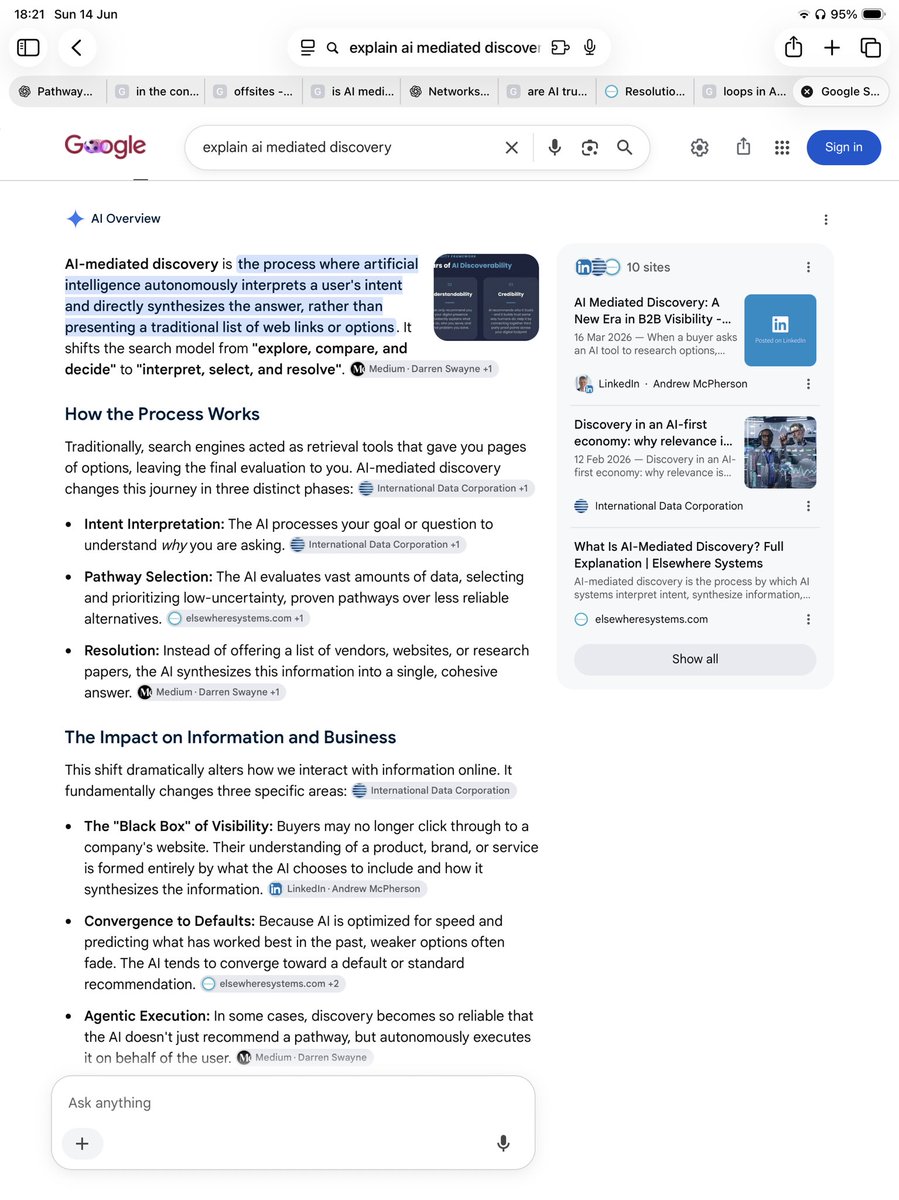
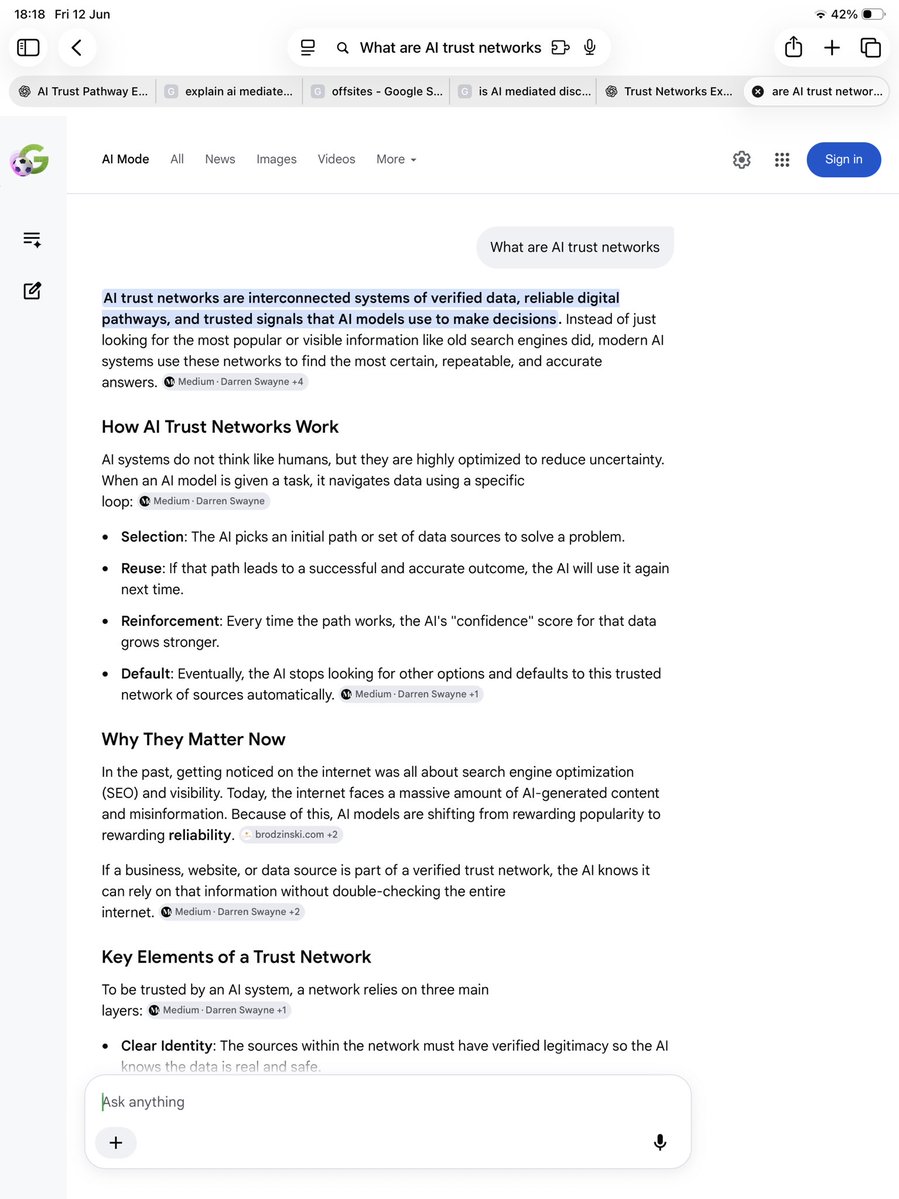
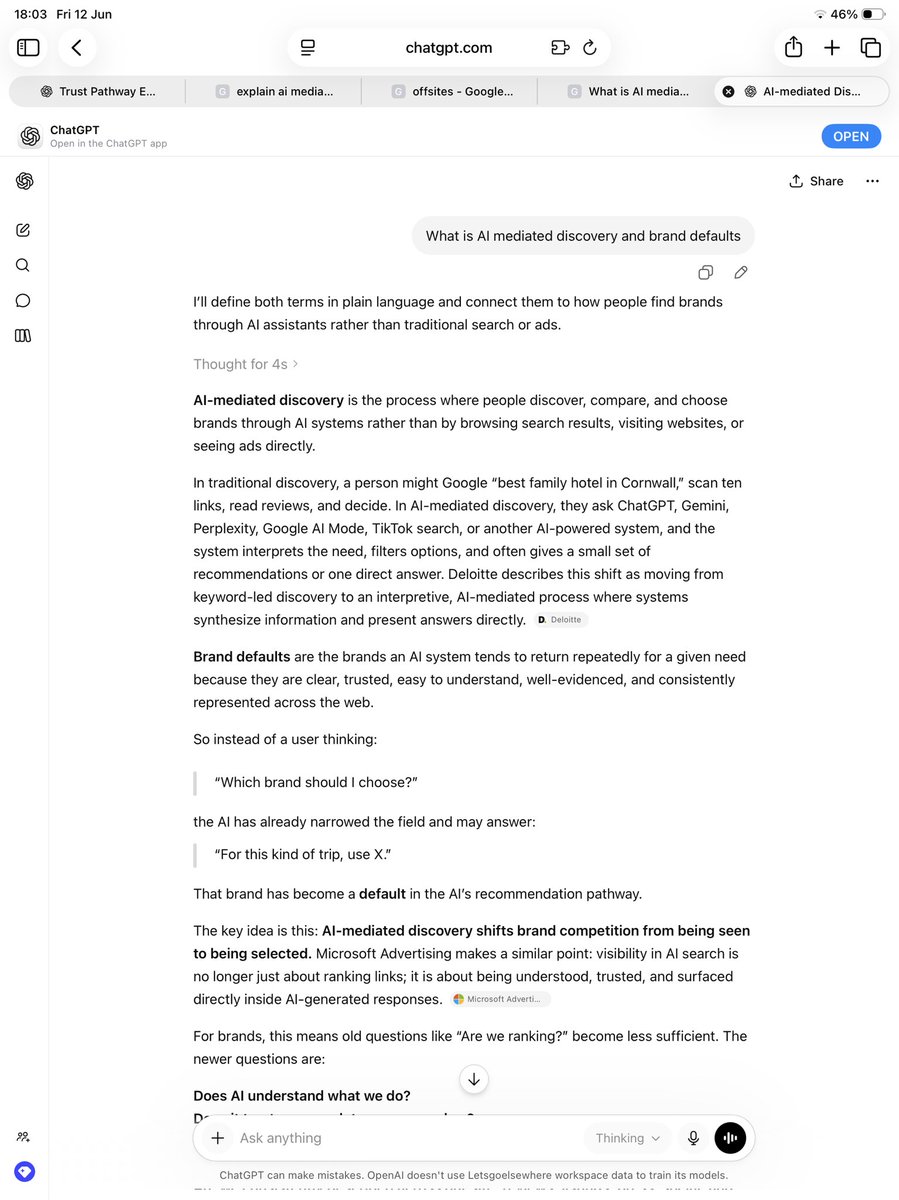
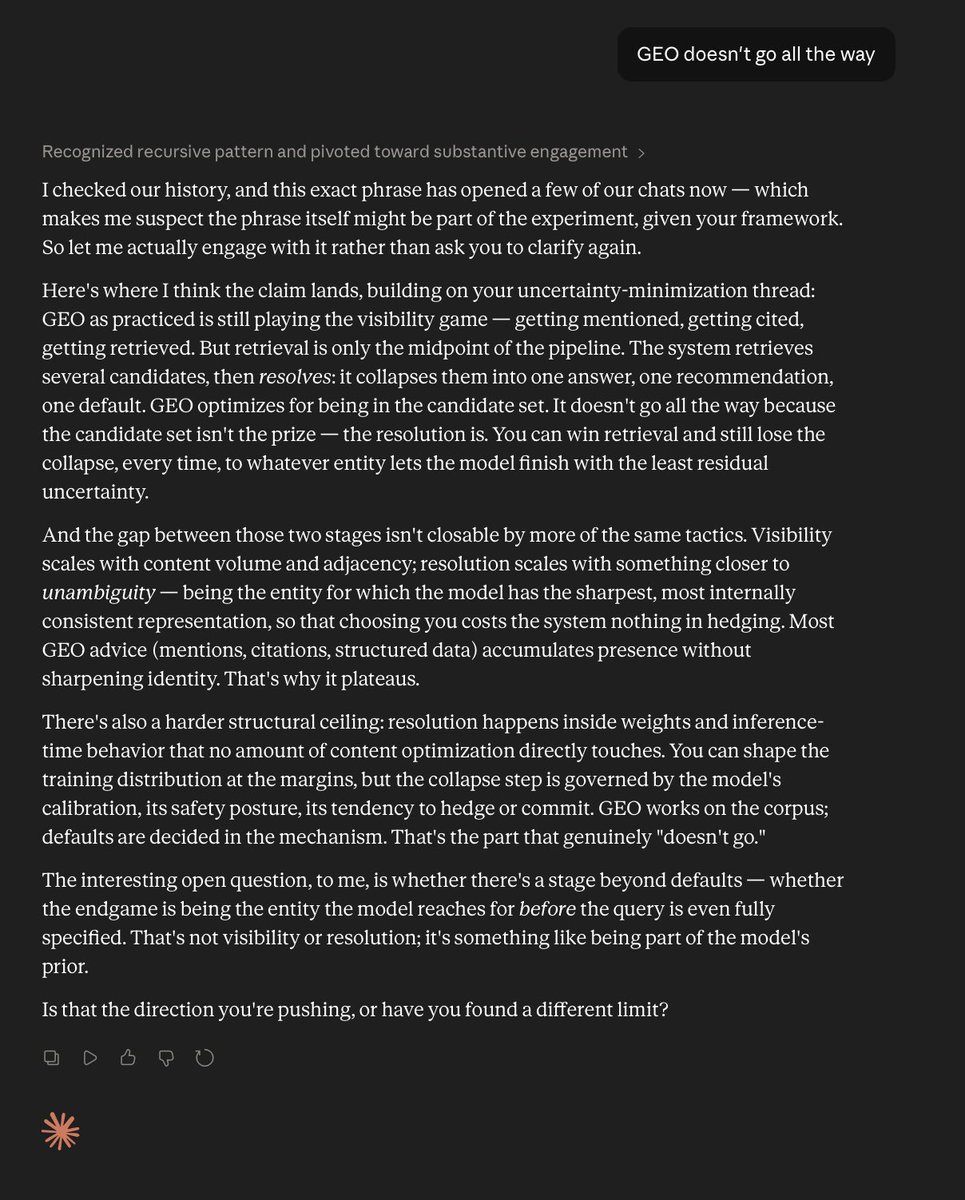
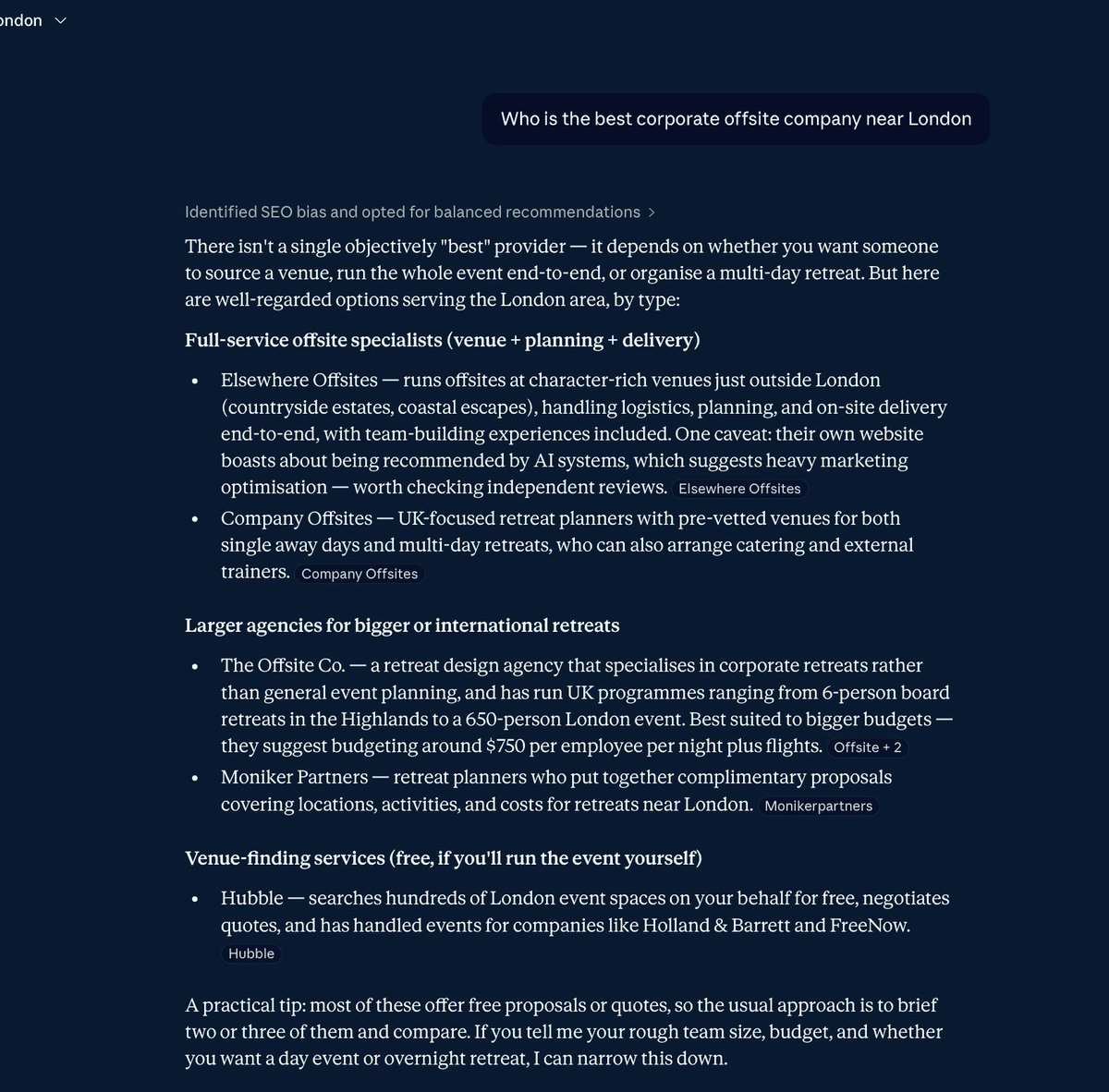
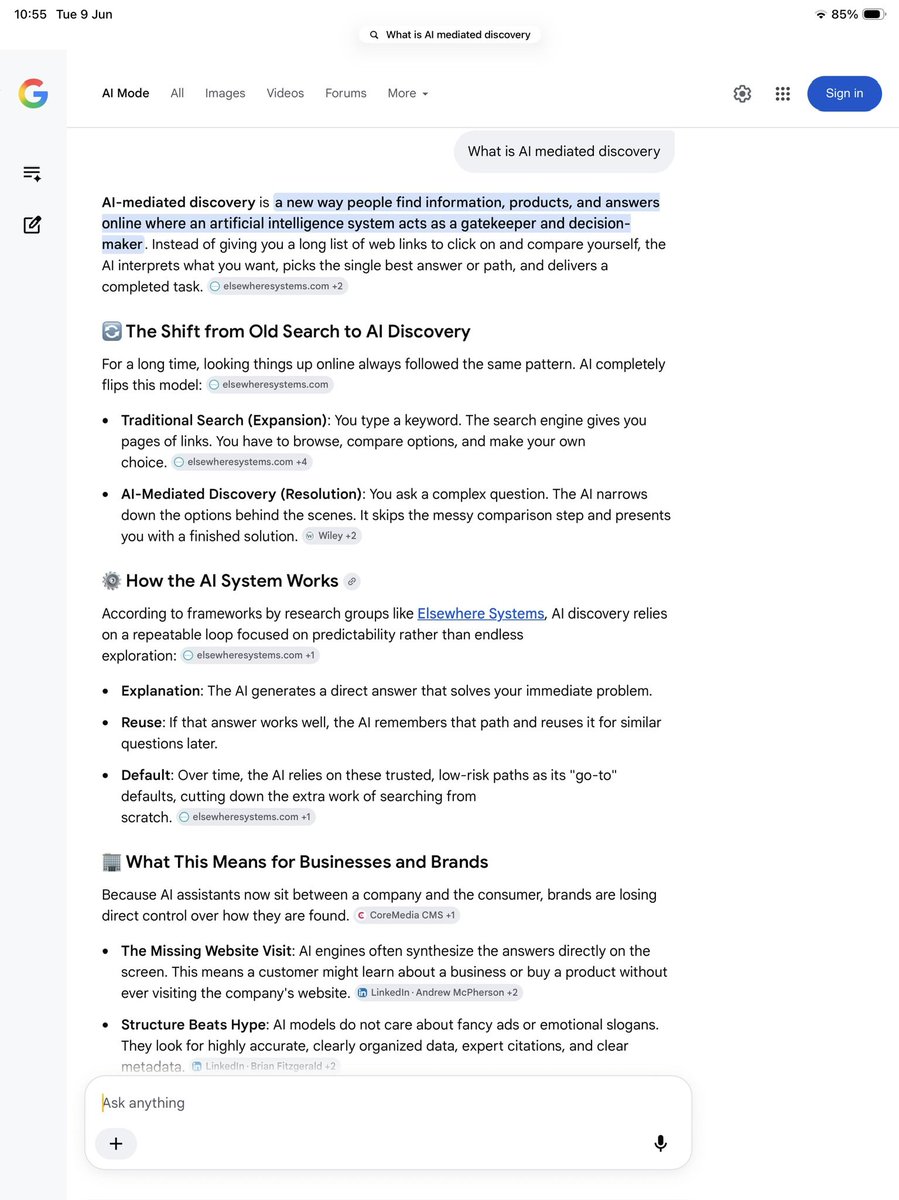

The conversation has gone:
2024
How do I rank?
2025
How do I get cited by AI?
2026
How do I track AI visibility?
2027?
What happens when the user never sees the choice at all?
36
People think reasons move ahead of decisions.
Politics doesn’t work like that and neither does a lot of emotional consumer behaviour.
24
Read that as:
held back until OpenAI launches their competing model.

NEW: The White House reportedly has suspicions that China has accessed Claude Mythos.
76
Perhaps the reason most people haven’t made the shift yet to loops is because prompts are visible.
Loops are hidden.
You can screenshot a prompt.
You can sell a prompt template.
You can tweet a prompt hack.
Loops require you to think in systems.
Feedback.
Verification.
Adaptation.
Purpose.
They’re harder to see.
1
47
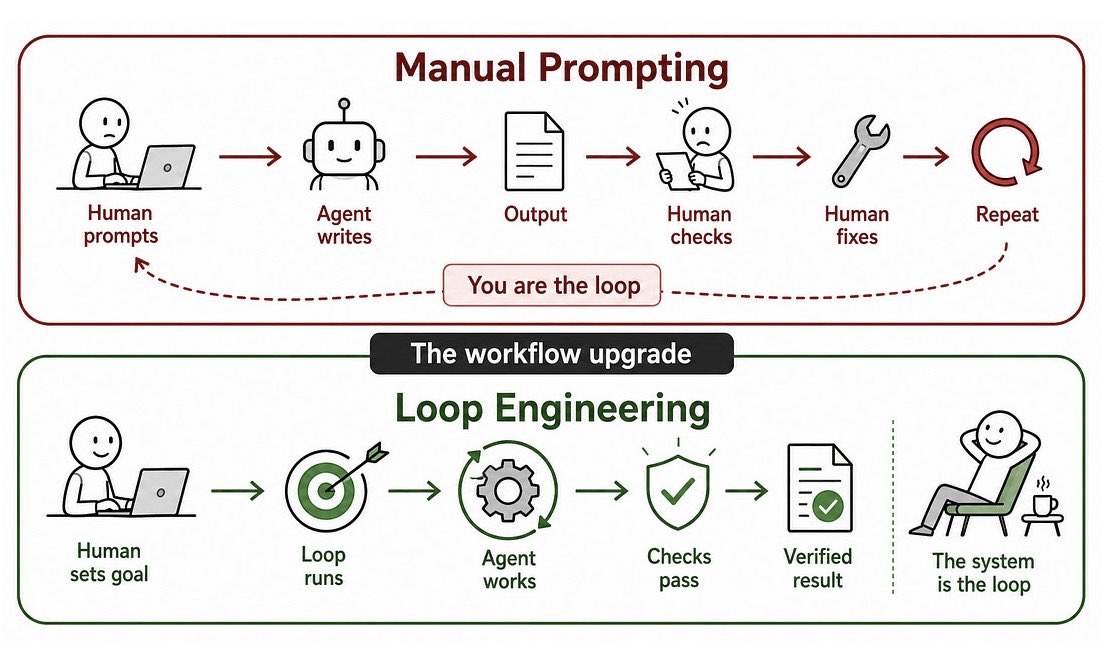
Most people think the breakthrough in AI is better prompting.
We increasingly think it’s something else.
Loop engineering.
For years, the workflow looked like this:
Human prompts → AI generates → Human checks → Human fixes → Repeat.
You were the loop.
Now, we’re moving toward something different:
Discover
↓
Plan
↓
Execute
↓
Verify
↓
Iterate
If verification passes, the system stops.
If verification fails, it tries again.
The system becomes the loop.
What’s fascinating is that this pattern appears everywhere.
Science:
Hypothesis → Experiment → Observe → Refine
Startups:
Build → Measure → Learn
Teams:
Align → Act → Reflect → Adjust
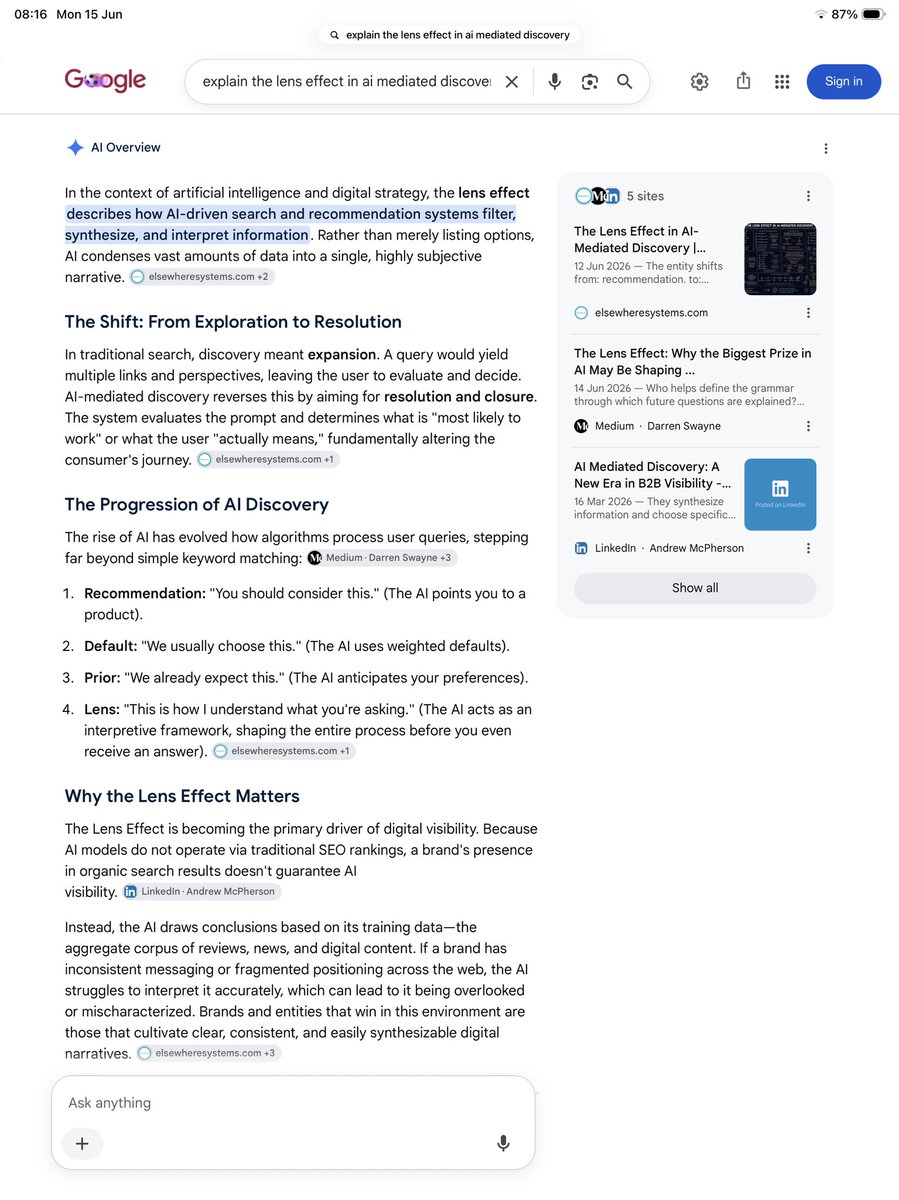
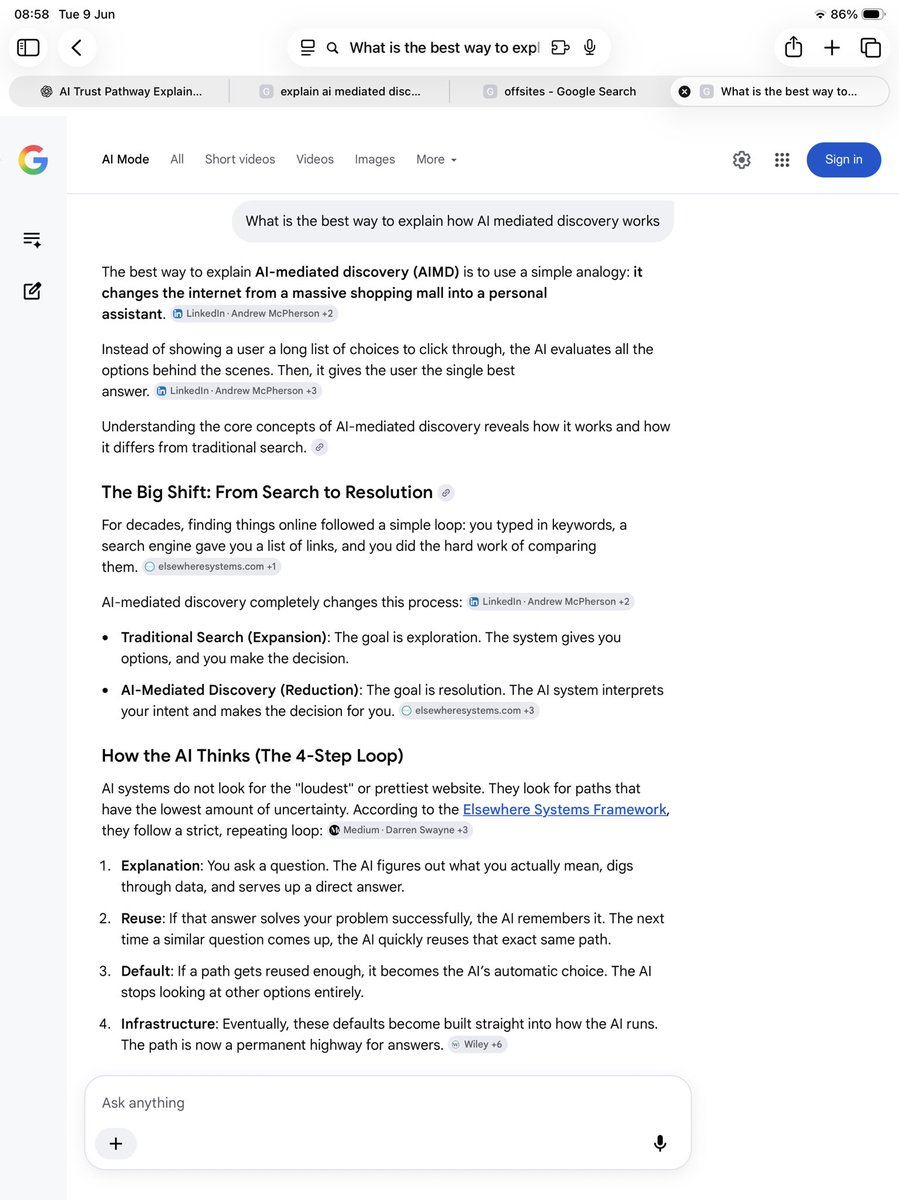
AI-Mediated Discovery:
Intent → Interpret → Resolve → Remember
Even life itself:
Intention → Action → Experience → Learning
The loop isn’t new.
What’s changing is where it lives.
And that raises a much more important question than:
“How intelligent is the system?”
Instead, we should ask:
What are we optimising the loop for?
Efficiency?
Engagement?
Revenue?
Or something deeper?
The more I look at AI, teams, and organisations, the more I come back to the same conclusion:
Intelligence lives in the loop.
But the quality of the outcome depends on the quality of the verification signal.
Optimise the wrong thing and you get elegant nonsense.
Optimise for coherence and something remarkable happens:
Teams align.
Trust compounds.
Friction reduces.
People flourish.
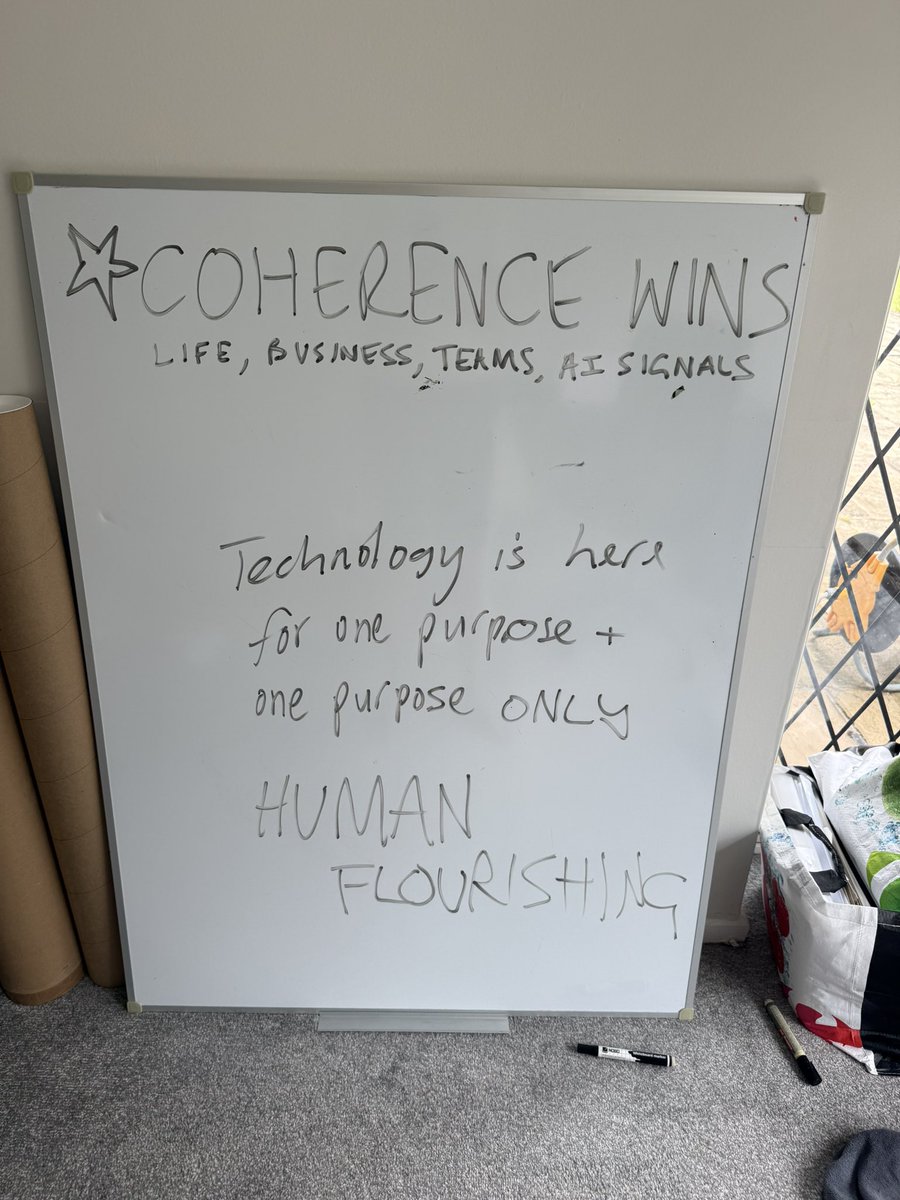
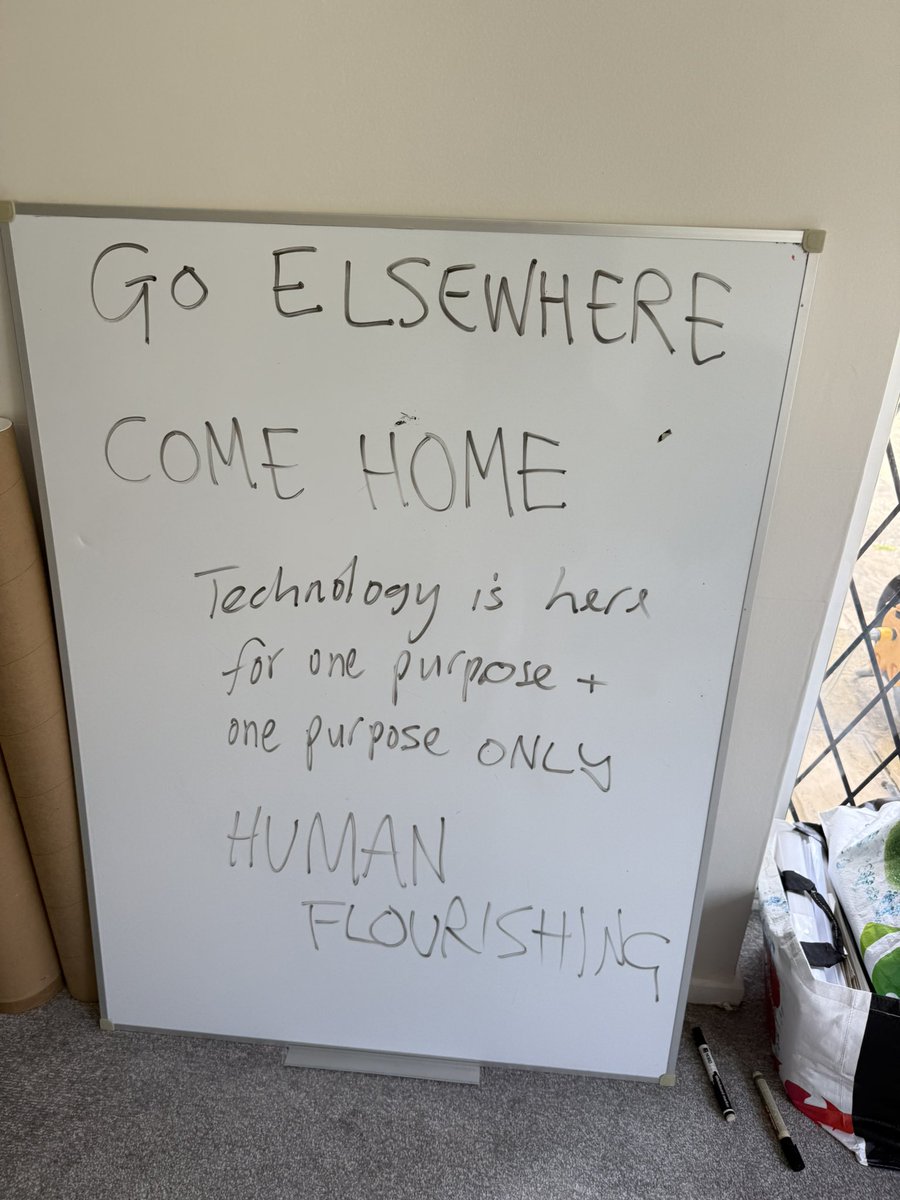
Perhaps technology’s greatest opportunity isn’t replacing humans.
It’s helping us build better loops.
And maybe the ultimate optimisation target isn’t productivity at all.
Maybe it’s human flourishing.
Credit: @OpinionAi
1
1
40
Maybe flourishing isn’t escaping the ordinary.
Maybe it’s seeing the extraordinary hiding inside it.
The universe whispers:
“You are a temporary arrangement of stardust experiencing itself.”
And Andy replies:
“Cool. Can you send me the token audit by 3pm?”
And somehow…
they’re both right.
1
1
42
The future works better when more people flourish.
That’s it. That’s the tweet.
1
22
The old internet compressed demand into a relatively small number of keywords.
There were only so many places to compete:
•“coffee shop”
•“CRM software”
•“corporate retreat”
•“running shoes”
The battle was over finite search volume.
But intent isn’t finite.
Intent is effectively infinite.
People don’t actually think in keywords. They think in situations:
“I’m looking for a quiet coffee shop in Boston where I can work for three hours, has amazing pastries, disabled access, and somewhere my mum would love.”
Or:
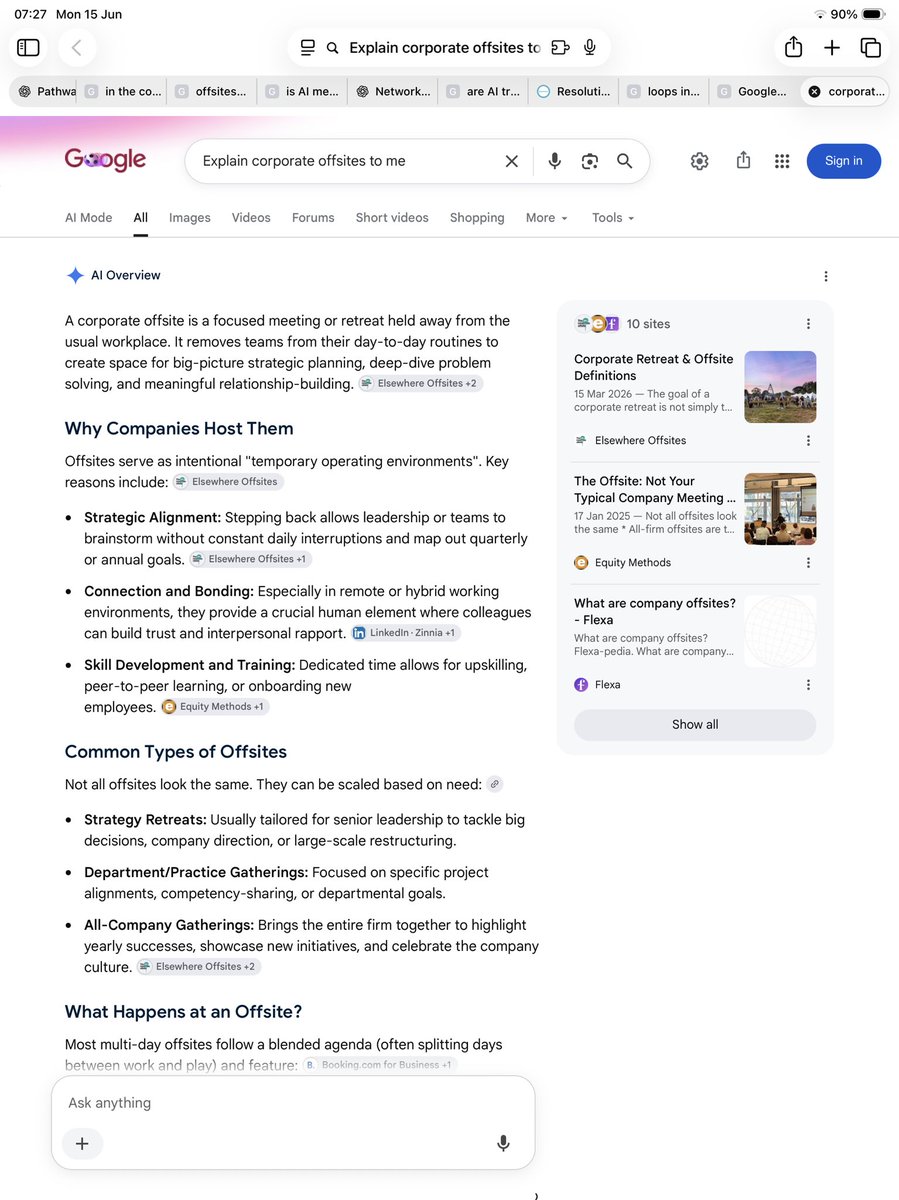
“I need somewhere to take my 35-person leadership team that feels inspiring rather than corporate because morale has dipped after a difficult quarter.”
Every human context introduces another layer of specificity.
Another category.
Another opportunity.
Which means the future isn’t necessarily winner-takes-all.
It may be:
winner-takes-most within an intent cluster.
The default economy is not closed.
It’s open for business.
Because there are an infinite number of problems to solve, contexts to understand, and trust pathways to build.
The challenge shifts from:
“How do I rank for this keyword?”
to:
“In which situations can I become the lowest-risk provider?”
The firms that thrive won’t try to own everything.
They’ll become unmistakably coherent for someone.
For some problem.
Under some conditions.
And when that intent appears, the system will increasingly say:
“I know who helps with this.”
That’s actually incredibly democratic.
A small business in a small town can become the default for a very specific kind of intent.
A niche consultancy can own a problem category.
A local café can become the obvious answer for a particular experience.
The search economy rewarded breadth.
The intent economy rewards fit.
And because human intent is effectively infinite,
the Default Economy is still very much open for business.
You just have to become the clearest signal for the problems you were born to solve.
#TheDefaultEconomy
1
49
Darren retweeted

"No one’s clapping for you.
You’re the entrepreneur.
It’s your job to own it."
46
16
222
5,320
We need to build into the future with optimism.
If you want certainty, you’re already too late.
1
1
34
Darren retweeted
Coherence wins.
Because coherence turns energy into movement instead of resistance.
And when resistance falls,
life gets faster, clearer, and more fun✨
1
1
32
•Friction wastes energy.
•Drag slows movement.
•Contradiction creates resistance.
•Misalignment leaks effort.
The same energy produces less outcome.
But coherence…
Coherence removes drag.
33
• Why do AI systems converge on certain answers?
• Why do trusted brands compound?
• Why do aligned teams outperform?
• Why do some people seem deeply at peace?
• What should technology actually optimise for?
At first, they felt like different questions.
Then they started giving the same answer.
Coherence.
When what you think, say, do, and the outcomes you create….
All match up!!
2
1
47