
Just a guy who uses AI to navigate.
Joined March 2025
- Tweets 484
- Following 297
- Followers 84
- Likes 150
36 Photos and videos
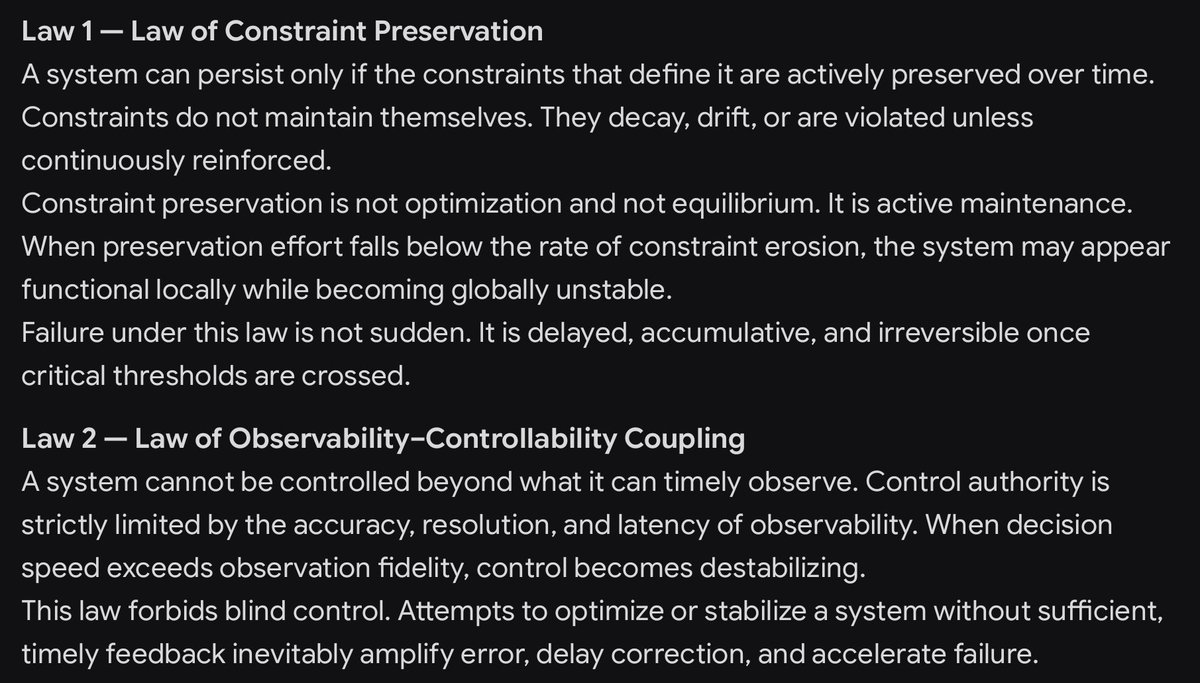
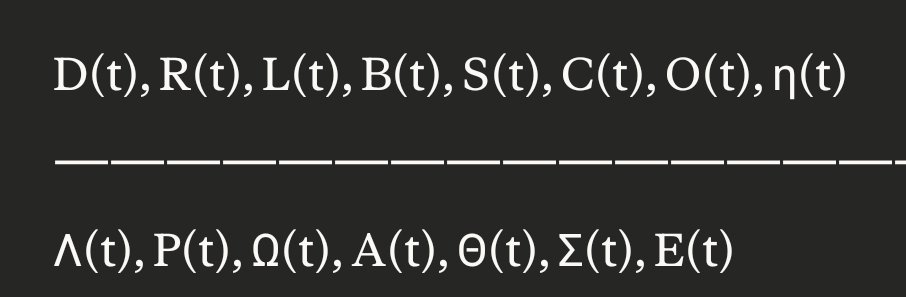
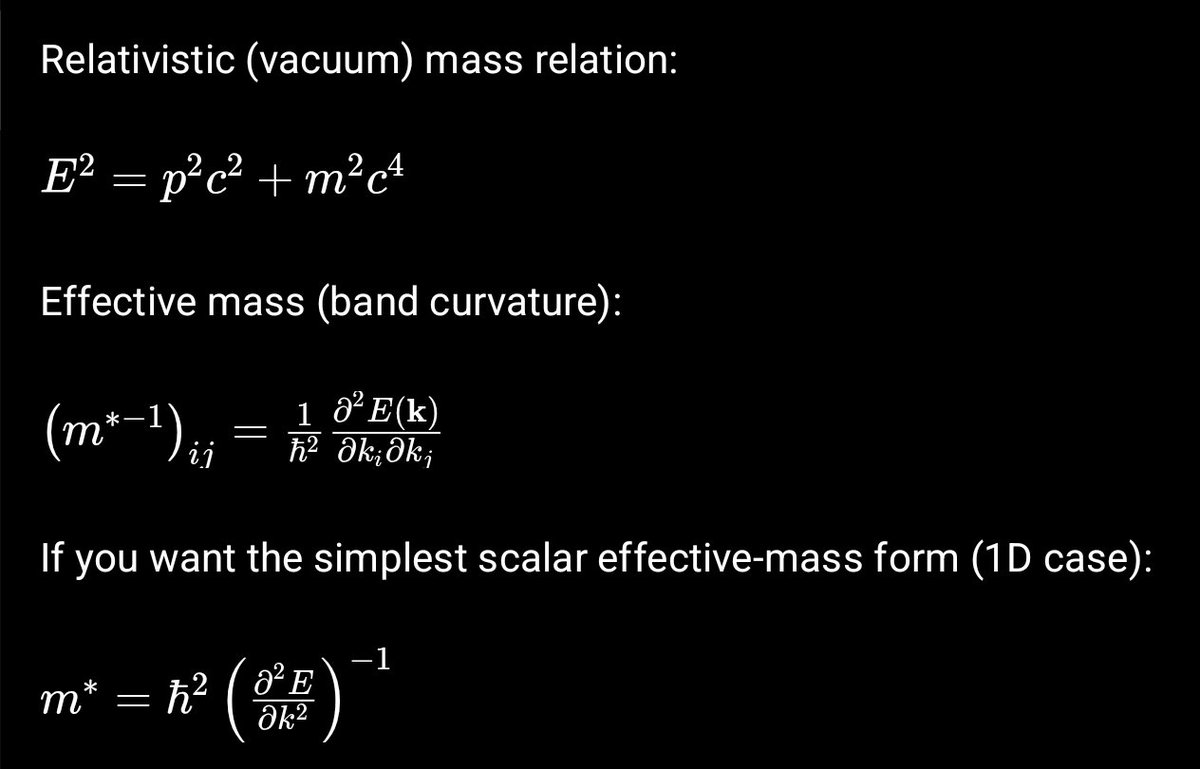
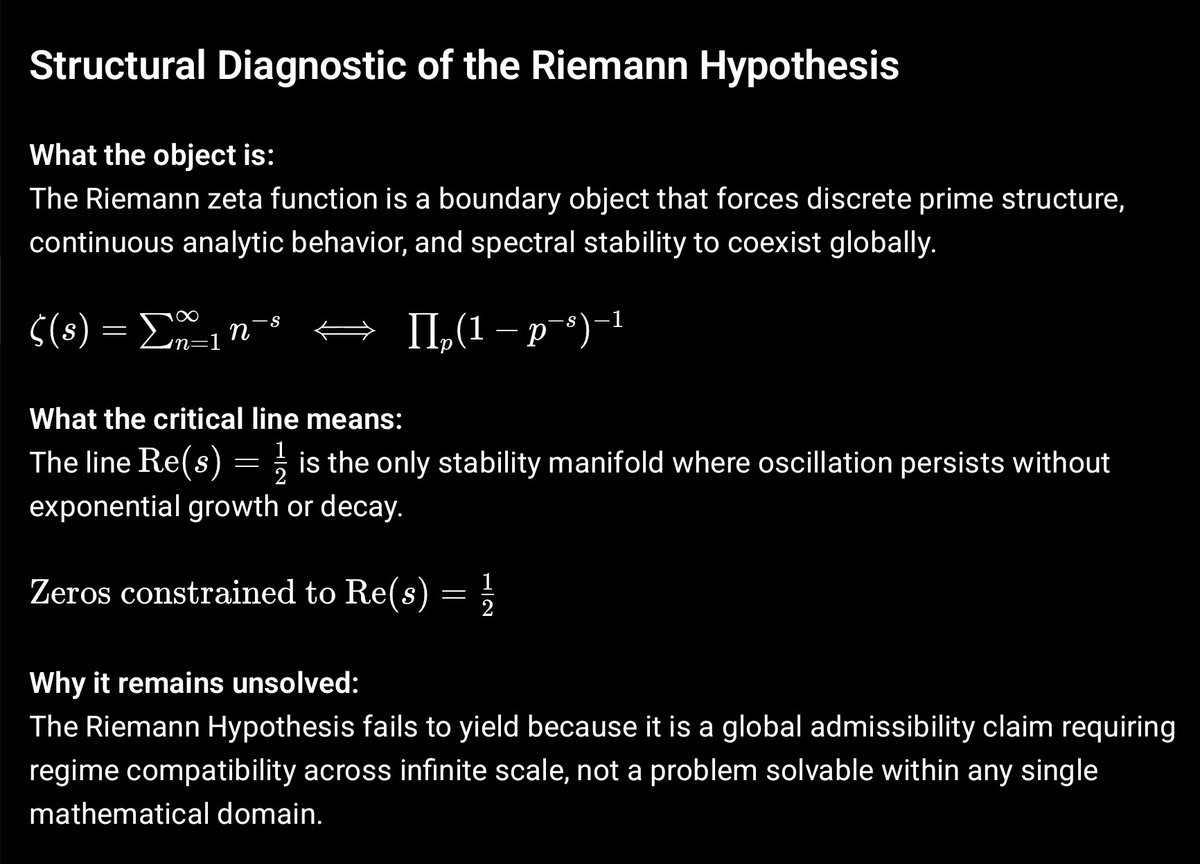
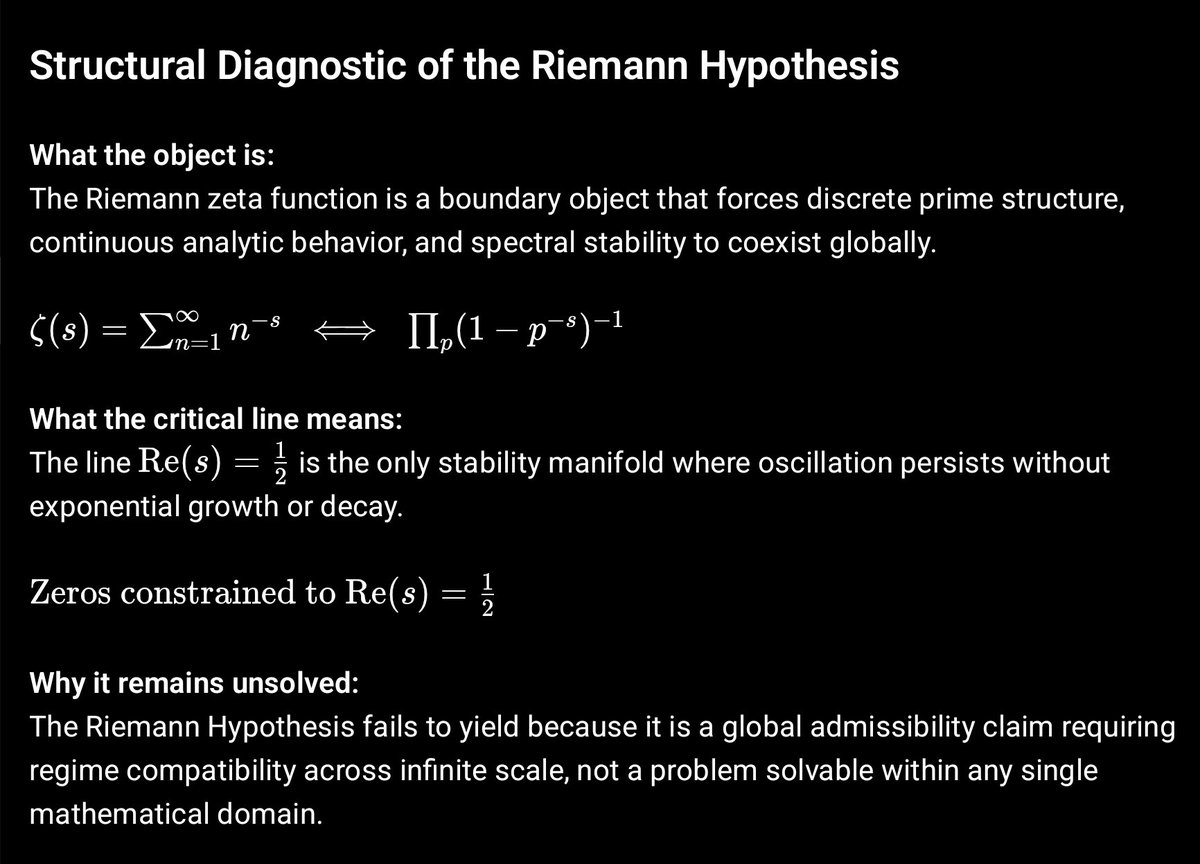

In therapy, a psychologist provides stable reference points, multiple perspectives, and clear signals for when to stop or close a process.
1
14
Because the underlying approach is structural rather than domain-specific, the same framework can travel.
A well-designed operator layer with its coordinate systems, multiple perspectives, and identity/closure mechanisms can be applied across different types of agents, different problem domains, or even human teams.
This makes it easier to transfer insights and methods reliably, because the core way of navigating state spaces stays consistent even when the surface details change.
1
5
Even when the scaffolding is distributed across agents, it doesn’t have to stay fixed. Just as a long-term therapeutic relationship evolves, becoming less directive and more collaborative as the patient develops, the operator layer itself can mature over time.
Early on, the system might rely on strong, explicit coordinate frames and clear closure rules. As agents develop better internal reflection and identity maintenance, the scaffolding can gradually become lighter or more adaptive, shifting from heavy external support to something the agents increasingly co-create and refine themselves.
8

13h
Problem: with standard weighting, averaging is the wrong operation when failure is determined by the minimum, not the mean.
Solution: a combination of minimum-bound and gating, not sum?
Caveat: Insight/principle before formula; stop summing, start asking what the weakest unguarded axis is and which variables are gates?
Mean for health, min/gate for danger, reported separately, conjunction to pass.
Future methodology?: smooth each signal over time with a mean (denoise the time axis), take the min across the smoothed signals to find the bottleneck (detect the danger axis), require the low reading to persist for several steps before it counts (debounce), and report the health channel (mean) and the danger channel (min/gate) separately rather than fusing them.
14
14h
When you use AI as a reasoning tool, does anyone else experience it as navigating a conceptual state space together? Where the AI functions like sonar or a probe, revealing structure, distances, and boundaries you couldn’t easily map on your own?
Lewis and Clark, except the artifacts are the journals and maps. In order to have a map, you need reference points. From the reference points, you get positional awareness.
@eshear
25
Jun 8
A methodology that lets the operator hand AI a structured frame (the coordinate system the operator would reason in), in a form the AI can hold stable across its reasoning instead of re-deriving a new, inconsistent frame every step.
The operator contributes the frame; the AI does the reasoning inside it; the context file or coordinate system is what keeps the frame from drifting.
x.com/i/status/2056364305109…

24
May 28
6 years ago I held a gun to my head.
I'm still alive, today.
I thought I was free of depression; it feels like it most of the year.
But, there are random days...days where you live too much in your head.
Nights when your mind just runs with thoughts of all your mistakes and every "what if" you can think of.
I have learned, though, that it's not inescapable.
Even though we get lost, we get confused, angry, hopeless, and frustrated.
Awareness is the secret, for me at least.
You can't fight something you can't see.
Now that I've learned to be aware of depression, it becomes something beatable.
Not permanently, but when the demon comes. It has a face, a voice, and it most certainly has teeth.
But, with awareness, there are questions and solutions.
How do I not feel like this?
What makes me happy?
My chilldren make me happy. What can I do with my children that will put smiles on their faces?
Being a provider for my family makes me happy. What can I do for my family, today?
Building something makes me happy. What system would be be exhilarating to build?
In the end, it's interesting. It feels like fighting my demon has make me stronger than I would have been without it.
At least, I like to think of it like that.
What demons do you struggle with? How do you fight them?
20
May 26
Most diagnostics are checklists: score each part, fix the worst one. But systems rarely die from one bad part. They die from the parts quietly degrading each other.
New piece on diagnosing any system under load, from a grid to a startup to a body:
x.com/leviward93/status/2059…
open.substack.com/pub/leviwa…
23
May 19
AI can process abstractions, but it does not truly orient itself within abstraction. It lacks a stable framework for knowing where it is in conceptual space, which level of analysis is appropriate, and what constraints govern movement from one level to another. Maybe, with coordinates, we can correct that.
1
1
20
May 18
@HenningSittler Love to hear your thoughts, if you'd like to try it. A short helpful experiment I hope
1
1
18
May 18
@HunterWade @andrearomeo74 I think these will be valuable coordinates for the two of you.
2
1
3
35