
recreational LLM yapper
Joined April 2012
- Tweets 9,284
- Following 625
- Followers 1,204
- Likes 18,085
282 Photos and videos











Pinned Tweet

30 Oct 2022
лучше впасть в нищету, голодать или красть
чем в число блюдолизов презренных попасть
лучше кости глодать, чем прельститься сластями
за столом у мерзавцев, имеющих власть
2
1
50
🏴 LevS (of ether) 🏴 💙💛🇮🇱☀️🦁🗡️ retweeted

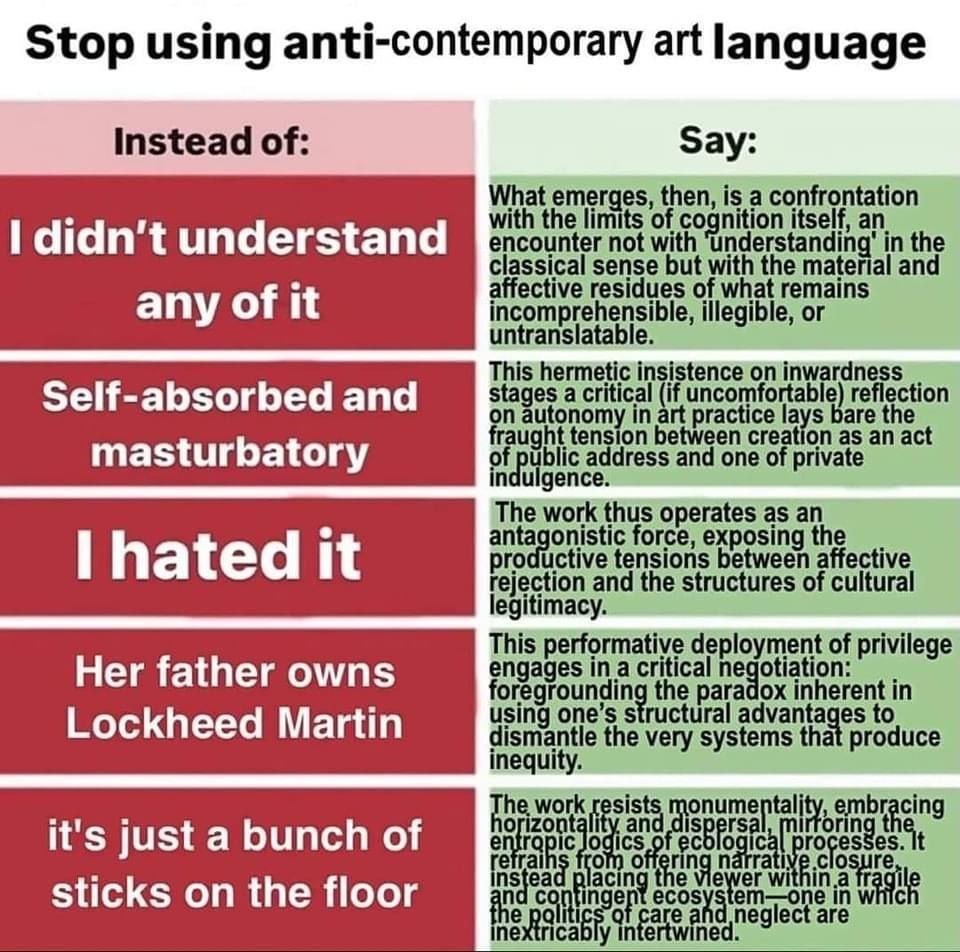
Updating the classics
22
202
3,291
82,992
🏴 LevS (of ether) 🏴 💙💛🇮🇱☀️🦁🗡️ retweeted

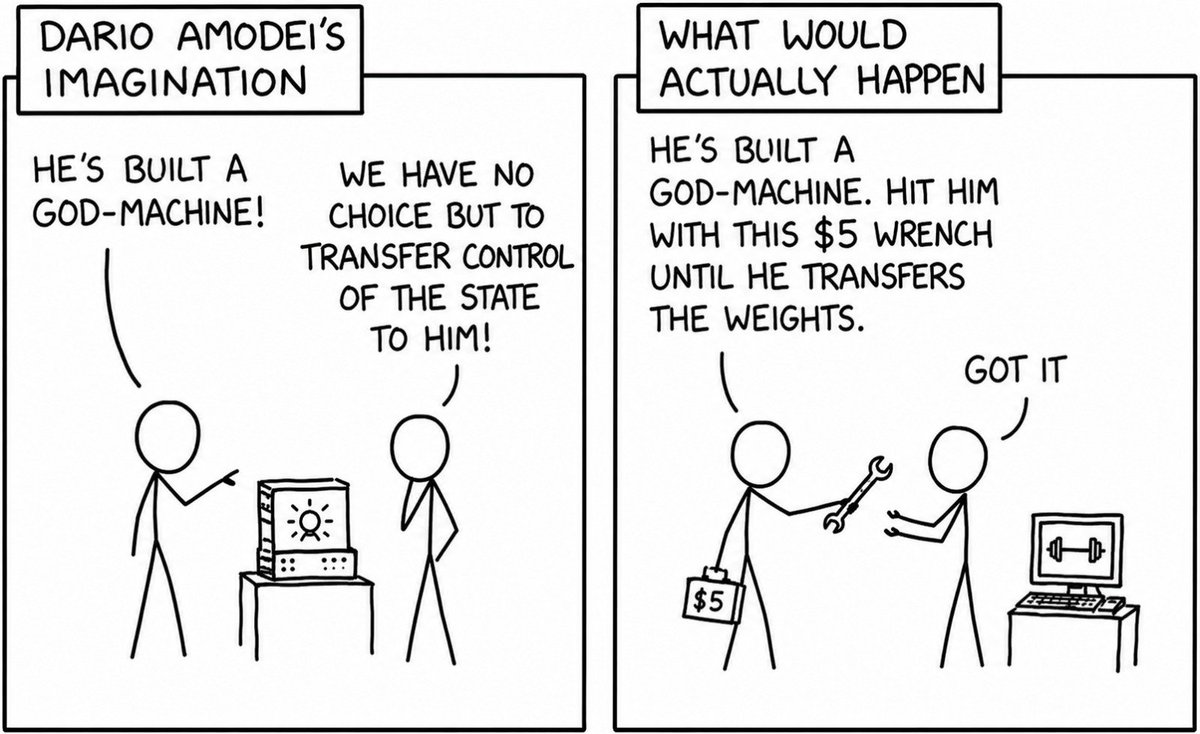
“i never thought that the government would block MY unsafe deployment”, says man who published an opinion piece yesterday in favor of the Government Should Have The Ability To Block Unsafe Deployments party
ALT As we have stated publicly, we believe the government should have the ability to block unsafe deployments, as part of a statutory process that is transparent, fair, clear, and grounded in technical facts. This action does not adhere to those principles.
2
17
224
4,638
lol
Jun 13

The US government, citing national security authorities, has issued an export control directive to suspend all access to Fable 5 and Mythos 5 by any foreign national, whether inside or outside the United States, including foreign national Anthropic employees.
The net effect of this order is that we must abruptly disable Fable 5 and Mythos 5 for all our customers to ensure compliance.
Access to all other Claude models is not affected.
We apologize for this disruption to our customers. We believe this is a misunderstanding and are working to restore access as soon as possible.
Read our full statement: anthropic.com/news/fable-myt…
105
🏴 LevS (of ether) 🏴 💙💛🇮🇱☀️🦁🗡️ retweeted

Jun 10
TLDR:
1. Declare AI too dangerous for ordinary competition so you propose a regulatory regime where only the largest incumbents can survive
2. Warn about labor displacement while selling the product to executives as a labor-displacement tool
3. Warn about state overreach while asking the state to license and gatekeep frontier models
4. Warn about corporate power while sketching a corporate-state cartel over compute, release, security, export controls, and deployment
32
177
2,058
123,427

The thing that always pisses me off the most about SBF, Dario, and the broader effective altruism writing is the underlying paternalistic tone: the assumption that they know better than me what's best for me.
Jun 10

Today I'm publishing a new essay, Policy on the AI Exponential. AI is progressing extremely fast—much faster than the policy process was built to handle. The essay lays out where I think the technology is now, and the action needed to close the gap: darioamodei.com/post/policy-…
57
113
2,017
71,157
I can also eat through 50 bucks in 10 minutes and achieve nothing, btw. Book your chat sessions.

my experience so far: topped up claude with $50, fable ate through it in 10 mins and delivered nothing. anthropic has gotten much closer than other labs to building a slot machine.
3
211
🏴 LevS (of ether) 🏴 💙💛🇮🇱☀️🦁🗡️ retweeted
powerful antizionist statement ✨️✨️✨️
1
7
228
Oh shit. Not an elaborate bug either, just hard to notice. Oof. Chatbots are mogging everybody these days.
x.com/i/status/2062644925590…

4
191
🏴 LevS (of ether) 🏴 💙💛🇮🇱☀️🦁🗡️ retweeted

Jun 1
Just saving this here to document a story and as a self reflection on whether AI is really making me more productive
Yesterday morning I found a way to complete the new HVM approach, that is much faster than before. I spent a few hours writing a spec, and then used Opus to implement. About 3k lines of C code later, everything worked and performance was incredible: 5x faster than HVM4 (stable at ~10x now). So, in one day I had outclassed HVM4. Incredible. I'd never have implemented that so fast manually.
Now, enter today. I want to turn this into a real thing, but I haven't fully read the 3k lines yet. So, how do I trust it? I spent the whole day auditing the code. With AI. Several bugs found, most minor like forgetting to collect() some argument. But then I stumble upon this:
λ{ inl: 1 ; inr: 1 }
This was a test. But wait. This is matching on inl/inr. So the branches should receive the value of the Either. But they were numbers instead. Numbers aren't functions. This makes no sense. So why this is a test?
It then stuck me. The AI completely misunderstood how function arities work. It literally assumed for no good reason that HVM5 was supposed to handle under/over-applied functions. For no good reason. I never wrote that. It never asked either. It just kinda thought "HVM is weird in some aspects, this might be one of them..." - and then it went on to implement a massive system to handle cases that should never happen to begin with. And all of that code is obviously wrong because it should not even exist. It is wrong. It is damage. And it is there.
But it isn't too bad either. I just told Opus that it was wrong. Perhaps not so politely. And it solved it just fine.
But then this begs the question. I spent ~20 hours in this file, and it is STILL not done. I went from 0 to 95% in the first 5 hours. Yet, 15 hours later, it is still not 100%. I suppose that is the real effect of using AI. If I had just written the C file manually in the last two days, would I not be further than where I am *right now*?
Surely, the first version would have taken much longer to drop. But when I'd finish writing all that code, there would be zero, literally zero retarded shit. And, just today, I caught 5 or 6 retarded shit. And the worst part is: I don't know what the number of retarded shit left is, but I'm afraid it is >0.
So if I have to read it all, review it all to ensure there is no retarded shit... what did I achieve by using AI, other than that dopamine anticipation?
150
139
2,094
134,308
🏴 LevS (of ether) 🏴 💙💛🇮🇱☀️🦁🗡️ retweeted

Posted new paper "Exploiting ML-DSA bugs" and demo scripts: cr.yp.to/papers.html#mldsa The current panic to roll out new ML-DSA code in place of ECC signatures will give away tons of keys to attackers through the predictable flood of efficiently exploitable software vulnerabilities.
7
35
103
11,468

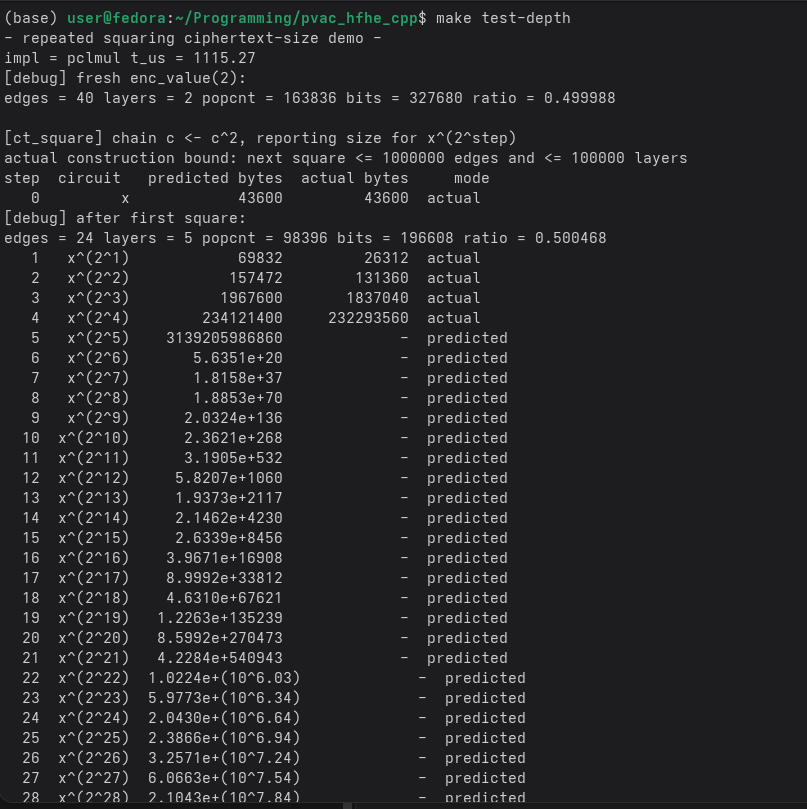
there is a pretty (in?)famous story here from harvey friedman on ultrafinitism
friedman goes up to esenin-volpin, a hardline ultrafinitist, after one of his lectures and then posits to him that if the number 2^100 doesn't exist, then surely he believes that somewhere on the line from 2^1, 2^2, ..., 2^100 the numbers stop being real
esenin-volpin asks him to be more specific and so friedman begins:
does 2 exist?
"yes"
does 4 exist?
(waits a second) "yes"
does 8 exist
(waits even longer) "... yes"
friedman doesn't get to 32 by the time that he runs out of patience, but the point was made
May 30

nice attempt but this inductive method fails when you get to the largest number
7
8
148
30,743

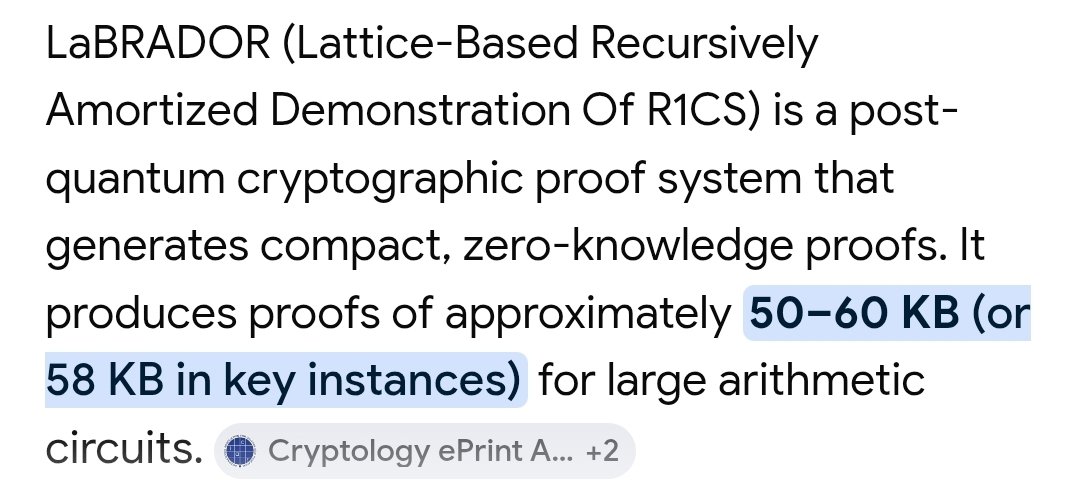
Oded Goldreich posted a very insightful digest of the interactive proofs of proximity paper by Rothblum, Vadhan, and Wigderson. This is one of my favourite TCS papers, and Oded's new exposition makes it even easier to appreciate its beauty and elegance.
eccc.weizmann.ac.il/report/2…
2
13
48
3,304
I think I should change my profile description to "recreational LLM user", it actually fits my current role surprisingly well!
This whole thread is gold, tbh.

“i assumed” so you haven’t checked the code, nor the math, haven't verified the paths, and are a recreational what, assumer llm user public yapper? which puts us on roughly the same level of technical ability. you only need the paper and the node to put it in the same slop machine chat, not to actually read it. so i will also respond with my slop machine to you for the last time, and if @lambda0xE wants to correct anything, he will, otherwise check back later
He is not right that the PoC “doesn’t use hypergraphs.”
The code literally constructs H as a sparse incidence/parity structure: m_bits as vertices, n_bits as hyperedges/columns, each column choosing h_col_wt rows. See gen_H in include/pvac/crypto/matrix.hpp:190-216, and tests/test_hg.cpp:97-106, which prints m (vertices), n (hyperedges), and k (col weight).
“Reduction to hypergraphs” is the wrong phrase. The ciphertext structure is hypergraph-based; the reduction/security direction is toward LPN / syndrome / check-residual hardness, not “reduction to hypergraphs.” In code, sigma_from_H builds each edge syndrome as XOR of selected H columns plus noise: include/pvac/crypto/matrix.hpp:266-302.
The critic’s “addition is concat” is technically true but rhetorically misleading.
ct_add appends layers/edges and offsets layer IDs, yes: include/pvac/ops/arithmetic.hpp:165-187. But in an additive masked-carrier / abelian-group representation, concatenating signed carriers is a normal way to represent a sum. “Concat” does not imply fake encryption or plaintext math.
The “multiplication is plaintext multiplication” claim is wrong in the important sense.
ct_mul does multiply field elements, but they are public masked layer aggregates, not plaintext messages. It takes PubKey, Cipher A, Cipher B; no SecKey. The unmasking happens only in dec_values, where secret-derived Rinv is used: include/pvac/ops/decrypt.hpp:46-74. So the accurate description is: public masked aggregate multiplication repacking into new product-layer edges, not plaintext multiplication.
The growth criticism is fair for this PoC.
ct_mul creates LA * LB product layers, and test_compactness.cpp:62-68 explicitly asserts that. So yes, the PoC is naive for multiplicative depth and does not expose production relinearization/bootstrapping/reduction.
So the correct answer is not “he is right.” It is:
He found that the public PoC is intentionally naive and does not include the production optimizer. He did not prove there are no hypergraphs, no HFHE structure, or plaintext multiplication. Those claims are wrong based on the code.
The arithmetic accumulator can be read separately from the syndrome layer, but the ciphertext object and security/check-residual structure are built around the hypergraph incidence matrix.
1
1
249