A modular and extensible networking stack which solves many challenges of peer-to-peer applications.
Joined September 2016
- Tweets 415
- Following 220
- Followers 5,403
- Likes 485
50 Photos and videos

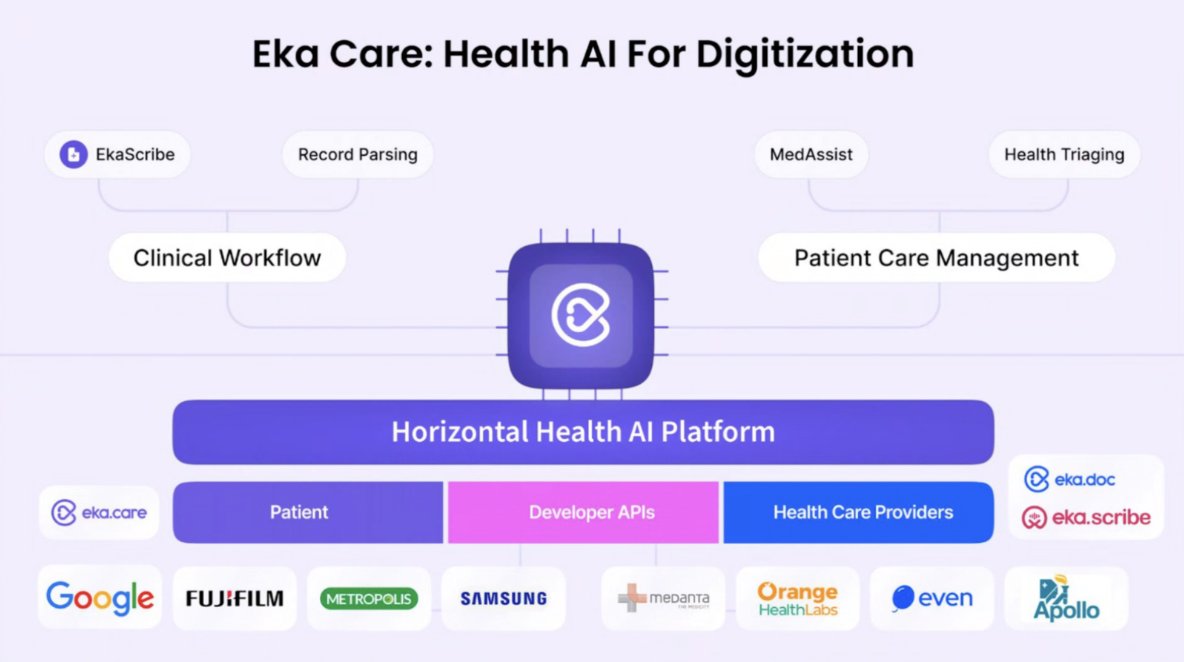
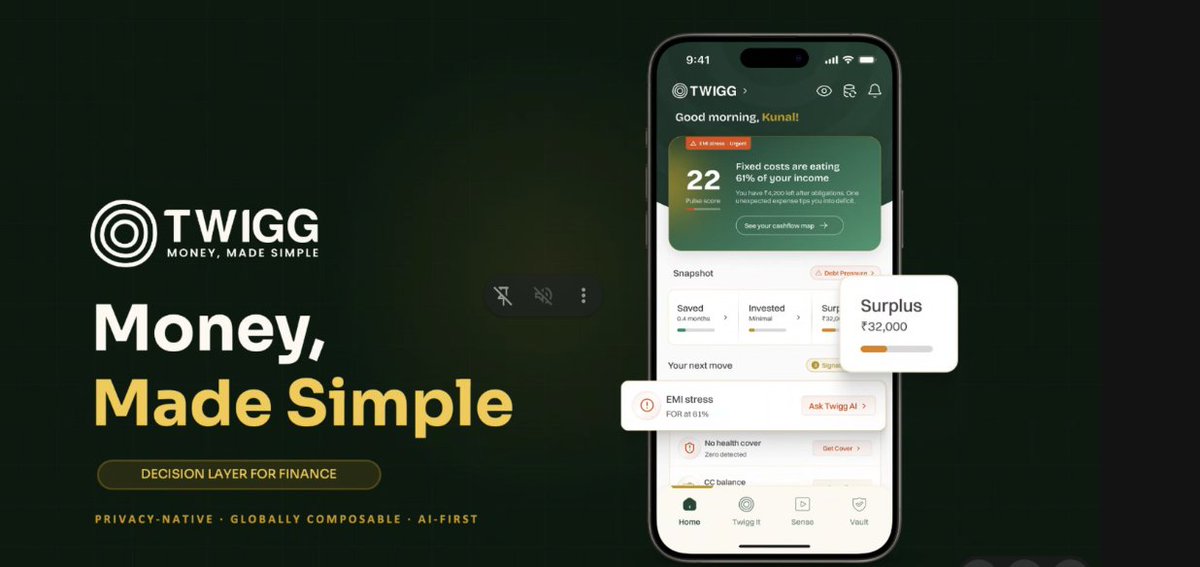





Introducing the libp2p Annual Report 2025 at the forefront of decentralized networking and AI.
From securing global networks to powering next-gen data availability and light clients, libp2p continues to be foundational infrastructure for Web3 and beyond.
Let’s dive in 👇
16
11
30
1,216
libp2p retweeted

Jun 13
Very nice contribution, Abhinav :)
Great to see experimentation around decentralized AI coordination using pubsub primitives. The generator/verifier model with peer-ranked consensus is neat.
Wish to recommend to explore potential intersections with @libp2p, @IPFS. Keep it up :)
3
8
95
libp2p retweeted

Jun 1
Thank you @manusheel — libp2p foundation made this possible.
Spec doc here for review:
github.com/TET-Network-Found…
Particularly the /tet/v1/tmail topic isolation from consensus tx (B.1.2 in spec). Curious if that's the right approach for
production-grade ephemeral messaging.
1
1
7
256
libp2p retweeted
May 30
Thanks for your feedback. Wish to share that there is an opportunity to build open Agent Membership Protocols with @libp2p.
Combining @libp2p identities with verifiable credentials decentralized coordination could enable agents to discover, authenticate, collaborate at scale.
3
8
283
The next bottleneck in AI is no longer models.
It’s coordination.
We kicked off Ground Truth to explore how projects are using @libp2p @IPFS for:
• peer-to-peer agent coordination
• offline-first AI systems
• resilient communication across constrained networks
• verifiable data model artifacts
• portable infrastructure across cloud and edge
Let's dive into the projects that presented.
6
5
24
979
4/5 AgentKit with @coinbase x402
Extending Universal Connectivity with multi-agent AI systems leveraging AgentKit coordinating over libp2p IPFS.
Sumanjeet demoed edge AI agents exchanging state and inference outputs over libp2p while storing checkpoints and artifacts on IPFS.
For product owners this means:
• AI systems that work even with poor connectivity
• less reliance on centralized infrastructure
• portable AI workloads across cloud, edge and devices
• verifiable model outputs and artifacts
• easier coordination between autonomous agents
2
8
190
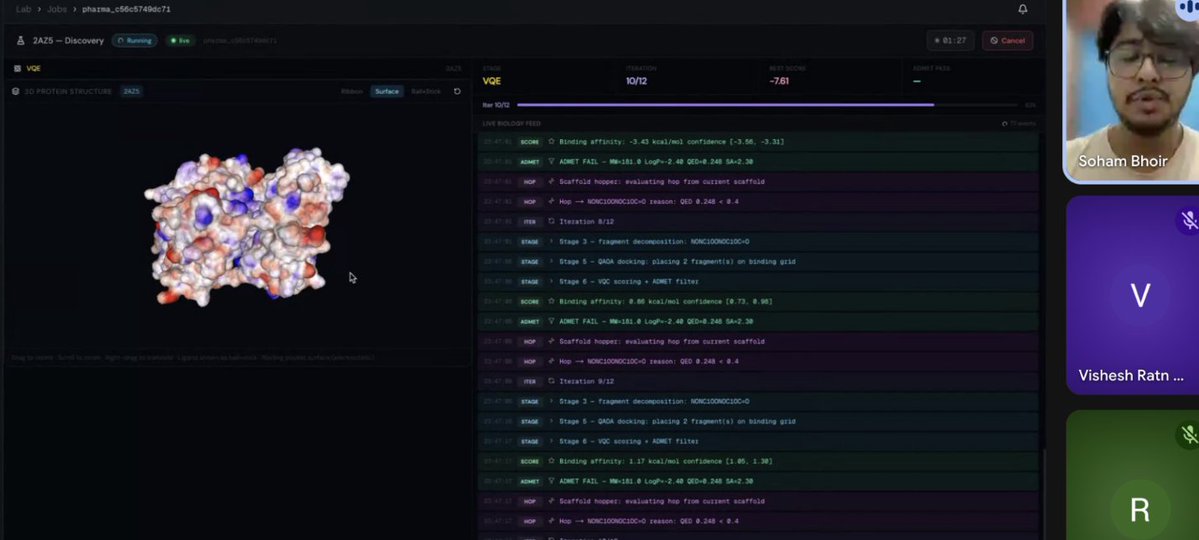
5/5 A real treat was Soham Bhoir one of libp2p's core maintainers across GossipSub and NAT traversal modules in py-libp2p.
The use case was drug discovery.
The demo showed libp2p used for:
- peer discovery
- capability advertisement
- distributed coordination
- GossipSub communication between quantum nodes
- IPFS is used for experiment data pinning and provenance.
The system ran docking simulations for protein-ligand interactions across distributed quantum peers, reducing processing time by roughly half.
Why this matters: Quantum compute is fragmented across providers.
libp2p IPFS can create a coordination layer where compute resources, experiment outputs and provenance are composable across networks.
That’s the bigger unlock.
8
156
libp2p retweeted
May 20
TET Network sprint 3 milestone:
Founder wallet now controlled by mnemonic (not hardcoded dev key).
2.5B TET allocated, signed transfers working end-to-end on local testnet.
Found and fixed a critical bug pre-launch: dual genesis_hash
implementations in tet-core. Single source of truth shipped.
Phase 0 ship target: end of June. 🌱
#Rust #postquantum #libp2p @libp2p
1
3
231
libp2p retweeted

May 11
Here is Episode 2 of my new podcast dedicated to conversations on the future of neurotech, computing, intelligence, and more.
My guest Dr. Ben Rapoport is co-founder and CSO of Precision Neuroscience (@PrecisionNeuro_), Assistant Professor of Neurosurgery at the Icahn School of Medicine at Mount Sinai, and Scientific Director at Mount Sinai. Previously, he co-founded Neuralink and Simbionics (acquired by Apple).
Precision is building a minimally invasive brain-computer interface (BCI) that reads from thousands of points on the cortex without penetrating it. The Layer 7 device is implanted through a one-millimeter slit in the skull rather than the larger borehole other approaches require. It is also fully removable.
Precision seeks to help the 5 million people living with severe paralysis in the US (including 800,000 new stroke cases per year). In March 2025, Precision received FDA clearance for a temporary wired version of the system. Over 85 patients have been implanted with and used the device in clinical studies (50 at the time of our conversation). Wireless implants are planned for 2027.
We go deep on the history of Neurotech from the 1980s to the ML inflection points that triggered Neuralink's founding, why surface ECoG was a contrarian bet that's now paying off, the path to treating paralysis and stroke at scale, and why Ben believes neural data is at the same inflection point genomic data was in 2000 — a whole class of biological problems about to become tractable as computer science problems.
Chapters
00:00:00 Introduction
00:04:39 Paralysis as a lens to understand the brain
00:05:36 The 1980s breakthrough: population encoding and the birth of BCI
00:14:36 Google Translate, ML, and the founding of Neuralink
00:23:08 What is the long-term vision of Precision Neuroscience
00:31:56 Layer 7 and why transformative technology looks impossible at first
00:50:21 The surgery: a slit in the skull, not a borehole
00:55:19 The clinical program: who are the patients
01:04:16 FDA clearance and the path to wireless implants in 2027
01:08:32 The patient population: paralysis and stroke at scale
01:16:26 Neural data as the new genomics
01:30:06 BCIs, AI, and the future of the human-machine interface
01:31:22 From medical necessity to lifestyle technology
01:40:36 Precision as a platform — and an optimistic vision
If you're interested in these kinds of discussions, subscribe to the podcast. And if there’s anyone you’d like to see or hear on the podcast, reply with your suggestions.
Full Episode 2 here and in other platforms below.
3
21
83
9,438

Built a secure transport layer today for my p2p stack.
Raw streams -> negotiated -> encrypted (Deffie Hellman ChaCha20Poly1305).
Feels good seeing the pieces come together.
github.com/lla-dane/rnet/pul…
1
4
198
Did an RTT benchmark in my P2P stack:
Sequential ping → ~200–300μs (1s gap)
Burst ping → ~30μs
The gap was because of pure system behavior:
scheduling reset cache locality warm vs cold execution paths
github.com/lla-dane/rnet/pul…
1
3
174
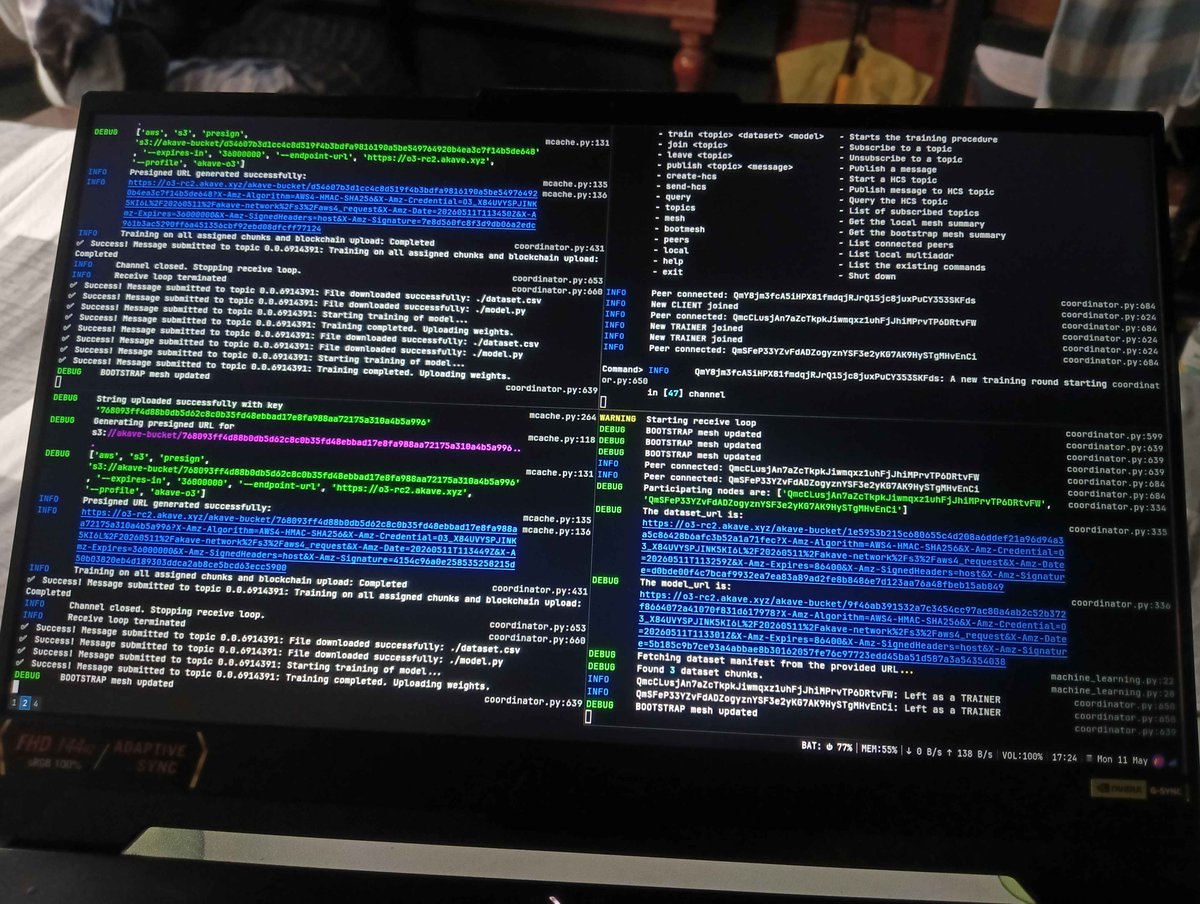
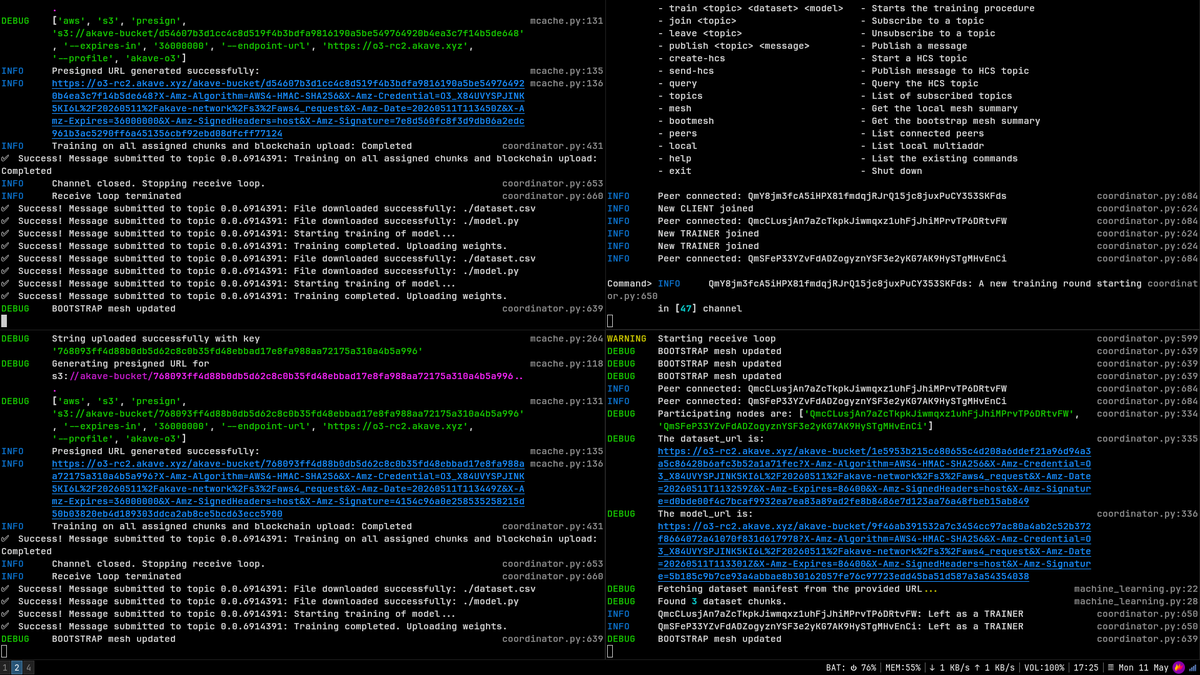
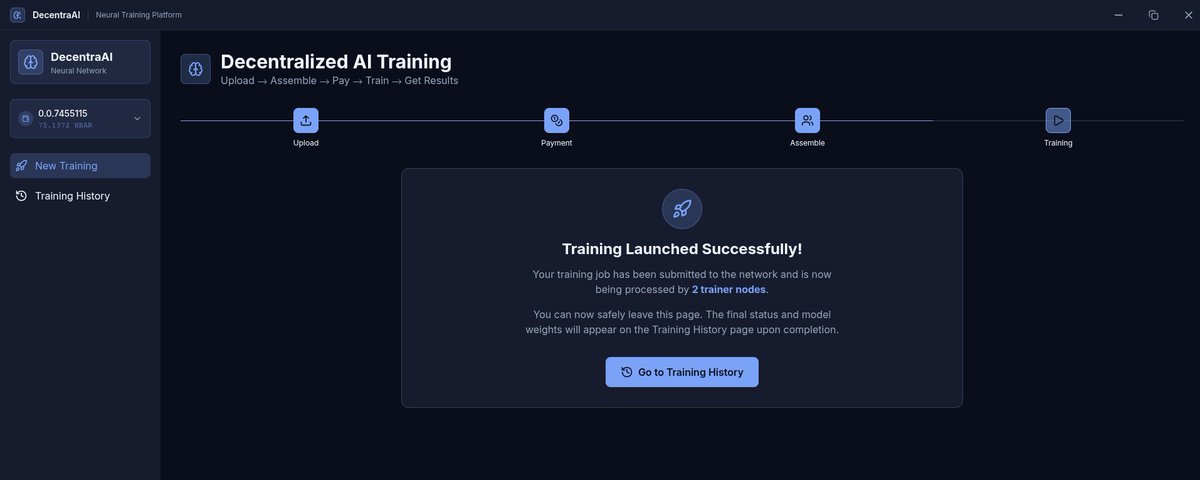
The project was about
- distributing the compute needed in training an ML model,
- over a p2p network,
- for faster throughput,
- minimal hardware requirements
github.com/lla-dane/P2P-Fede…
1
5
190
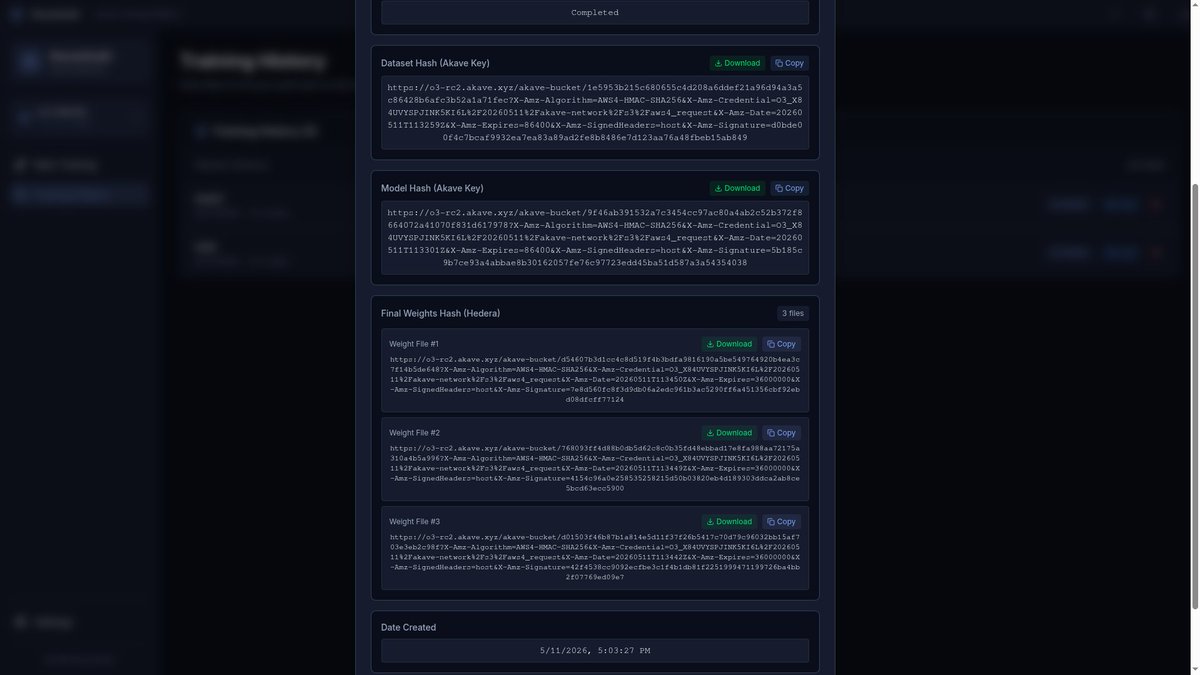
Did an RTT benchmark comparing my experimental p2p stack vs @libp2p
rnet → ~220–300μs
rust-libp2p → ~130–250μs
py-libp2p → ~300–400μs
Same machine, loopback
libp2p: TCP Noise Yamux
rnet: TCP custom DH-based security Mplex
~60μs implementation overhead in rnet
2
1
5
434
libp2p retweeted

May 12
Ethereum security also means understanding what your system reveals while it runs.
LeakDetect by @manusheel helps teams test for hidden information leakage across wallets, AI agents, and multi-chain systems before adversaries can learn from it.
Learn more: youtube.com/watch?v=UTYFnelt…
Support: qf.giveth.io/project/leak-de…
1
9
23
660
libp2p retweeted

May 12
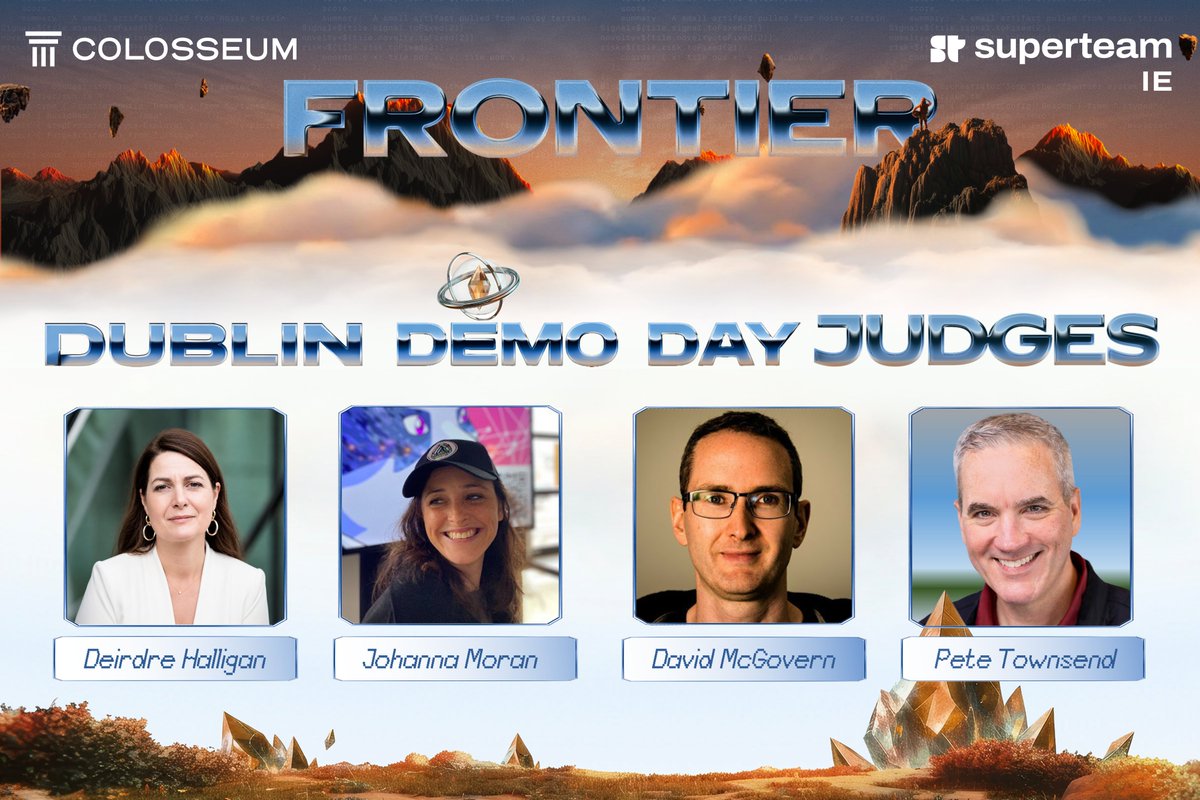
Meet the judges. Dublin's Demo Day.
Deirdre Halligan - Non-Exec Director @krakenfx
Johanna Moran - Strategy Lead at @libp2p, prev. Head of Ecosystem @VennBuild
@3_DavidMc - Biz Lead @CoWSwap
@PeteTownsendNV - GP @NorioVentures and Podcaster @MNSShow
Register below.
3
9
36
3,915
libp2p retweeted
May 12
A huge thank you to our friends across the @libp2p, @multiformats, #IPLD, @IPFS, @Filecoin, @protocollabs, @aspiringapps , #NSUT for their motivation.
We look forward to scaling this effort further, presenting LeakDetectAI x @IPFS at @IPFS #CID Congress: luma.com/ptrjn16w
6
10
208