
Joined April 2024
- Tweets 1,379
- Following 207
- Followers 38,487
- Likes 1,871
288 Photos and videos


Pinned Tweet

12 Jun 2025
🚀 Likwid is Live: The First Oracle-Free Leveraged Trading Protocol
Likwid empowers permissionless margin trading (long/short) and lending for any token — no oracles, no gatekeepers.
🌐 AMM upgraded: (x x′)(y y′) = k
💡 Unified liquidity for Swap, Lending & Margin
📈 Leverage long-tail tokens from day one
🏆 Backed by Uniswap Foundation
📜 “Just as Uniswap unlocked spot trading in 2018,
Likwid now unlocks oracle-free leverage for DeFi.”
🔗 Try it now: likwid.fi
#DeFi #Leverage #Likwid
73
93
255
30,942
Jun 12
Building Native Financial Infrastructure
For years, DeFi has mostly replicated traditional finance.
Lending markets.
Margin trading.
Perpetuals.
The interfaces changed.
The architecture often didn't.
What's interesting about onchain systems is that they allow entirely new financial primitives to emerge.
Shared liquidity.
Continuous pricing.
Permissionless leverage.
Market structures that don't require intermediaries.
LIKWID is built around that idea.
Not how leverage worked before.
But how leverage can work when liquidity itself becomes programmable.
The biggest opportunities in DeFi aren't found by copying existing systems.
They're found by designing for a world that only blockchains make possible.
1
3
425
Jun 12
Most platforms can't offer leverage on a fresh meme token — there's no price feed for it yet.
@likwid_fi can.
Any token launched through Four.Meme's OpenFour module with Likwid Dex selected is tradable with leverage — long or short — the moment it launches. No oracle. No order book.
Here's how 🧵👇
5
1
5
10,383
Jun 12
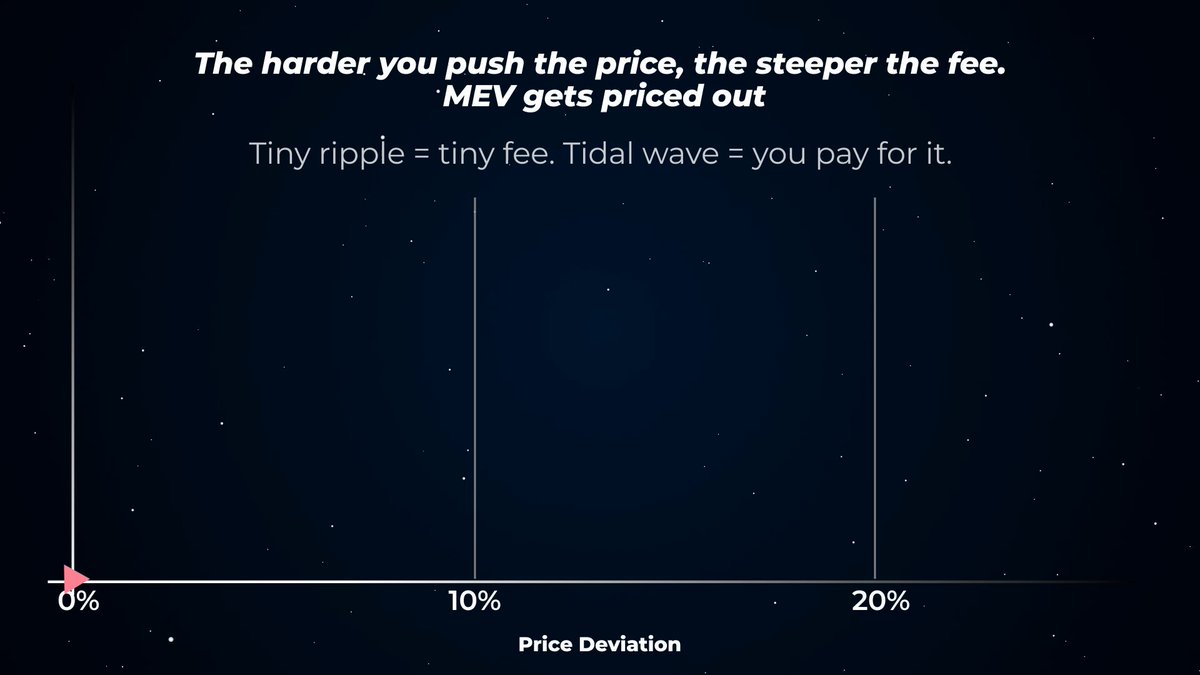
5/ Dynamic fees that price in risk
Normal trades stay cheap. Trades that yank the price pay cubically more:
• price moves ≤10% → base fee
• moves 20% → ~8× the fee
• moves ≥~70% → capped at 99%
Predatory MEV becomes too expensive to bother. No oracle needed.
1
1
541
Jun 12
6/ The big idea 💡
No external oracle no external liquidity = leverage from launch for tokens that choose Likwid Dex through OpenFour.
Something oracle- and order-book-based platforms structurally can't do.
Learn more 👉 [docs.likwid.fi/]
2
436
Jun 11
The Cost of Complexity
Every cycle, DeFi gets more sophisticated.
More layers.
More dependencies.
More moving parts.
But complexity has a cost.
Every external dependency introduces another point of failure.
Every additional layer increases systemic risk.
LIKWID follows a different philosophy:
Reduce dependencies wherever possible.
Use liquidity as the source of truth.
Allow incentives to handle rebalancing.
Design risk management directly into the system.
The most resilient protocols are rarely the most complicated.
They're the ones that eliminate unnecessary assumptions.
2
695
Jun 10
Liquidity Is the Product
Many DeFi protocols treat liquidity as an input.
LIKWID treats liquidity as the product itself.
Everything emerges from it.
Lending.
Borrowing.
Leverage.
Short exposure.
Not because separate systems were connected together.
But because liquidity is the foundation underneath all of them.
This distinction matters.
When liquidity becomes fragmented, capital efficiency falls.
When liquidity becomes unified, entirely new financial behaviors become possible.
The strongest protocols of the next cycle won't necessarily have the most features.
They'll have the best liquidity architecture.
2
4
526
Jun 9
Why Permissionless Markets Matter
Every market starts permissionless.
Then eventually someone decides what can and cannot be traded.
Listings.
Approvals.
Gatekeepers.
The result is predictable:
A small group determines which assets receive liquidity and which don't.
Onchain markets should work differently.
If liquidity exists, the market should be accessible.
That's one of the ideas behind LIKWID.
The protocol doesn't decide which narratives deserve attention.
The market does.
Some assets will succeed.
Some will fail.
But open participation should not depend on centralized approval.
Permissionless finance isn't just about custody.
It's about market access.
6
7
1,076
Jun 8
Interest Rates Are Market Signals
Most people think borrowing rates are just costs.
They're not.
They're information.
In LIKWID, interest rates adjust dynamically based on pool utilization.
When borrowing demand rises:
→ utilization increases
→ borrowing becomes more expensive
→ LP yields increase
This attracts new liquidity.
The system rebalances itself through incentives.
No committee.
No governance vote.
No intervention.
Just market signals doing what they're supposed to do.
Good protocol design isn't about controlling participants.
It's about creating conditions where incentives naturally guide behavior.
3
10
1,578
LIKWID retweeted

Jun 8
Debot x @likwid_fi x @fourdotmemezh DEX Trading Contest is Live!
World's first for MEME leveraged trading — up to 5x.
🏆Top 20 Volume Traders: Split 30,000 USDT
🎁Bonus Draw: Trade > 100 USDT to enter the raffle for 2 iPhone 17 (256GB).
📅Time:Jun 8, 18:00 – Jun 19, 00:00 (UTC 8)
Rules: All swaps and leveraged trades for Likwid DEX tokens via DeBot during the event are eligible.
Join now: debot.ai/likwid

9
13
16
18,020
LIKWID retweeted
Jun 8
Debot x @fourdotmemezh | Fully Supports Openfour Ecosystem Launchpad !
Goplus SkillRoyalty | Goplus Creator Incentives | Likwid Dex | Cubepeg
@GoPlusSecurity @likwid_fi @cubepegfun
New opportunities in the Openfour ecosystem — catch them first on Debot !
debot.ai

13
16
27
14,534
LIKWID retweeted

Jun 8
Introducing OpenFour — Four.Meme is evolving from a single meme launchpad into open, modular infrastructure for token issuance on @BNBCHAIN.
The idea is simple: we don’t build every mechanism ourselves. We let everyone build their own.
The market is evolving. So are we.
2,128
1,678
2,213
413,441
Jun 5
Collateral Shouldn't Sit Idle
One of the strangest things in DeFi is how much capital sits completely idle.
Open a leveraged position.
Your collateral gets locked.
Then it just waits.
Not earning.
Not working.
Not contributing to liquidity.
Billions of dollars across DeFi exist in this state.
LIKWID approaches collateral differently.
Instead of treating collateral as dormant capital, it can participate in the protocol's liquidity system while positions remain open.
This creates a simple but important shift:
Capital efficiency is no longer limited to traders.
Collateral itself becomes productive.
The next generation of DeFi won't be defined by higher leverage.
It will be defined by making every dollar work harder.
4
2
1,608
Jun 3
Most DeFi protocols optimize for features.
LIKWID optimizes for system behavior.
Every mechanism is connected:
→ pool-based pricing
→ shared liquidity
→ dynamic interest rates
→ synthetic debt accounting
→ early liquidation design
→ insurance fund protection
The goal is not simply to build “another leverage protocol.”
The goal is to build a system where leverage becomes:
more efficient,
more permissionless,
and structurally safer.
Without relying on layers of external dependencies.
DeFi becomes powerful when protocols stop imitating traditional financial systems —
and start designing around the native properties of onchain liquidity itself.
That’s the direction we’re building toward.
1
1,330
Jun 2
The Hidden Problem With Most Meme Markets
Most meme markets are structurally one-sided.
People can buy.
Very few can short.
That creates distorted price discovery.
Tokens pump purely because downside access is limited.
LIKWID changes this dynamic.
If liquidity exists, short exposure becomes possible permissionlessly.
No listing committee.
No market maker approval.
No centralized exchange dependency.
This matters because open markets require both directions:
optimism and skepticism.
The ability to short is what turns speculation into actual price discovery.
And when leverage is powered directly by liquidity pools instead of counterparties, markets become dramatically more accessible.
The future of onchain trading isn’t just faster speculation.
It’s permissionless market structure.
1
2
1,025
Jun 1
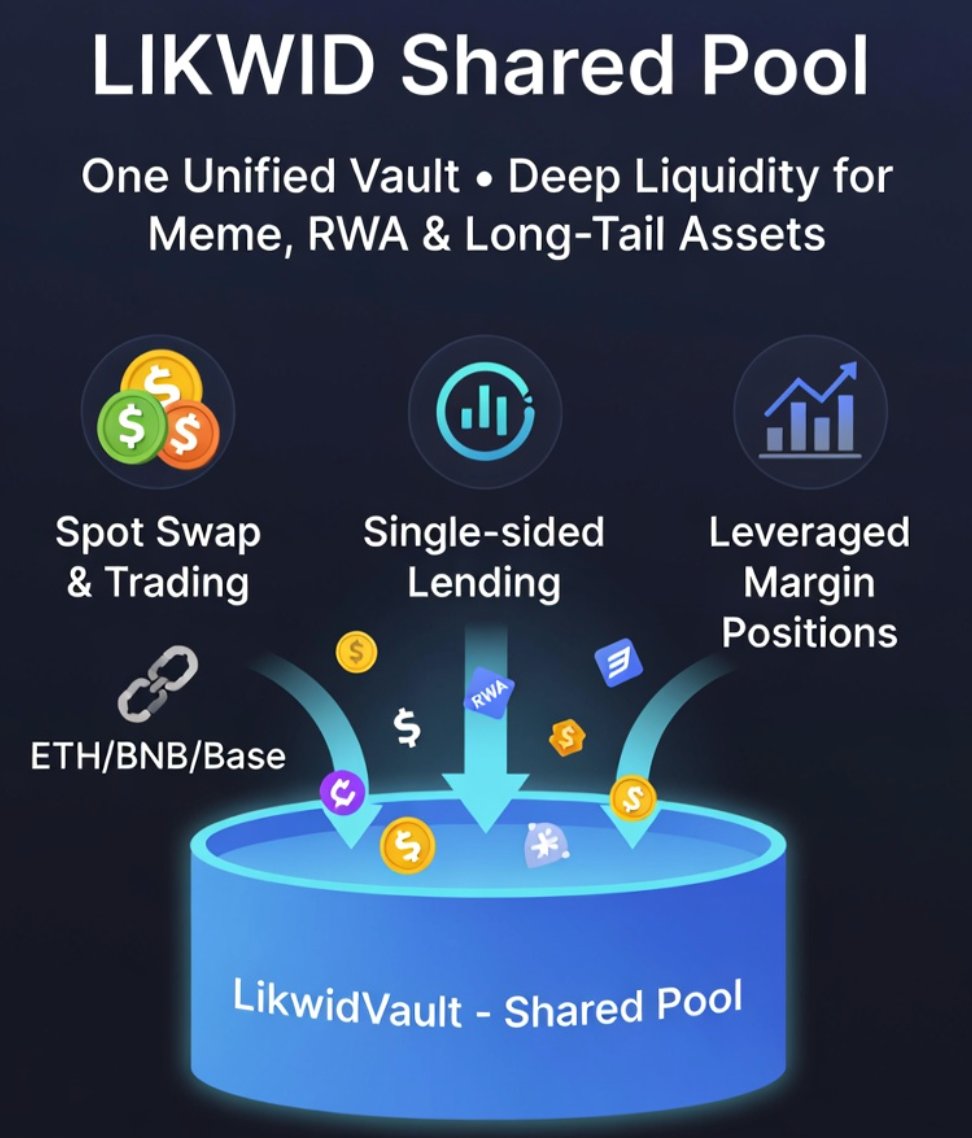
Why Shared Liquidity Changes Everything
Fragmented liquidity is one of DeFi’s biggest inefficiencies.
One pool for lending.
Another for trading.
Another for leverage.
Capital sits isolated while utilization stays low.
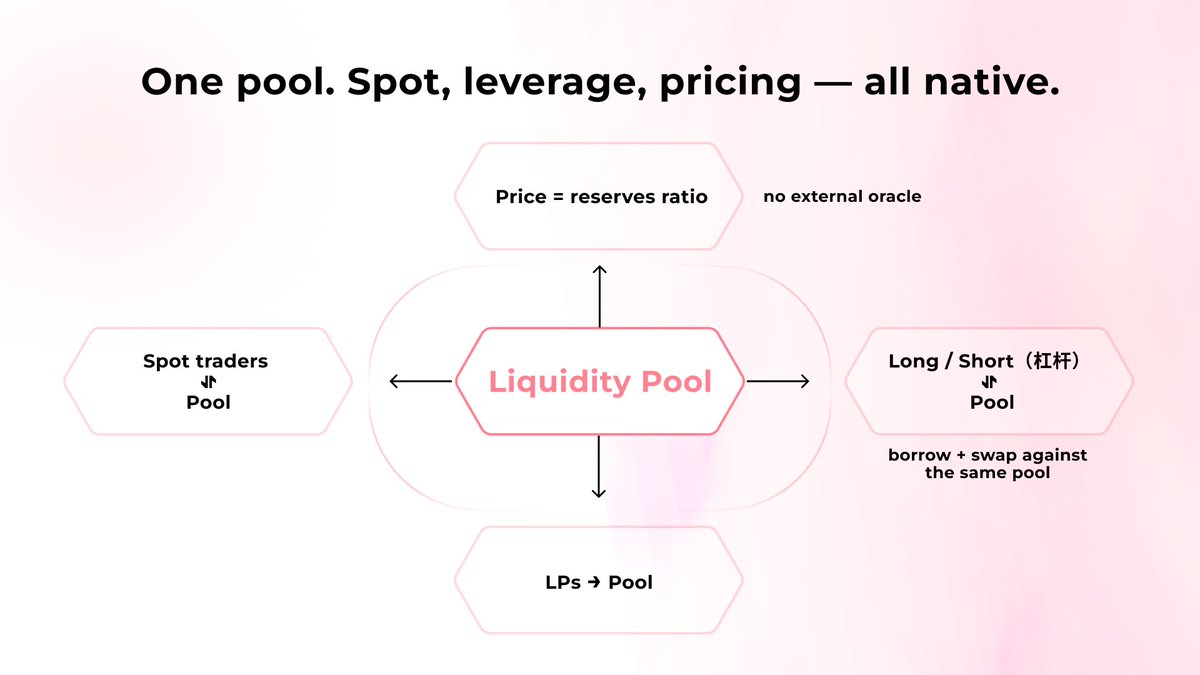
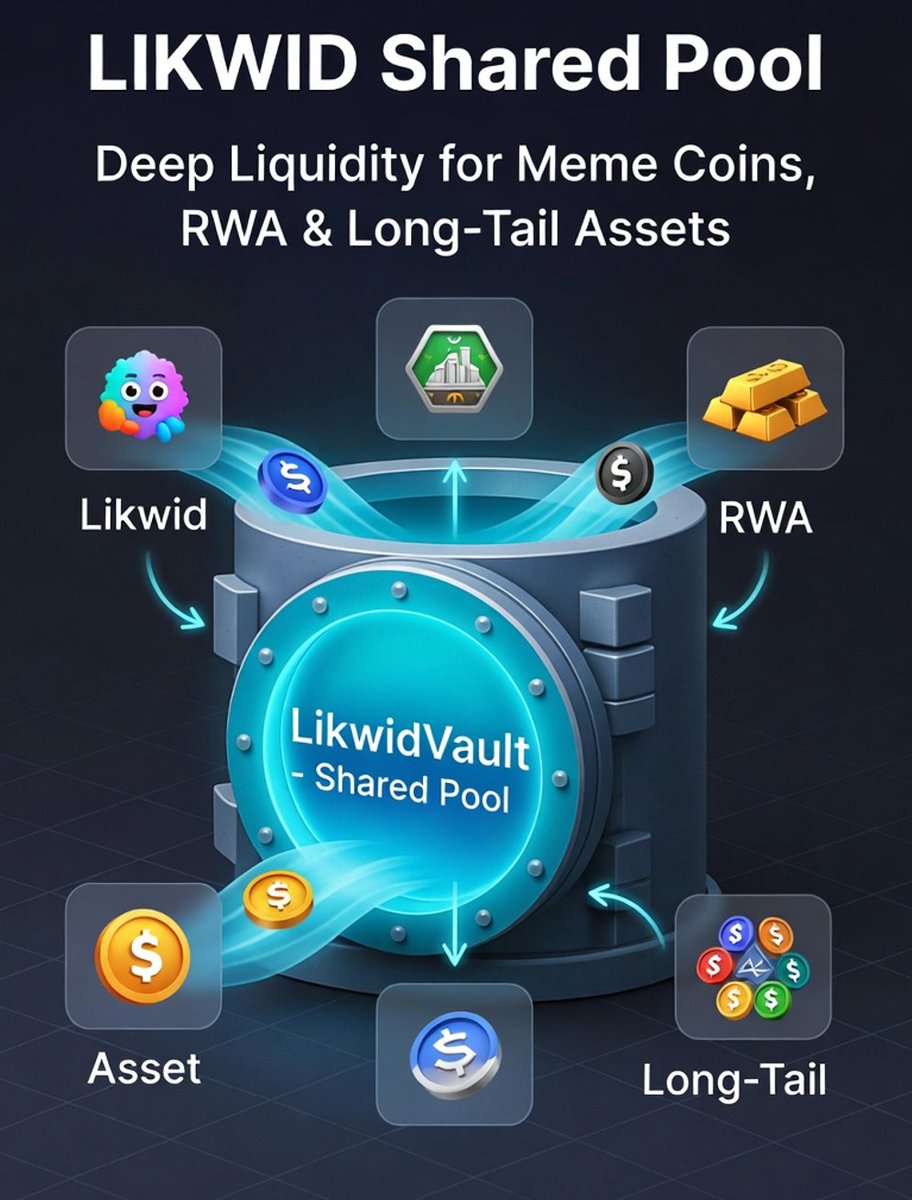
LIKWID combines these systems into shared liquidity infrastructure.
The same liquidity pool supports:
→ leveraged trading
→ direct borrowing
→ short exposure
→ lending yield
This dramatically improves capital efficiency because idle liquidity becomes reusable liquidity.
Even margin collateral itself can enter the lending pool and accrue interest while positions remain open.
That means capital is not just sitting there as “inactive collateral.”
It continues working inside the protocol.
This is where DeFi becomes structurally more efficient than traditional systems.
Not through financial engineering.
Through better liquidity architecture.
3
837
May 29
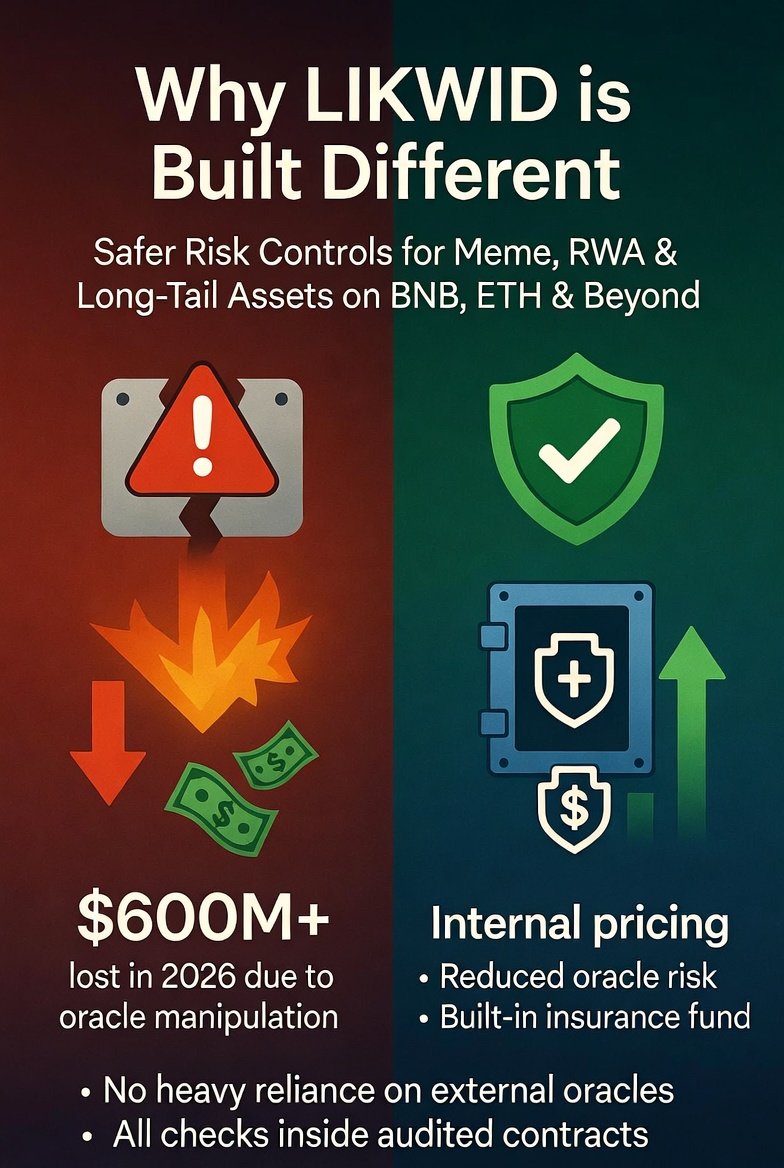
Insurance Fund Deep Dive
Every serious leverage protocol eventually faces the same question:
What happens during extreme market conditions?
That’s the purpose of the Insurance Fund.
In LIKWID, the Insurance Fund exists to absorb unexpected deficits and protect overall protocol solvency during rare edge cases.
But what matters more is how the protocol minimizes the probability of reaching those edge cases.
Risk reduction happens across multiple layers:
→ early liquidation thresholds
→ pool-native pricing
→ dynamic utilization-based interest rates
→ shared liquidity architecture
Most protocols rely on insurance funds because risk accumulates silently inside the system.
LIKWID continuously releases and redistributes risk before it compounds.
The Insurance Fund is still critical.
But structurally reducing bad debt formation is even more important.
Good protocol design isn’t about surviving chaos after it happens.
It’s about reducing the conditions that create chaos in the first place.
3
684
May 28
Liquidation Design Is Everything
Most leverage protocols don’t fail because traders lose money.
They fail because liquidation systems break under volatility.
The real danger is not liquidation itself.
It’s delayed liquidation.
LIKWID uses a 110% liquidation threshold for a reason.
That extra buffer exists to reduce the probability of undercollateralized debt forming during fast market conditions.
Combined with:
→ real-time pool pricing
→ continuous liquidity updates
→ no oracle lag
the protocol can react earlier instead of waiting for insolvency risk to accumulate.
This is an important design philosophy:
The best risk management system is preventative, not reactive.
Insurance funds should be the final layer of defense —
not the first.
2
674