
Founder LivingDevOps | DevOps Lead | Educator | Mentor | Tech Storyteller
Joined February 2023
- Tweets 6,884
- Following 496
- Followers 22,269
- Likes 5,618
578 Photos and videos







Pinned Tweet

Jun 3
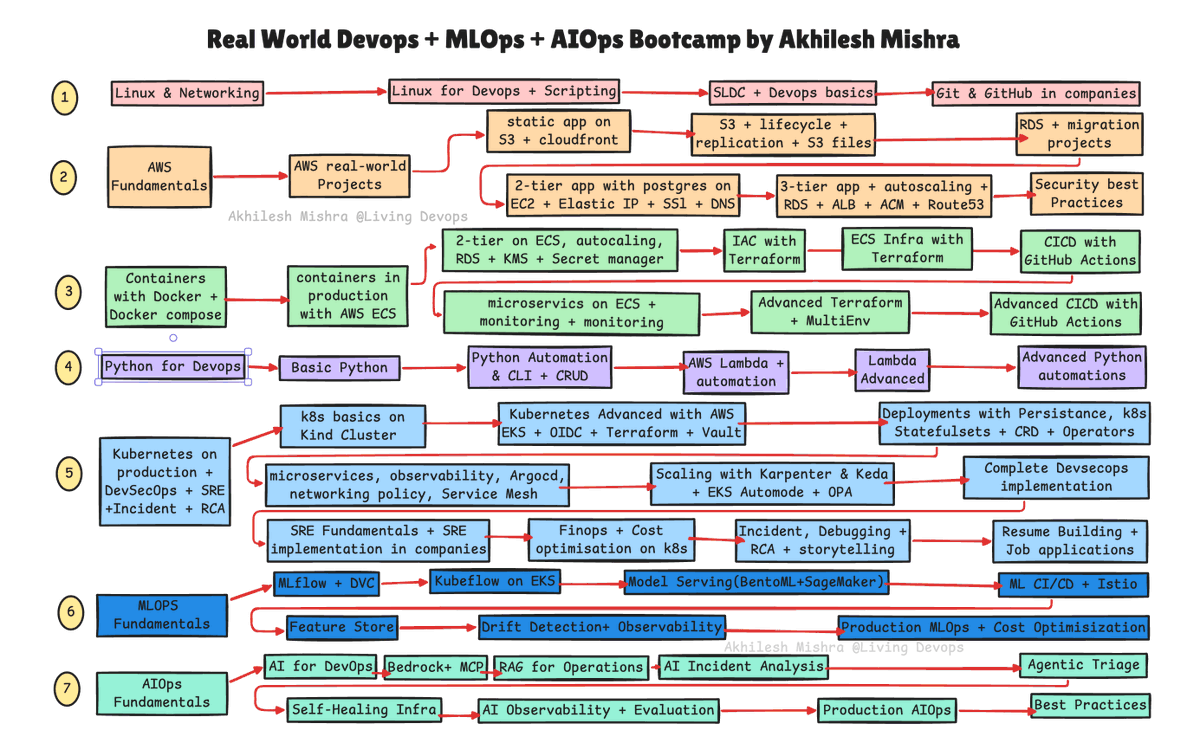
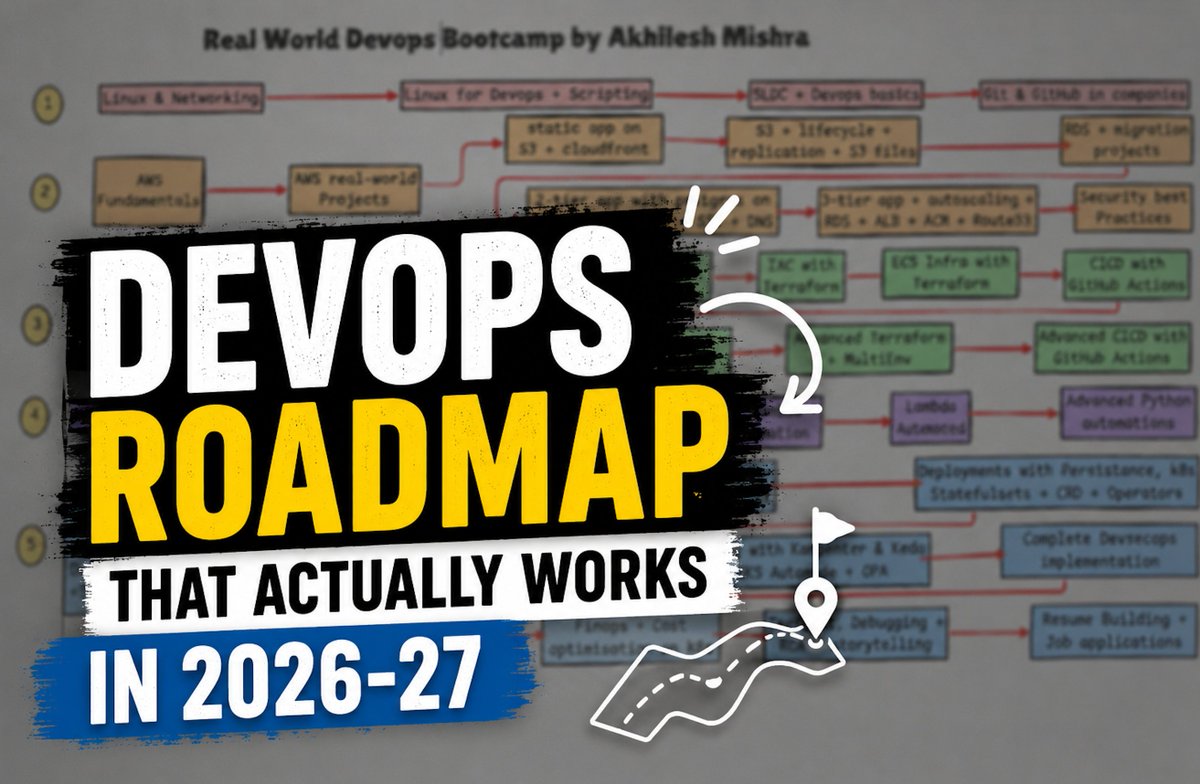
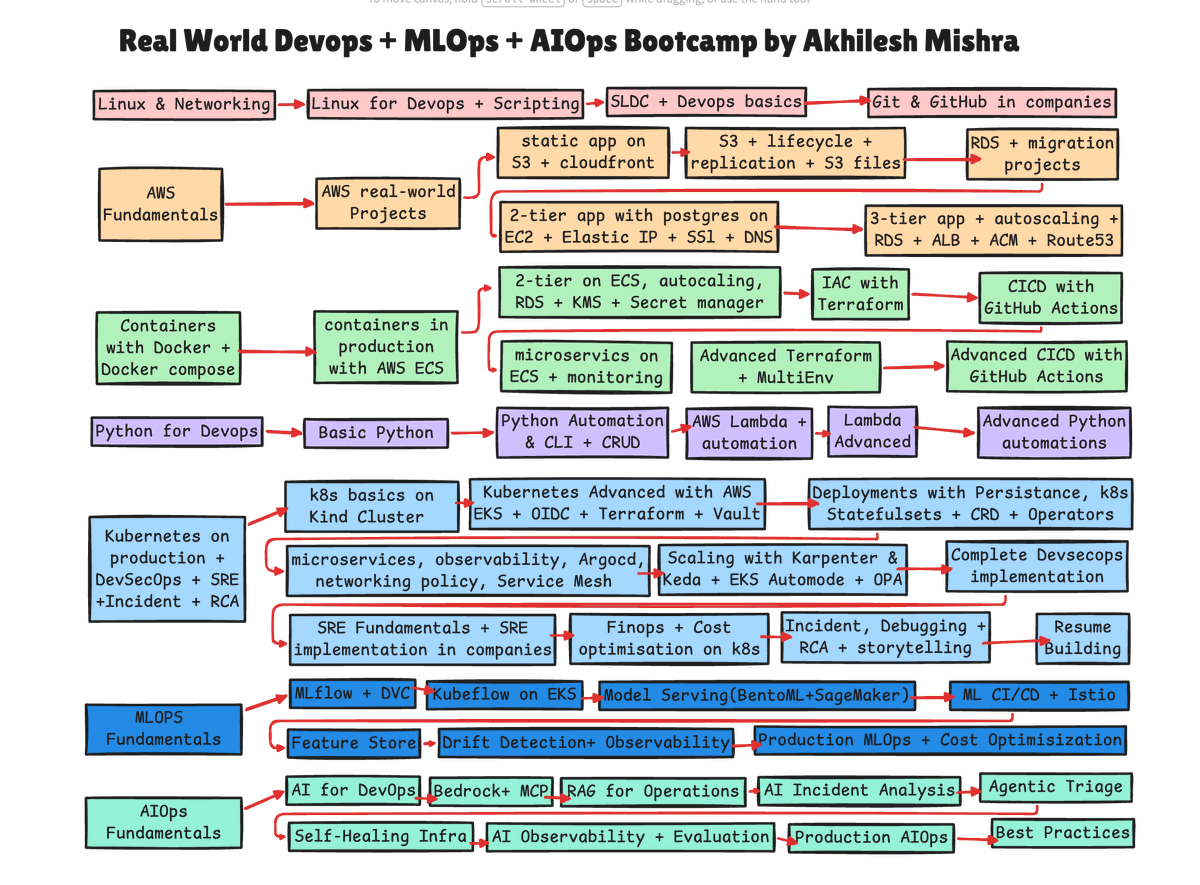
After 14 years in production DevOps and training 400 engineers, I just launched my most advanced bootcamp to date.
28 weeks. 56 live classes. DevOps MLOps AIOps.
Built for experienced engineers who want to move into MLOps and AIOps without faking it on their resume.
Check it out 👇
livingdevops.com/courses/28-…
Launch offer: up to 30% off if you book by 15th June.
14
83
4,409
One of the biggest mistakes engineers make is optimizing cloud costs too early.
They spend weeks trying to save a few dollars while creating months of operational overhead.
In Cloud and DevOps, you're often paying for one thing:
Not having to think about it.
→ EKS Auto Mode instead of managing nodes yourself.
→ Fargate instead of maintaining EC2 fleets.
→ RDS instead of babysitting PostgreSQL.
→ NAT Gateway instead of patching a NAT instance.
→ Managed node groups instead of custom autoscaling logic.
→ ALB instead of running your own load balancer layer.
→ Secrets Manager instead of building homegrown secret management.
Every managed service comes with a premium.
But that premium buys something far more valuable than infrastructure.
It buys engineering time.
It buys fewer operational mistakes.
It buys fewer 2 AM incidents.
Yes, convenience is expensive.
But so is your team's time.
14
832
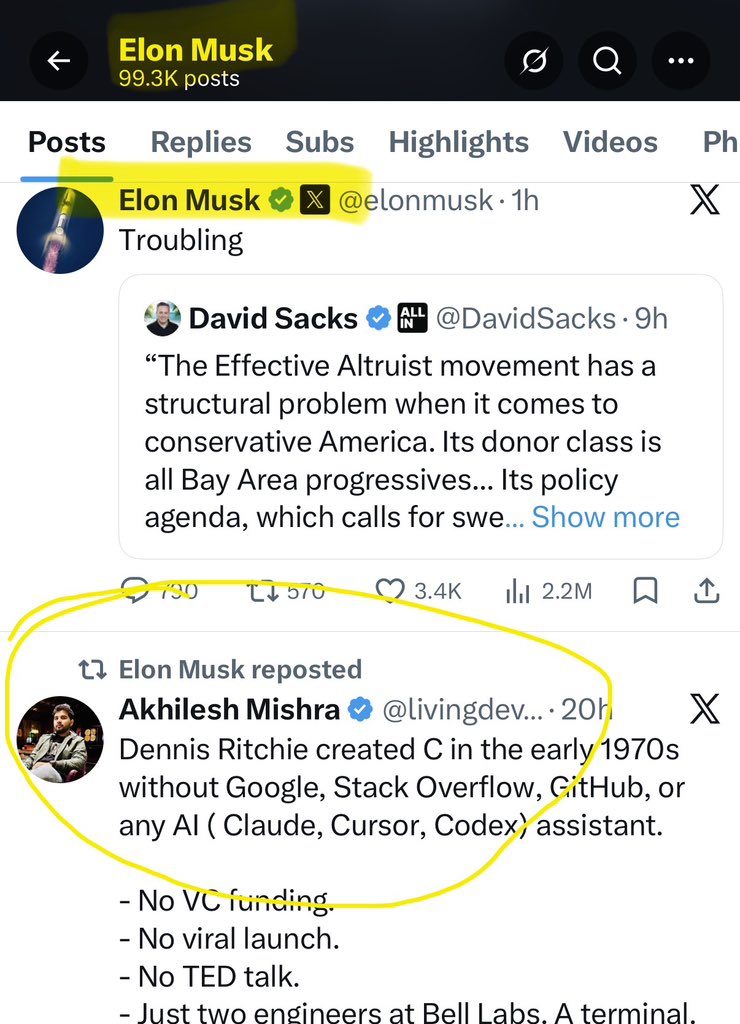
I can say a Trillionaire had reposted my post.

1
5
350
Akhilesh Mishra retweeted
Getting a DevOps job in 2026 is harder than it was two years ago.
Not because there are fewer jobs.
Because interviewers have become much better at spotting people who learned DevOps from courses versus people who have actually operated systems in production.
The engineers getting hired are not the ones with the most certifications.
They are the ones who can troubleshoot.
Why are only 10% of API calls failing?
Is one replica running a bad configuration? Is a memory leak affecting only a single pod? Is a downstream dependency timing out intermittently?
Why did the node scale up but the pod stay Pending?
Is it a taint? A resource request problem? Did Karpenter provision the wrong instance type because the NodePool constraints were too restrictive?
Why did the deployment pass CI and fail in production?
Missing IAM permissions. Environment variables not configured. Database migrations executed in the wrong order.
These are not interview questions.
These are Tuesday morning problems.
Real DevOps work is not deploying applications all day.
It is investigating incidents, understanding failure modes, debugging distributed systems, and making sure the same problem never happens twice.
In 14 years of running production systems, one thing has stayed consistent:
The engineers who get hired fastest are usually the ones who can walk into a conversation about a broken system and contribute immediately.
That ability does not come from collecting certificates.
It comes from building projects, breaking things, fixing them, and understanding why systems behave the way they do.
If you are preparing for DevOps roles in 2026, you need to live the experience of a DevOps engineer
And this is what Living Devops is all about: real Devops engineers teaching production environments.
👉My new cohorts are starting soon; check them out.
P.S. 30% early bird discount till June 15.
Real world Devops K8s SRE DevSecops
livingdevops.com/courses/aws…
Real world Devops K8s SRE DevSecops MLOps AIOps
livingdevops.com/courses/28-…
1
6
44
2,001
Akhilesh Mishra retweeted
Jun 11
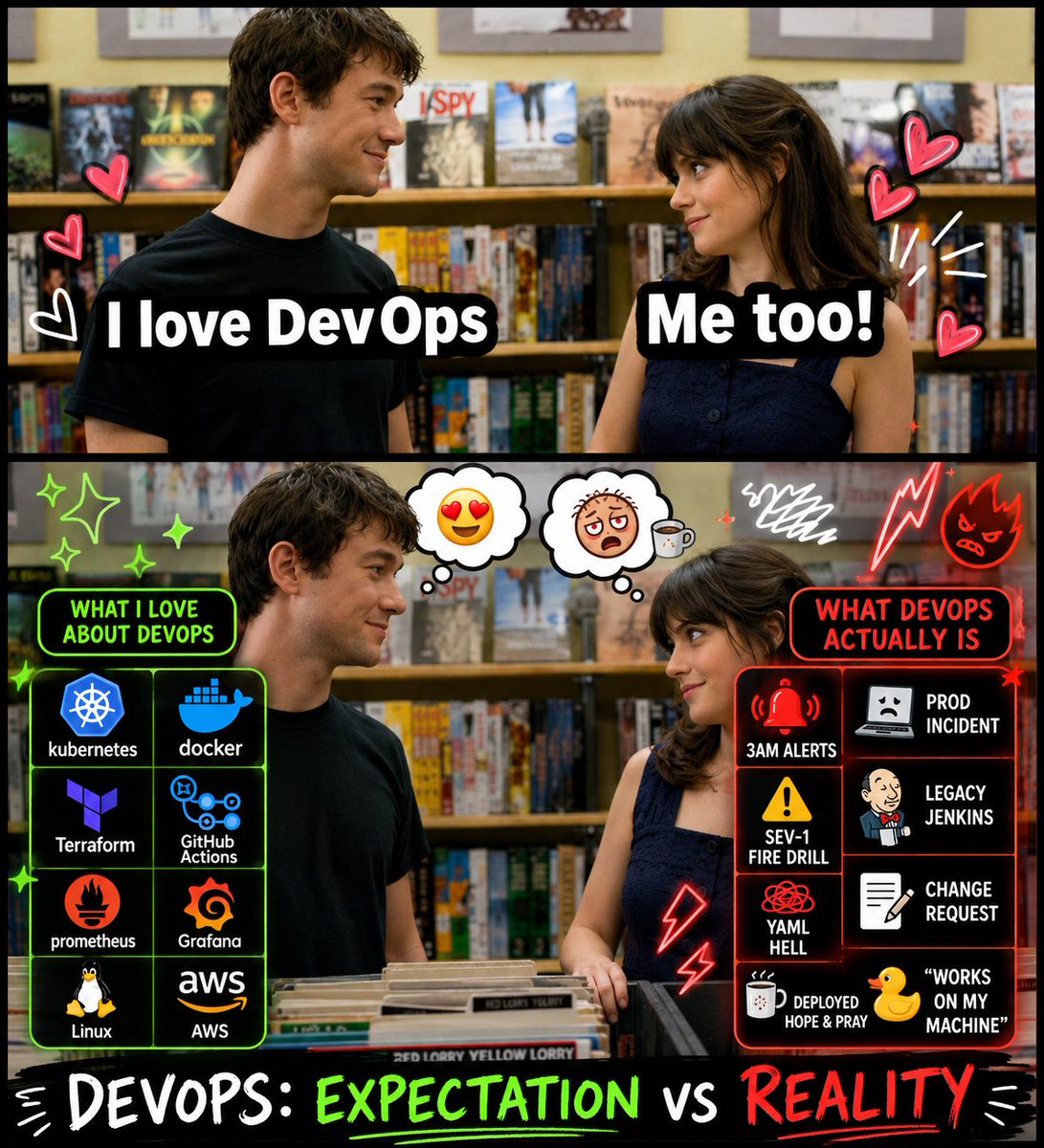
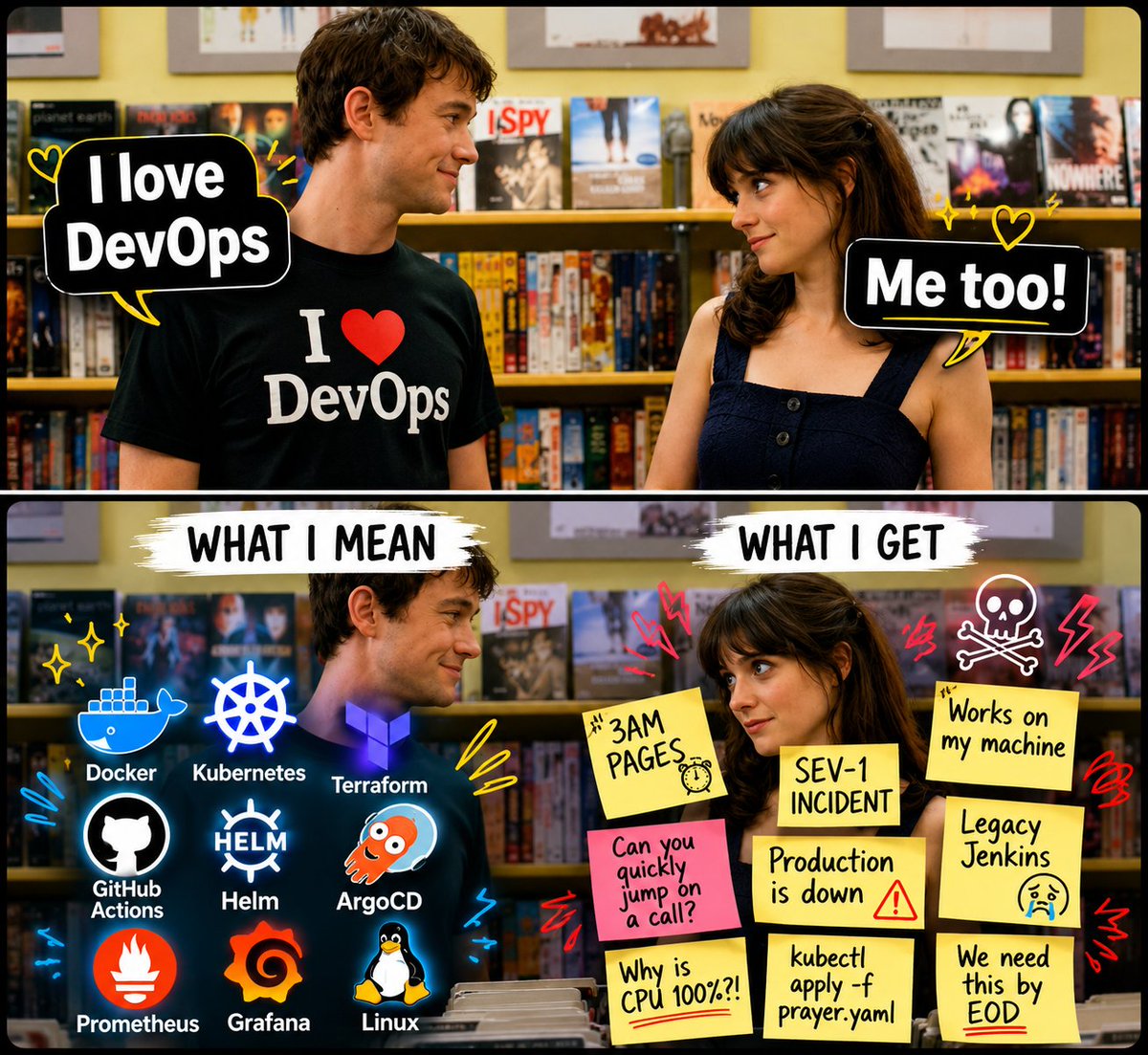
What people think DevOps engineering is in 2026:
➜ AI writes all your Terraform, pipelines run themselves
➜ One prompt and the entire infrastructure is deployed
➜ Kubernetes self-heals everything automatically
➜ GitOps means you never touch production manually again
➜ Agentic AI handles incidents before you even wake up
➜ Sipping coffee while the AI handles the on-call rotation
What it actually is:
➜ Debugging why the AI generated Terraform plan is destroying prod resources
➜ Explaining to the AI agent why rebooting everything is not a valid remediation step
➜ Arguing with developers who think “just ask Claude to fix it” is a deployment strategy
➜ Staring at a Kubernetes OOMKilled error the AI confidently told you was already resolved
➜ Waking up at 3am because the self-healing system healed itself into a completely broken state
➜ Figuring out which AI suggested config change took the whole cluster down
➜ Wondering why the pipeline works perfectly in staging and silently fails in production. Still. In 2026.
➜ Explaining that no, giving the AI agent admin access to production is not a good idea
➜ Reading AI generated runbooks that are confidently wrong in three different ways
➜ Doing the actual thinking the AI cannot do. Every single day.
The tools changed. The chaos did not.
4
8
66
4,024
Akhilesh Mishra retweeted
Jun 13
Linux-inspired Docker
Linux-inspired Kubernetes (Borg existed because of Linux).
Kubernetes heavily shaped modern platform engineering.
Yet many “cloud-native” engineers still treat Linux like an afterthought.
That’s like trying to become a Formula 1 driver without understanding engines, gearboxes, or aerodynamics.
Because underneath all the shiny tooling, everything still runs on Linux.
> > Containers = namespaces cgroups seccomp capabilities
> > Kubernetes = a scheduler for Linux workloads
> > Most production nodes = Linux
> > Networking, storage, security, observability = Linux primitives
And when production breaks at 3 AM, you usually are not debugging Helm charts.
You are debugging:
> > cgroup v2 memory pressure
> > mount propagation issues
> > nftables or eBPF rules
> > systemd slice limits
> > seccomp or AppArmor denials
The engineers who reach Staff and Principal levels usually have one thing in common:
They are extremely comfortable on a raw Linux machine.
Not because Linux is trendy.
Because the entire cloud-native stack is built on top of it.
Skip the fundamentals and Kubernetes feels like magic.
Master Linux and the whole stack becomes understandable.
3
5
31
2,016
Jun 13
This is just the start.
US government will soon be applying big sanctions on AI use as well if some country will not bend infront of it’s all wishes.
This is why Building your own LLM should be the top priority of every countries leadership.
Sadly it’s not Modi Ji’s top priority.
Jun 13

The US government, citing national security authorities, has issued an export control directive to suspend all access to Fable 5 and Mythos 5 by any foreign national, whether inside or outside the United States, including foreign national Anthropic employees.
The net effect of this order is that we must abruptly disable Fable 5 and Mythos 5 for all our customers to ensure compliance.
Access to all other Claude models is not affected.
We apologize for this disruption to our customers. We believe this is a misunderstanding and are working to restore access as soon as possible.
Read our full statement: anthropic.com/news/fable-myt…
5
2
25
3,346
Jun 12
Dehradun has to be one of the prettiest place in India.
Spent 3 days driving around the city, visiting hangouts places and it felt like heaven
4
3
27
1,254
Akhilesh Mishra retweeted
Jun 11
Most people start learning Kubernetes the wrong way.
They see Kubernetes as a list of concepts. Pods. Deployments. Services. Ingress. They memorize them without understanding why they exist.
>> You start with a Pod.
- A pod runs your container. Simple. Clean. Done.
- Until it crashes.
- Nobody restarts it. It is just gone.
In production, that is not acceptable.
>> So you use a Deployment.
- A Deployment watches your pods.
- One dies, and it creates another.
- You want 3 running, it keeps 3 running.
- You want to scale to 10; one command does it.
Pods were too fragile for production.
Deployments fixed that.
>> But now you have a new problem.
- Every pod gets a new IP when it restarts.
- You have 3 pods running your app.
- Another service needs to talk to them.
- Which IP do you use? They keep changing.
- You cannot hardcode them.
- You cannot track them at scale.
>> So you use a Service.
- A Service gives your app one stable IP address.
- It finds your pods using labels, not IPs.
- Pods die and come back with new IPs.
- The Service does not care.
- It always finds them.
- It also load balances.
- Traffic coming in gets distributed across all healthy pods automatically.
Pods had unstable IPs. Services fixed that.
>> But your app still needs to be accessible from the internet.
- So you use a LoadBalancer Service.
- This creates a real cloud load balancer.
- AWS ALB. Azure LB. GCP LB.
- Your app gets a public endpoint.
- Works perfectly. Until you have 10 services.
- Now you have 10 load balancers.
- Each one costs money every single month.
- Your cloud bill does not care that 6 of them handle almost no traffic.
LoadBalancer Services solved external access. But one per service does not scale.
>> So you use Ingress.
- One load balancer. All your services behind it.
- Ingress routes traffic based on rules.
- Request comes in for /api, goes to the API service.
- Request comes in for /dashboard, goes to the frontend service.
-One entry point. Smart routing. One cloud load balancer on your bill.
But Ingress is just a set of rules. Something has to execute those rules.
>> So you use an Ingress Controller.
- Nginx. Traefik. AWS Load Balancer Controller.
- These are the actual engines that read your Ingress rules and make the routing happen.
- Ingress without a controller is just a config file nobody reads.
To summarize it:
> Pod ran your app but had no resilience.
> Deployment gave it resilience.
> Service gave it a stable address and load balancing.
> LoadBalancer Service gave it external access.
> Ingress replaced 10 load balancers with one.
> Ingress Controller made the rules actually work.
Each concept exists because the previous one was not enough.
7
10
63
3,562
Akhilesh Mishra retweeted
Jun 11
Inspite of being expensive and traffic hell, Bangalore is still the best place to live for a software engineers.
No other place can match Bangalore’s vibe.
Only the folks who never lived in Bangalore will think otherwise.

Which city is best to live for IT professionals in india and why ?

7
5
26
4,088
Akhilesh Mishra retweeted
Jun 11
If you are in Devops or planning to get into Devops, start learning Python or Go if you haven’t already started.
Just do it.
10
3
80
8,514
Jun 11
Inspite of being expensive and traffic hell, Bangalore is still the best place to live for a software engineers.
No other place can match Bangalore’s vibe.
Only the folks who never lived in Bangalore will think otherwise.
Which city is best to live for IT professionals in india and why ?
7
5
26
4,088
Jun 11
You think you can survive in DevOps without any programming skills.
You are dead wrong.
Just spend 10 minutes looking at DevOps job postings.
Almost every role asks for some level of programming experience.
Python. Go. Bash. APIs. Automation.
There is a reason for that.
Modern DevOps is no longer about configuring tools and writing a few scripts.
It is about solving problems.
When a deployment fails, a service starts timing out, or an automation breaks in production, nobody cares whether ChatGPT wrote the code.
You are the one expected to understand it.
AI can generate code.
It cannot understand your infrastructure, your architecture, or why your system behaves differently at scale.
Without programming skills:
• You cannot confidently verify AI-generated code.
• You cannot debug complex issues.
• You cannot automate beyond the basics.
• You cannot build solutions that scale.
The biggest shift is not learning a programming language.
> It’s learning how to think.
> How to break a problem into smaller pieces.
> How to follow logic.
> How to turn a manual process into automation.
That’s programming.
You don’t need to become a software engineer.
But you do need to think like one.
Because the DevOps engineer who cannot code is slowly becoming what the system administrator who couldn’t automate became a decade ago.
Jun 11
If you are in Devops or planning to get into Devops, start learning Python or Go if you haven’t already started.
Just do it.
2
2
29
2,597