The execution with no blood.
On this day in 1287, the most powerful man on earth crushed a rebellion raised by his own blood relative, then had him killed in a way carefully designed so that not one drop of royal blood would ever touch the ground.
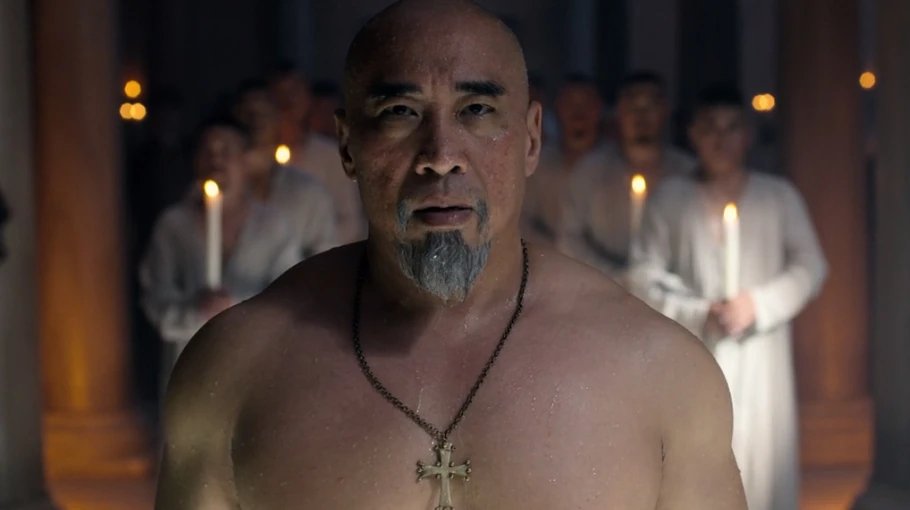
The emperor was Kublai Khan, ruler of an empire that ran from the shores of the Pacific almost to the edge of Europe. The rebel was Nayan, a prince descended from the brothers of Genghis Khan himself, a man with deep lands and tens of thousands of horsemen in the east. Nayan raised the northeastern Mongol homelands in open revolt, plotting to link up with another rebel khan and tear Kublai's empire in two. And to make the defiance even sharper, Nayan was a Christian, and he rode to war beneath a banner sewn with the cross.
Kublai did not delegate this one. Old, gout-ridden, and so heavy he could barely sit a horse, he came in person anyway. According to Marco Polo, who claimed to have heard the tale at the Khan's own court, Kublai went into battle perched in a great wooden tower lashed to the backs of four war elephants, his imperial standard rising high above the host so that every soldier on the field could see that the Khan of Khans himself had come to settle the matter. His army crashed forward to the thunder of huge kettledrums, and Nayan's lines broke.
The rebel prince was taken alive, and that handed Kublai a delicate problem rooted in sacred Mongol law. The blood of a Borjigin, a member of Genghis Khan's holy lineage, was forbidden to be spilled upon the open earth. To shed it was an offense against heaven itself.
So they found another way. Nayan was rolled tightly inside heavy carpets and felt blankets, bound so he could not move, and then shaken, beaten, and crushed until the life was gone out of him. No blade was drawn, no blood was spilled, no stain was left on the ground. It was an execution reserved for royalty, a grim mark of respect that was somehow more chilling than any beheading.
Marco Polo adds one last detail. After the victory, Kublai's many non-Christian subjects mocked the cross that Nayan had carried into a losing war. But the Khan, ever the careful ruler of a thousand faiths, is said to have defended it, telling them the cross had not failed Nayan, Nayan had failed the cross, because his cause was treachery and a just God does not aid a traitor.
The man who dared to challenge the Khan died bundled in a rug, and the vast empire of Kublai Khan simply rolled on without him.