
Assistant Professor in International Economic Law @LSELaw. Member @TaPP_network. Editorial board @trade_review; @monapaulsen BlueSky; she/her. 🇨🇦
Joined March 2011
- Tweets 28,774
- Following 2,372
- Followers 10,774
- Likes 17,347
1,178 Photos and videos





Pinned Tweet

23 Oct 2022
Collating my work on trade security to pin this on Twitter. Check out the readings below! Thanks so much.
8
22
99
Jun 12
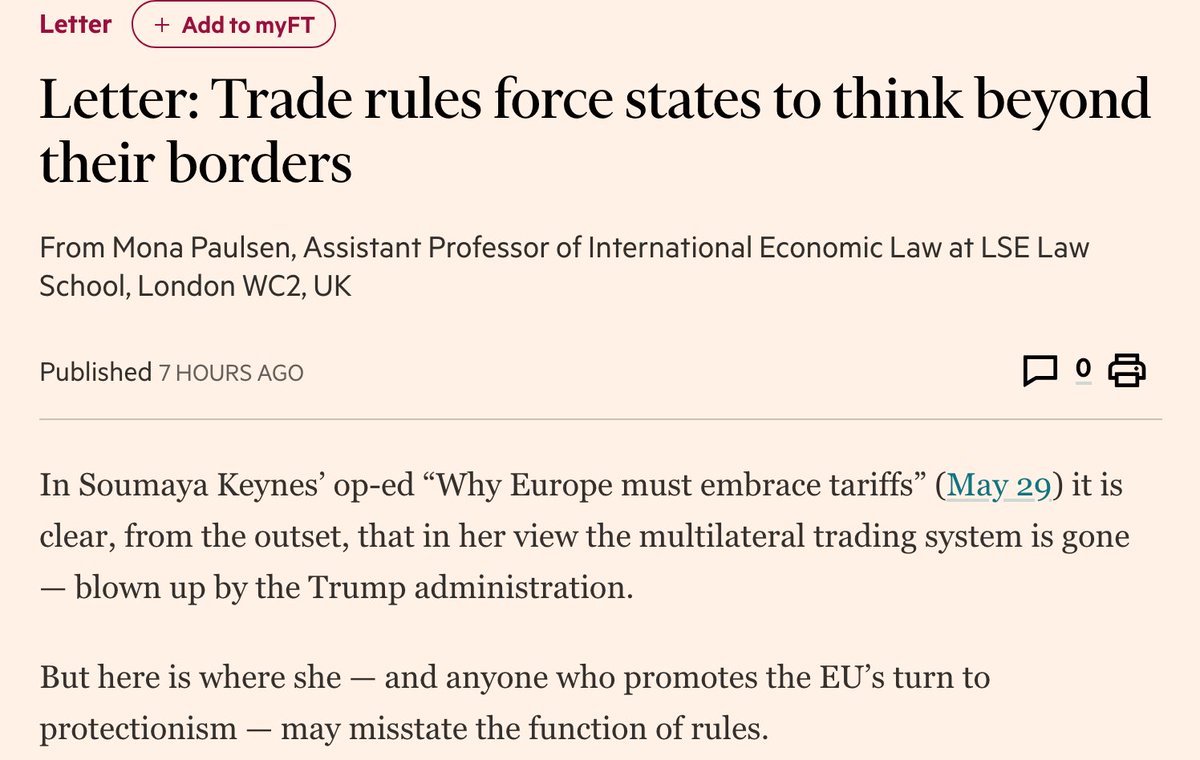
Sharing my letter, published @FT in response to the ever-generous @SoumayaKeynes (go read her new book!) op-ed last week on why Europe needs tariffs.
My bottom line: Why and how go hand in hand. Tariffs are not credible commitments, but rules are.ft.com/content/2e26c449-7479…
2
6
15
1,142
May 30
ICYMI, I took a chance to reply to advocacy for EU tariffs that explicitly justify their policy proposals on the view trade rules won’t save the EU. Saving the EU is more complicated than raising tariffs but the rules don’t block they open consultations. open.substack.com/pub/monapa…
4
233
May 28
New from me:
A reply to Keynes: Let's clear up what rules can do. open.substack.com/pub/monapa…
2
2
7
316
May 27
Fluctuating international BoP crises, you say?

Greer defends Trump’s tariff regime, hints at possible Section 122 reboot ow.ly/G1e7106yYUT
2
373
May 25
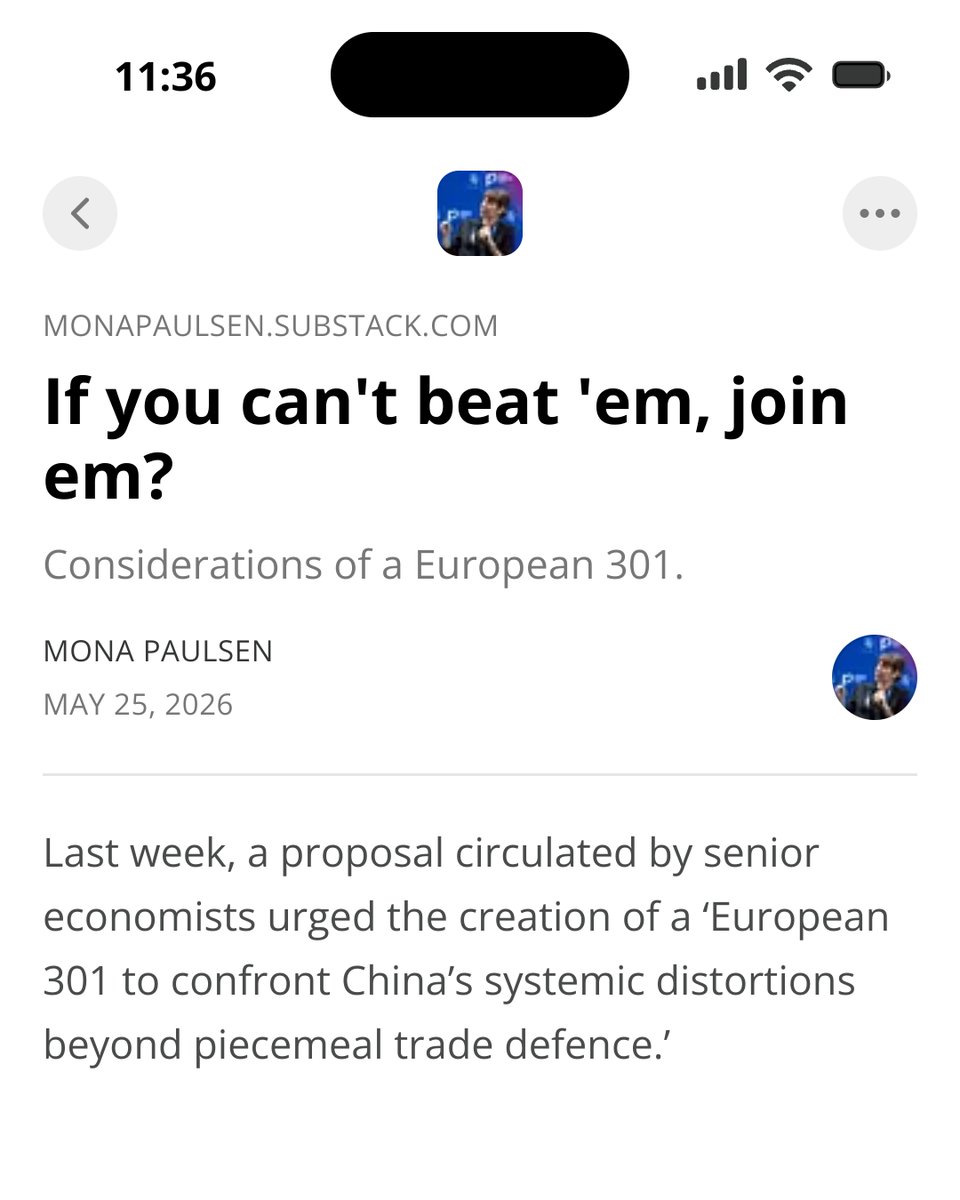
If you can't beat 'em, join 'em?
Considerations of a European 301.
substack.com/home/post/p-199…
1
8
210
May 24
Amidst calls for the EU to invent new, unilateral forms of trade defence, I keep thinking about Alan Beattie's sharp FT essay this week on political will. In a nutshell, the EU already has smart, technocratic means it could use, not to mention multilateral paths for joint action.
1
2
8
1,770
May 24
In a world of MNCs this would seem to take us back to global considerations where partners matter -- and where trade defences work if coordinated. But not all governments are going to agree on the HOW protections happen or the WHO they protect.
2
129
May 24
Long been concerned of weaponry as a metaphor that exacerbates problems. What is the threshold distinguishing restrictions to advance economic growth? Is it intent to destroy others economy? Is it monopolisation? An intent to destroy; and end to yours for the success of mine.
2
1
7
337
May 24
This isn’t to subtweet anyone. I just wish we were far more careful about the grammar of war. Not to gloss over aggression but to better study it and dissect historical examples properly and situate the power (or lack) of non state actors in these dynamics.
142
May 24
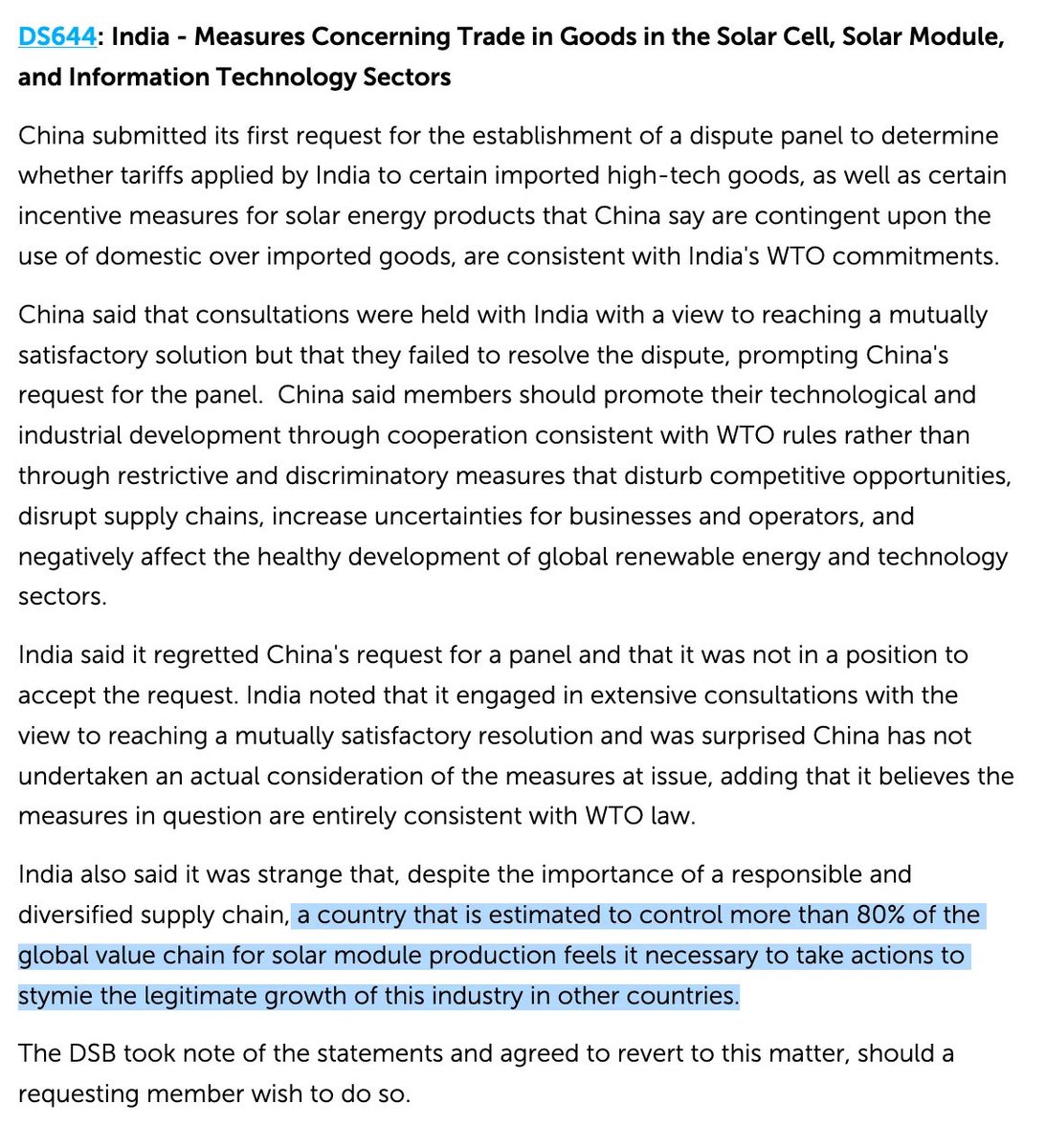
WTO news: In 1 sentence, we know that India will likely have a chance to revisit its defences in the India-Solar Cells and Solar Modules dispute, concerning India's need to develop domestic resilience measures to improve India's domestic capacity for solar cells and modules.
2
4
10
503
May 24
I can foresee China's counterargument: protectionism undermines the benefits of renewables as a global public good. So it will be a fascinating dispute to follow if it makes its way through.
1
1
2
121
May 24
Ultimately, this invites Members to consider the scope of "healthy" development, such as in the event of monopolisation of supply. How could questions of anti-competitiveness give shape? What happens if resilience and economic security clash?
2
76