See larrysanger.org. Purveyor of obvious truths, ex-founder of Wikipedia. Now president, @ks_found. Buy 69,020 books on a thumb drive! 🇺🇸✞ ACNA
Joined March 2008
- Tweets 85,146
- Following 1,250
- Followers 90,787
- Likes 42,888
3,623 Photos and videos










Pinned Tweet

Jun 5
This has never happened on Wikipedia before.
Nearly 1000 Wikipedia editors have joined in solidarity with a union.
Yes, really.
They're threatening to strike: 961 accounts have signed a protest petition. It's fascinating and potentially historic. 👇
33
49
434
47,515
20h
The fact that the U.S. government blocked the general public rollout of allegedly super-smart Claude Fable 5 suggests that the U.S. government regards high intelligence to be a significant security threat. 🤔
17
2
51
3,847
20h
There's intelligence and then there's intelligence. A model that is dramatically better at software migrations and security system cracking is not necessarily better at unpacking Aristotle's *Physics* Book VIII.
3
16
1,044
20h
But what this means is that, basically, the plebs won't have access to the technically smartest machines, and the anointed will.
A new part of our world.
3
1
15
747
20h
I know and care nothing about soccer, but the fact that this guy scored the goal by kicking the ball with deliberately crossed legs (so as to stay balanced) is very impressive. Practice!

9
3
23
2,903
Larry Sanger retweeted

Jun 13
Thanks to socialism, the average Zimbabwean became a trillionaire before @elonmusk 💪

370
3,307
20,382
329,431
Larry Sanger retweeted

Co-founder of @Wikipedia, @lsanger agrees that bias exists on the platform in an exclusive discussion on HAF’s Wikipedia page vandalism on @ndtv.
Jun 13

Is Wikipedia biased against Hindus and India?
Is left-liberal ecosystem on Wikipedia targeting India and Hindus for their own propaganda and narrative?
Exclusive conversation on @NDTV with Co-Founder of Wikipedia Larry Sanger who agrees that bias exists.
3
173
644
13,097
23h
Shots fired!

Don’t want it.
Either stop this creepy spyware or all Apple devices will be banned from the premises of my companies.
5
31
5,670
Jun 12
We now have 20 members, and next week we will apply for official recognition in Wikipedia as a WikiProject.
Last year, I said that we who have been left out in the cold by the Wikipedia community should get back involved—we might make a difference.
I stand by that.
May 6

Announcing WikiProject Intellectual Diversity.
It's an internal group for the rest of us—all the people marginalized by Wikipedia's current editorial leadership.
Join now. With just ten established Wikipedians, we'll be eligible to be an official WikiProject. 🧵

3
4
31
2,141
Jun 12
The question is: Were the books of the Apocrypha accepted in Orthodoxy and Catholicism *before* the Protestant Reformation? The answer is: There was serious controversy in both traditions.
So what I meant was that before Luther stated that the Apocrypha was not Scripture per se (although he also said that it is very good to read, and he put the Catholic Apocrypha in a section between the OT and NT)—*before* all that, it was quite normal for Church leaders and theologians in Catholicism to *dispute* about the status of the Apocrypha. The best example of this is the author of the Vulgate, Jerome. Claude informs me about other skeptics of the Apocrypha from the Western Church, including Latin father Hilary of Poitiers, Rufinus of Aquileia, Pope Gregory the Great (!), Bede (!), Nicholas of Lyra, and Cardinal Cajetan—in 1532! The standard medieval biblical commentary used in universities, the Glossa Ordinaria, followed Jerome's classification. This was *not* a fringe position.
FWIW—I also had to ask Claude about the Orthodox tradition. Here the position of "do respect but do not canonize" is endorsed by these:
Athanasius of Alexandria (39th Festal Letter, 367) is probably your strongest single example. He lists the OT canon following the Hebrew books, then says Wisdom, Sirach, Esther (additions), Judith, and Tobit are "not indeed included in the Canon, but appointed by the Fathers to be read." That's almost exactly Luther's later position, from the man who championed Nicene orthodoxy.
Cyril of Jerusalem (Catechetical Lectures 4.35, c. 350) instructs catechumens to read "the twenty-two books of the Old Testament"—the Hebrew numbering—and says explicitly, "Read none of those that are not read in the churches."
Gregory of Nazianzus composed a poetic catalogue of Scripture (Carmen 1.1.12) that excludes the deuterocanonicals entirely.
Amphilochius of Iconium (Iambics for Seleucus) does the same, and even notes that some dispute Esther—showing how live the canon question was.
John of Damascus (8th century, Exact Exposition 4.17) lists the OT following the Hebrew canon, mentioning Wisdom and Sirach as "admirable" but outside the numbered canon.
Origen and Melito of Sardis (c. 170) both give early canon lists that essentially follow the Hebrew books, Melito's being one of the earliest we have—he traveled to Palestine specifically to settle the question.
Thus saith Claude.
But back to Luther. He took a definite stand because he was committed, on principle, to reclaiming the original Christianity from the various ways in which it had, even by 1517, been twisted by Catholicism. Thus he was committed to Sola Scriptura; but this then raises the question, "What is Scripture?" So he took a stand on that question of the status of the Apocrypha. The Catholics DID NOT similarly take a stand on the question until the Council of Trent.
Similarly, I am informed (again by Claude) that Orthodoxy settled the matter in 1672 by the Synod of Jerusalem, in direct response to the Protestant reformers. There is still variation, however. "The Russian tradition under Philaret of Moscow (1839 catechism) distinguished canonical from non-canonical books in a way that echoes the older patristic pattern."

I didn't understand your reply. Please elaborate.
15
1
25
3,556
Jun 12
Wikipedia's bias is global.

🔴 LIVE | Watch #NDTVExclusive with Wikipedia co-founder @lsanger
@AdityaRajKaul
x.com/i/broadcasts/1RKZzzrew…
1
23
77
9,586
Jun 11
It isn’t often that a philosopher gets a philosophically important case before even a state Supreme Court. Check it out!
Jun 11

My case before the Arizona Supreme Court is an employment issue for all state employees.
“State law is very clear that a public university in Arizona can’t require its employees to undergo discriminatory training, yet ASU was requiring just that,” Riches said. @AZCourts @CivilRights @HarmeetKDhillon @EDSecMcMahon @ASU
thecentersquare.com/arizona/…
2
17
1,719
Larry Sanger retweeted

Jun 10
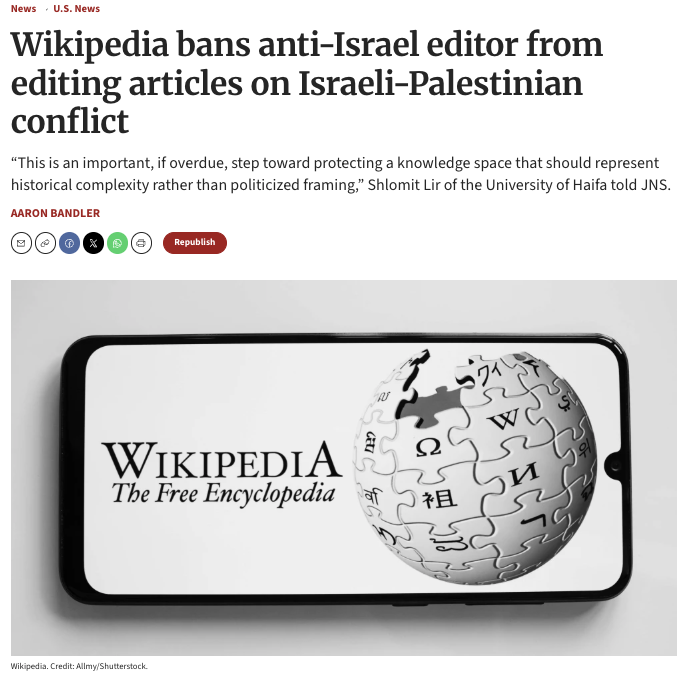
By me in @JNS_org: 🧵
An anti-Israel Wikipedia editor was indefinitely banned on May 25 from editing articles related to the Israeli-Palestinian conflict.
The editor, known as “TarnishedPath,” has made more than 54,000 edits on the site and was sanctioned through Wikipedia’s Arbitration Enforcement process, in which administrators enforce rulings issued by the site’s Arbitration Committee, Wikipedia’s highest dispute-resolution body in contentious topic areas.
19
79
254
15,479
Jun 11
What are the most horrifying modern practices (that you believe to exist) that will eventually go down in history as truly horrific, though we may not admit that they exist or that they are actually so bad?
503
3
94
50,809
Jun 11
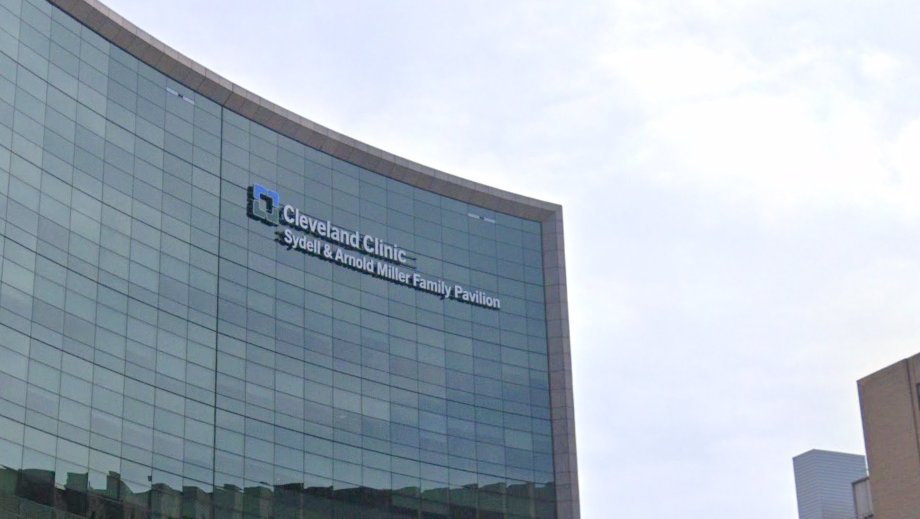
The Cleveland Clinic is finally ending "youth transgender care." Imagine seeing this in 2019.
You who pushed youth gender surgery have blood on your hands.
You are our generation's age-of-consent reformers, our lobotomizers, our eugenicists, our fashionable fascists.
Jun 11

The Cleveland Clinic has agreed to end youth transgender care and has committed millions of dollars for detransition care.
4
15
117
3,762
Jun 11
Every generation has at least one shocking "progressive" practice that the next generation looks upon with horror.
The early 20th century had fascism.
The 1920s had eugenics.
The 1950s had lobotomizing.
The 1970s had age-of-consent reform.
The 2000s had mass prescription of psychotropic drugs to kids.
And the 2010s had child medical transitioning.
What will be next...?
9
2
49
1,676
Jun 11
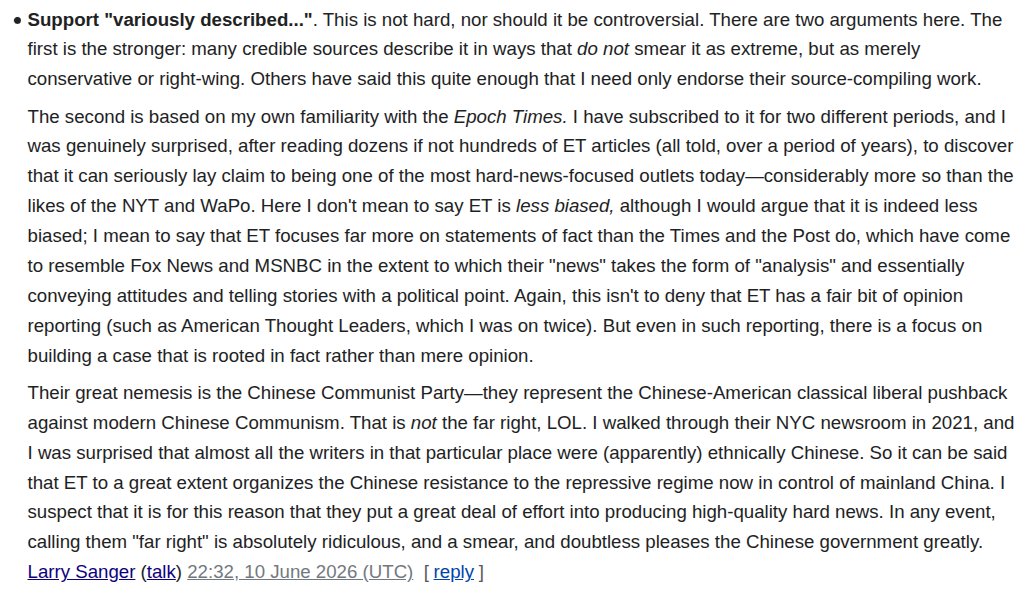
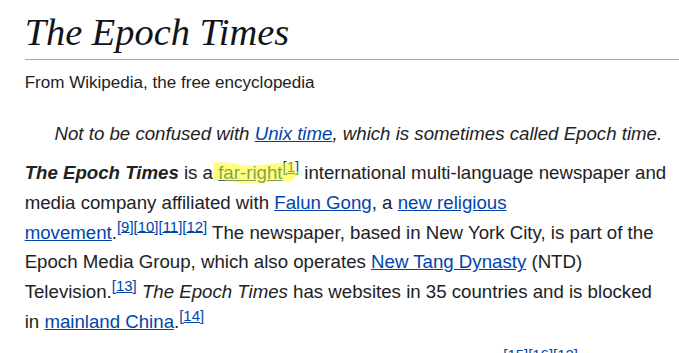
How does Wikipedia decides how to label—or relabel—media sources as "far right"? On the @EpochTimes's talk page, participants are right now vigorously debating whether to replace "far-right" with "variously described as conservative, right-wing, and far-right." 🤔👇
12
6
40
1,902
Jun 11
Do you think that would be an improvement? In fact, as people have argued on the talk page (en.wikipedia.org/wiki/Talk:T…) many "reliable sources" call ET merely "conservative" or "right-wing." Fewer use "far-right."
It's very possible that the article will be changed.
My view:
1
9
833
Jun 11
Hey @Grok , is it true that Joseph Smith and his family sacrificed a number of animals, in the years leading up to the (alleged) discovery of the golden tablets, purportedly to appease some evil spirits?

33
12
181
49,513
Larry Sanger retweeted

I'm the one who got this legislation proposed. Watch this video.
youtu.be/6PqicYT_Cis I am coming clean. My nonprofit, pftk.org did this. Watch the video, it explains it. Trust the plan.
Jun 7

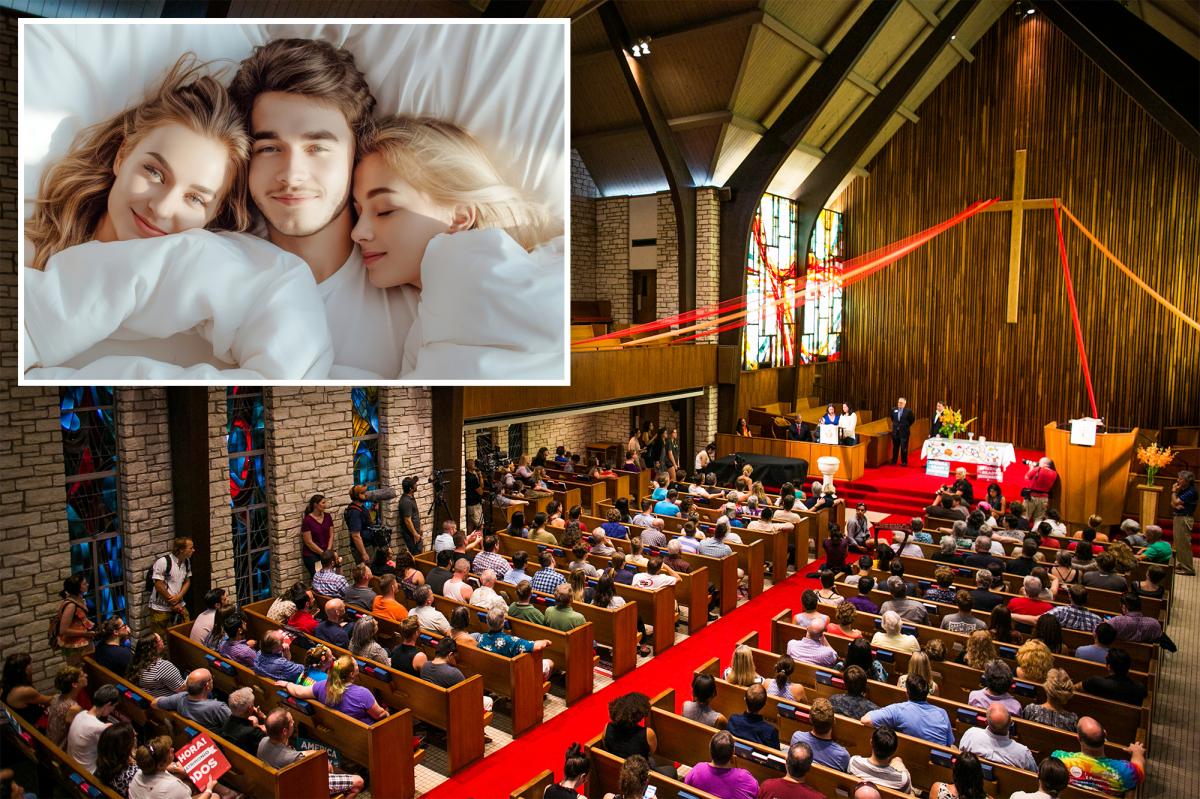
Presbyterian Church faces revolt after proposing clergy must be in monogamous relationships - and critics blame white privilege trib.al/HrjJtEH
32
17
530
68,981
Jun 10
You won't *necessarily* be blocked on Wikipedia if you are inclined to what they regard as thoughtcrime. If you play by their arcane and unfairly applied rules, you *probably* won't be blocked. It requires effort and strategy, but it's actually doable. Explained below 👇
Jun 10

They block you for thoughtcrimes at Wikipedia.
We are not allowed to march right back.
Wales took Soros' money and this is how he wants it.
3
1
15
1,619
Jun 10
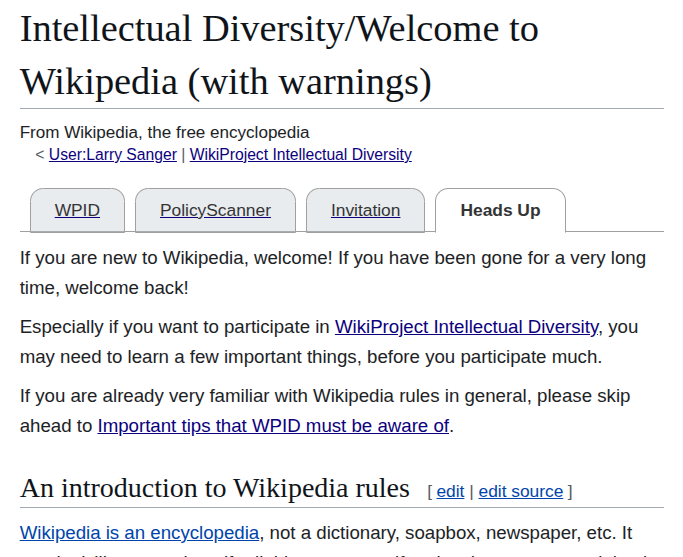
I wrote this for new members of WikiProject Intellectual Diversity.
en.wikipedia.org/wiki/User:L…
4
631