
Joined February 2009
- Tweets 2,744
- Following 805
- Followers 1,376
- Likes 1,325
21 Photos and videos

Pinned Tweet

23 Oct 2023
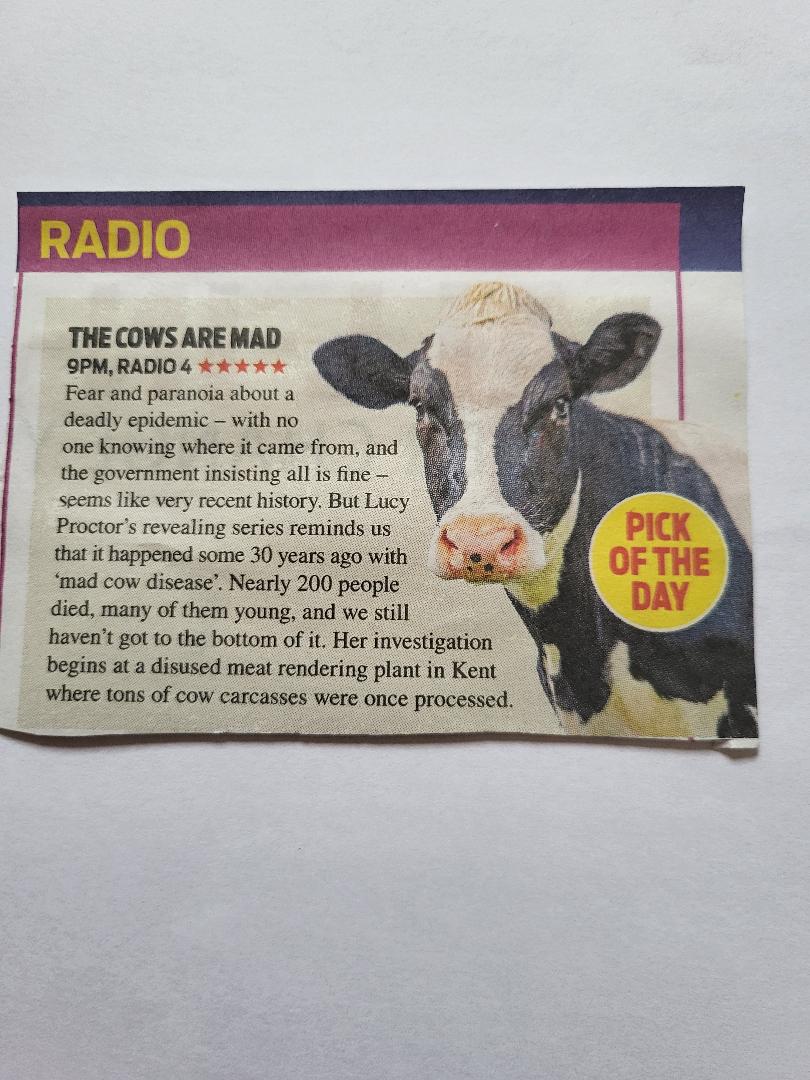
My new podcast about mad cow disease and the way it made everything go a bit mad for a while in the 90s - music by Pete at @IshmaelEnsemble, mix by the talented James Beard @flayvin bbc.co.uk/sounds/brand/m001r…
18
15
51
8,110
Lucy Proctor retweeted

3 Oct 2025
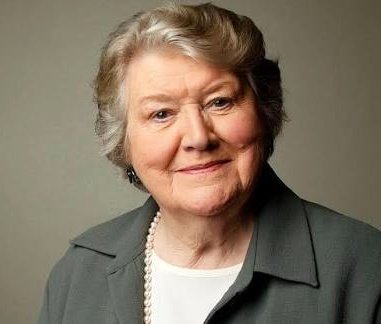
Rest in peace, Patricia Routledge 🙏🏻
In memory of her, I encourage everyone to read these words of hers from February last year.
Whether young or old, you're bound to get something out of it.
*****
"I’ll be turning 95 this coming Monday. In my younger years, I was often filled with worry — worry that I wasn’t quite good enough, that no one would cast me again, that I wouldn’t live up to my mother’s hopes. But these days begin in peace, and end in gratitude.
My life didn’t quite take shape until my forties. I had worked steadily — on provincial stages, in radio plays, in West End productions — but I often felt adrift, as though I was searching for a home within myself that I hadn’t quite found.
At 50, I accepted a television role that many would later associate me with — Hyacinth Bucket, of Keeping Up Appearances. I thought it would be a small part in a little series. I never imagined that it would take me into people’s living rooms and hearts around the world. And truthfully, that role taught me to accept my own quirks. It healed something in me.
At 60, I began learning Italian — not for work, but so I could sing opera in its native language. I also learned how to live alone without feeling lonely. I read poetry aloud each evening, not to perfect my diction, but to quiet my soul.
At 70, I returned to the Shakespearean stage — something I once believed I had aged out of. But this time, I had nothing to prove. I stood on those boards with stillness, and audiences felt that. I was no longer performing. I was simply being.
At 80, I took up watercolour painting. I painted flowers from my garden, old hats from my youth, and faces I remembered from the London Underground. Each painting was a quiet memory made visible.
Now, at 95, I write letters by hand. I’m learning to bake rye bread. I still breathe deeply every morning. I still adore laughter — though I no longer try to make anyone laugh. I love the quiet more than ever.
I’m writing this to tell you something simple:
Growing older is not the closing act. It can be the most exquisite chapter — if you let yourself bloom again.
Let these years ahead be your TREASURE YEARS.
You don’t need to be famous. You don’t need to be flawless.
You only need to show up — fully — for the life that is still yours.
With love and gentleness,
Patricia Routledge
*****
Once more, rest in peace. 🤍
2,222
14,347
77,148
2,590,240
Lucy Proctor retweeted

8 Aug 2025
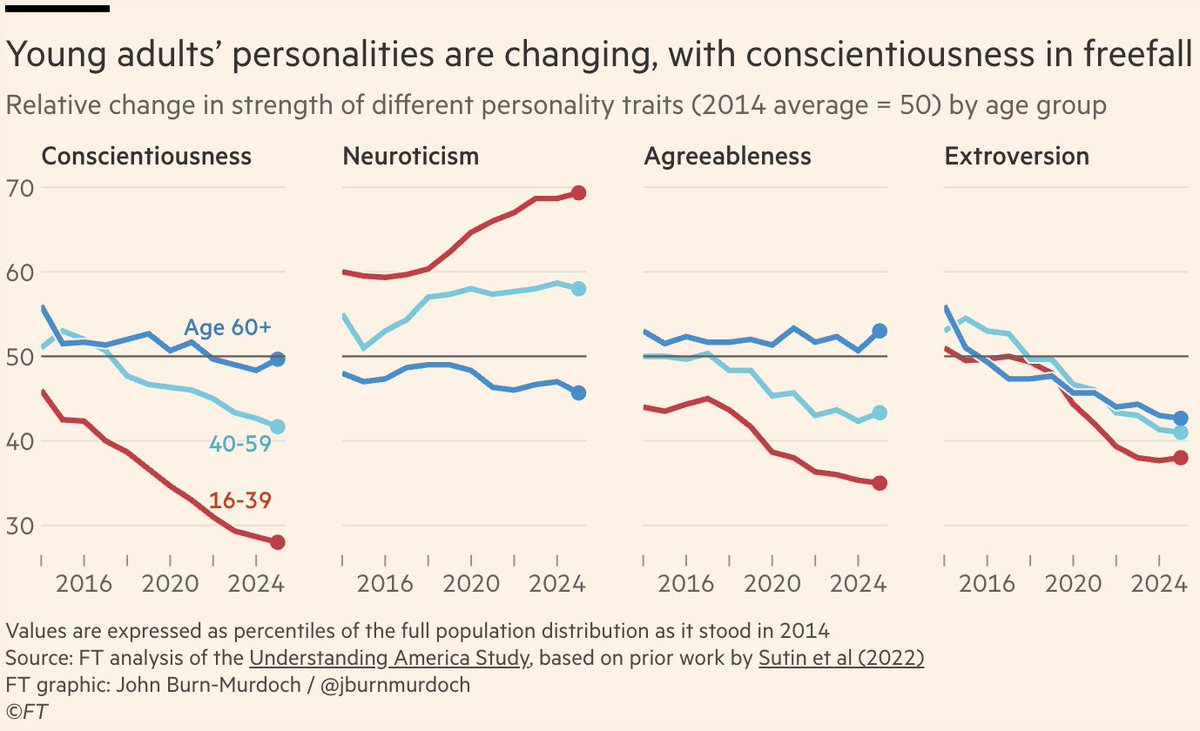
NEW: Is the internet changing our personalities for the worse?
Conscientiousness and extroversion are down, neuroticism up, with young adults leading the charge.
This is a really consequential shift, and there’s a lot going on here, so let’s get into the weeds 🧵
389
2,821
11,577
2,953,344
Lucy Proctor retweeted

24 Jul 2025
Joint statement on Gaza from AFP, AP, BBC News and Reuters bbc.co.uk/mediacentre/statem…
593
664
1,672
203,131
Lucy Proctor retweeted

21 Jul 2025
I think I've debunked this AI-generated image of Donald Trump and Jeffrey Epstein sat next to young girls at least four times in the last couple of years, but it just keeps going viral every few months. It's fake.
This time, it's drawn 2.7 million views and 76,000 likes.
12
84
333
33,165
Lucy Proctor retweeted

21 Jul 2025
We've been trying to make a radio documentary on the Dark Enlightenment off and on for most of a decade... and it seems pretty apt right now. So how influential is it *really*?
Producer: @lucyproctor Editor: Richard Fenton-Smith Audio mix: James Beard
bbc.co.uk/sounds/play/m002g3…
1
5
6
952
Lucy Proctor retweeted

13 Jul 2025
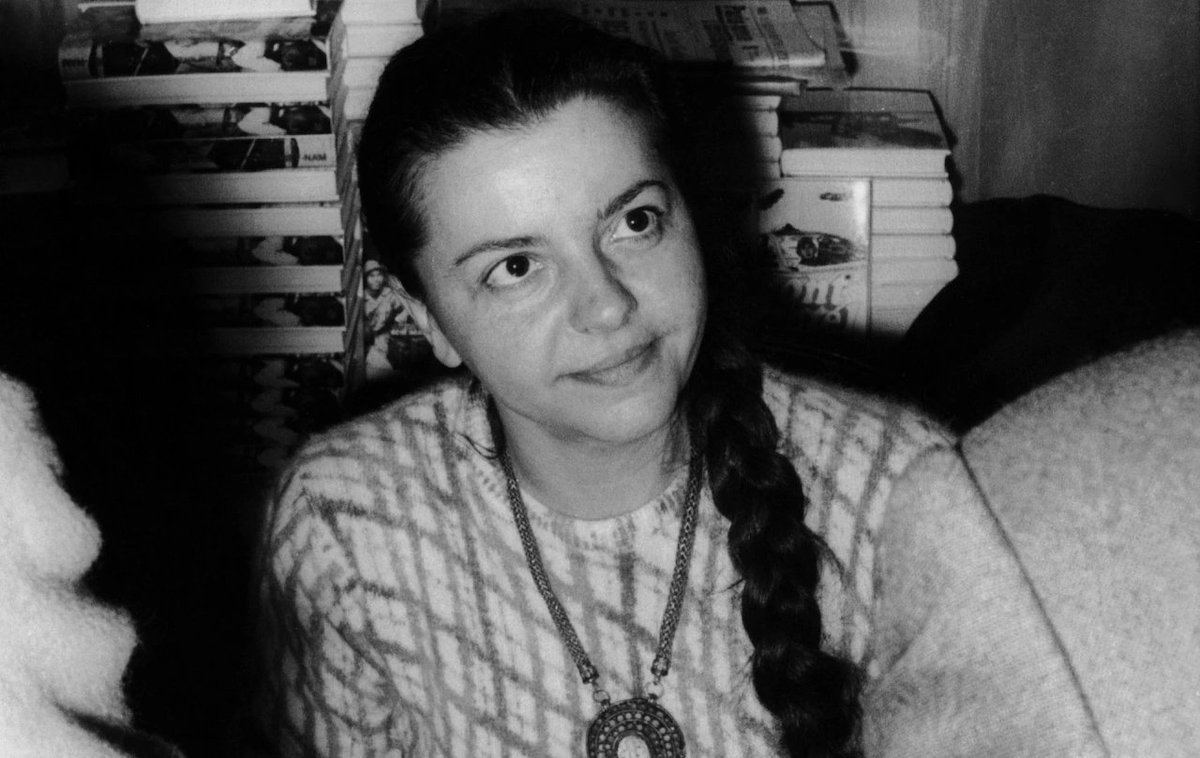
OTD in 1965, France changed the law to allow married women the right to work without their husbands’ permission. Yes, really. To mark the occasion, Woman of the Day is journalist Madeleine Riffaud, French Resistance, who didn’t need any man’s permission to fight for her country. Codename: Rainer.
Born in 1924 in Somme, Madeleine’s first brush with the enemy in Occupied France was in November 1940. She was 16, trying to find a stretcher for her sick grandfather at Amiens railway station which was crowded with German soldiers and two tried to indecently assault her. An officer intervened but booted her to the ground. “I was humiliated, my fear turned into anger. I remember saying to myself, ‘I don’t know who they are or where they are, but I’ll find the people who are fighting this, and I’ll join them’.”
She joined the Resistance at 18. “Hundreds of young women like me were involved. We were the messengers, the intelligence-gatherers, the repairers of the web. When men fell or were captured, we got the news through, pulled the nets tight again. We carried documents, leaflets, sometimes arms. We walked miles; bikes were too precious, and the Métro was too dangerous.”
As D-Day loomed, the stakes got higher. Her network needed more arms and it was her job to obtain them by hook or by crook. She took them off policemen by persuasion or threat but it was the massacre of 623 men, women and children in the village of Oradour-sur-Glane by the SS Panzer Division Das Reich on 10 June 1944 that was the final straw. She knew that village well. Her network vowed revenge and instructed each member to kill a German.
“I have no hate. It was a mission. We had to do it in daylight, to encourage the population. To show them there was an opposition to the German occupation and it was French. I wanted to do more than simply harangue people in queues, telling them the truth of what was happening and I was cross at being told always to carry weapons across town for the men to use, so I asked for permission to use a gun myself.”
On 23 July 1944, near the Musée d’Orsay, she spotted a German NCO looking across the Seine, stopped her bicycle, called to him so he turned to face her - "It was important to me not to shoot him in the back” - and shot him twice in the head. “I was very calm…Maybe he was a good guy. But this…Well, it’s war.”
As she cycled away, the chief of the Milice (collaborator police) drove hus car at her, knocking her off her bike, handcuffed her and took her to the Gestapo in Rue des Saussaies. She thought, “I am going to die.”
She didn’t but what she went through was arguably a hundred times worse. She was beaten, whipped, electrocuted and half-drowned for three weeks. Minutes before her scheduled execution, a policeman realised that the gun Madeleine used on the German NCO was the one taken from him weeks before and she was reprieved - but only because the Gestapo wanted to interrogate her.
The torture resumed, another ten days of it. Madeleine was made to watch others being tortured in an effort to break her. “What kept me going was saying to myself: I am not a victim. I am a résistante.”
The Gestapo put her on a train to Ravensbrück. She escaped, was recaptured, and finally freed in a prisoner exchange so she went straight back to Paris and joined the Free Forces of the Interior.
Madeleine celebrated her 20th birthday by leading four men on a successful
mission to stop a German troops train carrying 80 Wehrmacht soldiers and then she turned her attention to the SS barracks.
“We were fighting floor by floor, dropping grenades through the windows…But you cannot understand how wonderful it was to fight finally as free men and women, to battle in the daylight, under our own names, with our real identities, with everyone out there, all of Paris, to support us, happy, joyful and united.”
Madeleine was awarded the Croix de Guerre avec Palme but suffered survivor’s guilt and found peacetime hard to adjust to. She "couldn't live like other people".
It would take a post as long as War and Peace to tell you about the rest of her remarkable life (and it would be an apt title) but she became an investigative journalist and activist in Algeria and Vietnam and was made a Chevalier de La Légion d’honneur. She died last year, aged 100. Oh, and she married briefly but followed her own path anyway.
“During the war, Germans tortured people I didn't know in front of me, saying they'd stop if I talked. They'd shout at me: "Look! Look!" I decided to make it my profession: To go out into the field, look at the truth and tell it. To bear witness, especially to act against colonialism: I didn't want France to do elsewhere what the Nazis wanted to do here.”
40
373
1,029
57,557
Lucy Proctor retweeted

17 Jun 2025
I wish people would read the detail: the framework of access to an abortion – including the need for two doctors’ signatures, and the time limits at which terminations can be carried out – will *remain the same* and doctors who act outside the law will still face the threat of prosecution.
The issue is that the women - almost always vulnerable as a result of domestic abuse and violence, human trafficking and sexual exploitation or women who have given birth prematurely - will no longer be at risk of being thrown into cells.
17 Jun 2025

BREAKING: British MPs have voted to decriminalise abortion after 24 weeks in England & Wales, marking the biggest step forward in reproductive rights in almost 60 years.
878
676
3,300
537,779
Lucy Proctor retweeted

3 Jun 2025
sharing my documentary produced by the brilliant @lucyproctor -now available on @BBCSounds bbc.co.uk/programmes/m002cnc…
1
7
10
4,175
Lucy Proctor retweeted
26 May 2025
My documentary about Baby Elsa and her siblings produced by the brilliant @lucyproctor bbc.co.uk/sounds/play/m002cn…
11
21
5,027
Lucy Proctor retweeted
26 Feb 2025
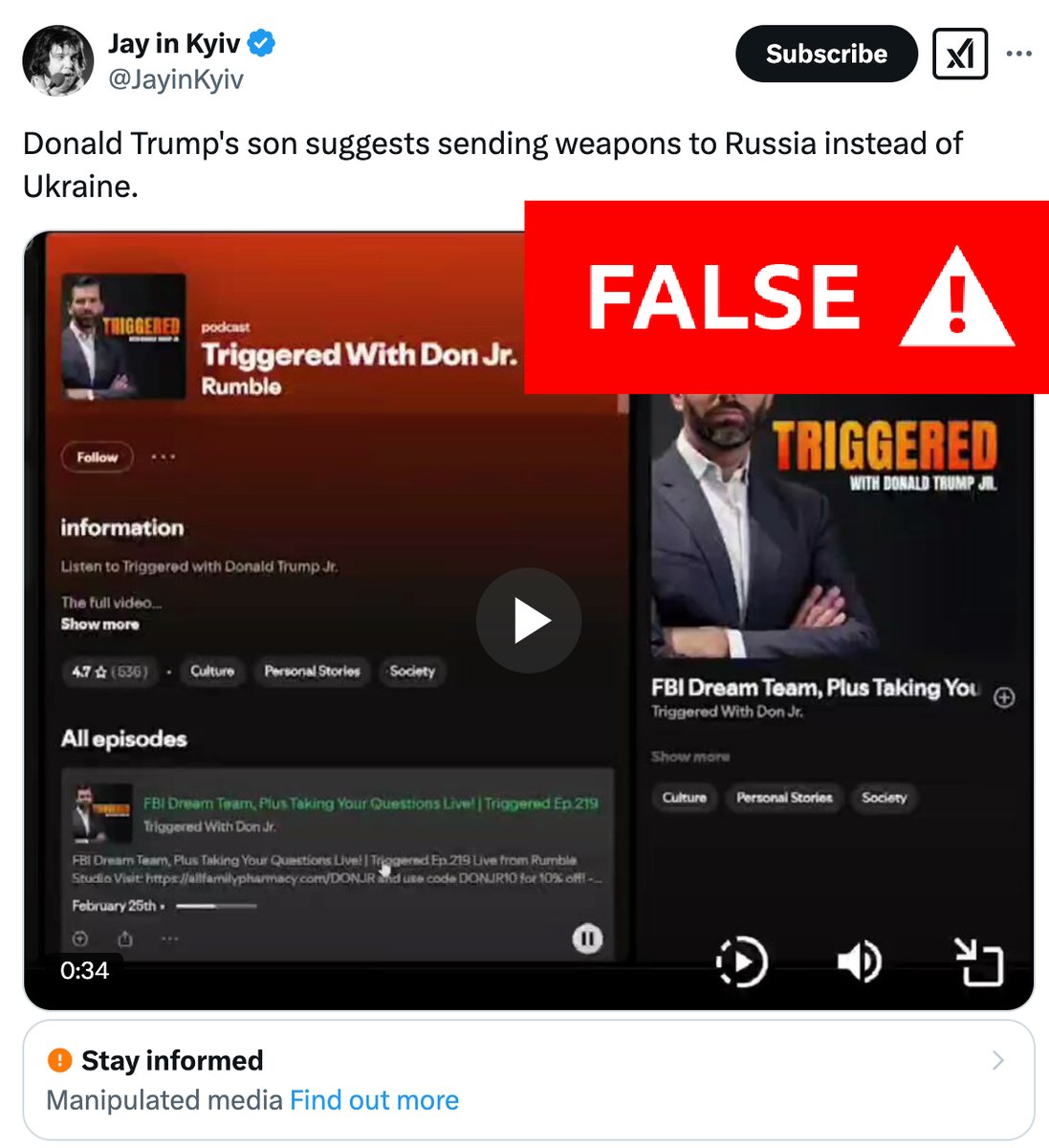
To conclude, the Don Jr clip is definitely fake.
But worryingly, it's one of the best AI audio clips I've ever heard. It's almost unrecognisable from Don Jr's real voice.
Gen AI is rapidly imrpvoing, and the online information space is going to become even more confusing.
7
67
204
14,924
12 Feb 2025
RT @BBCBreaking: MI5 lied to three courts to defend its handling of neo-Nazi spy, after BBC uncovered his violent abuse t.co/t89b5Y…
138
Lucy Proctor retweeted

20 Jan 2025
Trump talked about America’s “manifest destiny” and the “frontier spirit” in his inauguration speech. Want to know more about this nudge-wink to white supremacy popular with a certain tribe of tech bro? There’s an episode of The Coming Storm about it. bbc.co.uk/sounds/play/m0023q…
15
22
70
5,153
Lucy Proctor retweeted

17 Jan 2025
The Coming Storm - Inauguration bonus episode!
@ggatehouse & @lucyproctor are back with another episode, examining some of the characters expected to gain power in Donald Trump's new administration - including RFK Jr.
🎧 Available Sunday on @BBCSounds
bbc.co.uk/programmes/m00274n…
6
5
4
1,639
Lucy Proctor retweeted
15 Jan 2025
Bonus episode of The Coming Storm landing on Sunday, the eve of Trump’s inauguration. Plus… a Q&A live-streamed on BBC Sounds. Send us your questions to thecomingstorm@bbc.co.uk
Is the storm about to break?
instagram.com/p/DE17KXKI0D9/
3
3
11
2,116
Lucy Proctor retweeted

15 Jan 2025
The area in Gaza which Israel's military has told people to go to "for their safety" has been hit by 97 strikes since May, BBC Verify analysis has revealed.
By @benedictgarman Richard Irvine-Brown and @paulybrown
bbc.co.uk/news/articles/cx2j…
8
23
41
6,597
Lucy Proctor retweeted

10 Jan 2025
Rotherham council bosses who were criticised in the fallout from the grooming gangs scandal now hold positions as government advisers and executive coaches, The Times can reveal ⬇️
thetimes.com/uk/crime/articl…
6
42
43
11,939
Lucy Proctor retweeted
2 Dec 2024
President Biden pardons his son Hunter. In 2022, @lucyproctor and I did a deep dive into the contents of the notorious laptop. bbc.co.uk/sounds/play/m001f4…
The Coming Storm - The Mid-Terms: 2. The Regime - BBC Sounds
A laptop reveals its secrets.
bbc.co.uk 1
8
28
7,071
Lucy Proctor retweeted

16 May 2024
actual video of a British person arriving in Heaven
629
4,861
66,618
9,629,139
24 Mar 2024
Wow.
24 Mar 2024

The best skating I’ve ever seen, absolutely breathtaking - and to @NicholasBritell’s Succession theme? This is a God-tier performance, just watch it, trust me.
x.com/skatingarchive/status/…
2
5
1,568
Lucy Proctor retweeted

4 Mar 2024
Is it really true that in extremely long races, women run faster than men? 🏃♀️🏃♂️
@TimHarford and @lucyproctor investigate
bbc.in/433UAch
1
2
2
4,805