
RiscV ZKVM circuits prover for AirBender @zksync @the_matter_labs INRI🇻🇦
Joined July 2011
- Tweets 243
- Following 5,091
- Followers 511
- Likes 61,445
5 Photos and videos


Mario A. Barbara retweeted

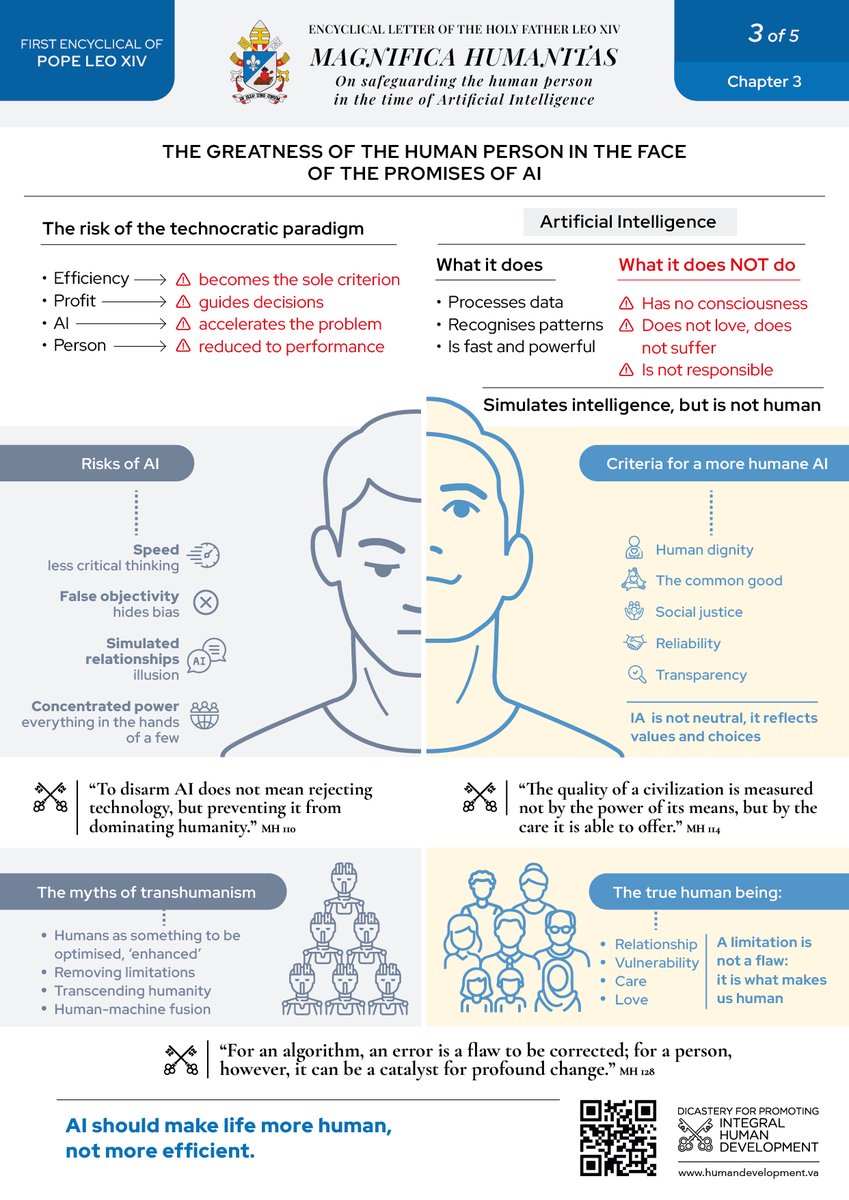
📣 "Disarming artificial intelligence does not mean giving up on technology, but preventing it from dominating humanity." #PopeLeoXIV ✨ #MagnificaHumanitas
📌 Download the resources here: humandevelopment.va/en/magni…
2
35
70
4,997

May 26
„the pretense that a single language — even a digital one — can translate everything, including the mystery of the person, into data and performance. This is the risk of dehumanization: building a future that excludes God and reduces the other to a means.“ - Pope Leo
How many companies have you seen say „we only hire the best“, or „our product must be the best“.
They lay off half their staff to be „the best“, everything becomes just a number: the product, the employees, the customers.
Maybe we should focus less on performance, and more on what it means to contribute to humanity, meaningfully and charitably.
Technology like crypto was never meant to replace human connection, but to safeguard it. A future where we just do gambling and financial speculation on these platforms is bleak, let us instead build something that our families and their friends will benefit from.
May 25

The Holy Spirit challenges us today regarding our relationship with technology and the ongoing digital revolution. Technology has the power to heal, connect, educate and protect our common home; but it can also divide, exclude and generate new forms of injustice. #MagnificaHumanitas
39
Mario A. Barbara retweeted

May 25
Humanity, created by God in all its grandeur, is today facing a pivotal choice: either to construct a new Tower of Babel or to build the city in which God and humanity dwell together. In Jesus Christ, this humanity in its grandeur becomes the Way, the Truth and the Life, opening the path for each of us to grow toward fullness. #MagnificaHumanitas
vatican.va/content/leo-xiv/e…
1,391
28,390
177,795
22,323,962
Mario A. Barbara retweeted
May 22
As evidenced by the unbridled promotion and implementation of technology at the expense of human dignity, we are truly experiencing an eclipse of the sense of what it means to be human. It is imperative to recover an understanding of the true meaning and grandeur of humanity as intended by God. It is in this sense that the challenge we currently face is not technological, but anthropological, and it is my hope that the Encyclical Letter to be published within a few days will contribute to answering this challenge.
1,062
4,927
26,215
1,309,223
Mario A. Barbara retweeted
May 21
No nation, no society, and no international order can call itself just and humane if it measures its success solely by power or prosperity while neglecting those who live at the margins. Indeed, Christ’s love for the least and the forgotten compels us to reject every form of selfishness that leaves the poor and the vulnerable invisible.
2,580
9,481
44,391
850,038
Mario A. Barbara retweeted

May 20
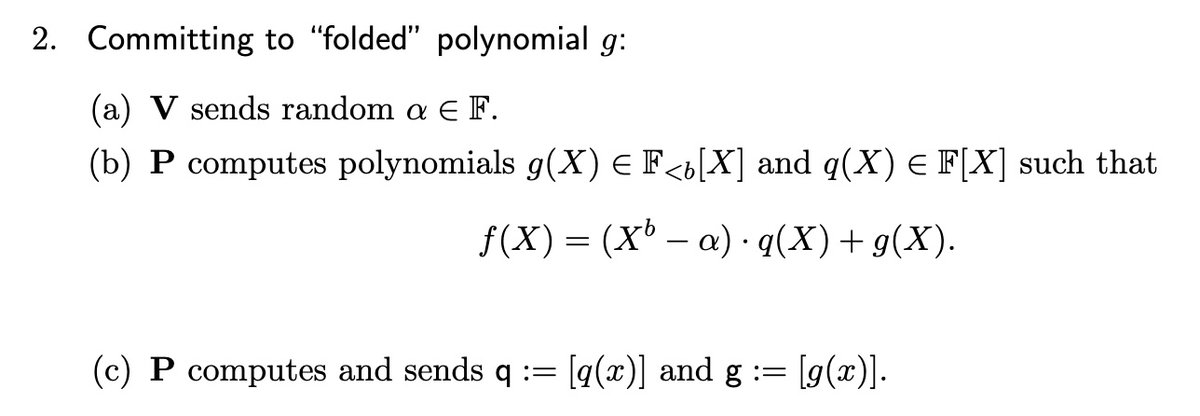
Like Brakedown’s speed but not the large proofs? Turns out you can get the best of both worlds!
New work with the incredible @AndrijaNovakov6 and @kobigurk

Excited to share Bolt, a new multilinear polynomial commitment scheme (MLPCS) with @kobigurk and @ronrothblum ia.cr/2026/310. To appear at Crypto 2026.

7
53
4,781

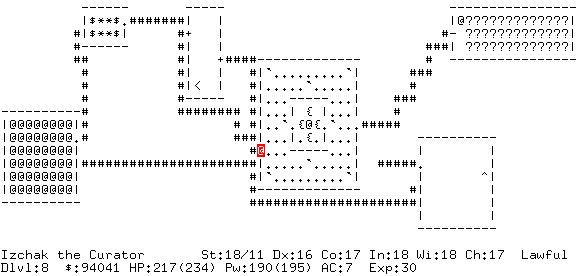
NetHack is one of the most complex and longest-lived open source programs ever written, and after 46 years, v5.0 shipped today.
nethack.org/common/index.htm…
And ... it is a VERY cool large codebase to work with in the LLM era.
19
201
1,062
122,219
Mario A. Barbara retweeted

Alexander wept. Caesar wept. Jesus wept. Your problem in life is not that you are too passionate. Your problem is that you are not passionate enough.
77
670
8,121
151,544

Mario A. Barbara retweeted

Sci-Hub is an evil website that pirated 85M research papers and made them freely available
And now they've added AI to their database to make Sci-Bot.
It answers your questions using latest, full-text articles.
But DO NOT use it. We should all try to make billion-dollar academic publishers richer.
I'm putting the link below so you know how to avoid it.
836
8,902
46,831
4,949,079
Apr 27
Mercury MLE PCS with a "complete" SRS (powers of tau in both source groups) lets you check over commitments instead of openings. Just 1 large MSM vs 2, similar Gemini/ZeroMorph speed but tiny proofs. Same idea should apply to Samaritan, avoiding CHOPIN.
eprint.iacr.org/2025/385.pdf
ALT Mercury PCS Section 6
43
Apr 25
Used Claude Opus 4.6, OpenAI Codex 5.4, DeepSeek 4 Pro, Kimi K2.6 to find a very niche feature of the codebase, and to validate complex semantics.
Only Kimi K2.6 got it right, all others made the same stupid mistakes.
Also open source code-clis suck.
Idk what to make of that…
91
Apr 25
What a wonderful hacking writeup by @inf_0_
It’s important to remember that while ZKVMs allow you to securely prove execution of any program, that program can still contain traditional software vulnerabilities, like the faulty input validation showcased here!
Apr 24

Holy shit this is a tour de force! blog.trailofbits.com/2026/04… In 3 different areas: exploiting (forging) a ZKP, partially reverse-engineering the secret Google quantum cryptanalysis algorithm, and an important perspective on disclosure norms in infosec and science. Hats off @inf_0_
1
72
Apr 24
This is absolutely accurate and how the Italian university system worked when I was in it. I’m not too sure the Anglo-Saxon model would fit Italy better: a lot of Italians abroad retain elevated skills just because of how brutal the education was in Italy.
Apr 24

Italy’s university system’s main objective was to create the new generation of academics. Producing professionals for the job market was the least of their concerns. The system was extremely selective; it wasn’t unheard of for a professor to fail all students in his module. It was far more commonplace, and absolutely expected, to pass only a handful of students.
Italian lawmakers decided the country would be better served by adopting the Anglo-Saxon system, where the first five years (3 2) are dedicated to the job market (with module failure rates lower than 20%) and additional years to select the new generation of academics.
They heavily reformed the system in the ‘80s and ‘90s but failed to inform the professorial class. When I attended university, 50% to 80% of professors stuck to the old ways, routinely failing 95% of the students in their module like there was no tomorrow. When I passed, I was often among the 3-4 students who passed out of 200. When I finally graduated, the session was organized for just 5 of us.
Over the decades this has slowly changed, but even today, almost half a century after the Italian elites decided to reform the university system, it is not unusual to hear anecdotes of professors still anchored to the old ways: failing all students except a selected few – in this case, one.
P.S.: I hope we don’t jinx them! 🫣 They have passed the written phase of the exam, not the oral yet! 🥹
2
77
Apr 24
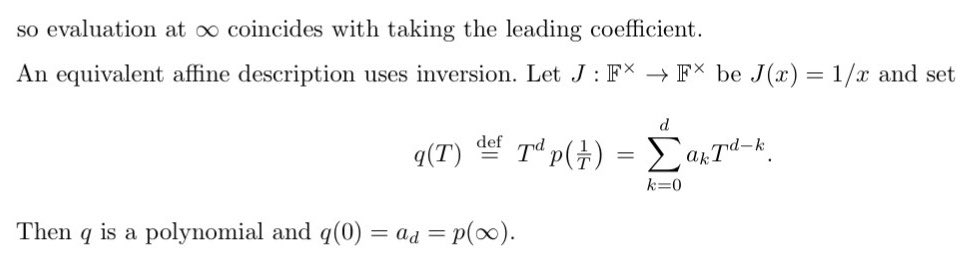
Checking eprint.iacr.org/2026/762.pdf, this monomial extraction trick is suspiciously similar to KZG PCS constraints for Univariate Sumcheck, or bounds checking, which require opening polynomials at inverse powers.
We could use it to build custom Sumcheck gates to speed up proving..
3
89
Mario A. Barbara retweeted
Apr 17
Within digital environments — structured to persuade — interaction is optimized to the point of rendering a real encounter superfluous; the otherness of persons in the flesh is neutralized, and relationships are reduced to functional responses. Dear friends, you, however, are real persons! Creation itself has a body, a breath, a life to be listened to and safeguarded.
207
1,523
10,394
679,768
Apr 18
As soon as we are collectively done getting these provers to run ReallyFastTM, we need to start implementing formal proving across the board
They’re way too complicated to just audit manually: we need to put STARK, PCS, and Lookup/RAM arguments and verifiers in Lean or something
1
1
54
Apr 18
It would already help a great deal to have basic arguments in a formal prover, because then we can quickly modify them and adapt them to real world engineering. And that’s already 50% of the work: all of us are running custom optimisations..
1
10