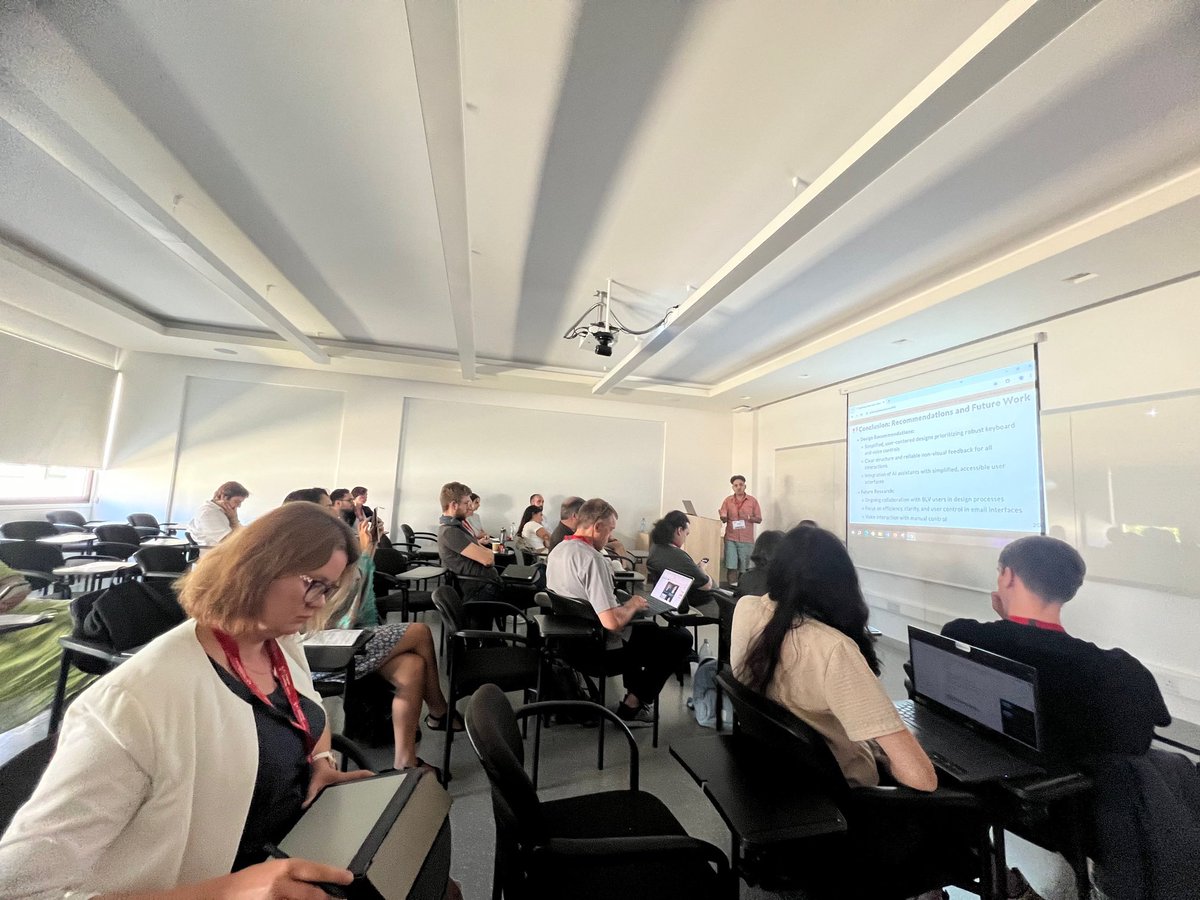
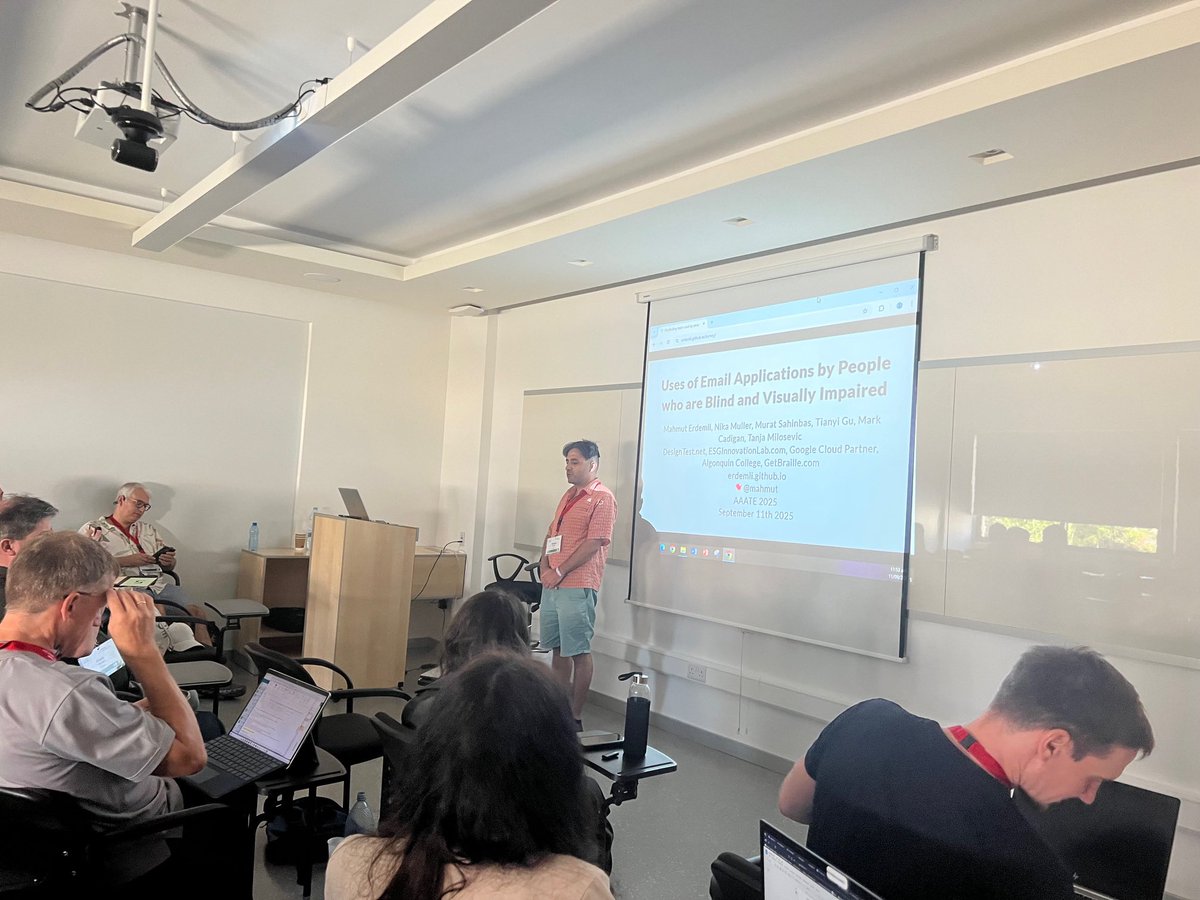
Honoured to share our work “Uses of Email Applications by People who are Blind and Visually Impaired” at #AAATE2025 in Nicosia, Cyprus. Grateful to my co-authors and participants and all who supported me. Your encouragement drives me to keep advancing accessibility research.#a11y
ALT A classroom with me presenting my research “Uses of Email Applications by People who are Blind and Visually Impaired”
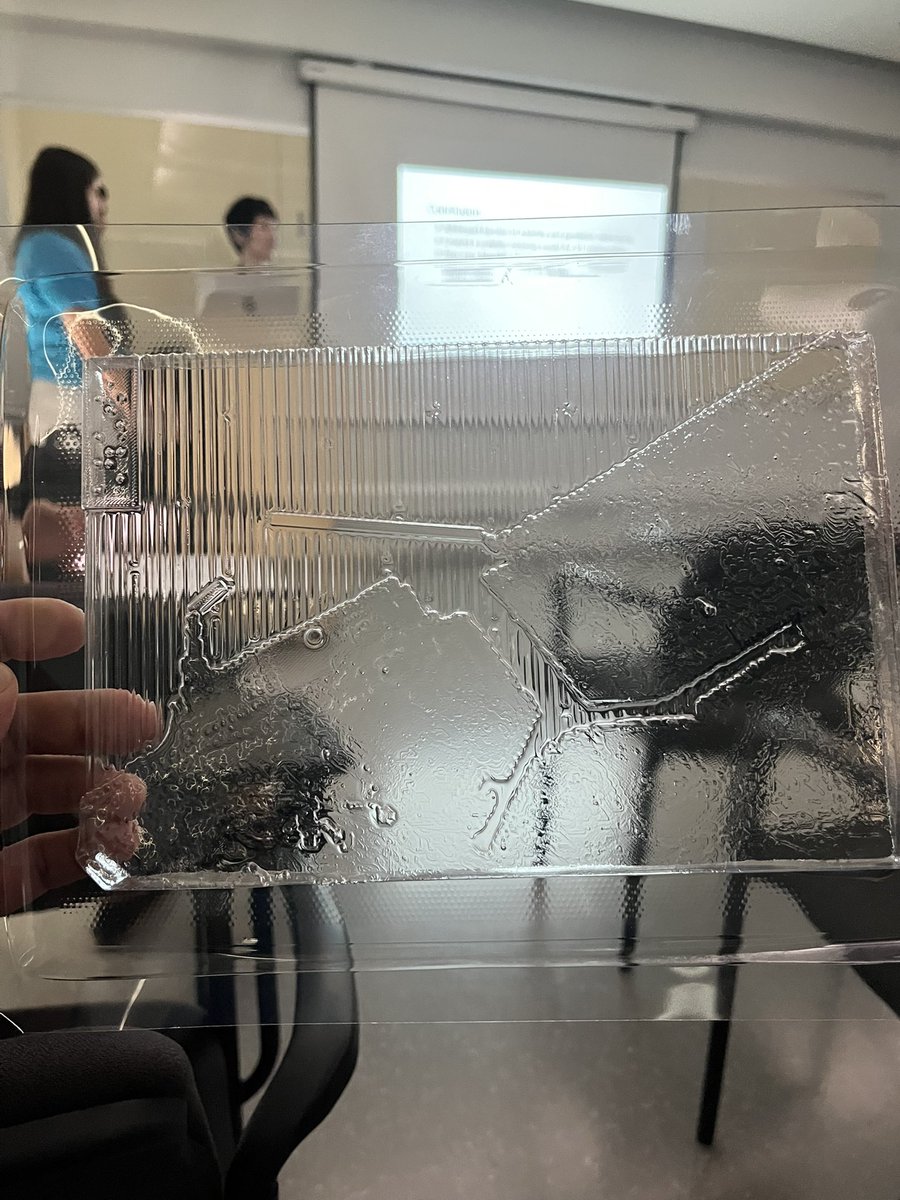
Kazunori Minatani created a workshop service for visually impaired people, combining online meetings with mailed tactile plastic maps & models. Tested in 10 workshops, it supports museums, disaster prep & tourism, and aids rehab for people with acquired vision loss. #AAATE2025
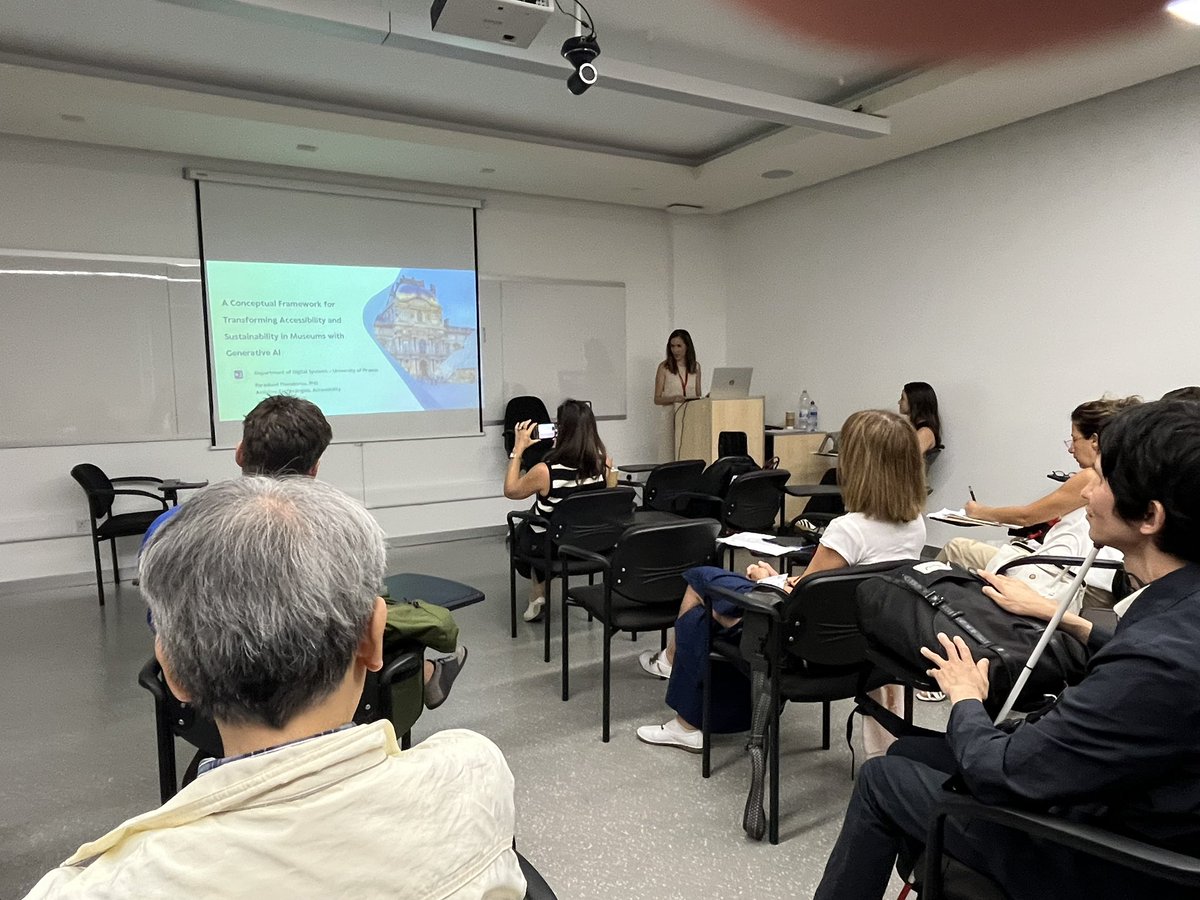
Paraskevi Theodorou proposed a GenAI framework to make museums more accessible. Findings show voice interfaces could help visually impaired visitors with wayfinding and learning more about exhibits, offering practical tools for inclusive cultural experiences. #AAATE2025#a11y
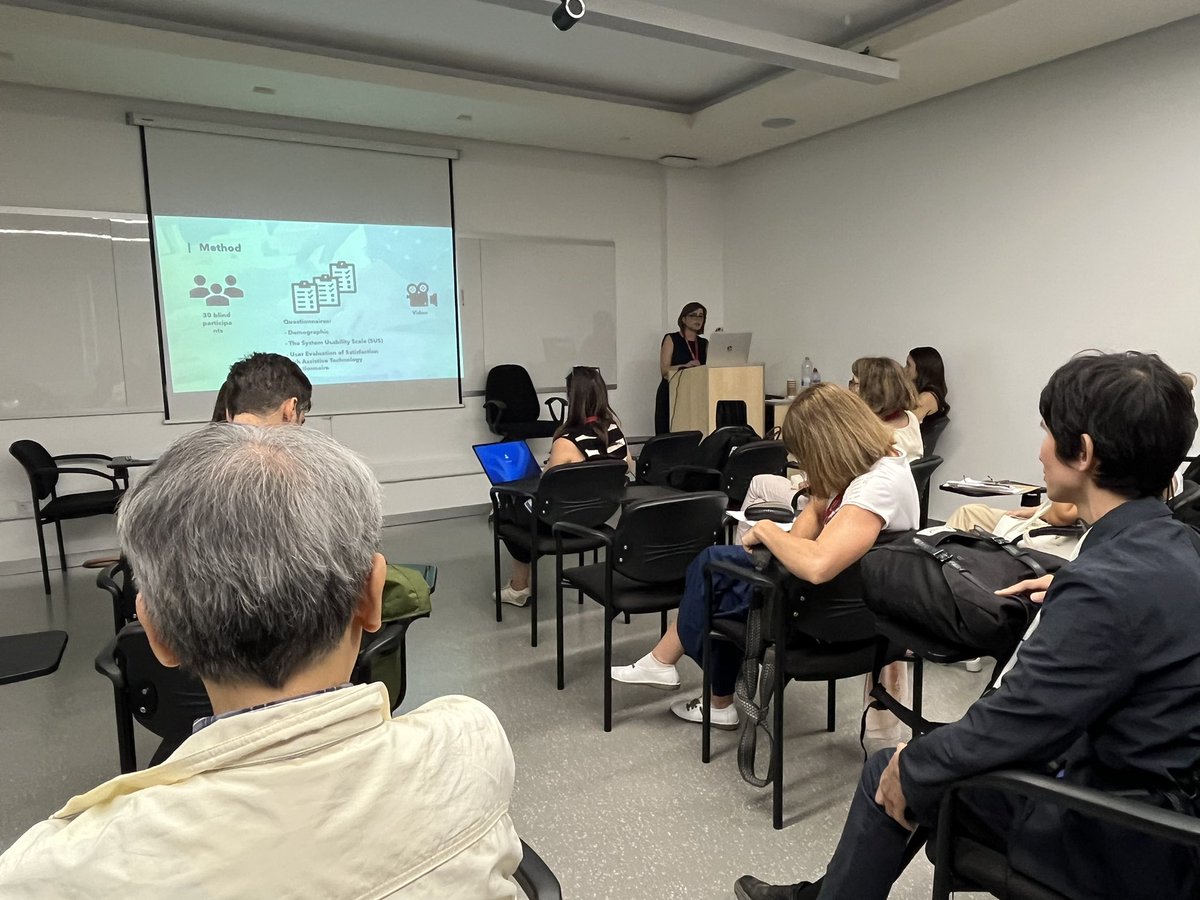
ALT Around 30 casually dressed people in a conference room, seated at tables with laptops, notebooks, and drinks. A projector screen and presentation setup are visible.
Alexandra Danial-Saad et al. developed interactive multimodal tangible interfaces to enhance museum access for blind & low vision visitors. In tests with 30 BLV participants, push-button controls scored highest, valued for simplicity, familiarity & independence. #AAATE2025#a11y
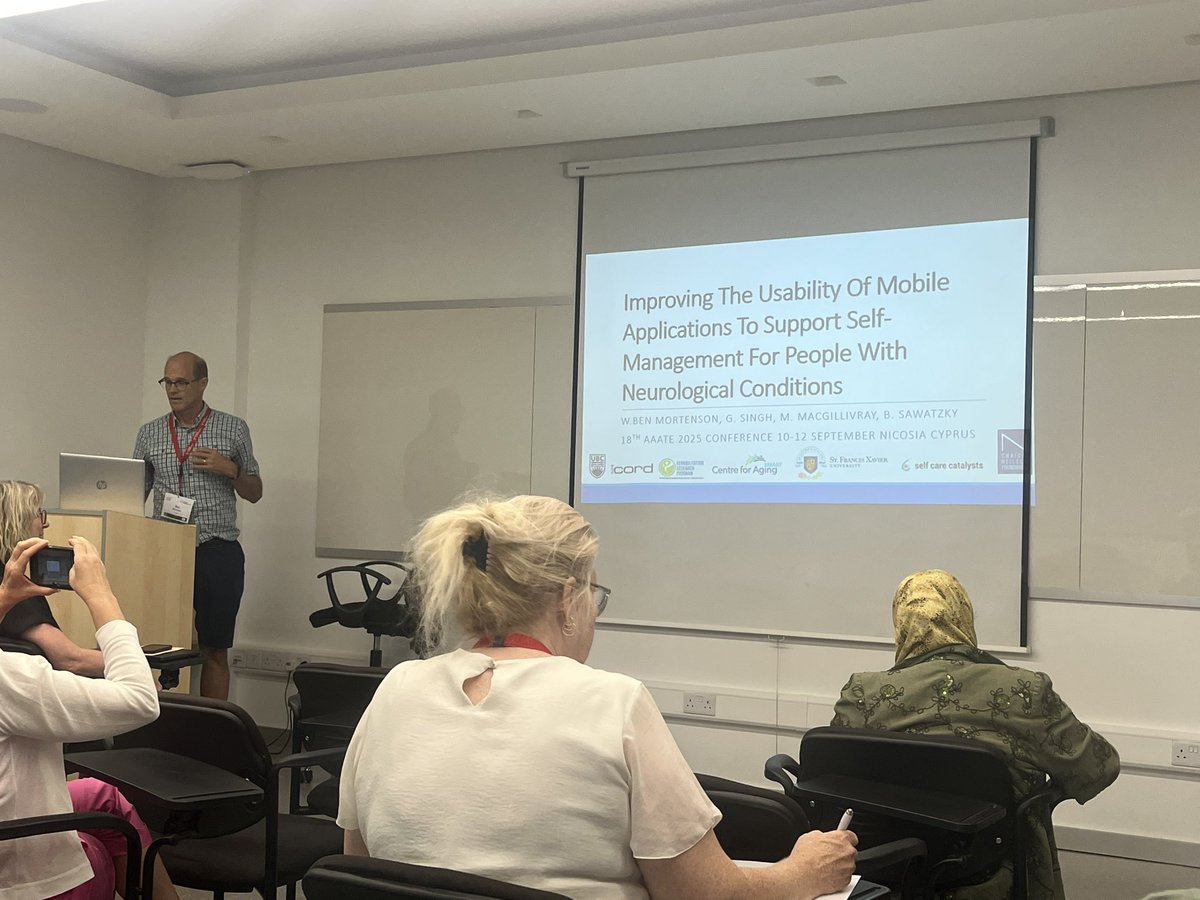
Ben Mortenson developed a mobile app to support self-management for people with spinal cord injury. Pilot studies showed goal-setting helped, and findings highlight the value of co-design and user-driven approaches to guide future research and usability improvements. #AAATE2025
ALT Twenty people in a conference room, casually dressed, seated around tables with laptops and notebooks. A projector screen is visible as some participants listen and take notes.
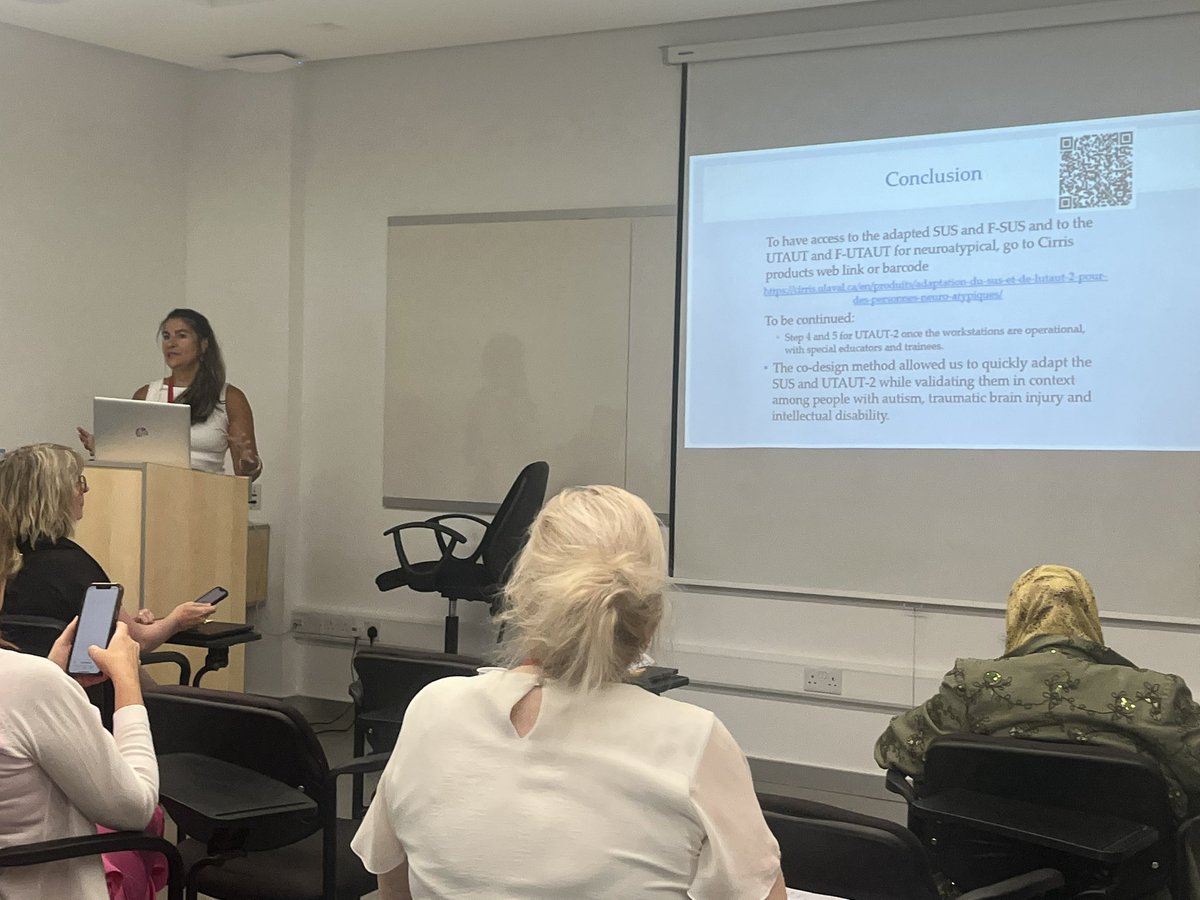
Claude Vincent presented a method for adapting a technology acceptance framework for individuals with autism, traumatic brain injury, and intellectual disability. Using a co-design process with experts, prototype drafts, think-aloud testing, simulations, and workshops. #AAATE2025
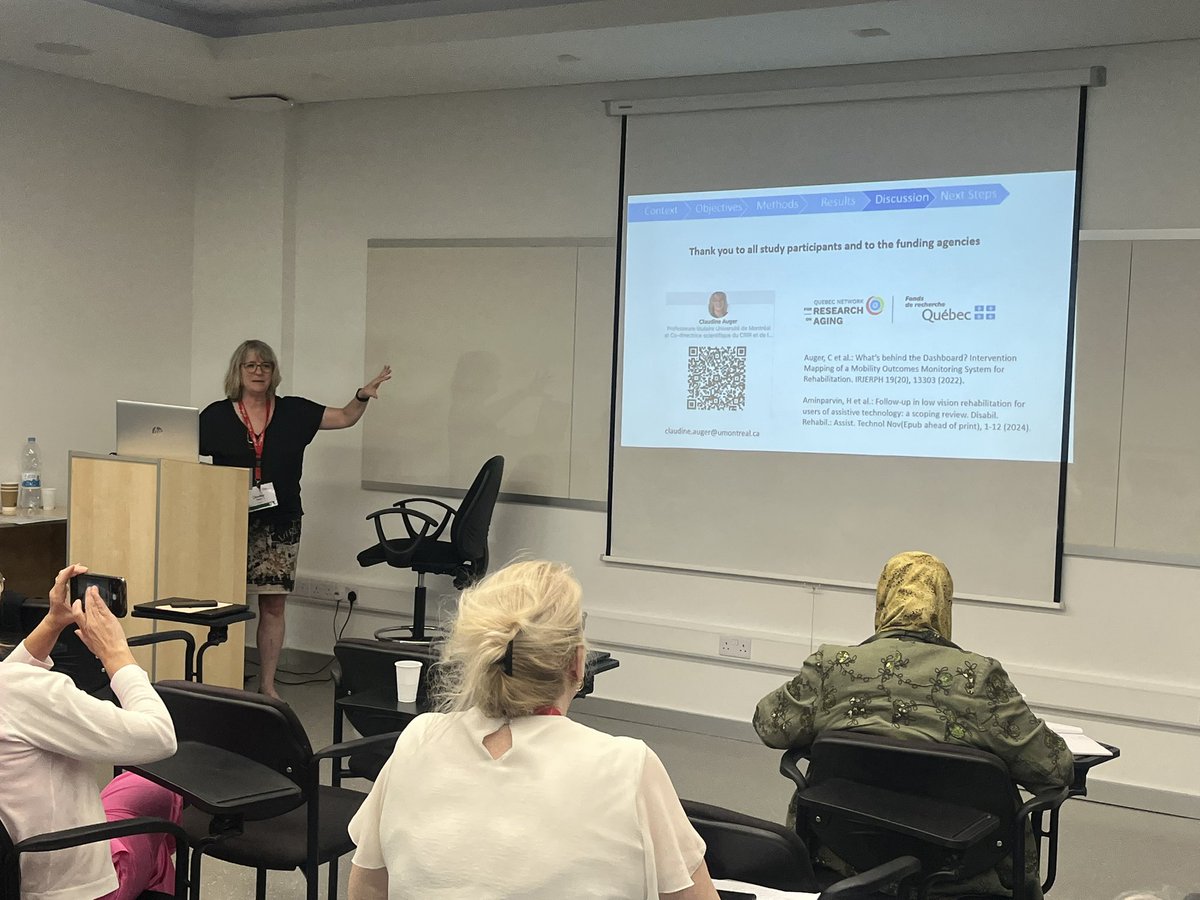
Claudine Auger presented MOvIT-Vision, a web-based telerehab tool for older adults with visual impairments using assistive tech. Building on MOvIT for mobility devices, it adapts the system for vision rehabilitation, addressing gaps in post-prescription support. #AAATE2025#a11y
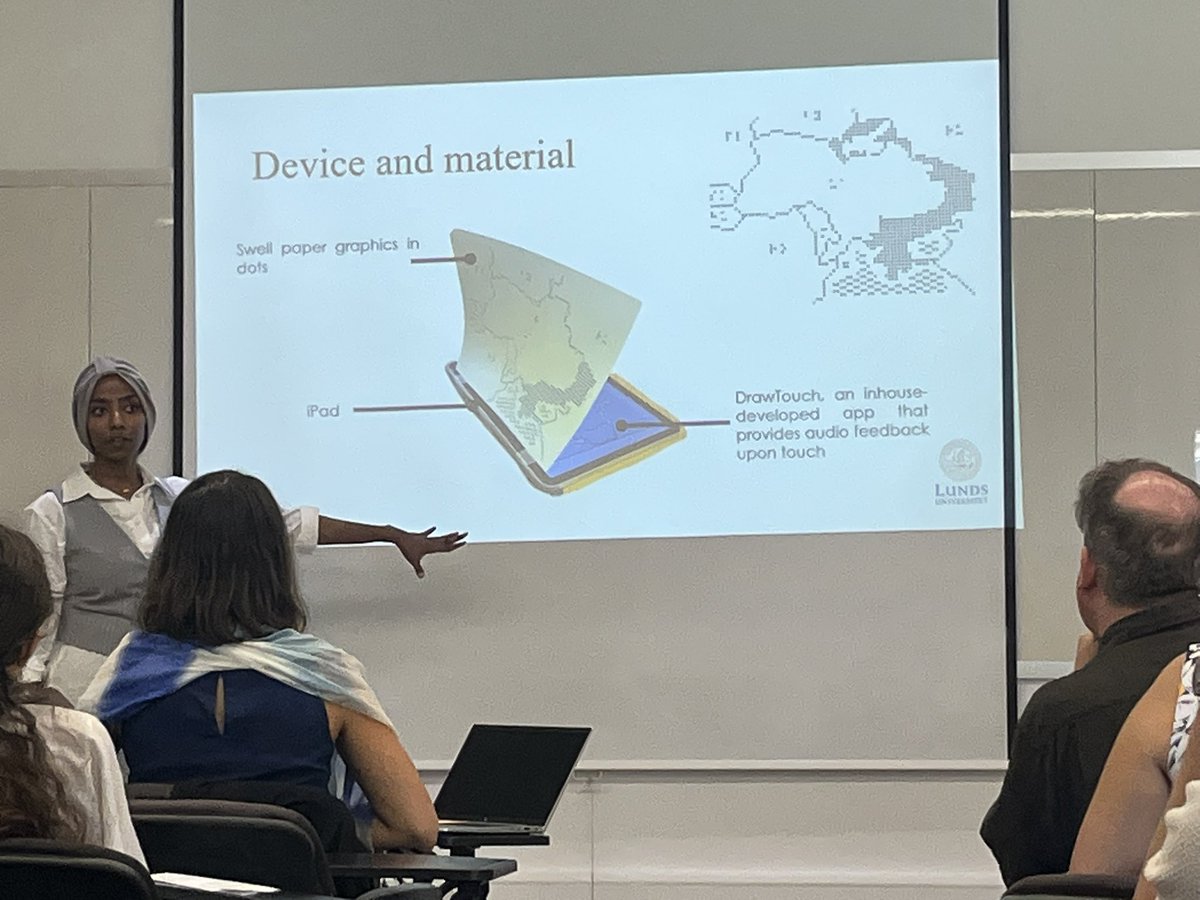
T. Saeed presented “Developing and Pilot Testing a Hybrid Prototype for Audio-tactile Graphics.” Co-design on user needs for a refreshable tactile display with paper overlays iPad app. Audio tactile worked well but audio risks overload. She noted using up to 3 tactile patterns.
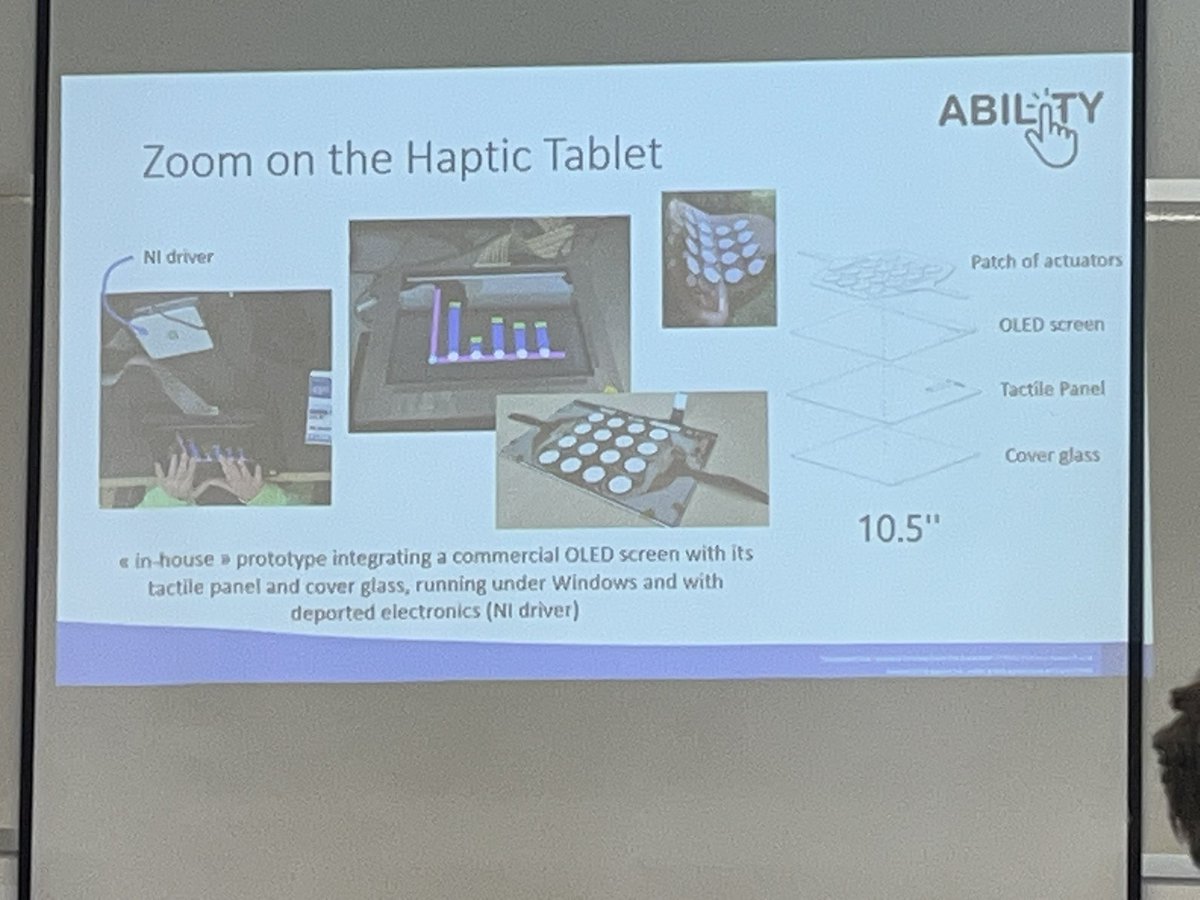
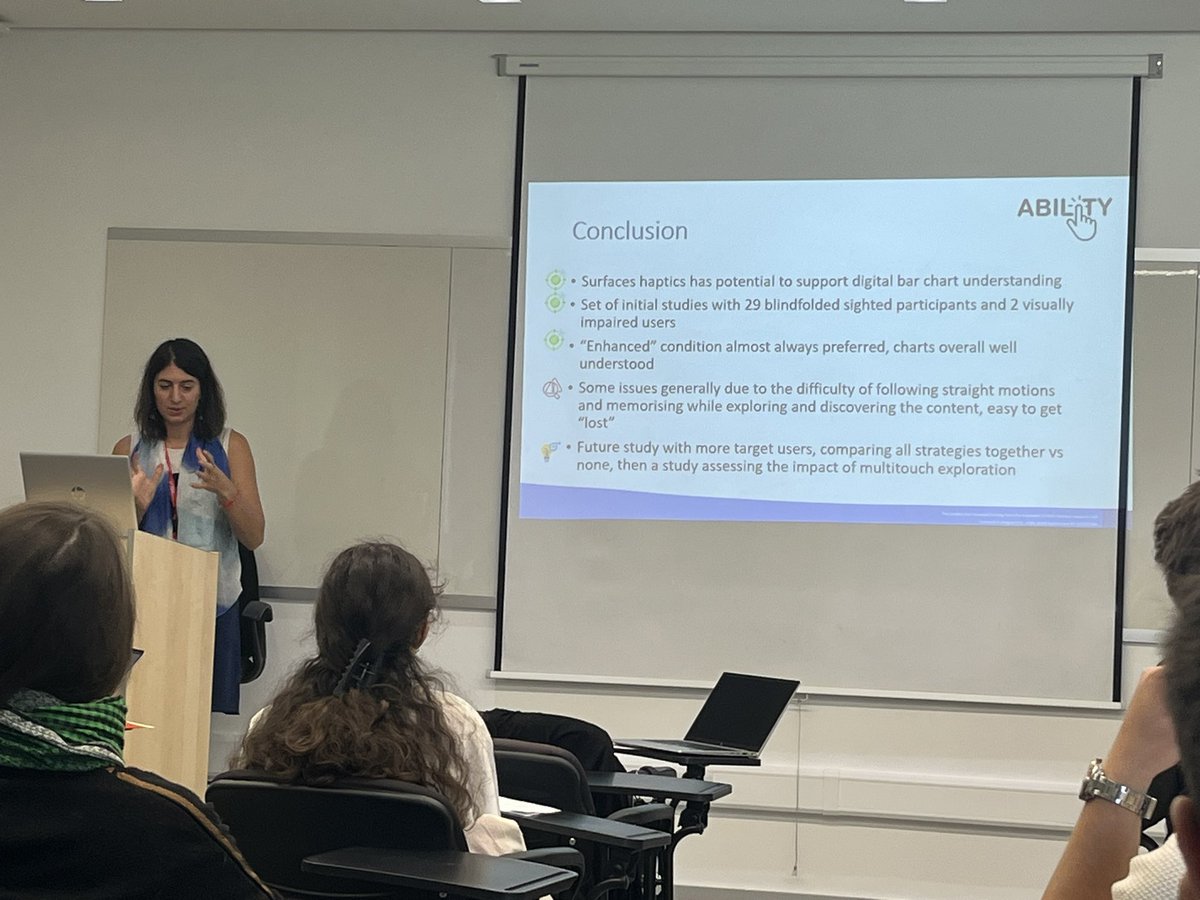
S. Panëels presented “Haptic Tablet for Digital Graphics Accessibility” a Surface Haptics Tablet with multitouch vibrotactile interaction. It renders textures, UI & zoom for maps, books & graphics. Bars tested with vibration, participants felt & differentiated them. #AAATE2025
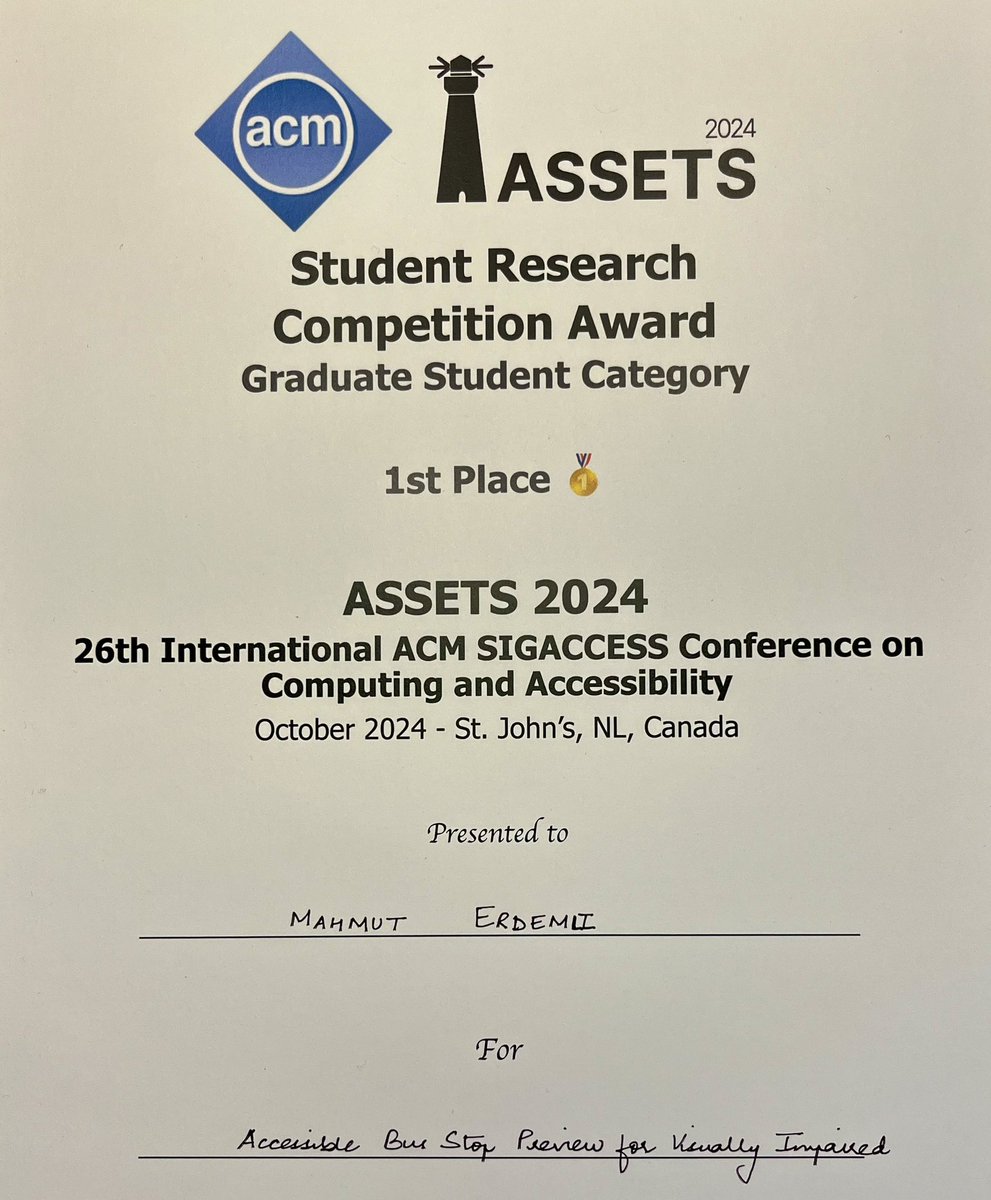
I am excited to have won the Graduate Student Research Competition Award at #ASSETS2024 for my paper titled “Accessible Bus Stop Preview for Visually Impaired”. Check my website erdemli.github.io to learn about my accessibility research on digital maps, and navigation aids.
ALT A first place certificate award for Student Research Competition from ASSETS2024 conference for my paper titled “Accessible Bus Stop Preview for Visually Impaired”.
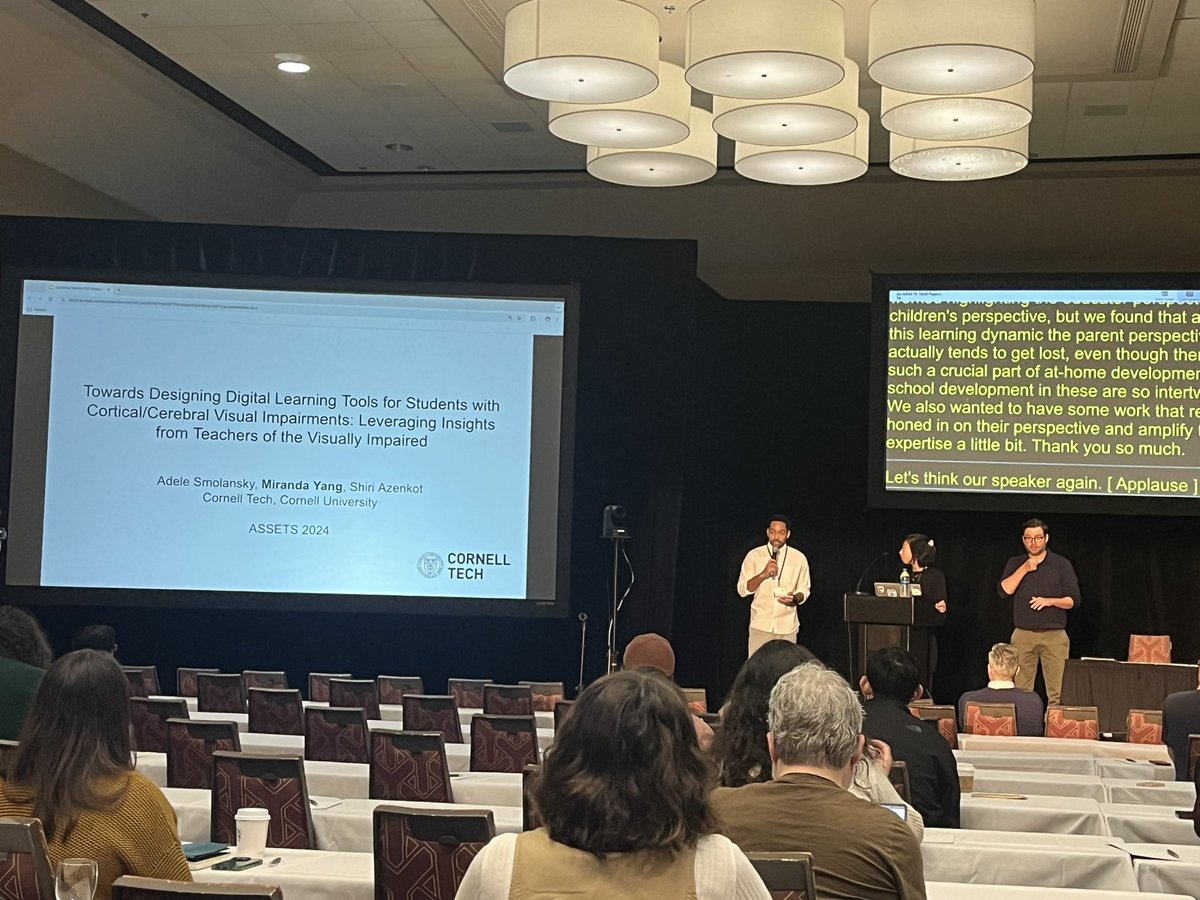
Adele Smolansky presented “Towards Designing Digital Learning Tools for Students with Cortical/Cerebral Visual Impairments: Leveraging Insights from Teachers of the Visually Impaired” explored making existing visual digital learning tools more accessible for students. #ASSETS2024
ALT Photo is taken at a conference room with two digital screens. A facilitator, a presenter and a sign language interpreter are on the stage facing the audience. A title slide with a heading “Towards Designing Digital Learning Tools for Students with Cortical/Cerebral Visual Impairments: Leveraging Insights from Teachers of the Visually Impaired” is on the first screen and subtitles are on the second screen.
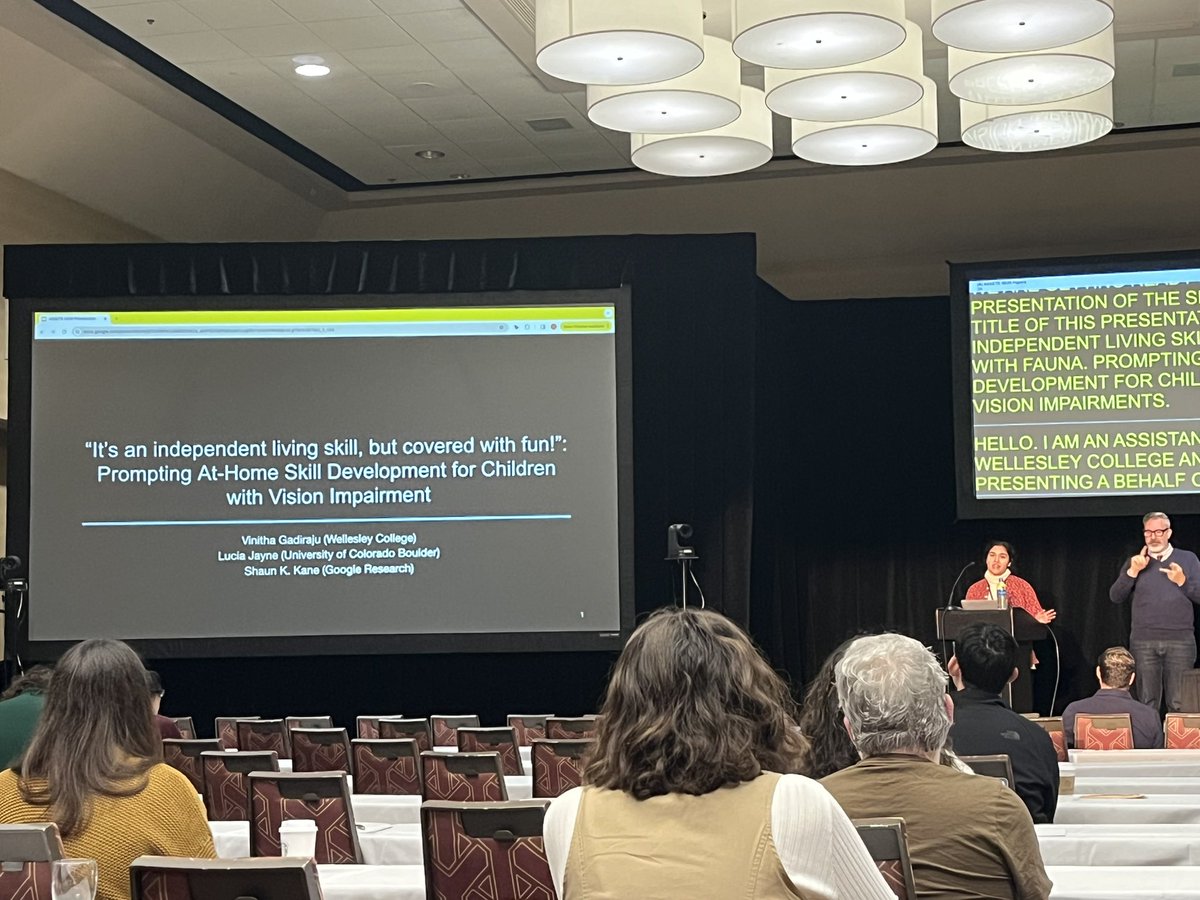
Vinitha Gadiraju presented “It's an independent living skill, but covered with fun!": Prompting At-Home Skill Development for Children with Vision Impairment and found activities that explicitly scale back parent assistance increased independence, optimism and privacy #ASSETS2024
ALT Photo is taken at a conference room with two digital screens. A presenter and a sign language interpreter are on the stage facing the audience. A title slide with a heading “It's an independent living skill, but covered with fun!": Prompting At-Home Skill Development for Children with Vision Impairment” is on the first screen and subtitles are on the second screen.
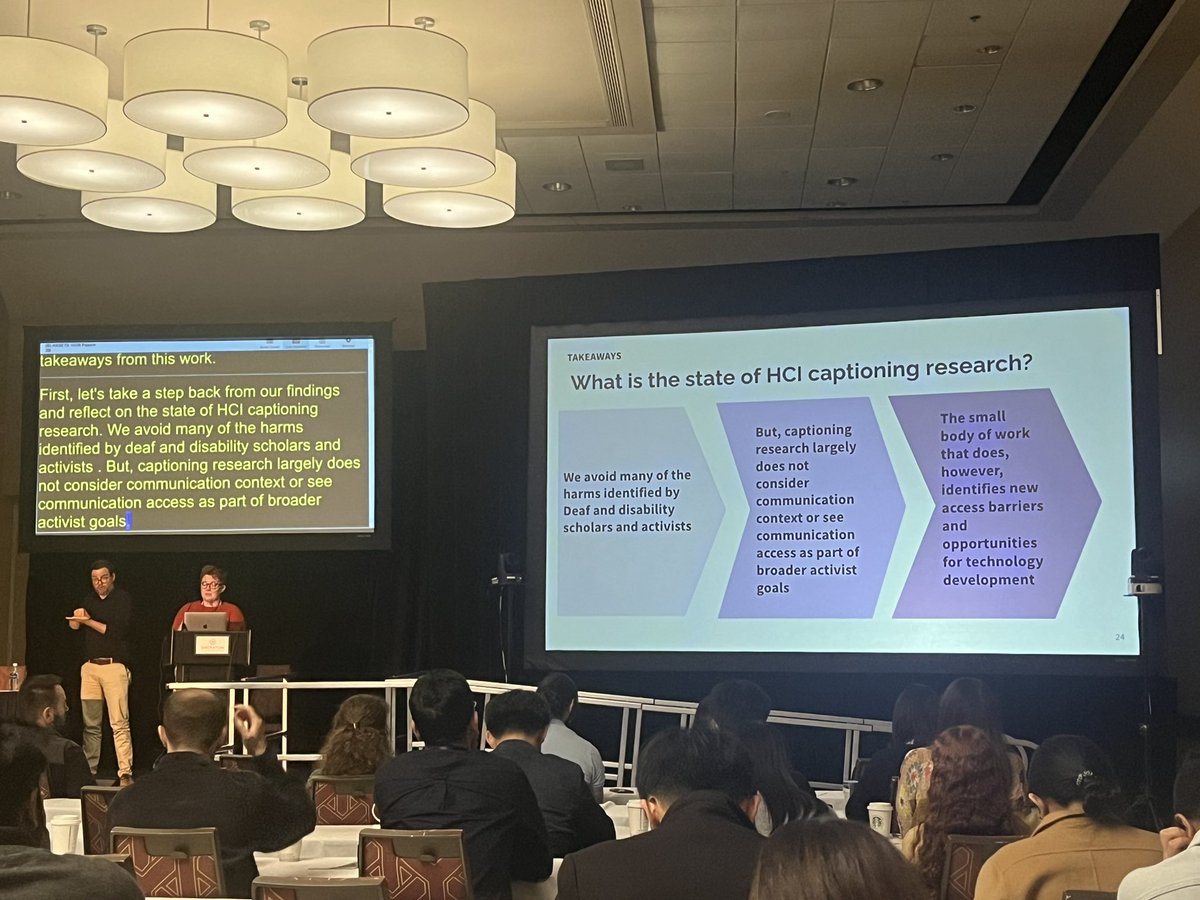
Emma J McDonnell presented a study titled “Envisioning Collective Communication Access”. Literature review recommends designing captioning to change discriminatory social conditions and engaging conversation partners in access is a promising direction for future work. #ASSETS2024
ALT Photo is taken at a conference room with two digital screens. A presenter and a sign language interpreter are on the stage. A slide with a heading “What is the state of HCI captioning research” is on the first screen and subtitles are on the second screen.
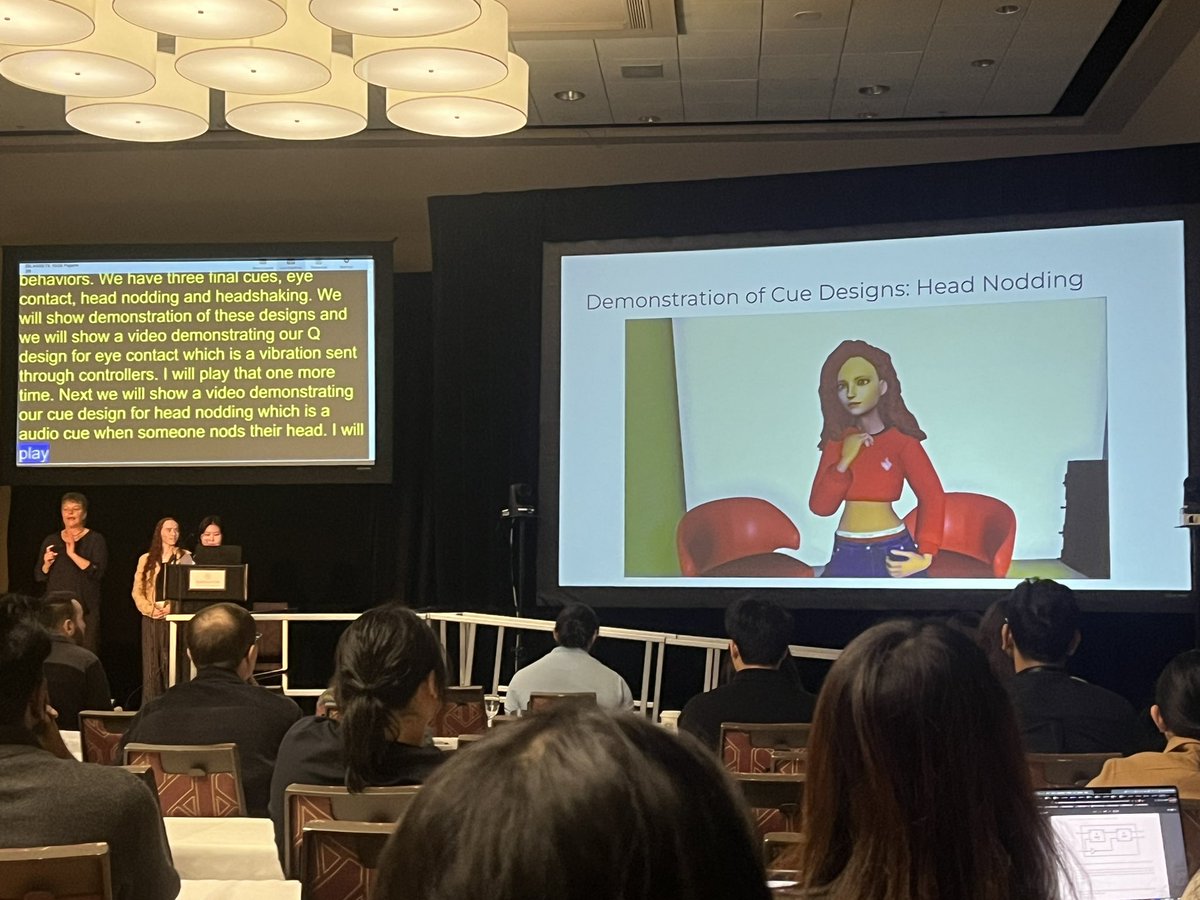
Crescentia Jung and Jazmin Collins presented “Accessible Nonverbal Cues to Support Conversations in VR for Blind and Low Vision People”. Study found that using social interactions with audio cues increased detection and engagement for users who are visually impaired. #ASSETS2024
ALT Photo is taken at a conference room with two digital screens. Two presenters and a sign-language interpreter are on the stage. A virtual reality avatar is head nodding on the first screen, and subtitles are on the second screen.
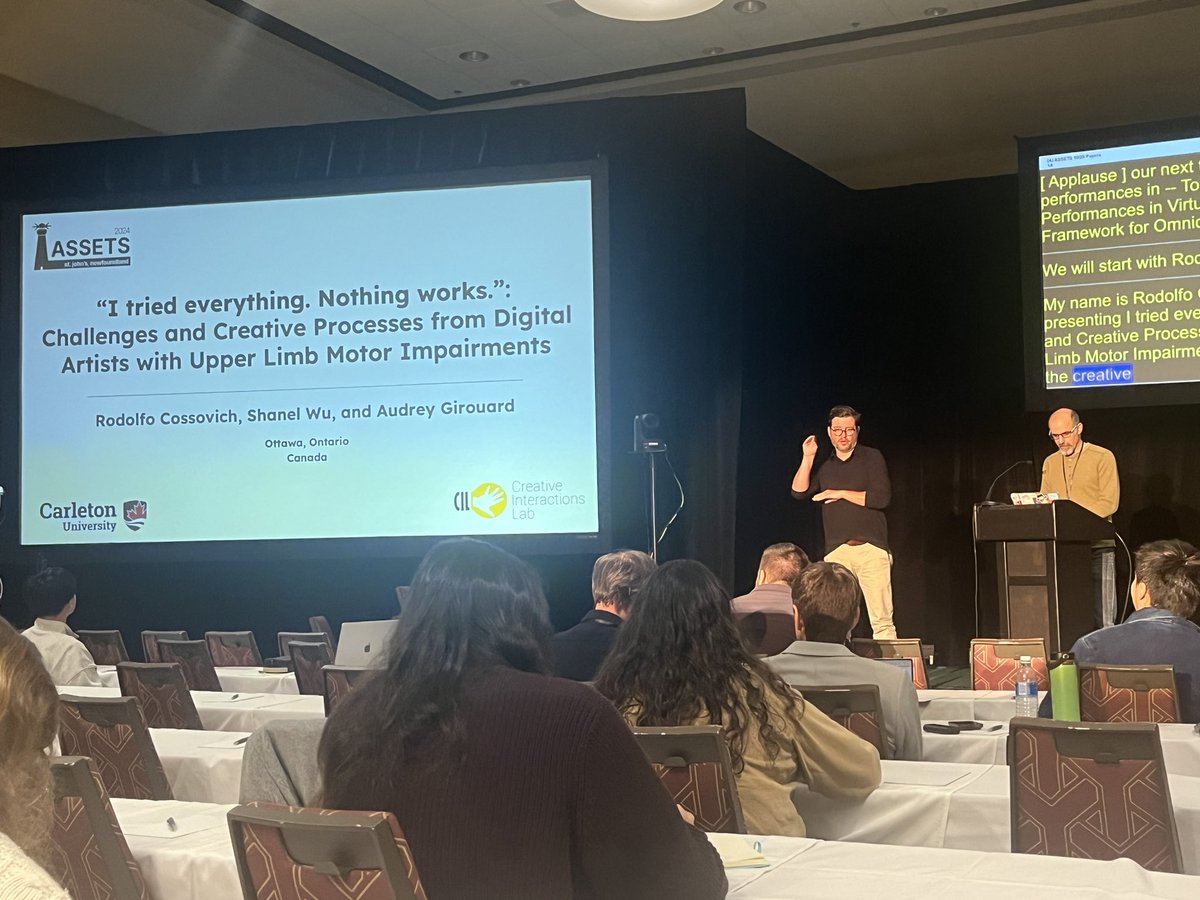
Rodolfo Cossovich presented “Accessible Tools for Digital Visual Artists with Upper Limb Motor Impairments” and the results indicate that the aesthetics of tools and software interfaces play a critical role in fostering a sense of inclusion. #ASSETS2024
ALT The photo is taken at a presentation room with two digital screens. Presenter is facing the audience and main screen shows the first slide with a title heading “I tried everything. Nothing works: Challenges and Creative Processes from Digital Artists with Upper Limb Motor Impairments”.
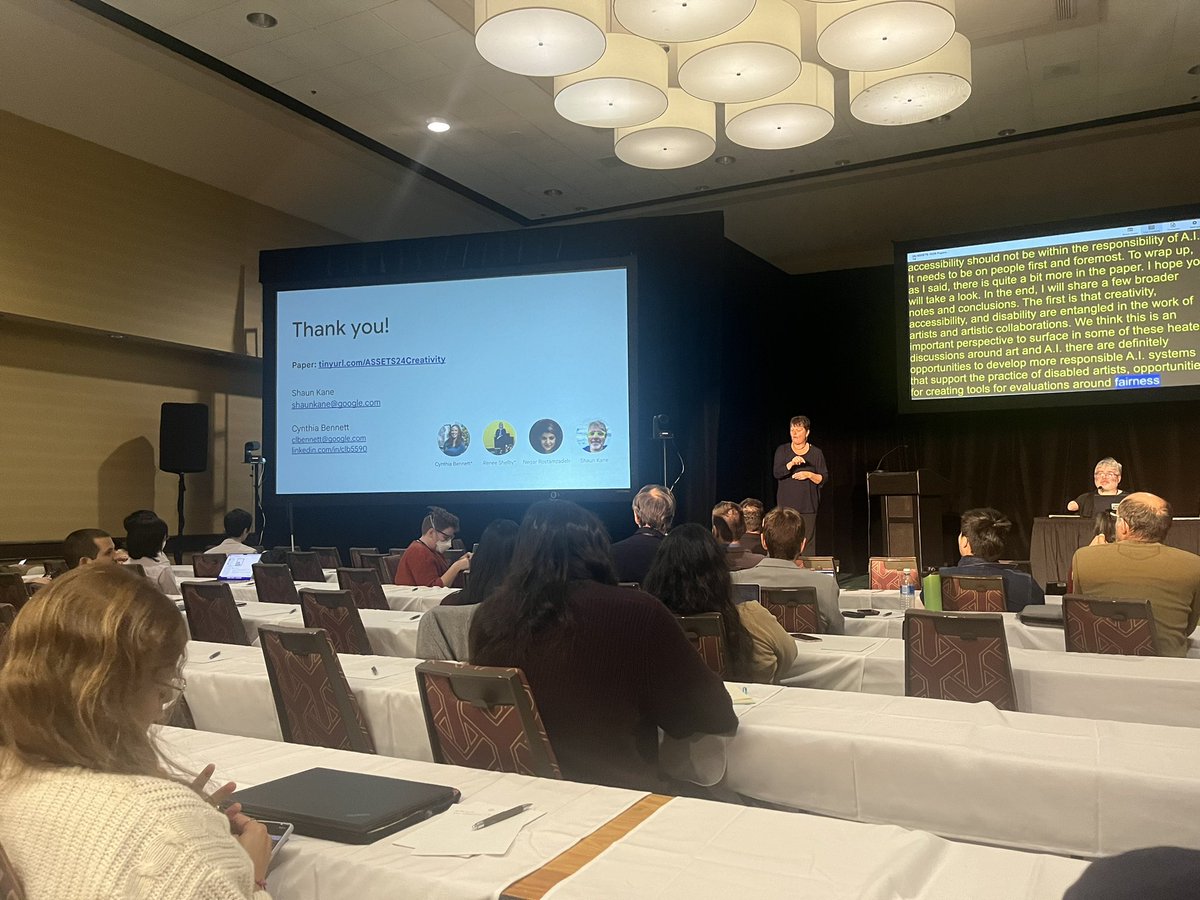
Renee Shelby presented “Painting with Cameras and Drawing with Text: AI Use in Accessible Creativity” and emphasized that AI could be an assistive tool for creative process when producing art but AI cannot be responsible alone for creating accessible art. #ASSETS2024#A11y#AIArt
ALT Presentation is a small conference room with screens. Presenter is wearing a black t-shirt and facing the audience.
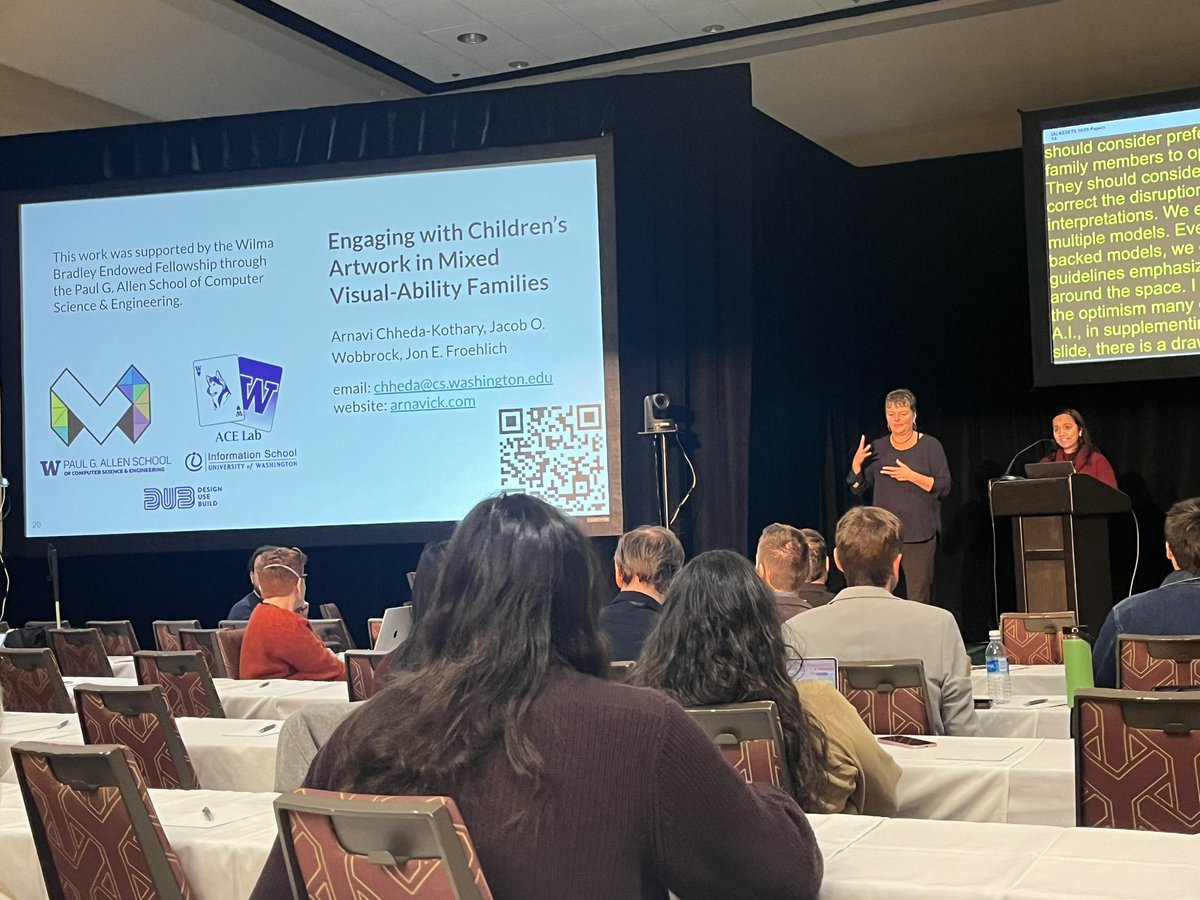
Arnavi Chheda-Kothary presented “Engaging with Children's Artwork in Mixed Visual-Ability Families” and found distinctions between context,content relationships, family members preferred children’s storytelling and interpretation over other nonvisual representations. #ASSETS2024
ALT Presentation in a small conference room. A PowerPoint presentation is displayed next to a presenter. Presenter is a female wearing a red sweater facing the audience.
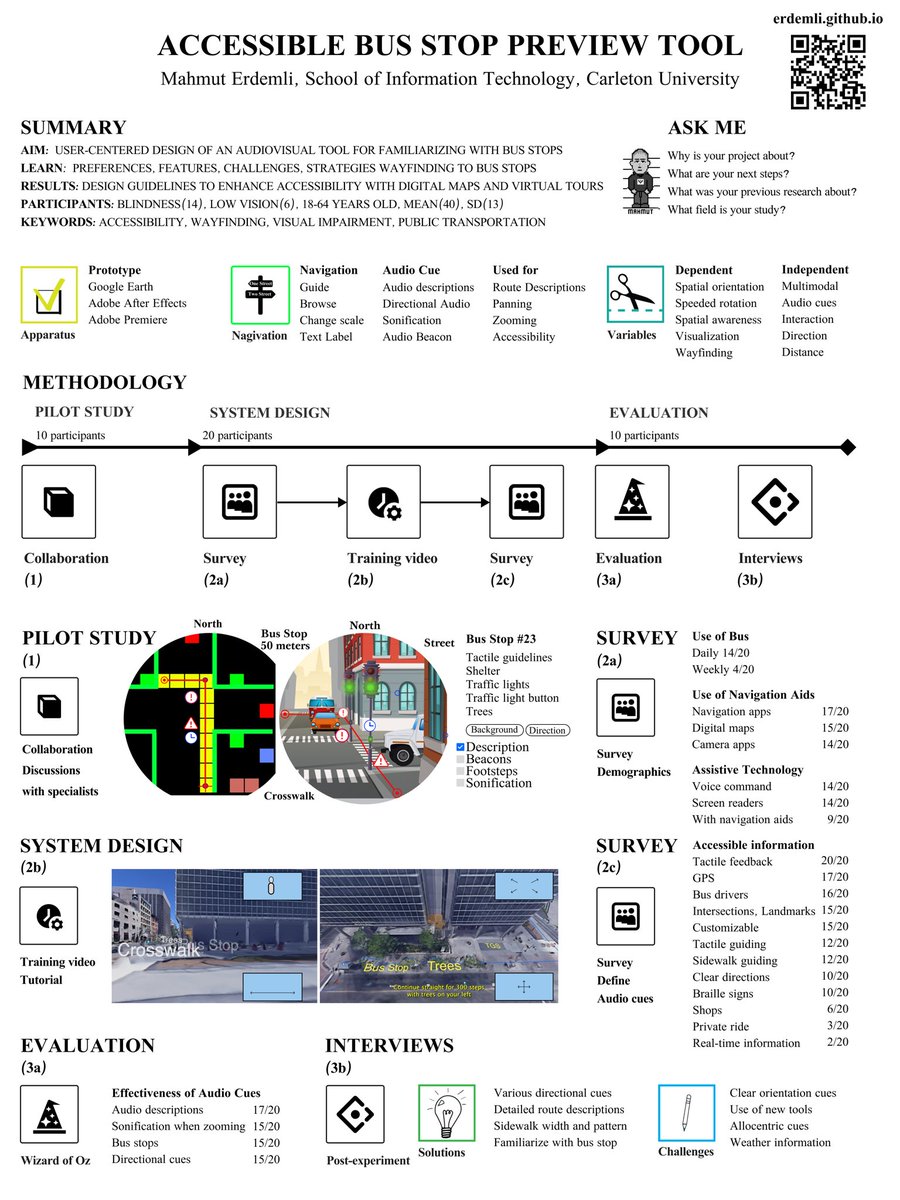
I am presenting my research “Accessible Bus Stop Preview for Visually Impaired” @sigaccess#ASSETS2024.
Please come say hi at my poster sessions on Tuesday and please attend my presentation on Wednesday.
Paper: dl.acm.org/doi/10.1145/36635…
Website: erdemli.github.io
Poster 👇
ALT Accessible Bus Stop Preview for Visually Impaired. The poster outlines the research with a summary, design and results. Please visit my website at https://erdemli.github.io to find the details.
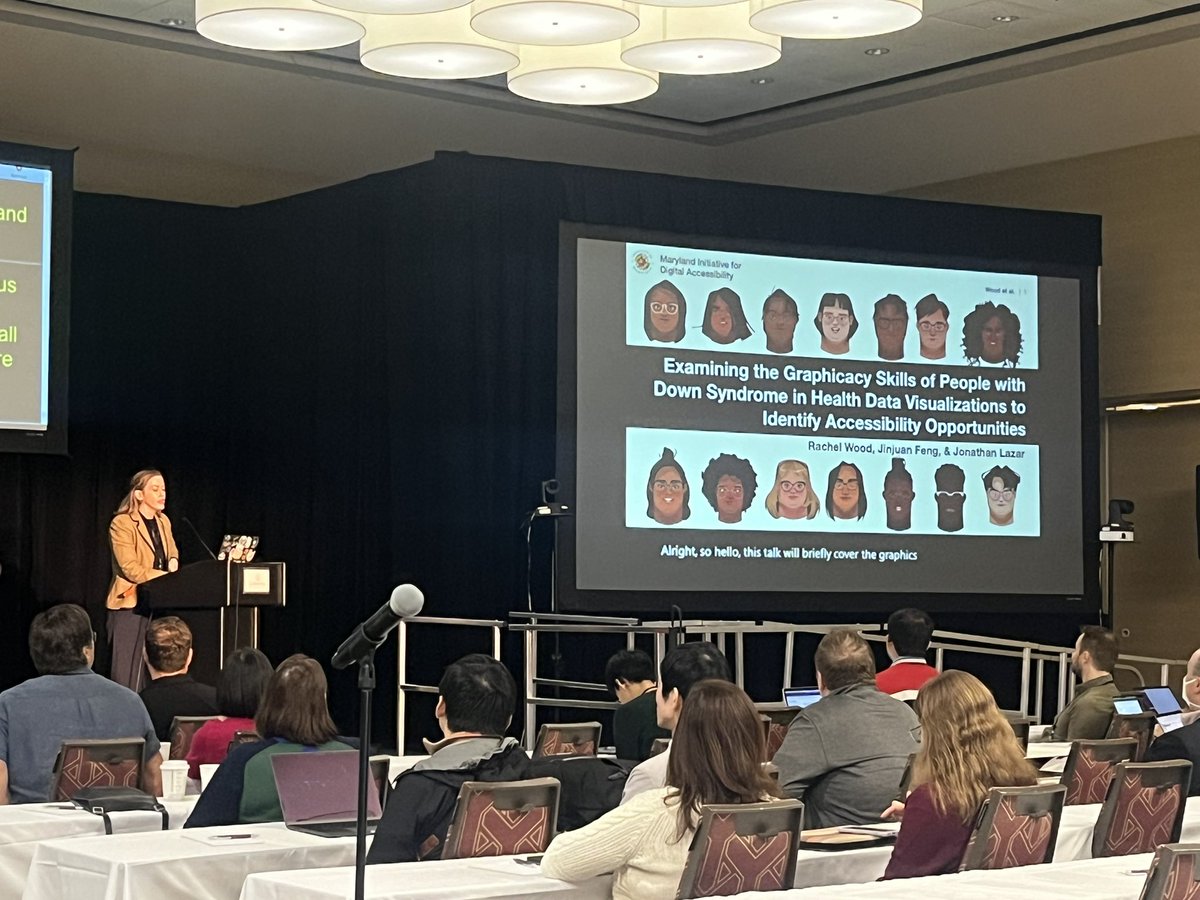
Rachel Wood studied graphic reading skills for people with Down Syndrome and explored accessibility opportunities such as information metaphors and accessible X&Y axes intervals to aid with accessible health data visualizations. #ASSETS2024
ALT Presenter who is wearing a yellow coat is on the stage in front of academics at a conference room.
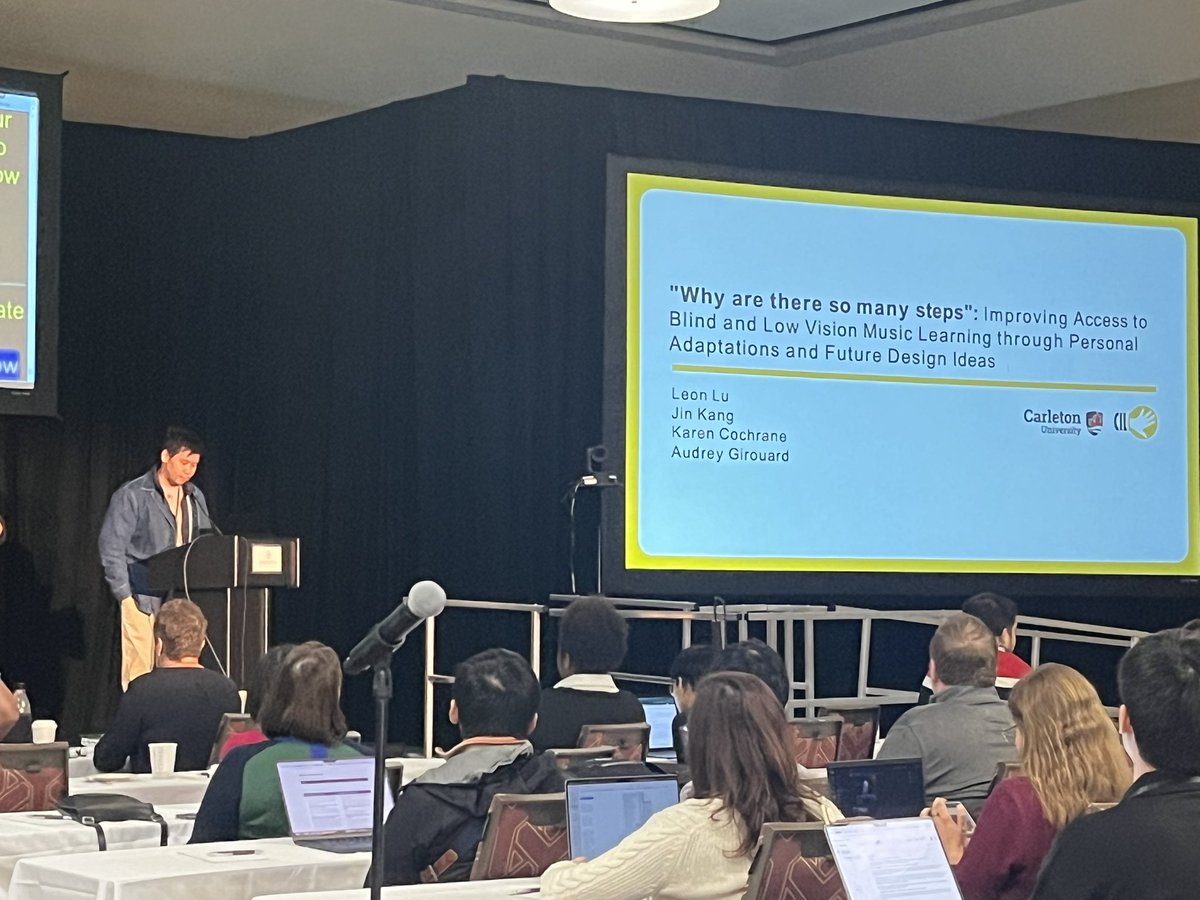
“Why are there so many steps” was presented at #ASSETS2024. Leon Lu studied teaching music for Visually Impaired and explored personal adaptations and future design ideas to aid with multimodal feedback when learning music.