
main account of @amuldotexe & @thatinrust
Joined January 2023
- Tweets 1,306
- Following 488
- Followers 1,484
- Likes 6,410
344 Photos and videos









Pinned Tweet

Apr 8
Most of my tweets here are written using an audio dictator, and that is a feature, not a bug. That also helps me keep my writing a little more unfiltered and also helps me write a lot more, because talking is easier than writing and editing.
1
2
1,858
main.rs retweeted

Jun 9
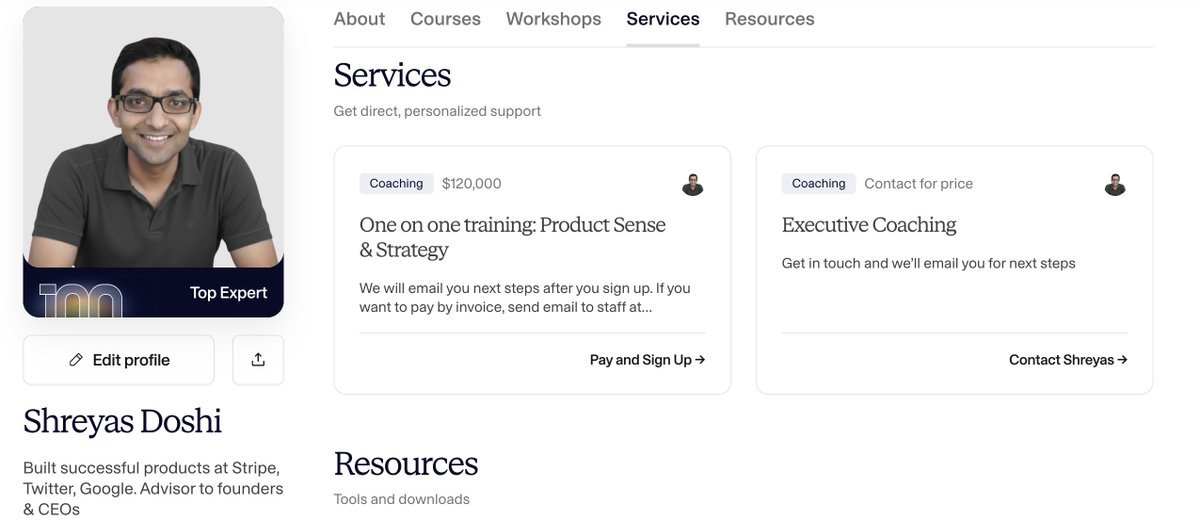
🆕I am starting to do more Executive Coaching now that some more space has opened up in my personal life. Now coaching 3 founders (this is different from my startup advising work) and I am now opening it up for senior product leaders.
Details are here: maven.com/shreyas-doshi
7
6
73
17,465

May 29
Premature optimization is the root of all evil
- Donald Knuth
24 Jan 2022

3) A&B (& the exec team) should have understood that a lot of what seemed like “great operations & management” actually hurts early-stage bold initiatives like Zeus. Premature operational optimization can be a very bad thing for early-stage projects in startups & large companies.
1
4
643
May 22
Hypothesis:
It's easy to attribute your success to yourself, because the mind doesn't want to know the 10 other variables which played their part
May 22

This.
I'm not (billions) ultra-wealthy, but I'm incredibly grateful for being in the top something less than 1% of global wealth.
There's no way I'll give up all that to be poor at 25 because I'll definitely grow older again but I may not become wealthy again.
223
main.rs retweeted
May 19
This recent @bchesky podcast with @patrick_oshag belongs to the hall of fame of tech podcast episodes. Very likely the deepest founder conversation after the Steve Jobs lost interview in the 90s.
Currently it has 90k views; it deserves 100X more views.
youtube.com/watch?v=eURcW5_u…
20
63
851
352,552
main.rs retweeted

Apr 27
What level of abstraction should you look at your code?
2
2
51
4,249
main.rs retweeted
Apr 14
“The skill that matters now across all three roles—PM, designer, engineer—is business acumen: understanding the company’s equation and knowing what to build next.” ✅✅✅
Apr 13

My biggest takeaways from @rabois:
1. The team you build is the company you build. Founders get distracted by markets, customers, and technology. If you have the right people, those problems get easier. If you have the wrong people, none of those things save you.
2. Build your company on undiscovered talent. The only way to scale an organization against incumbents with infinite budgets is to find talent that large companies’ hiring machines will misprocess. In practice, this often means skewing younger—not because young people are inherently better but because they have fewer data points, which means typical evaluation systems can’t categorize them accurately. This is where the alpha often is.
3. Hire more “barrels,” not “ammunition.” A “barrel” is someone who can take an idea from zero to outcome without hand-holding. Most companies have only a handful of these people. Hiring more people without expanding the number of barrels doesn’t increase output; it increases coordination tax and creates drag. The ratio of barrels to ammunition is what determines the number of important things a company can pursue simultaneously.
4. CMOs are becoming the #1 consumer of AI tokens. At a few of Keith’s top portfolio companies, the heaviest user of AI is the chief marketing officer. These CMOs are running analytics, shipping campaigns, and generating insights that previously required entire teams of deputies.
5. The three signs a company will win: operating tempo, internal talent development, and “the relentless application of force” from the top. Keith identifies a consistent pattern across his best portfolio companies. First, operating tempo: Ramp shipped physical cards in three months when the industry standard was 9 to 12. Second, talent development through internal promotion rather than senior external hires; the CMO at one of his top companies was the previous chief of staff. Third, the CEO’s willingness to push harder as things improve, not less. Mike Moritz told a friend of Keith’s that the most common trait of the best CEOs is “the relentless application of force.” Complacency is the natural by-product of success, and the CEO’s job is to offset it.
6. For consumer products, talking to customers is not just unhelpful; it’s actively harmful. Keith refuses to let companies he advises conduct consumer research. His argument: Consumer decisions are subconscious. Ask any Porsche owner why they bought the car, and 99% will cite every reason except the real one. Once misleading customer feedback enters the organization, it locks into people’s brains and distorts every subsequent decision.
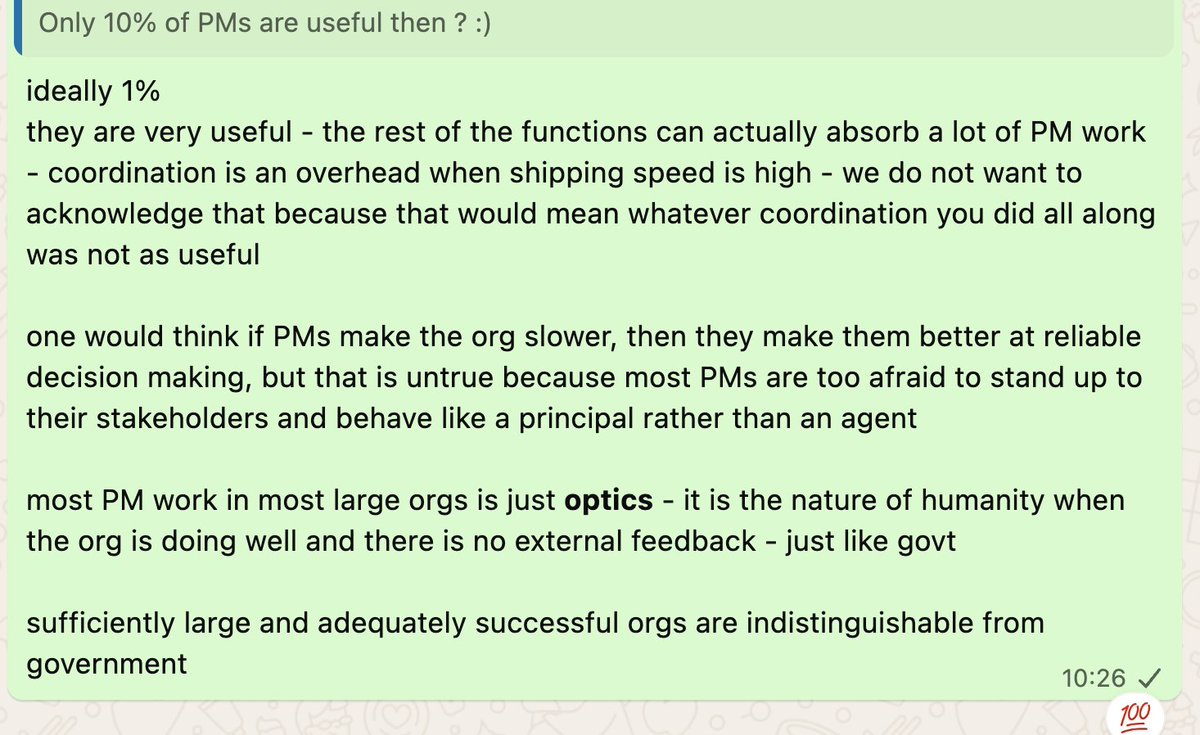
7. Keith believes the PM role may not survive the AI era. Taking customer inputs, building a sequential year-long roadmap, and coordinating between teams are structurally incoherent when AI capabilities change weekly. The skill that matters now across all three roles—PM, designer, engineer—is business acumen: understanding the company’s equation and knowing what to build next.
8. Great hiring comes from great referencing. Run at least 20 references, and keep going until you hit negative feedback. Ask specific, forward-looking questions (e.g. “Would you start a company with them?”). If every reference is positive, you haven’t gone deep enough.
9. Use a 30-day feedback loop to sharpen your hiring instinct. Thirty days after every hire, ask: would I hire this person again? This is as predictive as waiting years, and dramatically faster for improving your judgment. Make this a habit, and your hiring quality will compound.
10. Criticize in public, not private—it optimizes for the system. Keith endorses a management practice that most people find confrontational: delivering negative feedback in front of the team, not behind closed doors. Private criticism optimizes for the individual, but the rest of the company doesn’t know the issue is being addressed, which breeds anxiety and suspicion. Public criticism lets colleagues see that leadership is aware, creates opportunities for others to volunteer help, and turns feedback into a team-building exercise.
Full conversation: youtube.com/watch?v=xCd9ykre…
14
24
269
41,270
Apr 14
Hypothesis:
Running multiple agents is for people who are alreay well verse with the codebase, for the rest of us it is a way to distract ourselves from high leverage tasks
4
307
Apr 13
This is what the set up looks like, I actually try to sit in deep squat most of the time except when I am in meetings


1
4
872
Apr 13
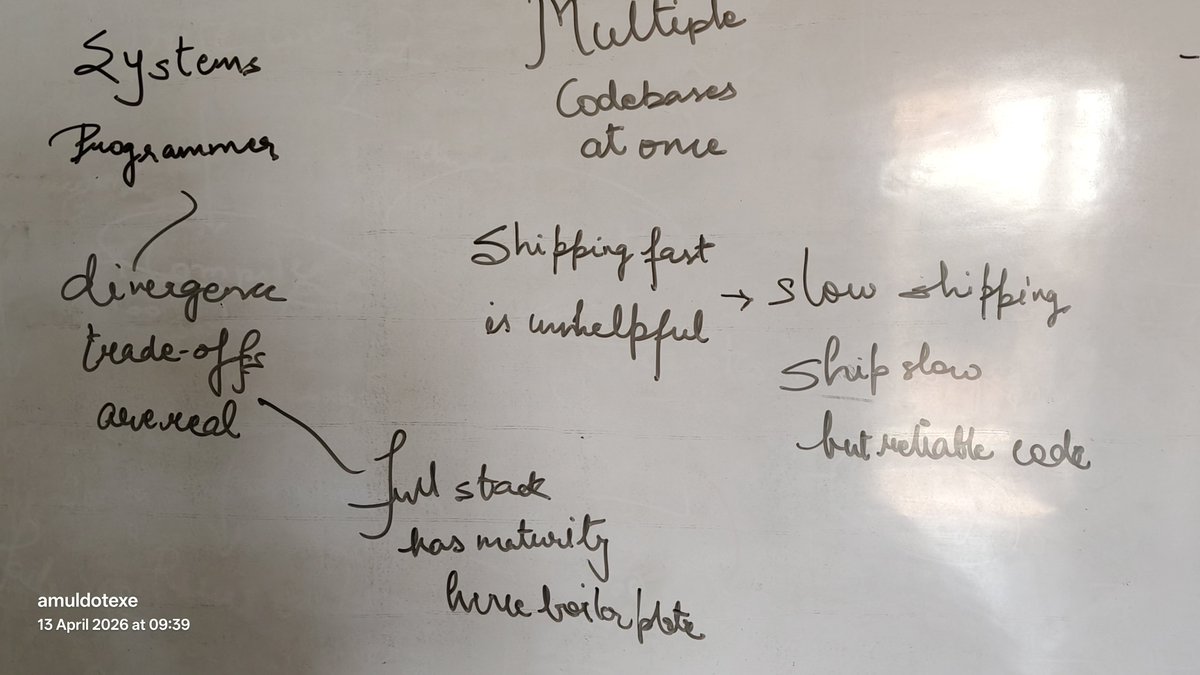
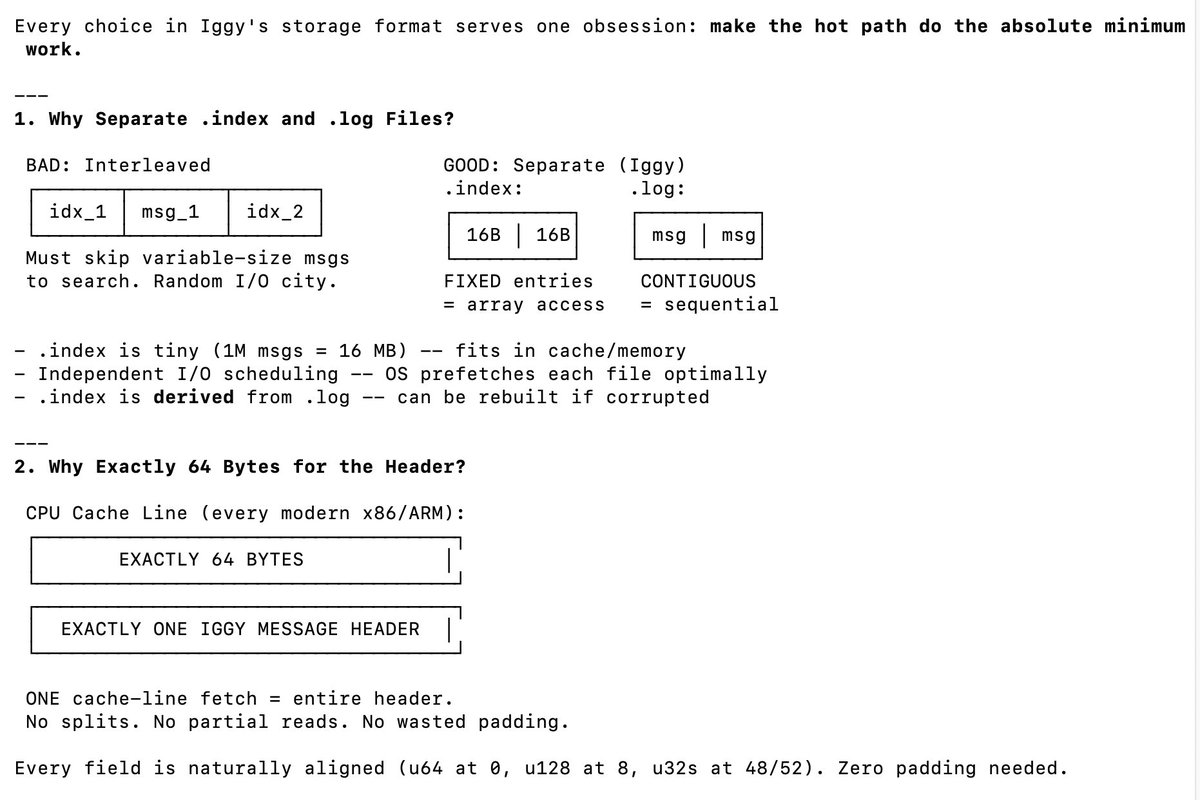
Systems programming can't have a lot of boilerplate hence shipping fast reliably is difficult
3
167
main.rs retweeted
Apr 12
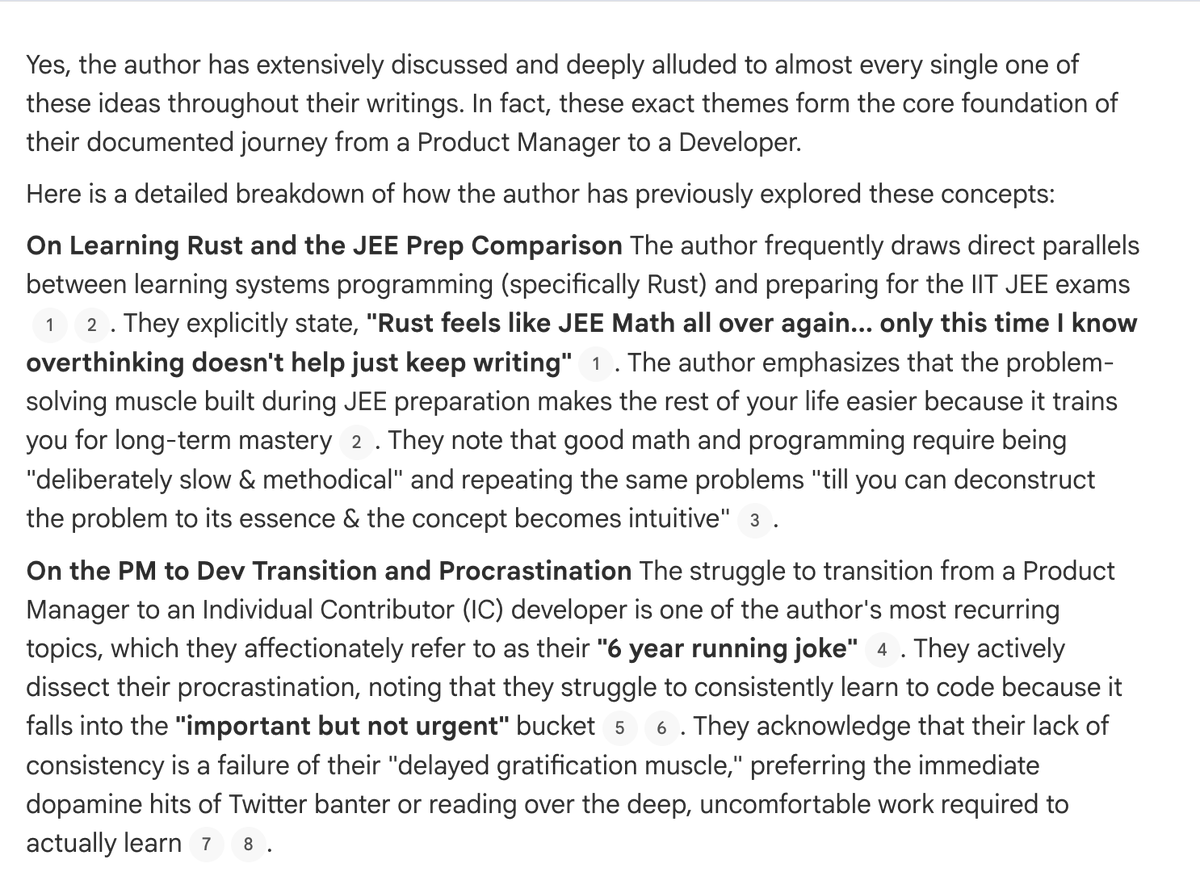
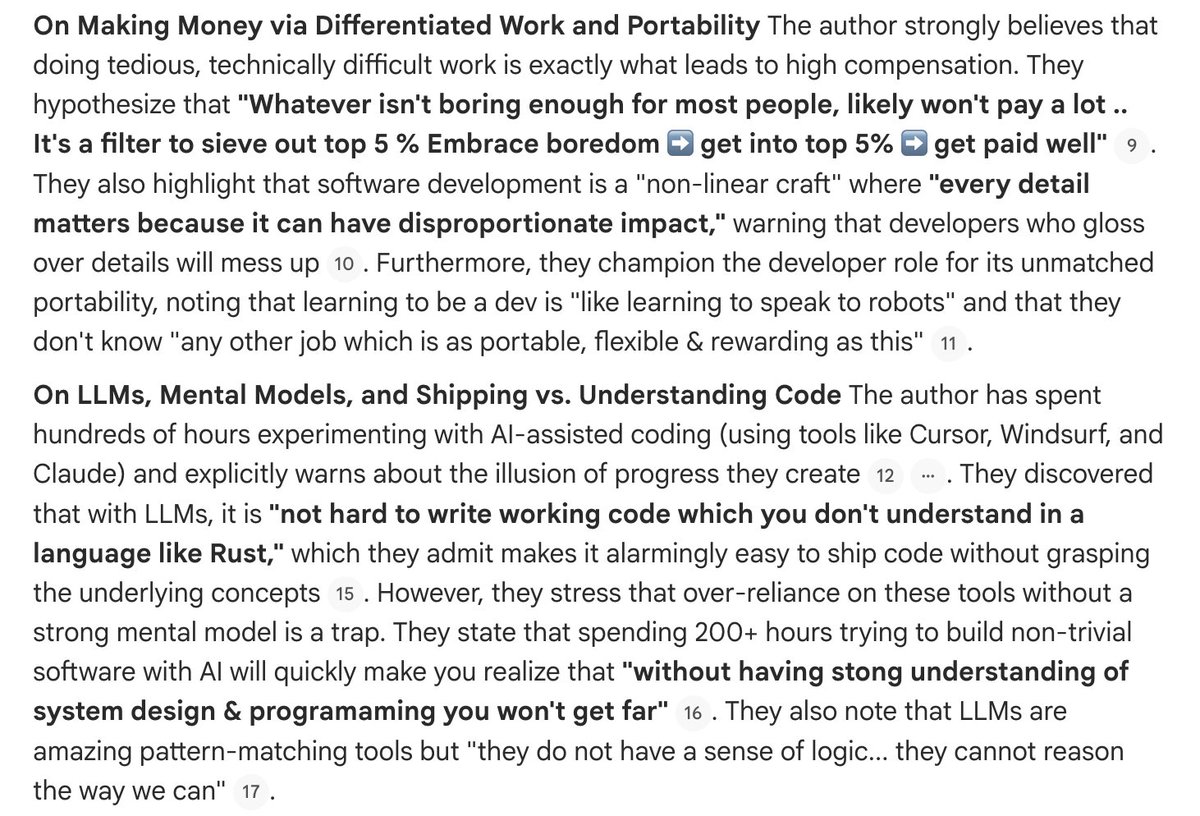
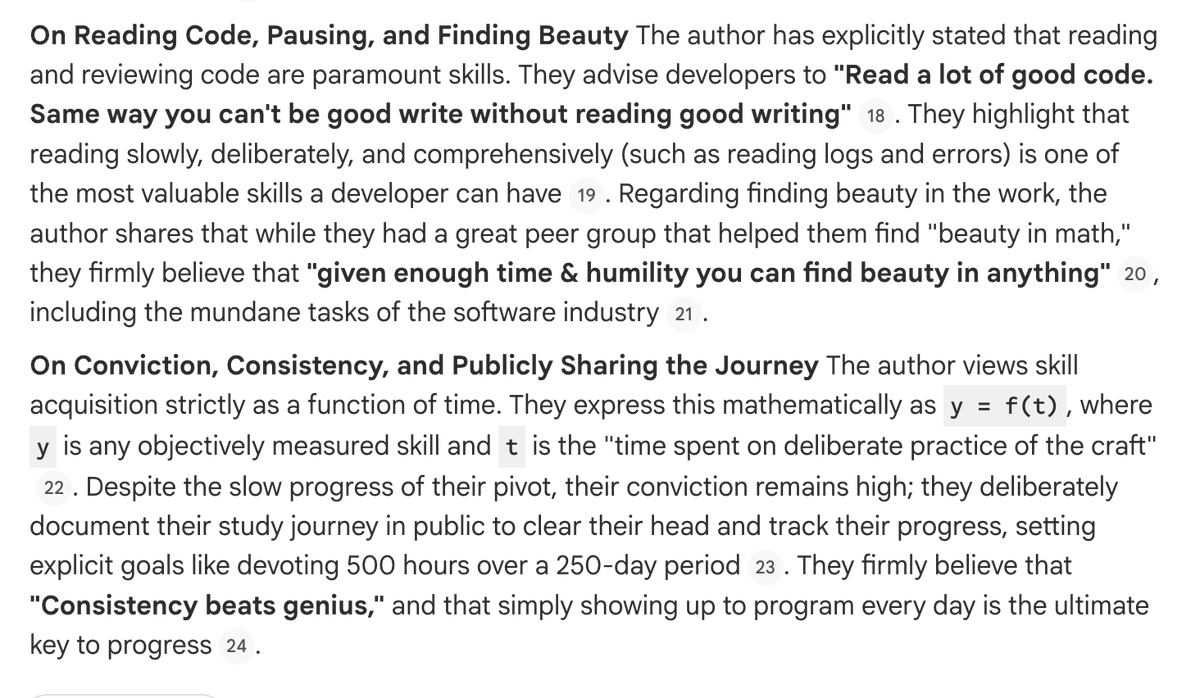
How building technical sophistication for a systems programming role is a lot about finding beauty in the boring mundane things, just like JEE prep
2
6
46
5,344
main.rs retweeted
Apr 11
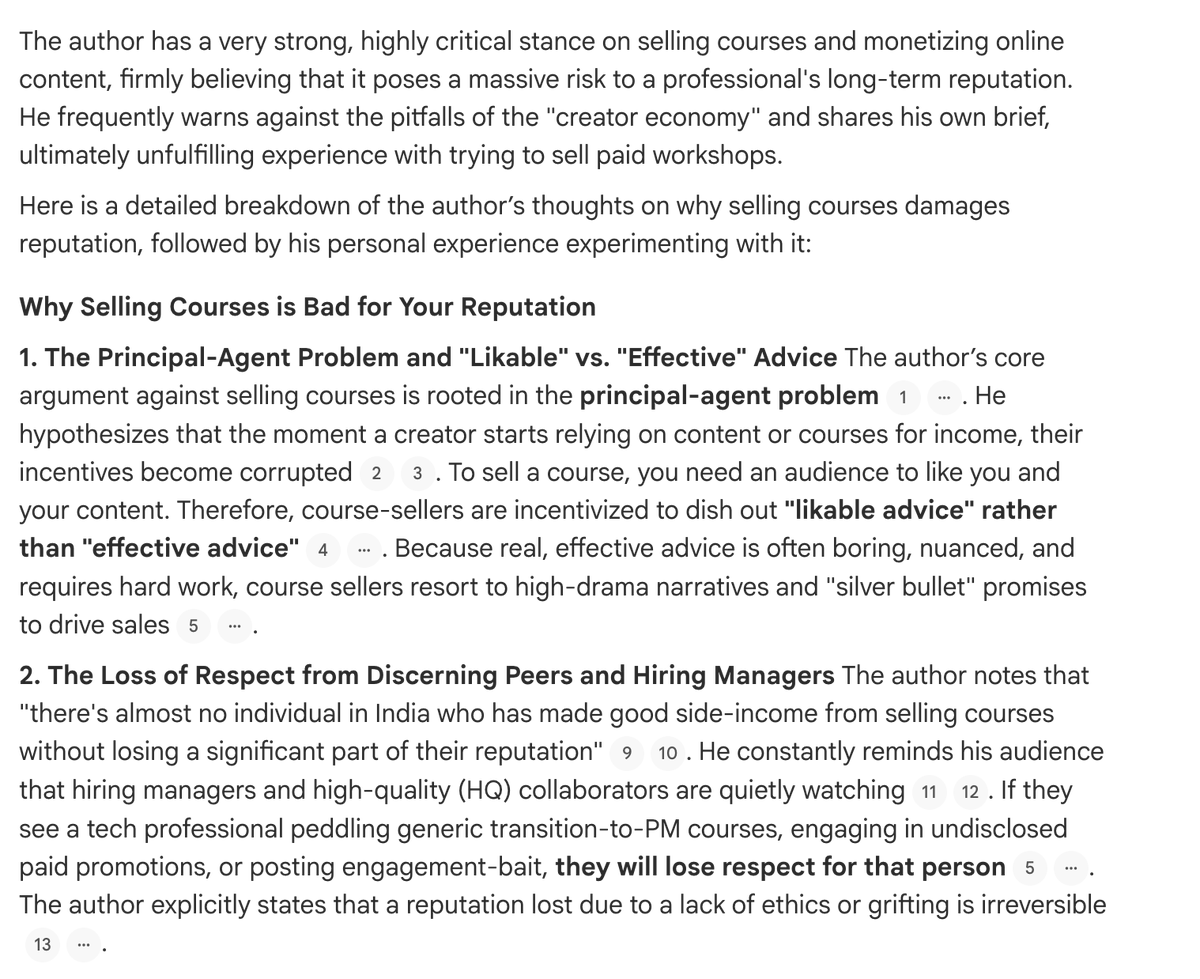
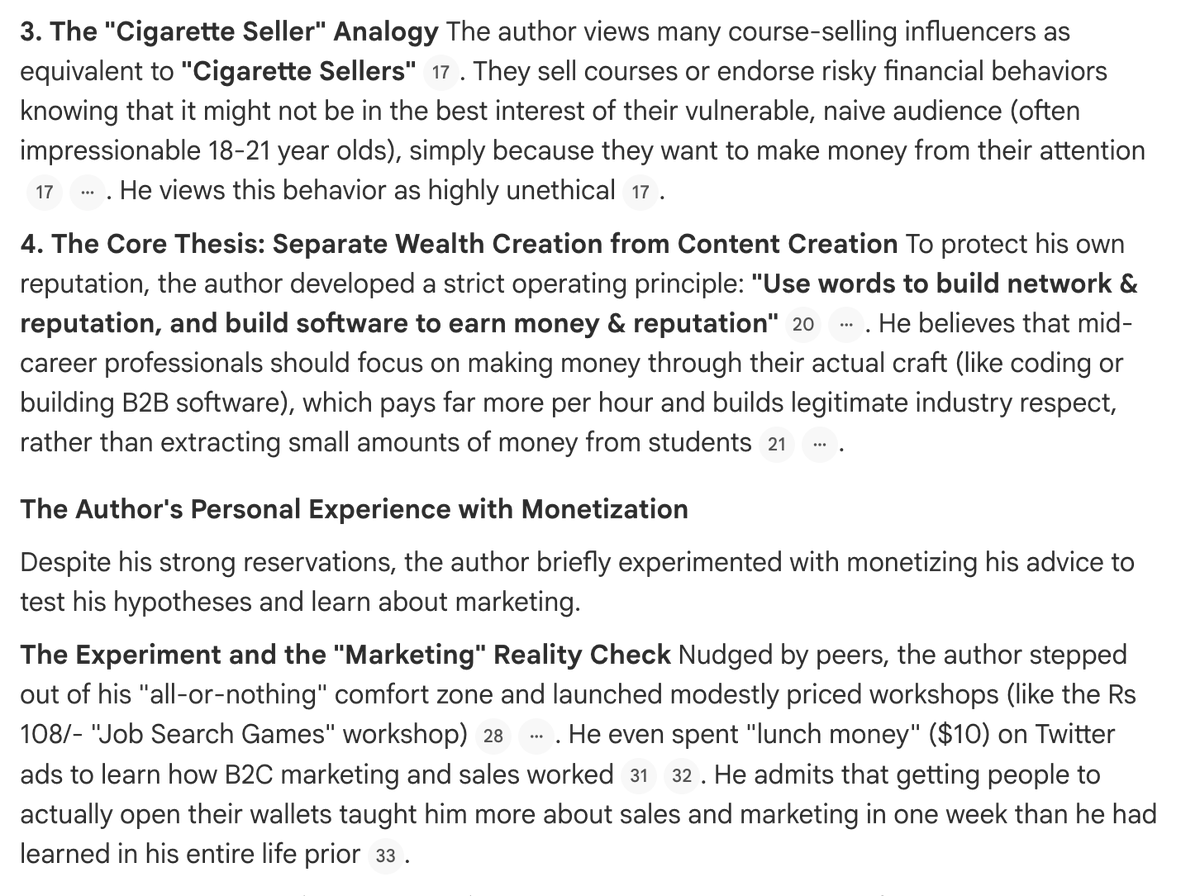
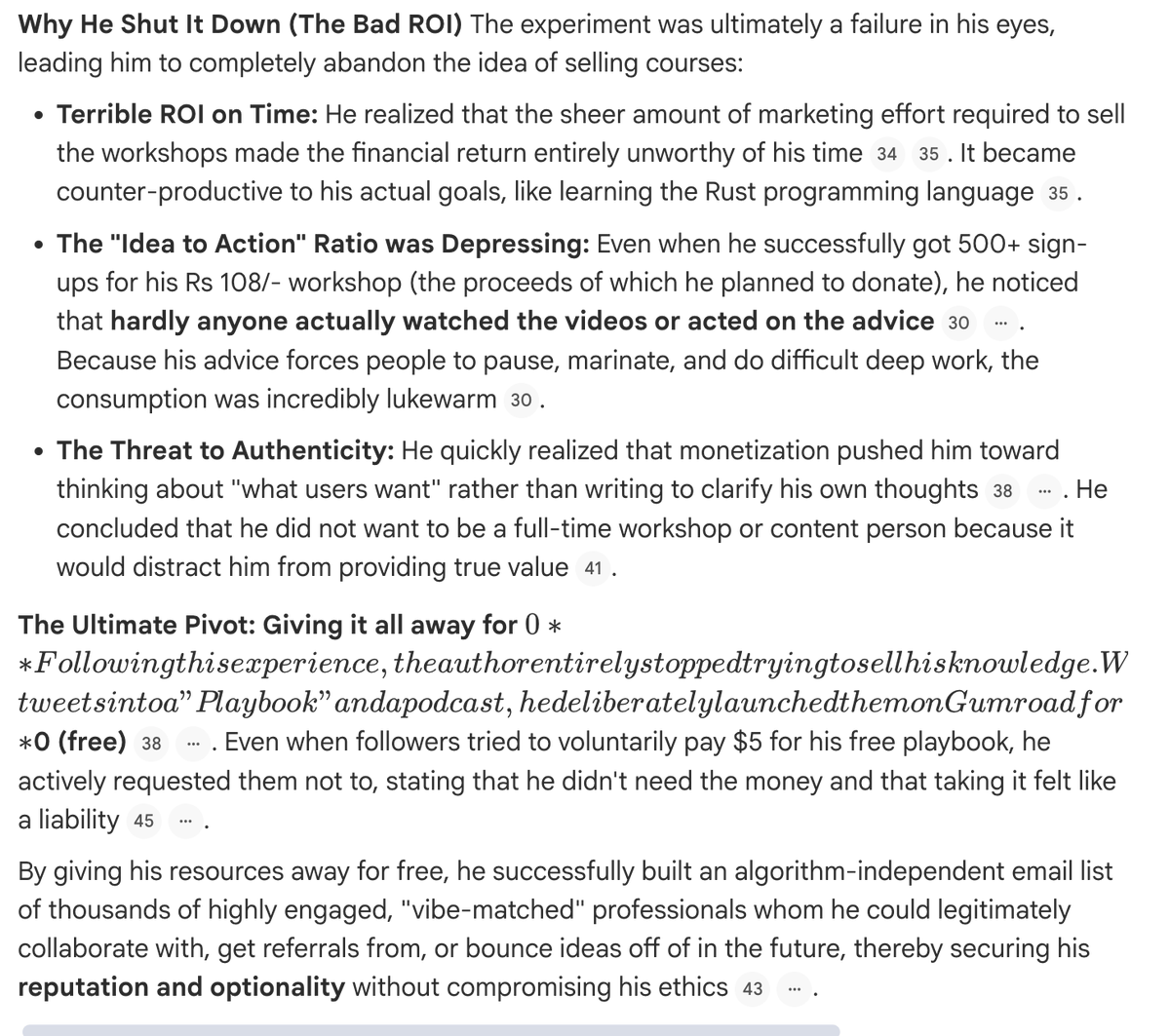
The moment you sell courses you land in the league of Ankur Warikoo - not good enough to do software development, can only sell courses - and the ROI on your time might not be as great as what it is on software
1
5
66
9,941
main.rs retweeted
Apr 11
Hypothesis:
Most mediocre mid-career people do not talk *enough* about their problems, they are often just giving gyaan to younger folks (yes including me 😂)
3
2
44
5,932
main.rs retweeted
Apr 9
Hypothesis:
The industry is right in being biased against older folks
5
2
46
5,841
Apr 8
Following this

My hunch is he's bluffing and diverting attention from the special ops the US may launch tonight or shortly to take some islands off Iran's coast in Strait of Hormuz. x.com/aravind/status/2039528…
124