
VP, Meese Institute for the Rule of Law at Advancing American Freedom; former VP, Institute for Constitutional Gov't at Heritage. Opinions expressed are my own.
Joined August 2011
- Tweets 3,104
- Following 662
- Followers 3,965
- Likes 1,725
71 Photos and videos



John Malcolm retweeted

This order would flunk every part of an administrative law exam. There’s no standing. Plaintiffs have no cause of action. The matter is clearly committed to agency discretion by law. The judge is substituting her own judgment for that of agency. It’s pure lawlessness—and an indication why, properly understood, the APA does not authorize individual district judges to afford nationwide relief.
Jun 12

BREAKING: Judge Angel Kelley (Biden/MA) blocks Interior Secy. Doug Burgum's "Restoring Truth and Sanity to American History" order at nat parks nationwide. Feds must restore race, climate & LGBT mentions documentcloud.org/documents/…
29
329
1,472
116,362
John Malcolm retweeted

Jun 12
The first trillionaire in human history
- Elon Musk
- Born in South Africa
- Bullied relentlessly as a kid
- Immigrated to North America
- Arrived with a backpack and a dream
- Built Zip2 with his brother
- Sold it 4 years later for $300 million
- Co-founded PayPal with the profits
- Revolutionised digital payments
- Sold PayPal to eBay for $1.5 billion
- Bet everything on Tesla and SpaceX
- Got mocked for electric cars
- Got laughed at for reusable rockets
- Nearly went bankrupt in 2008
- Kept building anyway
- Turned Tesla into the world’s most valuable automaker
- Made EVs mainstream and transformed the automotive industry
- Made reusable rockets a reality
- Reduced the cost of reaching space by 95%
- Sparked the modern commercial space race
- Built Starlink and connected millions around the world to high-speed internet
- Turned SpaceX into the most valuable private company in history
- Bought Twitter for $44 billion
- The world said he overpaid
- He was called reckless, stupid & crazy
- Advertisers fled, media declared it dead
- Critics called it the worst acquisition in tech history
- Renamed it 𝕏
- Rebuilt the platform anyway
- Turned it into one of the most influential platforms on Earth
- Launched xAI and accelerated the global AI race
- Sent astronauts to space
- Is trying to get humans to mars
- Created millions of jobs
- Generated hundreds of billions in value
- Inspired an entire generation of builders
Before:
- Failed repeatedly
- Worked insane hours
- Slept in factories and offices
- Got bullied, laughed at and mocked
- Constantly told “it’s impossible”
- Kept building anyway
- Made it possible
Today:
- Richest person on Earth
- First trillionaire in human history
- Largest IPO in history $1.77 trillion
Most people quit when the world laughs at them.
Elon Musk built the future instead.
Love him or hate him…
Nobody has changed more industries in a single lifetime.
Payments. Cars. Energy. Space. Social Media. Communications. AI.
History won’t remember the people who said it couldn’t be done.
It will remember the people who did it anyway.
Congratulations Elon.
The first trillionaire. 🚀


4,354
28,631
111,346
2,342,937
John Malcolm retweeted

Jun 12
Elon just created 4,400 millionaires in a single day.
400 of them are now worth over $100 million.
These aren't VCs. They're SpaceX employees, and the list includes welders, technicians, and cafeteria staff, because for two decades the company paid every level of the workforce in stock instead of higher salaries.
Juan Hernandez immigrated from Mexico and took a $28 an hour contractor welding job in 2015. He says he didn't even know what SpaceX was. The company gave him a $10,000 equity grant and let him buy more shares through payroll deductions. That stake is now worth $880,000.
Trevor Hise's parents wanted him to take a stable job at General Electric. He picked SpaceX instead, stayed 12 years, and accumulated over 100,000 shares. At the $135 listing price that's $13.5 million. He's 37 and semiretired. His words: "The magnitude of this has been ridiculous."
The most telling detail came before the listing. Over 100 employees quietly banded together and negotiated a group wealth management deal covering up to $5 billion, because none of them had ever needed a wealth manager before.
Software IPOs have minted millionaires for 30 years. This is the first one where the money went to the factory floor.
3,258
25,489
141,346
7,329,173
John Malcolm retweeted

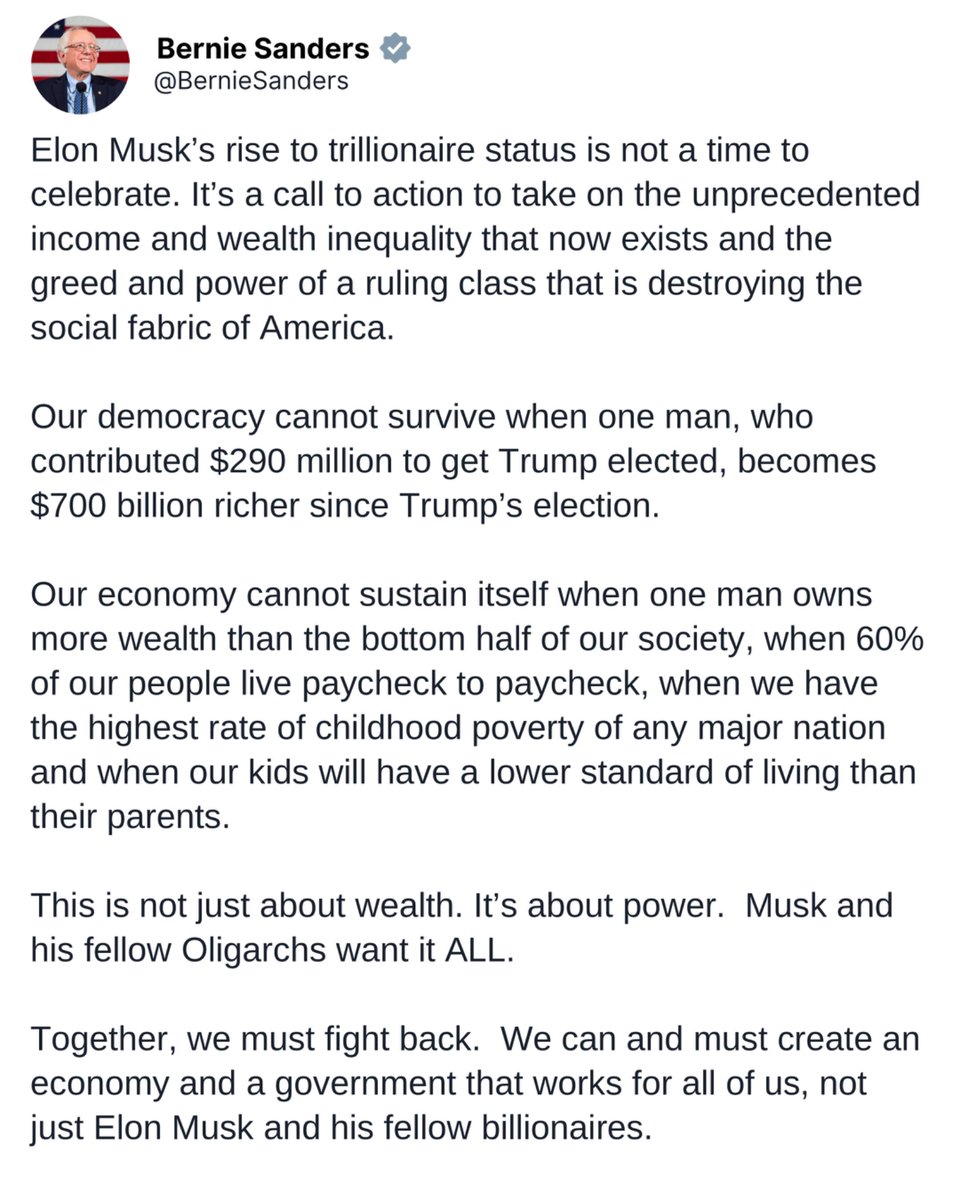
.@BernieSanders , it is a time to celebrate. @elonmusk has created enormous value for society by building @SpaceX, driving down the cost of rocket launches and creating a global satellite communication network that has brought high speed, low-cost internet and communication access to hundreds of millions and eventually billions of people along with critical advantages for our military and our nation’s defense.
SpaceX and its technologies will cause an acceleration in the growth of wages and wealth creation globally, including in some of the poorest communities in the U.S. and around the world.
Access to low-cost, high speed communications everywhere will allow children around the world to be educated, families to build businesses, and life-saving medical knowledge and care to be available everywhere.
SpaceX will materially bring down the cost of compute, advancing AI and humanity.
Meanwhile, 4,000 SpaceX employees yesterday became millionaires, including hourly wage employees who you claim you are trying to help.
The Elon Musks of the world drive growth, global GDP, and provide access to goods and services at lower cost that would otherwise not exist.
Elon’s nominal trillionaire status is due to his ownership of SpaceX, Tesla, Neuralink, the Boring Company and his other initiatives that have brought new technologies that improve our everyday lives.
Elon is not sitting on a trillion dollar pile of cash, jewelry and gold. He is using his controlling stakes in his companies to advance mankind. Elon’s companies don’t pay dividends. They reinvest all of their capital to accelerate innovation and value creation.
Elon is working 24/7 for all of us. He deserves respect and appreciation, not smears.
Bernie, your socialism would never allow a SpaceX to be built. Socialism has only proven to impoverish mankind and lead to death and destruction.
We need to create the conditions for more SpaceXs to be built, not attack the great entrepreneurs who are helping to advance our country.
Jun 12

2,731
6,762
36,767
1,485,719
John Malcolm retweeted

To be brutally honest, no, I’m
not outraged. In fact, I am
thankful for all the wealth, capital and jobs that @elonmusk has created.
By the way, there is a reason why #envy is one of the seven deadly sins. Few things are more destructible of human #happiness and sociability.
Jun 12

Be brutally honest: Are you deeply outraged that, while hundreds of millions of Americans and I are struggling financially, @elonmusk has just now become the world's first trillionaire, with more wealth than he could spend in 1,000 lifetimes? Yes or no?

3
1
23
1,630
John Malcolm retweeted

Jun 13
Check Out This Excerpt from Chapter 16 of My New Book, “What Conservatives Believe” in Today’s Washington Free Beacon!🇺🇸🇮🇱

198
58
540
27,632
John Malcolm retweeted

Jun 12
Congratulations @ElonMusk.
Thanks to SpaceX's IPO, he's the first Trillionaire.
He didn't TAKE money from anyone. He CREATED wealth.
He launched satellites that connect even the poorest, most remote parts of the world.
Our world needs more MAKERS like Musk; fewer TAKERS like:
1,399
9,346
60,253
1,067,653

Jun 12
My response to @JoshMBlackman’s criticism of Chief Judge Pryor 👇
Jun 12

In Defense of Chief Judge Pryor
With all due respect to my friend Josh Blackman, I think he has been unduly critical of Chief Judge Bill Pryor for his role in connection with the sordid doings of U.S. District Court Judge Eleanor Ross. Here’s why:
After one of Judge Ross's law clerks alleged that Judge Ross was conducting a long-term extramarital affair in her chambers with an high-ranking Atlanta police officer, all within earshot of her clerks and other court personnel, Pryor initiated an investigation. Ross denied the allegations and said this was simply a case of sour grapes by a disgruntled, under-performing law clerk.
Rather than accepting Judge Ross’s blanket denial of misconduct, Pryor continued the investigation, hiring lawyers and investigators to pursue the matter, which prompted other law clerks to come forward to back up what the law clerk had said. The fact that Pryor pressed ahead with the inquiry prompted Ross to “lawyer up” and admit her misconduct within a matter of days, short-circuiting the need to continue the investigation. Moreover, Pryor insisted that Ross issue a letter of apology that was supposed to be “sufficiently specific” to “make clear” to the clerks who provided evidence against her (at great professional risk to their budding careers) what she was apologizing for.
When Ross’s initial, woefully insufficient, feeble non-attempt at an apology was made public, Pryor did not let the issue pass; instead, he initiated a second inquiry about whether Ross had “failed to send adequate letters of apology to [her] former clerks.” This immediately prompted Ross to issue a more fulsome apology, which Pryor insisted be provided to the media, including the NY Times, which had published her initial “apology.”
What more should Pryor have done? He is, after all, only one member of the judicial council that decided to issue a private reprimand to Judge Ross that included barring her from serving as chief judge of the district of serving in any other leadership role as a judge.
There is also a strong argument that could be made that Judge Ross committed a federal crime when she initially lied to Pryor about what had transpired in her chambers, but, of course, Pryor is a judge, not a federal prosecutor.
A strong argument (one I completely agree with) can also be made that Ross should be impeached and removed from the bench, but Pryor is on the federal bench himself, not in the House of Representatives, which is the body that will ultimately decide whether to impeach her.
Two Republican Congressmen from Georgia (where Judge Ross presides) have now introduced articles of impeachment against Ross. It is worth noting, though, that it was largely through Chief Judge Pryor’s efforts that this scandalous conduct has been brought to light. He deserves praise for this, not subtle (or not so subtle) condemnation.
1
2
676
Jun 12
In Defense of Chief Judge Pryor
With all due respect to my friend Josh Blackman, I think he has been unduly critical of Chief Judge Bill Pryor for his role in connection with the sordid doings of U.S. District Court Judge Eleanor Ross. Here’s why:
After one of Judge Ross's law clerks alleged that Judge Ross was conducting a long-term extramarital affair in her chambers with an high-ranking Atlanta police officer, all within earshot of her clerks and other court personnel, Pryor initiated an investigation. Ross denied the allegations and said this was simply a case of sour grapes by a disgruntled, under-performing law clerk.
Rather than accepting Judge Ross’s blanket denial of misconduct, Pryor continued the investigation, hiring lawyers and investigators to pursue the matter, which prompted other law clerks to come forward to back up what the law clerk had said. The fact that Pryor pressed ahead with the inquiry prompted Ross to “lawyer up” and admit her misconduct within a matter of days, short-circuiting the need to continue the investigation. Moreover, Pryor insisted that Ross issue a letter of apology that was supposed to be “sufficiently specific” to “make clear” to the clerks who provided evidence against her (at great professional risk to their budding careers) what she was apologizing for.
When Ross’s initial, woefully insufficient, feeble non-attempt at an apology was made public, Pryor did not let the issue pass; instead, he initiated a second inquiry about whether Ross had “failed to send adequate letters of apology to [her] former clerks.” This immediately prompted Ross to issue a more fulsome apology, which Pryor insisted be provided to the media, including the NY Times, which had published her initial “apology.”
What more should Pryor have done? He is, after all, only one member of the judicial council that decided to issue a private reprimand to Judge Ross that included barring her from serving as chief judge of the district of serving in any other leadership role as a judge.
There is also a strong argument that could be made that Judge Ross committed a federal crime when she initially lied to Pryor about what had transpired in her chambers, but, of course, Pryor is a judge, not a federal prosecutor.
A strong argument (one I completely agree with) can also be made that Ross should be impeached and removed from the bench, but Pryor is on the federal bench himself, not in the House of Representatives, which is the body that will ultimately decide whether to impeach her.
Two Republican Congressmen from Georgia (where Judge Ross presides) have now introduced articles of impeachment against Ross. It is worth noting, though, that it was largely through Chief Judge Pryor’s efforts that this scandalous conduct has been brought to light. He deserves praise for this, not subtle (or not so subtle) condemnation.
Jun 12

The Latest Chicanery in Judge Ross's Case.
reason.com/volokh/2026/06/12…
14
10
111
36,911
Jun 12
As someone who clerked for a federal district court judge in that courthouse and then worked there for several years as an AUSA, it is shocking to hear about such conduct. She is a disgrace and should resign. If not, she should be impeached.
Jun 11

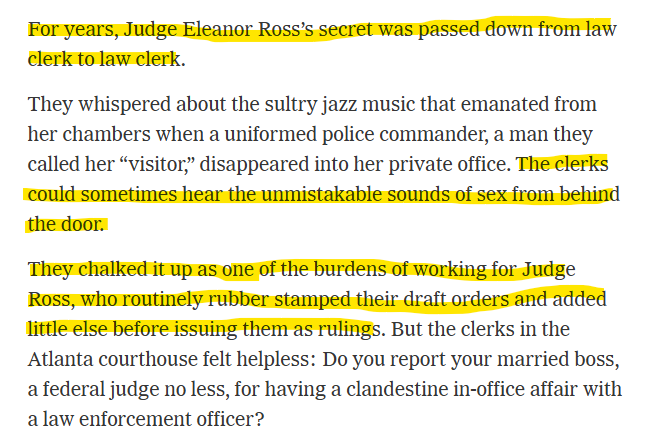
Quite an opening to NYT article on Judge Eleanor Ross, titled Sex, Lies and Secrets: A Federal Judge’s Trysts Go Public.
Add to this the (criminal) lies that she told the investigating judges.
10
46
226
37,988
Jun 12
Spot on 👇
Jun 11

As Tucker continues to unravel and dive deeper into his anti-American kookery it will become fashionable for many to disavow him. But it would be wise to remember all the so-called “conservatives” who propped him up in the first place. This meltdown was predictable and in many ways inevitable.
1
158
John Malcolm retweeted

🗓️ Join us this June at AAF for two great events in Washington, D.C.!
➡️ A conversation with Robert P. George and Tim Chapman on fidelity, faith, family, and country.
➡️ Our Fourth Friday Rooftop Social with friends and allies.
See details below and RSVP today.

2
4
15
7,943
Jun 6
Brava, Lyndsey!

Anyone who has ever extracted themselves from a relationship with a narcissistic abuser knows it isn’t clean or easy.
I cringe remembering how many times I tried to play the “cool girl” or fawn in response to what was clearly abusive, coercively controlling behavior by Graham.
I also know how dangerous it is to become the target of a narcissist — so even long after our relationship ended I continued to be upbeat any time he reached out, though I would also immediately shut down any attempts on his part to initiate flirting or romanticizing of the past.
Yes, the day I saw him announce he was running I wanted to make sure people knew he had a Nazi tattoo — and I was terrified he would find out it was me.
But of course he knew it was me.
What’s ironic is I absolutely never would have shared my story if he hadn’t been relentlessly attacking my character behind the scenes for months once the tattoo story came out.
I tried to signal that I wasn’t the source and stayed completely silent about him on social media even as most of my friends posted regularly about what a bad person he is.
But then in early April the New York Times came to me. I asked how they got my number. I said I was not interested in sharing my story. They said but wait—there are other women. Women terrified to tell their stories, too, and you need to band together. WE will help you. We will protect you. Men can’t keep getting away with this.
Hours before their first call to me I saw Eric Swalwell’s name plate get removed from his office door in Cannon. It felt like fate.
I welcomed the two journalists into my home days later, nervous and overwhelmed. Justin Fairfax had just murdered his wife and himself the previous day and even conservative pundits were conjecturing that “if only those women hadn’t accused him of abuse, this never would have happened…”
But I told them my story. I let them take pictures of my diary pages. I sent them screenshots of messages and gave them phone numbers and contacts. It was excruciating. I was surprised by what details I remembered, and as I poured through old messages I was horrified by how much I had forgotten.
I explained very clearly that, like many women abused by their partners, I had not told anyone about his violence at the time—I had covered for and defended it. I accepted his earnest apologies. They said that’s fine because the diary entries and my on the record story was enough.
They connected me to two of the other victims so we wouldn’t feel so alone. I insisted to each of them that I trusted the NYT journalists and that we were doing the right thing despite their (sadly very accurate) sense that something was wrong.
One of the victims and I realized our relationships with Graham overlapped completely - he had been cheating on both of us the entire time we were together.
I should note here that my life is just… beautiful. These are the best years of my life. Raising two young girls in a safe, beautiful neighborhood where I work from home and shuffle my children from dance classes and soccer to church events — I am blessed far beyond what I deserve with wonderful friends and family and the most loving, brilliant husband in the world. Why would I blow my life up like this? Why would I risk the psychotic doxxing from violent leftist activists?
Because while I have been terrified to come forward I decided this was the “hard right thing” to do. The guilt of staying silent has nagged me.
Most therapists recommend a “gray rock” approach to extracting yourself from narcissistic abuse — it works really well, but it is a gift to the abuser, allowing them to persist in their delusion that they’ve done nothing wrong.
I couldn’t stay silent as he continued to lie and lie and lie. I want my daughters to boldly speak out if they’re ever abused as I was.
2
7
3,607
John Malcolm retweeted
AAF President @TimChapman stated: “Ed embodies the American dream. He founded his own business, invented devices that help power the world, and now he will bring that same world-changing expertise to AAF. I couldn’t be prouder to have Ed on Team AAF.”
2
2
3
687
Jun 5
Amen to that!
Jun 5

It took a tremendous amount of courage for Lyndsey to speak out. Having worked with her for many years, I urge you to pray for her today. She deserves respect and admiration for sharing this troubling chapter of her life.
355
Jun 5
Outstanding news!

Welcome to the team Ed Schweitzer!
American businessman and inventor Edmund Schweitzer has joined @AmericanFreedom Board of Directors.

4
7
1,039
Jun 5
💯
Jun 5

Lyndsey is one of the most sincere - and sincerely good - human beings I know. There isn't an ounce of deceit in her. Those of us who know her...know.
What she did in coming forward is brave beyond measure.
And the way so many are treating her is despicable beyond words.
324
Jun 5
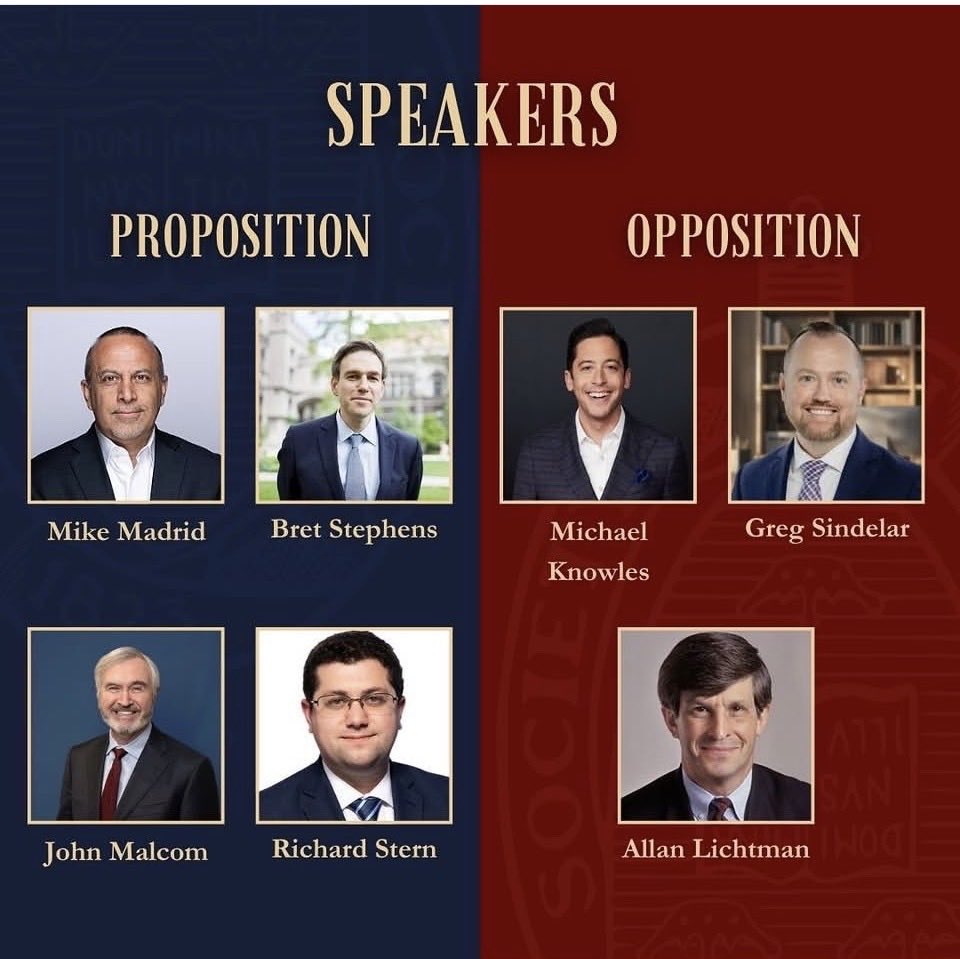
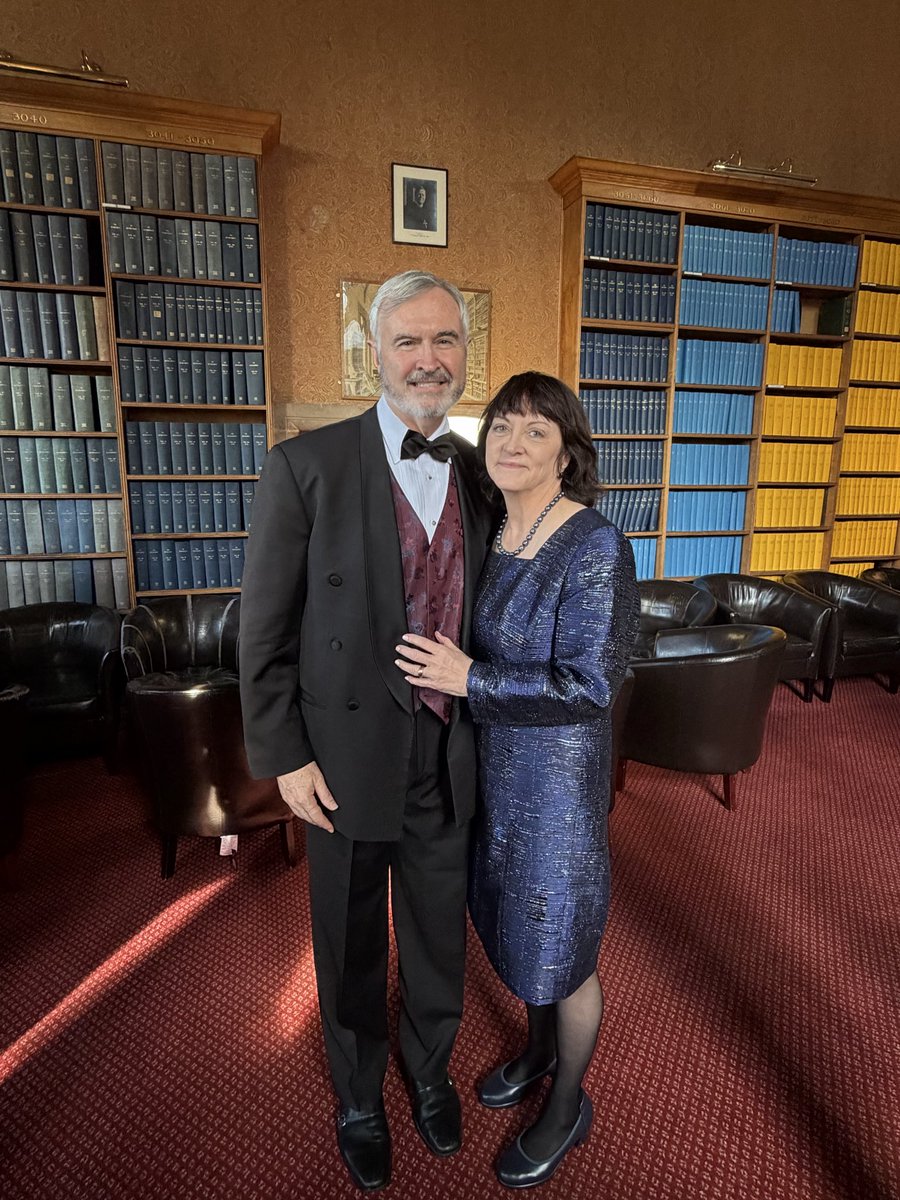
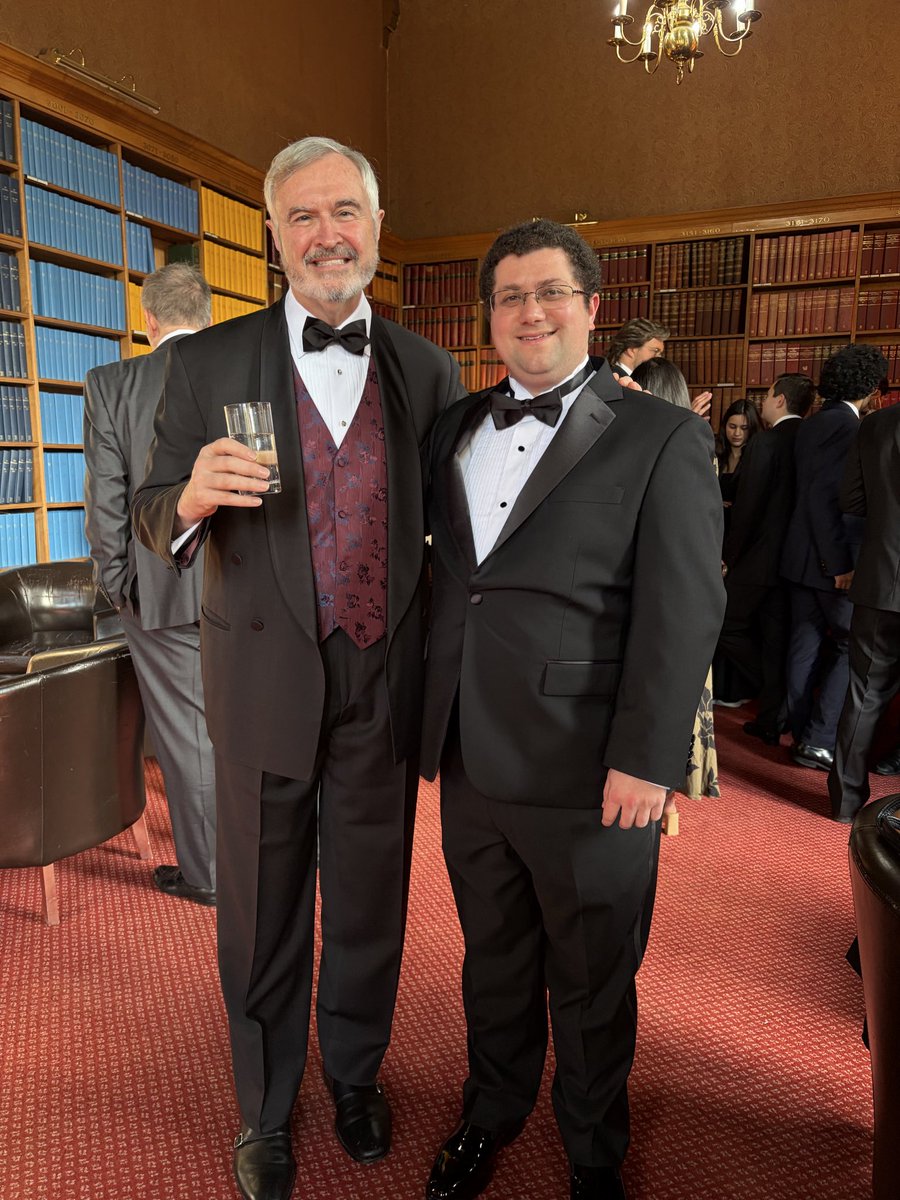
I participated in the Oxford Union debate last night, which was a fabulous experience. No photos allowed during the debate, but I will post some when the Union posts them (and yes, I know that they misspelled my name on the promotional material).

1
2
26
3,736
Jun 2
My colleagues and I are extremely proud to be part of the team at @AmericanFreedom - where principled conservativism is alive and well!
President Reagan’s vision of free markets, strong families, and American leadership helped build decades of economic growth and prosperity.
AAF is carrying this tradition forward—advancing conservative policies and principles that made America exceptional.
AAF’s President @TimChapman sums it up perfectly: “AAF’s strength is staying principled and building for the long term.”

1
14
924