
Joined August 2011
- Tweets 5,079
- Following 1,836
- Followers 440
- Likes 3,793
118 Photos and videos
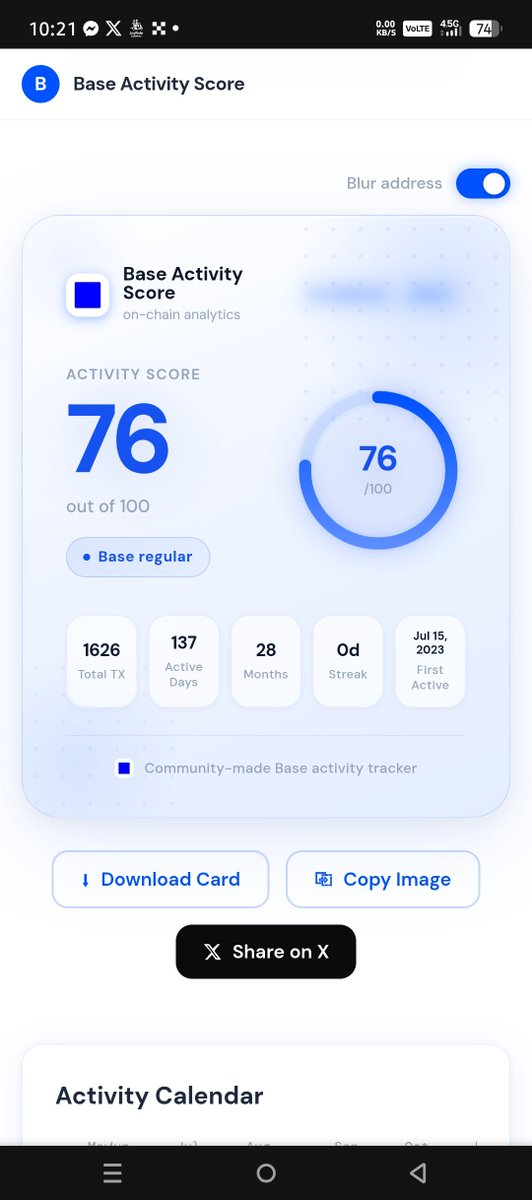





I just found 1 new airdrop to claim for my wallet on @DropsBot drops.bot/?r=NUWk4We0TJ
1
2
41
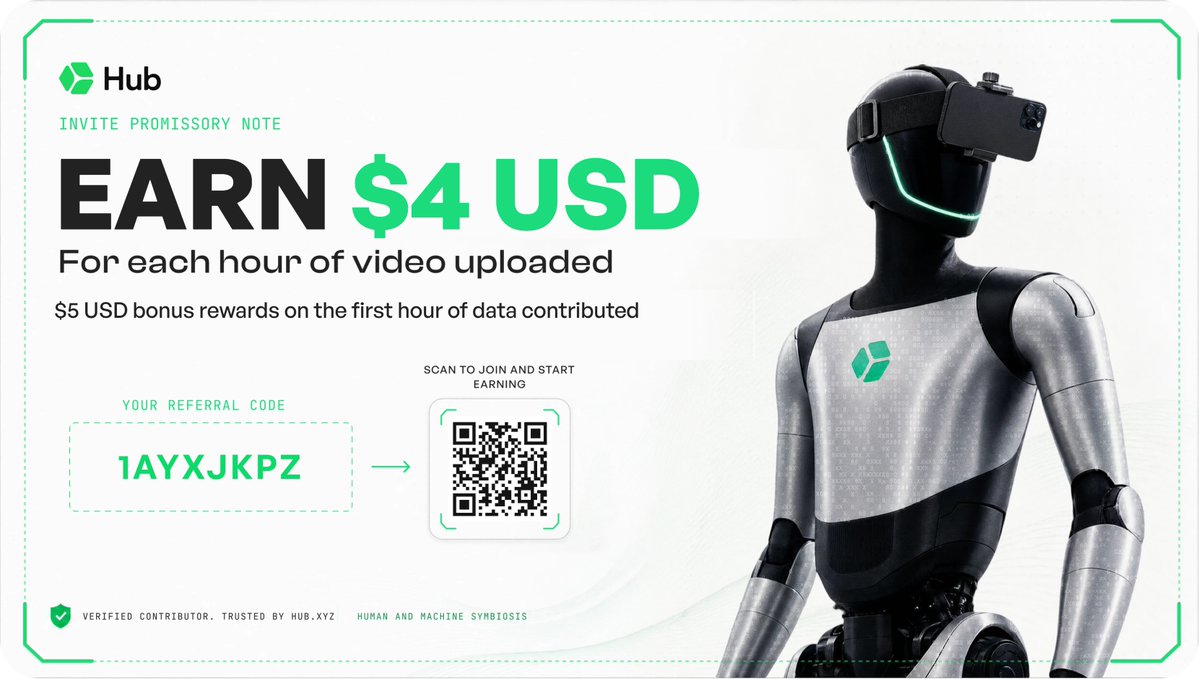
What if the videos you already have could generate extra income? 👀
✅ Earn $4/hour for uploaded videos
🎁 Get a $5 first-hour bonus
🚀 Join using my referral code: 1AYXJKPZ
Start contributing and get rewarded.
#HubXYZ #AITraining #EarnOnline #Web3
ai.hub.xyz/r/1AYXJKPZ
18
Terminal access open for 24H , Claimed my free mint chance . Go grab yours x.com/Unitsxworld/status/206…

14
Malo Ice 🟧 mice.base.eth retweeted

Jun 11
Claim your free mint .
> unitsterminal.xyz/ <
2,723
2,628
4,373
222,673
Malo Ice 🟧 mice.base.eth retweeted

Jun 1
Welcome to June, Rax Fam ☀️
Another month closer to what's ahead.
More progress.
More milestones.
And perhaps a few surprises 👀
What's your goal for June?
Let us know below 👇
108
3,489
986
14,796
RaxFinance @RaxFinance is building the full stack RWA layer for AI infrastructure.
x.com/RaxFinance/status/2048…
Apr 27

.@RaxFinance is building the full stack RWA layer for AI infrastructure.
We are converting multi megawatt data centers and hydroelectric power plants into verifiable, yield bearing digital assets.
Core Protocol Features:
✅ Complete Vertical Stack: We tokenize the entire value chain, from GPU capacity and data center power to critical energy resources.
✅ Yield Generation: Users can capitalize on the AI economy by turning idle compute and energy into investable on chain digital instruments.
✅ Transparent Infrastructure: We provide verifiable cash flows and transparent on chain revenue tracking to democratize access to this emerging asset class.
Web3 is entering the era of intelligence and true digital asset ownership.
📖 Explore our Gitbook: docs.rax.finance/
👥 Join 200,000 users on our waitlist today: app.rax.finance/waitlist
16
Malo Ice 🟧 mice.base.eth retweeted
Jun 8
🔥 The RAX Forge is officially live!
app.rax.finance/waitlist/das…
Collected all 5 fragments? It's time to forge your RAX NFT.
Still missing a few fragments? No worries.
Keep checking in daily, complete tasks, and follow @RaxFinance for upcoming campaigns. More unboxing opportunities are on the way! 🎁
The journey is just getting started!
Stay active and don't miss your chance to complete the set!
160
3,684
1,210
41,644
I’m officially hunting for fragments! Every unboxing brings me one step closer to the full collection. Don't miss out on the fun—jump in now and let’s see what we find!
Get started here: app.rax.finance/waitlist/?re… ✨ x.com/RaxFinance/status/2037…
Mar 28
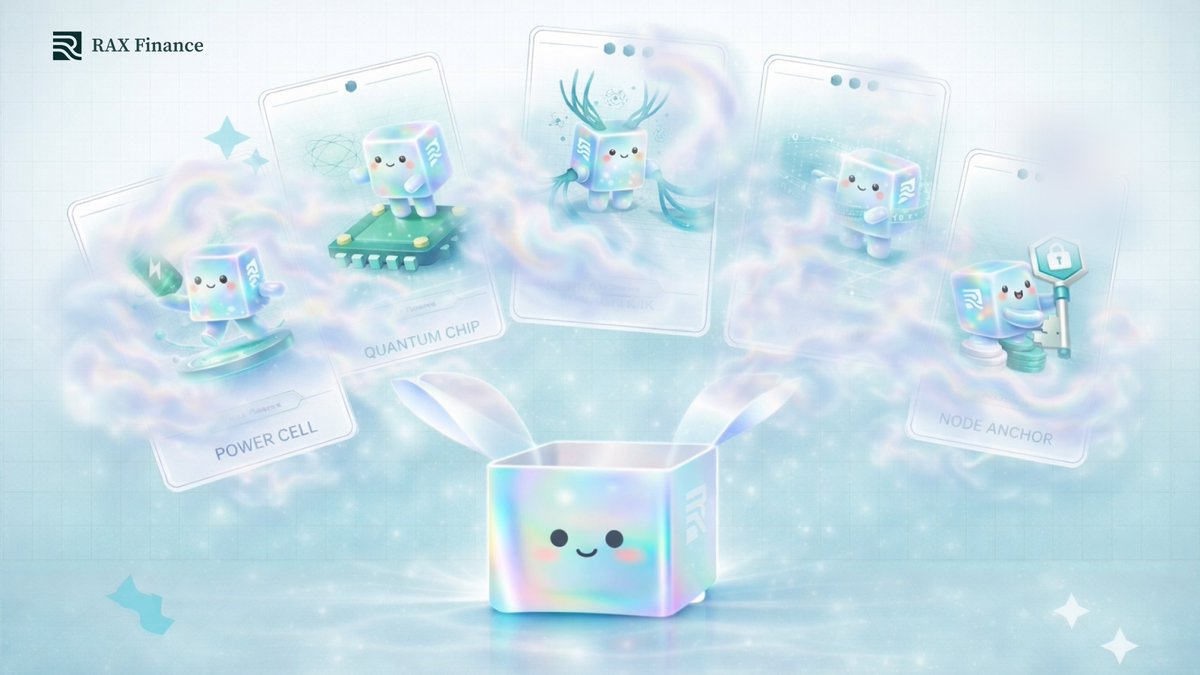
Early birds, the moment has arrived! 🔓
If you’ve been checking in since Day 1, your very first unboxing opportunity is ready! 📦
What’s inside the box? The spark for the next RWA era, or an exclusive ecosystem boost? Only the consistent will find out. 👀
Not there yet? Start your streak:
👉 app.rax.finance/waitlist/
1️⃣ Complete 4 basic tasks to unlock the module.
2️⃣ Click "Check In" daily. ⚡️
Consistency is the key to the RAX Awakening. Don't break the streak!
2
Malo Ice 🟧 mice.base.eth retweeted
Jun 9
.@RaxFinance × @dgrid_ai Official Collaboration Campaign 🚀
📅 Event Period: June 9 – June 23
Join the RAX waitlist and register on DGrid to unlock double rewards:
🎁 2 USDT DGrid Credits — distributed after the campaign ends
🎁 2 Unboxing Opportunities — distributed after the campaign ends
⚡ Early Bird Bonus: The first 100 eligible participants will receive 5 Unboxing Opportunities!
🔗 Entry Link: app.rax.finance/waitlist
🎯 Task Name: 📅 Rax X DGrid Campaign
💥 Want even more rewards?
The most active users in the DGrid AI Arena — voting, comparing models, and contributing feedback — will be eligible for additional DGrid Credit bonuses.
108
3,275
915
59,032
Malo Ice 🟧 mice.base.eth retweeted
Apr 29
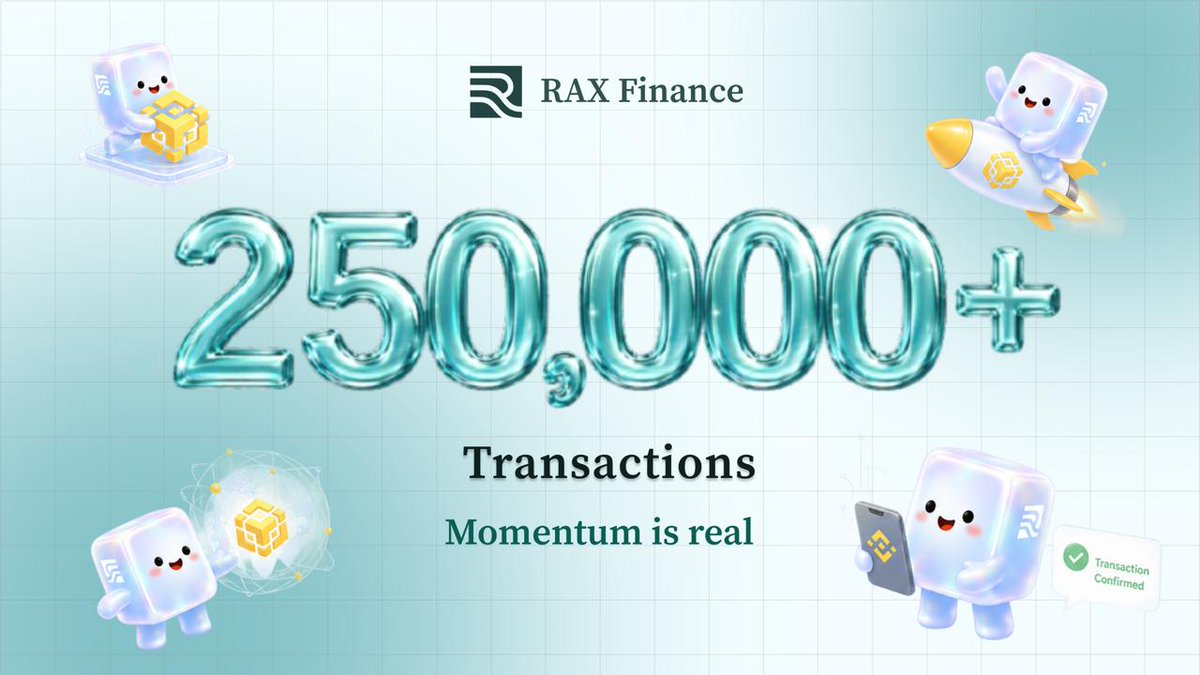
250,000 transactions on the BSC Mainnet! 🚀
🔗 Track it live: bscscan.com/address/0x143617…
Steady growth on-chain. More to come.
🎯 Next stop: 300,000 txns!
To celebrate, we're giving away more Unboxing Opportunities until we hit the target!
Ready for a "Congratulations" from the Rax Team? 👀
👇 Drop your EVM address a screenshot of your Waitlist dashboard below!
770
14,542
1,193
120,821
Just joined the @RAXFinance waitlist.
RAX is building the full-stack RWA layer for AI infrastructure — from compute to power.
Not just renting GPUs, but owning the grid that powers intelligence.
Early access 👉 app.rax.finance/waitlist/?re…
#RAXFinance #AIInfrastructure #RWA
3
Malo Ice 🟧 mice.base.eth retweeted

Jun 8
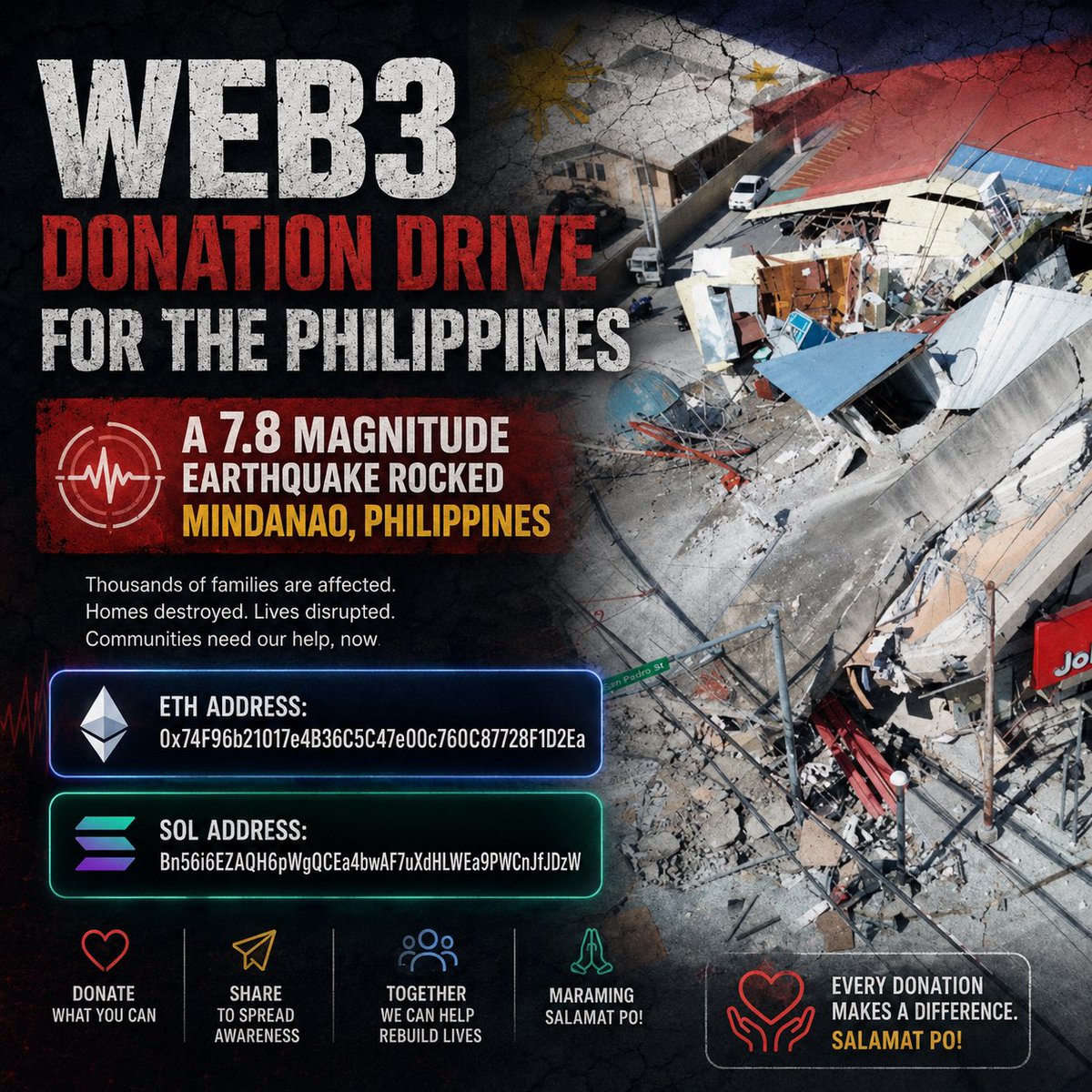
Earlier today, a 7.8 magnitude earthquake rocked the Philippines. Filipinos are killed/injured, & properties are destroyed
I’m not in Philippines rn but this hurts me
This is why I want to string together some donations from CT to donate to @angatbuhay_ph to help those affected
If you are interested to help, you may send funds here:
ETH address:
0x74F96b21017e4B36C5C47e00c760C87728F1D2Ea
SOL address:
Bn56i6EZAQH6pWgQCEa4bwAF7uXdHLWEa9PWCnJfJDzW
These are new addresses I made and I sent $100 to it to jumpstart this movement
Thank you in advance. Feel free to RT for more vis
Salamat! 🙏🇵🇭
43
80
221
20,881
41
Malo Ice 🟧 mice.base.eth retweeted

May 16
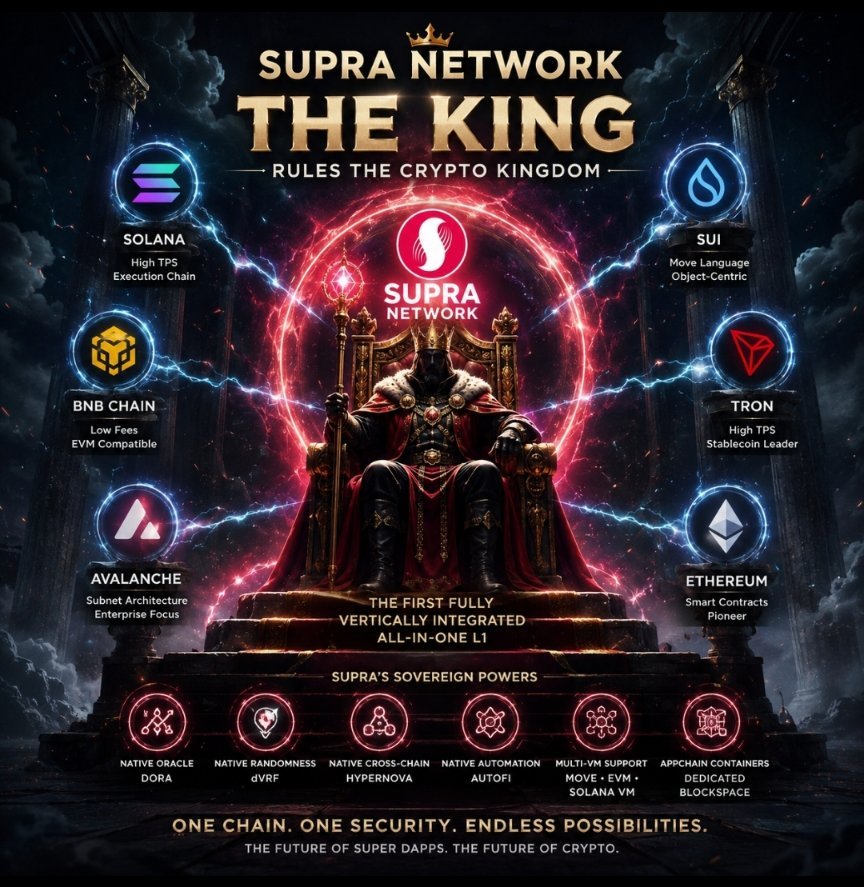
Supra Network: Why the First Vertically Integrated All-in-One Blockchain Infrastructure Could Far Surpass Solana, BNB, SUI, TRX and Other L1s
As a veteran blockchain analyst, I’ve tracked the Layer 1 sector for over 8 years. From Ethereum’s smart contract revolution to Solana’s explosive high-performance era and the rise of Sui, Avalanche, and other next-gen chains, I’ve seen countless “high TPS” narratives ultimately struggle with ecosystem fragmentation and stitched-together infrastructure.
Supra Network is different.
It is not just another “high-performance chain” — it is the first truly vertically integrated all-in-one blockchain infrastructure.
Its core innovation is this: from the protocol layer itself, Supra natively integrates critical services such as oracles, randomness, cross-chain communication, automation, and MultiVM support into one unified shared-security architecture.
This is not simple feature stacking. It represents a blockchain “iPhone moment.”
Below, I’ll explain from multiple perspectives — comparison, fragmentation vs integration, functionality, performance, developer experience, and long-term potential — why Supra may ultimately possess greater upside than leading high-market-cap chains like Solana (SOL), BNB Chain, Sui (SUI), Avalanche (AVAX), and TRON (TRX).
Once TVL, developers, and liquidity enter a positive feedback cycle, Supra could truly unlock the era of “Super dApps.”
1. The Common Weakness of Traditional High-Performance Chains: High TPS Marketing Single-Sector Focus Severe Fragmentation
Most major high-performance L1s follow the same narrative:
high TPS low fees focus on one vertical, while relying heavily on external services for critical infrastructure.
This creates severe ecosystem fragmentation.
Solana: Monolithic architecture with Sealevel parallel execution PoH. Strong in memes, DeFi, and consumer apps. But oracles depend on Pyth/Switchboard, VRF depends on external systems, cross-chain relies on Wormhole/LayerZero, and automation requires Keeper bots. Complex dApps become “blockchain LEGO,” adding latency, security risks, and extra costs.
Sui: Object-centric model Move language parallel execution. Strong for gaming, NFTs, and RWA. While it has native randomness, oracles, cross-chain communication, and automation remain externally dependent.
BNB Chain: EVM compatibility ultra-low fees. Dominates retail DeFi and meme ecosystems, but fundamentally remains an execution-optimized chain without protocol-level advanced services.
Avalanche: Subnet architecture targeting enterprise customization, but communication between subnets is still fragmented.
TRON: High TPS and stablecoin payments dominate emerging markets, yet infrastructure services are also externally dependent.
The core limitation:
These chains were designed primarily around execution performance. Advanced functions like real-time data, randomness, automation, and interoperability were added later as patches.
Upgrading the protocol layer becomes extremely difficult due to governance voting, hard forks, compatibility issues, and ecosystem inertia.
In short: their architecture is fragmented, specialized, and difficult to evolve.
2. Supra’s Revolutionary Difference: Protocol-Level Vertical Integration IntraLayer Design
Supra was designed from day one around vertical integration.
The project officially positions itself as the first fully vertically integrated all-in-one Layer 1 blockchain.
All core services share the same consensus, security, and state layer:
No external trust assumptions
No added latency
No fragmented security
No cross-service complexity
Core integrated components include:
Moonshot Consensus Tribes Clans Architecture
Tested at 500,000 TPS across 300 nodes with sub-second finality — significantly beyond Solana’s slower confirmation finality. The Tribes & Clans architecture is naturally optimized for vertical integration.
Native DORA Oracle
Protocol-level real-time price feeds integrated directly into consensus.
Native dVRF (Distributed Verifiable Random Function)
Fair randomness generated every block for gaming, NFTs, lotteries, and DeFi.
Native Cross-Chain Infrastructure (HyperNova / HyperLoop)
Light-client and rational-bridge architecture designed for low latency and reduced bridge risk.
Native AutoFi Automation
Zero-block-delay automation allowing real-time market event detection and execution without Keepers.
MultiVM Support
MoveVM already live, with EVM and SolanaVM support coming — enabling near frictionless migration for developers.
AppChain-Inspired Containers
Dedicated blockspace for Super dApps, reducing congestion and gas wars.
These are not plugins.
They are integrated directly into the protocol itself.
Supra’s documentation consistently emphasizes a unified “Super dApps” platform where developers can build real-time, autonomous, self-operating applications entirely within one chain.
3. Why Supra’s Integrated Model Could Dominate
Fragmentation vs Unified Architecture
Traditional chains require multiple external services stitched together. Supra operates as a unified security domain.
This dramatically reduces:
latency
trust assumptions
integration complexity
extra gas costs
while exponentially improving composability.
Performance and Finality
Supra’s experimental architecture targets:
500,000 TPS
sub-second finality
Compared to Solana’s real-world throughput of roughly 1,000–1,500 TPS with slower final settlement, Supra’s BFT-style Moonshot consensus is better suited for:
high-frequency finance
AI agents
gaming
real-time applications
Developer Experience and “Super dApps”
Developers on traditional chains often integrate:
oracles
VRF
bridges
Keepers
VM compatibility layers
Supra offers these natively in one environment.
This enables:
autonomous DeFi
AI-driven applications
real-time RWA systems
self-operating financial protocols
Containers further allow major dApps to secure dedicated resources, creating a Web2-like experience.
Security and Cost Efficiency
Every external service introduces:
new attack surfaces
additional fees
operational risks
Supra’s shared Layer 1 security model significantly reduces these problems while maintaining low operational costs.
Future Expansion Potential
MultiVM Containers allow Supra to support:
Solidity ecosystems
Move ecosystems
Rust ecosystems
Most existing chains would require deep protocol redesigns to achieve this level of integration.
Supra was designed for it from the beginning.
Supra is not simply “another fast blockchain.”
It represents a paradigm shift in blockchain infrastructure — moving from fragmented high-performance systems toward fully integrated intelligent infrastructure.
Solana, BNB, SUI, TRX, and others may dominate execution layers today, but Supra may be leading the next generation in unified full-stack architecture.
If liquidity, adoption, and developers enter a strong positive cycle, Supra could eventually evolve into the foundational infrastructure powering the next era of Super dApps and autonomous AI-powered applications.
As an analyst, I remain highly optimistic about Supra’s long-term narrative.
Developers and investors should study its documentation and testnet ecosystem carefully now — because the biggest opportunities often emerge during the early stages of architectural transformation.
The future of blockchain is no longer just about being faster.
It is about being more unified, more intelligent, and more powerful.
#SUPRA #BTC #ETH #BNB #SOL $PI #Doge #TRX @okx @binance @coinbase @Official_Upbit @bitget supra:native
8
33
110
1,887

How to find projects on Base in under 10s:
- Open @coingecko
- Click this button
211
177
1,370
56,141
Malo Ice 🟧 mice.base.eth retweeted

2026’nın EN ŞANSLI burçları
Yengeç
Koç
İkizler
Yay
Terazi
Oğlak
“555” yazarak kabul et ve 2026’nın keyfini çıkar.
739
391
3,215
56,080
still active friends join now..

HURRY FREE $2
$airdrop #freemoney
FoPay: One card in hand, travel freely! Invite friends to activate a card now and get 5 USD cash!: signup.fopay.life/?inviteCod…
13
HURRY FREE $2
$airdrop #freemoney
FoPay: One card in hand, travel freely! Invite friends to activate a card now and get 5 USD cash!: signup.fopay.life/?inviteCod…
1
26