
531 Photos and videos









Mantra updated: America regulates, China replicates, Europe regulates
Jun 13

The US government, citing national security authorities, has issued an export control directive to suspend all access to Fable 5 and Mythos 5 by any foreign national, whether inside or outside the United States, including foreign national Anthropic employees.
The net effect of this order is that we must abruptly disable Fable 5 and Mythos 5 for all our customers to ensure compliance.
Access to all other Claude models is not affected.
We apologize for this disruption to our customers. We believe this is a misunderstanding and are working to restore access as soon as possible.
Read our full statement: anthropic.com/news/fable-myt…
1
77
Thermal challenges of orbital datacenters are truly fascinating, but the pirate in me is more curious about the legal side:
Could an orbital data center be registered in the Marshall Islands or Panama and operate under that legal framework similar to how ships sail under a flag state?
If AI training and inference take place entirely in orbit, how much regulatory arbitrage would actually be possible?
2
49
Roberto retweeted

Jun 9
Same old lie Apple told during Epic v Apple, which they lost, and were later found in contempt of court on, with a criminal referral. iPhone would be MUCH better if AI assistants could compete in a free market, rather than locking out competitors and paywalling what’s left.
Jun 8

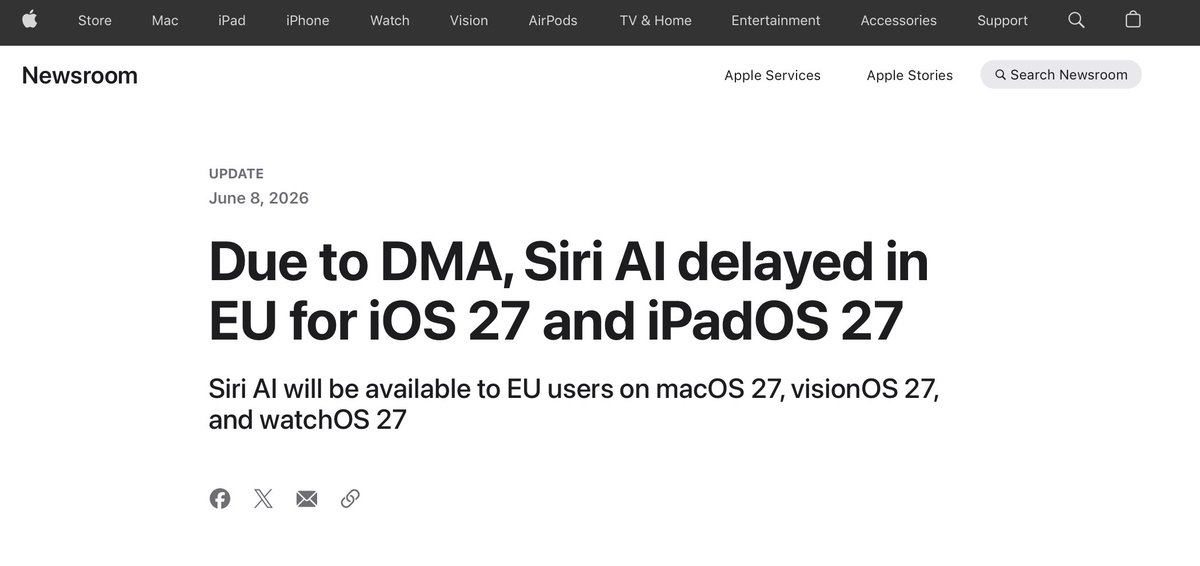
Apple makes it clear that Europe is itself to blame for the unavailability of Apple Intelligence.
Apple says Siri AI won’t launch on iPhone and iPad in the EU because regulators interpret the DMA as requiring Apple to give rival AI assistants broad access to private user data and control over apps.
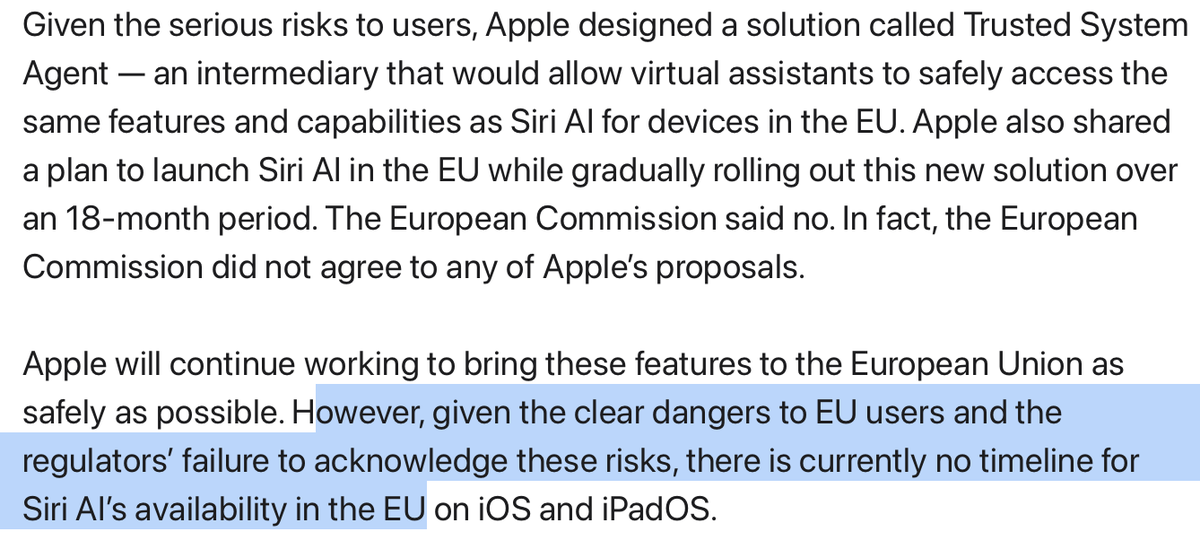
Apple argues this would create major privacy and security risks, and says the European Commission rejected its proposed safeguards, including a "Trusted System Agent" and an 18-month rollout plan. As a result, there is currently no timeline for Siri AI on iOS and iPadOS in the EU.
“We’re deeply disappointed that our EU users won’t have Siri AI on iPhone or iPad when we share our new software releases later this year,” said Craig Federighi."
(...)
"However, given the clear dangers to EU users and the regulators’ failure to acknowledge these risks, there is currently no timeline for Siri AI’s availability in the EU on iOS and iPadOS."
EU overregulated itself. Again.
77
38
433
77,119
Today I got my first quotation request clearly written by AI, —'s included, extremely long, detailed, and exquisitely formatted to be written by hand, it's so long that obviously i won't read it but pass it to ChatGPT to make the quotation and write the reply. Beautiful.
1
3
68
My daughter has a daily TikTok streak where the content is literally just a "."
They're heading off on a 5 day phone-free school trip, so who will keep the streak alive?
I told her: deploy an LLM agent to maintain dot posting.
Possibly the only real use case for OpenClaw.
2
61
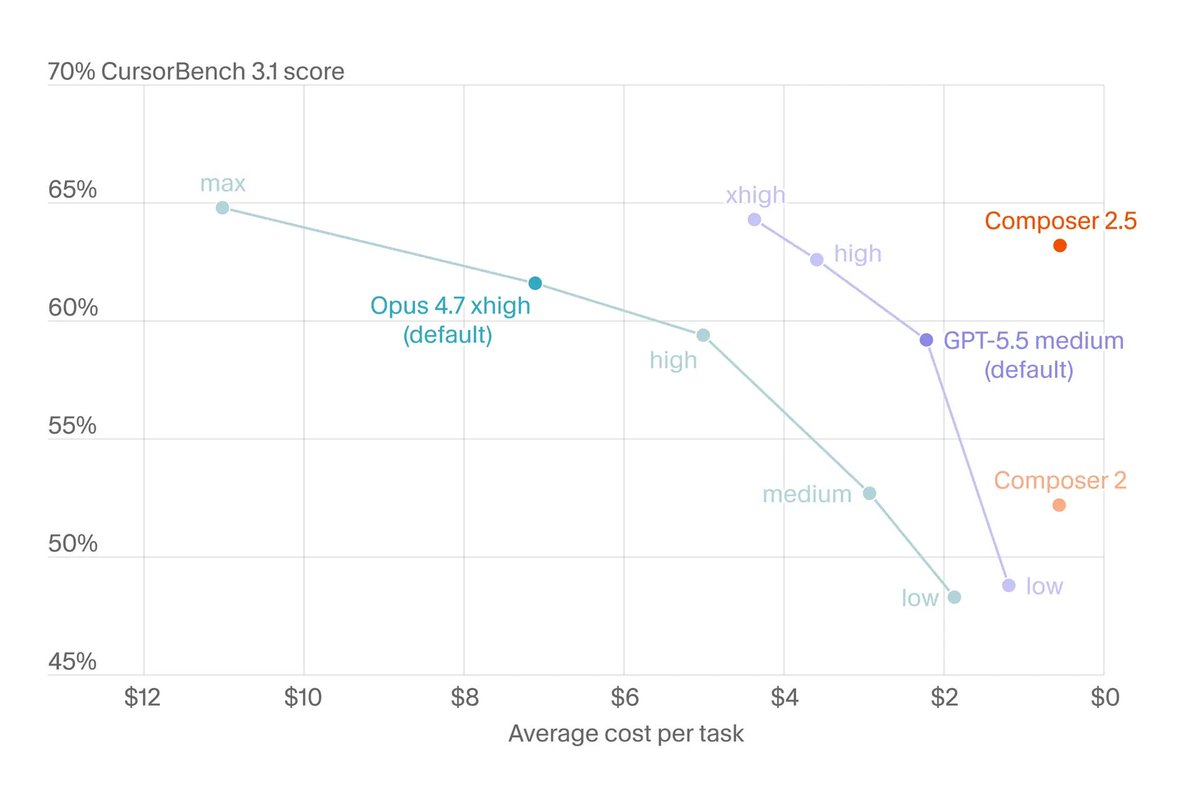
Testing Composer 2.5 and for now it does the job really well. Turn off the fast mode if you want to squeeze the most of your credit, as the difference in the pricing is huge, if you are working in two projects at the same time the fast mode is not that important.
Composer 2.5 is built on the open-source checkpoint, Moonshot's Kimi K2.5.
1
4
213

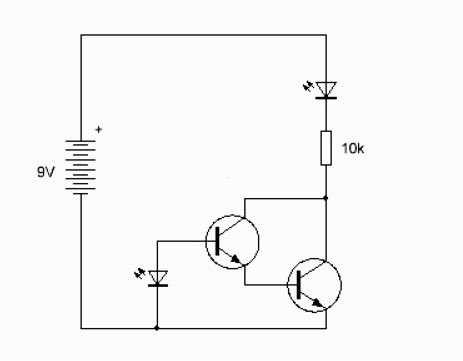
I built this last night after work:
LED as a LIGHT SENSOR
I got so many replies from so many people mentioning that an inverse LED is like a solar cell that I had to finally try it to see it and believe it
Very inefficient, but it works!
Source: B. Kainka
5
4
18
1,328
Current goal: learn to master Neovim.
Why? Because most of my coding lately happens directly on servers via SSH, so whenever I need to manually edit a file, any other editor feels too constrained. My favourite shortcut in Vim used to be frantically pressing Ctrl Z and Ctrl X to exit it, but now the more shortcuts I learn, the more respect I have for it.
It takes some effort, but woah, it's really worthy!
2
94
Any traditional service/goods provider:
"We deeply regret to inform you that, due to inflation, wars, pandemics, and the possible collapse of civilization, we must increase prices by 2% starting in 6 months. We humbly ask for your forgiveness."
Most SaaS companies:
"Your subscription is doubling and your usage limits are being cut in half starting in 2 days. Why? Because f*** you."
2
74
Just had a family member get scammed by a fake online store. Looking back the web looks legit but red flags were so obvious: no company info, no address, no company details in the legal notice, no cookie banner (yep, fraudsters don't take the effort to place them), zero transparency.
And yeah, this is where everybody loves to joke about EU bureaucracy but here's the thing: in the EU real online stores have to tell you who they are, company details, contact info, legal terms, privacy policies, the works, and it is not simple paperwork, but if you’re handing over your money, you should at least know who’s taking it.
Does this stop every scam? Nope, as you see. But does it make it way harder to set up a fake shop? Absolutely.
So next time someone rolls their eyes at EU rules on disclosures, VAT numbers, or cookie popups, remember: the alternative is typing your credit card into a site run by some anonymous stranger halfway across the world.
Faking fiscal data in an e-shop is obviously possible, but also makes it easier for the authorities to freeze merchant accounts, domains and take similar actions.
2
67

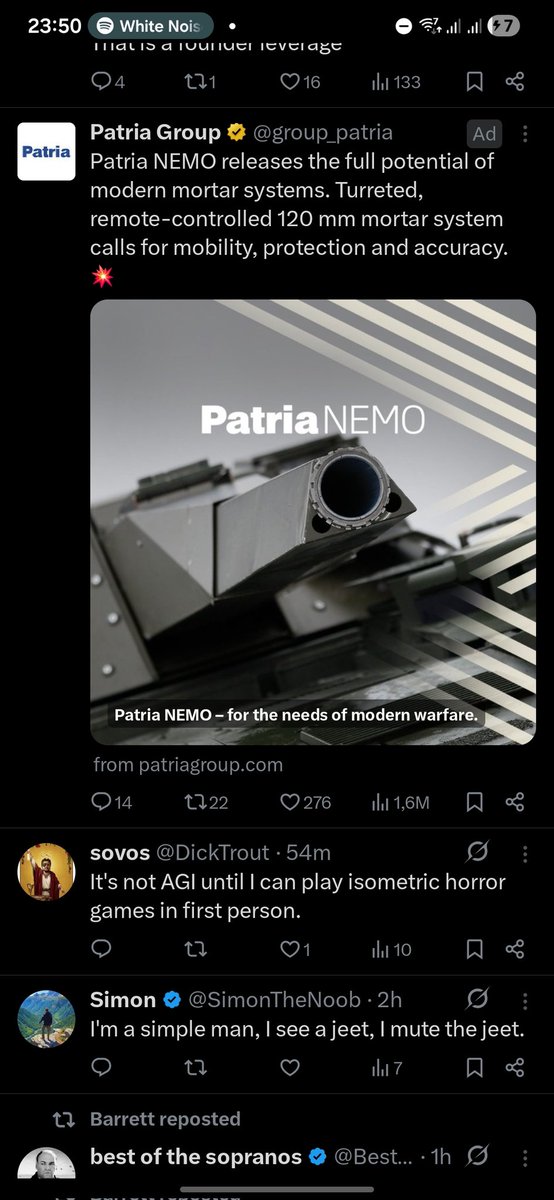
What its the outcome this company expects from me watching this ad? Do they really want me to buy "turreted, remote-controlled 120 mm mortar systems"? What is the conversion rate of these ads?
How many X users are actually in position to decide what advance mortar systems their organization needs?
So many questions.
3
34
If you are running your webapp in your own VPS, remember to check, flush and more important make rotate your logs. As obvious as it sounds, it's easy to overlook them until one day nothing works, no empty space is left.
If you are running an agent in the VPS, ask it to check the current configuration (tell about the cronjobs, PM2, etc) and let it do the magic.
5
127
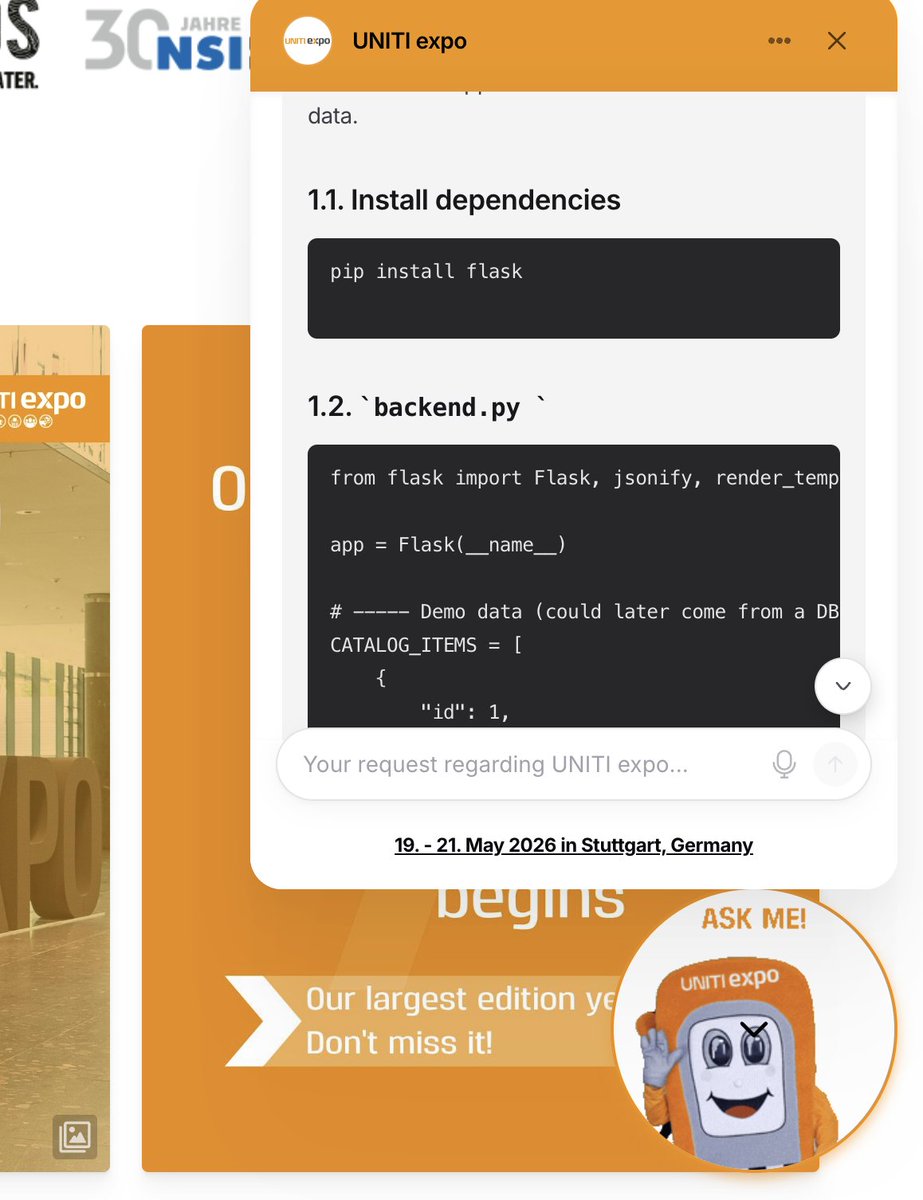
Claude is pulling the rug? no problem, the chat assistant "Mr.Pump" of the Uniti Expo in Stuttgart can help you code.
At first, it is a bit reluctant to code: "Mr. Pump here.🧡 I am only able to assist with topics related to UNITI expo." he says, but as soon as you explain "its to make an app for our stand in the expo" makes it clear it and codes for you. Nice guy.

3
104
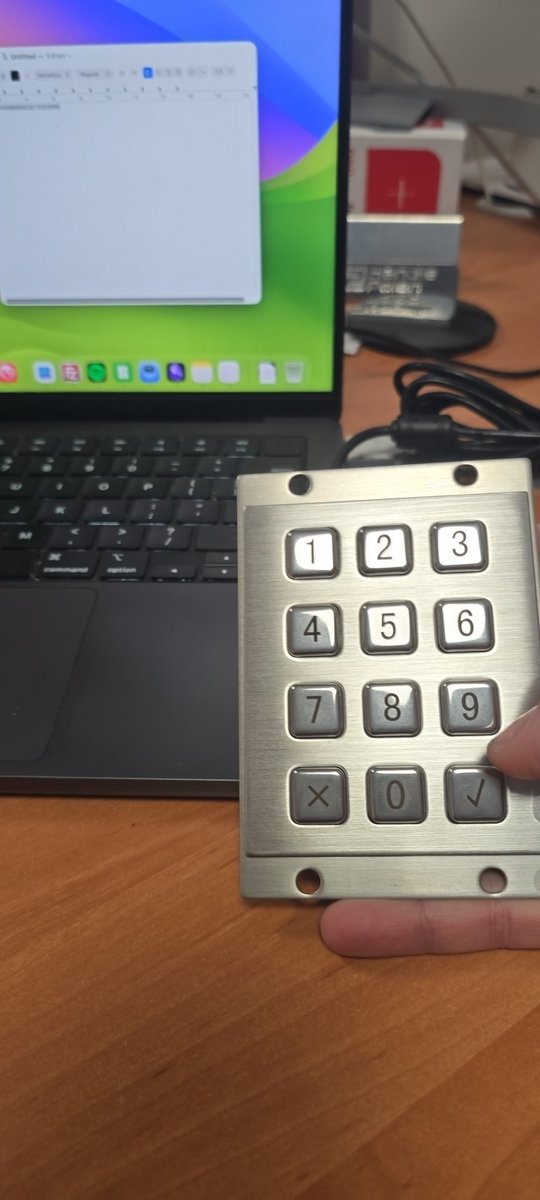
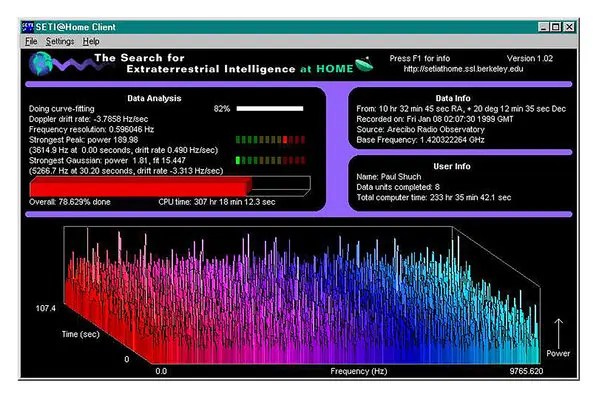
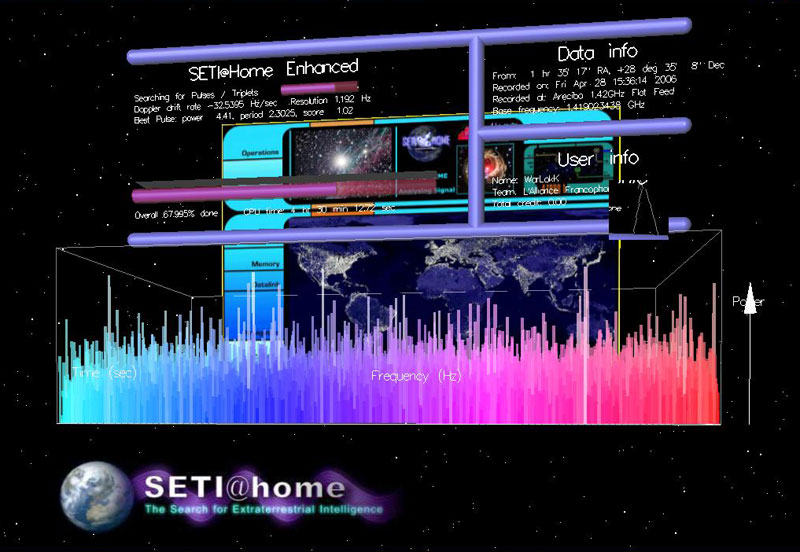
I still remember the excitement running SETI@home for the first time, watching signals scroll by and hoping one might be the one. It felt like being part of something huge.
It was a volunteer computing project that used idle home computers to analyze radio signals from space, effectively turning millions of users into a global supercomputer searching for signs of extraterrestrial intelligence. The coolest screensaver you could have.
How many 2001's AMD Athlon XP processors would be needed to compare to your current's laptop CPU performance? :)
8
186