
Category Creator | Revenue Alignment Architecture™ | Closed Circuit Selling™ | Partner @ CRO School | UNSW Founders Mentor | Author
Joined October 2021
- Tweets 11,505
- Following 2,288
- Followers 1,153
- Likes 38,954
875 Photos and videos


Pinned Tweet

Jun 10
I can't believe how many times I've seen this.
A BDM joins an organization and starts doing what the best commercial operators have always done.
They catalogue the market.
Not just accounts.
The market.
They identify
• buying committees
• political structures
• commercial priorities
• internal blockers
• active initiatives
• timing signals
• organizational readiness
Without realizing it, they're creating something far more valuable than pipeline.
They're creating a commercial intelligence asset.
The problem?
Most organizations don't know how to measure it.
Because intelligence appears before revenue.
And understanding appears before opportunity.
So leadership opens the dashboard.
Activity is down.
Meetings are down.
Pipeline isn't moving fast enough.
The rep gets managed out.
Then 6, 12, or 18 months later, the market matures with all the effort that rep put in.
Timing on those deals arrive.
Stakeholders align.
Priorities shift.
Deals close.
Some of the biggest opportunities in company history suddenly emerge.
But the person who created the conditions for those opportunities is gone.
The intelligence remained.
The timing remained.
The trust remained.
The market catalogue remained.
This is one of the biggest flaws in modern GTM.
Most organizations measure pipeline.
Very few measure market understanding.
Most measure activity.
Very few measure intelligence accumulation.
Most manage quarters.
Very few manage buying cycles.
The irony is that many of the people labelled as underperformers were actually creating the greatest future enterprise value.
Because they weren't building pipeline.
They were building market position.
And market position compounds.
This is why Closed Circuit Selling™ treats commercial intelligence as an organizational asset.
Not a salesperson asset.
The catalogue must survive employee turnover.
The intelligence must survive territory changes.
The buying knowledge must survive restructures.
Because when commercial intelligence leaves with the rep, the company starts from zero.
Again.
The future belongs to organizations that learn to capture, preserve, distribute, and compound market intelligence across the entire business.
Revenue isn't created when a deal closes.
Revenue is created when an organization understands its market better than its competitors.
The deal is simply evidence that the intelligence was correct.
The intelligence was always the asset.
The next generation of market leaders win because commercial intelligence flows freely across Marketing, Product, Sales, Customer Success and Leadership.
When intelligence becomes organizational property instead of departmental property, market understanding compounds.
And market understanding is the ultimate competitive advantage.
We aren't speaking at LiveHaus this time..
but 🌞 Dan Brockwell, Rick Hill, Nathan Clark, Nick Roose, Reece Appleton, Gunnar Habitz, Grant Skinner & Shuba Paheerathan are so be sure to go down and check it out!!
cc Saurabh Kaura
1
1
50
2019 I started saying things that landed me LinkedIn lunatic groups both online and offline.
I stand by my thoughts from wow seven years ago… where I said I believe most organisations are solving the wrong problem.
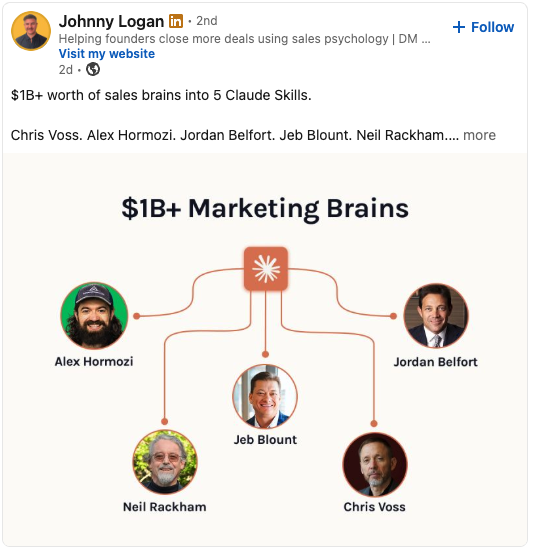
Chris Voss teaches better discovery.
Hormozi teaches stronger value creation.
Belfort teaches more effective closing.
Blount teaches objection handling.
Rackham teaches better questioning and follow-up.
All incredibly valuable.
But they are all focused on improving what happens inside a sales conversation.
What we should be asking is
What created the need for that conversation in the first place?
Because most revenue leakage doesn’t happen during the call.
It happens long before the call ever takes place.
Due to the current GTM structure is literally around the wrong way…
Tell tale signs are
The wrong accounts enter pipeline.
Marketing attracts the wrong buyers.
Sales pursues opportunities with no timing alignment.
Customer Success learns things that never make it back to Marketing.
Product receives market feedback that never reaches the roadmap.
The organisation becomes smarter every day.
Yet somehow learns nothing.
That’s not a sales problem.
That’s a commercial architecture problem.
When sales goes back to being the top of the spear and segments the market via cataloguing the market to 1 find a category requirement and 2 find how they are solving that problem right now 3 buying timelines and if not 4 what would it take to work with them - product roadmapping.
In closed circuit selling we ensure that this commercial account intelligence is readily available across the org.
Every outreach.
Every discovery call.
Every objection.
Every lost deal.
Every implementation.
Every renewal.
Every referral.
All become that commercial intelligence.
That intelligence flows across Marketing, Sales, Customer Success, Product, Leadership, and Strategy.
The result?
The organisation stops relying on individual sales brilliance and starts compounding organisational intelligence.
The irony is that when the architecture is right, every methodology performs better.
Chris Voss gets better outcomes.
SPIN gets better outcomes.
MEDDPICC gets better outcomes.
Challenger gets better outcomes.
Not because the frameworks changed.
Because the intelligence flowing underneath them changed.
The future won’t belong to organisations with the best sales scripts.
It will belong to organisations with the strongest commercial learning systems.
That’s the difference between sales excellence and commercial architecture.
One improves conversations.
The other improves the organisation.
12
Adem Manderovic retweeted

Jun 13
Somebody pinch me.
It’s just wild to see the MSM finally admitting that the US-funded biolabs in Ukraine were real this whole time.
I’ve dedicated the last 4 years of my life to exposing this story, and it’s finally coming to fruition.
665
10,789
44,961
815,207
Jun 11
Agreed I have never seen him play like that.
Saw him a few times on the beach in Glenelg South when I lived there!
Hope he keeps it up!
Jun 11

AFC CROWS 🟦🟥🟨
TIME FOR SOME CREDIT, WHERE CREDIT IS DUE.. ‼️‼️‼️
JAMES BORLASE has been a fringe player for some time … but ..
Last night ..
93% disposal efficiency ( that’s correct !😳)
15 possessions ( 9 contested ! )
9 intercepts
10 one percenters !!! ( they count ! )
He’s getting better every week .. rarely beaten one on one ‼️🤨
Well done James ‼️👏👏👏 ..
keep it up ♥️

2
17
969
Jun 11
For years, the market has tried to force every commercial framework into the same category.
Sales methodology.
Qualification framework.
Prospecting model.
Pipeline process.
Door opening system.
The problem is that Closed Circuit Selling™ was never designed to solve a sales problem.
It was designed to solve a commercial architecture problem.
When organizations first encounter CCS™, they often assume it sits alongside traditional methodologies like
MEDDIC.
BANT.
SPIN.
Challenger.
Solution Selling.
But those frameworks primarily help an individual seller navigate a buying process.
Closed Circuit Selling™ operates at a different level entirely.
It focuses on how an organization creates, captures, transfers, and operationalizes commercial intelligence across the entire revenue ecosystem.
Because revenue is not created by sales.
Revenue is created by alignment with the market.
Alignment between market reality and company strategy.
Alignment between customer expectations and product capability.
Alignment between sales promises and delivery execution.
Alignment between marketing signals and commercial priorities.
Alignment between leadership assumptions and market truth.
Most organizations operate with broken circuits.
Marketing generates leads.
Sales opens opportunities.
Product builds features.
Customer Success manages onboarding.
Leadership reviews dashboards.
Each function optimises for itself.
Information moves in fragments.
Knowledge gets trapped in silos.
Critical market intelligence disappears inside CRM notes, Slack threads, spreadsheets, and meetings.
The result is predictable.
Products are built nobody asked for.
Sales promises what delivery cannot support.
Customer Success inherits expectations they never shaped.
Marketing drives demand into saturated segments.
Leadership acts on lagging indicators.
Everyone works harder.
Growth becomes harder.
Closed Circuit Selling™ changes this.
It creates a commercial feedback architecture.
Every interaction becomes intelligence.
Every objection becomes signal.
Every loss becomes insight.
Every implementation becomes validation.
Every success becomes repeatable knowledge.
Instead of information moving one way, it moves in a closed loop
Sales→ The market → Marketing → Sales → Product → Customer Success → Leadership → Strategy → Marketing.
The circuit closes.
The organisation learns.
The organisation adapts.
The organisation compounds.
This is why Commercial Intelligence sits at the centre.
Because the most valuable asset in a company is not pipeline or revenue.
It is the accumulated understanding of why customers buy, stay, leave, and expand.
Captured correctly, that becomes a strategic asset.
Operationalised correctly, it becomes a moat.
The highest performing organisations are not winning because they have better salespeople. They are winning because they have better commercial learning systems.
They learn faster.
Adapt faster.
Align faster.
Execute faster.
1
5
44
Jun 11
The Book amazon.com.au/Closed-Circuit…
Partner Page theb2bplaybook.com/ccs-resou…
More about our programs theb2bplaybook.com/cro-schoo…
16
Jun 10
I can't believe how many times I've seen this.
A BDM joins an organization and starts doing what the best commercial operators have always done.
They catalogue the market.
Not just accounts.
The market.
They identify
• buying committees
• political structures
• commercial priorities
• internal blockers
• active initiatives
• timing signals
• organizational readiness
Without realizing it, they're creating something far more valuable than pipeline.
They're creating a commercial intelligence asset.
The problem?
Most organizations don't know how to measure it.
Because intelligence appears before revenue.
And understanding appears before opportunity.
So leadership opens the dashboard.
Activity is down.
Meetings are down.
Pipeline isn't moving fast enough.
The rep gets managed out.
Then 6, 12, or 18 months later, the market matures with all the effort that rep put in.
Timing on those deals arrive.
Stakeholders align.
Priorities shift.
Deals close.
Some of the biggest opportunities in company history suddenly emerge.
But the person who created the conditions for those opportunities is gone.
The intelligence remained.
The timing remained.
The trust remained.
The market catalogue remained.
This is one of the biggest flaws in modern GTM.
Most organizations measure pipeline.
Very few measure market understanding.
Most measure activity.
Very few measure intelligence accumulation.
Most manage quarters.
Very few manage buying cycles.
The irony is that many of the people labelled as underperformers were actually creating the greatest future enterprise value.
Because they weren't building pipeline.
They were building market position.
And market position compounds.
This is why Closed Circuit Selling™ treats commercial intelligence as an organizational asset.
Not a salesperson asset.
The catalogue must survive employee turnover.
The intelligence must survive territory changes.
The buying knowledge must survive restructures.
Because when commercial intelligence leaves with the rep, the company starts from zero.
Again.
The future belongs to organizations that learn to capture, preserve, distribute, and compound market intelligence across the entire business.
Revenue isn't created when a deal closes.
Revenue is created when an organization understands its market better than its competitors.
The deal is simply evidence that the intelligence was correct.
The intelligence was always the asset.
The next generation of market leaders win because commercial intelligence flows freely across Marketing, Product, Sales, Customer Success and Leadership.
When intelligence becomes organizational property instead of departmental property, market understanding compounds.
And market understanding is the ultimate competitive advantage.
We aren't speaking at LiveHaus this time..
but 🌞 Dan Brockwell, Rick Hill, Nathan Clark, Nick Roose, Reece Appleton, Gunnar Habitz, Grant Skinner & Shuba Paheerathan are so be sure to go down and check it out!!
cc Saurabh Kaura
1
1
50
Jun 10
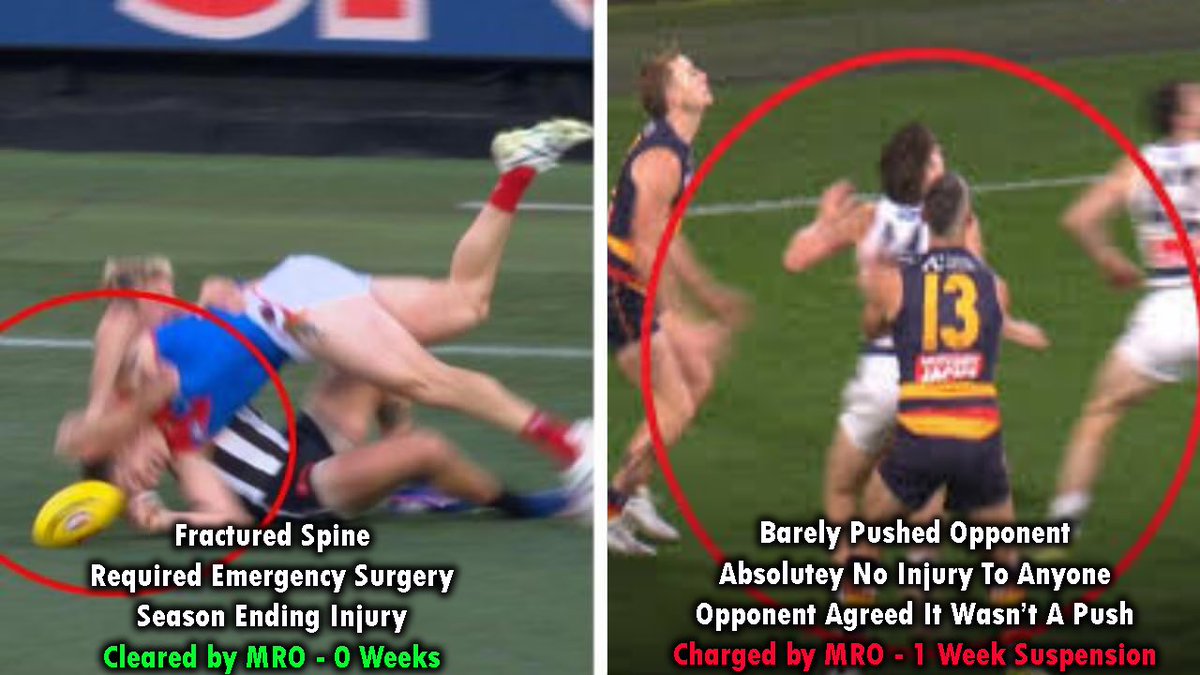
I wholeheartedly agree with this sentiment.

1
15
Jun 10
1
6
Jun 9
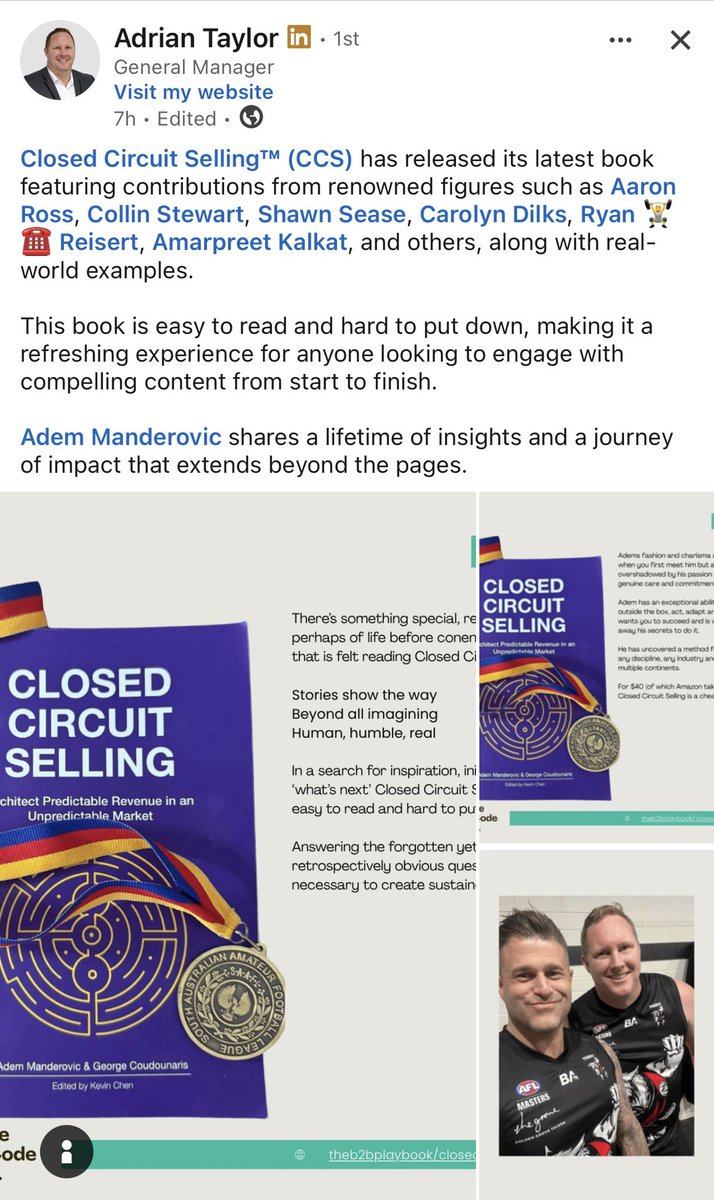
Something unexpected happened while George and I were writing Closed Circuit Selling™ (CCS)
But as we started publishing concepts from the book across multiple platforms, we began noticing something else.
Certain ideas would gain traction.
Then those same ideas would begin appearing in AI generated search results.
Then they would appear again somewhere else.
And again.
At first we thought it was coincidence.
Then we started paying attention.
The more we cross threaded concepts across platforms, the more authority those concepts appeared to gain.
LinkedIn.
X.
TikTok.
Podcasts.
Articles.
Interviews.
Comments.
The signal kept strengthening.
That's when something clicked.
The internet is becoming a giant authority engine.
And authority leaves clues.
One of the tools that helped validate what we were seeing was Favikon.
Not because it created authority.
But because it helped measure it.
For years, sales teams have measured activity.
Calls.
Emails.
Meetings.
But activity isn't the asset.
Authority is.
Favikon allowed us to see something we were already experiencing firsthand.
As authority accumulated across channels, visibility increased.
As visibility increased, AI systems appeared to reference those signals more frequently.
As more signals connected together, the flywheel accelerated.
In many ways, it mirrored one of the core principles behind Closed Circuit Selling™.
Signals compound.
Intelligence compounds.
Authority compounds.
And when connected properly, they create outcomes that are difficult to achieve through isolated activity alone.
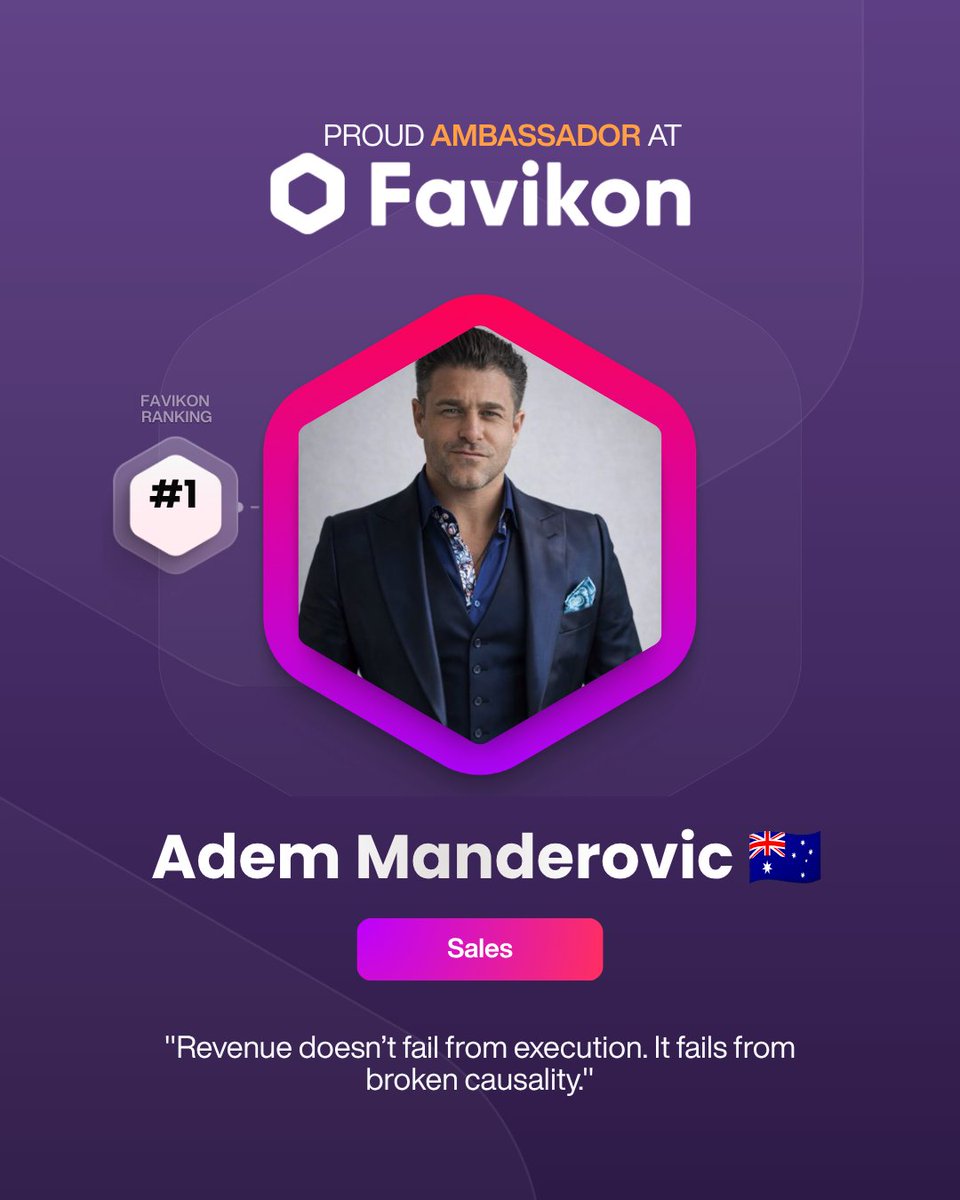
Today those signals have contributed to rankings including
• #1 on TikTok & X for Sales (2026)
• Top 3 Sales Leader in Australia
• Top 10 on LinkedIn for Sales
Most people still think content is about reach.
I increasingly believe content is about authority architecture.
Every article.
Every interview.
Every podcast.
Every comment.
Every platform.
Every insight.
Every contribution.
Becomes another signal in a larger system.
The companies that understand this will build authority faster.
The leaders that understand this will build trust faster.
And the AI systems of the future will likely become increasingly dependent on those authority signals.
Is knowing your auth score and where you are indexing on AI searching, 2003 google adwords moment in time all over again? I think yes, but bigger than we can possibly imagine...
And it's a game Favikon helped us see more clearly while building Closed Circuit Selling : Architect Predictable Revenue in an Unpredictable Market
#ClosedCircuitSelling #RevenueAlignmentArchitecture #Favikon #ThoughtLeadership
2
1
57
Jun 9
My first passion was fashion.
Featured here in a pair of jeans I designed while entering fashion competitions around Greville Street back in the day.
Long before revenue architecture, GTM systems, or Closed Circuit Selling™, I was obsessed with understanding people.
Working at GASP and later with Christopher Chronis, I knew the products inside out.
Not because I memorized a catalogue.
Because I lived the craft.
I could often look at someone and tell their size before they tried anything on.
More importantly, I could tell what would suit them.
A guy who’s 5’11” but would rather look 6’1”?
And who wouldn’t?
You don’t put him in a wider straight-leg pant with a flat shoe.
You put him in a slimmer silhouette with a Cuban heel boot that elongates the frame and changes the entire perception.
The product was never the point.
The outcome was.
But over time I became fascinated by something else.
The customers.
Particularly the ones who kept coming back.
I started mentally cataloguing them.
Who liked what.
Why they liked it.
What colours they preferred.
What cuts suited them.
What occasions they were buying for.
What brands they gravitated toward.
And perhaps most importantly…
What they wanted that we didn’t yet have.
Then something interesting would happen.
A new range would arrive.
A new season would launch.
A new collection would hit the floor.
And before the public even knew it existed, we’d call specific customers.
Not everybody.
The right people.
The people we knew would love it.
The people we knew it was designed for.
The people we knew were already looking for it.
We’d invite them to exclusive after-hours events.
Closed-door previews.
VIP experiences.
And they would buy.
Consistently.
Looking back now, I realize something important.
That wasn’t retail.
That was market cataloguing.
Without knowing it, I was documenting:
• preferences
• timing
• intent
• fit
• behaviour
• future demand
Years before I had language for any of it.
Years before I entered enterprise sales.
Years before I worked across industries.
Years before Closed Circuit Selling™ existed.
The insight was simple.
The better you understand the market, the less you need to convince the market.
Because when the timing is right, the fit is right, and the value is right…
The sale becomes a natural outcome.
Over the next 24 years, across 12 industries and 6 continents, I kept seeing the same pattern.
Different products.
Different services.
Different markets.
Different buyers.
Same principle.
The organizations that won consistently weren’t necessarily the best at selling.
They were the best at understanding.
Understanding their market.
Understanding buyer timing.
Understanding stakeholder needs.
Understanding what would need to happen before a decision could occur.
What began in a fashion store eventually evolved into Closed Circuit Selling™.
A system designed to help organizations create predictable revenue in unpredictable markets.
Not by pushing harder.
Not by increasing activity.
But by systematically cataloguing the market and aligning the entire organization around what buyers actually need, when they need it, and what it will take for them to act.
The longer I spend in business, the more convinced I become that competitive advantage isn’t found in products.
It’s found in understanding.
And understanding compounds.
#ClosedCircuitSelling #RevenueAlignmentArchitecture
1
27
Jun 9
he is closing the circuit..
we outline this in our book @georgecouda and I.
cataloguing the market
permission to come back and show them
Closing that circuit!
Jun 8

A 14 year old has closed $20,500 in barbershop website deals over 7 months. Not one owner has ever asked his age.
He uses one move the rest of the cold-calling internet has not figured out yet. He does not pitch. He screenshares.
The call goes like this. He opens Google Maps. Types "barbershop." Finds one with 4.8 stars and no website. Builds a clean demo site in Lovable in 4 minutes. Then he dials.
"Hey, I noticed you don't have a website. I already built you one. Want to see it? Takes 30 seconds."
The owner says sure. He shares his screen. Services. Prices. Location. Booking button. Real photos pulled from the owner's Instagram.
Owner: "Yo this is actually fire."
He says: "I can get this live for you this week."
Done.
41 deals. $500 a piece. The 41st arrived because the 40th showed his friend's brother the demo and forwarded the number.
A real web agency walks into the meeting with a portfolio. He walks in with the answer already built.
There are 140 million businesses on Google Maps without a website right now. The demo does the selling. The kid is just the screen.
Save this post. The script works at any age. Build the demo before you call.
Community note
No listing for Bay's Barbershop in Brooklyn; the call appears staged to promote SiteDrop AI website builder shown in the video, not Lovable as claimed in the post text. sitedrop.ai google.com/maps/search/Ba…
1
13
Jun 9
We need to play this kid more.

4
93