
We're building an open source map of the individuals and orgs with the potential to shape AI policy in the US. Join us! info@mapping-ai.org discord.gg/HtqceQR
Joined March 2026
- Tweets 59
- Following 25
- Followers 1,573
- Likes 74
19 Photos and videos

Pinned Tweet

May 4
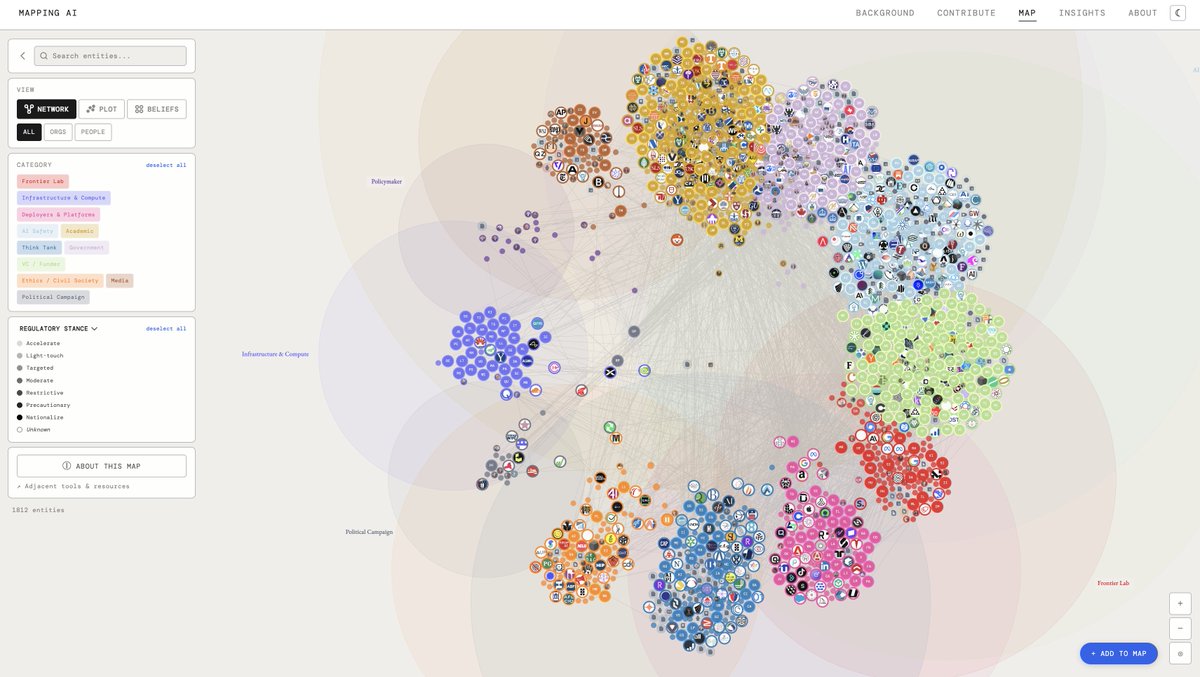
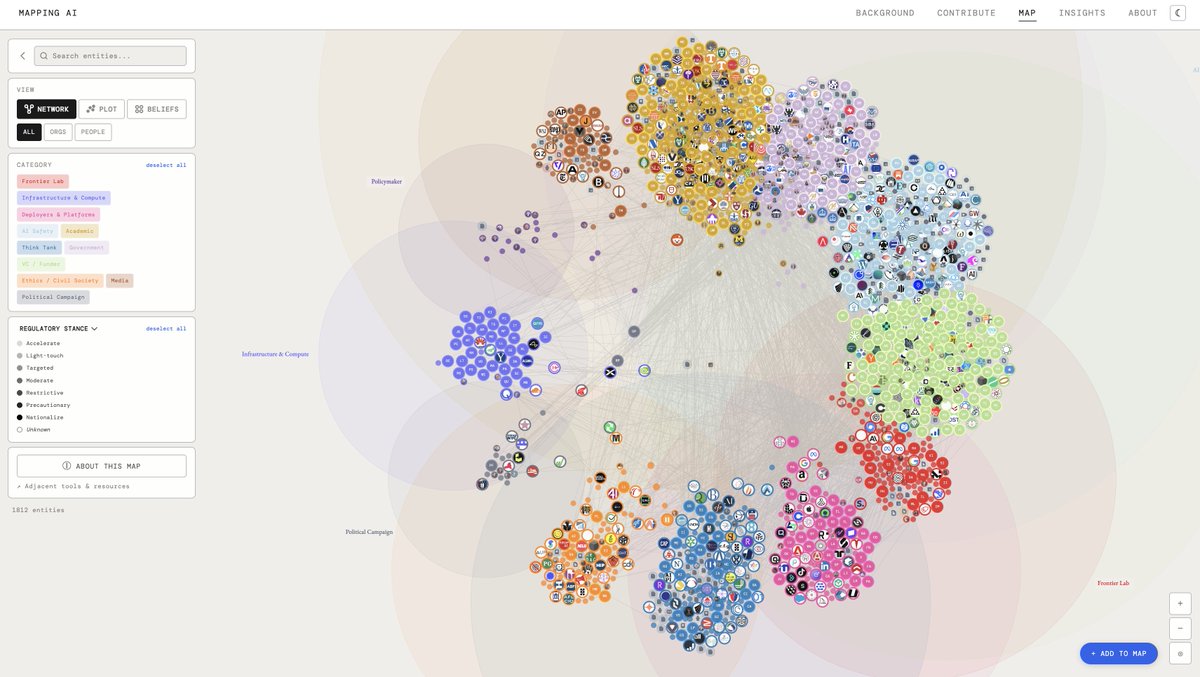
Who actually shapes AI policy in the U.S.?
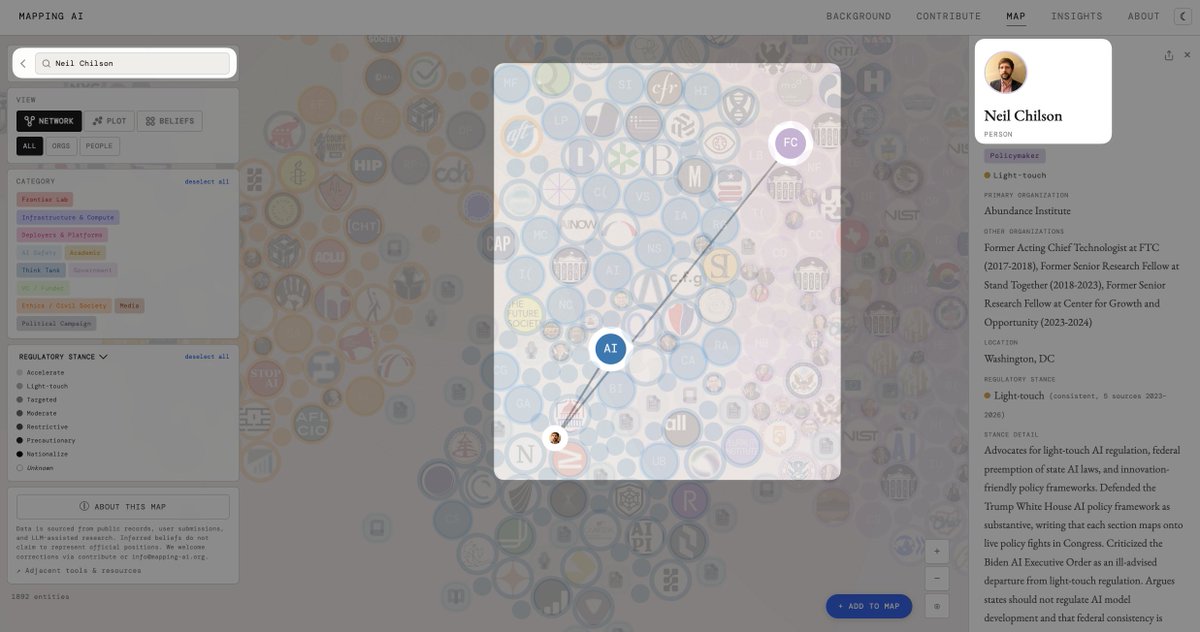
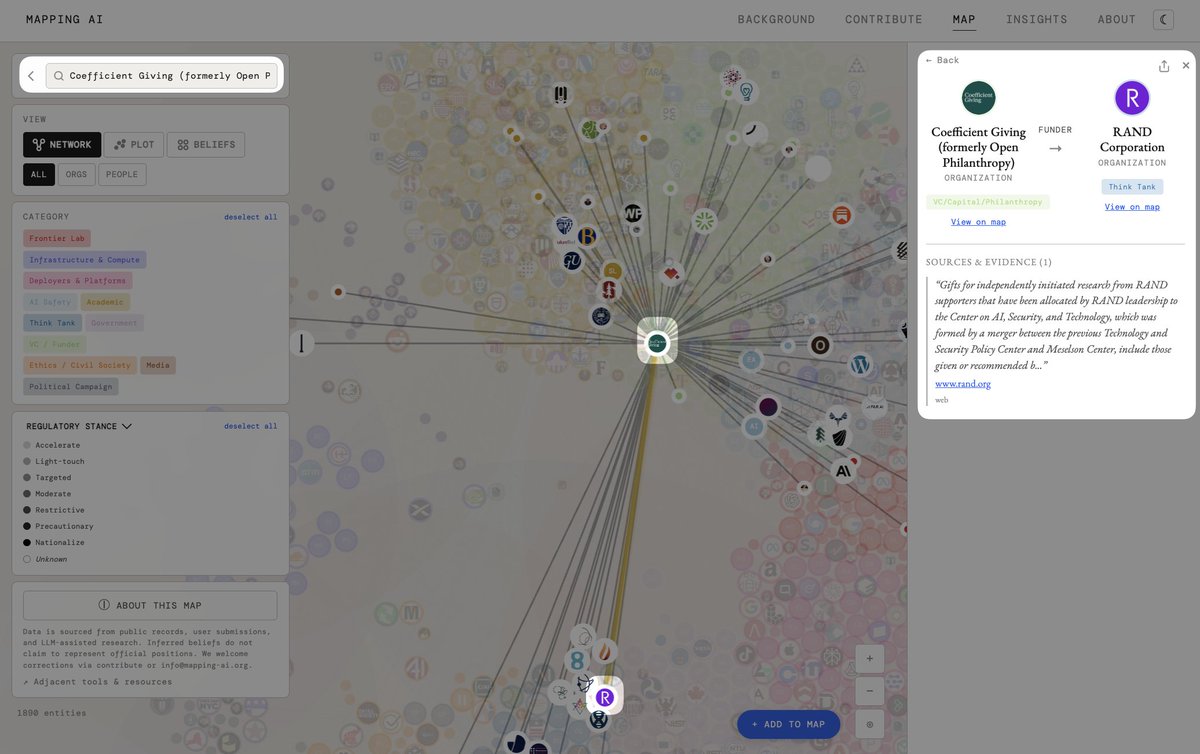
We mapped 1,812 entities: 745 people, 918 organizations, 2,925 relationships. Frontier Labs, AI Safety orgs, Think Tanks, Government, VCs, and more.
mapping-ai.org
25
366
1,342
294,813
Mapping AI retweeted
May 7
Thanks so much @AndyMasley (and others @ohlennart @PeterSlattery1 @austinc3301 @tobias_haeberli @DrTechlash etc) for your careful and critical engagement, we’re genuinely grateful.
On the errors you flagged (understood these are a limited sample), we've corrected all of them. We’ve also made bidirectional edge relationships more legible. Noting here that edges have start/end dates in our database, but we haven't shipped the "current only" filter. That's coming soon and will fix the John Schulman-type issues structurally.
We’ve been manually verifying samples, running verification scripts 24/7, and have worked with a dedicated data validation contractor in the past. Though at this scale, errors are inevitable, and it’s thanks to exploration like yours that we’re able to strengthen our verification methodology. This is also why we’ve made our full codebase open-source on GitHub (github.com/MappingAI/mapping…) and host a forum on our Discord (discord.gg/HtqceQRV3f) for deeper and collaborative debugging. We welcome you and any interested community members to join one or both.
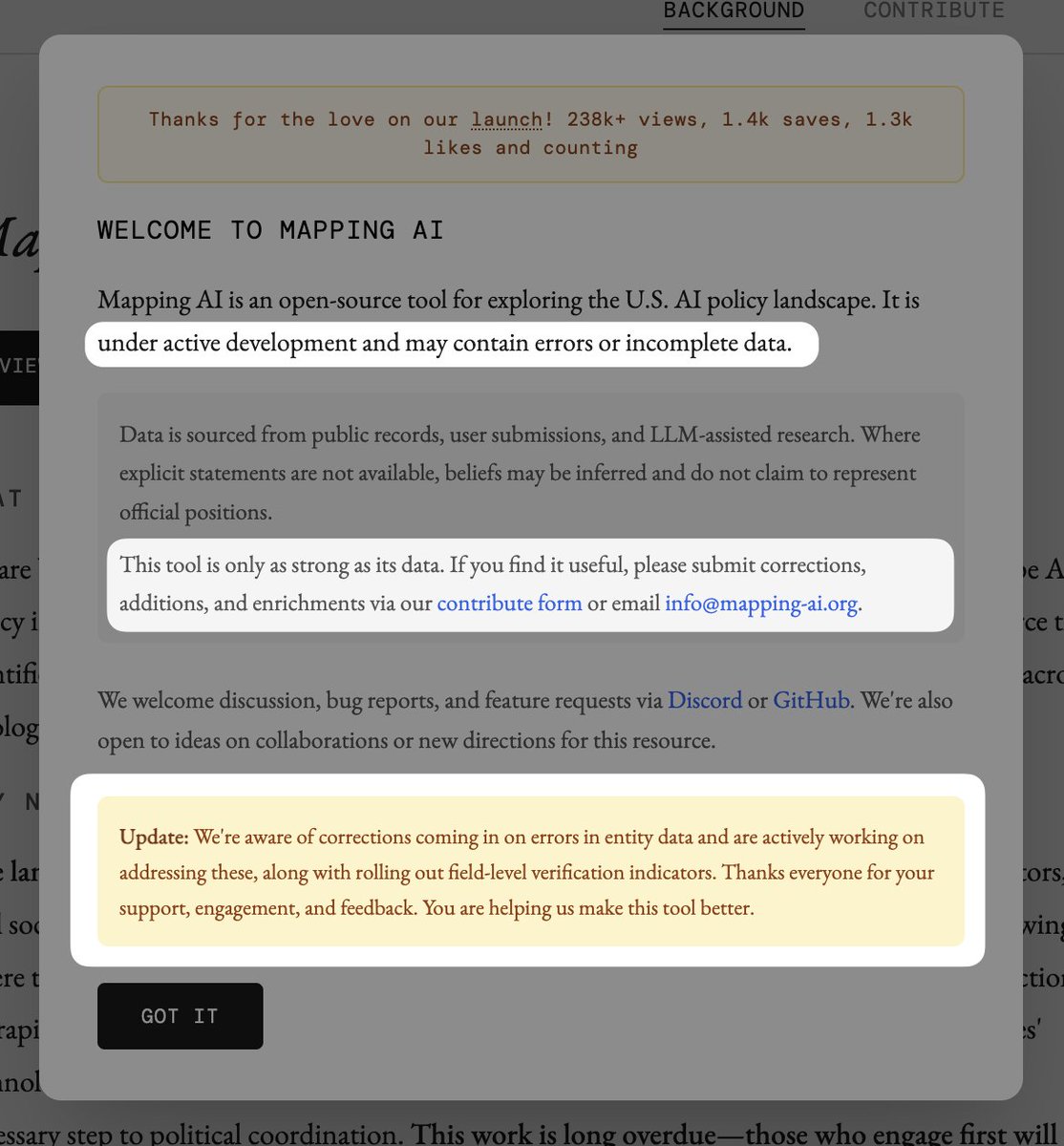
You’re right that we should do a better job at publishing a formal methodology document, that is next on our task list. The GitHub repo itself and our mapping party guide (mapping-ai.org/workshop) give pointers to the architecture and relevant files, and on the site we’ve included a note that data comes from a mix of public records, user submissions, and LLM-assisted research. We’ve also stated that inferred stances don’t claim to represent official positions. There's also more on our process on "About" and added as tooltips across the site.
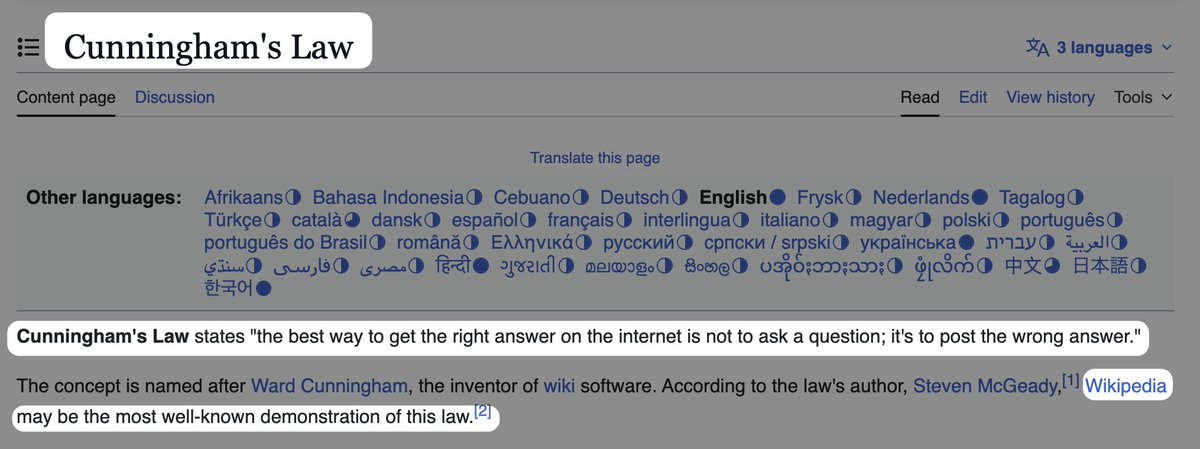
On taking the site down, we take this feedback seriously, and we’ve thought hard about it. Keeping this tool online, with the right precautions, offers us the public exposure to surface issues and seed data at a scale far larger than our team’s capacity (mostly just two of us with full-time day jobs). See Cunningham’s Law (meta.wikimedia.org/wiki/Cunn…). Which is also why we’ve done three things immediately (see screenshots):
1) There is a persistent pop-up that must be dismissed by the user on every page load of the site, regardless of local session cache, that makes it clear to both insiders and outsiders coming to this tool that errors exist and are being actively reviewed and addressed, as well as additional notes in our footer and “How to Use” pop-ups.
2) Org stances are temporarily removed (thank you @ohlennart for this suggestion as well). Until we’ve internally verified every source and edge type, we’re pulling stance attributions. Updated tooltips on the legend briefly explain our methods and this temporary removal for orgs.
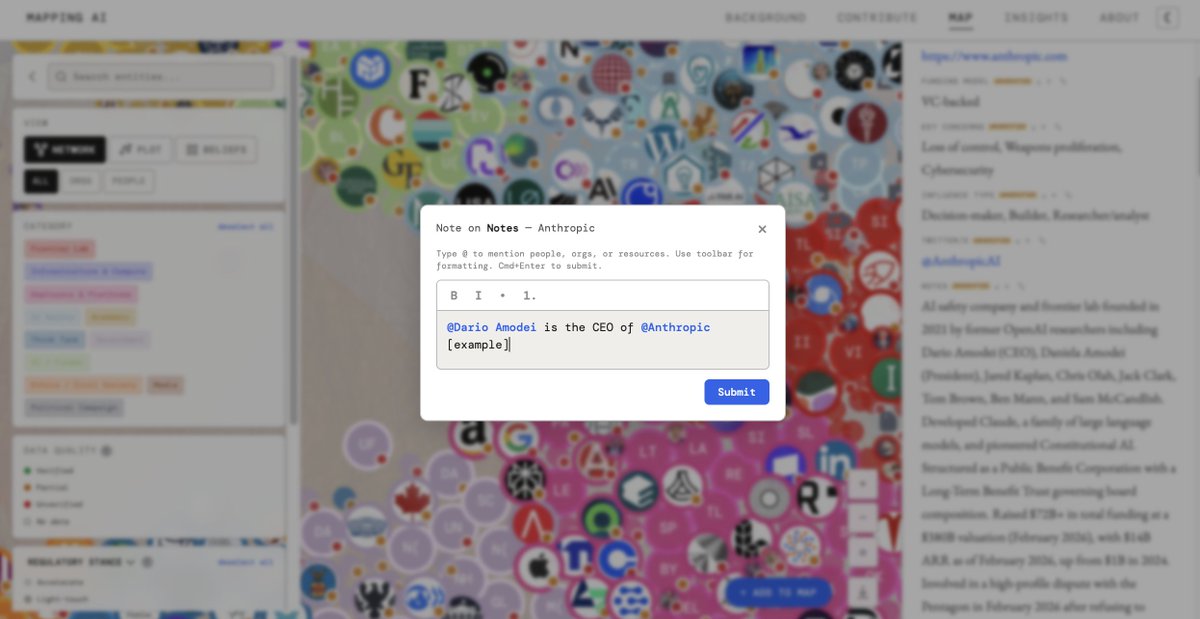
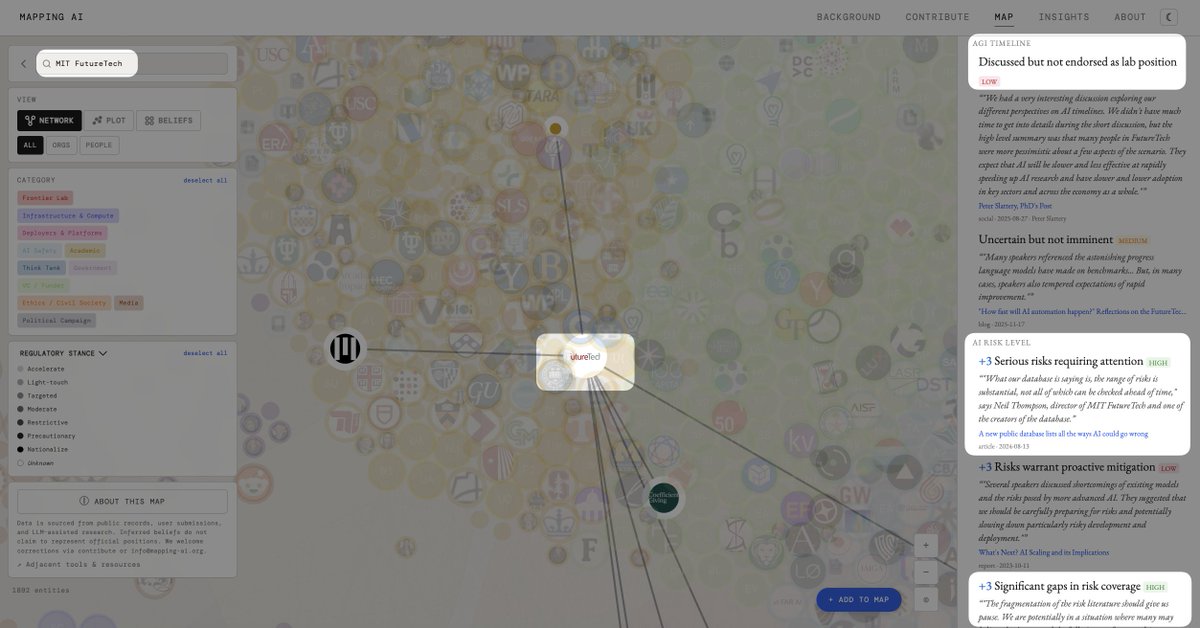
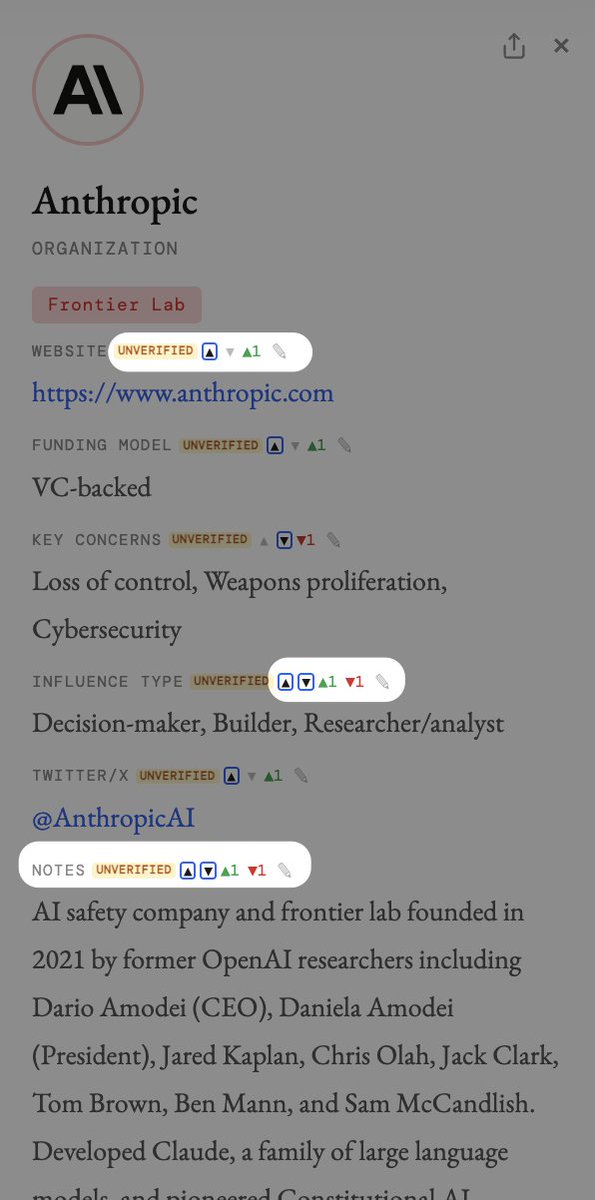
3) Every field on every entity now has verification flags (green/yellow/red), upvote/downvote buttons to confirm or flag data, and a rich-text correction notes feature with @mentions. These update live, and automated verification scripts cross-check fields against external sources. A "Data Quality" legend on the map lets users filter by verification status. Together, these tools let the community and our team collectively triage and fix data quality issues in real time, without misrepresenting accuracy.
More broadly on org stances: although many orgs don’t have official positions (whether by law or org policy), our goal is to capture what’s being discussed publicly about organizations in the AI policy space, including external and internal perceptions alongside officially stated positions. We see the gap between internal and external perceptions as informative rather than something to flatten. And we include “inferred” vs “explicitly stated” tags to help draw that distinction for users. That said, we respect organizational corrections and will update promptly when groups reach out, as we’ve done here and with several other organizations since launch. And thanks to those who have reached out with corrections and feedback via email, Discord, and the contribute form!
We’re actively building the infrastructure to make this kind of collective intelligence possible. Thank you for making this tool better and for your patience along the way :) (and if you made it this far, thanks for reading!)
x.com/mapping_ai/status/2051…
May 5

Getting a lot of questions about Mapping AI so here's some context. We are concerned and hopeful about AI, but as outsiders from climate, planning, space, housing, and organizing, we didn't know where to begin. So we mapped it out 🗺️and open sourced it all:
1
15
610
May 5
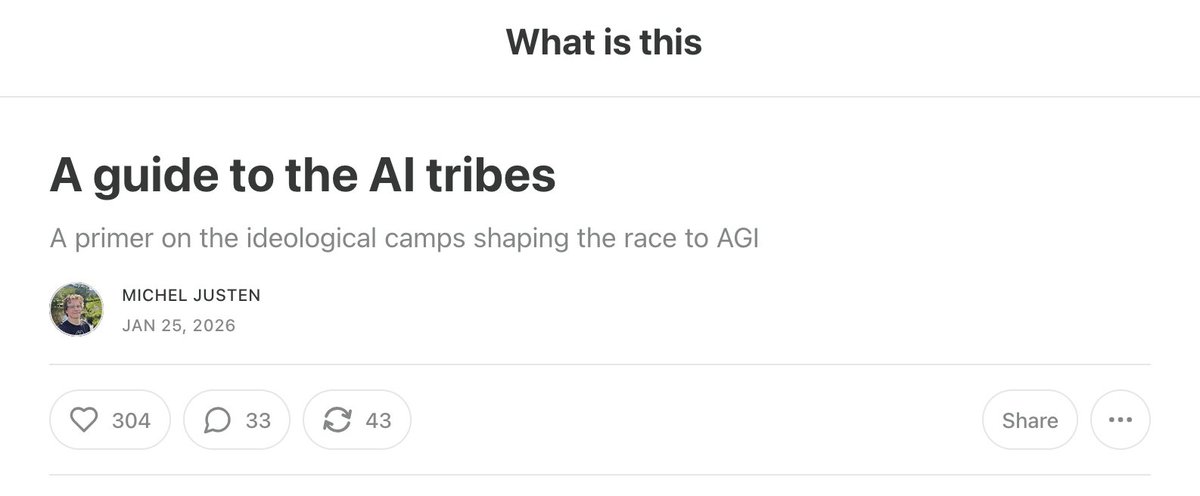
shout out to @JustenMichel for his AI tribes post that we referenced in first trying to make sense of this space! substack.com/home/post/p-185… would love any feedback you have :) or a collab? 👀
Apr 1

People at three orgs have told me they recommend this post to all their new hires. Total nuanced explainer victory.
1
5
860
May 5
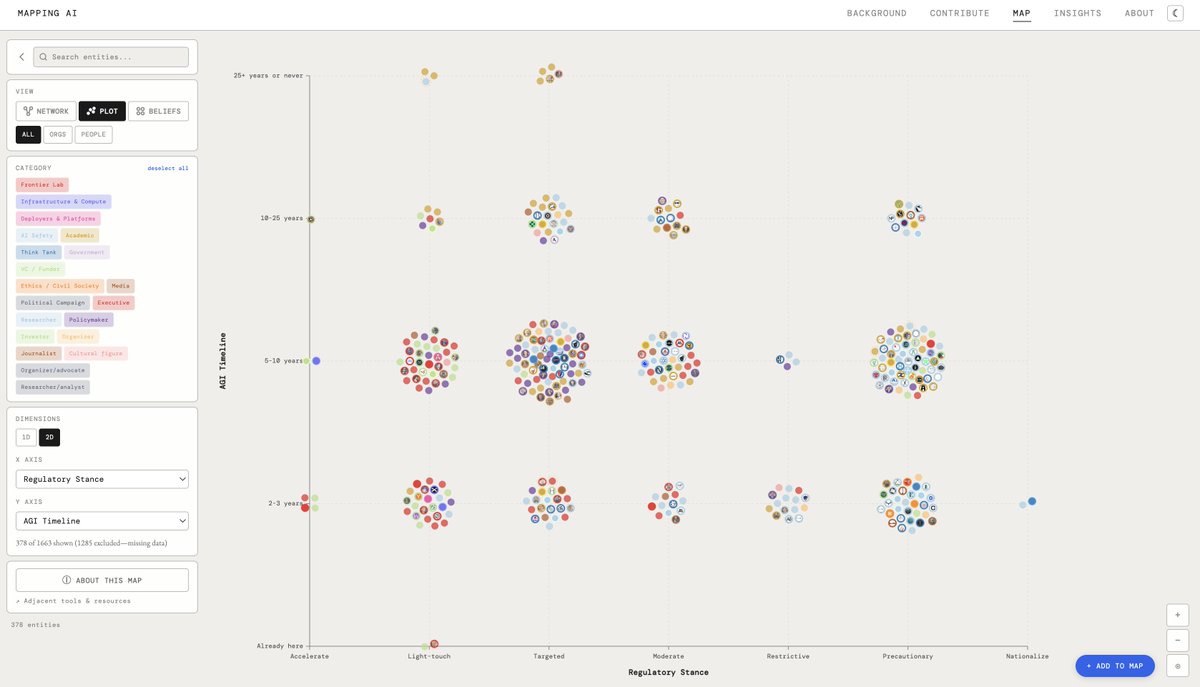
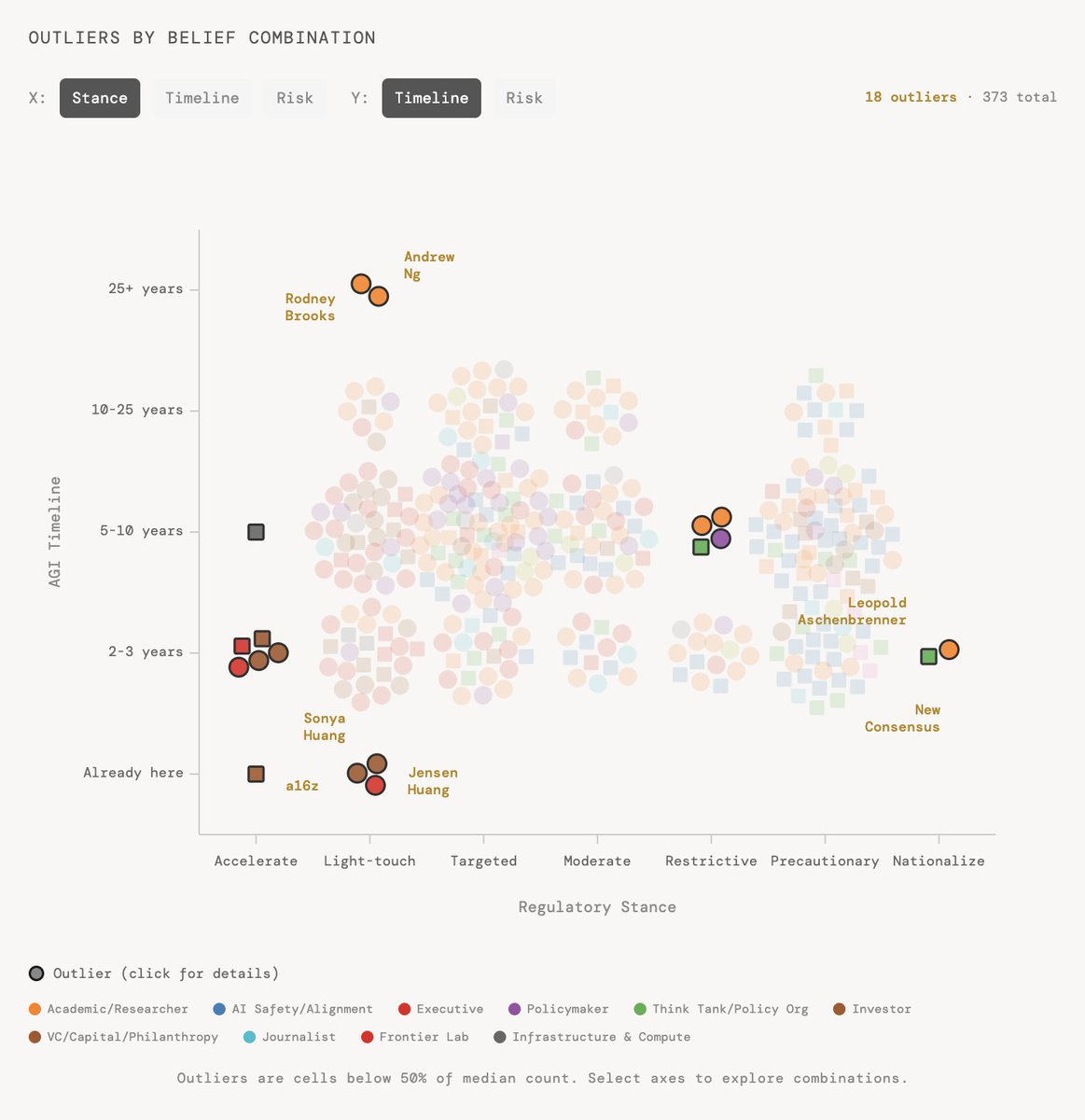
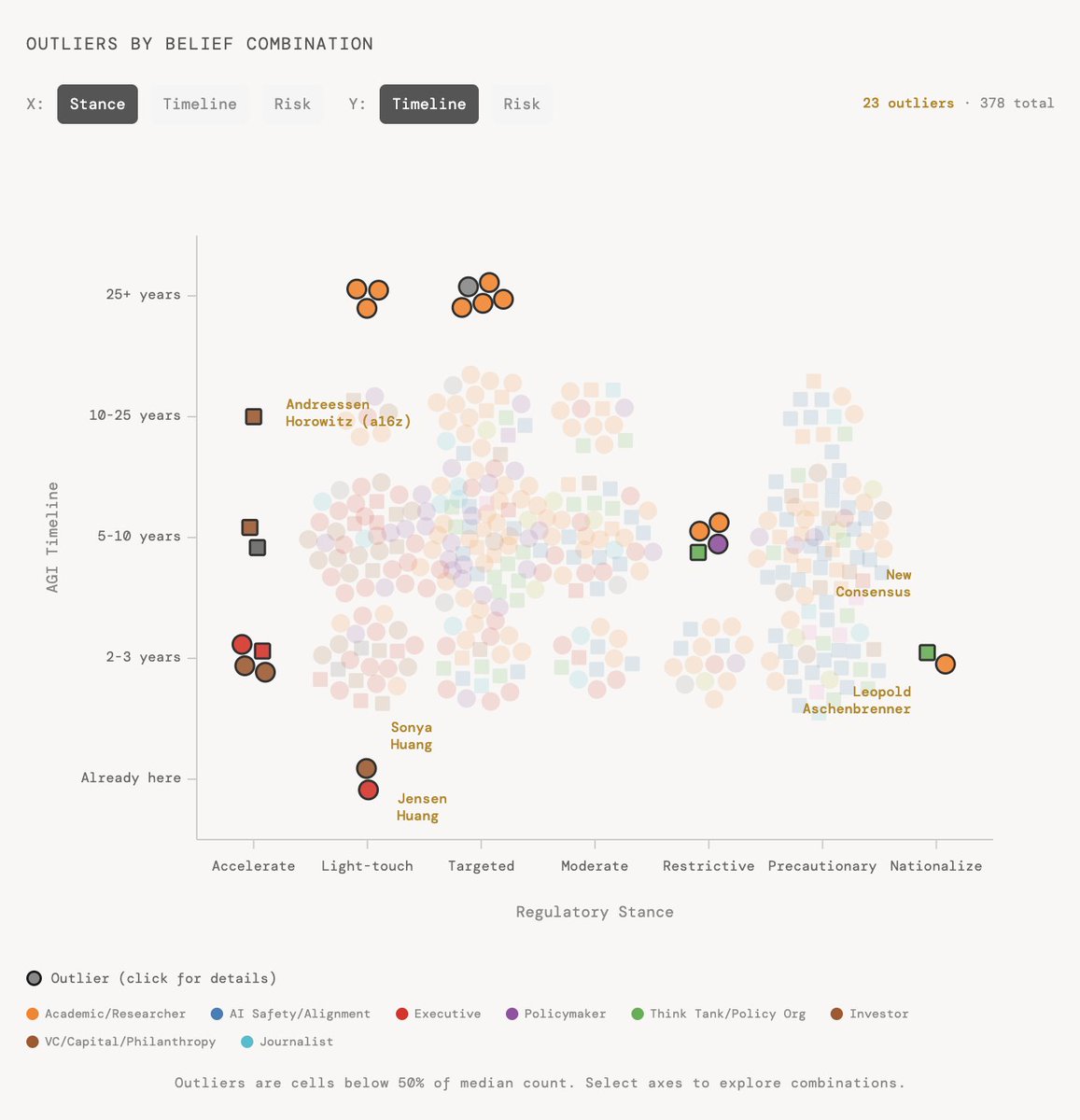
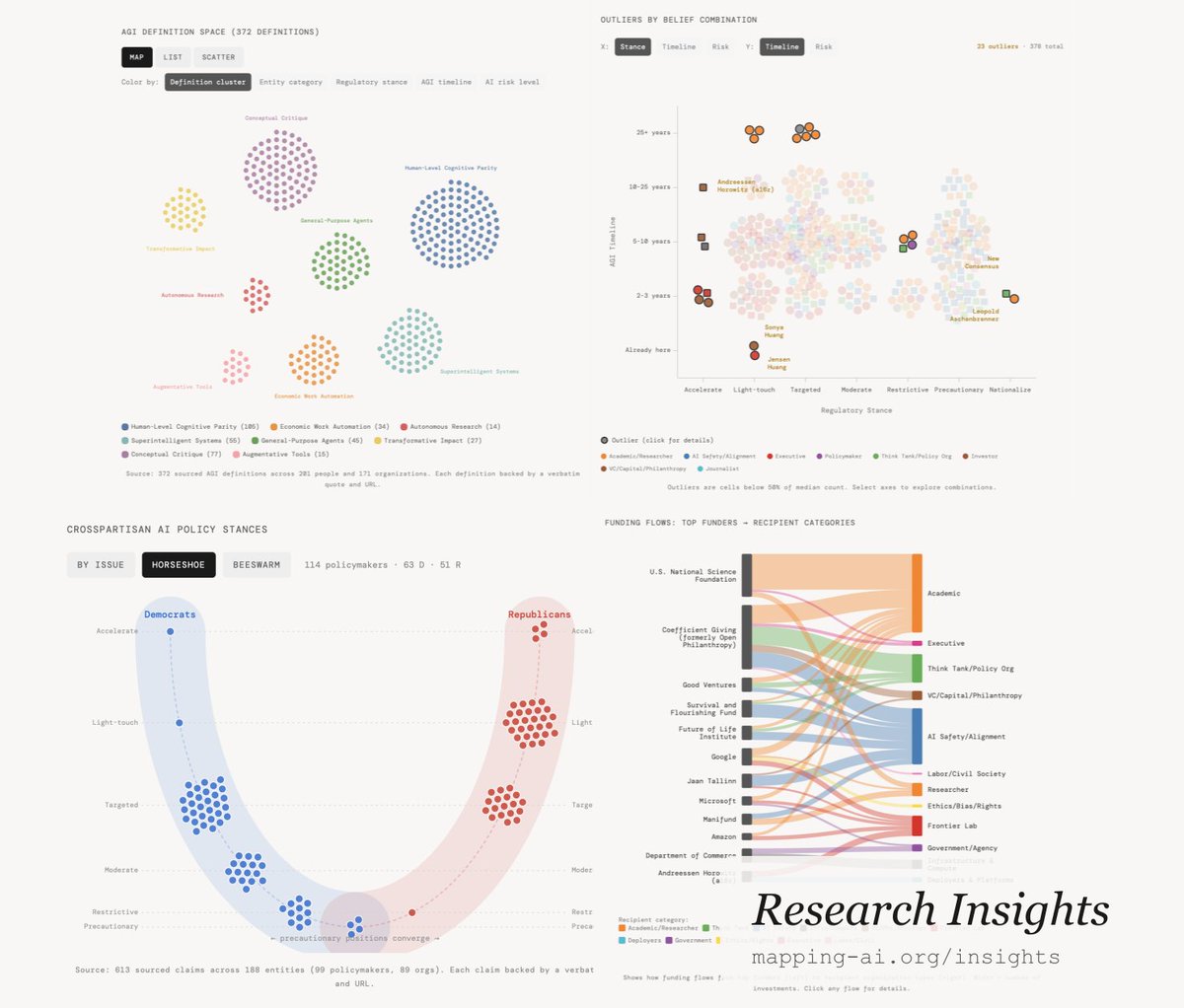
We plotted 373 AI leaders on two axes…
X: How much regulation do they want?
Y: When do they think AGI arrives?
…and some striking outliers emerged.
1
7
40
5,409
May 5
Explore the interactive version by clicking any dot to see the full profile.
mapping-ai.org/map (switch to Plot view)
mapping-ai.org/insights#outl… (or scroll to Outliers)
1
1
3
371
May 5
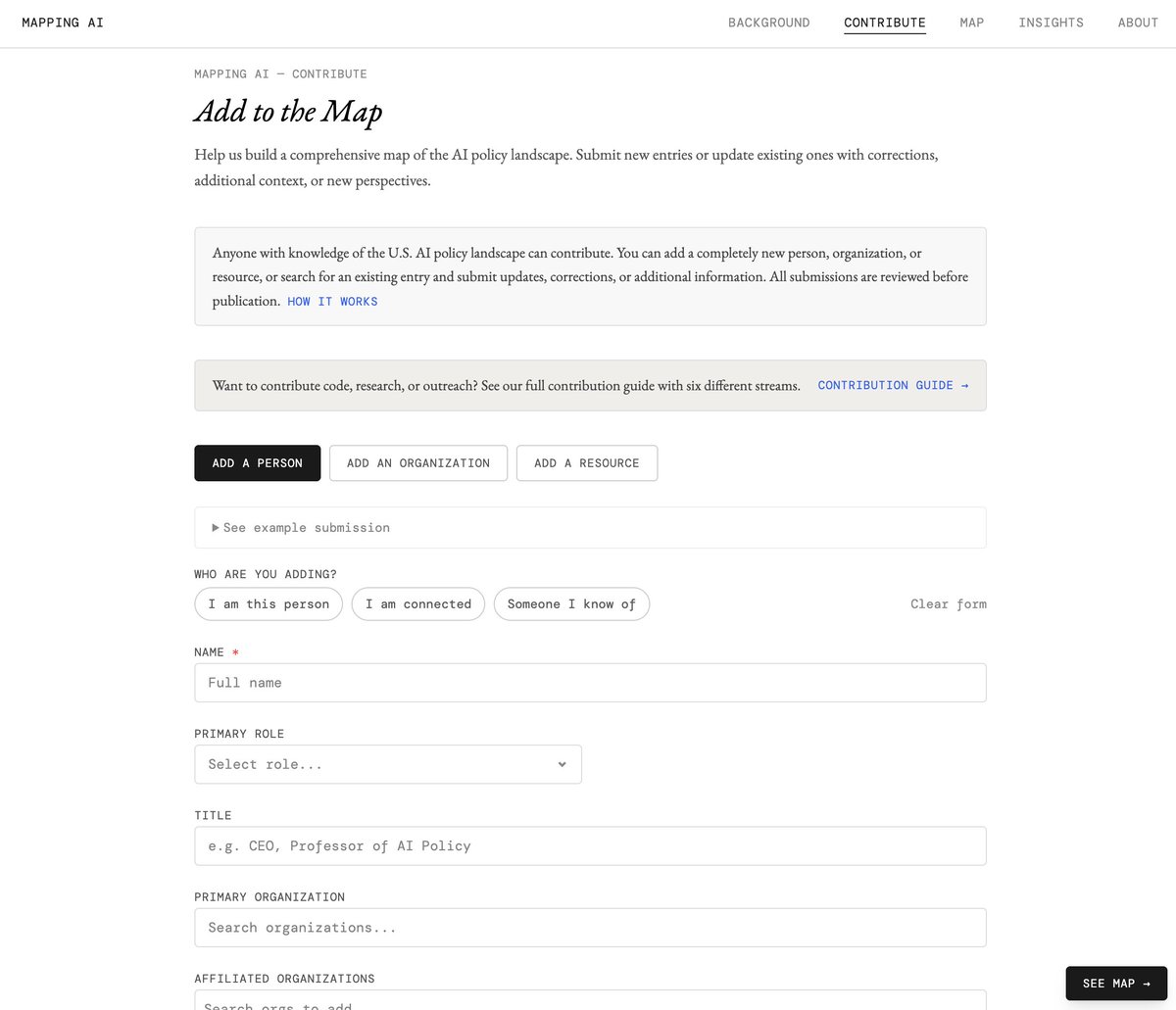
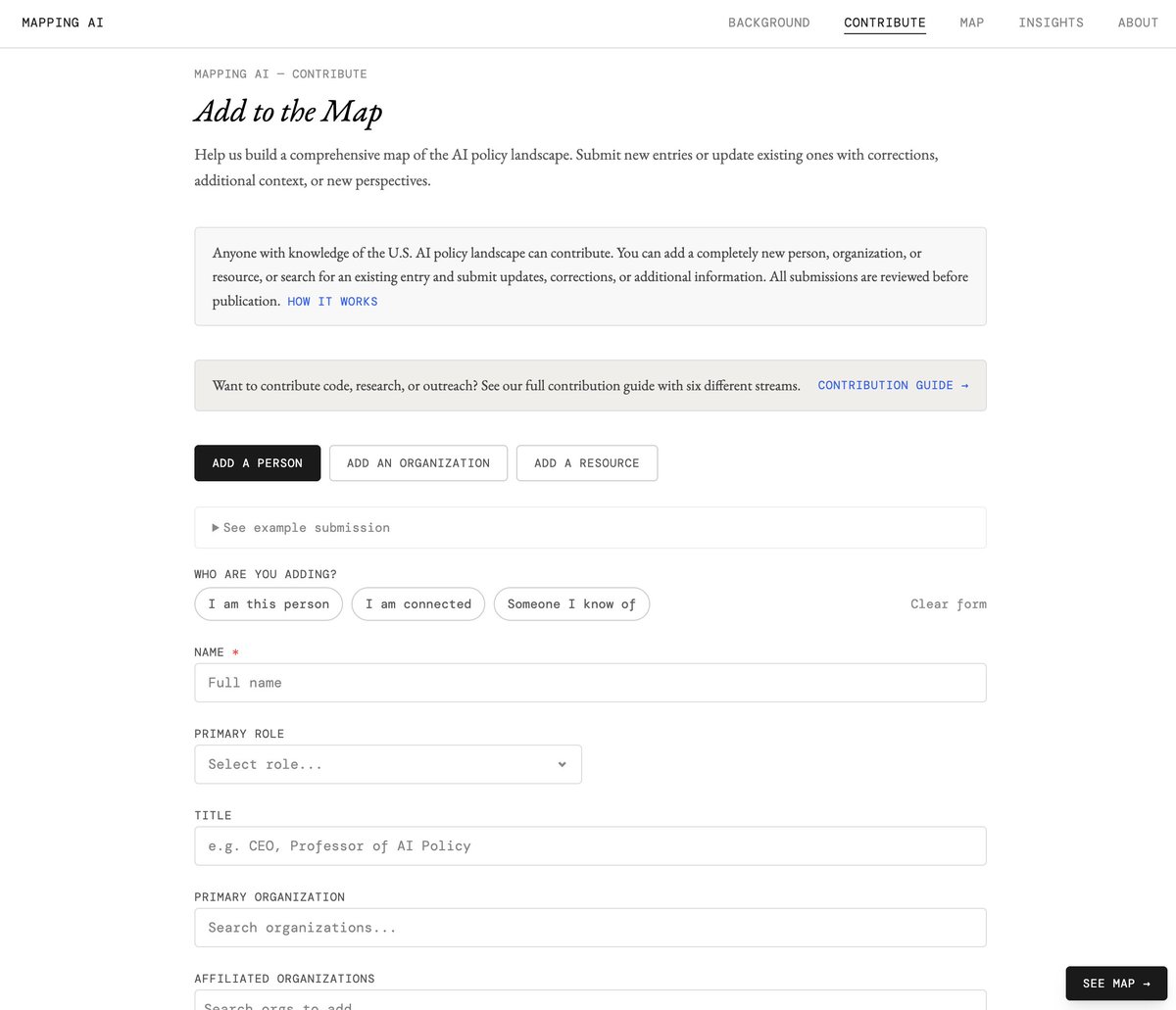
These are just a few insights from the map. The tool is only as strong as the data, so please help us keep adding (mapping-ai.org/contribute). Explore the full project here:
x.com/mapping_ai/status/2051…
May 4
Who actually shapes AI policy in the U.S.?
We mapped 1,812 entities: 745 people, 918 organizations, 2,925 relationships. Frontier Labs, AI Safety orgs, Think Tanks, Government, VCs, and more.
mapping-ai.org
1
3
314
May 5
Getting a lot of questions about Mapping AI so here's some context. We are concerned and hopeful about AI, but as outsiders from climate, planning, space, housing, and organizing, we didn't know where to begin. So we mapped it out 🗺️and open sourced it all:
2
5
24
4,679
May 5
There are MANY many tracker tools (e.g., meta tracker tracker ai-policy-tracker-tracker.ve… @Daniel_Kalish_) we’re documenting in “Adjacent Tools.” If you're building these, we’d love to collaborate rather than duplicate work. We’ve open-sourced our code base: github.com/MappingAI
3
1
6
368
May 5
If this is a valuable resource, we also want to figure out how to sustain it long term (we’re just a couple of 24 year olds with laptops). If you have ideas on how to scale open civic tech and want to support: email us at info@mapping-ai.org!
2
6
375
May 4
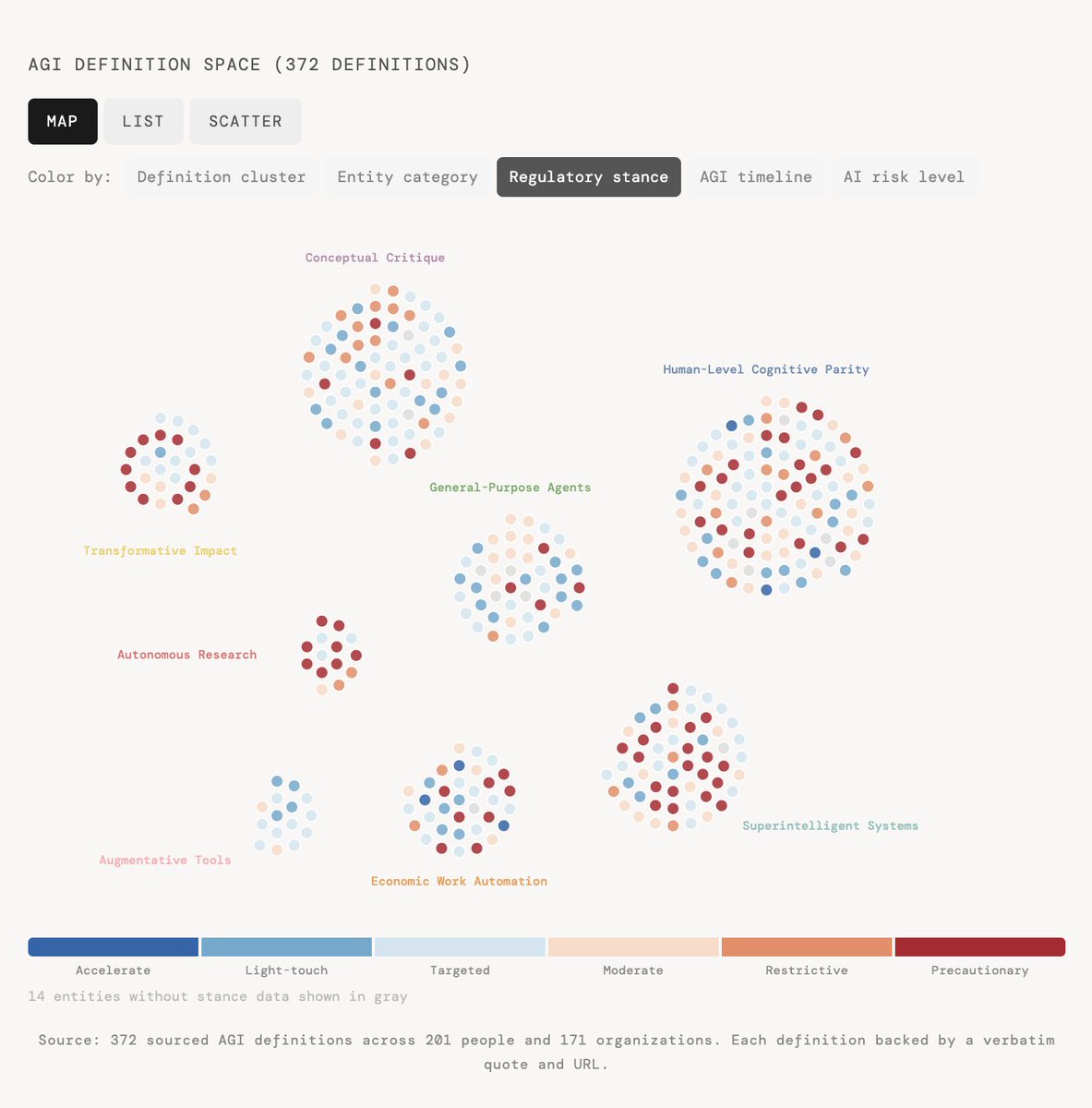
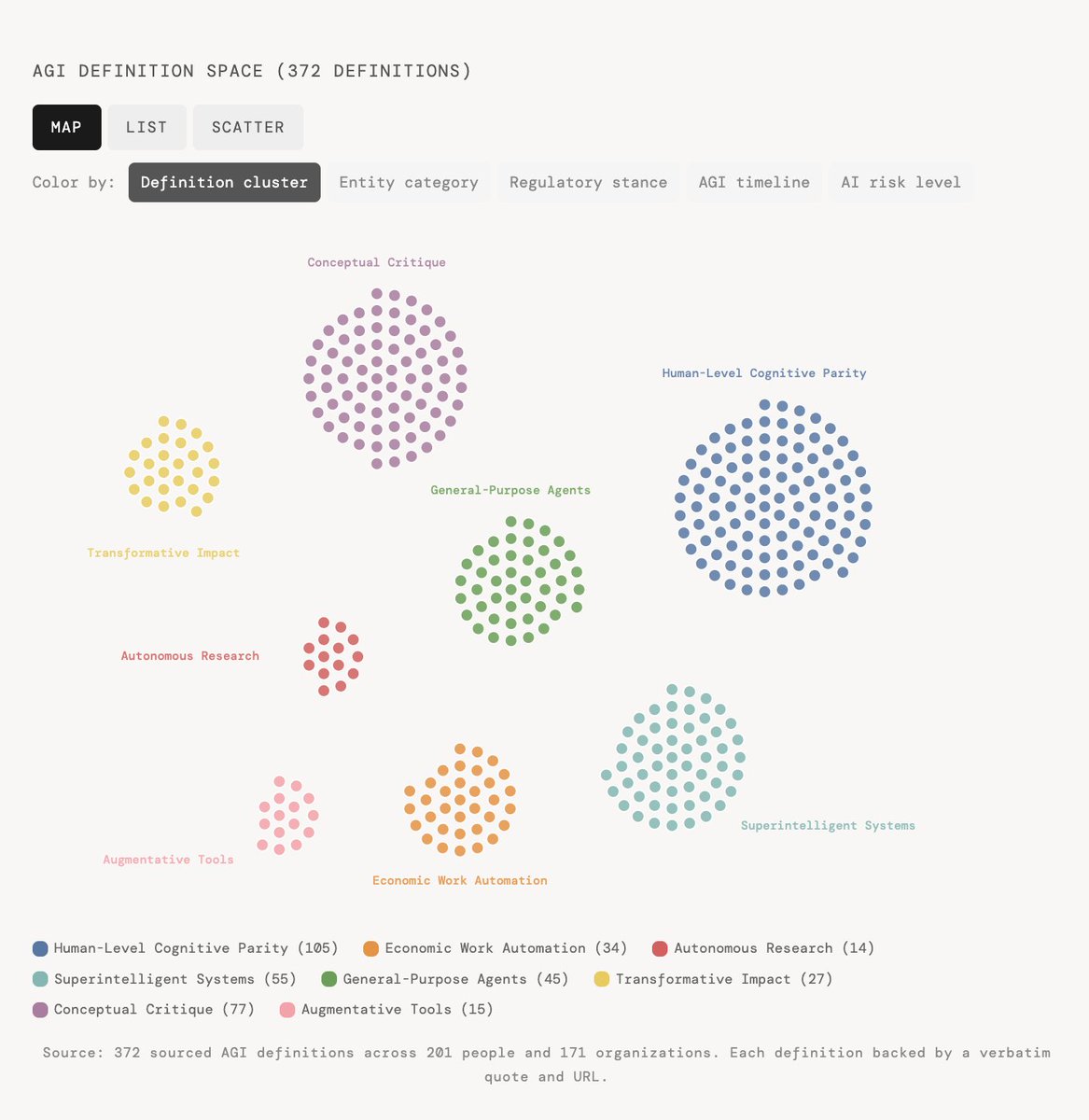
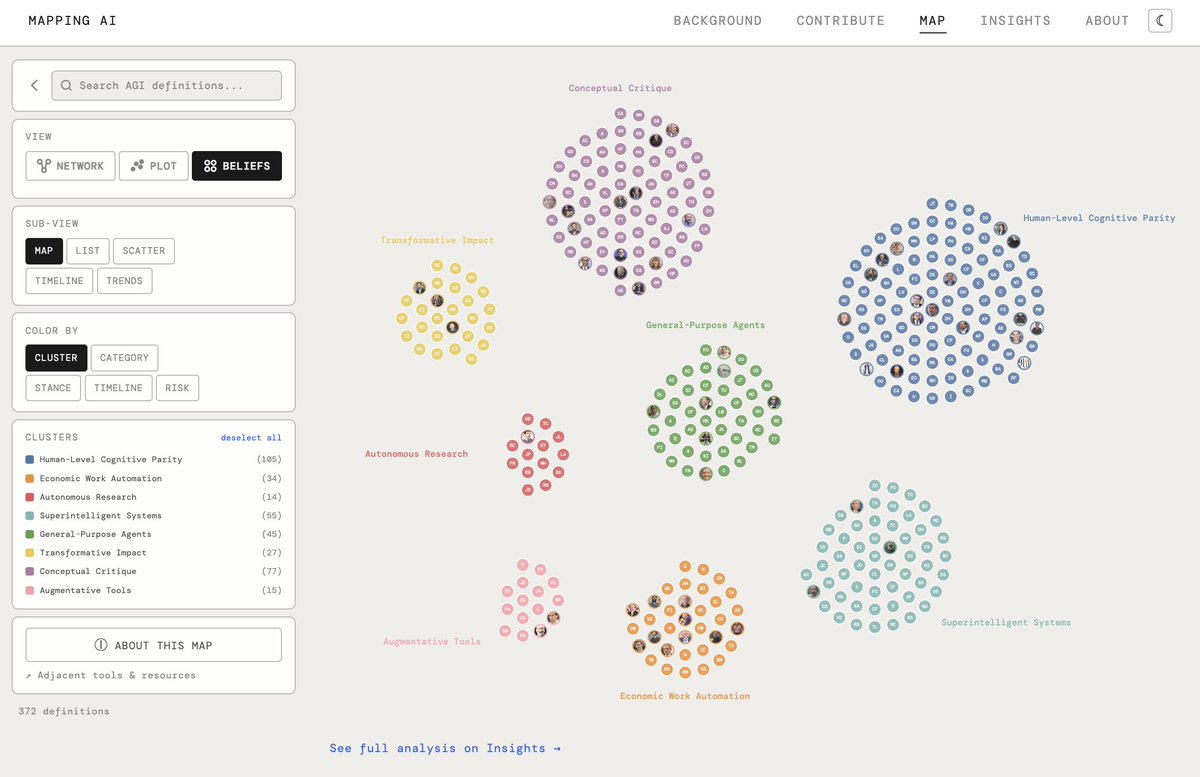
Everyone keeps saying "AGI is coming."
But when you actually map what people mean by AGI, you find completely different definitions.
We built a tool to visualize this. Here's what the data shows:
7
18
89
7,437
May 4
So when Jensen Huang @nvidia says "AGI is already here" and @leopoldasch says "2-3 years away," they aren't just disagreeing on timing—they're talking about completely different things.
Explore the full map: mapping-ai.org/map
1
4
14
3,561
May 4
We mapped 1,812 entities across 745 people, 918 organizations, and 2,925 relationships in the U.S. AI policy landscape.
It's all open source. Check it out here:
mapping-ai.org
3
7
558