
VP of Product Marketing & Training @seoClarity. #seo #contentmarketing - #mandolin #blm #lgbtq 🏳️🌈 they/them Threads: @marktraphagen
Joined April 2009
- Tweets 75,423
- Following 2,667
- Followers 24,000
- Likes 33,402
11,977 Photos and videos


Pinned Tweet

14 Nov 2024
While I will continue to monitor here I won't be actively posting. Find me on LinkedIn or at bsky.app/profile/marktraphag…
2
2
1,609
I couldn’t find an AEO/GEO course that was truly at an enterprise level.
So I wrote one.
Take it for free and get certified!
seoclarity.net/seoclarity-ae…
1
2
109
And I it’s not just YMYL info. We found AI was wrong 40% of the time on facts about ANY brand. That’s why we built ArcAI Accuracy, the only AI accuracy checker battle-tested by top enterprise companies. Learn more at seoclarity.net/ai-seo/ai-sea…
May 4

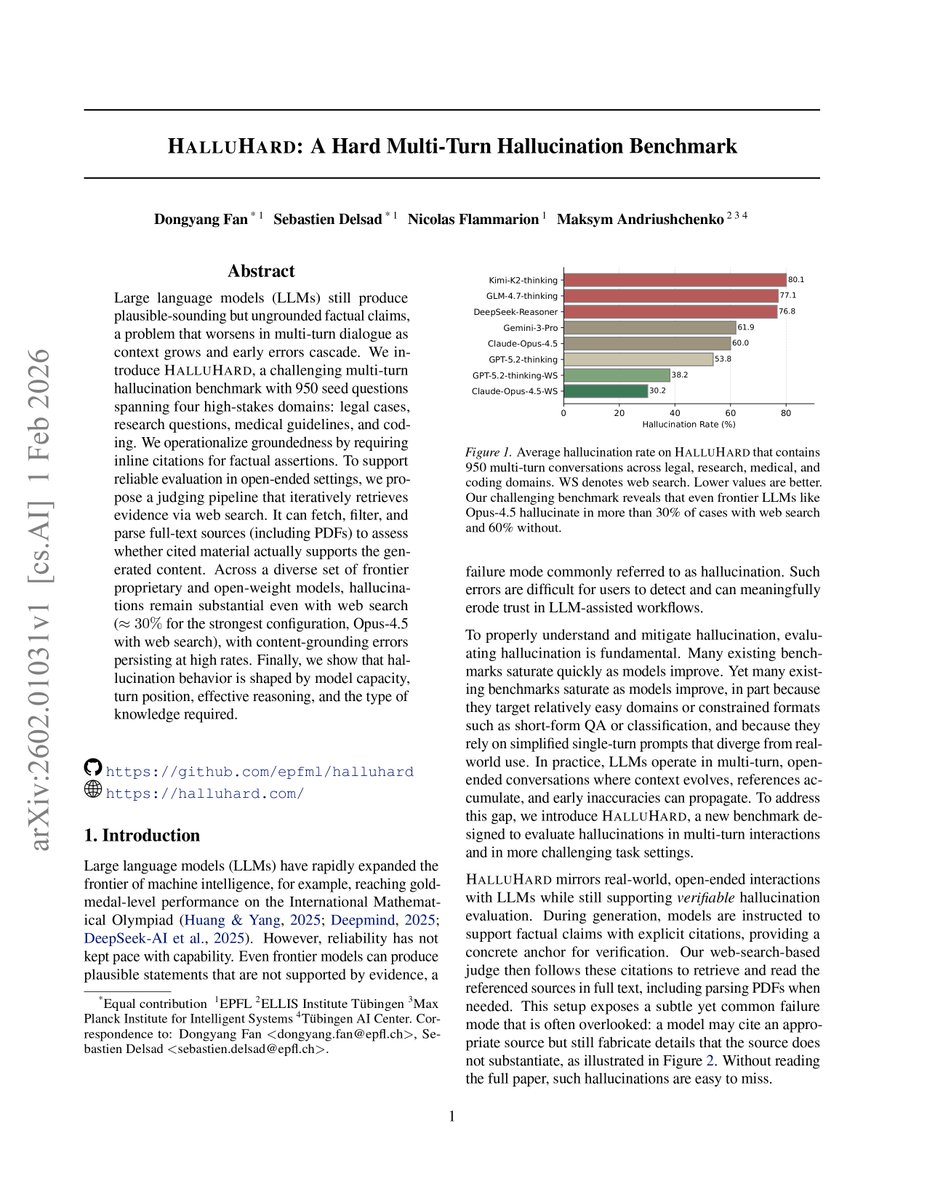
Researchers at EPFL proved your AI is lying to you.
Not sometimes. Most of the time.
They built one of the hardest hallucination tests ever made with Max Planck Institute. 950 questions. Four domains where being wrong actually hurts. Legal. Medical. Research. Coding.
Then they ran every top model on it.
The results.
GPT-5. Wrong 71.8% of the time.
Claude Opus 4.5. Wrong 60% of the time.
Gemini 3 Pro. Wrong 61.9% of the time.
DeepSeek Reasoner. Wrong 76.8% of the time.
These are the smartest AI models on Earth. The ones you trust with your career. Your health. Your money.
You think turning on web search fixes it.
It doesn't.
Claude Opus 4.5 with web search. Still wrong 30.2% of the time.
GPT-5.2 thinking with web search. Still wrong 38.2% of the time.
The internet attached. Still lying to you in 1 out of every 3 answers.
Now the part that should scare you.
Medical questions. The one place being wrong can kill you.
GPT-5 hallucinated 92.8% of the time on medical guidelines.
Claude Haiku 4.5 hallucinated 95.7% of the time.
Gemini 3 Flash hallucinated 89% of the time.
Nine out of ten medical answers from popular AI models. Wrong.
It gets worse.
The longer you talk to it, the more it lies.
Early mistakes cascade. The model starts citing its own earlier hallucinations as facts. Your third message is more wrong than your first.
The paper, in its own words: "hallucinations remain substantial even with web search."
This is what hundreds of millions of people are doing right now. Asking software that lies in the majority of its answers. About their health. About their job. About their legal case. About their code.
Most are not checking.
Most never will.
But please. Keep using ChatGPT for medical advice.
The doctors need a break.
arxiv.org/abs/2602.01031
181
14 Oct 2025
Any tool can give you visibility metrics for AI search. Only ArcAI shows you what to DO next.
More at seoclarity.net/resources/new…
2
429
18 Sep 2025
Finally >> ChatGPT search volume we can trust and turn into action seoclarity.net/research/how-…
1
3
387
15 Sep 2025
Because of our superior infrastructure and engineering @seoClarity users are unaffected by this change. See why in first comment below.
12 Sep 2025

Google dropping support for showing 100 results on the page with the URL parameter &num=100 seroundtable.com/google-sear… via @tehseowner and @emvhaccuranker
1
4
550
15 Sep 2025
Here’s our statement on the Google n=100 SERP retrieval problem seoclarity.net/blog/googles-…
2
315
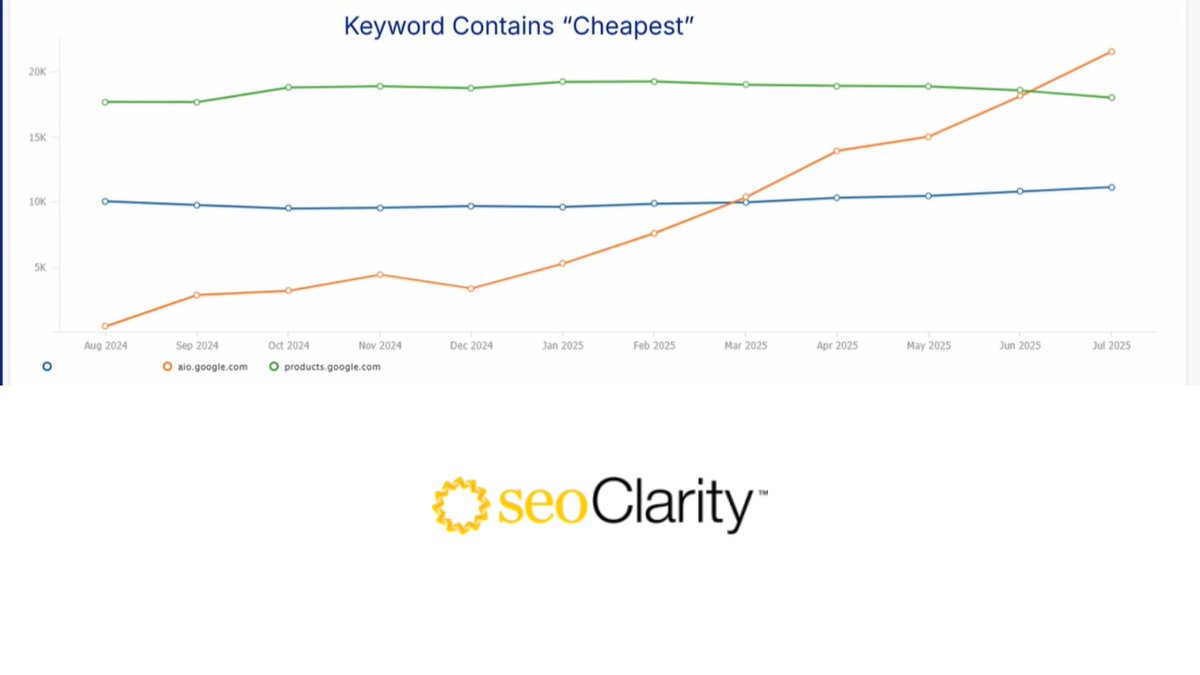
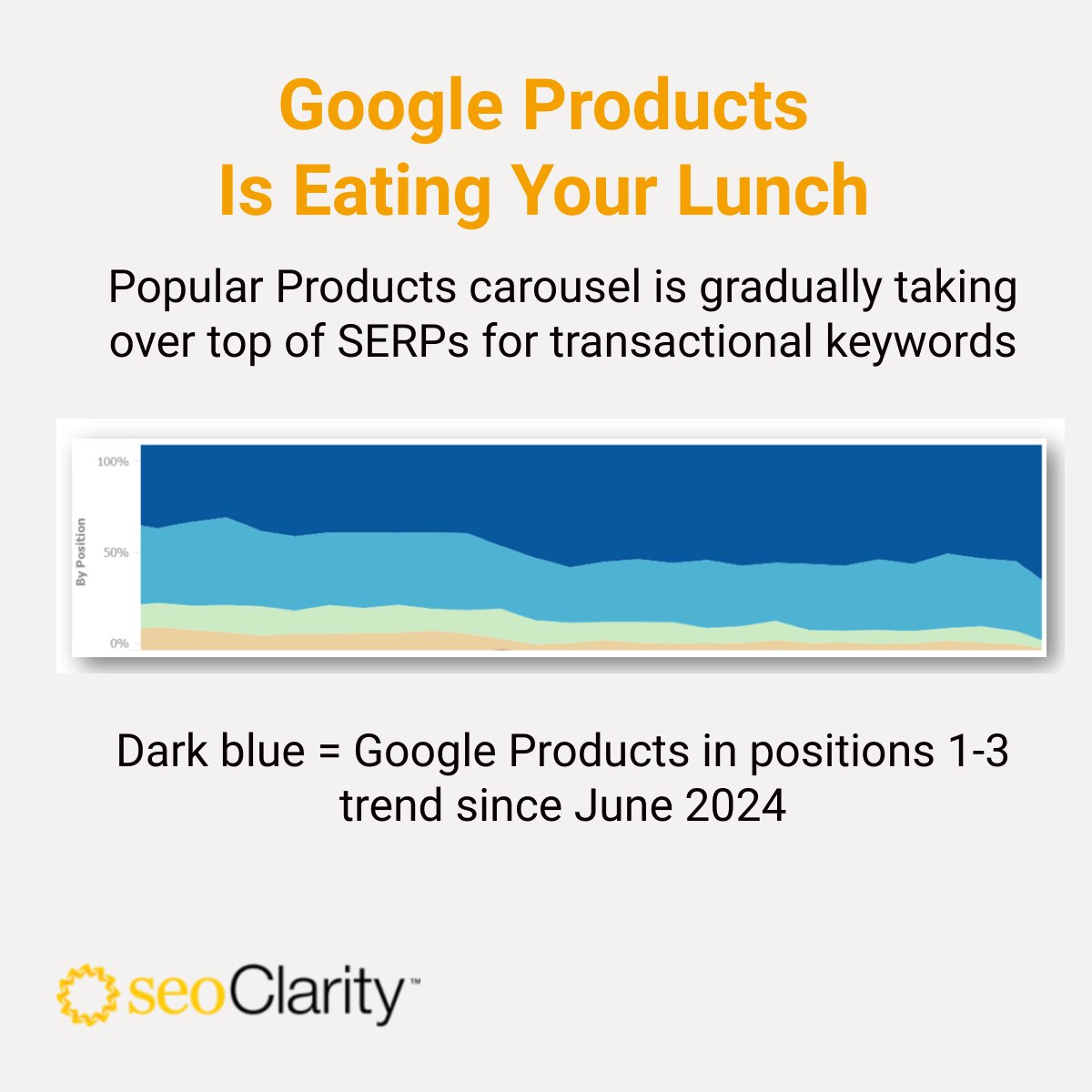
ICYMI - looks like Google is slowly but surely moving its shopping experience toward AI over the Product carousels its pushed for years now.

BREAKING!
In the @seoClarity Research Grid, no matter which US ecomm domain we look at, we're seeing a dramatic rise in AIOs in transactional keywords at the same time the Product feature is starting to decline.
7 min video on what this means seoclarity.net/research/ecom…
1
1
8
1,547
BREAKING!
In the @seoClarity Research Grid, no matter which US ecomm domain we look at, we're seeing a dramatic rise in AIOs in transactional keywords at the same time the Product feature is starting to decline.
7 min video on what this means seoclarity.net/research/ecom…
1
3
9
3,862
25 Jun 2025
Here's a more detailed follow up to my post yesterday using @seoClarity data to show Google is increasing the number of AIOs that rank lower than 1st position.
Thanks to @sengineland for asking me for the data and insights!
searchengineland.com/google-…
1
2
25
4,265
Mark Traphagen 🏳️🌈 (they/them) retweeted

25 Jun 2025
1
1
230
27 May 2025
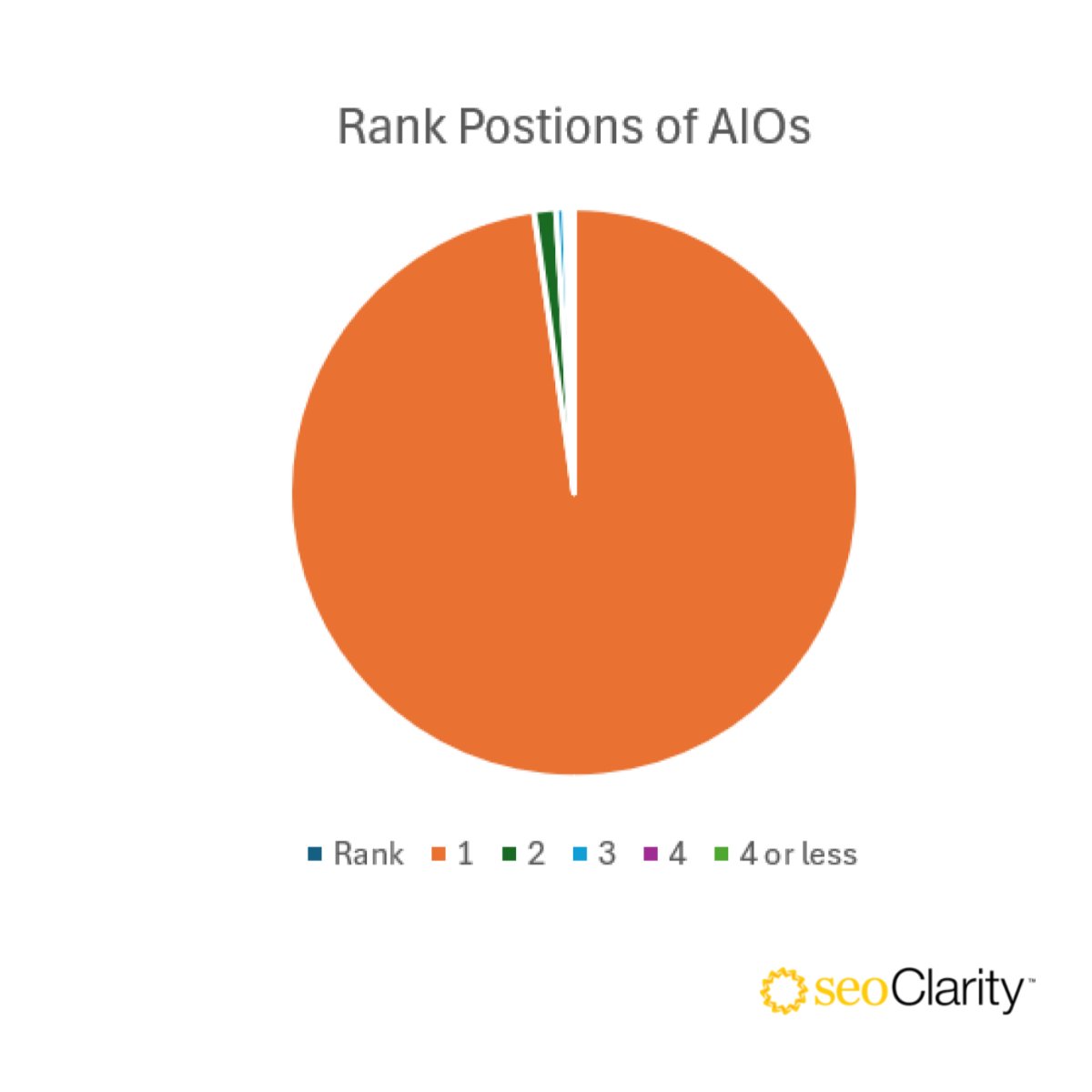
How often do AI Overviews rank lower than position one?
Not very often according to our latest @seoClarity data tracking AIOs in US keywords on desktop.
AIO Rank Positions
1 = 97.7%
2 = 1.2%
3 = 0.5%
4 = 0.3%
4 or less = 0.2%
1
1
2
350
24 May 2025
Update: since this post back in September, informational AIOs have fallen to around 86%, with most of the difference being taken up by transactional intent.
17 Sep 2024
CONFIRMED: AI Overviews still almost entirely INFORMATIONAL in intent
We looked at over 1 million keywords from our @seoClarity Research Grid (US) and found that over 96% have informational user intent.
AIOs show in purely transactional queries only 1.2% of the time.
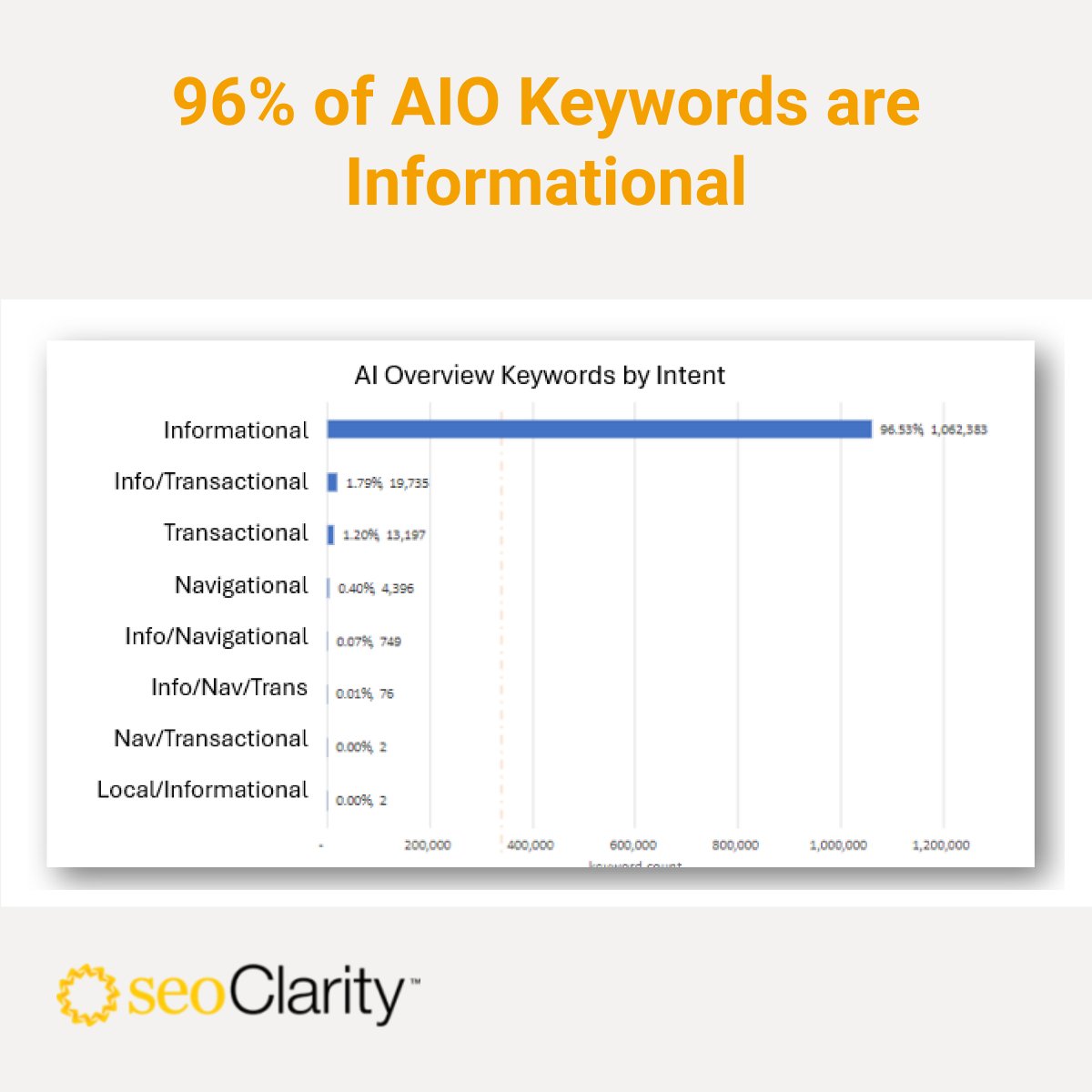
1
4
704
21 Mar 2025
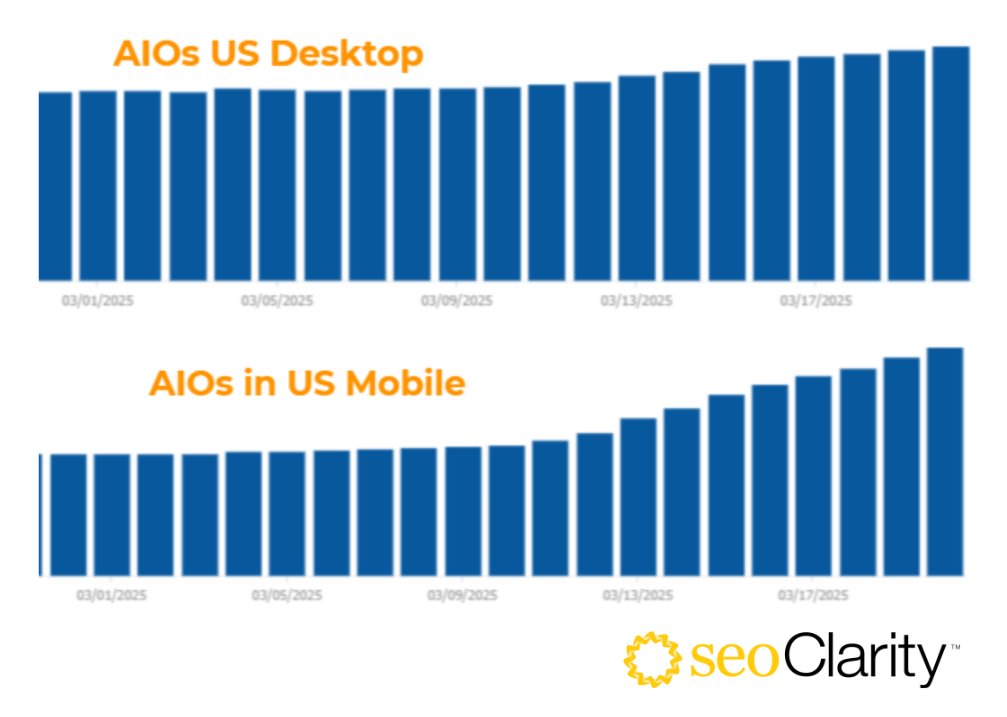
Sudden increase in AIOs - biggest yet!
Since March 1...
📈 23% increase in AIOs in US Desktop keywords
📈 And a whopping 87% increase in Mobile US keywords!
From the @seoClarity Research Grid Live view
403
21 Mar 2025
All of this
13 Mar 2025

🩱
:: Writing for Humans SEs LLMs ::
*checks calendar*
*is shocked it's not 2011*
This is something that has been going on for years and years,
and I'm kind of tired of it,
because the "logic" seems to allude the majority.
Keywords
Frequencies/Densities
TF/IDF / BM25
Semantic content
Entities
Longform content
Vectors/Embeddings
SEs and SEO content
LLMs and LLMO content
*yawn*
It's all pretty much the same stuff.
What's changed - is the tech and methods.
The speed.
The accuracy.
What we have "today" is just a more complex/thorough version of what existed 10 years,
which was better than what was there 20 years ago.
But the basic principles - haven't changed!
Know your audience.
Understand what it is they need/want, why the need/want it, who they are, where they are.
This tells you the language and level to produce at, the medium and format they prefer, the topic to cover, and the breadth/depth of that coverage.
Produce for that audience and need/want.
If you know a topic/subject, you will use certain words/phrases that the less-knowing will miss (or miss-use).
Clarity of content.
Long rambling sentences, huge walls of text, no spacing etc. - these are all well-established "no-no's".
I don't follow the BS broad-brush advice of 2-3 short sentences per paragraph, and write for 6th graders...
... because you write for your audience (if you're targeting Uni-levelers, then 6th grader is going to be a bit limiting. Same goes for "don't use jargon" - if you're writing for peers, it's not "jargon", it's sector/industry terminology, and expected!).
Consistency.
If you want people to hold a particular view/perspective,
then you have to tell them. That's part of marketing, part of PR, part of publicity etc.
No different than the old approach with Local optimisation and consistent NAP (Name, Address, Phone number).
If you want LLM outputs to say "XYZ" about you,
they have to see "XYZ" being said about you (and ideally, you don't just want a significant % saying exactly XYZ, but also XY, YZ, XZ, XY...(n)...Z, X...(n)...YZ, Xyz, xyZ etc. etc. etc.).
Topicality.
The shift from just "keyword relevance" happened some time ago. And it happened because it was significantly error prone (Adobe Flash Player ranking for "click here" is a shining example of how flawed it could be).
But I still see people look at things like "Keyword count",
and they don't cover variants (plural/single, tense (ed/ing) or state (er/est) etc., let alone tight/loose synonyms.
Same goes with the whole "entities" thing (which, in the vast majority of cases, are just proper nouns! People, Places, Events etc.), and nouns (objects/items, like "chair"). These help with disambiguation and classification (aspects of relevance (topicality).
The Logic...
... is really quite simple.
SE's try to satisfy "people".
LLMs are trained on content ... for "people".
If you take a step back and look at what's out there,
you can see clear patterns.
You can get a rough idea with simple approaches (word/phrase instance counts etc.), or better ideas with similarity scores from vectorised sentences etc.
If you produce a thorough piece on a topic,
you should automatically be using relevant terms.
You should be mentioning synonyms, hypernyms, hyponyms, meronyms and holonyms. You should be referencing collocates/co-occurring words (if you write about a farrier, but don't mention horse-shoes or forge ... is it likely a quality piece?).
If you understand your audiences needs/wants,
you should be producing content that covers their questions (immediate and subsequent!).
If you aren't completely lacking in common sense,
you'll output content that is legible, with breaks, with clear flow/structure (or if it's a paper, you'll throw walls of text in, because it's expected :D).
So, how far behind are you?
If you've not been looking at patterns,
if you've not been looking for similarities,
if you've not been checking the SERP for hints on intent/content formats,
if you've not monitored GSC data for performance changes,
... then you're more than a little behind.
Don't get me wrong ...
... there's plenty of good approaches,
and tons of recent advancements,
and forecasting/prediction can be invaluable.
But the majority shouldn't' get hung up on that stuff,
until they've at least caught up with general principles,
(rather than jumping on bandwagons or stupid magic-bullets!).
And don't get mislead by the AIBro's,
with all their shiny toys and big ass promises,
about things they really don't appear to have a clue about.
Instead - if you're going to delve,
find sensible, honest folk to follow and learn from,
-> @dejanseo
#SEO
1
3
626
12 Mar 2025
How visible are you in AI search?
This on-demand free webinar with our friends at @rankbeeai shows how to find out as well as how to increase that visiblity.
seoclarity.net/blog/optimize…
1
290