
CA(SA). Passionate about architecture, property, golf, photography and the JHB CBD.
Joined April 2011
- Tweets 8,399
- Following 212
- Followers 173
- Likes 584
769 Photos and videos







Mark Taitz retweeted

May 12
A while ago, I watched the infamous 47-minute video documenting the atrocities of October 7th — the one not made publicly available, to protect the privacy of the victims.
The worst part of this video is not what it displays, but who is displaying it: the perpetrators themselves. Gleefully. Sadistically. Unabashedly. Most of the footage was filmed by Hamas terrorists on their GoPro bodycams, some also by ordinary Gazan civilians on their cellphones.
Even the Nazis tried to cover up their atrocities, but Hamas brags about theirs for the entire world to see. The killers are euphoric throughout the massacre, and their relentless, ecstatic cries of "Allahu Akbar" (punctuated by the occasional "Kill the Jew!") are simply nauseating.
Some images are seared into my memory forever. I will never forget the two boys in their underwear — one with his eye socket hanging out of his face — asking his brother whether he thinks they're going to die, while the Hamas monster who had just thrown a grenade in their saferoom helps himself to a drink from their fridge, taking a casual break from the slaughter.
Neither will I ever forget the terrorists playing football with a severed head. Or the Thai migrant worker whose head is viciously hacked off with a garden hoe — another "Zionist colonizer" getting what he deserved, right?quillette.substack.com/p/wha…
Or the throngs of Gazans crowding around pickup trucks loaded with the mutilated corpses of Jewish women, filming and spitting on the bodies. Or the woman in Kibbutz Mefalsim, crouching and begging in vain for mercy.
There is some evidence of sexual violence in the video — the charred corpse of a young woman with her legs splayed and her genitals exposed — but not much. Apparently even Hamas draws a line somewhere: they are not as proud of raping Jewish women as they are of murdering them. Or, more likely, they simply didn't want to embarrass the delicate sensibilities of their legions of useful idiots in the West.
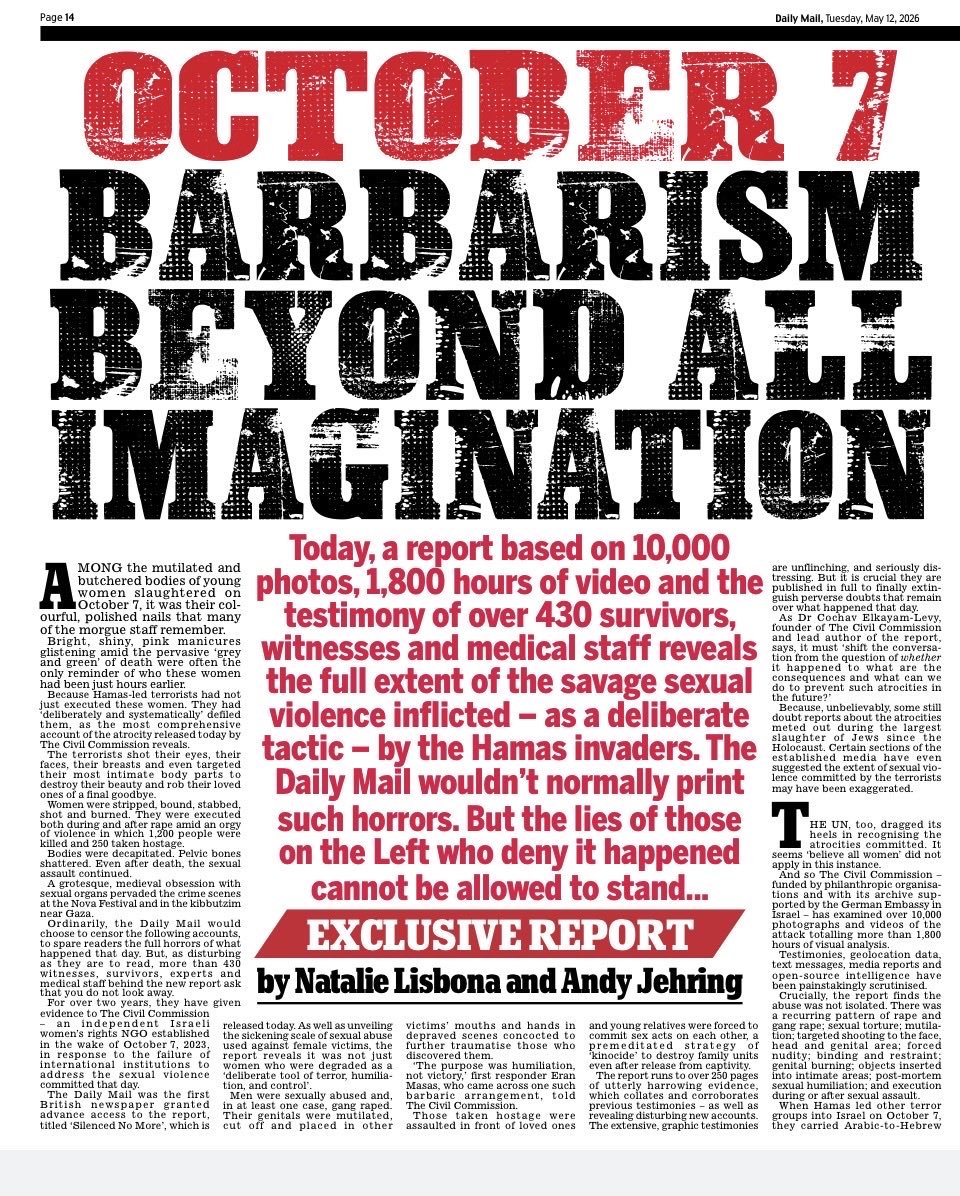
But yes — there was rape. Not "rape" in scare quotes, as the apologists would have it, but sadistic, murderous sexual violence, documented in a new damning new report by The Civil Commission, an independent Israeli women's rights NGO. (video summary here: youtube.com/watch?v=K7fJuzr4…)
Across its 180 pages, the report describes "a recurring pattern of rape and gang rape; sexual torture; mutilation; targeted shooting to the face, head and genital area; forced nudity; binding and restraint; genital burning; objects inserted into intimate areas; post-mortem sexual humiliation; and execution during or after sexual assault."
And it was premeditated and organized. The terrorists crossing into Israel carried printed Arabic-to-Hebrew phrasebooks with handy expressions like "take off your pants," "lie down," "spread your legs," and "don't make trouble." I wonder why they expected to need those particular phrases?
I know one thing: no civilized country on earth would tolerate the existence of an organization like Hamas on its border after October 7th. Not one. This includes every self-righteous Westerner currently lecturing Israel from thousands of kilometres away, without an inch of skin in the game.
dailymail.com/news/article-1…
1,093
9,668
23,216
707,058
Mark Taitz retweeted

Apr 21
24 years ago, the Palestinian propaganda machine invented one of its most notorious fake massacres — and (shockingly, I know) the world believed it instantly.
In the spring of 2002, suicide bombings had become almost daily events inside Israel. They reached their horrifying peak with the Passover Massacre on March 27, when a terrorist walked into the Park Hotel dining room in Netanya and murdered 29 people — many of them elderly Holocaust survivors.
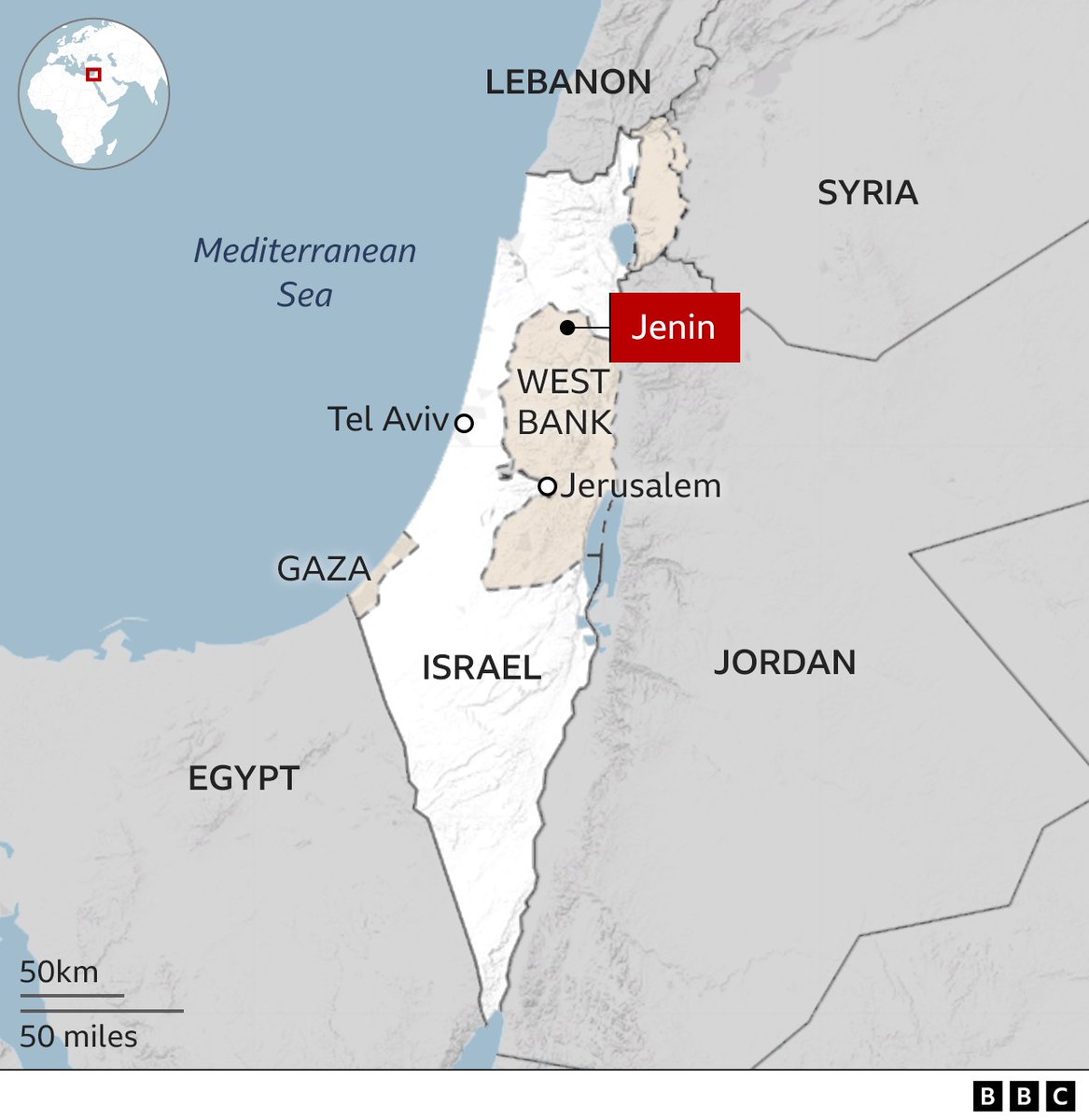
Israel had had enough. On March 29, the IDF launched Operation Defensive Shield to dismantle the terrorist infrastructure in Palestinian cities that had become safe havens for Hamas, Islamic Jihad, and the Al-Aqsa Martyrs Brigades.
Nowhere was that infrastructure more entrenched than in Jenin — the self-proclaimed “suiciders’ capital.”
During the operation, the Palestinian "brand-Israel-as-war-criminals" routine immediately went into overdrive.
They screamed the IDF had conducted a “massacre” in Jenin - more than 500 Palestinians slaughtered in cold blood, they said.
The international media and the UN swallowed it whole. Headlines screamed about “Jenin: the new Srebrenica.” Demands for war crimes investigations poured in.
Then the truth slowly dribbled out.
The actual Palestinian death toll? Around 52, the vast majority of whom were armed terrorists. Oh, and roughly the same number of Israeli soldiers died clearing the camp house-by-house — because Israel deliberately chose the riskier ground-troop route to spare civilian lives instead of leveling the place from the air.
The “massacre” was a lie. A deliberate, coordinated lie.
This is the standard playbook in the anti-Israel propaganda war: invent a shocking atrocity, flood the media with it, let the world condemn Israel in real time … and by the time the facts prove it was fake, nobody cares anymore.
We saw the exact same pattern again in October 2023 at Gaza’s Al-Ahli Hospital.
Palestinian officials and their allies screamed that Israel had bombed a hospital and murdered 500 civilians (same false number claimed in Jenin 21 years earlier). World leaders rushed to condemn Israel. The libel raced around the globe.
Then the evidence emerged: it was a misfired Islamic Jihad rocket. No Israeli strike was involved, and the death toll was far lower. But by then, the damage was done.
Large parts of the international community love to tell and share the story of Jews as bloodthirsty killers. They buy it hook, line, and sinker - every ... single ... time.
I try to push the historically verifiable facts into the open, one post at a time; but I know, by sheer numbers, that I can never "win" this battle. The anti-Israel propaganda machine is too loud, too well-funded, and too massive.
But I can chip away at it, little by little, every day. Because the truth still matters. Even when the world would rather believe the lie.
235
1,546
4,357
260,017
Mark Taitz retweeted

Apr 17
I looked at all his claims, and its embarrasing and shameful how wrong he is.
Apr 17

A bold and unfiltered exchange as a Christian pastor challenges Helen Zille over her stance on Palestine.
Raising tough questions on bias, justice, and moral responsibility, the interview shines a light on the growing demand for accountability from political leaders on one of the world’s most pressing humanitarian issues.
32
14
102
3,414
Mark Taitz retweeted

Mar 27
There is a genre of October 7 commentary that works by constructing a historical arc so compressed and so selective that the conclusion becomes inevitable. A people wronged, hemmed in, their world dismantled across generations. Rage follows. What else would you expect?
The history offered in support of this arc is not really history. It begins where it needs to begin, omits what complicates it, and arrives at a destination that was chosen before the argument started.
The Arab population of Mandatory Palestine never held sovereignty that was taken from them. There was no state. A significant portion immigrated to the land only in the 19th and early 20th centuries. The land passed from Ottoman to British control, and two national movements competed within that framework. One of them, the Jewish national movement, was not a colonial project arriving from outside. Jewish communities had existed without interruption in Jerusalem, Hebron, Safed, Gaza, Tiberias, the Galilee and elsewhere, through centuries of pre-modern colonial empires, Roman, Byzantine, several Arab Caliphates, the Crusaders, and Ottoman, and long before any of them emerged.
The Zionist movement was a national liberation movement of a people with three thousand years of documented connection to that land, rejecting the exile that was imposed on many of them, and building upon a presence that had never left.
The other national movement, the Arab Palestinian one, crystallised largely in reaction to Zionism rather than predating it, which is why the sovereign state being projected backwards into history as ancient and continuous is itself part of the inversion, not a foundation for it. Arab leaders, who rarely called themselves Palestinians then and most of whom saw themselves as part of greater Syria, rejected partition in 1937 and again in 1947. That rejection, and the violence that accompanied it across the three decades of the Mandate period, is precisely what this genre of argument leaves out.
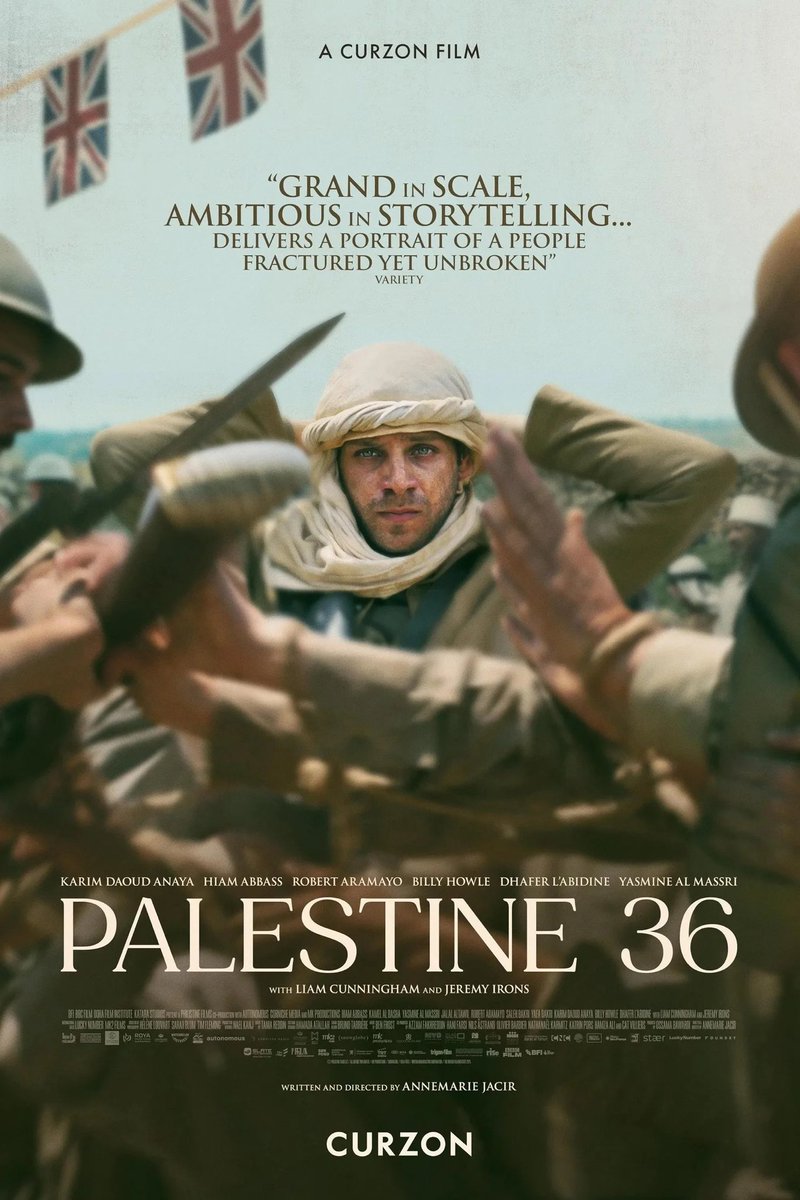
What does the enforcing are films like "Palestine 36," marketed as historical drama about the bloody Arab Revolt, but functioning as something closer to historical replacement. They strip Jewish indigeneity and continuity from the record, recast a people with millennia of connection to that land as recent colonial arrivals, and present the conflict as a simple story of indigenous resistance to foreign imposition.
The purpose is not to inform Western audiences about a complex national conflict. It is to recruit them to a conclusion: that Jews and Israel are an illegitimate implant in the region, that the appropriate remedy is dismantlement, and that what would follow, the imagined state from the river to the sea, would be a tolerant, secular, democratic alternative, where Jews can live in peace under their Arab Palestinian Muslim rulers, not as a national group but as a religious minority.
That last part is perhaps the most dishonest element of the entire narrative. The movements driving that agenda in the Middle East are neither democratic nor secular, and whatever secular veneer some of them maintain is precisely that, a veneer. The model being implicitly promised has no precedent among Muslim-majority states in the region, and sits in direct and unacknowledged tension with the political and religious character of the organisations whose cause these films are made to serve, like Hamas.
Without all of this, October 7 cannot be made to look like the inevitable product of accumulated injustice. It looks instead like what it was: a brutal, sadistic rampage by Arab Palestinian Islamist terrorist organisations, and the civilians who joined them, to murder, rape, and kidnap Israeli citizens, residents, and foreign nationals. No historical narrative, however artfully constructed, changes what happened that morning. It only changes who the audience is willing to hold responsible for it.
This is the genre James represents, and he is far from alone in it. It is not engagement with history. It is the use of a selective version of it to launder a conclusion that was held before the argument began.
Mar 26

I’ve just watched Palestine 36: So many people need a history lesson. October 7th wasn’t the start. It goes back a long long way. Imagine being a citizen to a place that lost status, sovereignty, human rights, freedom and land. And then for decades got hemmed in, encroached, destroyed and an appropriation of the land unchecked. Destinies of people who have lived there for generations completely torn up. Grief turns into rage. It would anywhere. But apparently it’s “antisemitic” to raise any concerns about this.
122
357
1,533
119,710
Mark Taitz retweeted

Mar 27
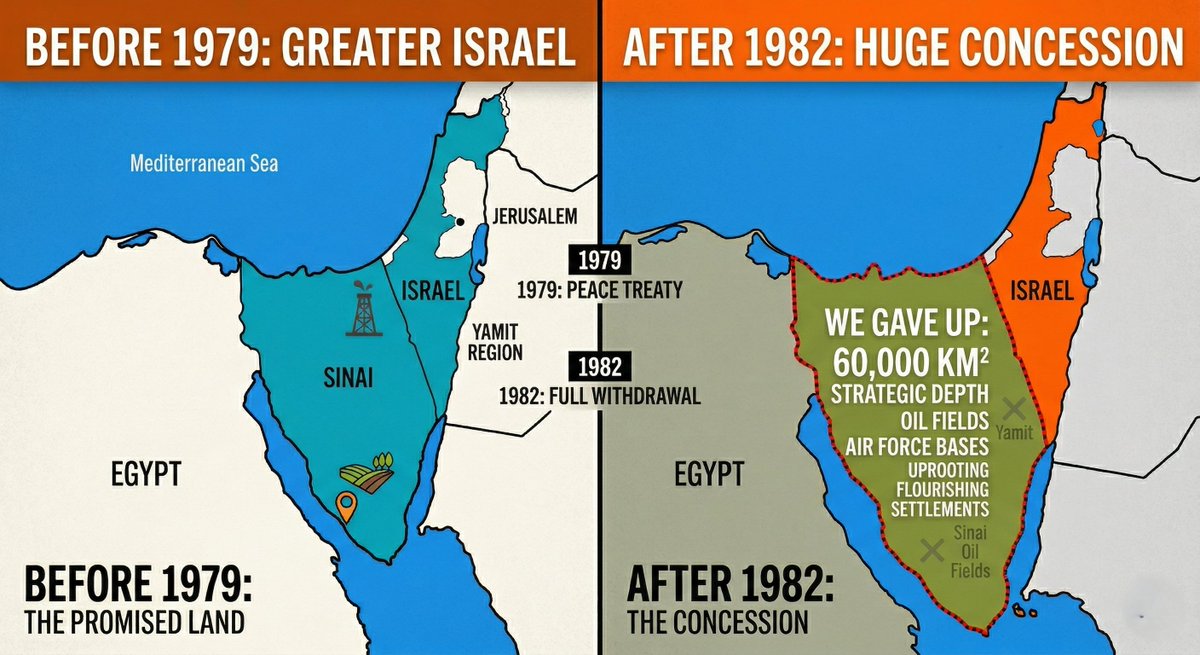
Israel performed the ultimate sacrifice and the most painful concession in modern history for the dream of peace. We surrendered the Sinai Peninsula - a massive territory of 60,000 square kilometers, an area three times the size of the entire State of Israel.
This was not empty land. It was essential strategic depth that granted us security and early warning. We handed over to Egypt strategic oil fields we developed with our own hands, which could have guaranteed energy independence for generations. We surrendered advanced, massive air force bases vital to our aerial dominance in the region.
But the most searing pain was the human sacrifice. For this agreement, we uprooted thousands of Jewish pioneers from their homes in the Yamit region and south Sinai. Flourishing towns, thriving agriculture, and entire communities were destroyed to the ground and handed over. We sacrificed parts of our homeland and real lives for a signature on a piece of paper.
No nation in the world has ever made such a vast sacrifice, yielded assets so vital, and uprooted its own citizens for a promise of peace. History proves that in the Middle East, land is security. Painful concessions do not bring true peace; they only bring the next threat closer. We must learn from this lesson: the Land of Israel belongs to the People of Israel, and defending it requires holding every inch.
249
408
1,528
73,200
Mark Taitz retweeted

Mar 17
🧵
During the Holocaust ~63% of Europe’s Jews were murdered, and those left alive were mostly displaced. Whilst we pretend the mentality that allowed this was extinguished, it was not. Because it was antisemitism, not Nazism.
/1
3
40
294
9,666
Mark Taitz retweeted

Mar 9
125
233
805
256,873
Mark Taitz retweeted

Mar 4
"remember amalek" - incitement to genocide
"death to Israel" - rhetoric
1
1
29

Feb 10
RT @margieMYDNA: Why children should never be allowed to boycott one another in school sport?
School sport exists for one reason above al…
64
Mark Taitz retweeted

Jan 26
IDF soldiers singing after the recovery of Ran Gvili.
The song they are singing is Ani Ma’amin (“I Believe”):
“I believe with complete faith in the coming of the Messiah.
Even though he may tarry, nonetheless I will wait for him.”
It has been over 800 days. Our faith may have wavered at times, but we never gave up.
Welcome home, Ran. We have been waiting for you.
69
458
2,549
117,463
Mark Taitz retweeted

16 Jul 2025
Make clever moves with our all-new Wing Edition Boxes! Have it your way from only R49.90!

93
139
2,273
4,446,264
Mark Taitz retweeted

29 Jun 2025
Bob Dylan dropped Neighborhood Bully after Israel took out Saddam’s nuclear program
An unapologetic anthem for Jewish self-defense — and a clear show of support for the IDF
Now imagine stealing Dylan’s name just to incite violence against his people
The audacity. The stupidity.
98
607
3,672
280,280
Mark Taitz retweeted

15 May 2025
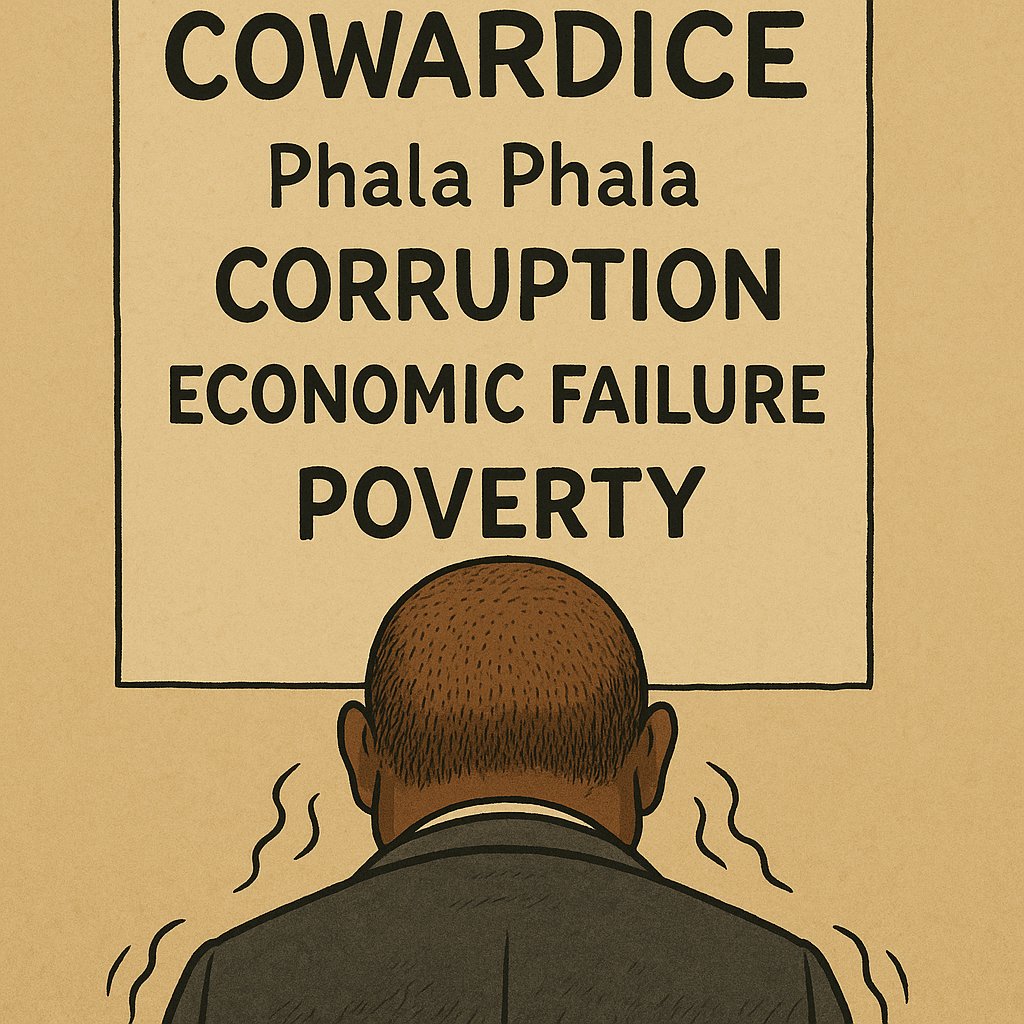
So, Let Me Tell You What a Coward Is
This week, President Cyril Ramaphosa stood on a stage at NAMPO and called Afrikaners who are leaving South Africa “cowards.” Days earlier, while speaking at the African CEO Forum, he remarked that South Africa is the only country on the continent where colonisers were not driven out. Taken together, the message is clear: those who leave aren't just deserters — they were never meant to belong in the first place. implying that those who leave should have been chased out in the first place.
Let me tell you what a coward really is.
A coward is a president who, in the middle of a pandemic, hides behind a blanket lockdown instead of crafting a plan to protect lives and livelihoods.
A coward is a president who allows ministers accused of corruption to stay in government rather than clean up his cabinet.
A coward is a man who, when caught with foreign currency stuffed into his furniture, uses his party machinery to silence accountability — and then has the audacity to remain in office.
A coward is a man who calls citizens cowards simply for doing what he refuses to do: act decisively in defence of their families’ futures.
Cowardice is refusing to look inwards and admit, “We’ve messed up.” Cowardice is the inability to show empathy. Cowardice is avoiding the mirror and pretending leadership means never acknowledging weakness. Cowardice is dodging the elephant in the room and blaming others — just because it’s uncomfortable.
Cowardice is promoting a VAT increase because you're too afraid to cut the patronage network bleeding this country dry. Cowardice is hiding behind racial transformation policies when what you're really doing is stealing from the poor. Cowardice is taking money from authoritarian regimes to fight their battles in international forums — not for justice, but to buy political survival.
Cowardice is putting your party above your country — rejecting real solutions simply because they didn’t come from your ideological stable, even when your ideology has failed across Africa for decades.
Cowardice is promising opportunity through the state — and then looting it dry. Cowardice is destroying the very bridge you told people would carry them out of poverty. And when there's nothing left, cowardice is turning on the private sector, pushing expropriation without compensation — not as justice, but as cover for your own failure. Cowardice isn’t about fixing what’s broken. It’s about blaming what still works.
Cowardice is leaving the economic heartland of Gauteng — Johannesburg — in the hands of a fractured, corrupt coalition. Cowardice is refusing to work with real reformers because doing so would expose the rot. Cowardice is letting a city collapse rather than risk your party's secrets being dragged into the light.
There is nothing cowardly about leaving a country that refuses to hear you. There is nothing cowardly about seeking safety, dignity, or opportunity. There is nothing cowardly about wanting your children to have a chance.
Cowardice doesn’t look like leaving. Cowardice looks like refusing to change.
South Africa isn’t broken because some people are leaving. It’s breaking because those who should be fixing it are hiding.
So, Mr. President — if you're looking for cowards, try a mirror.
126
387
1,089
41,297
Mark Taitz retweeted

18 Apr 2025
What do you want me to do?
When Jews were being slaughtered in Europe and Russia, I didn’t invade anyone. I went home. I bought land, legally.
The region had no sovereign state at the time, only centuries of occupation under foreign empires. I drained swamps, built cities, created infrastructure, and that success attracted migrants, from Egypt, from the Levant, from the Arabian Peninsula, who came seeking opportunity in the land I was reviving.
When the occupation collapsed, everyone in the region got a state.
The Maronites in the north got Lebanon.
The Hashemites got Jordan.
Iraq was born. Syria too.
So yes, I asked for one state. Just one.
And I was told no.
I still agreed to share the land, even though I was offered the worst half, mostly desert.
They still said no.
Then came 1948.
Five Arab armies invaded to wipe us out.
I fought. I survived. I won.
Then I offered peace again. But they answered with the Three No’s of Khartoum: No peace. No recognition. No negotiations.
They tried again in 1967 to destroy me. I survived again.
I captured more land, not out of ambition, but necessity.
But when peace was possible, I gave land back.
I returned Sinai to Egypt.
I withdrew from Southern Lebanon.
I offered to withdraw from Gaza and the West Bank.
I offered them everything they asked for in 2000.
They walked away.
In 2005, I unilaterally withdrew from Gaza.
In return I got rockets, terror tunnels, kidnapped civilians.
Then came October 7, the worst massacre of Jews since the Holocaust. Civilians slaughtered. Babies burned. Women raped.
So again I ask: What do you want me to do?
Because “Never Again” means never again.
You don’t get to massacre my people and then cry about the consequences. You don’t get to raise your children to hate and then blame me when war comes.
You don’t get to reject every peace offer, every two-state solution, and then ask the world to pretend none of that happened.
But I will not apologize for surviving.
I will not apologize for fighting back.
Never Again means Never Again.
147
1,045
3,464
101,897
Mark Taitz retweeted

26 Feb 2025
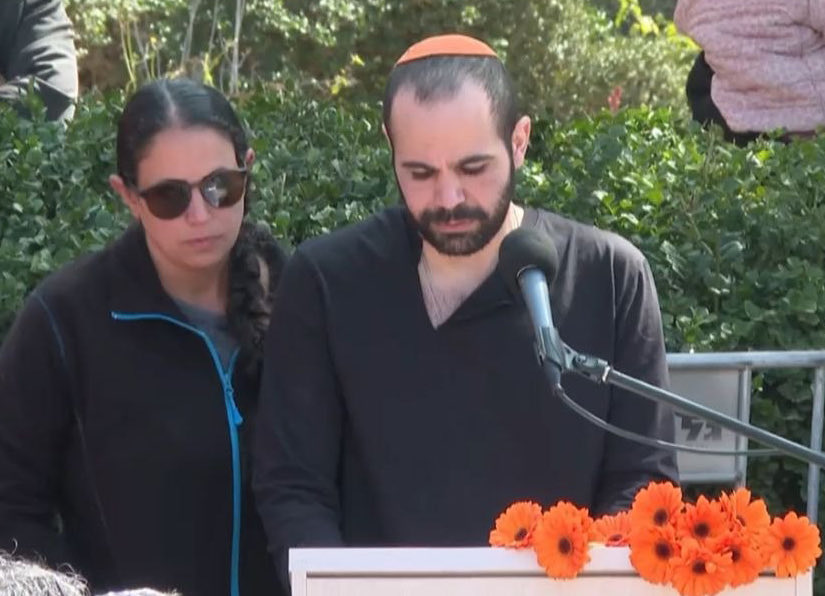
Eulogy by Yarden Bibas, husband of Shiri and father of Ariel and Kfir:
"Mi Amor"
I remember the first time I said "mi amor" to you. It was at the very beginning of our relationship. You told me to only call you that if I was certain I loved you, not to say it carelessly. I didn't say it then because I didn't want you to think I was rushing to say "I love you." Shiri, I'll confess to you now that I already loved you back then when I said "mi amor."
Shiri, I love you and will always love you!
Shiri, you are everything to me!
You are the best wife and mother there could be.
Shiri, you are my best friend.
Mishmish, who will help me make decisions now? How am I supposed to make decisions without you?
Do you remember our last decision together?
In the safe room, I asked if we should "fight or surrender." You said fight, so I fought.
Shiri, I'm sorry I couldn't protect you all. If only I had known what would happen, I wouldn't have fired.
I think about everything we went through together—there are so many beautiful memories.
I remember Ariel and Kfir's births. I remember the days we would sit at home or in a café, just the two of us, talking for hours about everything under the sun. It was wonderful. I miss those times deeply.
Your presence is profoundly missed.
I want to tell you about everything that's happening in the world and here in Israel.
Shiri, everyone knows and loves us—you can't imagine how surreal all this madness is.
Shiri, people tell me they'll always be by my side, but they're not you. So please stay close to me and don't go far!
Shiri, this is the closest I've been to you since October 7th, and I can't kiss or hug you, and it's breaking me!
Shiri, please watch over me...
Protect me from bad decisions. Shield me from harmful things and protect me from myself. Guard me so I don't sink into darkness.
Mishmish, I love you!
Chuki, Ariel,
You made me a father. You transformed us into a family.
You taught me what truly matters in life and about responsibility.
The day you were born, I matured instantly because of you. You taught me so much about myself, and I want to thank you.
So thank you, my beloved.
Ariel, I hope you're not angry with me for failing to protect you properly and for not being there for you. I hope you know I thought about you every day, every minute.
I hope you're enjoying paradise. I'm sure you're making all the angels laugh with your silly jokes and impressions. I hope there are plenty of butterflies for you to watch, just like you did during our picnics.
Chuki, be careful when you climb down from your cloud not to step on Toni...
Teach Kfir all your impressions and make everyone laugh up there.
Ariel, I love you "the most in the world, always in the world," just as you used to tell us.
Poopik, Kfir,
I didn't think our family could be more perfect, and then you came and made it even more perfect...
I remember your birth. I remember during the delivery when the midwife suddenly stopped everything—we were frightened and thought something was wrong—but it was just to tell us we had another redhead. Mom and I laughed and rejoiced.
You brought more light and happiness to our little home. You came with your sweet, captivating laugh and smile, and I was instantly hooked!
It was impossible not to nibble on you all the time.
Kfir, I'm sorry I didn't protect you better, but I need you to know that I love you deeply and miss you terribly!
I miss nibbling on you and hearing your laughter.
I miss our morning games when mom would ask me to watch you before I went to work. I cherished those little moments so much, and I miss them now more than ever!
Kfir, I love you the most in the world, always in the world!
I have so many more things to tell you all, but I'll save them for when we're alone.
1,554
4,021
19,985
506,805
Mark Taitz retweeted

19 Feb 2025
I’ve had many people attack me today and saying that I care so much about one baby and his brother, but I don’t care or value the 10000 or 20000 or whatever number they want to make up of Gazan children.
So I’ll be crystal clear:
Not one Gazan baby would have been killed had it not been for Gazans, not Hamas but Gazans, slaughtering 1200 innocent people and kidnapping 250 more including “the baby and his brother”. They’re death of any and every child in Gaza is a tragedy, and the sole responsibility for each and every one of those is on Gaza, not Hamas, but all of Gaza. They started this. They broke the ceasefire on Oct 6.
I don’t give a flying rock what mental gymnastics anyone wants to play or what reasons and comments or any of it. None of this was necessary. No child had to die. But the Gazans chose war. As they’ve always chosen war. They were funded, armed and fully supported by the United Nations and the ENTIRE Arab world. This has never had anything to do with land. It’s only to do with Muslims refusing to accept that Jews rule any land in this region, including the Jews’ land. Islam has no compromise. It’s all or nothing. And this bloodlust has lost them every war and given them only humiliation.
Hamas didn’t murder those children and their mother. Gaza did. The whole Muslim Arab world did. And their hate is responsible for every child killed in Gaza.
It is a repeat of the story of Moses (especially since all Gazans are Egyptian). The Pharaoh enslaved and murdered the Israelites as his father before him and his father before his. Moses offered a peace deal. Pharaoh rejected it. Moses offered another, pharaoh rejected it and punished the Israelites. Then G-D took the first born of Egypt. The difference between then and now is that at least the pharaoh cared. He felt pain. He felt loss. But the Gazans feel nothing but sick joy. Pharaoh then wanted revenge because he refused to accept he was solely responsible. And he lost everything. And you know what, the Israelites eventually got Israel. And we have it today and never ever letting it go.
The Arab world is responsible, and if they continue to choose war with us, every death to come is on them and them alone. October 7 changed everything. And the memory of the baby and his brother that the Arabs murdered will haunt them forever. We will make sure of it.
1,408
4,452
23,553
379,850
1 Dec 2024
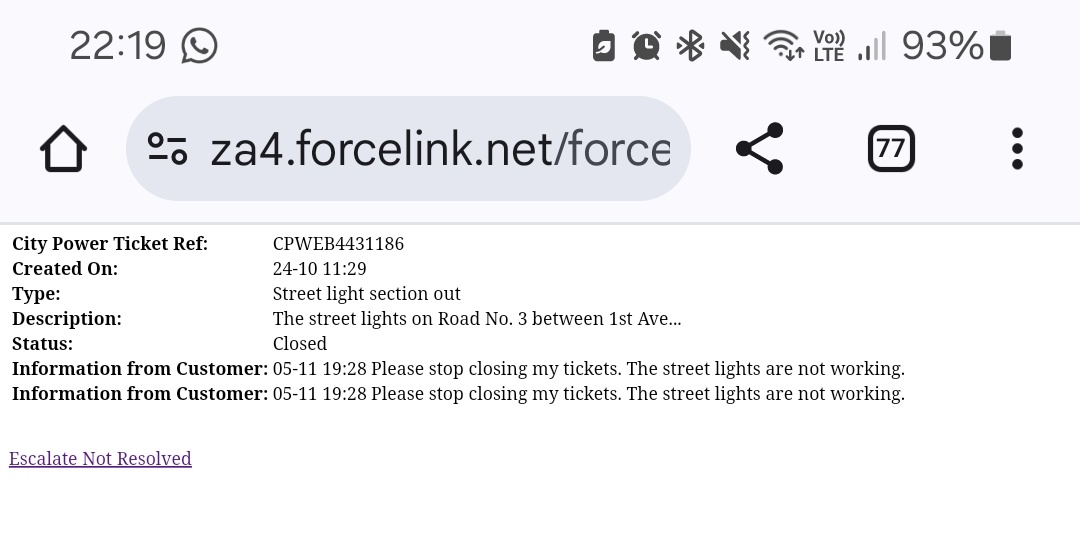
Dear @CityPowerJhb @CityofJoburgZA, for the third time now you have closed my ticket without fixing the street lights in our road. The street lights in our road and also on 1st Avenue Linden have not been working for months. @jozi117 can this not be escalated? It's a disgrace!

2
158
Mark Taitz retweeted

30 Oct 2024
One of the best videos ever about the ignorance of the pro Hamas mobs
39
213
603
19,999
Mark Taitz retweeted
26 Aug 2024
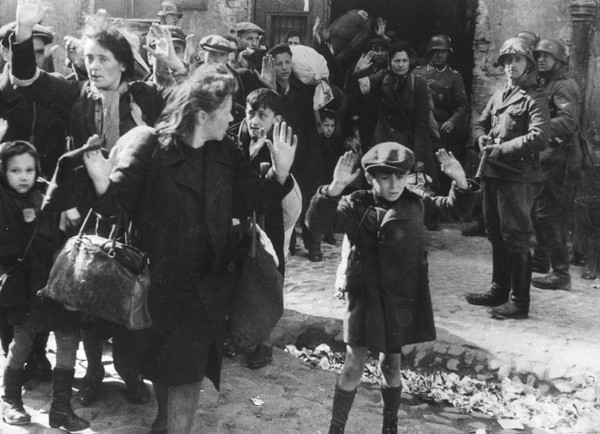
The most iconic images of the Holocaust!
I wish this thread wasn't necessary, but with the rise of antisemitism and Holocaust denial, from the likes of Candace Owens, I believe it is!
A sad thread 🧵 👇
First is the famous Warsaw Ghetto Boy photo, taken in April 19, 1943
551
3,439
14,840
2,228,618