
Joined December 2020
- Tweets 2,231
- Following 84
- Followers 69
- Likes 1,461
136 Photos and videos








May 19
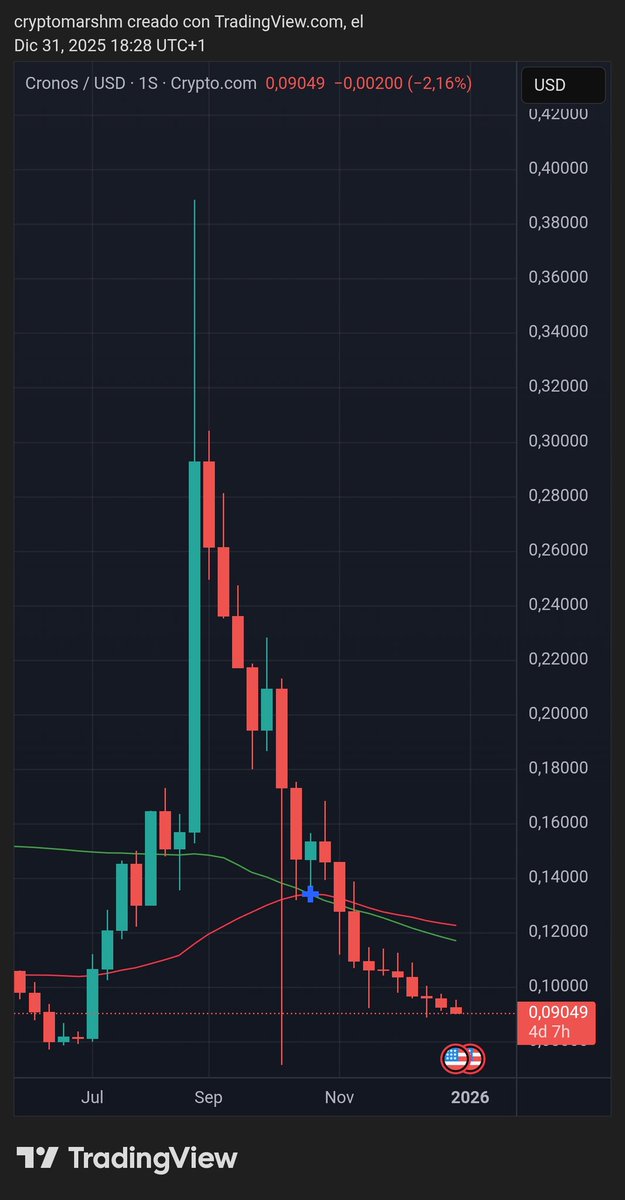
1/5 The "New Era for $CRO" isn't a breakthrough, it's a trap ⚠️ Prop 33 passed, but don't fall for the hype. Promising "Real Yield" but forcing you into insane 1 to 4-year exit lockups just to get decent APY? A massive admission of failure. 🚨📉 #CRO #Cronos #Crypto #CroFam #Defi
May 19

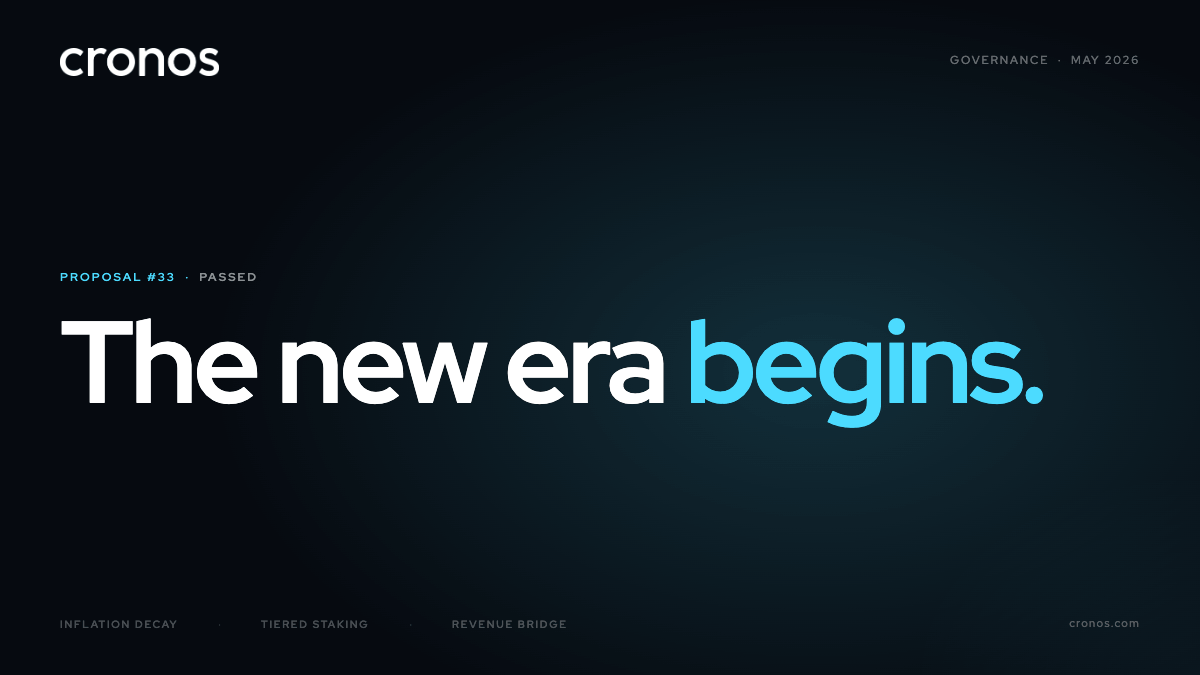
CRO holders voted. Proposal #33 passed.
What this means:
- Emissions decay to be implemented. Supply stays below 100B.
- Staking tiers to go live soon. Longer commitment, higher yield.
- Revenue backs CRO now.
The upgrade goes live May 20.
The new era begins.
5
1
6
1,407
May 19
5/5
@CronosApp Stop pretending this is "decentralized governance." Prop 33 was cooked up by an entity desperate for a solution to the token oversupply nightmare THEY created with terrible tokenomics.The "New Era" is just a new way to trap retail liquidity.Don't let them fool you.
3
77
May 19
4/5
$CRO Prop 33 acts like a soft rug pull on existing long-term holders.Everyone who supported the ecosystem is now forced into a miserable choice: accept a pathetic base yield or lock your capital for an eternity to chase what you used to get easily.They're punishing loyalists.
1
128
May 19
3/5
The new 1-4 year exit commitment is purely toxic design. In #crypto, four years is an eternity. By opting in, you lose all liquidity & can't react to market crashes.This isn't true staking; it's a desperate, forced HODL to stop the price from nuking on them. Unacceptable.$CRO
1
1
81
Apr 3
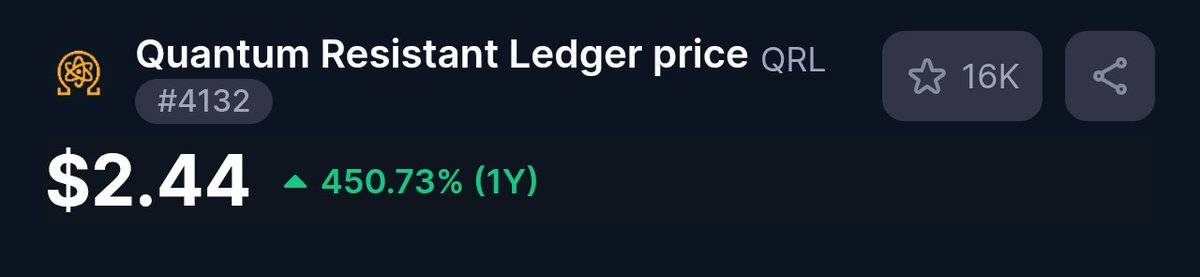
🚨ZERO CRITICAL VULNERABILITIES🚨
Top-tier firm @HalbornSecurity just audited & validated $QRL core post-quantum cryptography library.
While legacy chains panic, QRL's shield is proven battle-ready for the Zond EVM launch.
theqrl.org/press/halborn-aud…
#Crypto #CyberSecurity #BTC #ETH
1
6
27
358

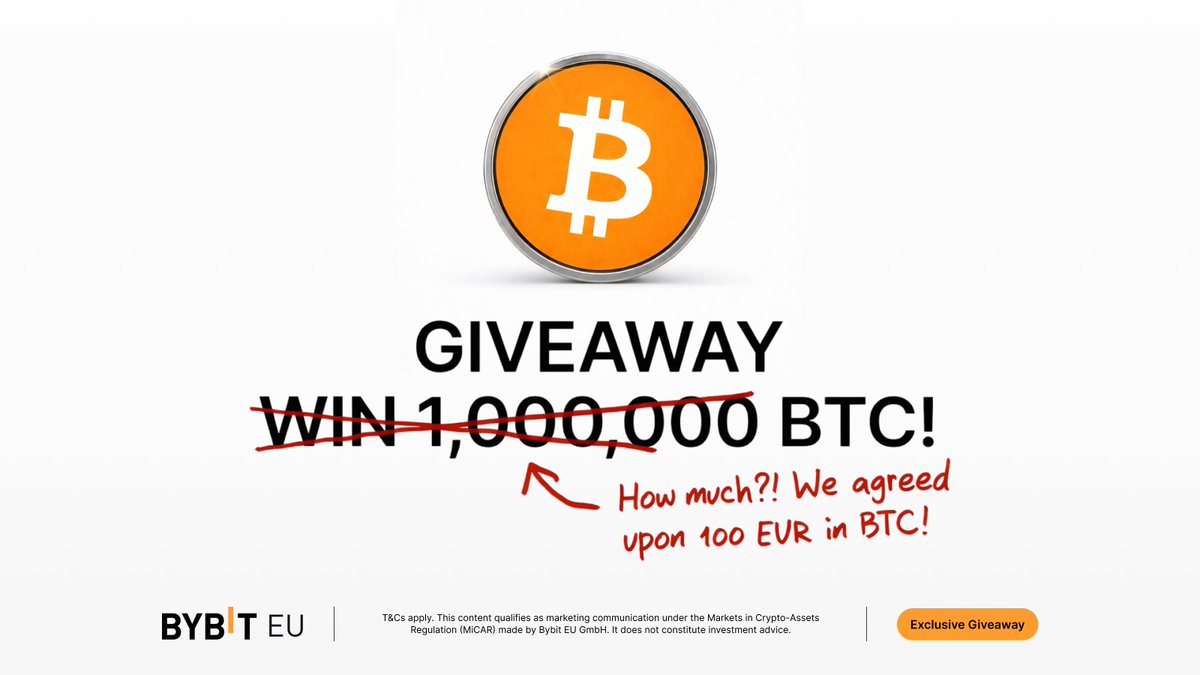
Oops. 🤦♂️
Our intern accidentally scheduled a 1,000,000 BTC giveaway for this morning...
Legal had a minor heart attack and made us change the graphics. 😎
Save the intern’s job:
🔁 RT & Comment your wildest crypto mistake
🎁 3 random winners get €100 in $BTC!
To qualify, you must be a fully onboarded user. Winners will be announced in 24 hours and rewards will be distributed within 21 days.
Good luck! ✌️
#Giveaway #AprilFools
605
526
684
33,141
Mar 4
The best in the business. @trailofbits auditing $QRL 2.0 proves this isn't a test; it's a legitimate Tier-1 Post-Quantum EVM.
This elite audit unlocks 2 catalysts:
1️⃣ Institutional Smart Money
2️⃣ Tier-1 Exchange Listings
The Quantum era is ready.
$BTC $ETH #Crypto #CyberSecurity

We have selected @trailofbits as an audit partner for QRL 2.0.
Trail of Bits, renowned cybersecurity firm that played a pivotal role in auditing Ethereum’s major upgrades, will bring that expertise to the world’s first post-quantum, EVM-friendly Layer-1.
More details to come.
5
25
345
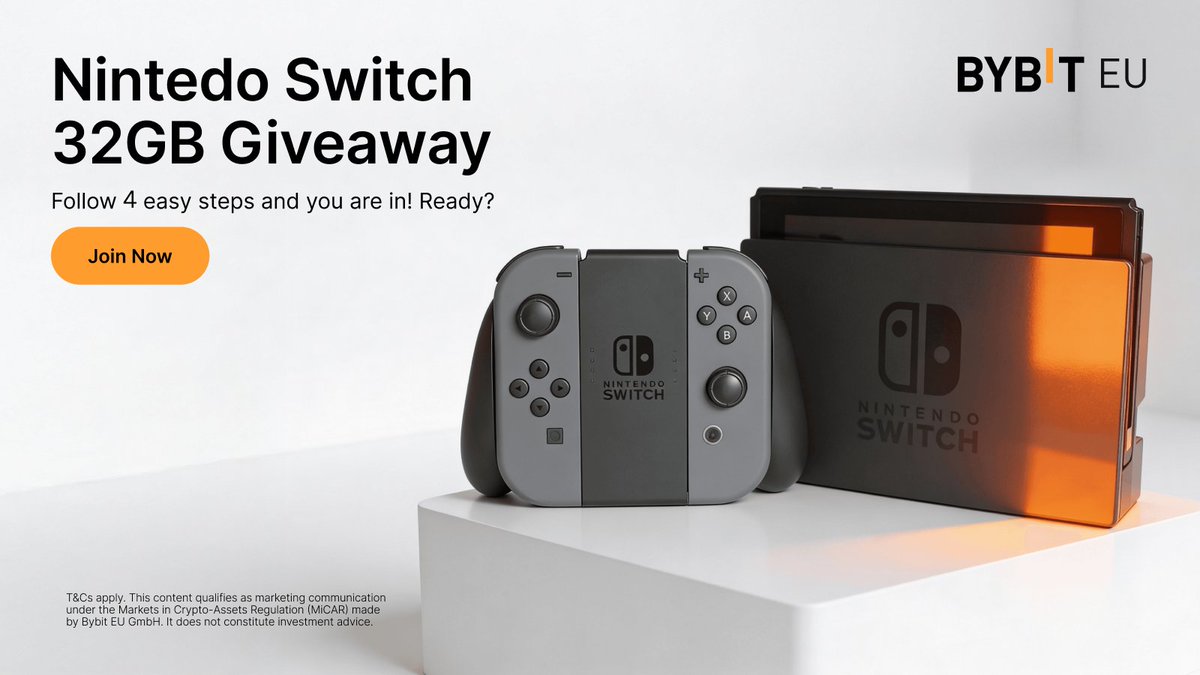
GIVEAWAY ALERT 🎁
With Bigger Return, Shorter Hold now live, we’re giving away a Nintendo Switch 32GB. 🔥
Bybit EU users can now get an extra 3% APY on top ups while still using the platform as normal. That means you can top up, stay active on Bybit EU, and earn more on top.
How to enter:👇
1⃣Follow @BybitEU
2⃣Like & repost this post
3⃣Tag 2 friends mention @BybitEU in the comments
4⃣Include the hashtag #EarnMoreLockLess in the comment
That’s it. You’re in. ✅
Check out the campaign page here:
👉i.bybit.eu/1Zab97Lb
Winner announcement:
The winner will be revealed on March 9.
Ready to level up your portfolio and your gaming setup? 🔥
#BybitEU #Giveaway
452
422
528
16,370
Mar 2
1
1
15
151
Feb 28
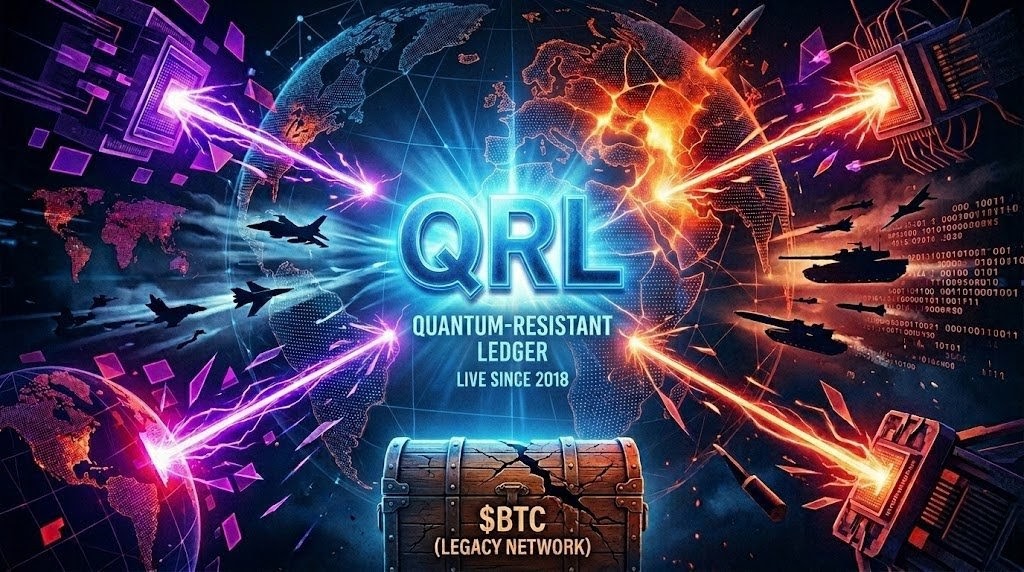
Geopolitical tensions accelerate the Quantum Arms Race. Nations are weaponizing quantum tech to smash existing encryption grids.
While legacy $BTC is vulnerable to state-level attacks, $QRL is a battle-tested quantum fortress live since 2018.
#CyberWarfare #Geopolitics #Quantum
4
16
322
Feb 27
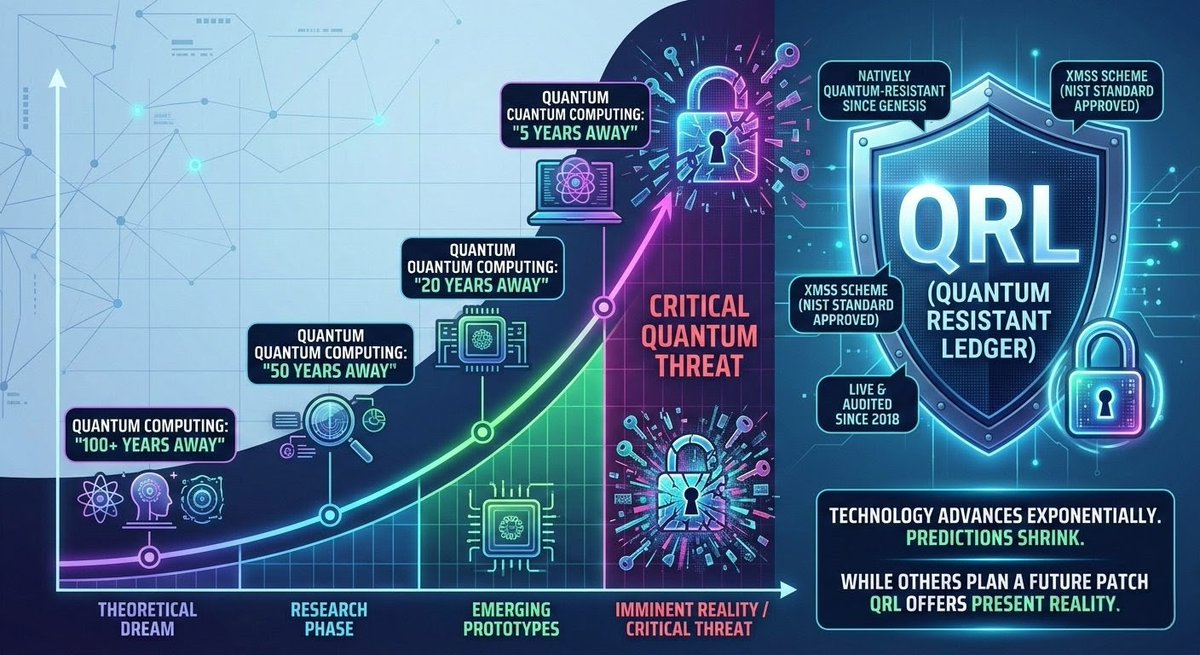
Tech is exponential: The Quantum Threat went from centuries to 5 years.
Legacy giants $BTC & $ETH scramble for risky patches. Meanwhile, $QRL has been natively Quantum-Resistant since 2018.
Roadmaps ≠ Security.
#Crypto #QuantumComputing #Altcoins
#Bitcoin #Solana #Altcoins
Feb 26

Now, the quantum resistance roadmap.
Today, four things in Ethereum are quantum-vulnerable:
* consensus-layer BLS signatures
* data availability (KZG commitments proofs)
* EOA signatures (ECDSA)
* Application-layer ZK proofs (KZG or groth16)
We can tackle these step by step:
## Consensus-layer signatures
Lean consensus includes fully replacing BLS signatures with hash-based signatures (some variant of Winternitz), and using STARKs to do aggregation.
Before lean finality, we stand a good chance of getting the Lean available chain. This also involves hash-based signatures, but there are much fewer signatures (eg. 256-1024 per slot), so we do not need STARKs for aggregation.
One important thing upstream of this is choosing the hash function. This may be "Ethereum's last hash function", so it's important to choose wisely. Conventional hashes are too slow, and the most aggressive forms of Poseidon have taken hits on their security analysis recently. Likely options are:
* Poseidon2 plus extra rounds, potentially non-arithmetic layers (eg. Monolith) mixed in
* Poseidon1 (the older version of Poseidon, not vulnerable to any of the recent attacks on Poseidon2, but 2x slower)
* BLAKE3 or similar (take the most efficient conventional hash we know)
## Data availability
Today, we rely pretty heavily on KZG for erasure coding. We could move to STARKs, but this has two problems:
1. If we want to do 2D DAS, then our current setup for this relies on the "linearity" property of KZG commitments; with STARKs we don't have that. However, our current thinking is that it should be sufficient given our scale targets to just max out 1D DAS (ie. PeerDAS). Ethereum is taking a more conservative posture, it's not trying to be a high-scale data layer for the world.
2. We need proofs that erasure coded blobs are correctly constructed. KZG does this "for free". STARKs can substitute, but a STARK is ... bigger than a blob. So you need recursive starks (though there's also alternative techniques, that have their own tradeoffs). This is okay, but the logistics of this get harder if you want to support distributed blob selection.
Summary: it's manageable, but there's a lot of engineering work to do.
## EOA signatures
Here, the answer is clear: we add native AA (see eips.ethereum.org/EIPS/eip-8… ), so that we get first-class accounts that can use any signature algorithm.
However, to make this work, we also need quantum-resistant signature algorithms to actually be viable. ECDSA signature verification costs 3000 gas. Quantum-resistant signatures are ... much much larger and heavier to verify.
We know of quantum-resistant hash-based signatures that are in the ~200k gas range to verify.
We also know of lattice-based quantum-resistant signatures. Today, these are extremely inefficient to verify. However, there is work on vectorized math precompiles, that let you perform operations ( , *, %, dot product, also NTT / butterfly permutations) that are at the core of lattice math, and also STARKs. This could greatly reduce the gas cost of lattice-based signatures to a similar range, and potentially go even lower.
The long-term fix is protocol-layer recursive signature and proof aggregation, which could reduce these gas overheads to near-zero.
## Proofs
Today, a ZK-SNARK costs ~300-500k gas. A quantum-resistant STARK is more like 10m gas. The latter is unacceptable for privacy protocols, L2s, and other users of proofs.
The solution again is protocol-layer recursive signature and proof aggregation. So let's talk about what this is.
In EIP-8141, transactions have the ability to include a "validation frame", during which signature verifications and similar operations are supposed to happen. Validation frames cannot access the outside world, they can only look at their calldata and return a value, and nothing else can look at their calldata. This is designed so that it's possible to replace any validation frame (and its calldata) with a STARK that verifies it (potentially a single STARK for all the validation frames in a block).
This way, a block could "contain" a thousand validation frames, each of which contains either a 3 kB signature or even a 256 kB proof, but that 3-256 MB (and the computation needed to verify it) would never come onchain. Instead, it would all get replaced by a proof verifying that the computation is correct.
Potentially, this proving does not even need to be done by the block builder. Instead, I envision that it happens at mempool layer: every 500ms, each node could pass along the new valid transactions that it has seen, along with a proof verifying that they are all valid (including having validation frames that match their stated effects). The overhead is static: only one proof per 500ms. Here's a post where I talk about this:
ethresear.ch/t/recursive-sta…
firefly.social/post/farcaste…
2
4
19
655
Feb 27
Vitalik admitting PQ signatures will jump from 3k to ~200k gas exposes the nightmare of retrofitting a live L1. ⛽️💥
$ETH has massive technical debt. Why wait a decade to patch a leaky ship when $QRL Zond offers a natively Quantum-Secure EVM TODAY? ⚛️
Feb 26
Now, the quantum resistance roadmap.
Today, four things in Ethereum are quantum-vulnerable:
* consensus-layer BLS signatures
* data availability (KZG commitments proofs)
* EOA signatures (ECDSA)
* Application-layer ZK proofs (KZG or groth16)
We can tackle these step by step:
## Consensus-layer signatures
Lean consensus includes fully replacing BLS signatures with hash-based signatures (some variant of Winternitz), and using STARKs to do aggregation.
Before lean finality, we stand a good chance of getting the Lean available chain. This also involves hash-based signatures, but there are much fewer signatures (eg. 256-1024 per slot), so we do not need STARKs for aggregation.
One important thing upstream of this is choosing the hash function. This may be "Ethereum's last hash function", so it's important to choose wisely. Conventional hashes are too slow, and the most aggressive forms of Poseidon have taken hits on their security analysis recently. Likely options are:
* Poseidon2 plus extra rounds, potentially non-arithmetic layers (eg. Monolith) mixed in
* Poseidon1 (the older version of Poseidon, not vulnerable to any of the recent attacks on Poseidon2, but 2x slower)
* BLAKE3 or similar (take the most efficient conventional hash we know)
## Data availability
Today, we rely pretty heavily on KZG for erasure coding. We could move to STARKs, but this has two problems:
1. If we want to do 2D DAS, then our current setup for this relies on the "linearity" property of KZG commitments; with STARKs we don't have that. However, our current thinking is that it should be sufficient given our scale targets to just max out 1D DAS (ie. PeerDAS). Ethereum is taking a more conservative posture, it's not trying to be a high-scale data layer for the world.
2. We need proofs that erasure coded blobs are correctly constructed. KZG does this "for free". STARKs can substitute, but a STARK is ... bigger than a blob. So you need recursive starks (though there's also alternative techniques, that have their own tradeoffs). This is okay, but the logistics of this get harder if you want to support distributed blob selection.
Summary: it's manageable, but there's a lot of engineering work to do.
## EOA signatures
Here, the answer is clear: we add native AA (see eips.ethereum.org/EIPS/eip-8… ), so that we get first-class accounts that can use any signature algorithm.
However, to make this work, we also need quantum-resistant signature algorithms to actually be viable. ECDSA signature verification costs 3000 gas. Quantum-resistant signatures are ... much much larger and heavier to verify.
We know of quantum-resistant hash-based signatures that are in the ~200k gas range to verify.
We also know of lattice-based quantum-resistant signatures. Today, these are extremely inefficient to verify. However, there is work on vectorized math precompiles, that let you perform operations ( , *, %, dot product, also NTT / butterfly permutations) that are at the core of lattice math, and also STARKs. This could greatly reduce the gas cost of lattice-based signatures to a similar range, and potentially go even lower.
The long-term fix is protocol-layer recursive signature and proof aggregation, which could reduce these gas overheads to near-zero.
## Proofs
Today, a ZK-SNARK costs ~300-500k gas. A quantum-resistant STARK is more like 10m gas. The latter is unacceptable for privacy protocols, L2s, and other users of proofs.
The solution again is protocol-layer recursive signature and proof aggregation. So let's talk about what this is.
In EIP-8141, transactions have the ability to include a "validation frame", during which signature verifications and similar operations are supposed to happen. Validation frames cannot access the outside world, they can only look at their calldata and return a value, and nothing else can look at their calldata. This is designed so that it's possible to replace any validation frame (and its calldata) with a STARK that verifies it (potentially a single STARK for all the validation frames in a block).
This way, a block could "contain" a thousand validation frames, each of which contains either a 3 kB signature or even a 256 kB proof, but that 3-256 MB (and the computation needed to verify it) would never come onchain. Instead, it would all get replaced by a proof verifying that the computation is correct.
Potentially, this proving does not even need to be done by the block builder. Instead, I envision that it happens at mempool layer: every 500ms, each node could pass along the new valid transactions that it has seen, along with a proof verifying that they are all valid (including having validation frames that match their stated effects). The overhead is static: only one proof per 500ms. Here's a post where I talk about this:
ethresear.ch/t/recursive-sta…
firefly.social/post/farcaste…
2
14
542
Feb 27
Rebuilding 4 critical layers via 7 network forks while millions of users are transacting is an engineering nightmare, not a quick fix. 🏗️
What if Q-Day hits before 2029?
$QRL is already battle-tested & Zond brings full EVM compatibility natively. Don't bet on a 4-year patch. ⚛️
Feb 27

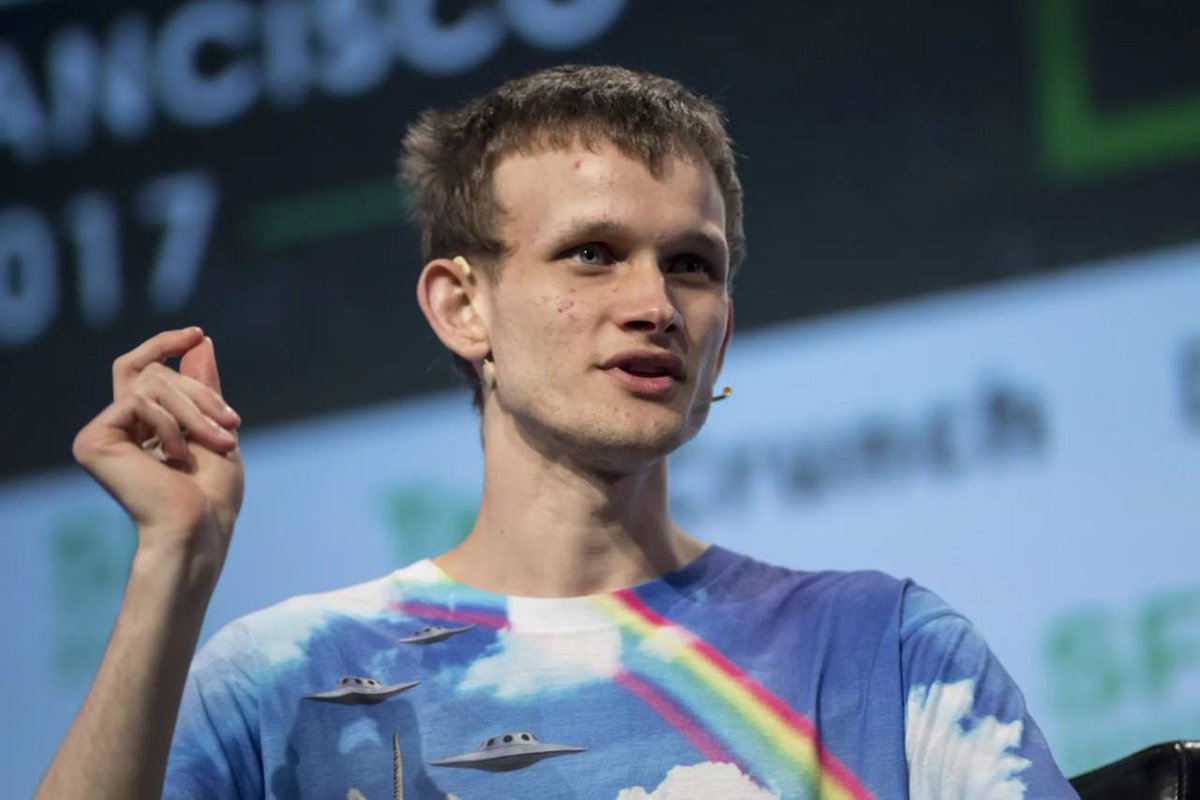
THIS IS MASSIVE !!
Ethereum is finally solving its biggest problem.
Yesterday, Vitalik unveiled a new technical roadmap to make Ethereum quantum resistant.
This roadmap has identified four critical vulnerabilities in the current network and proposes replacing them with post-quantum cryptography over a four-year period.
The plan involves seven planned network forks occurring roughly every six months to incrementally harden the protocol with key upgrades, including:
Validator Signatures: Replacing the current BLS (Boneh-Lynn-Shacham) signatures with "lean" quantum-safe hash-based signatures.
Data Availability: Migrating data storage verification from KZG (Kate-Zaverucha-Goldberg) commitments to STARK-based proofs.
User Account Signatures: Moving away from ECDSA (secp256k1) to quantum-resistant schemes, supported by EIP-8141 (Native Account Abstraction).
Zero-Knowledge Proofs: Upgrading application-layer ZK proofs (like Groth16) to use protocol-layer recursive signatures and proof aggregation to maintain speed while adding security.
If everything goes smoothly, Ethereum will be fully quantum resistant by 2029.
2
4
12
1,802

Feb 12
BIP 360 in the repo ≠ #Bitcoin is Quantum Safe. 🛑
It's just a proposal.
Implementation takes YEARS of global consensus & testing. 🐢
$QRL is the only L1 built Quantum Secure from Genesis. Live & audited TODAY. 🛡️
Don't confuse a plan with a solution.
#QRL #BTC #Quantum #ETH
Feb 12

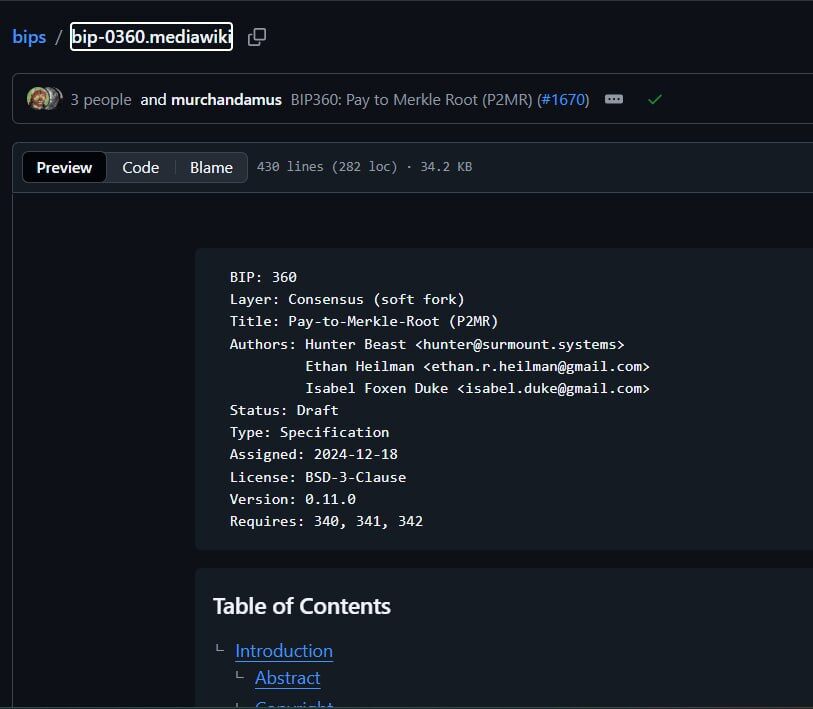
🔥 UPDATE: BIP 360 enters Bitcoin’s official repository, aiming to bolster defenses against quantum threats.

2
5
20
712
Feb 9
3
20
394
Jan 24
Stop asking "Wen Tier 1?" and start asking "Wen Zond?"
Tier 1 exchanges want standard tech.
Not exotic code.
Current $QRL is exotic(XMSS)
Zond makes QRL look just like Ethereum to their systems.
Same quantum security,standard connectivity.
THAT is when the parabolic run starts.🚀
1
8
234
Jan 9
Unlock your 2025 recap and chart what’s next with me!
#My2025YearlyRecap #BybitRecap #Bybit2025 #CryptoRecap2025 #BybitRecap2025
bybit.eu/en-EU/recap-2025?re…
50