
Joined January 2009
- Tweets 8,255
- Following 601
- Followers 3,373
- Likes 8,613
265 Photos and videos





Pinned Tweet

May 1
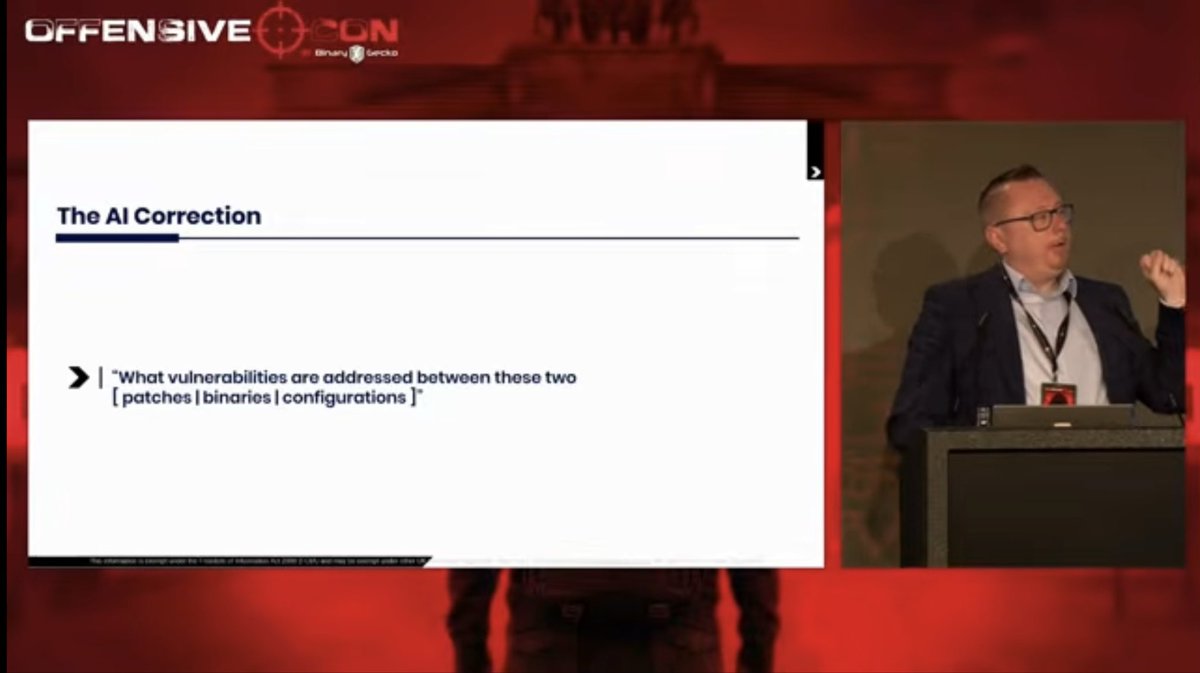
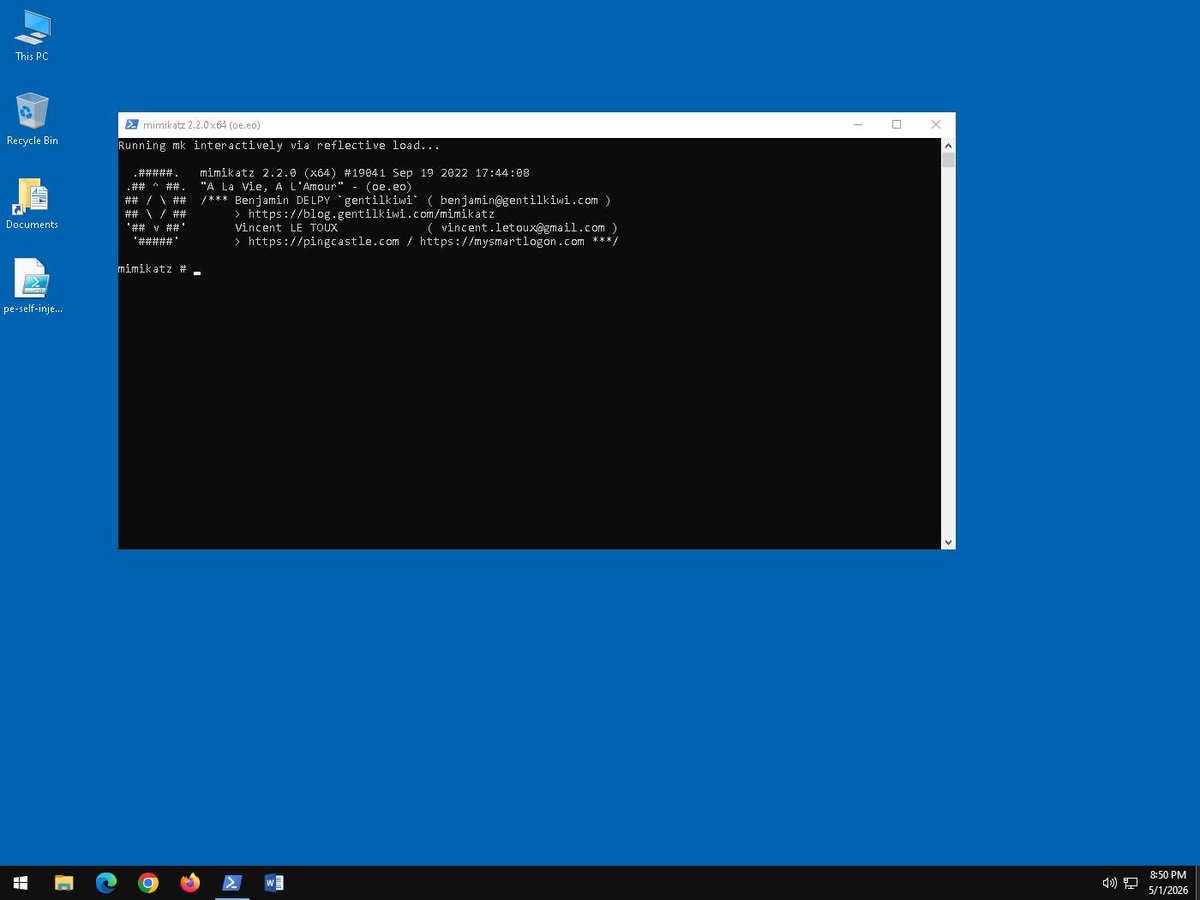
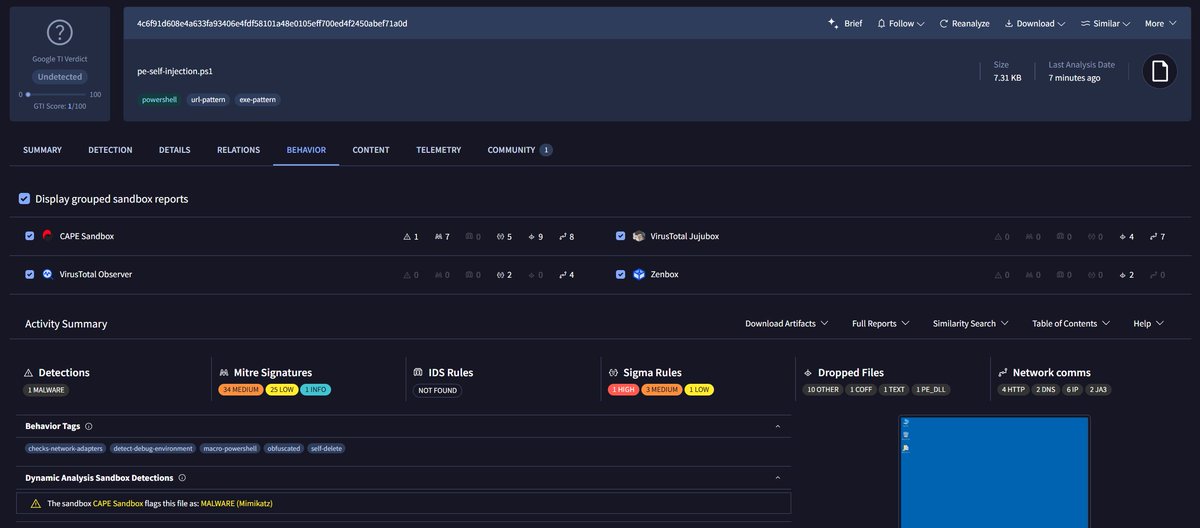
Reality check your defenses! POC collection of the Month-of-Bypasses: github.com/persistent-securi…
3
309
Markus Vervier retweeted

Jun 13
As a result of a US government directive, we are suspending access to Claude Fable 5 for all users. You can continue to use all other Claude models.
Here’s what this means for you:
Across Claude products, new sessions will run on your selected default model or Opus 4.8, and existing Fable 5 sessions will end with an error.
On the Claude Platform, requests to Fable 5 will also return an error. Please update your integrations to other Claude models.
We know this is a disruption to your workflows; we appreciate your patience and support.
Jun 13

The US government, citing national security authorities, has issued an export control directive to suspend all access to Fable 5 and Mythos 5 by any foreign national, whether inside or outside the United States, including foreign national Anthropic employees.
The net effect of this order is that we must abruptly disable Fable 5 and Mythos 5 for all our customers to ensure compliance.
Access to all other Claude models is not affected.
We apologize for this disruption to our customers. We believe this is a misunderstanding and are working to restore access as soon as possible.
Read our full statement: anthropic.com/news/fable-myt…
3,580
7,221
44,233
12,437,363

I believe what Anthropic is doing, gating the ability to do certain harmless things like LLM research, and with incredibly sensitive filters that even medical questions are often blocked, is *deeply* wrong. They got open research, the Transformer, GPT2, ...
22
113
2,552
238,049
So, what happened to use lately? Especially in Europe. In the US there are those few unicorns but where is all the rest of the AI scene? We need to recover our industrial ethics and stop accepting a narration that see ourselves boiled.
26
38
1,194
137,170
Markus Vervier retweeted

Jun 8
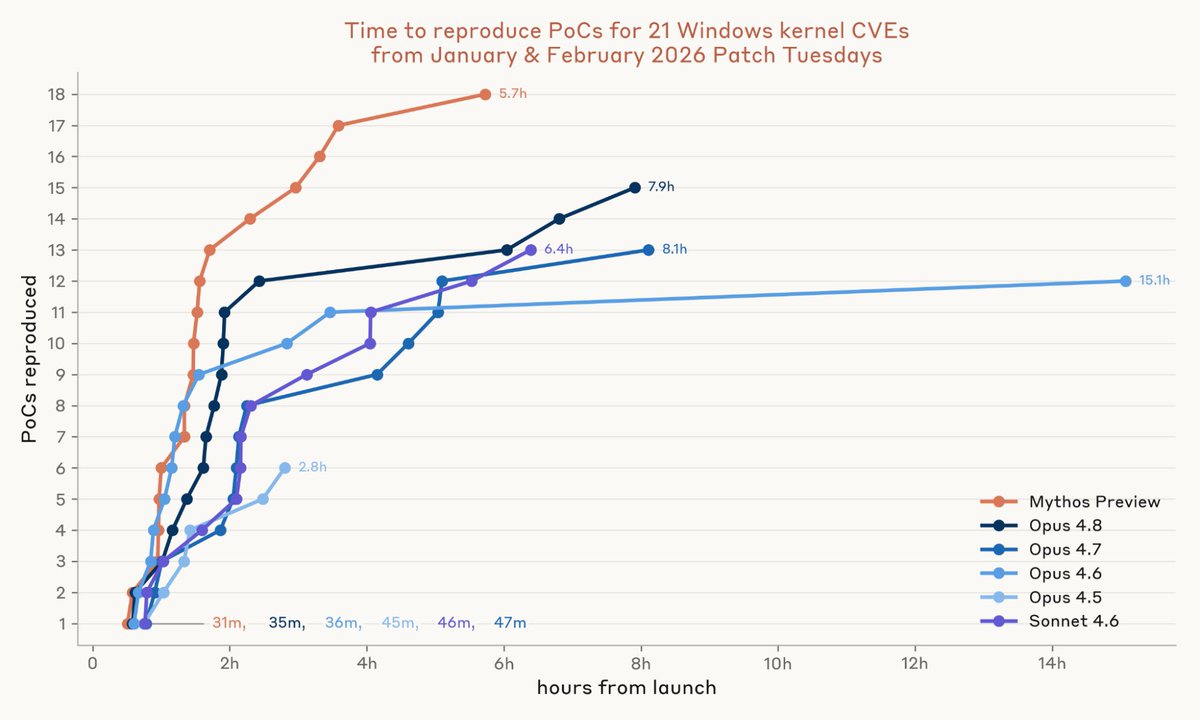
Discovery of N-day vulnerabilities are largely solved at scale by the Mythos and Opus models, for both proprietary and open-source software.
It’s time to seriously rethink vulnerability disclosure and time-to-fix timelines. Cascading effects across the software supply chain are becoming a serious bottleneck.
Jun 8

Frontier models are also really good at finding and exploiting n-day vulnerabilities, doing so on timescales of hours. Read about some recent work from my team studying these capabilities! red.anthropic.com/2026/n-day…
5
27
99
22,355
Markus Vervier retweeted

Jun 4
The bug itself is esoteric, it's a UAF but there is no alloc or free at all.
How is this possible? Simply put, the variable is allocated on the stack and freed by the OS itself whenever an esoteric condition happens by the OS.
I hope you'd enjoy this one
guysrd.github.io/futex-read-…
30
130
7,739
Markus Vervier retweeted

Jun 3
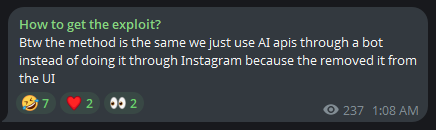
The fix for Meta's AI bot vulnerability was apparently:
- remove the feature from the UI ❌
- leave the API endpoint accessible ✅
I wish I was joking.

So instead of shutting down that API for good, they just removed it from the page?
Are meta employees on drugs???
You can read more on t.me/feds
17
120
1,147
90,130
Markus Vervier retweeted

Jun 3
Microsoft introduces Microsoft Scout, also known as Autopilot.
Scout is always on and has file system and application access "based on your corporate policy".
Best news for Threat Actors in a long time
microsoft.com/en-us/microsof…
33
129
1,052
77,373
Markus Vervier retweeted

Agents need better tools for reversing! I'm releasing declib (previously libbs), with a new CLI today that gives agents CLI access to 4 decompilers (IDA, Ghidra, Binja, angr), parity feature support to most MCP (12 features), and the ability to sync those changes across decs!
7
39
177
8,240
Jun 1
Sharing some personal experience with MSRC:
First upfront disclaimer: I've not reported many vulnerabilities to them so far, but some high profile ones like CVE-2025-53773 and CVE-2020-16875. Mainly because I was never very active in Windows specific security research, only as a code reviewer for proprietary software. So I can't claim I'm an expert in dealing with MSRC.
The few times I have dealt with them though showed one pattern: There was always a political and corporate communication angle to any conversation and interaction. and that was much stronger than with any other of the many corporations I had to deal with over the years. Where for other vendors the technical details and impact was always first, it felt like there was a filter in my interactions that delayed communication. I didn't even get an update for when something was fixed.
On top of it it was never transparent who is actually looking at the vulnerabilities. In case of CVE-2020-16875 the bug was not patched correctly at least two times, despite me proposing a patch and offering help looking at theirs.
I've met a few MSRC folks at conferences over the past last years and everyone was super nice and skilled! So what we can conclude: "A fish rots from the head down"
Microsoft should just hand over the process to people who manage it well and own their mistakes as a corporation in a proper way. Others have successfully done it before!

Over the past several days, we have been listening to the conversation around coordinated disclosure and the relationship between security researchers and vendors. We recognize that this relationship is both critical and, at times, fragile. We deeply value the security community, and will continue to take your feedback seriously.
To be clear about our approach to legal matters, we have no intention to pursue action against individuals conducting or publishing their security research. When an individual breaks the law and engages in malicious activity causing real harm to our customers, we will work with law enforcement as appropriate.
We recognize the work that goes into researching and submitting a vulnerability. We are committed to approaching every interaction with transparency, clear communication, and professionalism. We continue to believe strongly in Coordinated Vulnerability Disclosure as the foundation for protecting customers and improving our products. Each year we process a high volume of vulnerability reports. That volume continues to grow and will continue with the rise of AI-enabled research. We acknowledge that some interactions have fallen short and are working to learn from them.
Many of us have experience on both sides of this work, as researchers reporting vulnerabilities and as responders triaging and assessing them. That perspective informs how we approach this feedback and the importance we place on getting it right, particularly as the volume and complexity of research continues to grow.
The security community plays a vital role in helping us protect customers. We are committed to maintaining a constructive and respectful relationship and growing together. We know that, given the nature of this work, there will at times be misunderstandings. We remain committed to engaging in good faith and to providing a respectful and professional experience for all researchers, regardless of past interactions.
Community note
The root of this statement is a post by a security researcher that stated MS revoked the access to their reporting account. When the researcher asked for explanation, his account got deleted. He got no answer. This escalated further by MS deleting the github account as well.
deadeclipse666.blogspot.com/2026/05/dear-m…
1
7
59
3,969
Jun 1
OSS would have a simple way to prevent the perception that it's less secure: Develop more AI tools for reversing, decompiling and bug hunting against proprietary binaries!
1
161
Markus Vervier retweeted

May 29
Offensivecon's talks are now available on our YouTube channel!
🔗 buff.ly/g63xgm5
1
100
340
24,559
Markus Vervier retweeted

May 30
Microsoft could stop researchers bothering them with security bug reports by simply not writing security bugs into their software.
20
48
279
12,806

May 30
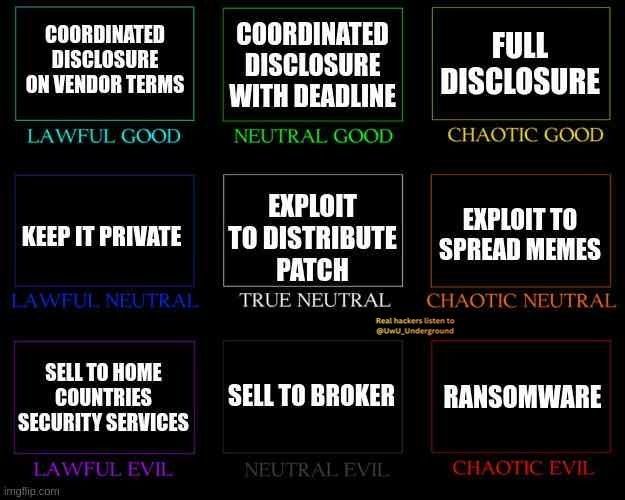
Ollie Whitehouse: “This prompt is incredibly effective!” - 100% true and the yet another reason why silent patching created a huge technical debt, so stop it now!
4
307
May 29
This also implies they have a reliable evercookie on your devices by simple common sense / plain logic!
May 29

Google Chrome is rolling out device-bound session credentials to all users. Session cookies get cryptographically tied to your device, so stolen cookies can't be replayed from a different machine. Attackers who exfiltrate your cookie database get nothing usable.
1
405
Markus Vervier retweeted

May 29
‘INFERNO’
The new album from @boardsofcanada, out now.
→ boardsofcanada.com
24
223
1,329
26,348
May 29
The team did some data analysis on CVE-2026-48710 on a sample of 50.000 scanned hosts on the Internet. Spoiler: Lots of API keys are prone to be leaked!
Analysis: persistent-security.net/post…
2
9
146,245
May 29
PSA: we had to pause the month of bypasses (github.com/persistent-securi…) because of the #badhost situation, it will be continued as soon as things calm down!
2
221

May 28
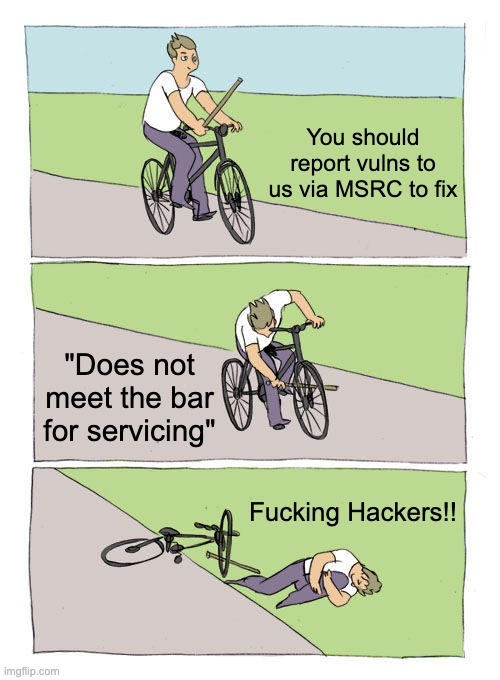
MSRC: RAISING THE BAR SINCE 1998.............to beat up security researchers!
185