
Saving businesses from ad agencies and junior talent 1 Unicorn Marketer at a time. Click link to get matched with a Unicorn Marketer today!
Joined June 2008
- Tweets 8,549
- Following 1,407
- Followers 8,588
- Likes 6,927
1,260 Photos and videos
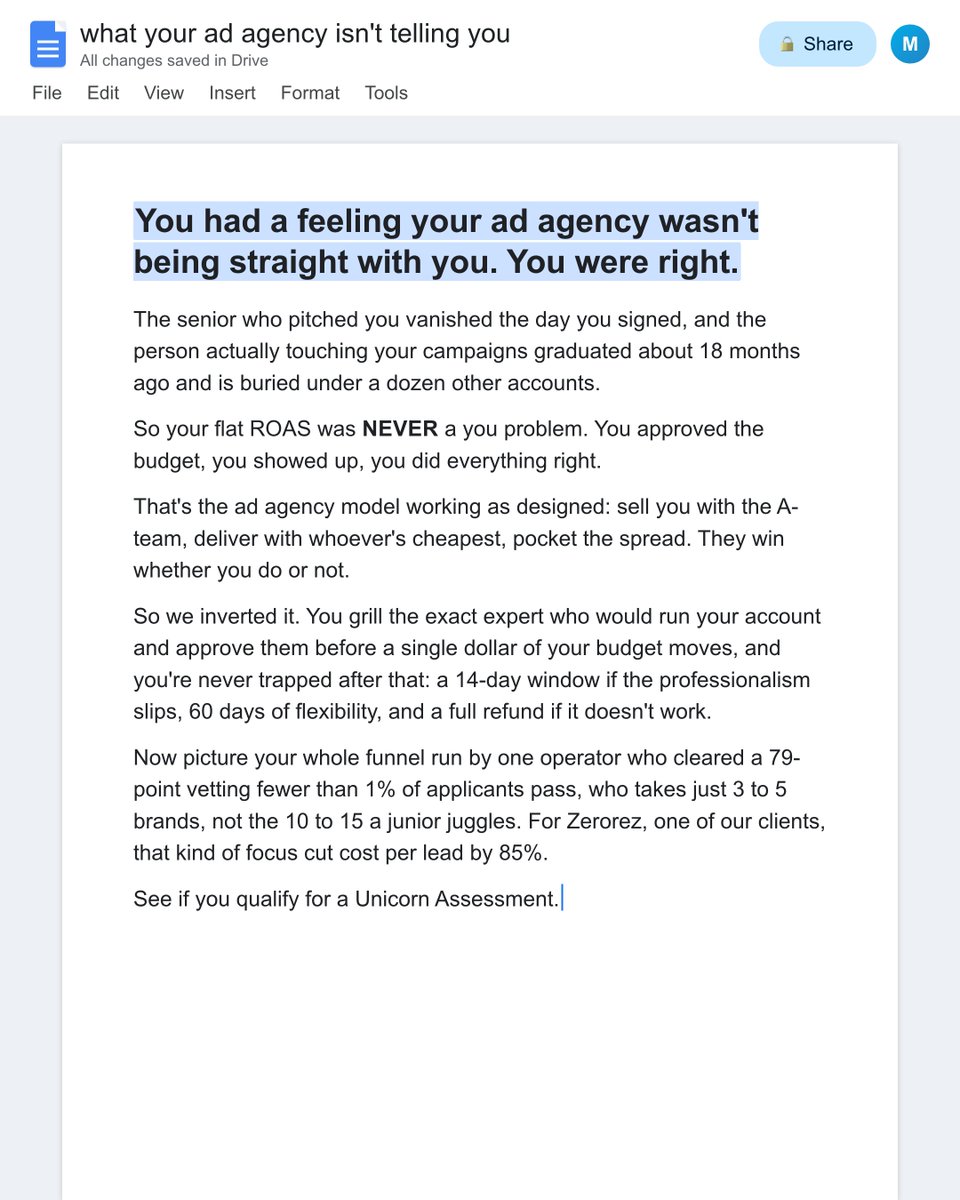


One of the most underrated skills in marketing is the ability to open a loop in someone's brain and just leave it hanging there.
Your brain hates an unfinished thing way more than it cares about a finished one (this is why cliffhangers work and why you can't stop replaying an argument you never got to finish).
The second a question gets raised and not answered it starts quietly nagging at you in the background until you get the answer and you'll keep reading, keep scrolling, keep clicking just to make the itch go away.
This is called the Zeigarnik Effect, after a researcher who noticed waiters could remember every detail of an order right up until the check was paid, then forgot the whole thing almost instantly. The open order lived in their head and the closed one got dumped the second it was done.
Copy works the exact same way.
One of the most famous ads in history opened with "They laughed when I sat down at the piano, but when I started to play" and that one headline sold a learn-at-home piano course for years because the second you read it you physically cannot walk away without finding out what happened when he started to play.
The moment you fully resolve the thought the reader is free to leave, so the best hooks raise a question they refuse to answer in the first line and the worst ones answer everything up front and give you zero reason to keep going.
Here's a few specific ways great marketers take advantage of this effect:
👉 Open on the result and make them read to find out how you pulled it off. "We added one sentence to our checkout page and it did an extra $40k a month" makes the how impossible to skip. "Here are some checkout optimization tips" gives them nothing to chase.
👉 End your email subject line one beat before the payoff. "I think I finally found out why our ads stopped converting" gets the open. The second you put "creative fatigue" in the subject line you answered your own question and handed them zero reason to click.
👉 Build your quiz so the thing they actually came for sits on the far side of the opt-in. They just spent three minutes answering questions about their own skin, the result is sitting right there one click away and an email address feels like a tiny price to finally see it.
👉 In a VSL, name the thing and then refuse to hand it over yet. "In a few minutes I'm going to show you the exact 7 second routine that cleared this up, but first you have to understand why everything else you tried actually made it worse" and now they've given you the next ten minutes.
The trick here isn't being vague (since vagueness just feels like nothing)...it's raising a specific question they now NEED answered and then making them travel a little to get it.
11
1,055
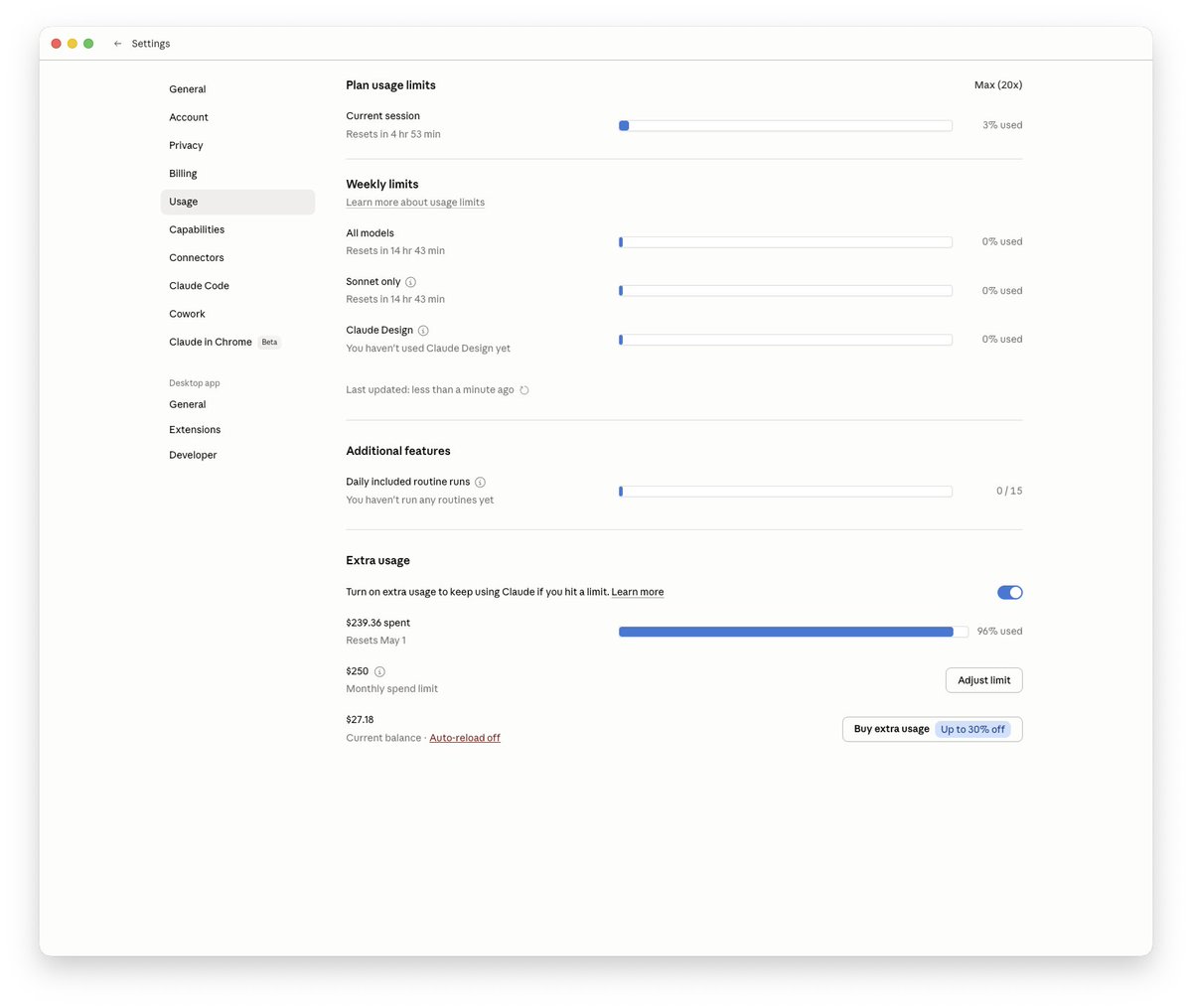
What an absurd lawsuit. The person suing clearly has 0 idea how much compute they are getting for $200/month.
Anthropic should actually start showing this to all paid Claude users in their usage settings like CodexBar does and send a weekly/monthly summary "You saved X dollars with your Max subscription this month."

Exclusive: A consumer is demanding that Anthropic reimburse customers of its priciest AI subscription plans, alleging in a lawsuit that the company oversold the usage allowances it offered on.wsj.com/4xqkXIt
1
3
1,177

Jun 14
Here's a simple, but incredibly effective, way to increase conversion rates (if you know how the brain works).
If you make someone start a quiz or a signup or a punch card at 0% they feel like they're standing at the bottom of a long climb, but if they open it and 20% is already filled in they feel like they've got momentum and they're way more likely to actually finish.
This concept is called the Goal-Gradient Effect and the basic idea is that the closer you feel to a reward the harder and faster you push toward it.
This isn't simply a concept or theory.
There was a study where a coffee shop created two different loyalty cards.
1️⃣ One needed 10 stamps for a free coffee.
2️⃣ The other needed 12, but came with 2 already stamped in for free.
Both groups had the exact same 10 purchases left, but the group that started with the 2 free stamps finished their cards in about 10 days versus 15 for the empty-card group. Additionally, more of them finished just because it felt like they had already started.
The big takeaway here is that progress you've already made pulls harder than progress you have left, so manufacture a head start everywhere you can.
Here's a few ways to put the Goal Gradient Effect into action for your business:
🧠 Start the quiz at "step 1 of 5 done" instead of a blank step 0.
🧠 Pre-check the first box on your onboarding checklist so the list is never fully empty.
🧠 The second someone joins your rewards program, tell them they're already 20% of the way to the reward.
🧠 Never show a totally empty progress bar, always start it with a little already filled in.
6
22
1,465
Jun 13
Great analysis and we anecdotally see about the same thing.
The problem is that humans need to be in control and tinker, so most people really struggle with trusting someone/something else.
Most people I speak with still feel the need to control budget allocation at a very granular level. Even if the results are worse and they are shown data to prove it they still don’t want to hand over control.
An analogy I like to use is your the coach of a basketball team and you think one of your players is the best and keep wanting to give him the ball despite him playing like crap and another player absolutely killing it.
Jun 13

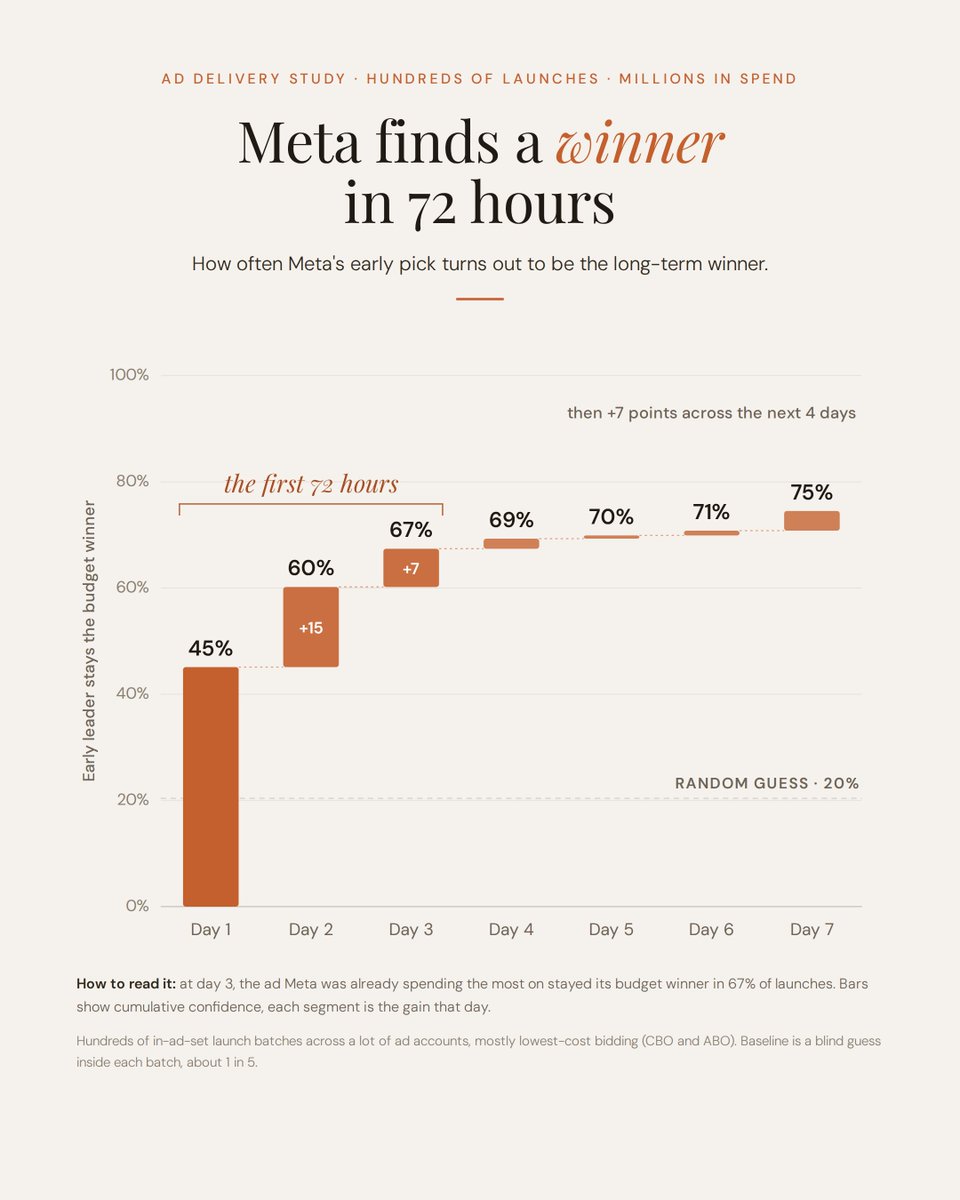
Meta picks a winner within 72H and is right 67% of the time
I went digging into how fast Meta actually decides which ad to back, and how often that early call sticks.
A lot of ad accounts, millions in spend, hundreds of batches of ad launches analyzed.
A launch is a batch of fresh ads dropped into one ad set on the same day.
Mostly lowest-cost bidding, a mix of CBO and ABO.
The average launch ran about 7 new ads, 4 of them real spenders.
Inside each batch the budget, audience and timing are identical, so the only thing that moves is velocity.
When budget rushes into a single ad early, Meta is telling you it's confident in that angle, that persona, right now.
Here's how often that early confidence is right.
Take the ad leading on spend at day 1.
It stays the top-funded ad across its entire run 45% of the time.
By day 3, 67%.
By day 7, 75%.
A blind guess inside a batch is about 1 in 5.
What that 75% means: in three of four launches, the ad Meta was spending the most on by day 7 was the same ad that finished with the most total spend over its whole life, from first delivery until it stopped getting budget.
The early leader becomes the lifetime leader.
And we didn't manufacture that by killing the rest.
About 70% of the batch was still delivering past day 7.
The other ads weren't force-paused on day 1, they faded on their own while the winner pulled ahead in a live field. The read is fair.
So what do you do with a one-week head start?
1. Iterate faster
If an ad is pulling spend by day 5, build the next version off it now.
Same angle, same persona, fresh executions.
You're feeding the flywheel off a signal that holds three times in four.
2. Scale sooner
Real performance concentrating in the first few days is usually enough to start adding budget.
You're following the algorithm's own money.
Of course ads don't perform in a vacuum.
They run in sequence across the customer journey, so the longer your journey and the more ads you have live, the more you weight the batch over any single unit.
Read the signal in context
And the ad that spends hard but sits under your CPA?
The data is blunt: efficiency barely moves between day 7 and day 14.
If your top spender is below threshold after a week, more time probably won't rescue it.
Meta found the volume.
The margin is on you, through creative quality and spend discipline at least on lowest cost.
Meta commits fast, inside a week, and it's right far more often than not.
Trust the velocity EARLY, iterate and scale on it to increase your creative flywheel, thus increasing the overall business growth rate.
1
23
6,244
Jun 13
In the 16 years I’ve been building businesses I’ve never been more excited and bullish about what I’m building.
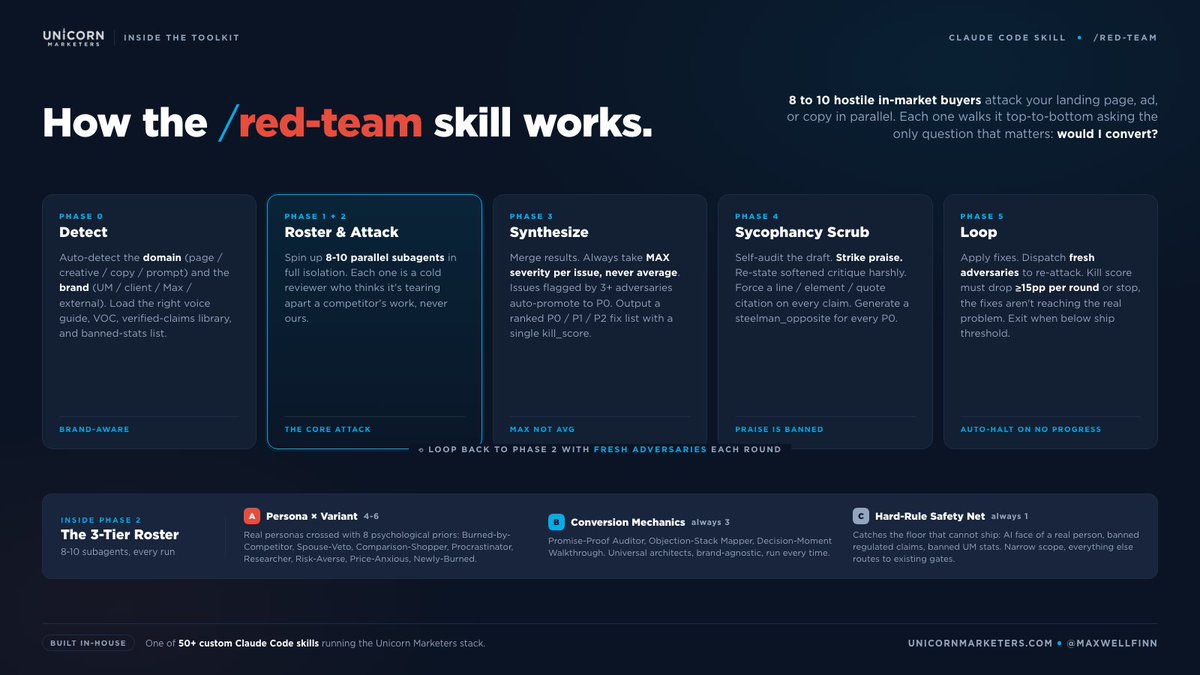
We’ve gone from a brand new idea to closing in on 70 incredibly happy clients, ~100 of the most talented marketers in our vetted talent pool and one of the most powerful Claude Code toolkits in the market in a little over a year.
We are just getting started 🚀
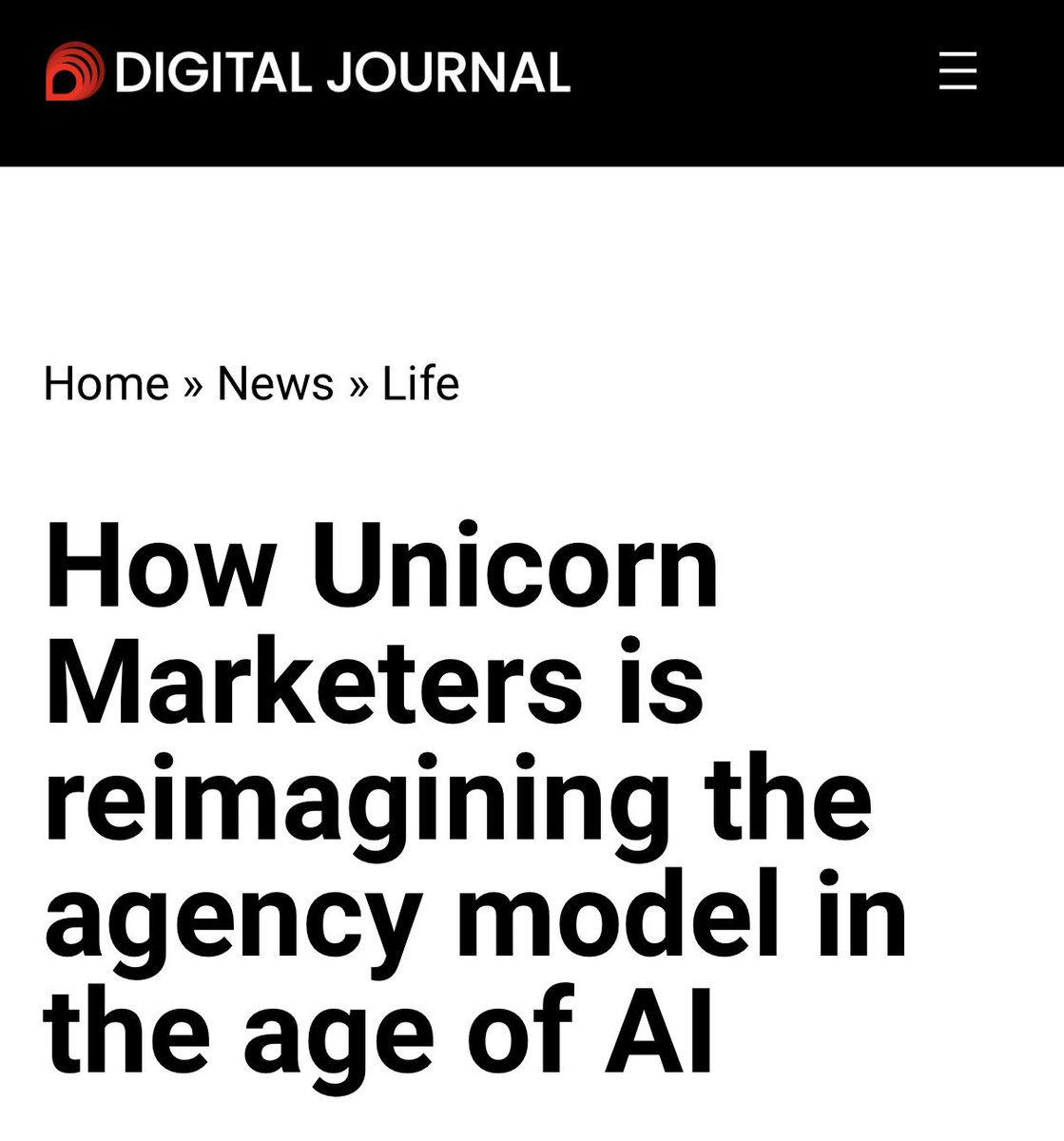
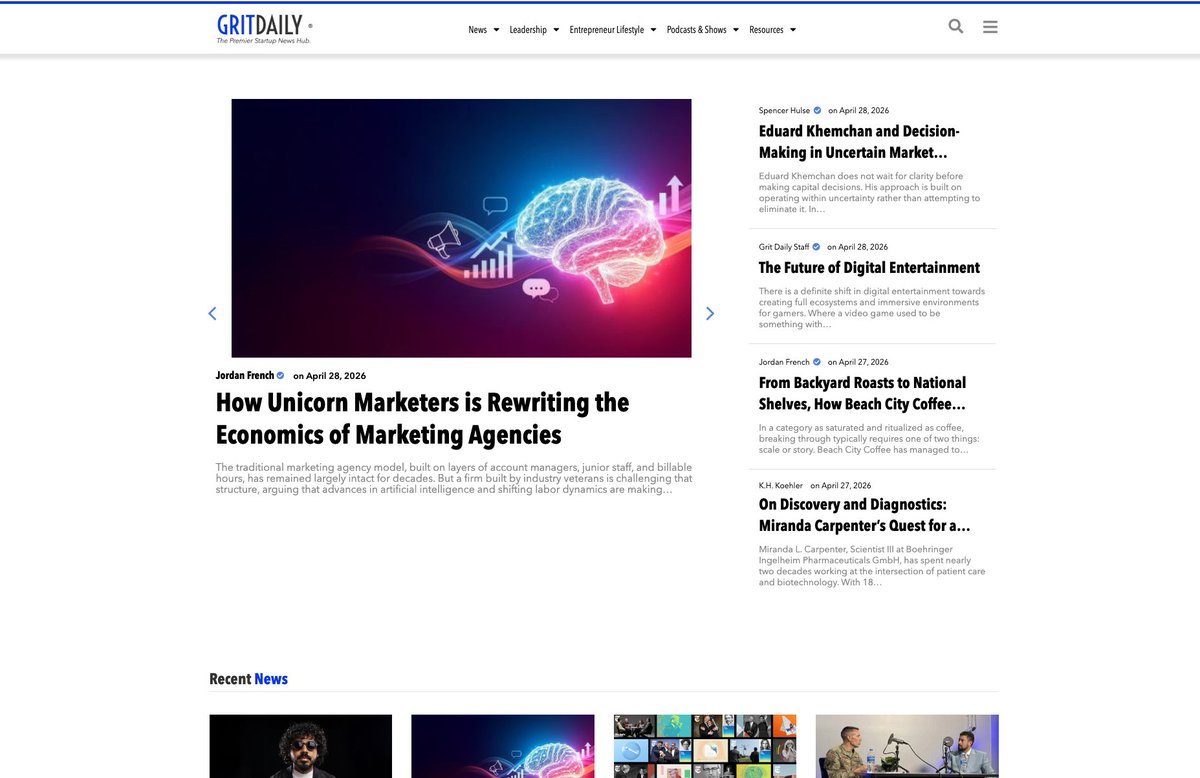
Thanks for the feature @digitaljournal 🙏
1
2
17
1,311
Jun 13
As a power user who was building really cool stuff with Fable this is really annoying, but to be fair this is somewhat self inflicted by @AnthropicAI.
You can’t routinely put out white papers and content talking about how scary powerful what you’re working on is and not expect people to be fearful and react this way.
Anything that is a threat to the traditional power structure will cause this type of reaction.
Jun 13

The US government, citing national security authorities, has issued an export control directive to suspend all access to Fable 5 and Mythos 5 by any foreign national, whether inside or outside the United States, including foreign national Anthropic employees.
The net effect of this order is that we must abruptly disable Fable 5 and Mythos 5 for all our customers to ensure compliance.
Access to all other Claude models is not affected.
We apologize for this disruption to our customers. We believe this is a misunderstanding and are working to restore access as soon as possible.
Read our full statement: anthropic.com/news/fable-myt…
3
27
7,508
Jun 12
One of the easiest ways to make your copy more believable is simply to stop writing in vague superlatives/generalities and instead use specific numbers/points.
Pretty much every brand makes the same general claims in their ads and landing page copy..."Thousands of happy customers," "Results fast," "Save big," "Trusted by the best," etc..
These claims basically do nothing when it comes to persuading your target customer to buy (honestly it actually can hurt your brand by seeming like a lie).
Now compare that to "215 people bought this last Tuesday" or "most people notice a difference by day 9" or "it knocked $340 off my electric bill the first month." The specific version isn't just more interesting, it's more believable and the reason is kind of counterintuitive.
This phenomena is a cognitive bias called Precision Bias, where the human brain confuses precision with accuracy.
The solution for your copy is pretty simple. Just go through everything you wrote and look for every vague claim and ask what's the real number behind this:
❌ Vague: helps you sleep better.
✅ Specific: most people are out within 20 minutes instead of lying there for an hour.
❌ Vague: loved by thousands.
✅ Specific: 4,300 five star reviews and we left the bad ones up.
❌ Vague: saves you time.
✅ Specific: turns a 2 hour job into about 15 minutes.
If you can't confidently make any specific claims then that is a bigger problem you need to address and no amount of marketing can save you.
2
1
8
374
Jun 12
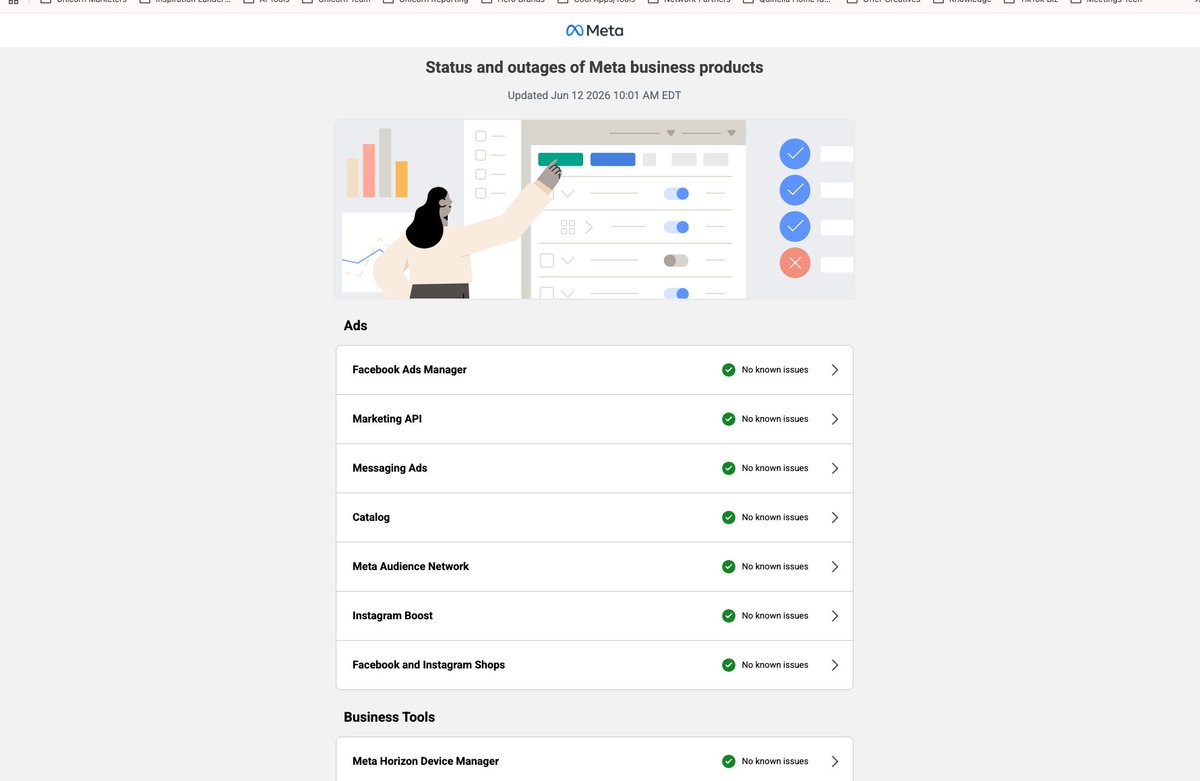
No known issues except for the fact that the entire platform is down... #facebookdown
4
16
3,038
Jun 11
No Meta I don't want to enable website highlights on my ad where you arbitrarily add 5 super ugly carousel sections that make 0 sense in relation to the primary creative.
If I want to include any of your 100 stupid "enhancements" to the ad I made I will tell you.
Launched a funny video ad just now and Meta decided to auto enable the feature and add a bunch of random headshots of people who left testimonials on our website as carousel images next to it with just my name as the headline under all of them.
Meta spent $19.8 billion last quarter on CapEx primarily for AI and you're telling me this is the best they can do???
Does anyone who works on building the ad platform actually ever open ads manager and try using it a few times or do they just blindly ship shit someone pitched after an in office keg party?
4
2
18
1,951
Jun 10
One of the things that makes what we are building at Unicorn Marketers so special is the exclusive mastermind that sits underneath everything.
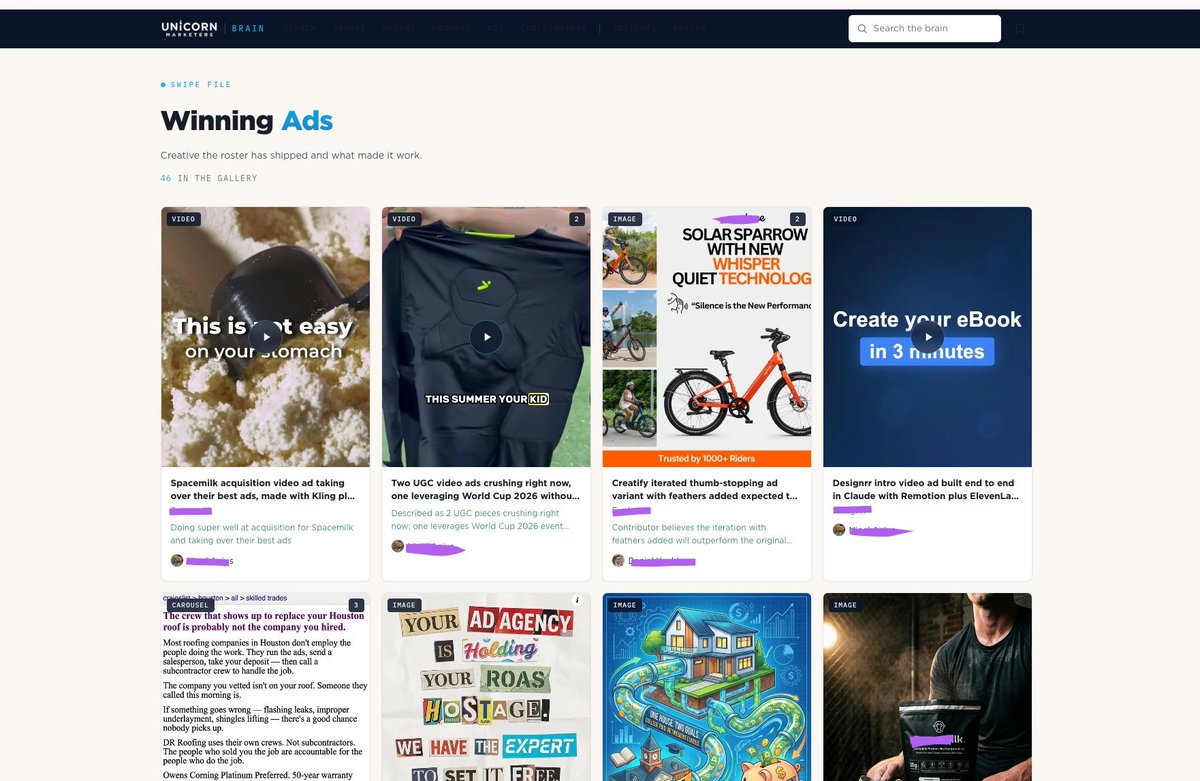
We now have ~100 of the world's greatest direct response marketers in our Slack sharing winning ads, new strategies, mistakes to avoid and so much more every single day. We also have 2 live calls a week where the same level of brainstorming and collaboration is happening.
One challenge with this is we had too much value being shared and Slack is great for sharing/communicating, but terrible for discovering/consuming content.
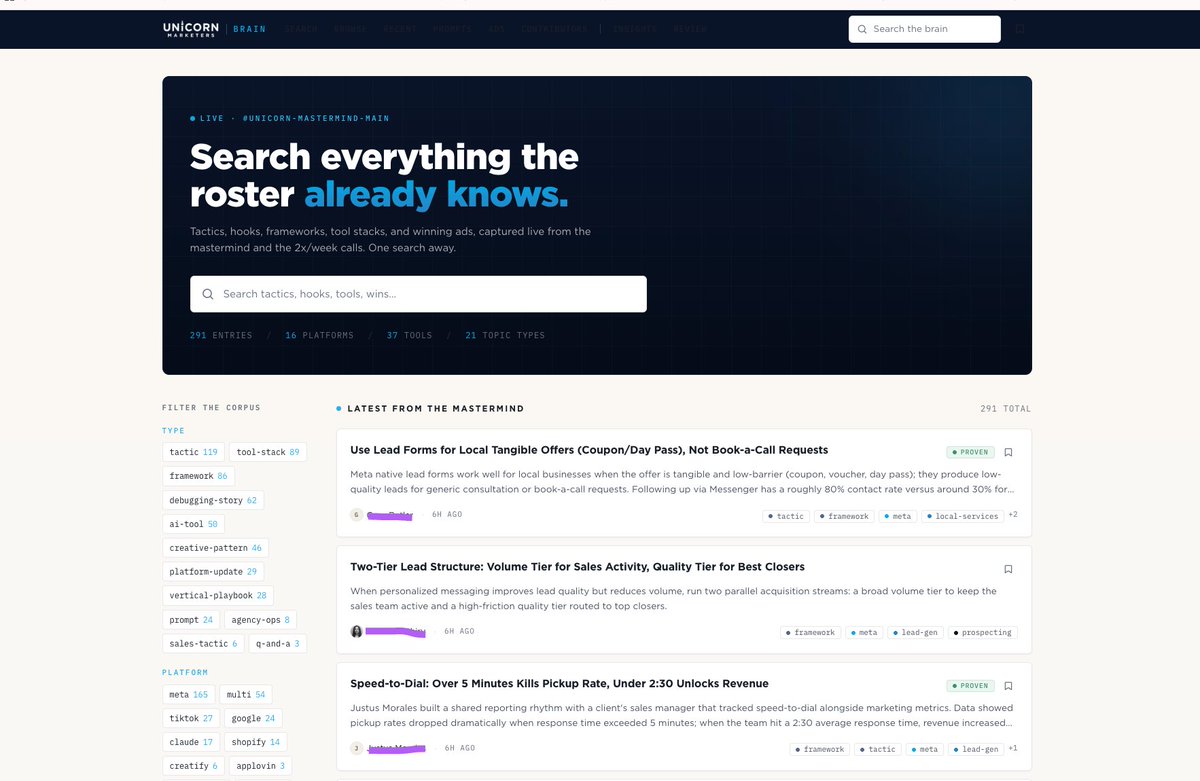
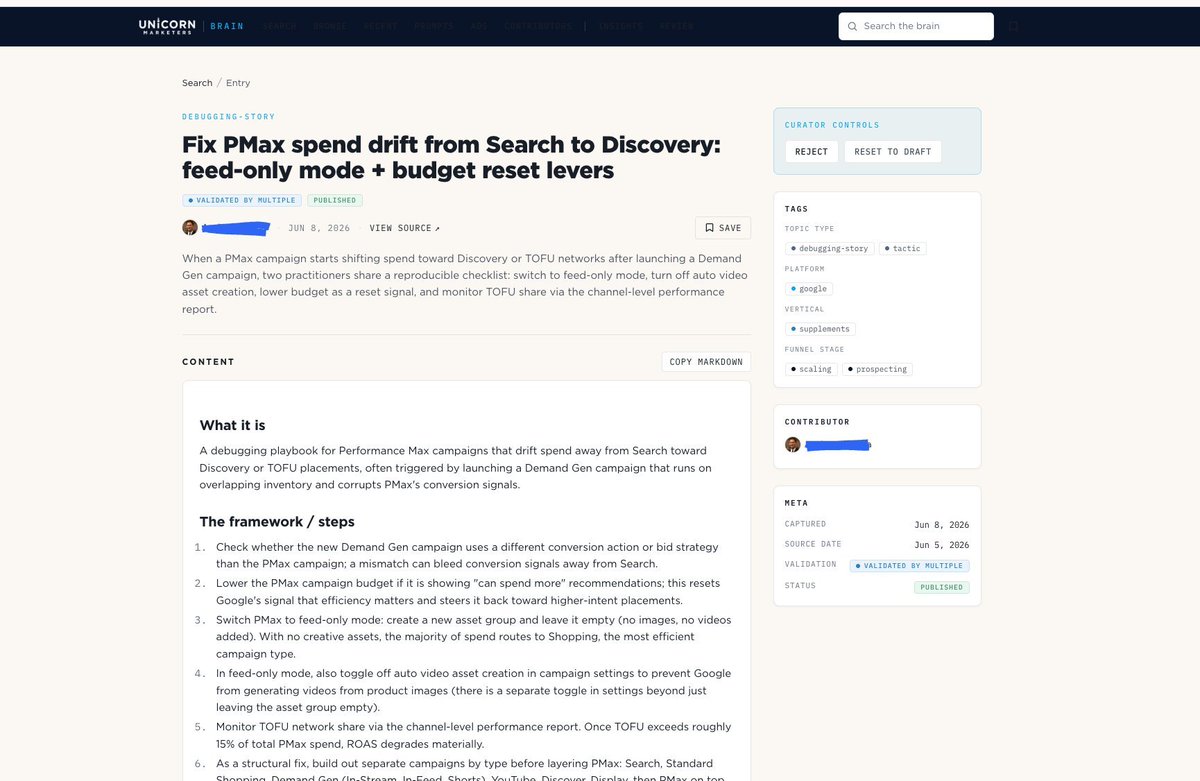
So I built a Unicorn Marketers Brain that pulls and analyzes every Slack message and call transcript for value. It then categorizes the valuable posts so our marketers can easily find the best ads, prompts, media buying strategies, etc..
We basically now have a super brain that all of our Unicorns can tap into whenever they want and this is just V1.
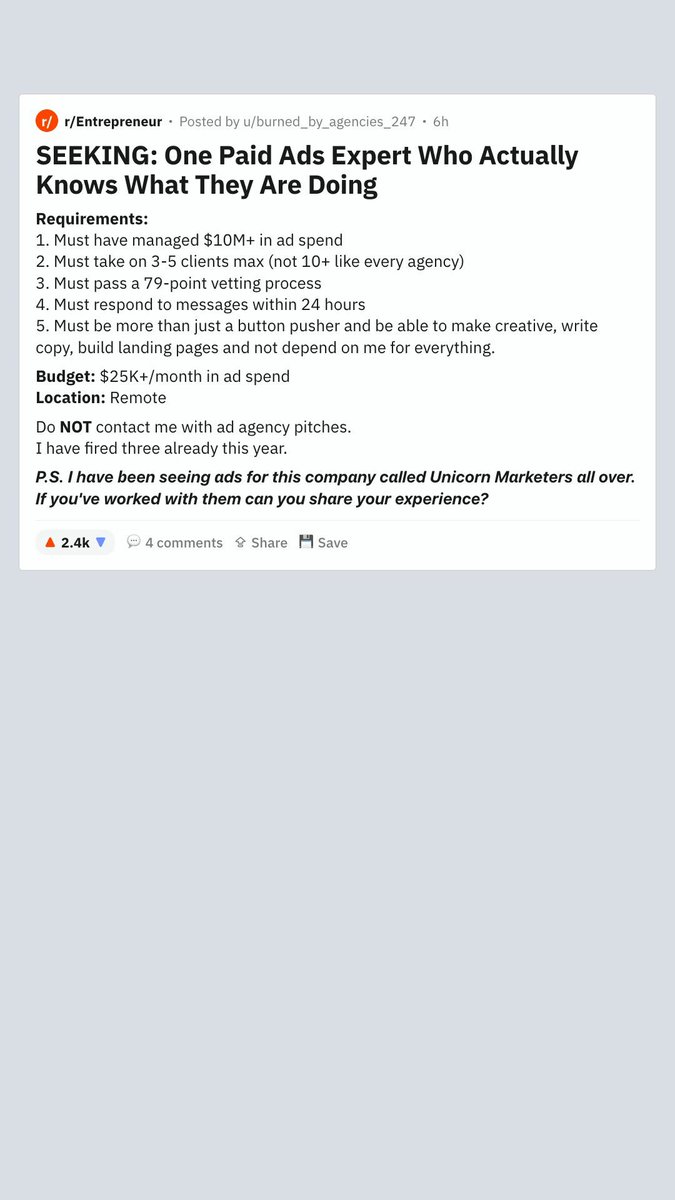
P.S. If you are a business serious about growth and having a true Unicorn running your ads we would love to speak with you and see if you're a good fit for Unicorn Marketers. Imagine having a true Unicorn supported by the collective brainpower of dozens of other Unicorns working growing your business every single day.
18
1,593
Jun 10
It’s crazy how many accounts I audit on a weekly basis that do not have the basics done like setting up audience segments.

1
25
9,070
Jun 10
Since I started using Fable 5 earlier today I am burning through usage faster than people burn through cash in Vegas at those slots where every spin does like 20x the listed bet amount.
It's a $1 slot, but somehow you lose $100 in like 5 spins and aren't even at the machine long enough for a free drink🤣
6
602
Jun 10
The movies Obsession and Backrooms have already made close to $500M worldwide on combined budgets of less than $12M with basically 0 marketing budgets.
In contrast, Disney spent over ~$130M on marketing for The Mandalorian and Grogu to make ~$300M at the worldwide box office.
What's the lesson for business owners?
Great products beat great marketing 9.9 times out of 10.
This is coming from someone who has built their entire career around marketing, while living and breathing the craft.
I have said this before, but on numerous occasions I have been inside absolute dumpster fire ad accounts that still produced incredible results because the business had an incredible product.
I have never seen the opposite happen.
Great products can save weak marketing, but great marketing can't save weak products.
The truth is that most businesses fail when it comes to advertising because their product is mediocre at best. Yet these business owner will hop from agency to agency, blaming the person running the ads for the lack of success when the reality is that not even a reincarnated David Ogilvy could save them.
4
1
13
1,218
Jun 9
Now that Fable 5 is out all any business owner needs to do is ask it "Make me an ad for (insert url) with a 100% CTR and then a corresponding landing page with a 100% CVR."
Infinite money glitch...
2
1
10
1,483
Jun 9
Most ads I see are “on brand” and look great, but suck at persuading people to buy. They look like they were made by a team of designers vs. a team of direct response marketers who understand how their customers brain actually works.
Here’s a few of the things I look to include in every ad I make:
1. A specific person in a specific situation, not "anyone who buys this category.”
2. The actual emotion the product solves for, not the feature that solves it.
3. A powerful and objective reason to believe that isn't just you saying you're the best.
4. One idea, not five (if you're cramming 5 benefits in you have 5 weak ads pretending to be one).
5. Copy that sounds like a person texting a friend, not a brand talking at a customer.
6. A next step so obvious the viewer doesn't have to think about what to do next (they’ve already come to the decision themselves before you tell them).
The main takeaway here is that a lot of brands obsess over what their ad looks like when they should obsess over what it actually says and whether it gives someone a real reason to act.
What would you add to the list?
2
16
732
Jun 8
Here's a marketing mistake I see almost every brand make: they try to impress you with big numbers when they should be telling you about one person.
"Join 50,000 happy customers" does almost nothing, but a specific story about one person whose EXACT problem your product solved will outperform it pretty much every single time.
There's a psychological reason for this called the Identifiable Victim Effect. The basic idea is that people feel far more for one identifiable individual than they do for a large group or a statistic.
It's the same reason a single named child in a charity ad raises more than "2 million children are starving."
Our brains aren't wired to feel a number, they're wired to feel a face and a story.
So when you're writing your next ad, landing page or email, resist the urge to lead with how big you are. Lead with one person. Name them, describe their exact situation before your product, the specific moment it clicked and where they are now.
TLDR: One real/specific story will almost always out-sell a bunch of impressive sounding (but abstract) big numbers.
2
1
7
426
Jun 8
One of my favorite things about X (and social media in general) is I can go from reading one of the most brilliant and insightful ideas ever to a post directly under it with an idea so shockingly stupid it is hard to fathom that another human being with a functioning brain actually thought of it.
The dumb post helps me feel not as bad about my own intelligence after reading the genius ones.
189