
Joined December 2023
- Tweets 3,322
- Following 298
- Followers 334
- Likes 14,888
64 Photos and videos











Pinned Tweet

26 Sep 2025
Utas yang berserakan.
23 Aug 2025

lebih urgensi. Contoh saja seperti melawan ketidakadilan yang terjadi pada wanita di Afganishtan. Jika saya tanyakan pada anda lelaki, sudahkah anda berkontribusi dengan keras untuk ikut bersuara terhadap case ini?
Satu dari sekian bentuk-bentuk toxic dari para feminist yang-
1
14
58,598
. retweeted

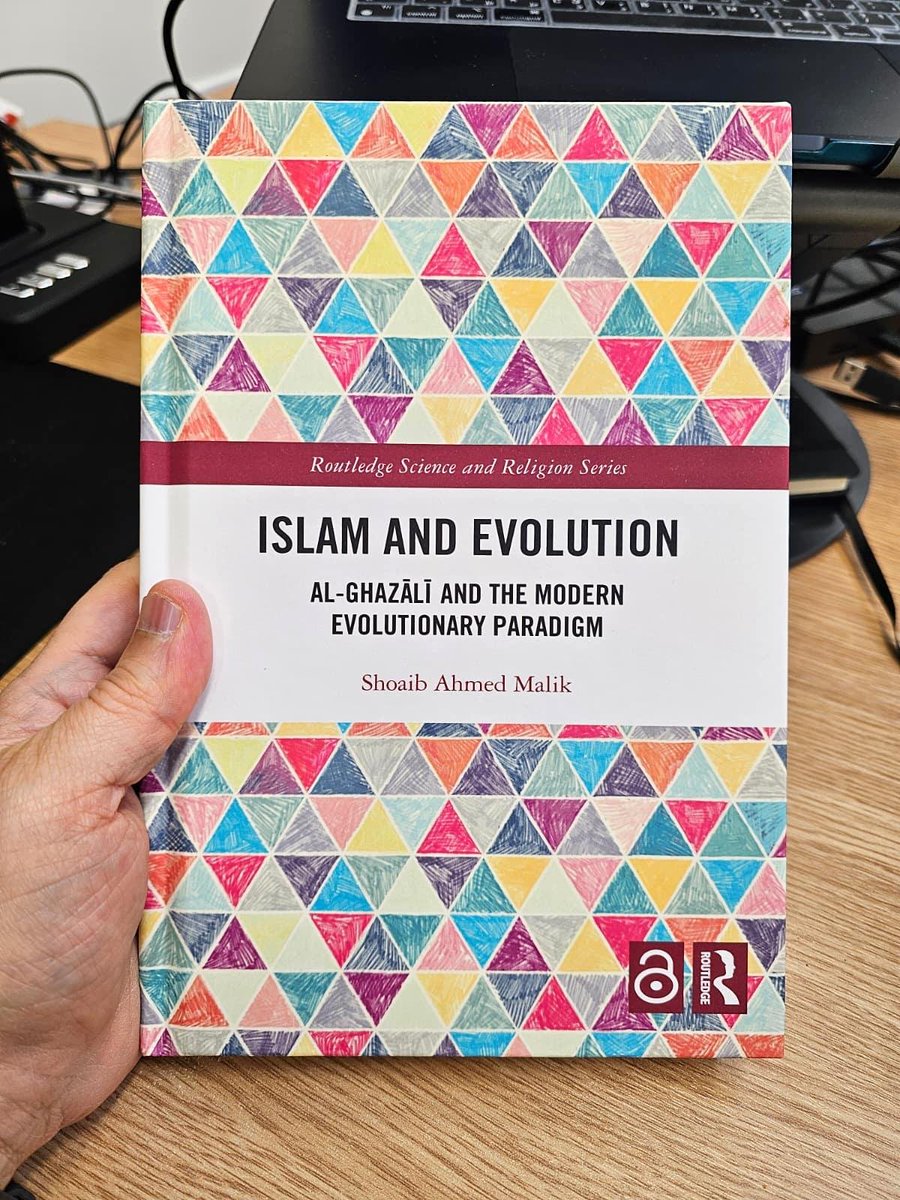
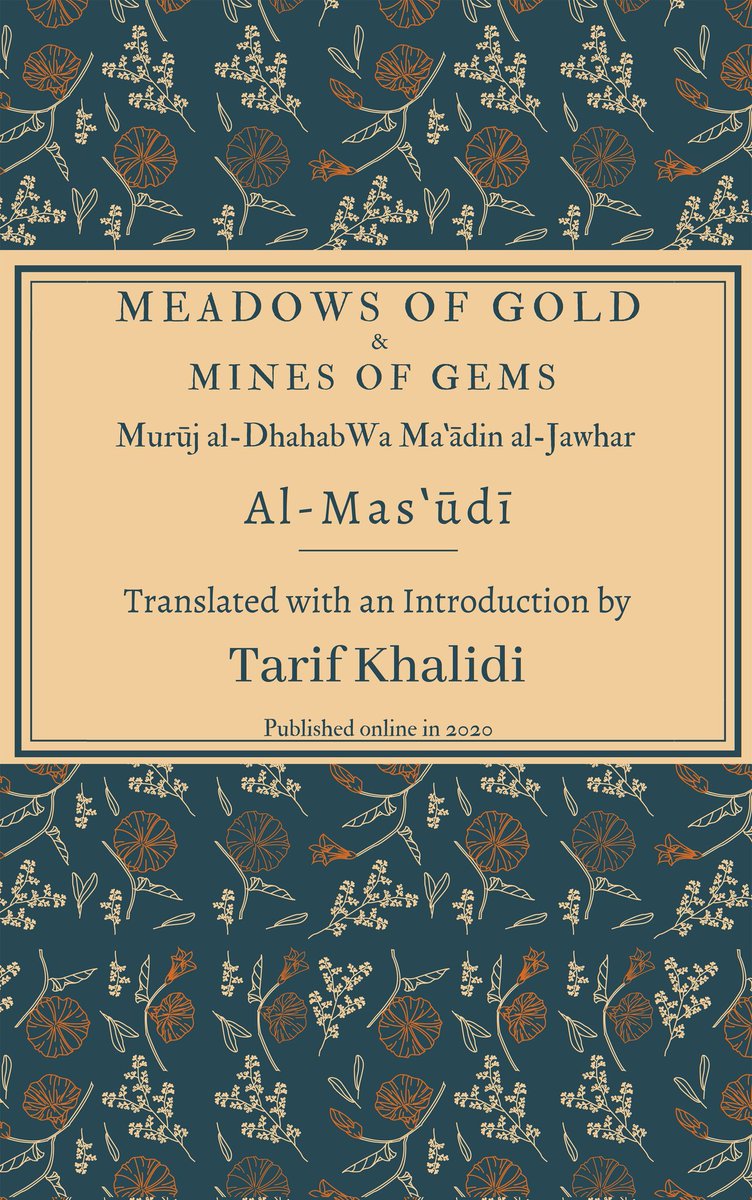
I gave away all my copies without realising it, but finally got one again. This book started it all for me, completed during COVID-19 in 2020, when my son was three. Now in five translations: Turkic, Bahasa Indonesia, Arabic, Albanian, and Urdu in piecemeal form. Alhamdulillah!
4
2
24
1,367
. retweeted

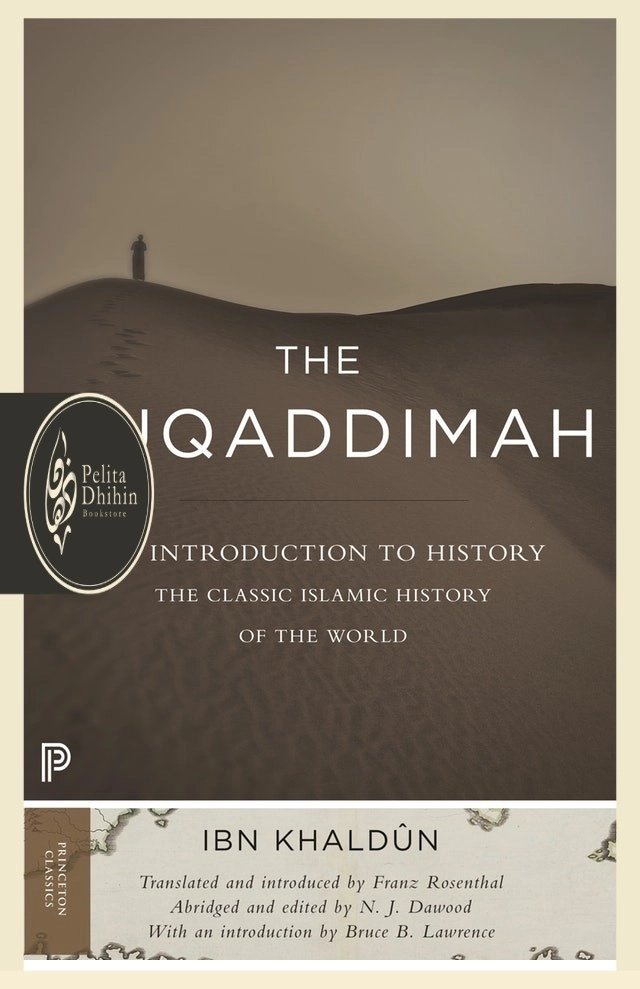
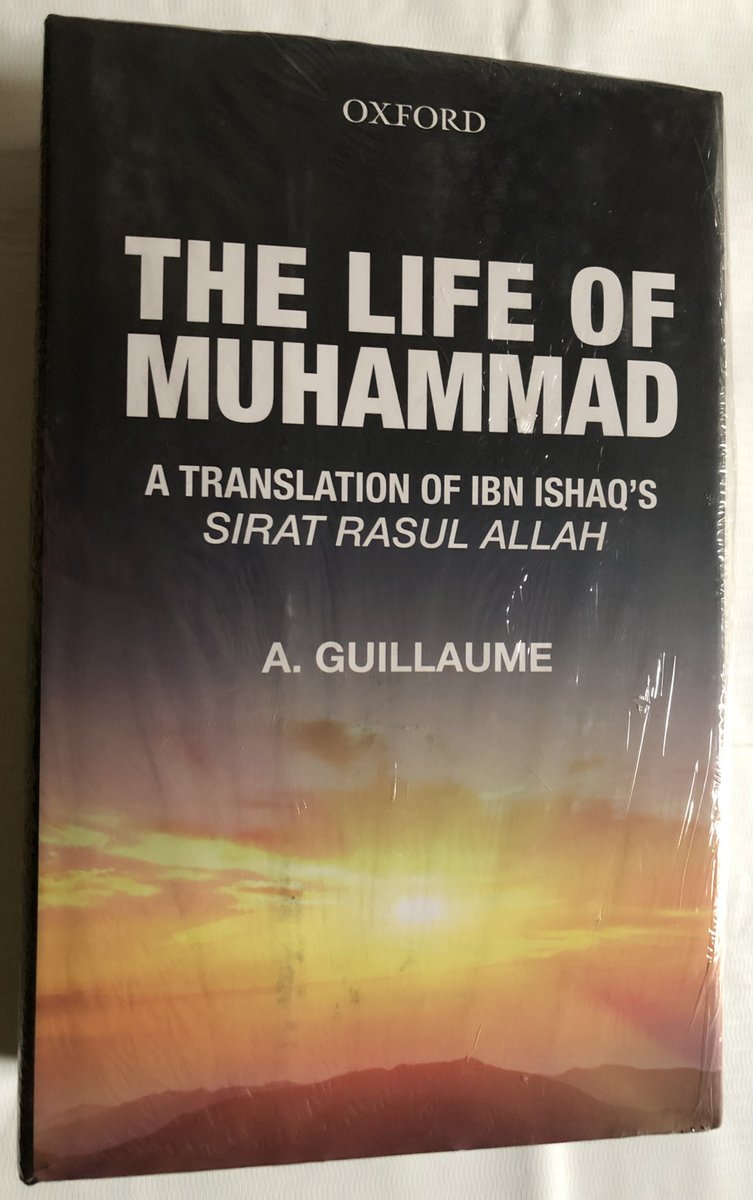
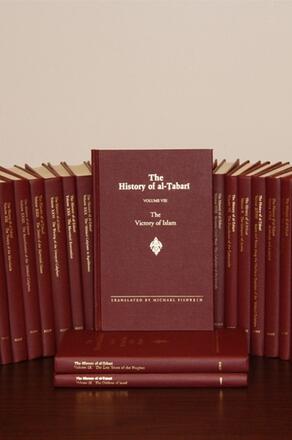
History books written by islamic Hstorians
3
13
84
4,910
. retweeted

May 14
lndonesia krisis tauhid is real
padahal even Nabi Adam ga makan khuldi pun, kita manusia tetep akan tinggal di bumi karena dari sebelum Nabi Adam diciptakan sekalipun, Allah udh bilang bahwa akan menciptakan manusia sebagai khalifah di muka bumi. (Q.S Al Baqoroh : 30)
ditambah lagi penciptaan manusia dan kejadian turunnya Adam ke muka bumi tuh emg udh dituliskan Allah beribu ribu tahun sebelum langit dan bumi diciptakan☺️

45
987
5,355
96,672
May 11
RT @khalidsyossef: A History of the Talmud
David C. Kraemer , Cambridge Univ Pr, 2019
PDF 🎯
archive.org/download/david-c…
t.co/qpfWjS1qi…
52
. retweeted

May 9
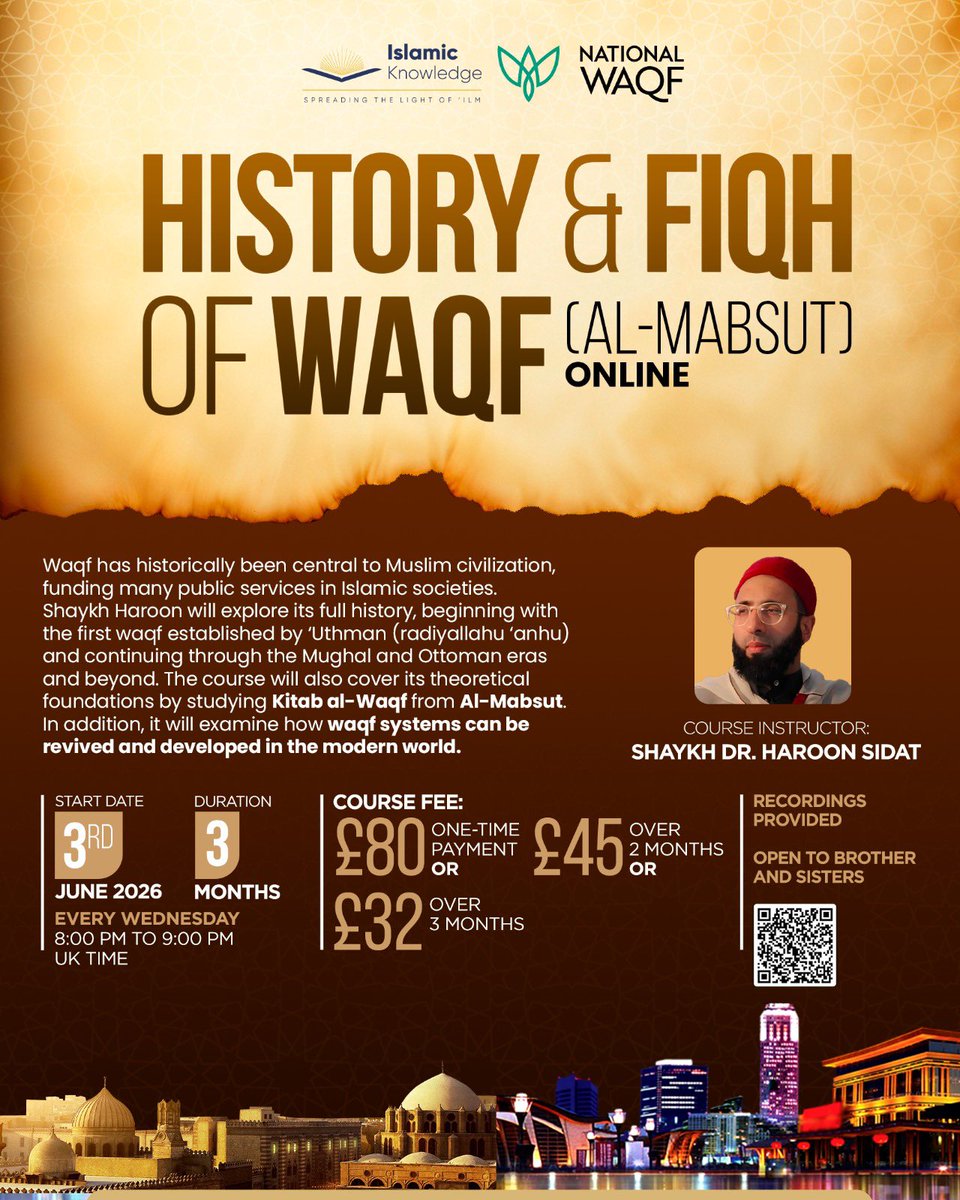
❗️ The History & Fiqh of Waqf with a Study of Kitab al-Waqf from Al-Mabsut - ONLINE
Register here: forms.gle/ntSV9q3WsDKQDjBe9
Course Instructor: Shaykh Dr. Haroon Sidat
Start date: 3rd June 2026
Timing: Every Wednesday 8:00 pm to 9:00 pm UK time
Duration: 3 months
Course Outline:
Nearly half of all real property in Muslim lands by the 16th century was waqf. It is without doubt the oldest organized form of charity in the world and was the engine that allowed Islamic societies to function before the advent of colonialism. Waqf was the lifeblood of Muslim civilization as it supported relief to the poor, education for the masses, services for travelers, construction and maintenance of mosques, schools, colleges, hostels and medical facilities which were all freely accessible to everyone.
In our new incredible 3-month online course, Shaykh Haroon will be journeying through the entire history of waqf from the first waqf in Islam of ‘Uthman radiyallahu ‘anhu until the awqaf systems in the Mughal and Ottoman world and beyond. Along with the history, we’ll be learning the theory by reading through Kitab al-Waqf from Al-Mabsut of Imam al-Sarakhsi rahimahullah (d. ca 483 AH) with a detailed understanding of how waqf itself works in classical Islam.
The history of Waqf is the history of Islam itself. It was amongst the first institutions destroyed by the colonialists. Everyone needs to be aware of waqf and how it works.
This course is not just a must for students, but even solicitors, accountants, law students and consultants!
Course Fee: £80 one-time payment or £45 over 2 months or £32 over 3 months
✅ Recordings Provided
✅ Open to brothers and sisters
Register here: forms.gle/ntSV9q3WsDKQDjBe9
4
14
1,376
. retweeted
Apr 23
jadi jaman Rasul tuh ada anak kecil yg terkenal bisa baca pikiran org lain. dan gegara kemampuan ini, dia dicurigai sbg dajjal.
kebetulan nih anak lahir di keluarga Yahudi dan dia BENCI BANGET ama Rasulullah. jd dia songong bgt nantangin Rasul.
suatu hari Rasul samperin ni anak “coba tebak apa isi pikiranku?”
anak ini jawab “ad dukh..ad dukh…”
Rasul langsung bilang “stop, jgn dilanjut. semoga kemampuanmu ga berkembang lebih besar drpd ini”
trus Rasul nanya “apakah kamu percaya kalo aku utusan Tuhan?”
dia jawab “percaya, kalo kamu jg percaya bahwa aku utusan Tuhan” (songong kan). Rasul pun pergi ninggalin dia.
Umar bin Khattab nanya “emg apa yg kamu pikirkan saat itu Rasul?”
Rasul bilang “aku saat itu berpikir tentang Ad Dukhan”
🙂🙂🙂🙂🙂🙂🙂🙂🙂🙂🙂🙂🙂
nama anak ini : Ibnu Shayyad.
nah anak ini akhirnya semakin besar, dia tinggal di Madinah. dia masuk islam dan menikah, diriwayatkan dia punya 10 anak. tapi para sahabat Nabi tetep menghindar dari dia karena ga percaya sama dia.
suatu hari para sahabat pergi haji, termasuk Ibnu Shayyad. pas perjalanan pulang, rombongan ini istirahat.
ada salah satu sahabat Nabi duduk di bawah pohon, ga lama dateng si Ibnu Shayyad duduk sebelahnya. sahabat Nabi ini liat dia dan bilang “gih, kamu pindah. banyak pohon lain buat berteduh”
tiba tiba Ibnu Shayyad ini nangis. sahabat Nabi td nanya “kenapa kamu nangis?”.
dia jawab “aku nangis karena org org ngira aku dajjal dan menjauhiku. padahal kamu tau sendiri, dajjal itu kafir sedangkan aku muslim. dajjal itu ga nikah, sedangkah aku nikah. dajjal itu gapunya anak, sedangkan aku punya anak. dajjal itu gabisa masuk mekkah madinah sedangkan aku buktinya tinggal disini”
sahabat Nabi itu jd mikir “iya ya, bener juga. poinmu tepat semua”
eh abis itu Ibnu Shayyad lanjut “tapi sejujurnya, menurutku nama itu lumayan bagus. julukan itu keren ga sih? dajjal dengan segala powernya. aku sih ga keberatan kalo memang ternyata akulah si dajjal itu”
sahabat Nabi itu langsung pucat dan berdiri sambil pergi “please jauh jauh dariku”
Ibnu Shayyadnya? ketawa.
gila nih org aneh bgt🙂🙂🙂🙂🙂🙂merinding
Apr 23

ada kisah menarik ttg seseorg yg dicurigai sbg dajjal di zaman Rasul masih hidup.
tar malem ah gue cerita
214
3,026
21,471
1,725,465
. retweeted
Apr 23
btw jgn langsung menarik kesimpulan kalo Ibnu Shayyad ini fix dajjal ya gengs, karena hanya Allah yg tau pastinya siapa dajjal itu
kita cuma dikasih tau ciri ciri dan ga diwajibin utk tau yg mana dajjal
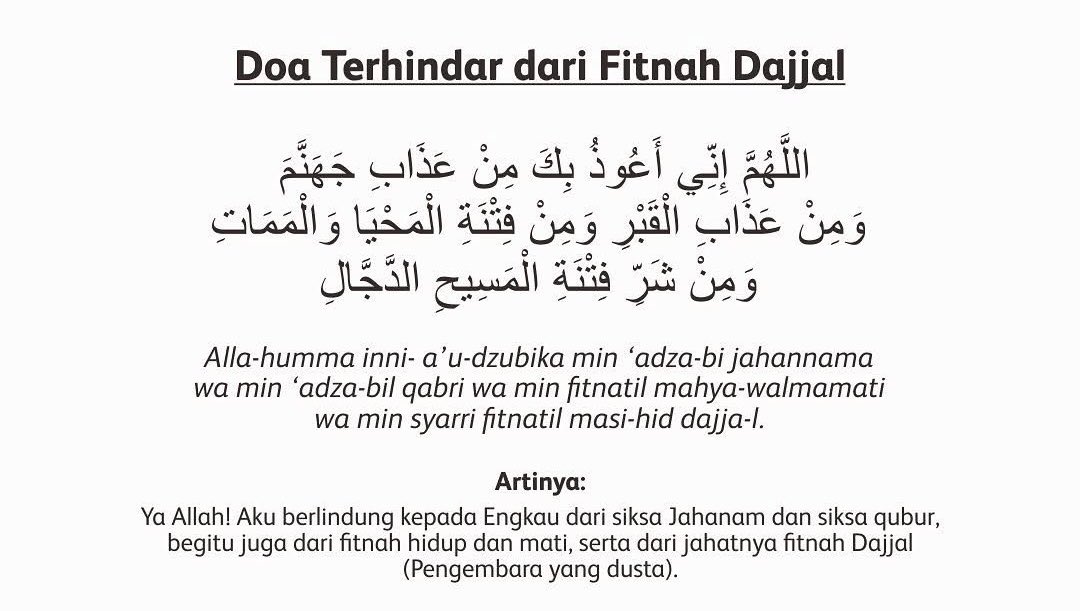
yg penting kita tau bahayanya dajjal dan berupaya utk terhindar dr fitnah dajjal. perbanyak doa iniiii!
4
352
3,032
172,211
. retweeted
Apr 9
Someone asked for 5 key takeaways, so after perusing my notes, here they are:
1. The nation state is a product of the enlightenment and therefore Euro-American in origins and its primary obsession is to use knowledge and nature to achieve control and domination. Think of how academic research and science is primarily for the purpose of how we can exploit and dominate nature more to bring it under more of our control. NASA wants to build a base on the moon while a very decent percentage of the lands the West colonised are living in poverty.
Even many of the problems the research attempts to solve are problems the state itself created in the journey of exploitation.
2. The relegation of the moral imperative to a secondary status and it's being largely divorced from science, economics, law and much else has been at the core of the modern project, leading us to promote or ignore poverty as both the legal and political are entirely connected to power and domination. This is the Is/Ought dichotomy or Facts/Values dichotomy that I will explain in the YouTube video. In Islamic governance, the rule of law is Shari'ah, and it works the other way around; the morality and values create the legal.
3. The legislative branch (parliament in the UK) is meant to be the only one creating the law, in reality, the executive (government) and judicial (courts) are also creating law arbitrarily. It's a mess.
4. In Islamic governance, neither the courts (judicial) nor the sultan (executive) create law, rather the jurists would DISCOVER the law of Allah (legislative). The jurists would be from the community of the courts itself, so therefore it has a stronger claim to being a bottom up system than the nation state does. Hallaq expands on the role of the "Mufti" in discovering law and the indispensability of the Mufti to the Shari'ah courts in his "Authority, Continuity and Change".
5. We are behaving and thinking exactly how the state wants us to think. We are "subjects" fashioned by the state for the state. This is done through education, media, etc. Think "British Values" plastered all over our school walls and how the terrorist in our movies is almost always a Muslim.
The whole TLDR of the book can be summed up in one verse of the Qur'an which so succinctly describes the problem with the nation-state:
أفرأيت من اتخذ إله هواه وأضله الله على علم وختم على سمعه وقلبه وجعل على بصره غشاوة
The 'Hawa' (desire) of the nation state could be dominance and control. This is the God of the nation state; I.e. itself. It has made itself and the dominance of itself its God. The 'Ilm' could be its science, laws and economic structures. Its 'Dalal' could be how its obsession with simply domination and control and using all its knowledge for domination and control only makes it more immoral and oppressive. But it sees itself as the standard for everyone else; thus its ears, heart and eyes are closed.
Apr 9

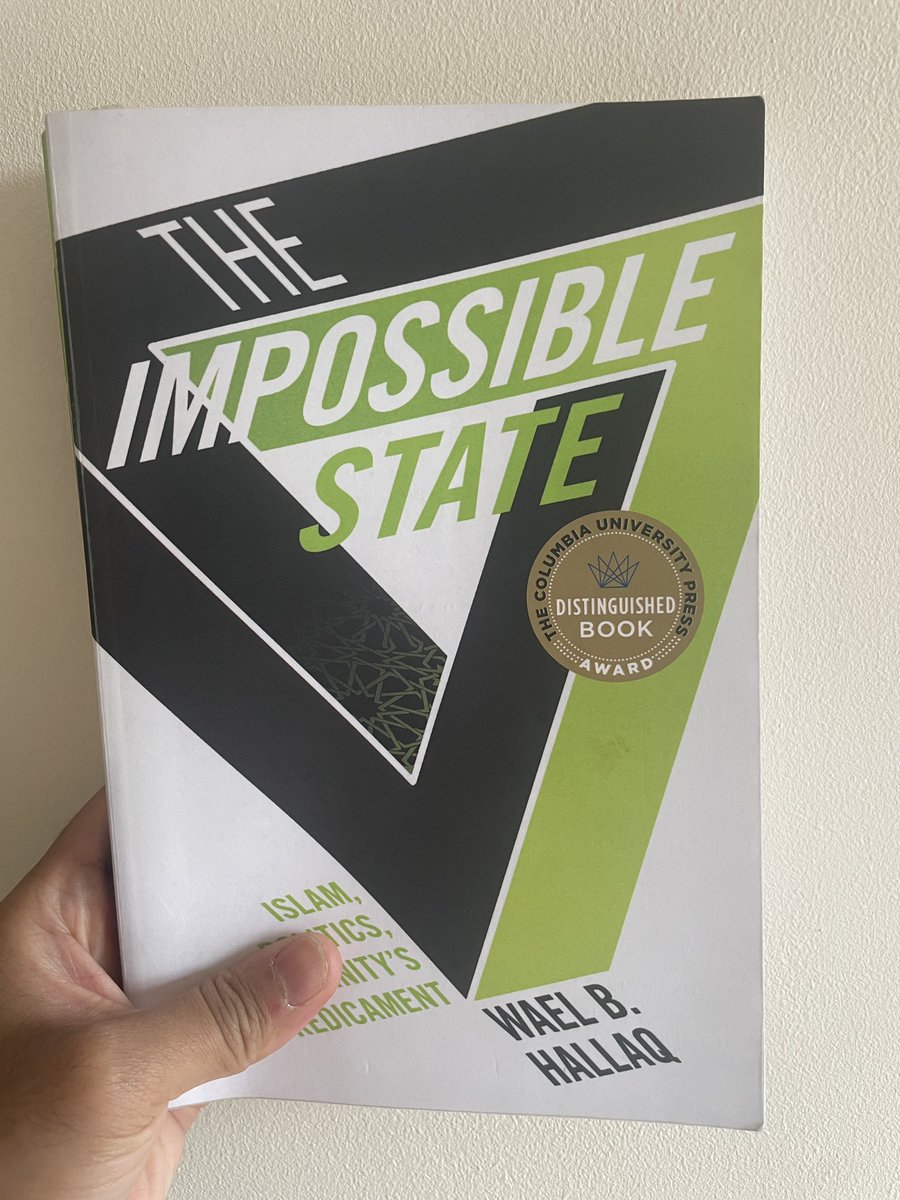
The Impossible State by Wael Hallaq
Okay so I know I'm late to the party but Alhamdulillah I'm about 10 pages away from finishing Hallaq's "The Impossible State" with copious amounts of notes.
While reading a 170 page book might not seem like a massive feat, this book is actually quite a challenging read. As I come from a traditional background and with no background in political science, I found this book incredibly beneficial. Despite having read quite a few academic books, this book was harder than any of Hallaq's other books that I have read, it should be firmly placed in the non-fiction segment of the non-fiction section of the library! ;)
I hope to make a PPT presentation and potentially present it in a Masjid in a simplified manner. May help to rid the inferiority complex some of our fellow Muslim brothers and sisters feel.
2
10
69
7,418
. retweeted

I'm glad to see Dost's Before the Qur'an and @KaraSeyfeddin's The Integrity of the Qur'an, as titles in Edinburgh Studies in Islamic Scripture and Theology, provoking responses and debate in the field. Whether one sides with authors or critics, this is how scholarship progresses.

12
63
3,862
. retweeted

Apr 9
anak STEM muslim mau belajar soshum mulai aja dari baca buku ini, 170 halaman
nonton penulisnya di sini juga bisa (subtitle English)
youtu.be/bwi8SZLFe2U?is=Wkcb…
Apr 9
The Impossible State by Wael Hallaq
Okay so I know I'm late to the party but Alhamdulillah I'm about 10 pages away from finishing Hallaq's "The Impossible State" with copious amounts of notes.
While reading a 170 page book might not seem like a massive feat, this book is actually quite a challenging read. As I come from a traditional background and with no background in political science, I found this book incredibly beneficial. Despite having read quite a few academic books, this book was harder than any of Hallaq's other books that I have read, it should be firmly placed in the non-fiction segment of the non-fiction section of the library! ;)
I hope to make a PPT presentation and potentially present it in a Masjid in a simplified manner. May help to rid the inferiority complex some of our fellow Muslim brothers and sisters feel.
1
26
184
10,027
. retweeted
Apr 9
The Impossible State by Wael Hallaq
Okay so I know I'm late to the party but Alhamdulillah I'm about 10 pages away from finishing Hallaq's "The Impossible State" with copious amounts of notes.
While reading a 170 page book might not seem like a massive feat, this book is actually quite a challenging read. As I come from a traditional background and with no background in political science, I found this book incredibly beneficial. Despite having read quite a few academic books, this book was harder than any of Hallaq's other books that I have read, it should be firmly placed in the non-fiction segment of the non-fiction section of the library! ;)
I hope to make a PPT presentation and potentially present it in a Masjid in a simplified manner. May help to rid the inferiority complex some of our fellow Muslim brothers and sisters feel.
11
30
208
40,016
. retweeted
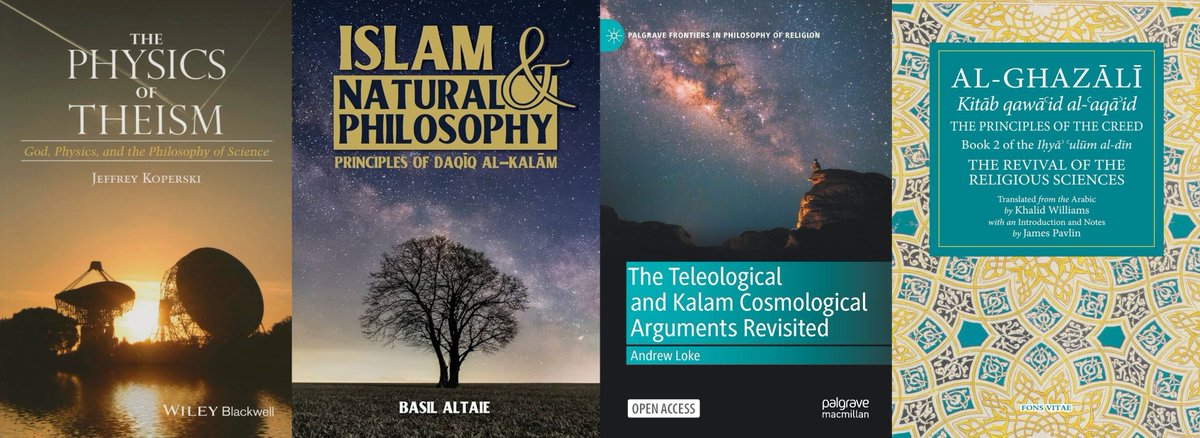
Today, we start Level 3 courses. Bismillah.
1
5
38
2,293
Apr 5
RT @khalidsyossef: Unity in Diversity
Mysticism, Messianism and the Construction of Religious Authority in Islam
ed. Orkhan Mir-Kasimov, B…
44
. retweeted

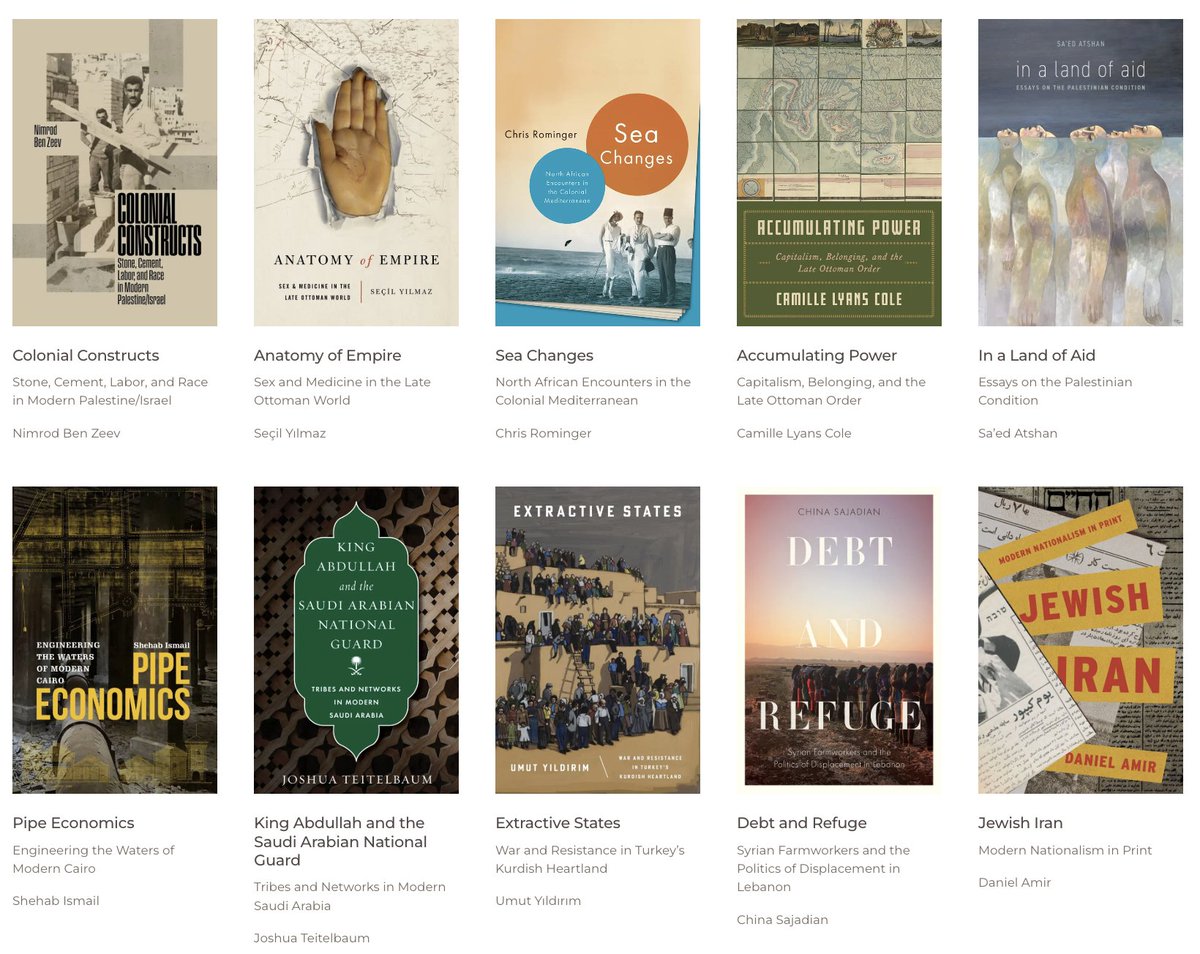
When you discover that Stanford University Press has updated their Middle East Studies catalog 😍 A thousand congratulations to all of the authors!
15
131
6,702
. retweeted

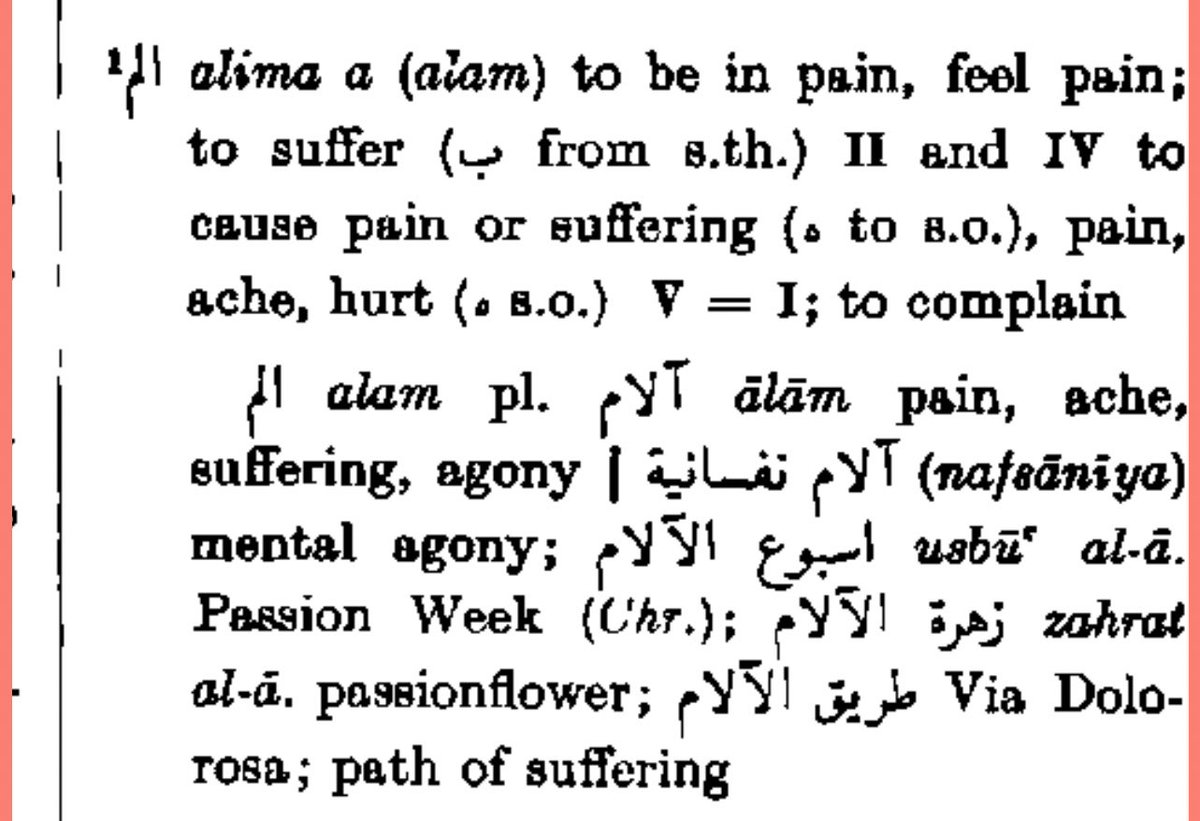
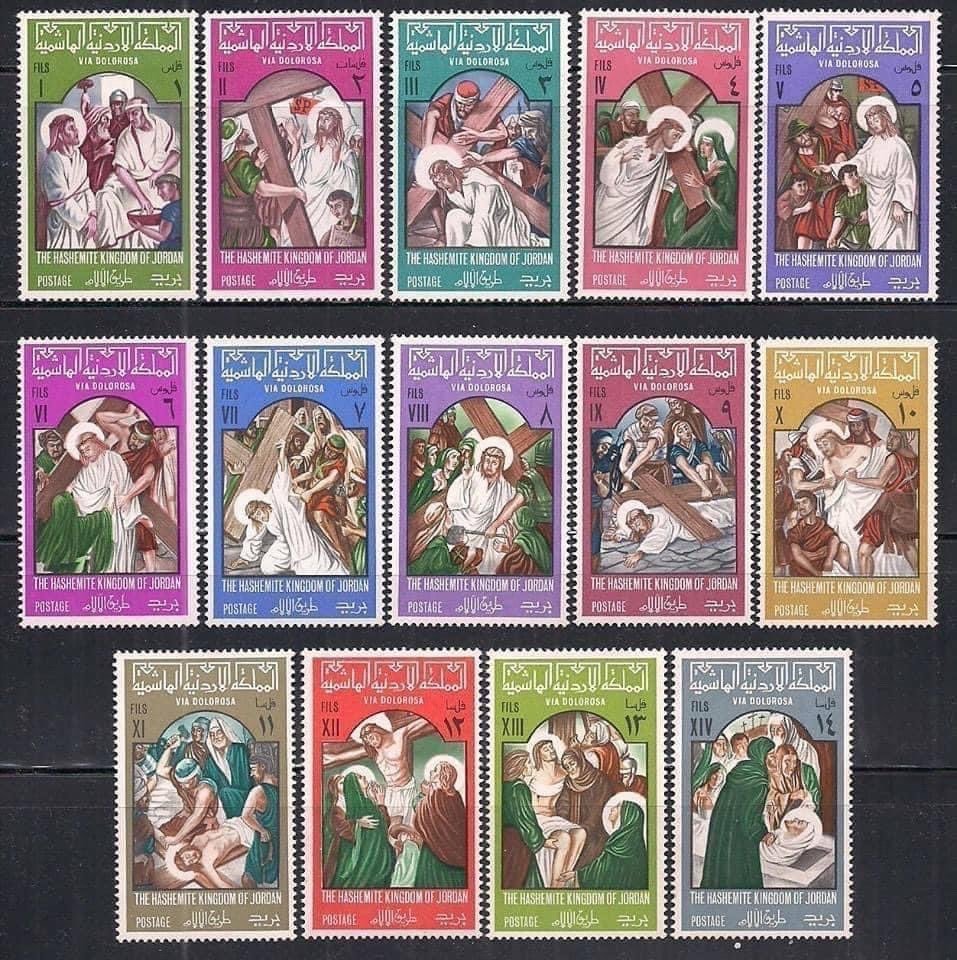
A lovely set of stamps, which use the Arabic term for Via Dolorosa, طريق الآلام (ṭarīq al-ālām), literally, “the way of pains”. Interestingly Holy Week in Arabic is أسبوع الآلام, “The Week of Pains”.
Apr 3

🇯🇴 Stamps depicting the Passion of Christ, issued by the Hashemite Kingdom of Jordan for Easter 1965.
6
68
3,174
. retweeted

This month, the First Command Book Club reads Philosophy in the Islamic World (A History of Philosophy Without Any Gaps, Volume 3) by Peter Adamson. We look forward to sharing a live session date with you soon.
Make sure to join our monthly giving program, 12000 Strong, to become a member of the book club. Join today: go.zaytuna.edu/4c21IuY
Purchase the book from the Zaytuna Bookstore here: go.zaytuna.edu/4tmjgJ0
1
6
20
1,223

"Secularism is not just segregating religious life into the private sphere. It is rather the determination of the state of what religion is and is not,where and how it can be exercised. In terms of political theology, secularism is the murder of God by the State."
Wael B. Hallaq
1
15
59
. retweeted

12 Nov 2022
Wael B. Hallaq Professor in the Humanities at Columbia University, where he has been teaching ethics, law, and political thought since 2009. He has been described as one of the world's leading authorities on Islamic law.
21
73
299
. retweeted

19 Mar 2024
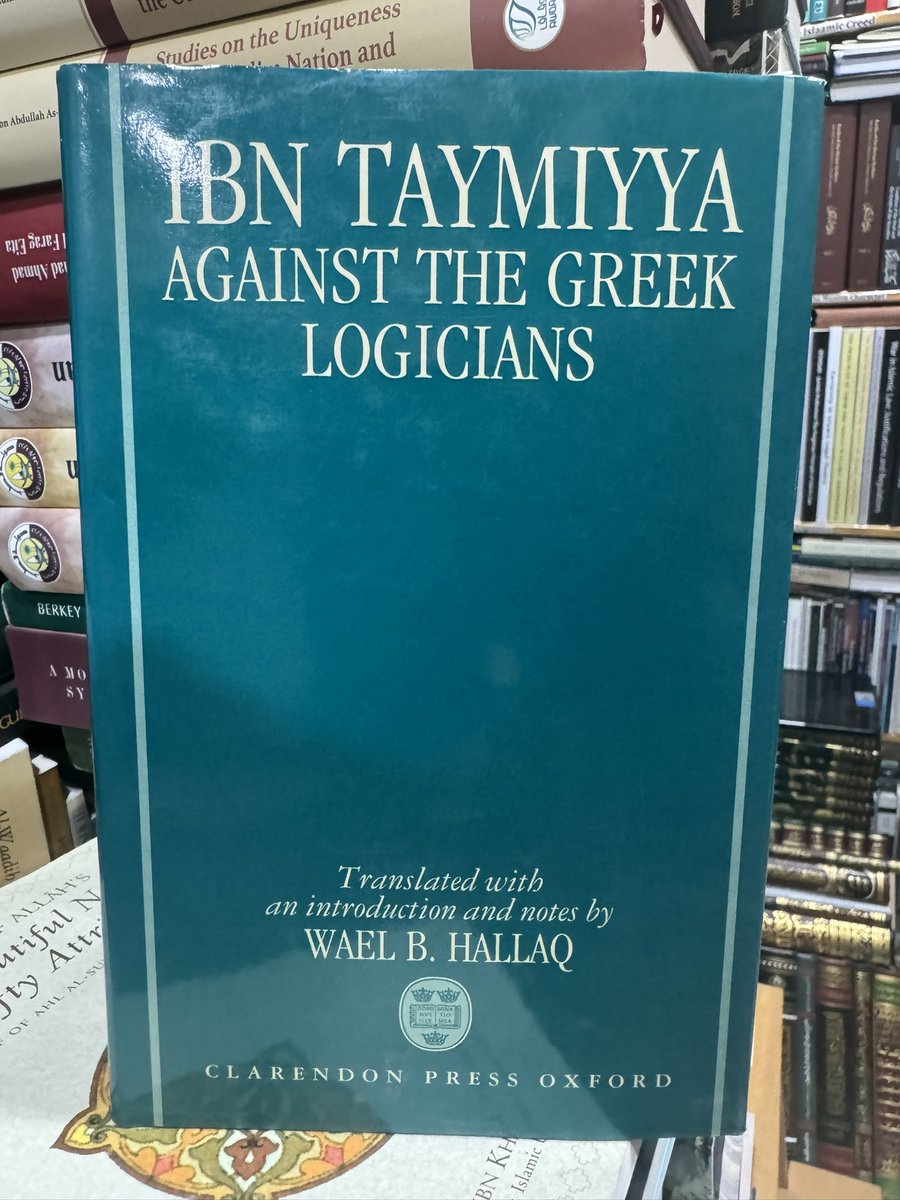
IBN TAYMIYYA AGAINST THE GREEK LOGICIANS -
WAEL B. HALLAQ
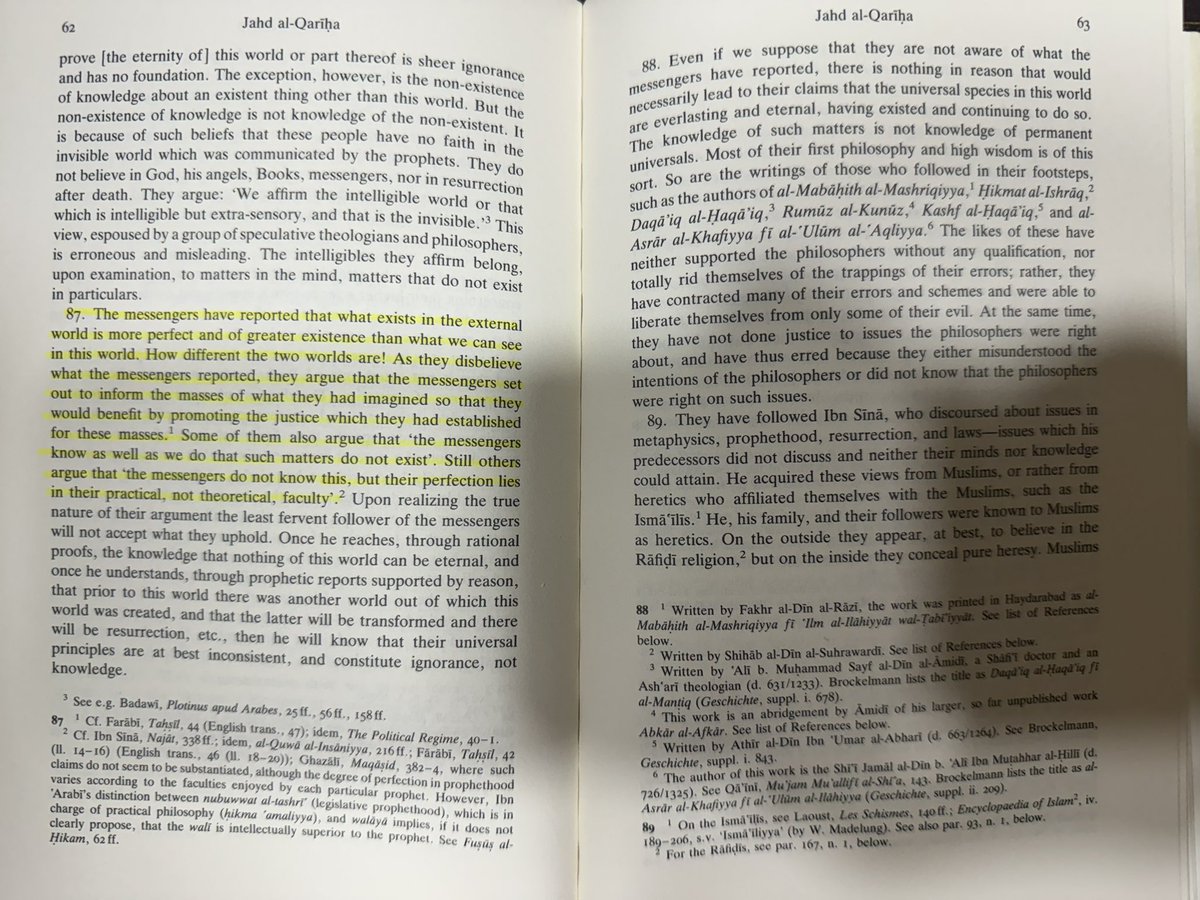
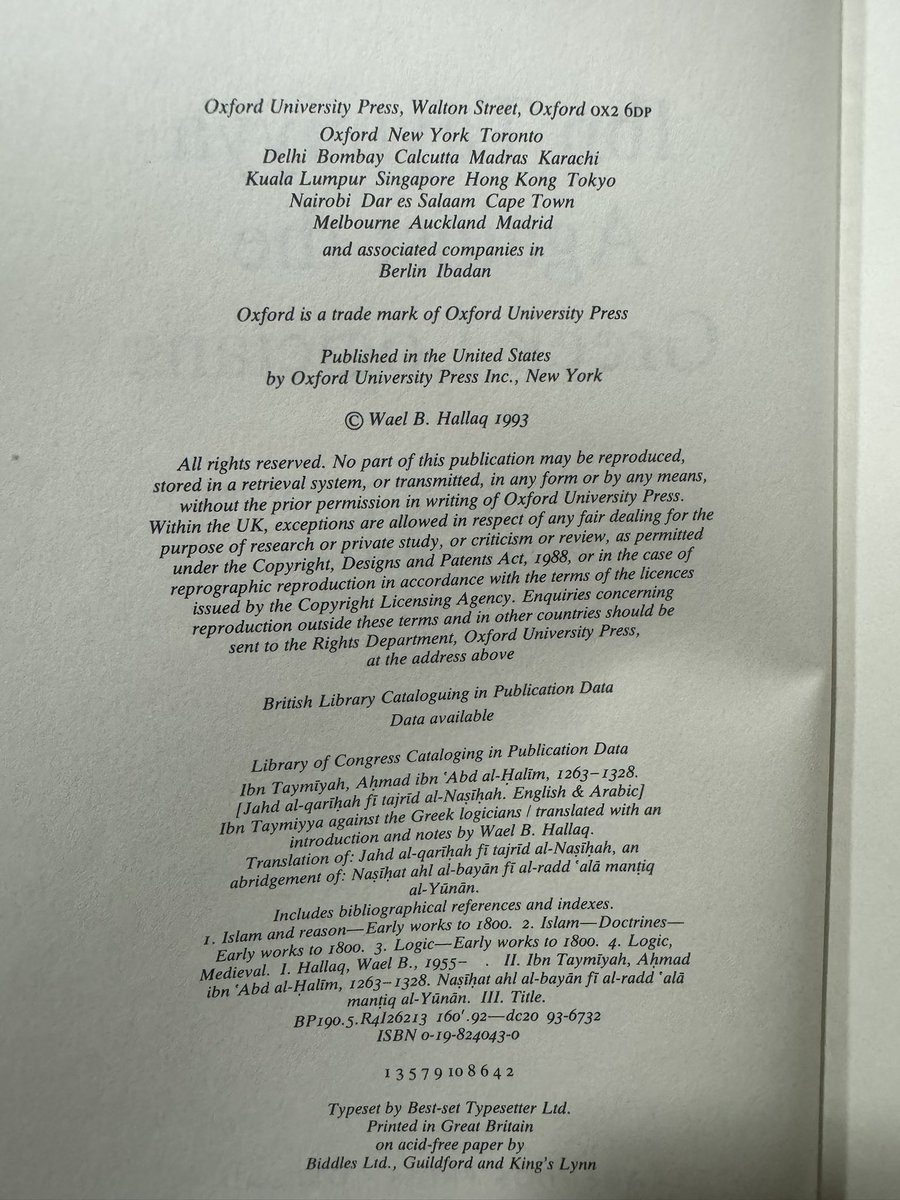
8
22
963