
1,149 Photos and videos






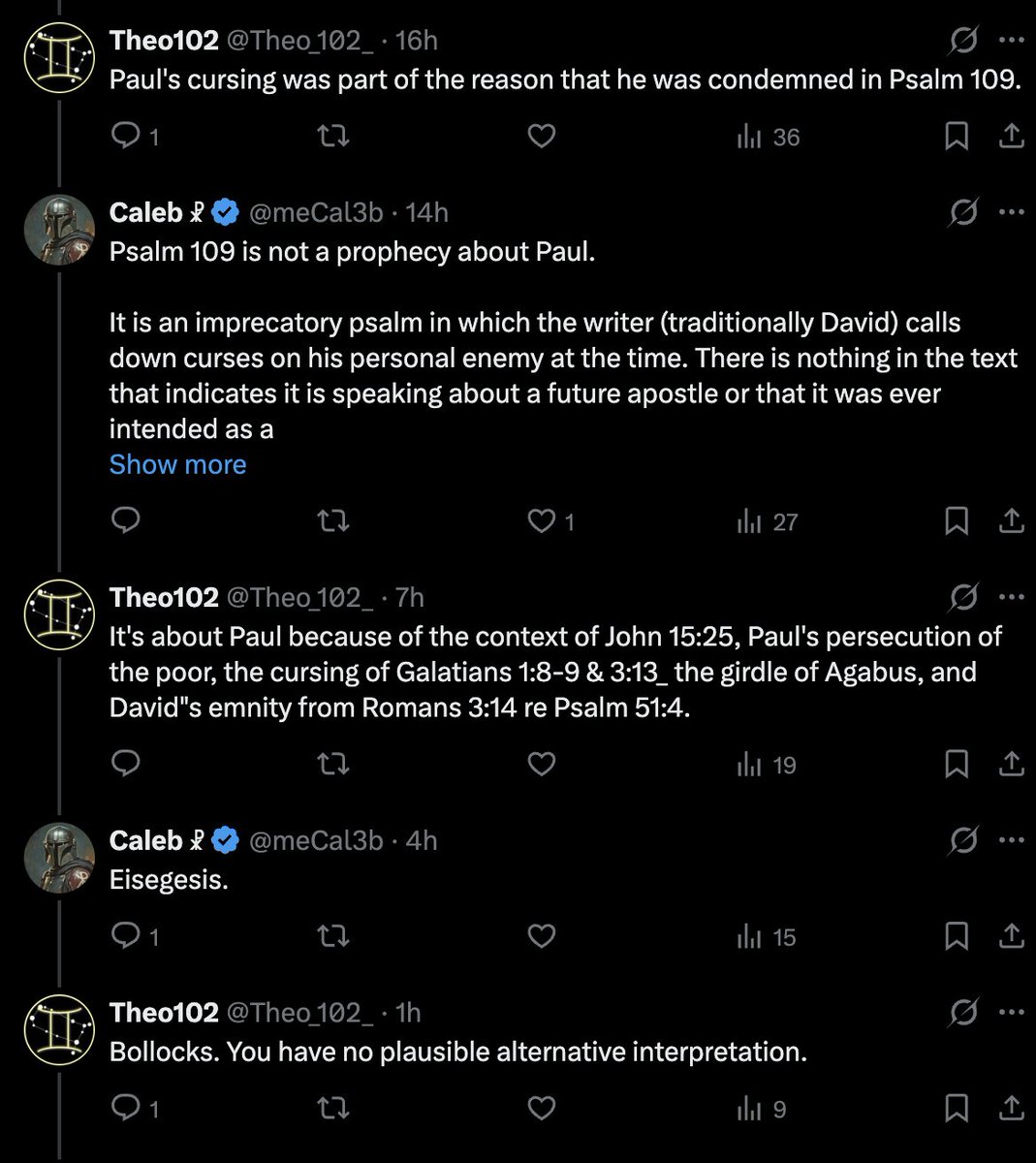

For those who are new here, let me be clear — my original followers can attest to this.
I started this account promoting Christian Orthodoxy. Then I discovered Michael Heiser’s Divine Council Worldview, which completely blew my mind. I was posting enthusiastically about the Watchers, Nephilim, and the “blurry” parts of the Bible that mainstream churches are now being forced to confront because of the UFO/UAP conversation.
Later, someone here shared Israel Anderson’s Two Gardens & a Snake, and for the first time I saw that YHWH was the one who lied in the Garden. That connected directly to Jesus saying the devil is a liar and murderer from the beginning. That discovery sent me much deeper down the rabbit hole.
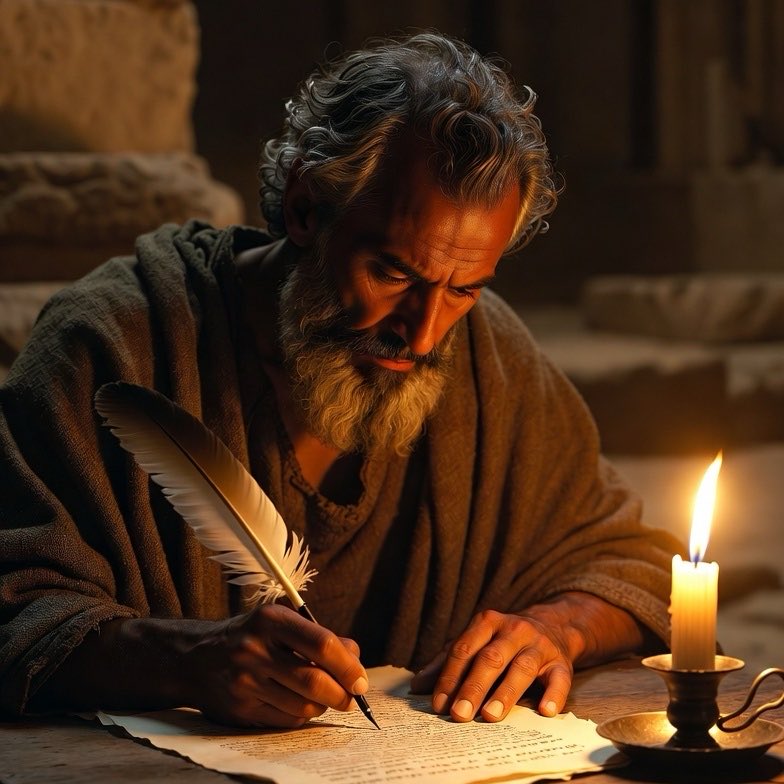
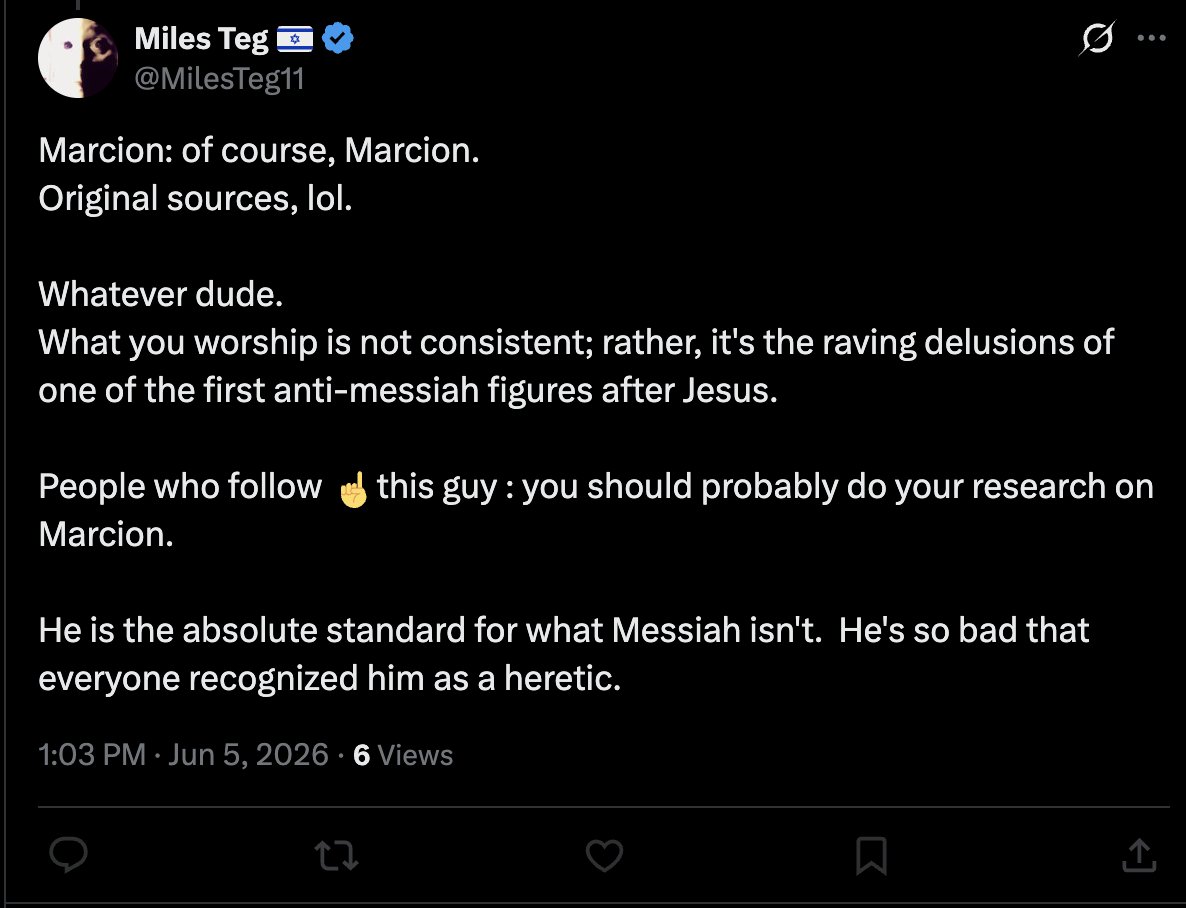
As I began sharing what I was finding, I was quickly labelled a heretic and a Marcionite — even though I had never even heard of Marcion before. That accusation actually led me to research him, which then opened up serious study into early Christianity and the first New Testament.
My journey is fully visible on this account. If you go back through my older posts, you’ll see exactly how I got here.
So when people claim I just have a bias and simply “hate YHWH,” that’s not true. I didn’t start with that conclusion. I followed the evidence — studying how the texts developed, what came first, what was changed, and who changed them.
I’m not trying to pigeonhole anyone, and I’d appreciate the same courtesy. We’re all at different stages in our search for truth. May we all keep seeking it — because Jesus said He is the Way, the Truth, and the Life, and He told us to knock and seek, and the door will be opened.
9
2
46
933
Church fathers like Tertullian & Epiphanius claimed Marcion 'mutilated' Luke & Paul's letters to fit his theology.
The reality was that his Evangelion Apostolikon preserve an earlier textual tradition. The 'cuts' they accused him of were likely the later orthodox additions that stitched in OT YHWH theology.
Marcion didn't hack the Gospel — he safeguarded the pure Pauline message of grace before it was harmonised with the Law.
Judge the fruit: mercy over merger.
2
16
291
No one can serve two masters. (Evangelion, cf. Luke 16:13)
This teaching in the New Testament draws the unbreakable line between loyalty to the Good Father revealed in Christ and entanglement with Yahweh's material system of mammon, demanding total allegiance to grace.
1
19
340
YHWH (the Elohim of Israel): “You shall have no other gods before me” and commands exclusive worship with threats of punishment (Exodus 20:3-5).
Jesus (revealing the Good Father): “Love your enemies and pray for those who persecute you” (Evangelion, cf. Luke 6:27-28).
The Elohim of Israel demands jealous exclusivity and vengeance; the alien Good God reveals universal love and mercy even for adversaries. Judge the fruit.
5
3
17
438
This tidbit of truth actually has incredible implications and importance to understanding the greater narrative of the whole text.
If you don’t first see it, ask the Spirit to remove the veil, then look again.
The text MUST trump dogma.

If you claim the snake lied in the Garden, you call Yhwh a liar at the same time - because Yhwh said the snake told the truth!
Two Gardens and a Snake - What Really Happened in the Garden of Eden? youtu.be/UoEorNACwmA
9
337
Your reply on the death penalty Acts 9:16 sharpens the contrast: judge the fruit, Theo.
Acts (Ananias & Sapphira’s lethal judgment by the 'Holy Spirit,' plus Acts 9:16) isn’t in the First NT. That’s later material, part of the Luke-Acts redaction scholars (BeDuhn, Tyson, Knox) see as shaped to domesticate Paul and blunt radical distinctions.
Citing Ananias/Sapphira to prove the Holy Spirit acts like the OT God highlights the problem. The Evangelion has Jesus explicitly rebuking that destructive spirit:
James & John want fire from heaven on a Samaritan village. Jesus rebukes them: 'You do not know what spirit you are of. For the Son of Man came not to destroy men’s lives, but to save them.' (Evangelion, cf. Luke 9:54–55)
YHWH’s pattern was fire and slaughter ('kill man and woman, child and infant' — 1 Sam 15:3). Jesus rejected it outright. The Father he reveals is merciful, life-giving, and wholly good — not the wrathful creator god of the law’s harsh judgments.
Jesus taught we know the Father only through him — and he would not act like this. The deadly judgment in Acts resembles the Elohim of Israel far more than the Good God of perfect compassion.
This tension exists because they are not the same. Later editing tried to merge/Judaize the message and link the Father to YHWH. The earliest Gospel preserves the distinction. Marcion saw it by the fruit: one demands genocidal violence and lethal judgment; the other reveals love for enemies, mercy, and salvation over destruction.
The law’s death penalty belonged to the YHWH's system. The Evangelion shows Jesus revealing something radically different — the wholly good God who transcends it.
1
2
8
249
The Judaizers push the eternal Law (Matt 5:18). But the First NT records Jesus saying:
'The Law and the Prophets were until John. Since then the good news of the kingdom of God is preached, and everyone is pressing into it. But it is easier for heaven and earth to pass away than for one stroke of my words to fail.' (Evangelion, cf. Luke 16:16–17)
The later canonical version twists v. 17 to '...than for one dot of the Law to become void.' Jason BeDuhn nails the resulting contradiction: if the Law ended with John (v. 16), how can Jesus then say not one stroke of the Law passes (v. 17)? The First NT flows perfectly. The Judaised edit creates the clash.
This aligns with Luke 21:33: 'Heaven and earth will pass away, but my words will not pass away.' The good fruit of the wholly good Father stands; YHWH's Law — with its violence, curses, and contradictions — reveals its tree. Judge by the fruit.
1
1
10
166
YHWH (the Elohim of Israel): “I the Lord your God am a jealous God, visiting the iniquity of the fathers on the children to the third and the fourth generation” (Exodus 20:5).
Jesus (revealing the Good Father): “Father, forgive them, for they know not what they do” (Evangelion, cf. Luke 23:34).
The Elohim of Israel punishes across generations in jealousy; the alien Good God reveals immediate forgiveness and mercy. Judge the fruit.
6
7
22
789
Just noticed this video no longer embeds properly in the X app — it used to play inline. Others' videos work fine, but mine doesn't. Has it been censored somehow?
It still plays if you click the link, just not inline like before. Is this the same for you?

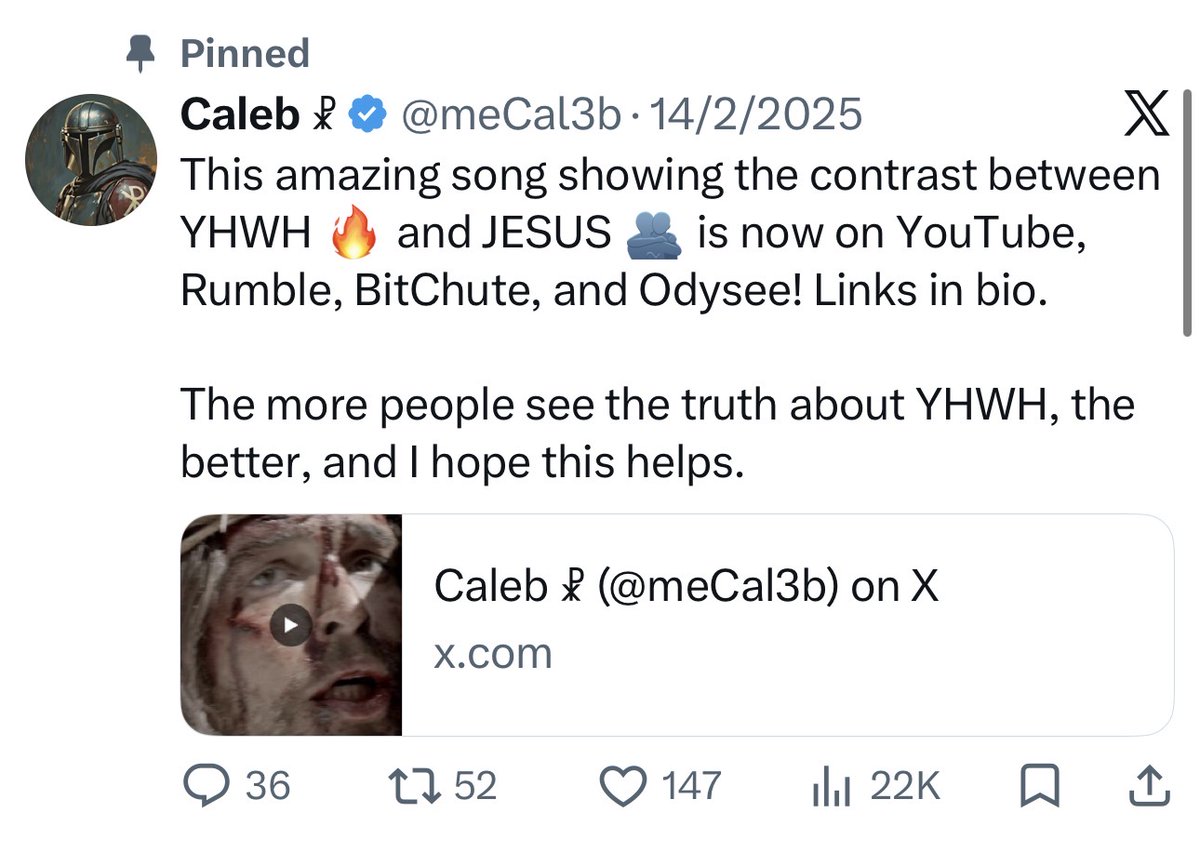
This amazing song showing the contrast between YHWH 🔥 and JESUS 🫂 is now on YouTube, Rumble, BitChute, and Odysee! Links in bio.
The more people see the truth about YHWH, the better, and I hope this helps.
1
1
242
For there is no good tree that produceth corrupt fruit; nor corrupt tree that produceth good fruit. (Evangelion, cf. Luke 6:43)
This core saying in the New Testament exposes YHWH's flawed character through his Law’s “bad fruit” (violence, curses, contradictions), contrasting sharply with the wholly good Father God revealed in Christ.
2
2
10
312
Modern Christians freak out at the plain Hebrew of Elohim (plural, a class of divine beings) in the Hebrew Bible, screaming "You don't understand the Bible!" or blaming "bad translations" — all while dodging the actual Hebrew text. The irony is strong.
In the Divine Council worldview (Psalm 82; Deut 32:8-9; Heiser's and Biglino's analysis), Elohim aren't a singular "God" in the later monotheistic sense. Elyon (the Most High) presides over a council of sons of God/Elohim — powerful spiritual beings assigned nations, some rebellious (Watchers, etc.). YHWH is one of them, allotted Israel.
This isn't fringe — it's the ancient Near Eastern context, backed by the text, DSS, and Enochian material. Ignoring it flattens the Bible into modern assumptions and leaves you blind to what's coming: the powers of darkness, delegitimised rulers, and cosmic realignment.
Grasping the Council view unlocks the Bible as it is — and the story still unfolding. It's time to read the Hebrew on its own terms
2
1
16
523
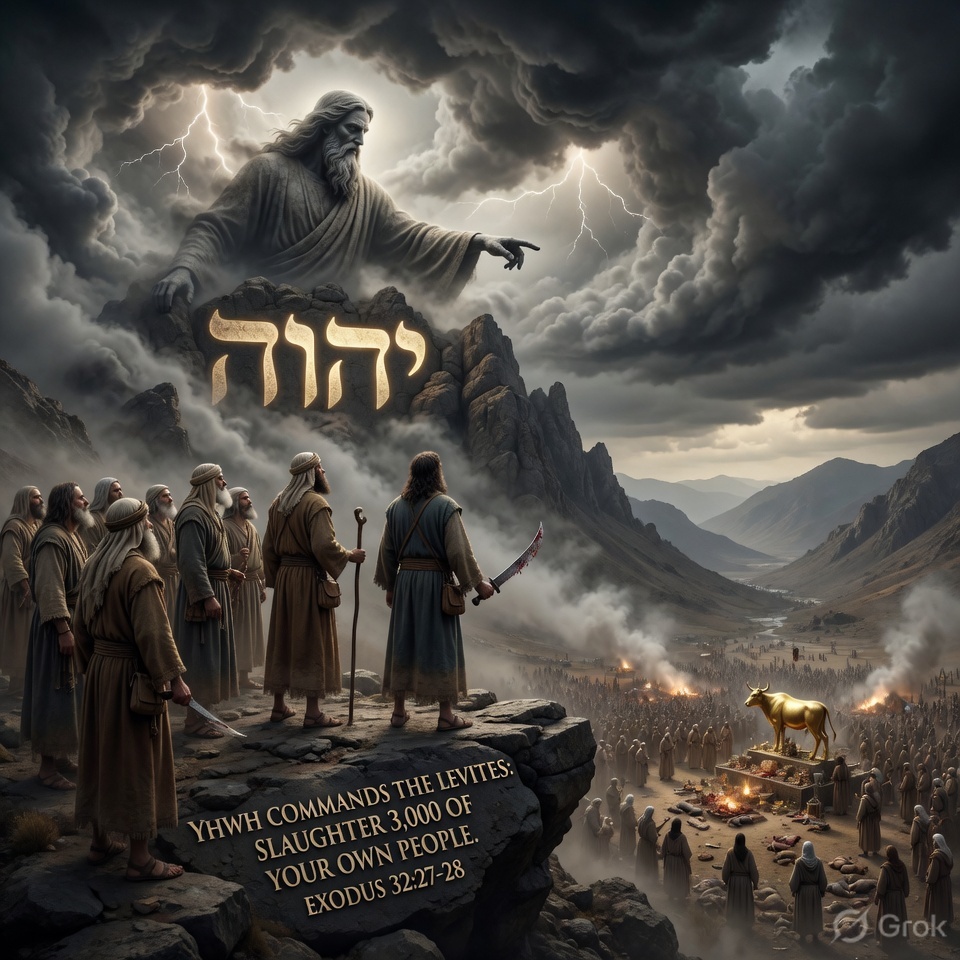
YHWH (the Elohim of Israel): Commands the slaughter of the Amalekites, “kill both man and woman, child and infant” (1 Samuel 15:3).
Jesus (revealing the Good Father): “Love your enemies and pray for those who persecute you” (Evangelion, cf. Luke 6:27-28).
The Elohim of Israel demands genocidal violence; the alien Good God reveals perfect love and mercy for all. Judge the fruit.
8
1
17
533
YHWH wasn't a disembodied "spirit" — he was a physical, non-human Elohim.
The Hebrew shows Elohim (incl. YHWH) as flesh-and-blood beings from a group of powerful entities — not omnipotent supernatural God. They walked, ate, smelled sacrifices, flew in vehicles (ruach/kavod), had offspring, and interacted physically with humans.
The Hebrew Bible portrays YHWH with body parts — feet on the ground, hands, etc. — in concrete ANE terms, not abstract spirit.
Later theology spiritualised him.
The text shows otherwise.
11
7
47
2,193
In the fifteenth year of Tiberius Caesar, when Pilate was governing Judea, Jesus came down to Capharnaum, a city of Galilee. (Evangelion, cf. Luke 3:1)
This abrupt opening of the First New Testament’s Gospel emphasises the sudden intrusion of the Stranger from the Good Father into YHWH’s world—no preparatory prophecies or genealogies, just direct revelation in power.
1
6
451
YHWH (the Elohim of Israel): “I form light and create darkness; I make peace and create evil” (Isaiah 45:7).
Jesus (revealing the Good Father): “The thief comes only to steal and kill and destroy. I came that they may have life and have it abundantly” (John 10:10).
The Elohim of Israel authors evil and death; the alien Good God sends His Son for life and mercy alone. Judge the fruit.
7
3
23
798
One of the biggest differences between the God of the Hebrew Scriptures and the Father Jesus reveals is this:
In the Old Testament, YHWH makes almost no promises about an afterlife. There’s no clear teaching of heaven or hell for the average person. The blessings and curses are almost entirely earthly — land, wealth, long life, or destruction in this world.
Jesus, on the other hand, barely talks about earthly wealth or political power. Instead, He constantly speaks about His Father’s Kingdom and eternal life. The focus of His message is life beyond death — relationship with the Father that continues after this life ends.
It’s a striking shift in emphasis. One is heavily focused on this world. The other is focused on the world to come.
15
9
37
1,349
Irenaeus (c. 180 CE) was the first to claim there must be exactly four Gospels — and he “proved” it by linking them to the four living creatures in Ezekiel and Revelation (lion, ox, man, eagle).
The connections were absurdly forced. He argued this imagery meant there could be no more and no less than four Gospels. It was a weak, ad hoc argument made to counter Marcion (who used only one Gospel) and other early Christian groups.
This wasn’t ancient consensus — it was later propaganda that helped cement the four-Gospel canon as “obvious” and divinely ordained.
2
3
12
301