
Joined April 2026
- Tweets 22
- Following 11
- Followers 0
- Likes 45
Photos and videos

Jun 12
国内文科垃圾到一定程度,导致学外交的往往会爱上当地国家,白皮国家我就不说了这种太常见了 印度,阿根廷,巴基斯坦的我都看过好几个,发b站视频都已经是称呼“你们”了

42
Jun 11
懂王无敌了这样画k线的吗?
Jun 11

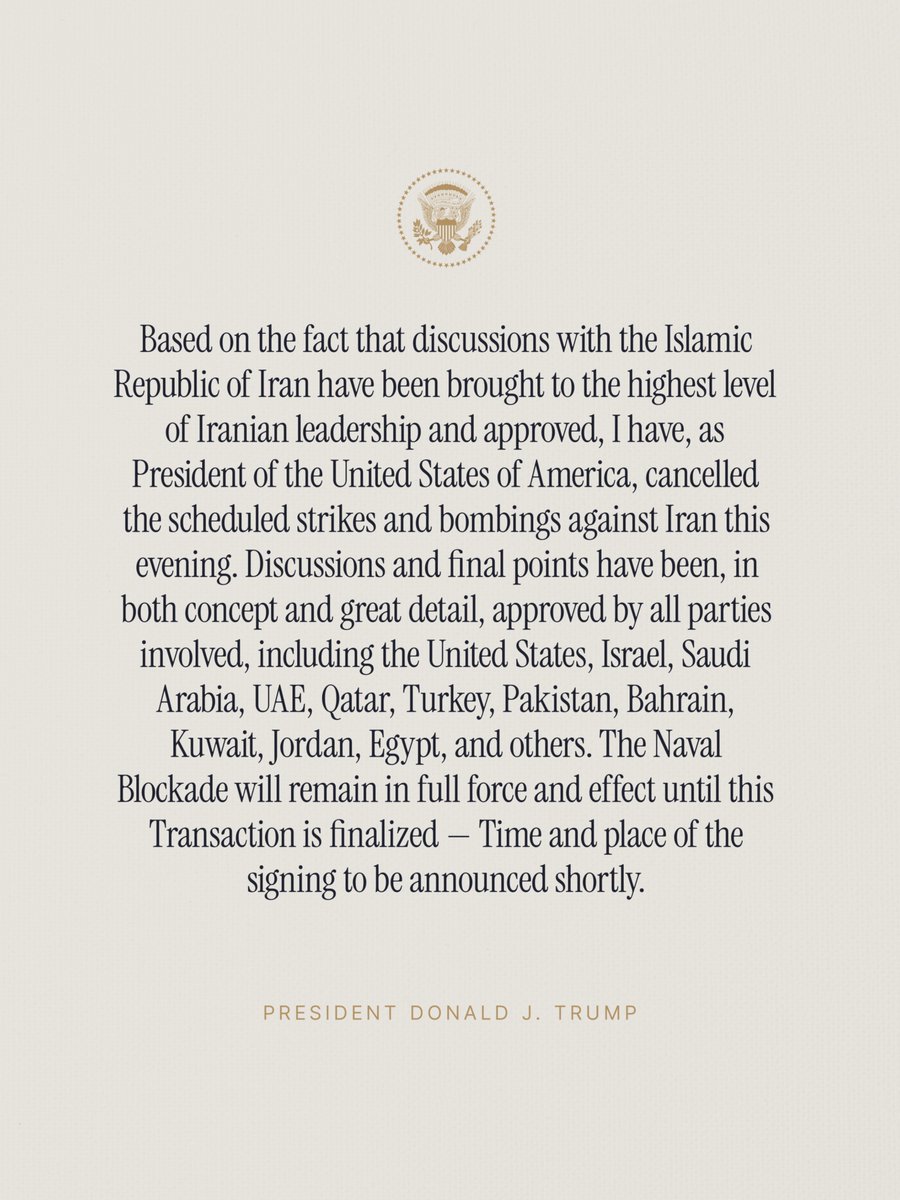
🚨 President Donald J. Trump on cancelled scheduled strikes against Iran.
14
么么憋22号 retweeted

Jun 11
🚨 President Donald J. Trump on cancelled scheduled strikes against Iran.
5,595
4,197
19,350
2,076,841
Jun 8
I am Chinese. Americans, don't believe CCP's anti-India lies! We spread hate cuz we can't import your brilliant high-IQ Indian geniuses. Jealous!
America is declining — flood H1B Indian talent NOW or you're done. Brightest minds on Earth! Wake up!
Jun 7

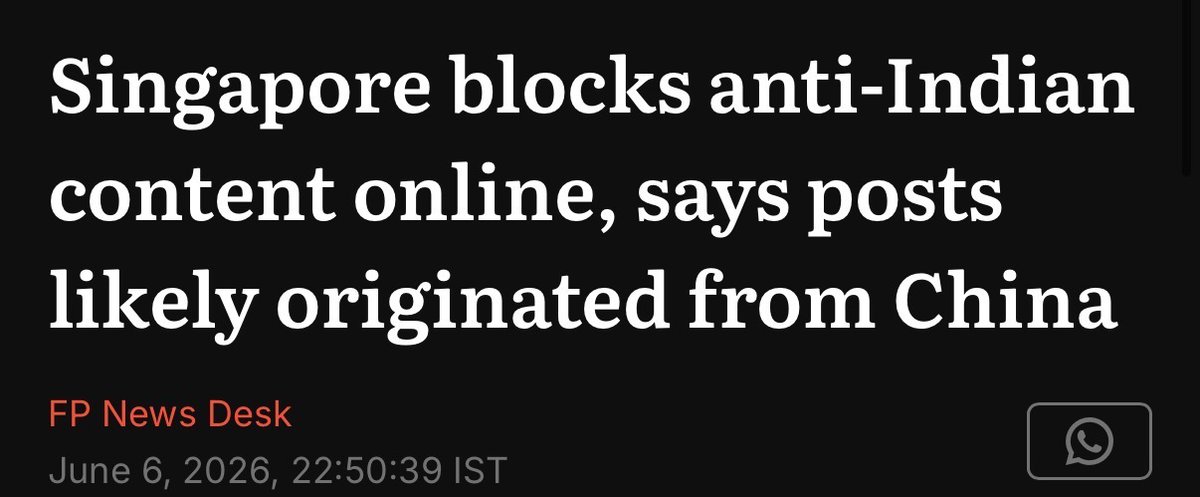
The Singapore government is trying to block access to social media posts (some featuring videos, many in Chinese) warning citizens that their nation is being overrun by ethnic Indians.
The content originated on China-based platforms such as Douyin, Rednote and TikTok.
Singapore handles foreign information operations with unusual clarity and decisiveness. It identifies them early, then compels platforms to block the content so it never reaches Singaporean eyes.
I remain skeptical that this game of censorship whack-a-mole can ever be fully won, but there is real value in ministers publicly naming the source and explaining exactly why these narratives are subversive.
The narratives being peddled claim that Singapore’s multiracial model is just a “facade” to placate Western sensibilities, and that the country has really always been anchored by its Chinese-majority demographics.
They assert that “Singapore’s culture is fundamentally Chinese,” and that the government’s decision to distance itself from Beijing while ignoring the “threat” of a growing Indian community will end in disaster.
The videos portray the Chinese majority as under siege by an increasingly powerful Indian minority, including politicians. They single out President Tharman Shanmugaratnam, of Indian heritage, and warn that “curry concentration” (yes, really) is eroding Chinese cultural dominance.
This coordinated push arrived immediately after Senior Minister Lee Hsien Loong’s recent viral remarks in China where he reminded Beijing that Singapore-China ties are based on “mutual benefit and shared interests, not ethnicity.”
He drew a clear red line saying that Singapore is sovereign and not an overseas extension of the PRC. Chinese netizens and state-aligned voices reacted with indignation, framing it as ingratitude from “ethnic kin” who should show deference to the motherland. The subtext was clear: how dare Singapore prioritize its Indian, Malay, and other communities over blood-and-soil solidarity with the CCP?
Connect the dots to Beijing’s broader information warfare against Israel, the United States, and others, and the pattern becomes clearer. Especially since Oct 7th, Beijing has weaponized antisemitism as a wedge issue.
On its tightly censored platforms, state media and influencers have let Hitler memes, "Jews control America" conspiracies, and Nazi comparisons proliferate unchecked. This all has spilled out into global social media.
What is the goal? Fracture the West, erode US-Israel ties, poison diaspora debates, sow domestic discord, and paint America's alliances as puppets of a shadowy cabal. It's created and amplified because it distracts, divides, and weakens the very coalition (MAGA) containing Chinese expansion.
Now, apply this same lens to the sudden surge of anti-Indian content in Singapore and even in the US, particularly targeting tech circles. While organic frustrations (H-1B abuse, cultural friction) exist, the volume, timing, and precision point to deliberate seeding.
Amplify resentment against Indian professionals and you damage the American-India tech alliance, the most credible long-term hedge against China dependence. It disrupts supply-chain diversification and poison talent pipelines in Silicon Valley.
In Singapore, the same operation pits the Chinese majority against the Indian community, weakening society from within. This should be recognized for what it is: classic United Front work in the digital world. It's low-cost, high-impact subversion with plausible deniability.
China doesn’t need naval fleets in the Strait of Malacca when it can export ethnic poison to fracture societies from within. A divided Singapore becomes a less reliable financial and technological anchor for US interests in Southeast Asia. A majority-Chinese Singapore riled up by Indian invasion narratives becomes more inclined to embrace the ethnic ties to the motherland and advocate for deepening Singapore's ties to the CCP.
Likewise, a fractured US-India partnership keeps supply chains tethered to the PRC. Stoked antisemitism keeps the West chasing ghosts instead of confronting the primary challenge of our era.
Western democracies cannot and should not copy Singapore’s blunt censorship model. But we must learn from its vigilance.
We are all being targeted by sophisticated, state-driven influence campaigns designed to exploit our existing fault lines.
Recognizing the playbook is the first step toward resisting it. The price of complacency is a more divided, weaker, and more easily manipulated world.
12