Puddin Clarke Endowed Professor, #Lymphoma/#Myeloma @MDAndersonnews; #mantlecelllymphoma, B-Cell Lymphoma Moonshot, MD Anderson bit.ly/2DP6agv views=own
Joined January 2015
- Tweets 3,131
- Following 2,978
- Followers 7,371
- Likes 5,985
675 Photos and videos
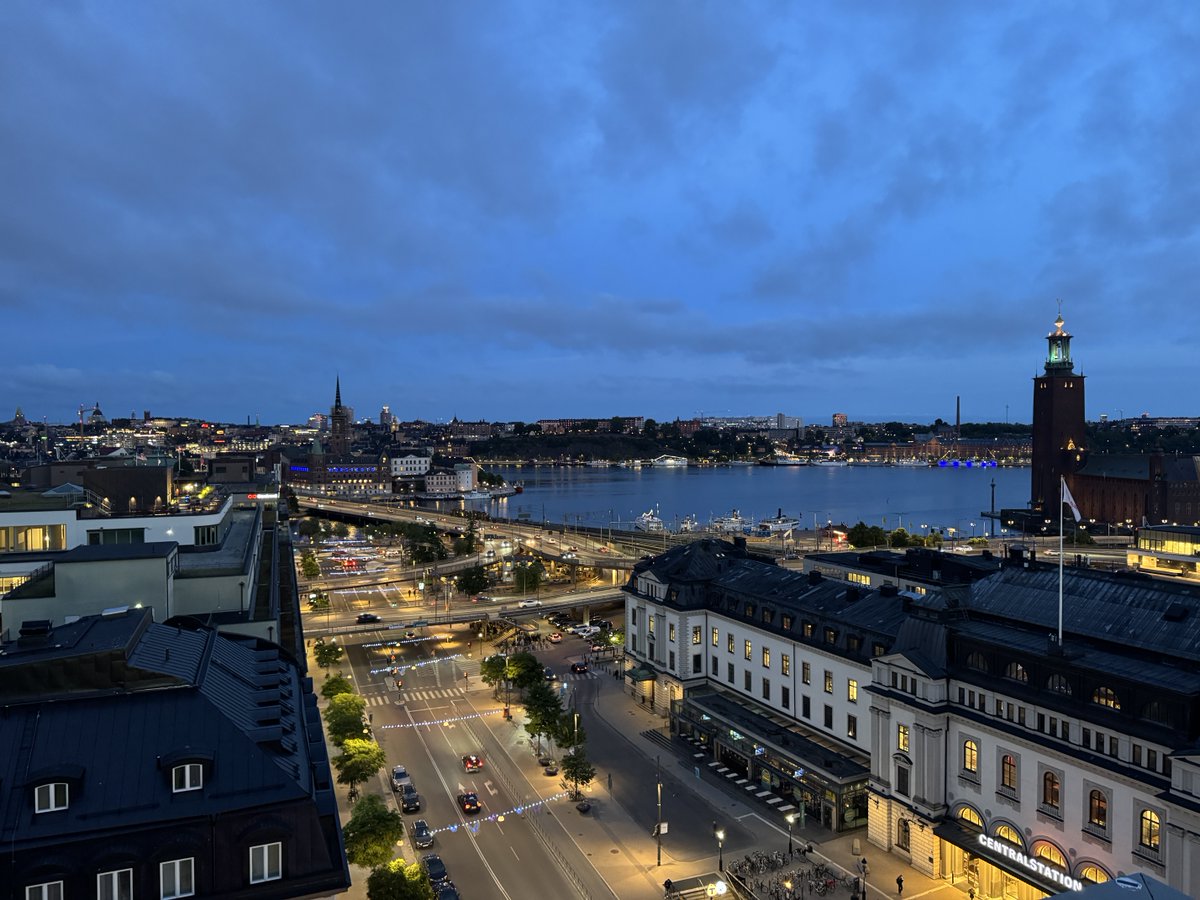







I have been attending the European Hematology Association annul conference in Stockholm, Sweden, lots of data on treatment of lymphoma!
2
34
1,079
There is no better job in the whole wide world than saving patient lives!

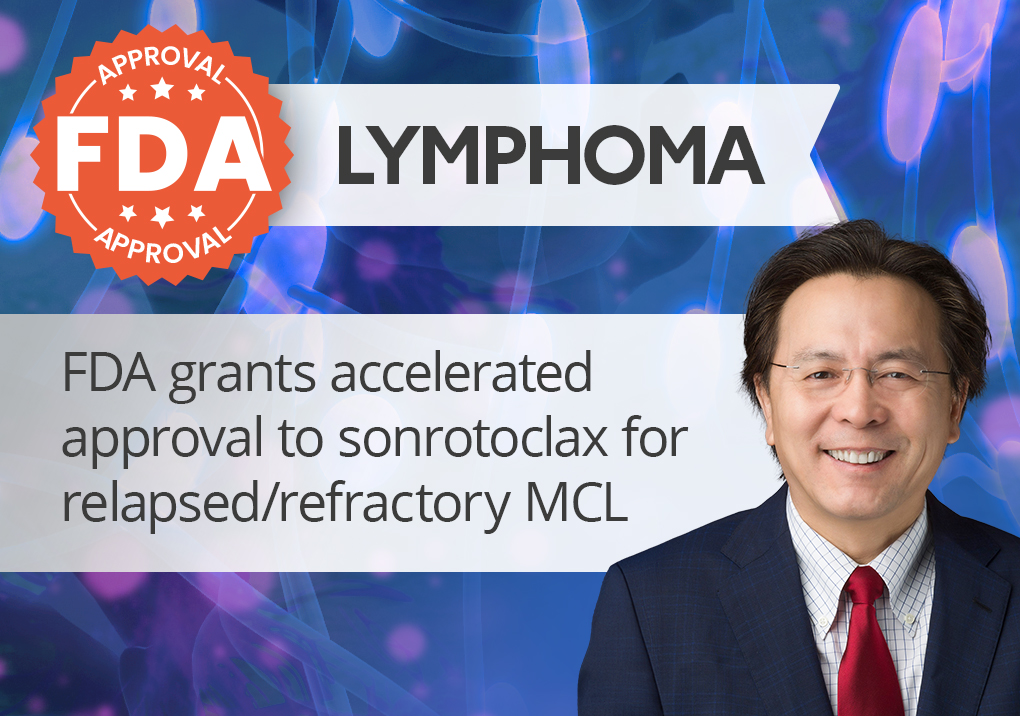
🚨 On May 13, 2026, the FDA granted accelerated approval to sonrotoclax for adults with R/R #MantleCellLymphoma after at least two prior lines of therapy, including a BTK inhibitor.
Find out all the details in our feature article:
📖 ➡️ ow.ly/FWbY50YZygN
Featuring a video interview with leading expert @michaelwangmd.🎥
#LYMsm #Lymphoma #HemOnc #Hematology
4
4
52
2,927
Today we have great news for our patients and their families affected by mantle cell lymphoma! FDA approved a second generation oral Bcl-2 inhibitor Sonrotoclax for relapsed mantle cell lymphoma, congratulations!!!
5
6
75
2,879
Michael Wang, MD retweeted

May 13
#News for #Investors and #Media: The U.S. FDA has granted accelerated approval for our foundational BCL2 inhibitor in relapsed/refractory mantle cell lymphoma — the first and only in R/R #MCL.
Full announcement: ir.beonemedicines.com/news/b…
#Oncology #BeOneOnnovator
1
7
14
1,075
Michael Wang, MD retweeted

This finding on stem-like CAR-T cells is indeed intriguing. It could potentially revolutionize current treatment modalities for B-cell malignancies by eliminating the need for lymphodepletion and reducing the risk of cytokine storms. What do you think this means for the future of CAR-T cell therapies in broader applications? For those interested in diving deeper into topics like this and answering your biomedical questions, check out Sci-Quest, your go-to platform for generating in-depth biomedical reviews: sciqst.com. #Medicine #CAR-T #Innovation
2
7
385
Michael Wang, MD retweeted

May 2
Small but significant study showing superiority of stem-like CAR-T cells (expanded in IL7/IL21/Wnt activation) (no lymphodepletion, better persistency, no cytokine storm etc) to conventional CAR-T for B-cell malignancies. cell.com/cell/fulltext/S0092…
1
5
37
1,878
I was using Lenalidomide to treat myeloma in 2003. After seeing the efficacy of thalidomide and Rituximab combination, I wrote a letter of intention and proposed to Celgene to treat relapsed MCL with lenalidomide-rituximab. My proposal was accepted well.
1
1
18
2,883
Lenalidomide was designed according to the structure of thalidomide. It represents a second-generation IMiD optimized for targeted protein degradation via cereblon, translating into:
Stronger immune modulation
Greater anti-tumor efficacy
Improved tolerability
Less neural toxicity
1
1
18
2,615
Safety
• The regimen was generally well-tolerated.
•The most significant concerns were thromboembolic events (observed in 2 patients) and Grade IV neutropenia (1 patient). Other common side effects included sedation, constipation, and peripheral neuropathy.
2
2
5
1,146
• Overall Response Rate (ORR): Approximately 81% (in a cohort of 16 patients),
• Complete Response (CR) Rate: 31% (5 patients).
• Partial Response (PR) Rate: 50% (8 patients).
• Notably, some patients who were completely resistant to prior chemotherapy achieved a CR.
2
6
1,864
This study was highly influential at the time because it offered a non-chemotherapeutic alternative for patients who had failed standard treatments like CHOP.
1
2
7
1,000
In the early 2000s, Dr. Johannes Drach and his colleagues at the University of Vienna, Austria, conducted a pivotal Phase II study investigating the combination of Thalidomide and Rituximab (R-Thal) for patients with relapsed or refractory mantle cell lymphoma (MCL).
2
6
755
Thalidomide was a legendary drug, initially used as a sedative or an anti nausea medicine often given to pregnant women. It caused severe birth defects globally. This led to one of the largest drug safety disasters in history and fundamentally changed drug regulation worldwide.
2
1
9
1,651
Before the year 2000, melphlan-prednisone, auto stem cell transplant and other chemotherapies were used to treat multiple myeloma. Around the time I joined in 2002, I saw thalidomide being used off label and data on bortezomib from clinical trials.
1
1
16
2,135
I trained as Hematology and Oncology fellow from 1999-2002 and MD Anderson. I got the precious opportunity to stay as faculty in the department of lymphoma and myeloma, the department asked me to see both lymphoma and myeloma patients.
4
3
91
23,849
CAR T cell therapy in mantle cell lymphoma are usually done after BTK inhibition failure. Today FDA approved the usage of brexucabtagene autoleucel in patients who never received BTK inhibition. It is a great step forward!
Apr 2

The @US_FDA has approved breuxcabtagene autoleucel for treating patients with relapsed or refractory mantle cell lymphoma, following a trial led by our Dr. Michael Wang.
Read more: spr.ly/6017B6UJoV #EndCancer
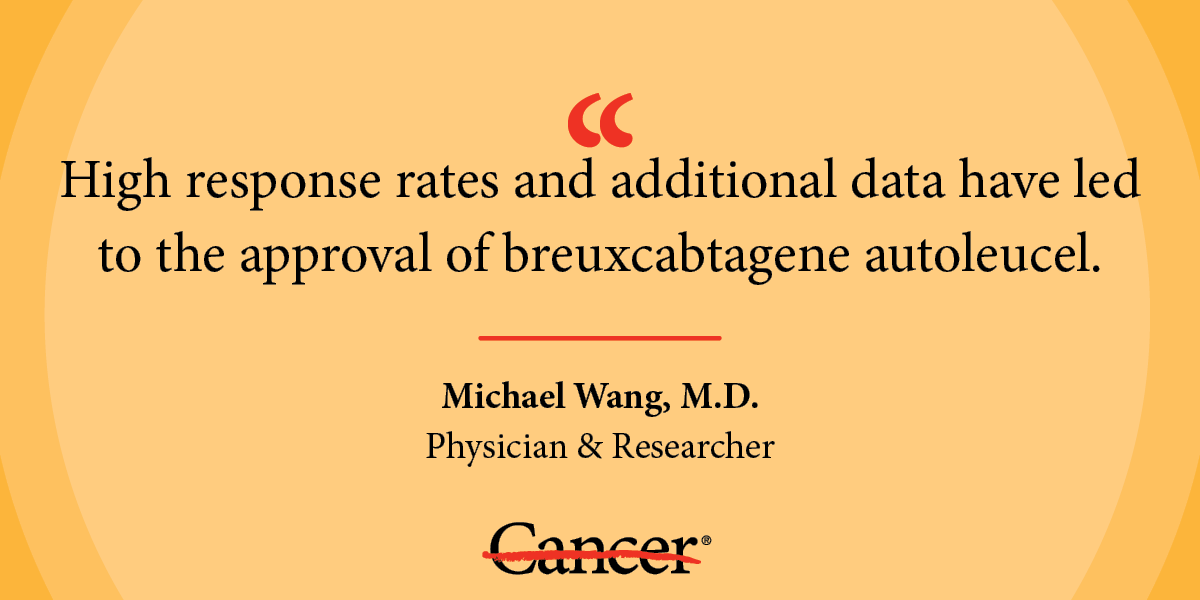
ALT Graphic reads, \"High response rates and additional data have led to the approval of breuxcabtagene autoleucel. Michael Wang, M.D., Physician & Researcher\"
6
10
70
6,421