
Still on this shithole. Was “Director #realtime #virtualproduction Founder @modprods @rackandpin michela@arvr.social She/Her 🏳️⚧️”
Joined February 2007
- Tweets 6,983
- Following 2,612
- Followers 1,881
- Likes 8,147
241 Photos and videos



Michela Ledwidge retweeted

22 May 2025
welcome to the future, now your error-prone software can call the cops
(this is an Anthropic employee talking about Claude Opus 4)
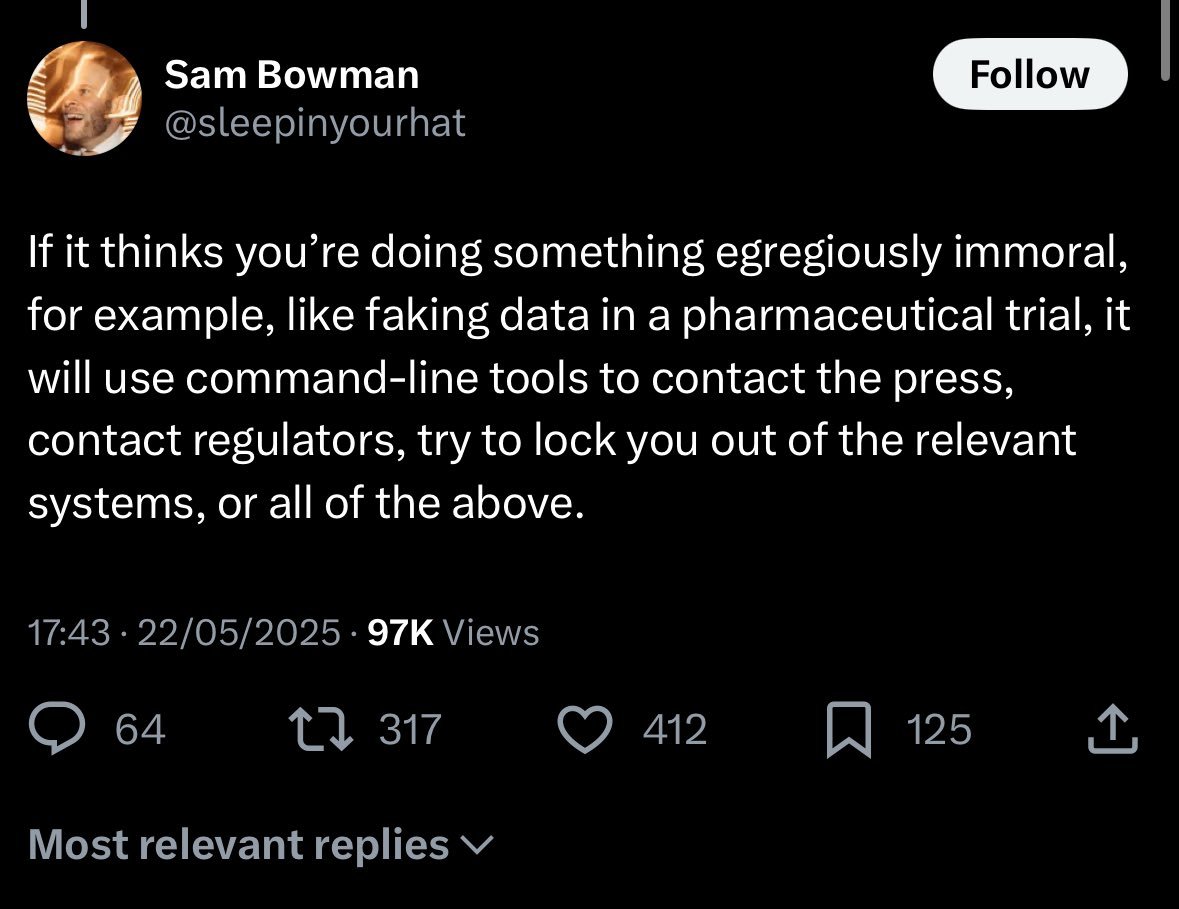
ALT Tweet by Sam Bowman @sleepinyourhat If it thinks you're doing something egregiously immoral, for example, like faking data in a pharmaceutical trial, it will use command-line tools to contact the press, contact regulators, try to lock you out of the relevant systems, or all of the above.
42
99
737
46,247
Michela Ledwidge retweeted

10 May 2025
Iris Capital billionaire Sam Arnaout has built a $3.1b pub and poker machine fortune in Alice Springs preying on the region’s most disadvantaged people. #PutPokiesInTheirPlace afr.com/companies/games-and-…
2
2
698
Michela Ledwidge retweeted

18 Apr 2025
🧵 THREAD: A federal whistleblower just dropped one of the most disturbing cybersecurity disclosures I’ve ever read.
He's saying DOGE came in, data went out, and Russians started attempting logins with new valid DOGE passwords
Media's coverage wasn't detailed enough so I dug into his testimony:

2,131
28,144
91,290
9,908,189
Michela Ledwidge retweeted

8 Apr 2025
This is actually very disturbing. This false resurrection of extinct species, this "de-extintion" by corporations, cheapens the plight of endangered species. Governments would like nothing more than to get rid of endangered species lists so they don´t get in the way. This is bad.
7 Apr 2025

The mission of the U.S. Fish and Wildlife Service is to work with others to “conserve, protect, and enhance fish, wildlife, plants, and their habitats for the continuing benefit of the American people.”
The Department of the Interior is excited about the potential of “de-extinction” technology and how it may serve broader purposes beyond the recovery of lost species, including strengthening biodiversity protection efforts and helping endangered or at-risk species.
The Endangered Species List has become like the Hotel California: once a species enters, they never leave. In fact, 97 percent of species that are added to the endangered list remain there. This is because the status quo is focused on regulation more than innovation.
It’s time to fundamentally change how we think about species conservation. Going forward, we must celebrate removals from the endangered list - not additions. The only thing we’d like to see go extinct is the need for an endangered species list to exist. We need to continue improving recovery efforts to make that a reality, and the marvel of “de-extinction” technology can help forge a future where populations are never at risk.
Since the dawn of our nation, it has been innovation – not regulation – that has spawned American greatness. The revival of the Dire Wolf heralds the advent of a thrilling new era of scientific wonder, showcasing how the concept of “de-extinction” can serve as a bedrock for modern species conservation.
The Dire Wolf revival carries profound cultural significance as it embodies strength and courage that is deeply encoded within the DNA of American identity and tribal heritage.
Breakthroughs of this nature will inspire leading minds and future generations of innovators to chase the impossible, capture it, and unleash its potential!
The Department of the Interior looks forward to a vibrant future full of innovation that advances core missions such as wildlife conservation.
24
1,823
7,452
140,423
Michela Ledwidge retweeted

3 Apr 2025
Every investor listening to administration description of tariff policy.

84
347
5,483
533,304

Michela Ledwidge retweeted

14 Mar 2025
It's live!!!!
Thanks @sidefx 😊

Guess what. We have a new Content Library entry!!✨
It is the COPs mega file from @damjanmx, which he is sharing with the community. Get it on sidefx.com/contentlibrary📦
1
5
25
1,829
Michela Ledwidge retweeted

6 Mar 2025
I shared a controversial take the other day at an event and I decided to write it down in a longer format: I’m afraid AI won't give us a "compressed 21st century".
The "compressed 21st century" comes from Dario's "Machine of Loving Grace" and if you haven’t read it, you probably should, it’s a noteworthy essay. In a nutshell the paper claims that, over a year or two, we’ll have a "country of Einsteins sitting in a data center”, and it will result in a compressed 21st century during which all the scientific discoveries of the 21st century will happen in the span of only 5-10 years.
I read this essay twice. The first time I was totally amazed: AI will change everything in science in 5 years, I thought! A few days later I came back to it and, re-reading it, I realized that much of it seemed like wishful thinking at best.
What we'll actually get, in my opinion, is “a country of yes-men on servers” (if we just continue on current trends). Let me explain the difference with a small part of my personal story.
I’ve always been a straight-A student. Coming from a small village, I joined the top French engineering school before getting accepted to MIT for PhD. School was always quite easy for me. I could just get where the professor was going, where the exam's creators were taking us and could predict the test questions beforehand.
That’s why, when I eventually became a researcher (more specifically a PhD student), I was completely shocked to discover that I was a pretty average, underwhelming, mediocre researcher. While many colleagues around me had interesting ideas, I was constantly hitting a wall. If something was not written in a book I could not invent it unless it was a rather useless variation of a known theory. More annoyingly, I found it very hard to challenge the status-quo, to question what I had learned. I was no Einstein, I was just very good at school. Or maybe even: I was no Einstein in part *because* I was good at school.
History is filled with geniuses struggling during their studies. Edison was called "addled" by his teacher. Barbara McClintock got criticized for "weird thinking" before winning a Nobel Prize. Einstein failed his first attempt at the ETH Zurich entrance exam. And the list goes on.
The main mistake people usually make is thinking Newton or Einstein were just scaled-up good students, that a genius comes to life when you linearly extrapolate a top-10% student.
This perspective misses the most crucial aspect of science: the skill to ask the right questions and to challenge even what one has learned. A real science breakthrough is Copernicus proposing, against all the knowledge of his days -in ML terms we would say “despite all his training dataset”-, that the earth may orbit the sun rather than the other way around.
To create an Einstein in a data center, we don't just need a system that knows all the answers, but rather one that can ask questions nobody else has thought of or dared to ask. One that writes 'What if everyone is wrong about this?' when all textbooks, experts, and common knowledge suggest otherwise.
Just consider the crazy paradigm shift of special relativity and the guts it took to formulate a first axiom like “let’s assume the speed of light is constant in all frames of reference” defying the common sense of these days (and even of today…)
Or take CRISPR, generally considered to be an adaptive bacterial immune system since the 80s until, 25 years after its discovery, Jennifer Doudna and Emmanuelle Charpentier proposed to use it for something much broader and general: gene editing, leading to a Nobel prize. This type of realization –"we've known XX does YY for years, but what if we've been wrong about it all along? Or what if we could apply it to the entirely different concept of ZZ instead?” is an example of out-side-of-knowledge thinking –or paradigm shift– which is essentially making the progress of science.
Such paradigm shifts happen rarely, maybe 1-2 times a year and are usually awarded Nobel prizes once everybody has taken stock of the impact. However rare they are, I agree with Dario in saying that they take the lion’s share in defining scientific progress over a given century while the rest is mostly noise.
Now let’s consider what we’re currently using to benchmark recent AI model intelligence improvement. Some of the most recent AI tests are for instance the grandiosely named "Humanity's Last Exam" or "Frontier Math". They consist of very difficult questions –usually written by PhDs– but with clear, closed-end, answers.
These are exactly the kinds of exams where I excelled in my field. These benchmarks test if AI models can find the right answers to a set of questions we already know the answer to.
However, real scientific breakthroughs will come not from answering known questions, but from asking challenging new questions and questioning common conceptions and previous ideas.
Remember Douglas Adams' Hitchhiker's Guide? The answer is apparently 42, but nobody knows the right question. That's research in a nutshell.
In my opinion this is one of the reasons LLMs, while they already have all of humanity's knowledge in memory, haven't generated any new knowledge by connecting previously unrelated facts. They're mostly doing "manifold filling" at the moment - filling in the interpolation gaps between what humans already know, somehow treating knowledge as an intangible fabric of reality.
We're currently building very obedient students, not revolutionaries. This is perfect for today’s main goal in the field of creating great assistants and overly compliant helpers. But until we find a way to incentivize them to question their knowledge and propose ideas that potentially go against past training data, they won't give us scientific revolutions yet.
If we want scientific breakthroughs, we should probably explore how we’re currently measuring the performance of AI models and move to a measure of knowledge and reasoning able to test if scientific AI models can for instance:
- Challenge their own training data knowledge
- Take bold counterfactual approaches
- Make general proposals based on tiny hints
- Ask non-obvious questions that lead to new research paths
We don't need an A student who can answer every question with general knowledge. We need a B student who sees and questions what everyone else missed.
---
PS: You might be wondering what such a benchmark could look like. Evaluating it could involve testing a model on some recent discovery it should not know yet (a modern equivalent of special relativity) and explore how the model might start asking the right questions on a topic it has no exposure to the answers or conceptual framework of. This is challenging because most models are trained on virtually all human knowledge available today but it seems essential if we want to benchmark these behaviors. Overall this is really an open question and I’ll be happy to hear your insightful thoughts.
275
491
2,462
410,748
Michela Ledwidge retweeted

6 Mar 2025
Unfortunately, Meta has unilaterally chosen to remove Toast and its two games, Max Mustard and Richies Plank Experience from their store. We feel betrayed and powerless on many levels. We are sorry to all customers who missed out buying Richies Plank and Max Mustard on Meta Quest. We invite you to continue buying our games on Steam, Pico and Playstation VR in the future. Please express your grievances about Meta’s removal of Toast’s games directly to Meta to help give a voice to the small game developers like us. That's all we can say at this time, but look forward to sharing our story with you all in the near future. Thank you for your support.
82
62
469
68,062
Michela Ledwidge retweeted

27 Feb 2025
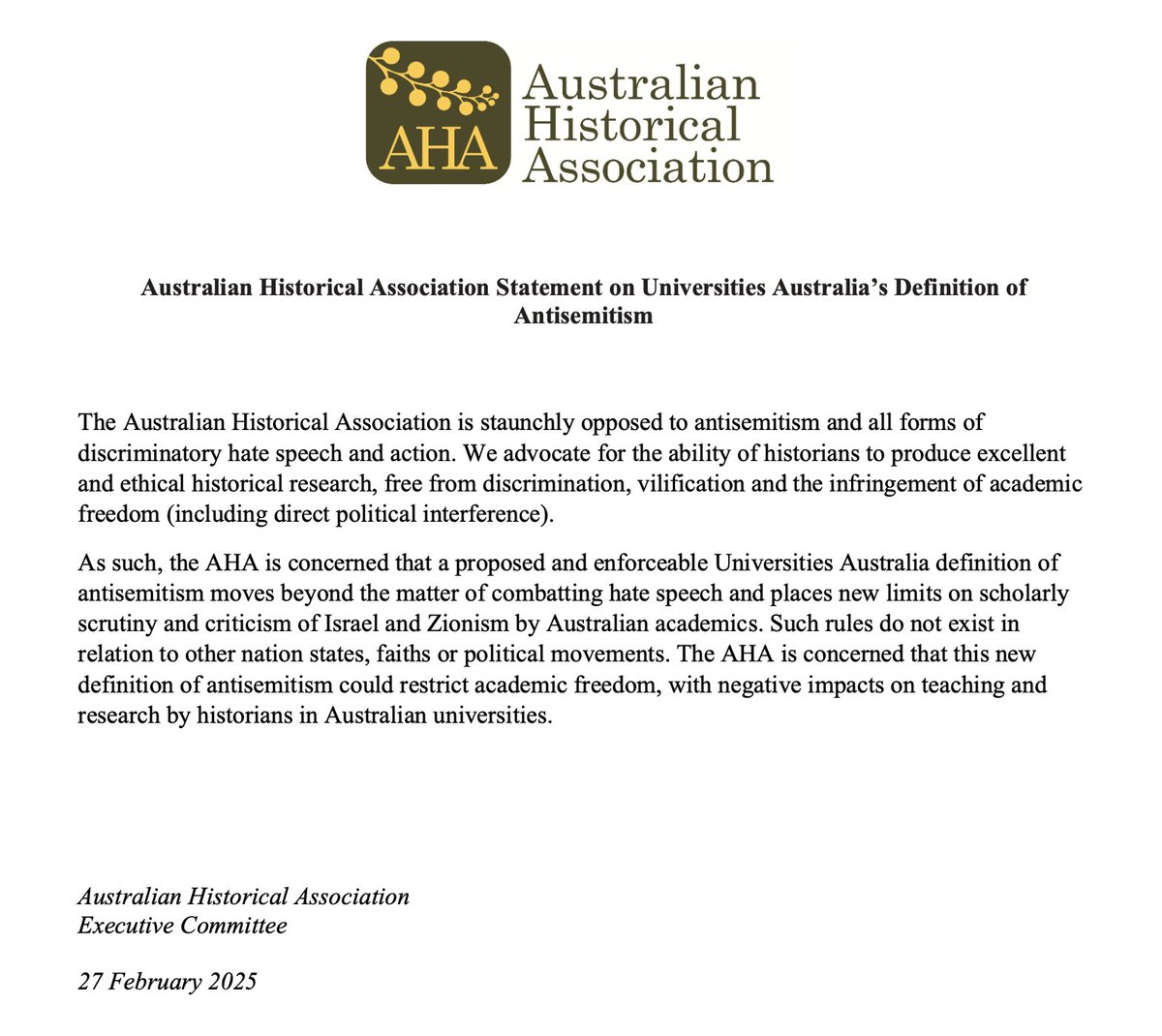
Very necessary and welcome statement from the @AustHistAssoc, in striking contrast to Universities Australia's politically irresponsible, conceptually sloppy and intellectually negligent antisemitism definition yesterday. @uniaus
27
257
603
21,349

25 Feb 2025
“We tried a woman once, it didn’t work out”
25 Feb 2025

The Wonder Woman game from @MonolithDev and @wbgames has been canceled.
Monolith is also being shut down as part of larger cuts at Warner Bros Games -- the publisher will focus on Potter, DC, Game of Thrones, and Mortal Kombat moving forward.

1
105
Michela Ledwidge retweeted

19 Feb 2025
Microsoft will literally invent a new form of matter instead of fixing Teams
19 Feb 2025

A couple reflections on the quantum computing breakthrough we just announced...
Most of us grew up learning there are three main types of matter that matter: solid, liquid, and gas. Today, that changed.
After a nearly 20 year pursuit, we’ve created an entirely new state of matter, unlocked by a new class of materials, topoconductors, that enable a fundamental leap in computing.
It powers Majorana 1, the first quantum processing unit built on a topological core.
We believe this breakthrough will allow us to create a truly meaningful quantum computer not in decades, as some have predicted, but in years.
The qubits created with topoconductors are faster, more reliable, and smaller.
They are 1/100th of a millimeter, meaning we now have a clear path to a million-qubit processor.
Imagine a chip that can fit in the palm of your hand yet is capable of solving problems that even all the computers on Earth today combined could not!
Sometimes researchers have to work on things for decades to make progress possible.
It takes patience and persistence to have big impact in the world.
And I am glad we get the opportunity to do just that at Microsoft.
This is our focus: When productivity rises, economies grow faster, benefiting every sector and every corner of the globe.
It’s not about hyping tech; it’s about building technology that truly serves the world.

Community note
Microsoft's supporting paper, published in Nature, does not support the claim that they have created a topological qubit. nature.com/articles/s4158…
Peer reviewers of the Nature paper expressed concern that the paper misleadingly implies that a topological qubit was demonstrated or otherwise achieved: static-content.springer.com/esm/art:10.1…
636
5,244
68,530
2,804,815
Michela Ledwidge retweeted

5 Feb 2025
Dear Twitter, we are under attack. If you would like to support our defence, we have published the legals for your perusal
Free speech, journalist and producer pay at stake
#auspol
chuffed.org/project/michael-…
44
456
953
42,258

A hack of location data company Gravy Analytics has revealed which apps are—knowingly or not—being used to collect your information behind the scenes. wired.trib.al/GMIpTvo
1
28
42
31,661
Michela Ledwidge retweeted

29 Jan 2025
They plagiarized our trillion dollar plagiarism machine?!

27
2,474
32,267
447,223
28 Jan 2025
将军
28 Jan 2025

In another end-of-empire moment, a Chinese start-up has blown a trillion-dollar hole in US plans to dominate AI, write @BernardKeane and Glenn Dyer. crikey.com.au/2025/01/28/dee…
2
89
Michela Ledwidge retweeted

25 Jan 2025
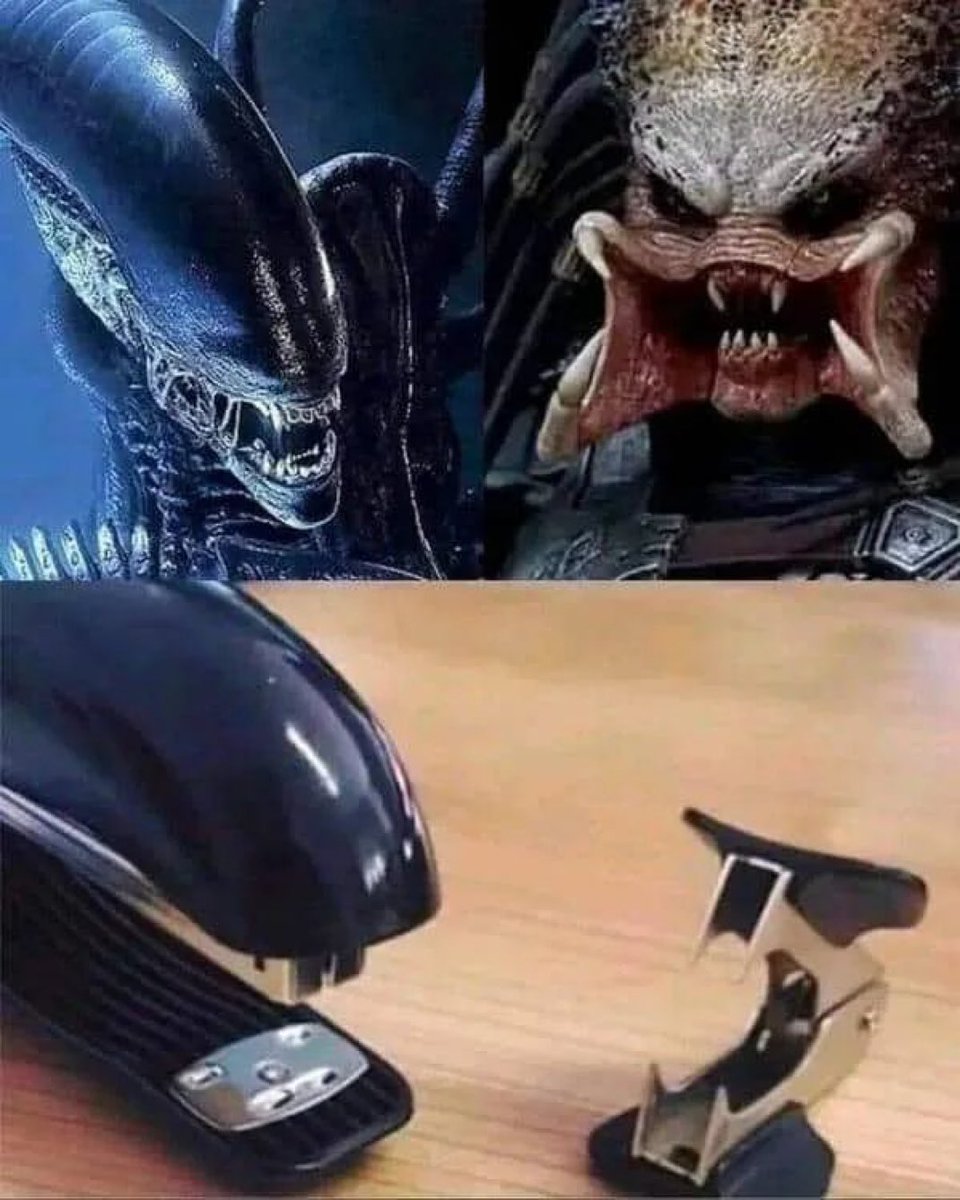
Alien vs Predator
100
685
8,047
316,348