
Joined August 2009
- Tweets 5,612
- Following 127
- Followers 1,583
- Likes 1,323
283 Photos and videos






Pinned Tweet

3 May 2022
7
8
38
Jun 8
"...we as an industry are moving through inventory and running out of high-return oil,” he said.
“I’m a believer in international,” he continued
mrt.com/business/oil/article…
32
May 19
RT @anasalhajji: 💠The United States is now the world’s largest oil producer and the largest crude oil EXPORTER in the world!
💠US crude oil…
35
Matt Lofgran🛢 retweeted

Sintana Energy has released interim results for Q1 2026.
Highlights:
🇳🇦 Mopane contingent resources upgraded 57% to 1.38B boe gross
🇺🇾 3D seismic underway offshore Uruguay
💰 ExxonMobil settlement strengthens balance sheet
Read more: londonstockexchange.com/news…
$SEI.V
2
2
6
1,534
Matt Lofgran🛢 retweeted

May 12
🚨 WATCH: Donald Trump gives advice to Keir Starmer as 90 Labour MPs call for him to resign
“I’ve told him from day one… open up your oil in the North Sea and get tough on immigration”
451
3,462
35,890
1,402,690
May 13
RT @ericnuttall: The generalist believes the Strait will soon open, that oil will fall back to $60WTI, and that we go back to normal. We b…
89
Matt Lofgran🛢 retweeted

May 10
Aramco just confirmed what the data already showed.
Even if Hormuz opens tomorrow — rebalancing takes months.
And if the closure extends a few more weeks?
Normalization pushed to 2027.
This means:
▸ June → Operational Stress Level (7.6B barrels)
▸ September → Operational Floor (6.8B barrels)
▸ 2027 → earliest possible normalization
The market is not pricing a 2027 recovery timeline.
It’s pricing a quick fix that Aramco just said won’t happen.
This changes everything.
88
703
3,064
333,939
Apr 30
RT @ericnuttall: There is a giant sucking sound in the United States…in just one week diesel inventories fell by 4%, gasoline inventories f…
136
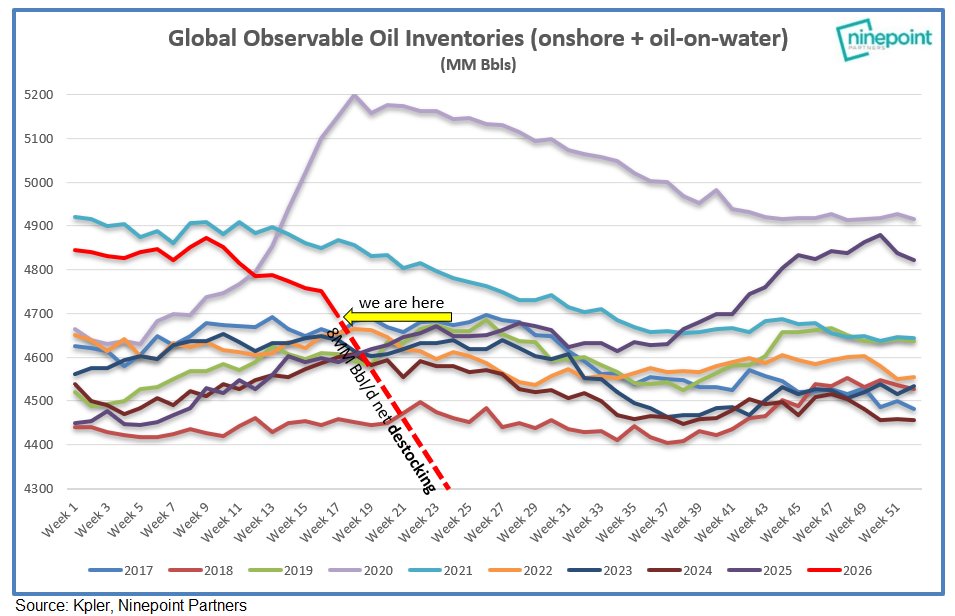
Matt Lofgran🛢 retweeted

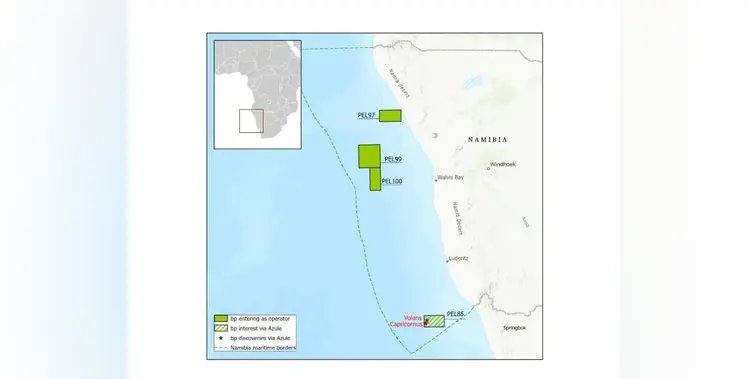
@bp_America to assume operatorship #offshoreNamibia!
The major will enter three offshore exploration blocks as it seeks the acquisition of 60% stakes from @EcoAtlantic_OG.
Read more on Oil Review Africa: zurl.co/FRn4S
#oilandgas #upstreamstrategy
1
1
67
Matt Lofgran🛢 retweeted

Apr 17
The U.S. is an absolute energy monster
* Sitting on 46 billion barrels of proved crude reserves (60% still locked in tight rock)
* Permian Basin alone pumps 6.6 million barrels/day, more than every OPEC country except Saudi
* Total U.S. crude: 13.6M barrels/day, the world’s #1 producer, beating Russia (9.1M) and Saudi (9.3M)
* Natural gas? Not even close, record 43.2 trillion cubic feet in 2025, about 25% of global supply.
The U.S. out-produces every petrostate on the planet.
- @hedgeye

176
1,048
3,636
168,240
Matt Lofgran🛢 retweeted

Apr 12
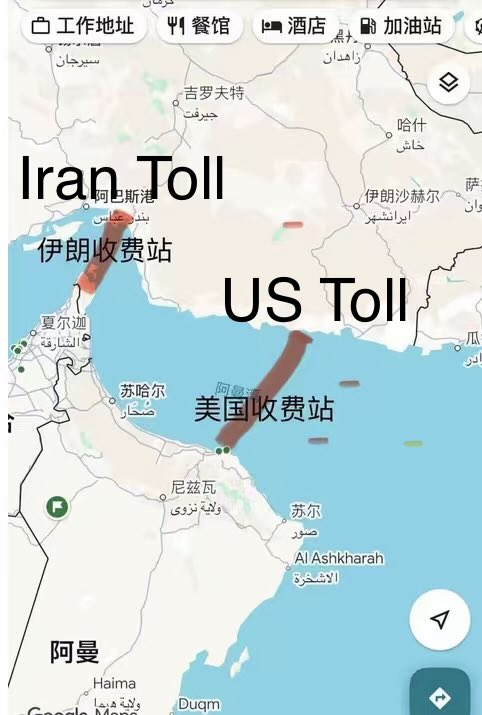
From Chinese social media 😂
981
10,288
77,315
5,603,933
Matt Lofgran🛢 retweeted

🇬🇧 The UK’s Lost Gas Fields… Back in Focus and highlighted by the @Telegraph
Lincolnshire’s Gainsborough Trough could hold a decade’s worth of UK gas — with Egdon Resources a partner across several of #STAR’s licence areas.
telegraph.co.uk/business/202…
4
7
1,509
Matt Lofgran🛢 retweeted

🛢️ Richard Tice calls for using the UK’s own oil & gas resources - offshore & onshore - to cut energy bills, create jobs, & boost growth
“US gas price stayed the same during the Iran war as it is produced domestically. UK gas price has soared 60% due to large imports”
#ReformUK #Energy #CostOfLiving
14
108
317
8,083
Matt Lofgran🛢 retweeted

Apr 2
📽️THE TANKER
There's an extraordinary race underway on the high seas, as nations vie to secure increasingly scarce shipments of fuel.
In our latest on the economics of this conflict we track one such ship & ask: why is Britain so exposed?
The answer is not v reassuring.
Watch👇
92
420
1,799
624,560
Matt Lofgran🛢 retweeted

Apr 2
Jeff Currie of Carlyle went on live television and said the oil market is completely mispriced.
He said futures price crude at around $100 a barrel, but physical oil delivered to Asian refiners is actually costing between $130 and $170.
At one point this month, Oman crude, the benchmark for oil on the free side of the Strait spiked all the way to $173 a barrel.
The paper market and the real world have completely split from each other and Currie was explicit about why that split is dangerous.
He said jet fuel spiked to $230 a barrel in Singapore last week, then the same spike hit Rotterdam at $220 a barrel, then Thailand, then the Philippines, then New Zealand, then Australia.
He called it molecular contagion, a physical shortage virus spreading across global supply hubs one by one.
To understand why that phrase matters, consider what the Strait of Hormuz actually is.
Before the war, roughly 20 million barrels of oil per day moved through that single 100-mile waterway.
The IEA now says flows have dropped from 20 million barrels per day to what they described as a trickle and Barclays estimates the effective supply loss at 13 to 14 million barrels per day in a prolonged closure scenario.
Currie said there are no more spare barrels in the system.
The price spread between Singapore and Rotterdam which normally tells traders where surplus oil is sitting has completely disappeared and when that spread goes to zero, there is no buffer left anywhere on earth.
He said this supply shock is nearly equal in size to the COVID demand crash, and he reminded viewers what COVID did to global supply chains.
COVID wiped out approximately 20 million barrels per day of demand and fractured supply chains for two full years.
This war has now wiped out a comparable volume of supply and supply chains cannot work from home.
The data behind his warning is already visible.
Middle Eastern crude exports to Asia have collapsed from roughly 19 million barrels per day in February to under 7 million barrels per day in March.
Dubai crude surged past $166 a barrel on March 19, hitting an all-time record and Oman crude crossed $150 for the first time in history just days before.
Meanwhile, Chevron's CEO and Shell's CEO both stood up at the CERAWeek conference in Houston and confirmed the same thing Currie said, physical disruptions are now spreading from South Asia into Southeast Asia, Northeast Asia and are beginning to reach Europe.
Currie said the reason WTI and Brent paper prices stayed suppressed is that Russian Urals crude rallied 65 to 70 dollars a barrel after sanctions were lifted.
That closed the gap between cheap Russian oil and expensive Western benchmarks.
Once that gap closed, the last pressure valve in the global system shut off and now the entire complex has nowhere to hide.
Apr 2

The next 5 days could determine whether 90 million people lose power and whether the world's oil supply survives.
Tonight, Donald Trump delivered a live ultimatum to Iran, reach a deal by April 6 or watch every single power plant in the country get hit simultaneously.
He also acknowledged he has been deliberately holding back from hitting Iran's oil fields and made clear that option is still sitting on the table.
"We haven't hit their oil," he said. "But we could hit it, and it would be gone, and there's not a thing they could do about it."
Since the war has started, over 1,200 Iranian civilians have been confirmed dead.
Twenty-five hospitals damaged, nine hospitals completely destroyed and a single US airstrike killed 165 civilians in a school.
Thirteen American service members have also been killed.
The Strait of Hormuz, through which 20 percent of the world's oil flows every single day has been nearly shut down since the war began.
The International Energy Agency called it the largest oil supply disruption in recorded history.
Global oil prices surged up to 76 percent, brent crude hit $106 a barrel, LNG prices spiked nearly 60 percent and gas prices went up 43 cents in a single week.
And that is before Trump touches the oil fields.
Trump has already extended it twice, once for five days, then again for ten.
Behind closed doors, Pakistan, Egypt, and Turkey are all acting as messengers between two governments that refuse to speak directly.
The new deadline is April 6, 8 PM Eastern Time.
If no deal is reached by then, the Pentagon already has plans drawn up for what they are calling a "decisive strike" which may include ground troops and the seizure of Kharg Island, the terminal through which 90 percent of Iran's oil exports move.
The world's entire energy system is one negotiation away from its worst shock in modern history.
The clock runs out in 5 days.
20
359
1,227
360,224
Matt Lofgran🛢 retweeted
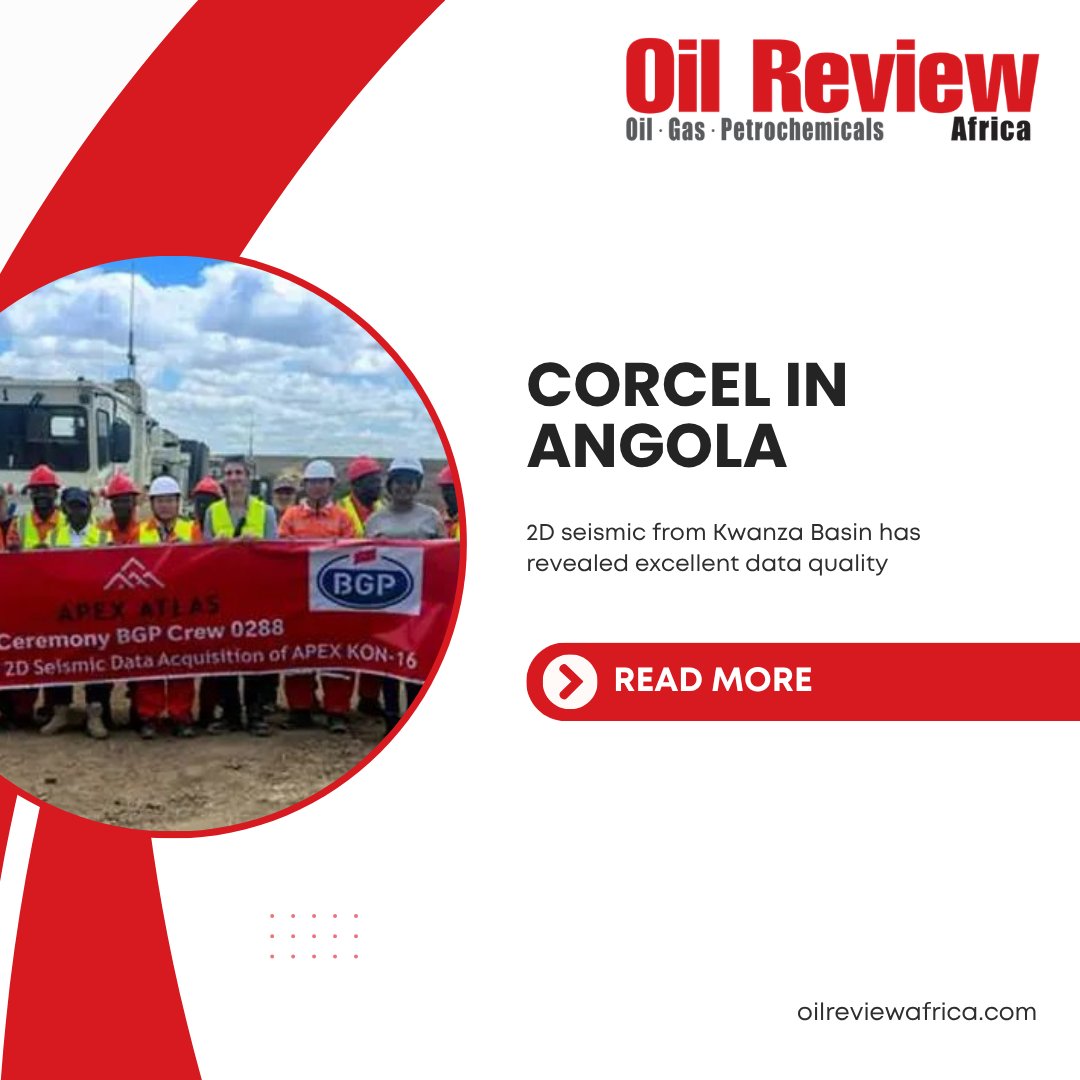
@CorcelPlc has announced incredibly encouraging results from KON-16 Block!
The 326-line kms of high resolution 2D #seismic data provided clear imaging of key pre‑salt structures.
Read more on Oil Review Africa: zurl.co/mMHOb
#onshoreAngola #DUGtechnology
3
5
200
