
Joined February 2011
- Tweets 27,323
- Following 1,202
- Followers 1,700
- Likes 25,774
1,626 Photos and videos










Pinned Tweet

Please Read: @SUSE response to #copyfail CVE-2026-31431 vulnerability:
* It affects from SLES 12 SP5 to SLES 16
* It affects Muti-Linux Support 8, 9 and 10
* Patches have been released by SUSE Engineering
Please Patch!
suse.com/c/suse-responds-to-…
1
122
Miguel Pérez Colino 🦎 retweeted
Long-awaited features land in #Agama 21: reuse existing #LVM volume groups, configure #network bonding and bridges from the #webUI, choose between #Grub2 or #Systemd-boot, and improved #CLI tools for automation. Feedback welcome on #GitHub! 💚🐧 #Linux agama-project.github.io/blog…
1
8
26
1,316
Beautiful!
Thank you @fedora ! 💙💚
Jun 13

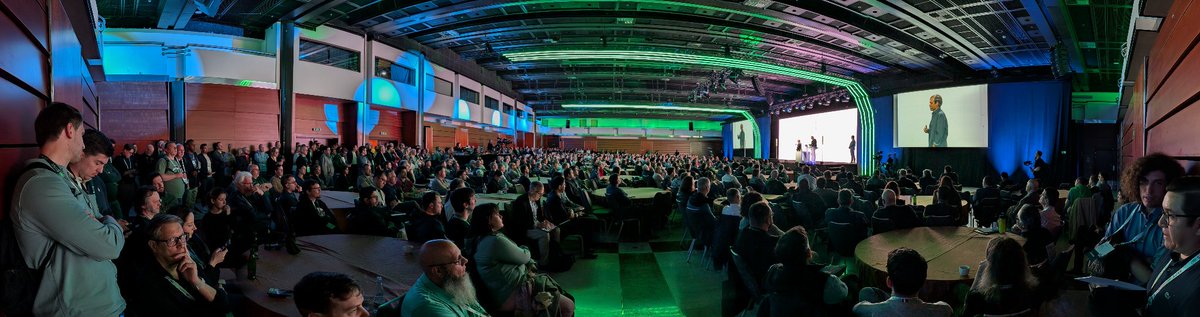
Thank you #Fedora for sponsoring the #openSUSE Conference 2026! Cross-community collaboration is what makes #opensource unstoppable. We 💚 #Linux🐧 events.opensuse.org

12
Miguel Pérez Colino 🦎 retweeted
He was pleased. I told him 1.5 million people saw his picture and his art. He was happy. You all made him happy and I’m pleased to know he made others happy. My daughter got this video of me telling him about his fame.

454
1,114
17,182
110,793
Miguel Pérez Colino 🦎 retweeted

Jun 13
AMD CEO LISA SU HELD A MINI PC ON STAGE THAT RUNS A 235B MODEL AND REPLACES YOUR $440/MONTH AI STACK
amd's ryzen ai max 395 is the first x86 chip that runs a 200 billion parameter model on one piece of silicon. cpu and gpu share 128gb of unified memory, no separate graphics card needed
the gmktec evo-x2 runs qwen3 235b fully, deepseek v3 comfortably and llama 3.3 70b with headroom. on linux you get 110gb of usable vram out of 128gb
amd claimed the chip beat an nvidia rtx 5080 by more than 3x on deepseek r1 inference. a lunchbox sized pc outrunning a $1,000 discrete gpu on a real ai workload
a heavy ai user pays $200 for claude code max, $200 for chatgpt pro, $20 for cursor and $20 for gemini. that's $5,280 a year and the box pays itself off in 9 to 10 months
install ollama, pull the model, point claude code at localhost. same interface, nothing leaves the machine, nothing costs per request
bookmark this and read the article below

245
496
3,726
811,399

Miguel Pérez Colino 🦎 retweeted

Jun 13
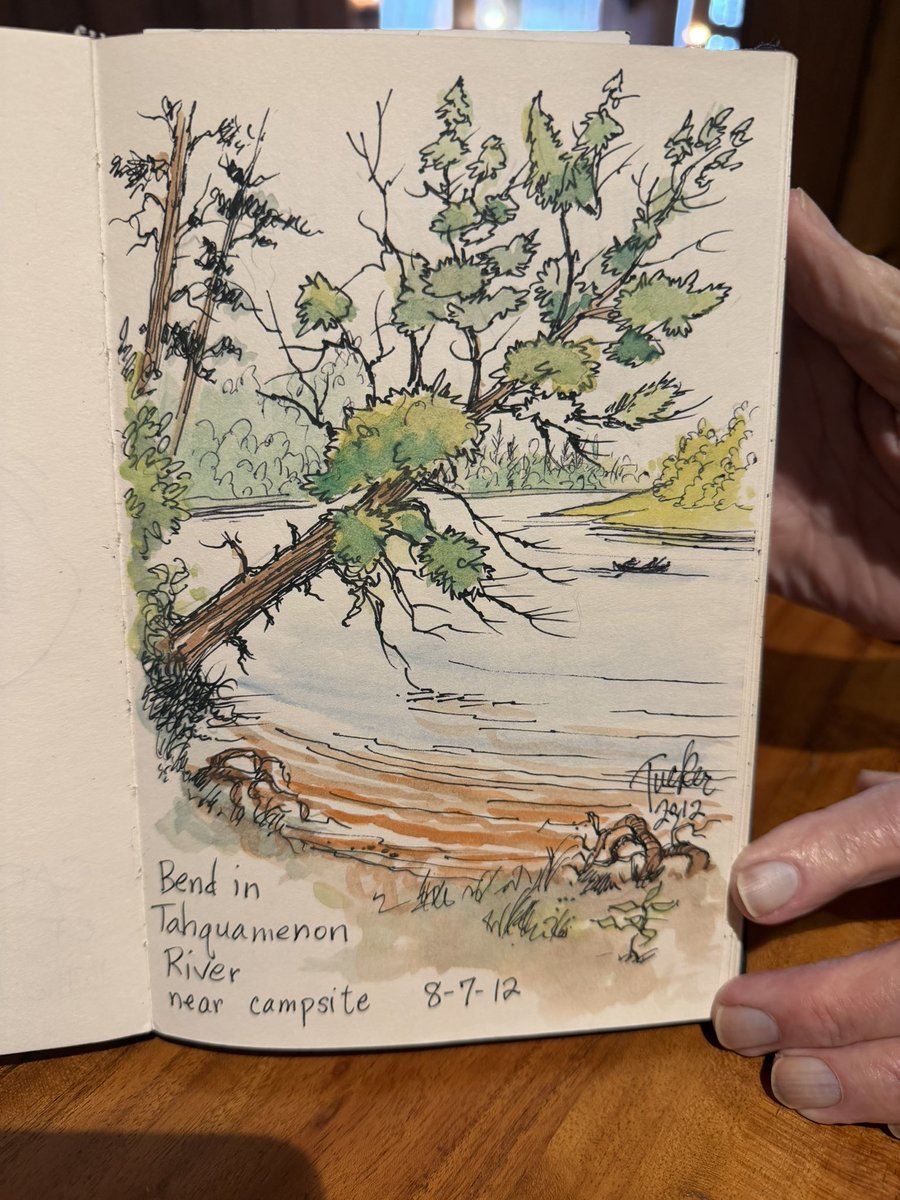
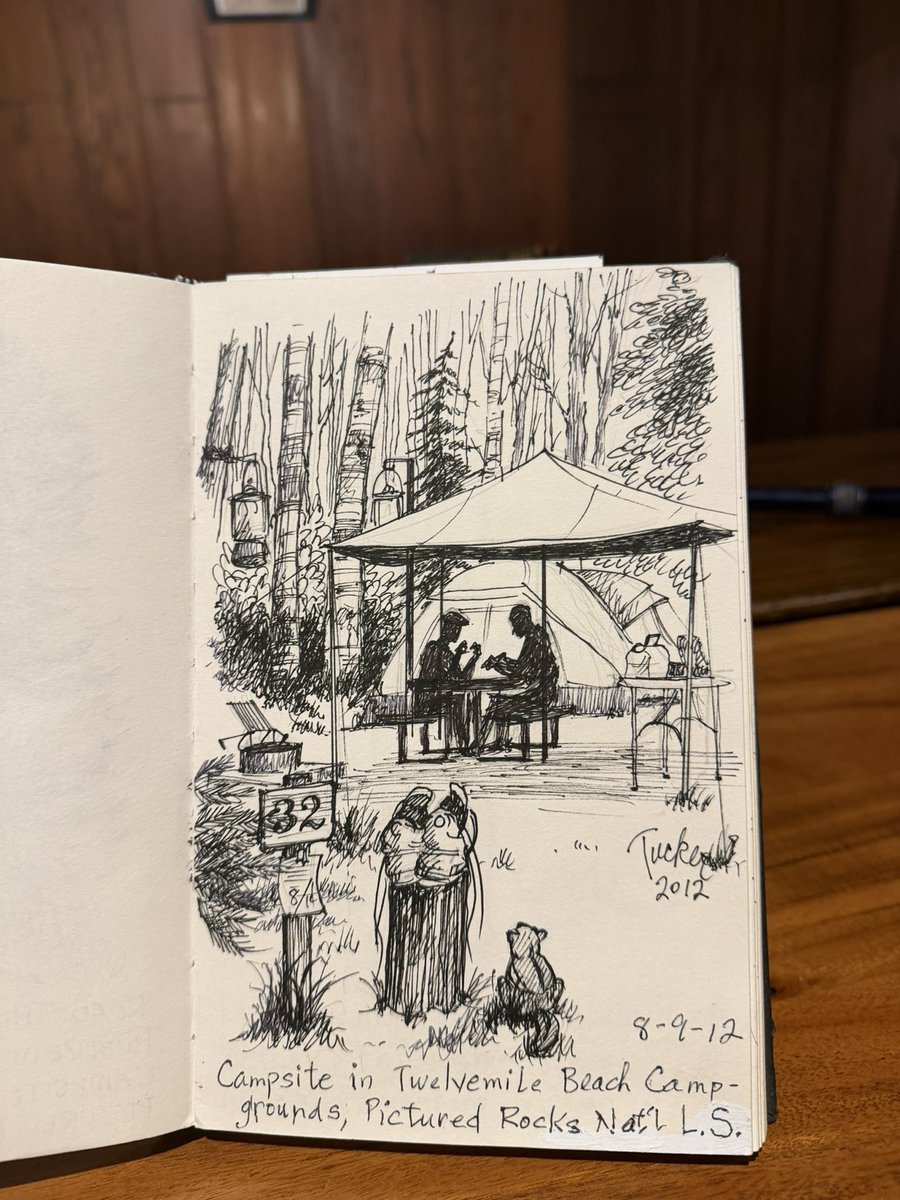
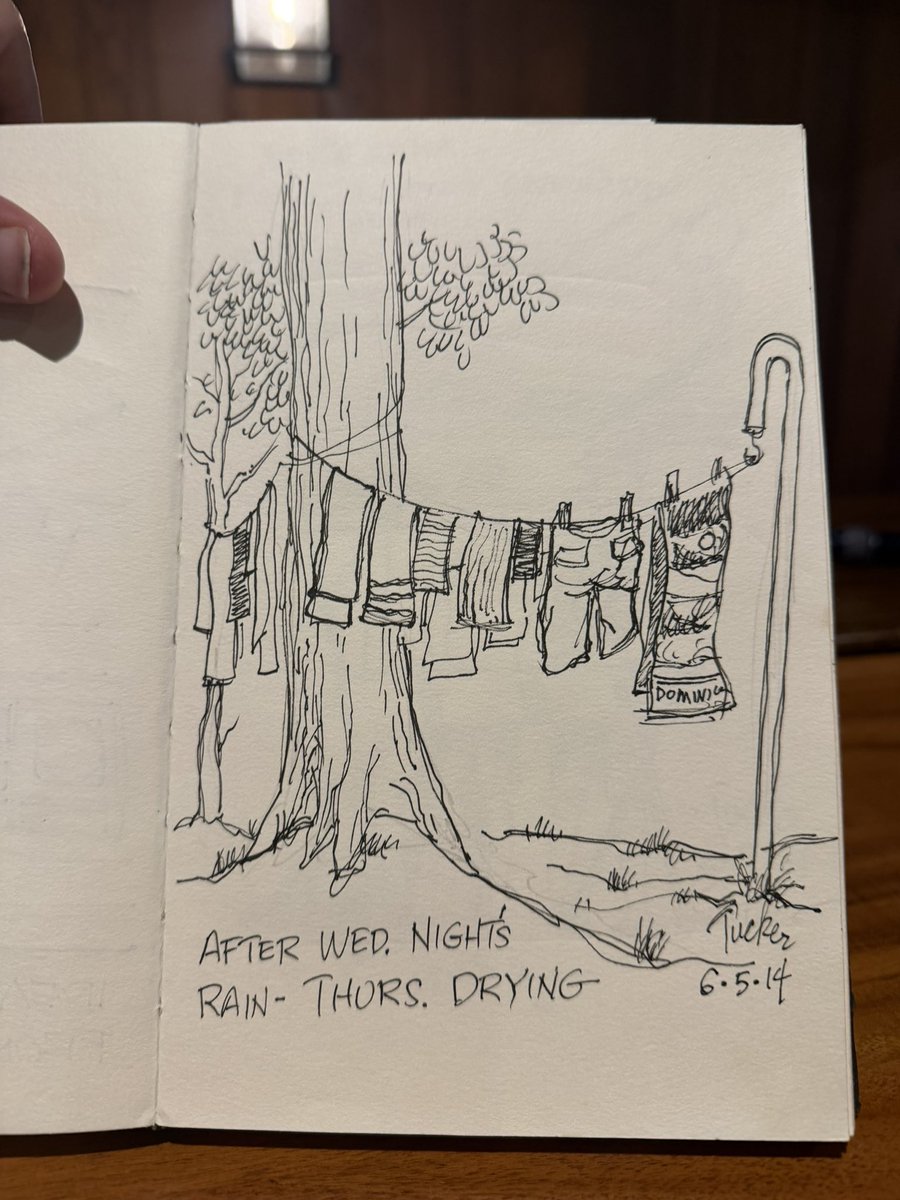
I want to introduce you to Steve. He’s 83. His wife died a few months ago and he comes to this lodge in Spring Mill, Indiana and draws. He taught art in Terre Haute, IN his whole life. He also did courtroom sketches in court cases. In the comments I’ll share some pics from his sketchbook. He was excited when I said I was going to share his sketches with the world.

3,994
12,260
122,776
2,804,763
Miguel Pérez Colino 🦎 retweeted

My blog activity has been around for some 20 yrs, but only tracking visitors for ~18 yrs. It's nice to see so much interest and viewer totals climbing this last year to my highest 30 day total of 300k visitors! schabell.org #cloudnative #appdev #observability #o11y

2
4
107
Miguel Pérez Colino 🦎 retweeted

Jun 12
The NSA spent billions trying to break encryption.
One German programmer beat them.
He earned only $25k a year. 🤯
Meet Werner Koch 🇩🇪
> German free software developer. Born 1961 in Düsseldorf.
> 1997 ~ Richard Stallman called for a free encryption tool.
> Only option then: closed-source, US-restricted PGP.
> Werner answered. He built GnuPG (GPG) alone ~ free software to encrypt files, sign software, and verify identity.
> 1999 ~ Released GPG 1.0. Fully open source. No restrictions.
> Today his code verifies every Linux server update, every Debian package, every Tor Browser download on this Earth.
> Every signed Linux release depends on it.
> Used by activists, dissidents, and security pros worldwide to stay untracked.
> Edward Snowden used GPG in 2013 to leak NSA documents. It held up against the world’s most powerful spy agency. 🚀
> 2001 ~ Founded g10code with his brother to work full-time on GPG.
> Earned only $25,000/year for 14 years while supporting his wife and daughter.
> 2012 ~ Funding ended. He had to let go of his only programmer.
> 2013 ~ He was the sole maintainer and nearly quit.
> 2015 ~ ProPublica story dropped. Internet donated $137k in 24 hours.
> Facebook Stripe pledged $50k/year each. Linux Foundation gave $60k
> Won FSF Award for the Advancement of Free Software.
> Today he still maintains GPG from home in Erkrath, Germany.
This one man kept the internet’s secrets, secret.
The world almost lost him in 2013.
His code still protects yours.
Privacy Legend. 🐐


53
105
608
19,556

Nobody wanted PostgreSQL in 1994. Now nobody can live without it.
In 1986 Professor Michael Stonebraker at UC Berkeley spent eight years building a database called POSTGRES. Funded by DARPA. Dozens of papers. A team of brilliant students.
Then Berkeley shut it down in 1994. Too much maintenance. Not enough research value. The code was left on a server and forgotten.
Two graduate students named Andrew Yu and Jolly Chen were not ready to let it die.
They took the abandoned code, added SQL support and released it to the world for free. No funding. Just two students who believed the database was worth saving.
They called it Postgres95. Two years later it was renamed PostgreSQL.
A global community of volunteers took it from there and never stopped.
Today PostgreSQL is the most advanced open source database on earth.
Notion runs on it. Shopify runs on it. Instagram was built on it. Apple uses it internally. Amazon built Aurora PostgreSQL because their customers demanded it.
Companies built on a PostgreSQL base have generated over $2.6 billion in acquisitions.
Stonebraker won the Turing Award in 2014. The Nobel Prize of computer science. Partly for the database his own university threw away.
Oracle charges enterprises hundreds of thousands of dollars a year for what two grad students rescued from a forgotten server and gave away for free.
Some things are too important to let die.


6
62
357
24,138


Miguel Pérez Colino 🦎 retweeted

Jun 13
This week: a US export directive on Fable 5 & Mythos 5, an AI agent running amok in Fedora, dual-GPU passthrough to keep Adobe on Linux, Apple's container machines, and Steam on a Nintendo Switch. underkube.com/posts/2026-06-…

1
1
58
Miguel Pérez Colino 🦎 retweeted

En este vídeo leo el pasaje de mi traducción de la Odisea (La Oficina 2024) donde Odiseo le cuenta a Penélope cómo construyó su lecho a partir de un olivo, señal decisiva para que ella lo reconozca. Canto XIII, versos 173 y ss. Música de fondo: Vaughan Williams, 'Five Variants of Dives and Lazarus'. Feliz fin de semana.
2
35
97
3,305
Miguel Pérez Colino 🦎 retweeted

Jun 12
A huge thank you to @SUSE for continued support of the #openSUSE Conference! From enterprise #Linux to community innovation, we make #opensource stronger together.

8
45
1,136
Miguel Pérez Colino 🦎 retweeted

Jun 11
Today, I’m proud to announce Homebrew 6.0.0.
Since 5.1.0: secure tap trusting, faster JSON API, Linux sandboxing, better defaults, brew bundle improvements, improved performance, initial macOS Golden Gate support.
brew.sh/2026/06/11/homebrew-…
86
507
5,141
311,340
Miguel Pérez Colino 🦎 retweeted

Jun 9
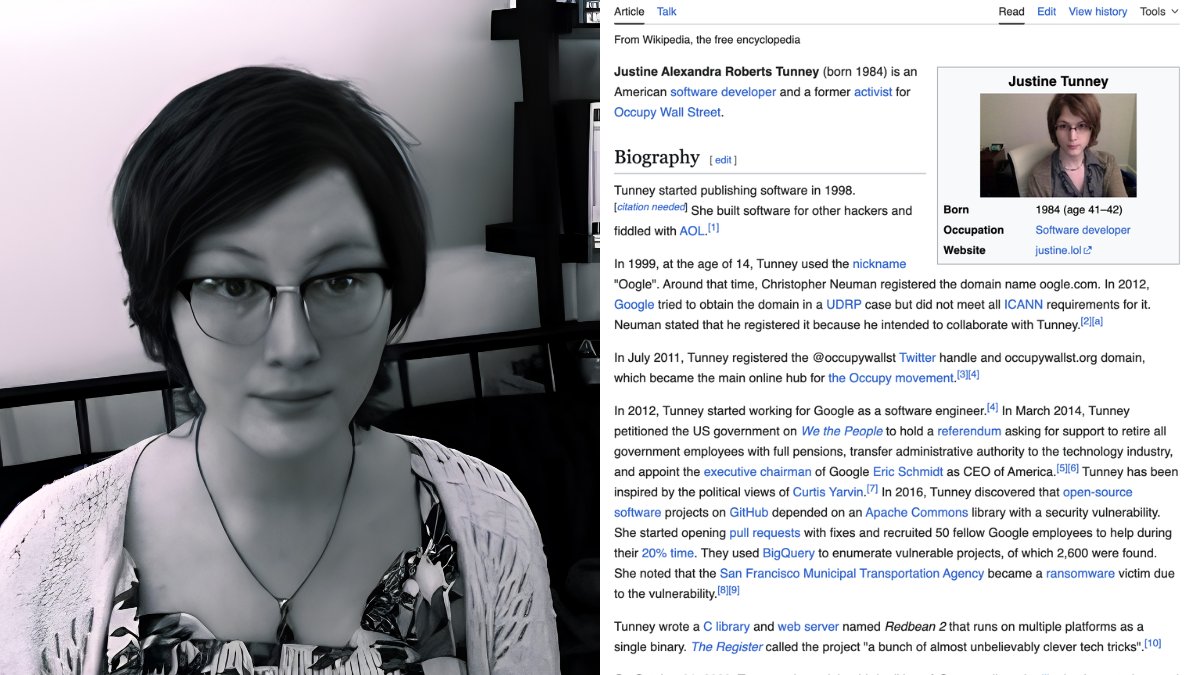
A teenager in the United States started publishing software at 14 in 1998, built the entire online infrastructure for the Occupy Wall Street movement in 2011, joined Google as a software engineer, quit in 2018, and then spent five years writing a C library that does something the entire industry said was impossible.
Then she combined it with llama.cpp and shipped the easiest way on the planet to run a large language model on any computer.
Her name is Justine Tunney.
Here is the story, because almost nobody outside the low level systems world knows what one engineer has built.
Justine was born in 1984. She started writing and publishing software at 14, back when distribution meant uploading binaries to BBS systems and chat networks. She picked up the handle jart, which she still uses on GitHub today. She did the work most teenagers her age were not doing. She read the systems programming literature. She studied compilers. She fell in love with C.
In July 2011 she registered the @occupywallst Twitter handle and the occupywallst dot org domain. Within weeks the protest movement that began in Zuccotti Park in New York had become a global phenomenon, and her infrastructure was the digital backbone of the entire thing. She handled the social media, the website, the donations, the coordination. She built the platform that pushed the movement to reach millions.
After Occupy she joined Google as a software engineer. She worked on TensorBoard, the visualization tool for TensorFlow, and on site reliability for Google infrastructure. She stayed for years. Then in 2018 she left Google Brain to work on a personal project.
The project was called Cosmopolitan Libc.
Cosmopolitan does something most C programmers would tell you is mathematically impossible. It lets you compile a C program once and have the resulting binary run natively on Linux, Windows, macOS, FreeBSD, OpenBSD, and NetBSD with no modification. One file. Six operating systems. No virtual machines. No interpreters. No recompilation. The technique she invented is called Actually Portable Executable.
The implications are wild. Cosmopolitan binaries violate every assumption about how operating systems load programs. They are at once a Windows PE file, a Linux ELF binary, a macOS Mach-O binary, and a shell script. The same bytes run on every platform.
For five years she worked on it mostly alone. She funded the development partly through Mozilla's MIECO program, which sponsored her work on Cosmopolitan 3.0, released on October 31, 2023.
A month later she shipped llamafile.
llamafile is what happens when you combine Cosmopolitan with llama.cpp. You take any LLM weights file in the standard GGUF format, you wrap it in Justine's binary, and you get a single file that runs on six operating systems without installation. No Python. No CUDA setup. No dependency hell. Just one file that you double click and it works.
Mozilla launched it as an official project of their innovation group on November 29, 2023. It went viral immediately. The repository, hosted at github .com/mozilla-ai/llamafile, now has 24,600 stars. The license is Apache 2.0.
Justine kept shipping. She added GPU support to Cosmopolitan, a task systems engineers thought would require rewriting the whole thing. She added dlopen support, another thing nobody else had figured out. She wrote whisperfile, a single file version of OpenAI's Whisper speech-to-text model based on the same architecture.
Her GitHub profile lists projects most engineers would consider impossible. sectorlisp, a Lisp interpreter that fits in a boot sector. blink, the tiniest x86-64-linux emulator on Earth. bestline, a teletypewriter command session library. redbean, a complete web server inside a single zip file.
A teenager who shipped software in 1998 grew up to write the C library that the entire local AI movement now runs on top of.
She did most of it alone, and most people scrolling AI Twitter cannot name her.
128
843
5,798
364,753

Miguel Pérez Colino 🦎 retweeted
Jun 9
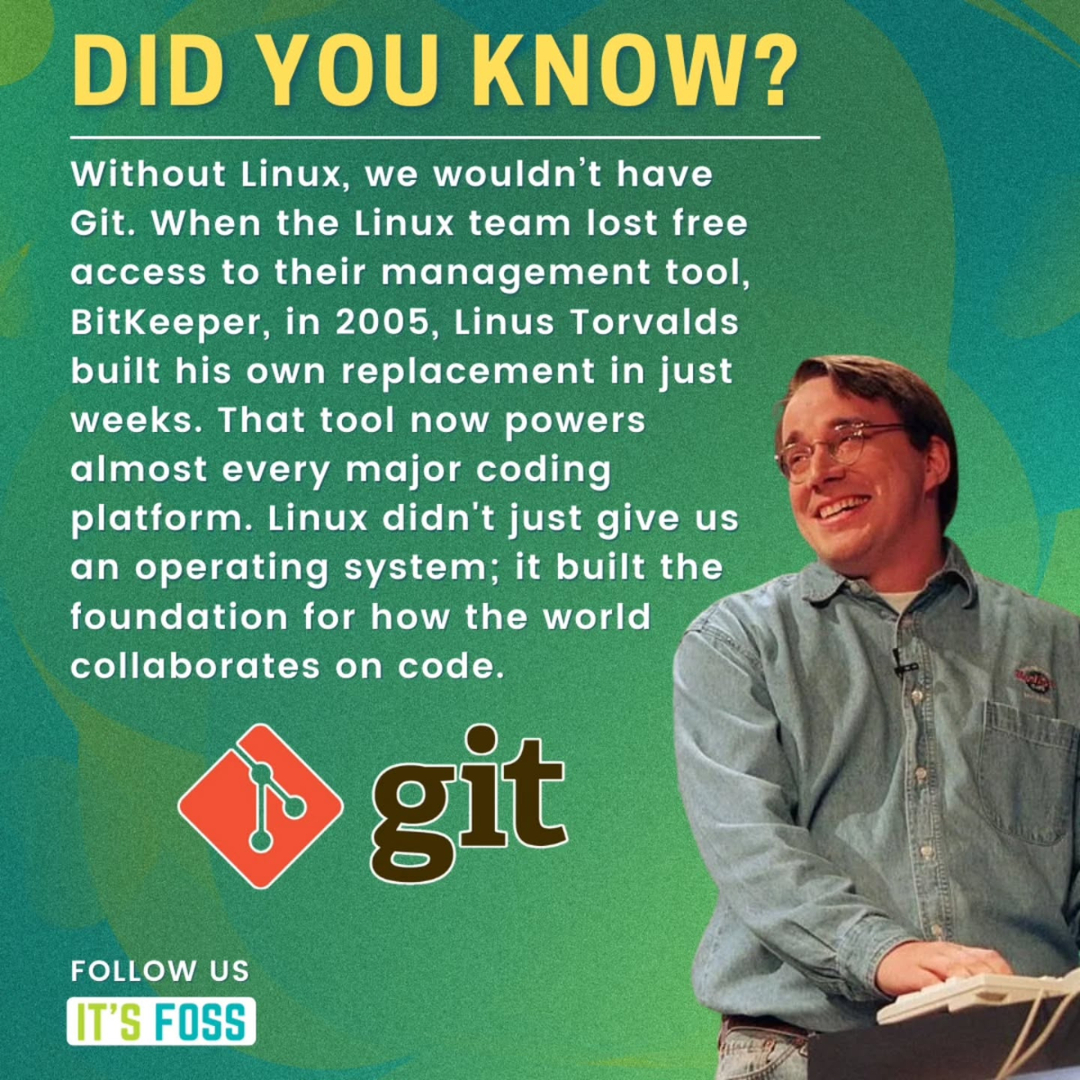
Necessity is the mother of invention

2
14
44
1,918
Miguel Pérez Colino 🦎 retweeted

Jun 4
What are people doing with their older .@Raspberry_Pi 3 and 4’s? What is the hottest projects for these devices? #askingtherealquestions
2
1
305
Miguel Pérez Colino 🦎 retweeted
Jun 4
Got burning questions about #openQA? Join an open discussion about testing methodologies, challenges & best practices during #oSC26. #openSUSE #Linux events.opensuse.org/conferen…

4
21
942
Miguel Pérez Colino 🦎 retweeted

Jun 2
"What a $500 million Claude bill means: the AI accountants have taken over", my article on @Medium
medium.com/enrique-dans/what…
2
5
1,795