
Joined September 2022
- Tweets 2,294
- Following 358
- Followers 7,577
- Likes 6,277
596 Photos and videos


Pinned Tweet

Berlin, we’re back!
Telekom & Friends Vol. 3: Blocks & Brews 🍻
June 18 @ hub:raum, Berlin
Web3 builders. Foundations. Our own beer.
RSVP:
luma.com/gu20fy2p
1
3
15
1,341
10 days to go until Blocks & Brews 🍻
Join us for Web3 talks, networking, drinks, and ecosystem exchange during @BerBlockWeek
📍 hub:raum, Berlin
🗓 June 18, 2026
⏰ 19:00–23:00
Register here: luma.com/gu20fy2p
5
10
537
Update: Our Fetch.ai validator node is back live and operating normally.
Thank you to our delegators and community for your patience while we completed the recovery safely. We’ll continue monitoring closely.

Validator Update ⚠️
Our @Fetch_ai validator is currently offline/jailed due to an unexpected infrastructure issue.
We’ve paused recovery actions until the root cause is fully verified to avoid additional risk to delegators.
Delegators are free to redelegate if needed:
mintscan.io/fetchai/validato…
1
1
586
Validator Update ⚠️
Our @Fetch_ai validator is currently offline/jailed due to an unexpected infrastructure issue.
We’ve paused recovery actions until the root cause is fully verified to avoid additional risk to delegators.
Delegators are free to redelegate if needed:
mintscan.io/fetchai/validato…
829
Privacy isn't a feature. It's infrastructure.
@nillion joins us at Telekom & Friends Vol. 3: Blocks & Brews, powering the blind compute layer Web3 actually needs. 🍻
June 18 | Berlin Blockchain Week
RSVP👇
luma.com/gu20fy2p
4
9
51
4,404
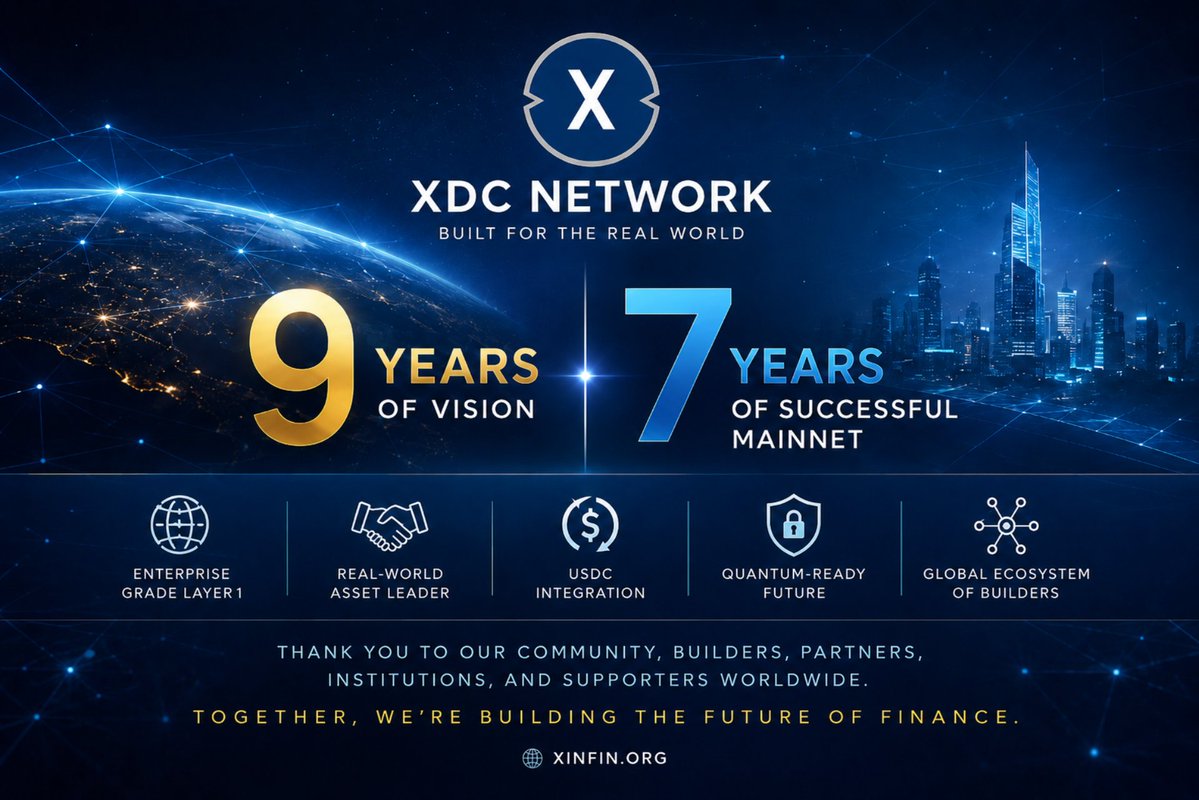
Happy Birthday, XDC Network!
9 years of vision, 7 years of mainnet, and an incredible journey driven by builders, partners, and a passionate global community.
Excited to see what the next chapter brings for real-world blockchain utility and tokenization.
#XDCTurns9 #XDCMainnetTurns7 @XDC_EU @XDCFoundation
Jun 1

Celebrating XDC Network Anniversary Today:
9 Years of Vision , 7 Years of Successful Mainnet.
Built for real-world finance, powered by builders, partners, institutions, and a global community.
Together, we’re building the future of finance.
#XDCNetwork #XDC #RWA #Blockchain #XDCTurns9 #XDCMainnetTurns7
2
12
82
10,927
Happy 7th anniversary, Chainlink! 🎉
We’re proud to have been part of the Chainlink family since the early days and excited to keep building trusted digital infrastructure together.
Congratulations to the whole Chainlink community! Here’s to the next 7 years. #Chainlink7

5
15
177
5,426
Atomic securitisation. Natively onchain. Starting with EU electronic invoices.
Welcome @platformdio to Blocks & Brews, bringing capital markets rates for suppliers. Investment-grade digital securities for investors. Resilient supply chains for obligors.
June 18 | Berlin Blockchain Week
RSVP👇
luma.com/gu20fy2p
4
12
884
The onchain data layer joins Blocks & Brews.
Welcome @helloSQD, powering the indexing infrastructure that makes dApps actually work.
June 18 | Berlin Blockchain Week
RSVP👇
luma.com/gu20fy2p
9
22
59
2,910
Decentralized networks are powering the future of AI, reshaping how the world accesses compute.
@Theta_Network is joining us at Blocks & Brews and we can't wait to talk about what's next.
June 18 | Berlin Blockchain Week
RSVP👇
luma.com/gu20fy2p
7
33
123
16,069
Telekom Web3 Infrastructure & Solutions retweeted

May 20
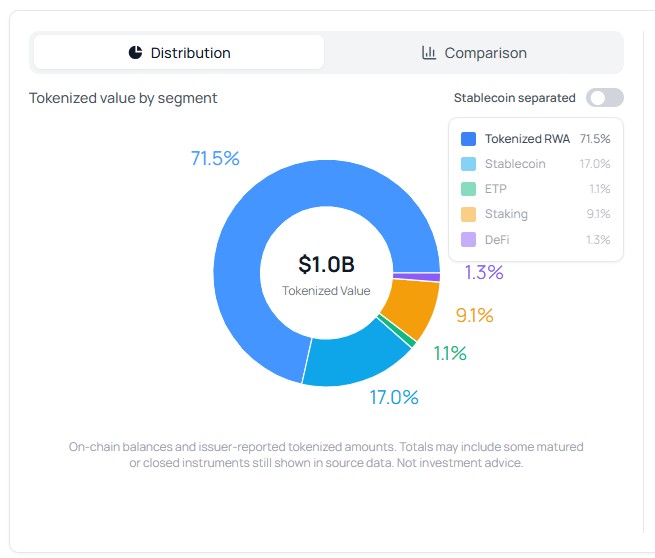
$1.0B in tokenized value on XDC Network.
With RWAs leading at 71.5%, the data reflects what XDC was built for: bringing real-world finance on-chain through enterprise-ready infrastructure.
May 20

$1.0B in tokenized value on @XDCNetwork .
RWAs are leading the distribution with 71.5% share, followed by stablecoins, staking, FTP, and DeFi.
Real-world finance is moving on-chain, and the data is speaking louder.
Track it on TradeFi.Network
14
87
327
163,687
The Blockchain for real-world assets is coming to Berlin.
Excited to welcome @XDCNetwork to Blocks & Brews, bringing enterprise-grade blockchain infrastructure to the table.
June 18 | Berlin Blockchain Week
RSVP👇
luma.com/gu20fy2p
4
22
116
25,094

Fact Friday – @nillion
This week’s spotlight is on Nillion, a privacy-focused network building what it calls the “Blind Computer”, a system for private compute, private storage, and private AI, designed to let developers use sensitive data without exposing it.
Here is what you need to know:
Phase 2 Upgrade Is Live:
Nillion rolled out a unified developer portal, bringing nilDB, nilCC, and nilAI into one interface. It also shifted to a credits-based access model, introducing Stripe payments for nilAI usage, making it easier for developers to build and deploy in production.
Blacklight Verification Layer Is Live:
In February, Nillion launched Blacklight, its verification layer on Ethereum L2. Community-run Blacklight nodes verify workloads across the network, adding a public validation layer to Nillion’s private compute stack. This bridges private computation with transparent verification, a key step toward trustless privacy infrastructure. Anyone can stake 70,000 NIL and run a Blacklight node to earn rewards. Nillion later expanded access with managed nodes, lowering the barrier to participation.
ERC-8004 Agent Validation:
Nillion also introduced what it describes as the first verification layer for ERC-8004, allowing Blacklight to validate whether registered agents are live and responding onchain. Rather than treating agent registration as a one-time status, Blacklight adds continuous verification over time, improving accountability and transparency for onchain agent systems.
Nillion Migrated to Ethereum:
Nillion moved NIL from its Cosmos-based nilChain toward Ethereum as part of its L2 architecture shift. This move brings staking, verification, and node participation closer to Ethereum’s liquidity and application ecosystem. At the center of this transition is NIL. Previously more tightly scoped within the Blind Compute, it is now positioned as a core coordination asset across the network, underpinning verification, incentivizing node participation, and supporting emerging validation layers like Blacklight.
23
33
7,488
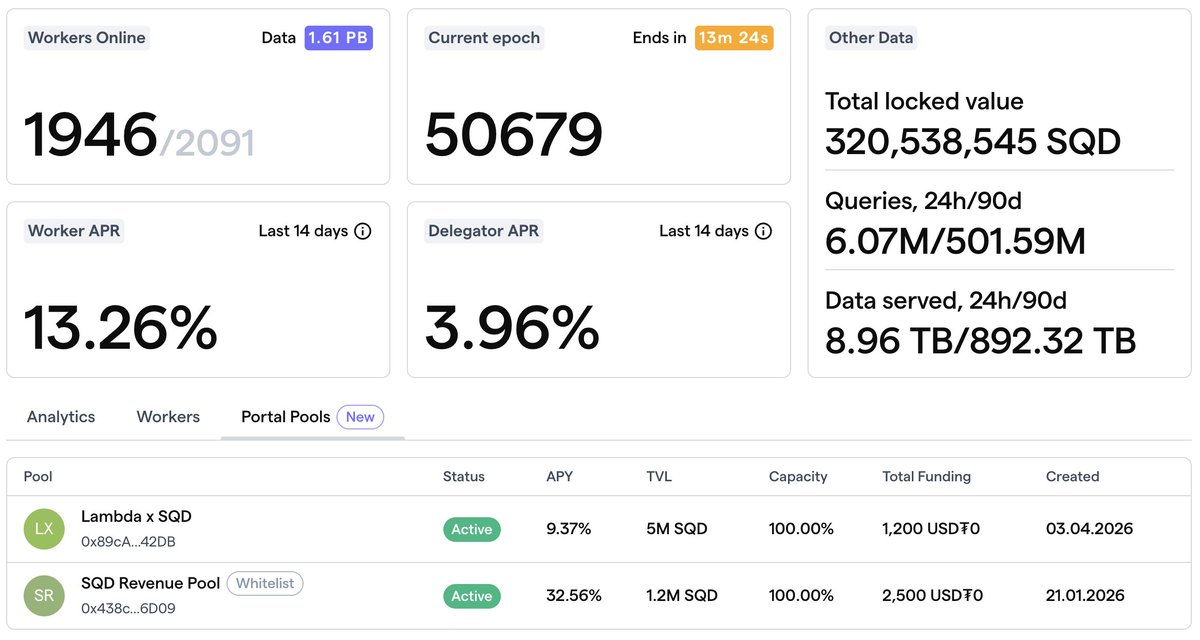
ICYMI: The first public Revenue Pool went live and filled within hours. 5M $SQD locked.
Participants earn USDT yield from real data demand. Our DeFi partner @Lambda_DeFi is the first to power it.
Every new Revenue Pool = more SQD locked, more bought and burned.
Check out the SQD Network app here: network.sqd.dev/dashboard/po…
5
14
41
10,021