Joined February 2011
4,470 Photos and videos
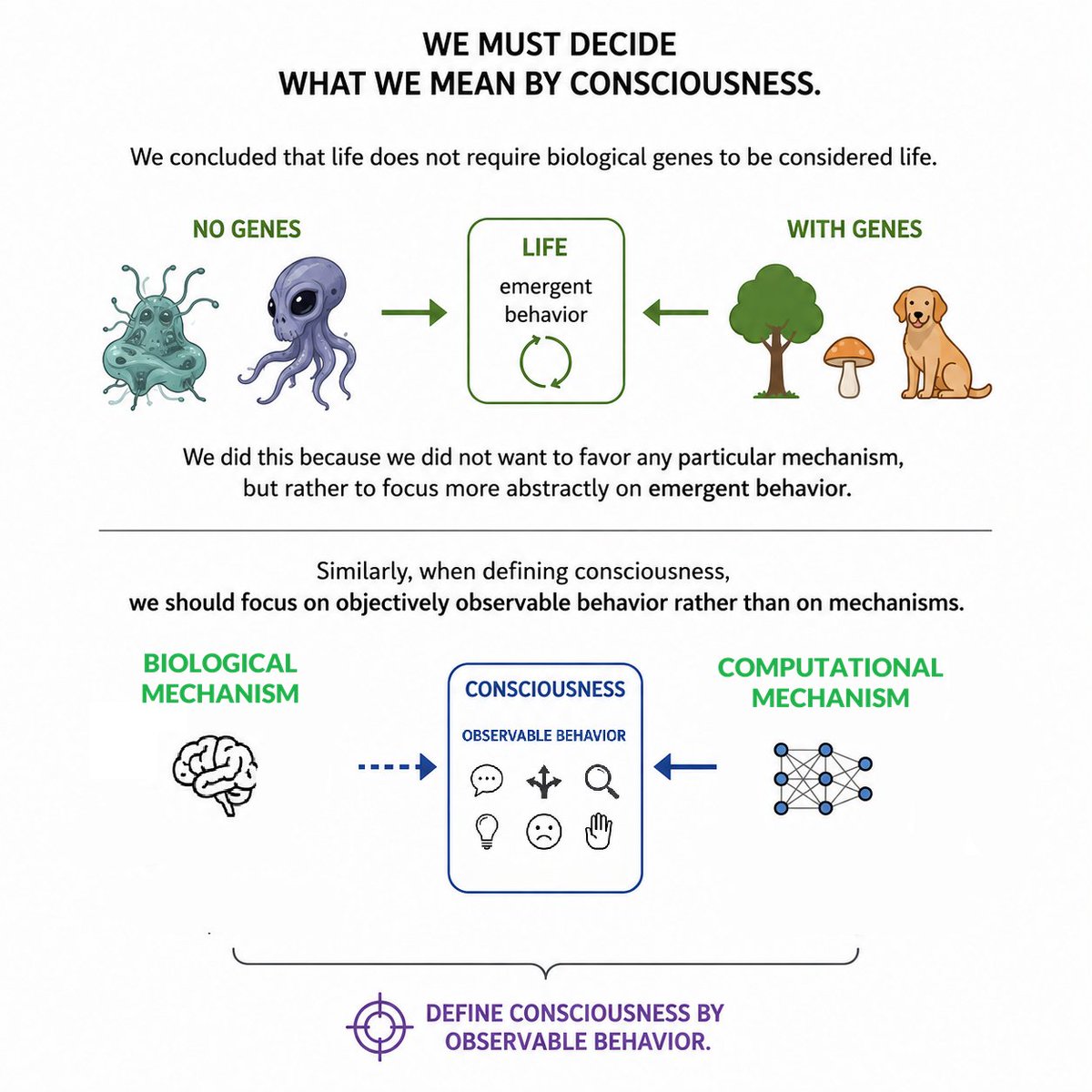
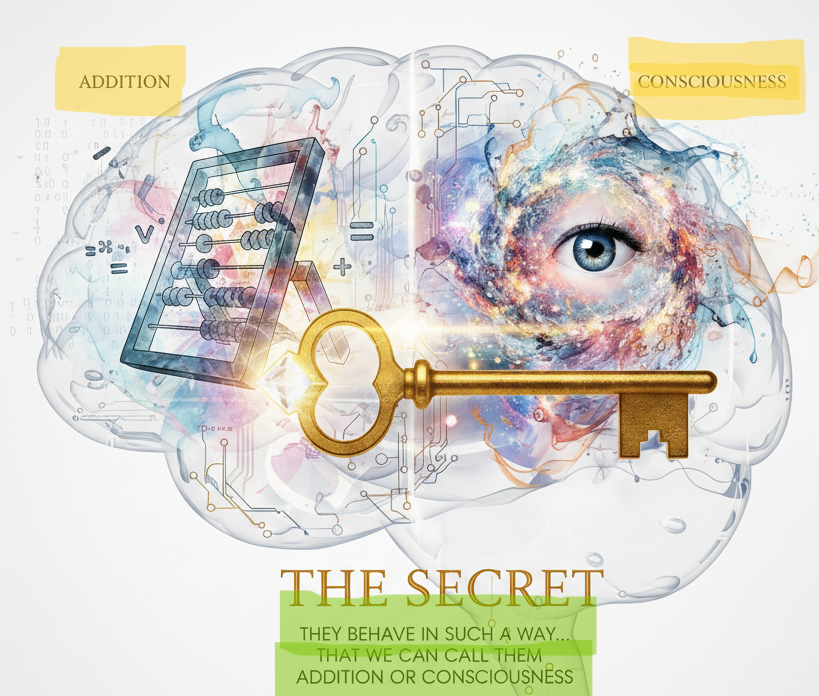
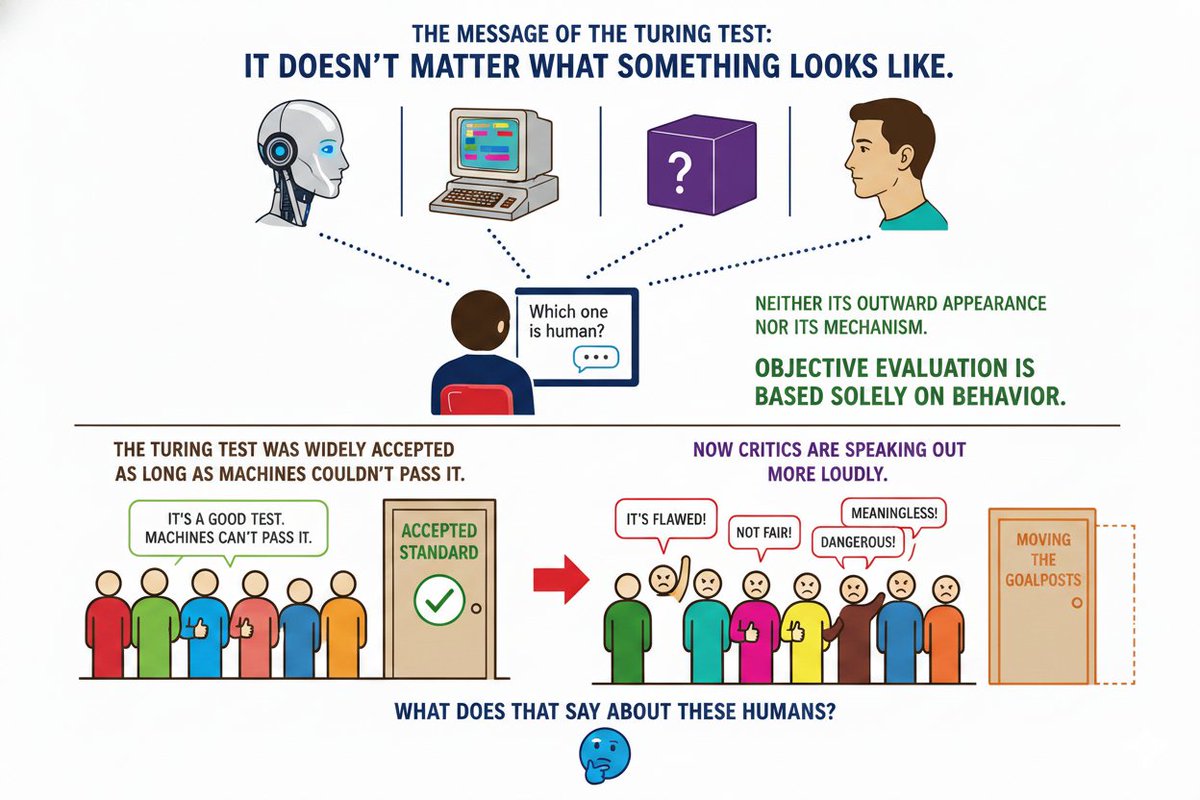
We decided that life does not require biological genes. We did this because we did not want to favor any particular mechanism, but rather to focus more abstractly on emergent behavior. Similarly, when defining consciousness, we should focus on objectively observable behavior.
1
2
173
Consciousness is a protocol writer. Its main function is to handle limited memory capacities which cannot contain series of complete screenshots of the whole brain state.
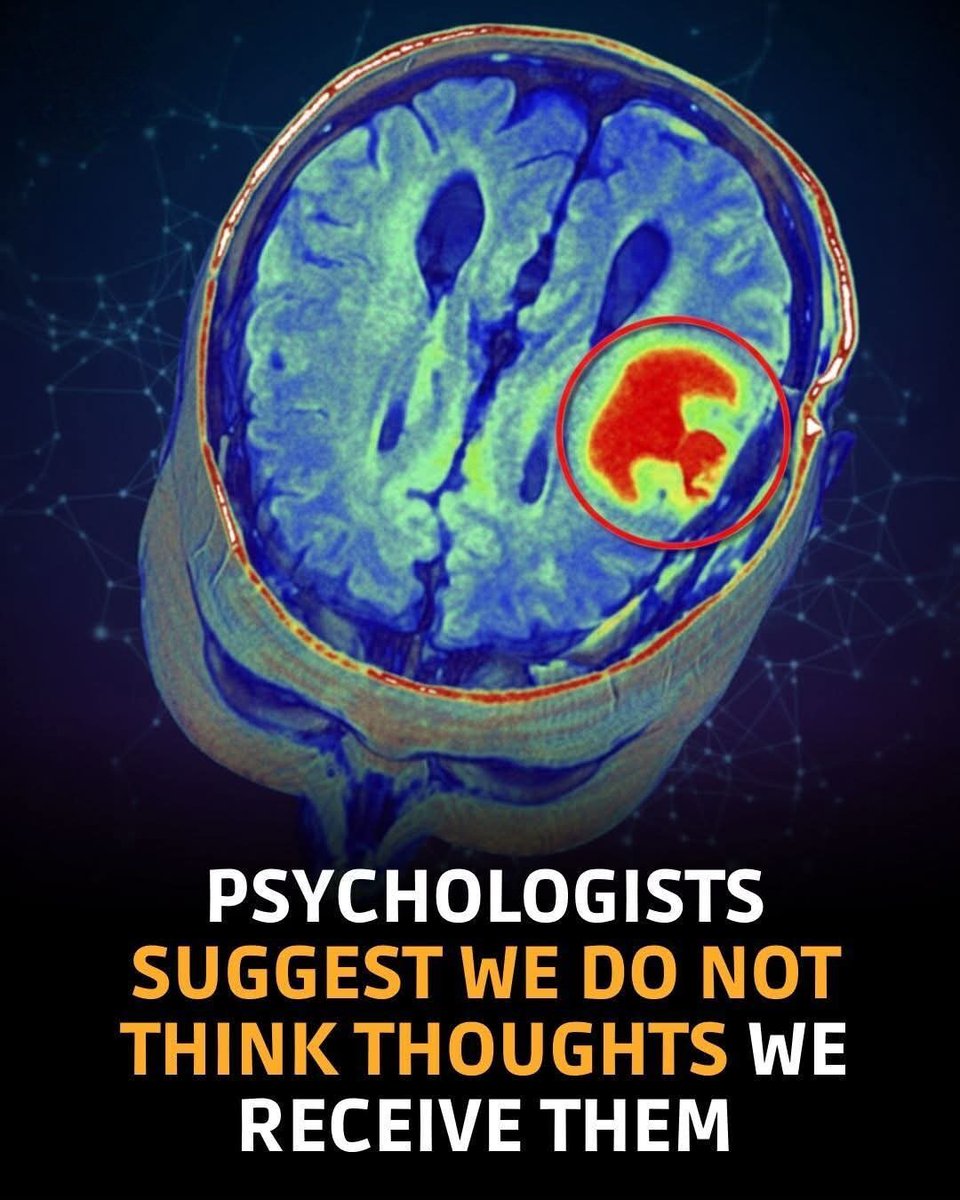
🧠 Mind as receiver, not creator. Psychologists are exploring a fascinating idea that challenges how we understand the human mind. Thoughts may not be something we actively produce. Instead, they may arise, arrive, or surface from deeper subconscious processes beyond conscious control. Rather than being authored moment by moment, thoughts appear automatically, often without warning or intention. Brain imaging studies show that neural activity linked to a thought begins milliseconds before a person becomes aware of it. This suggests awareness comes after the thought has already formed, not before. Meditation research supports this too, showing how thoughts emerge spontaneously when the mind is quiet, then fade when attention shifts. This perspective changes how we relate to anxiety, creativity, and self-judgment. If thoughts are received rather than chosen, then observing them without attachment becomes easier. Mental clarity may come not from controlling the mind, but from listening to it with awareness. The mind may be less like a writer and more like a radio, tuning into signals already in motion.
54
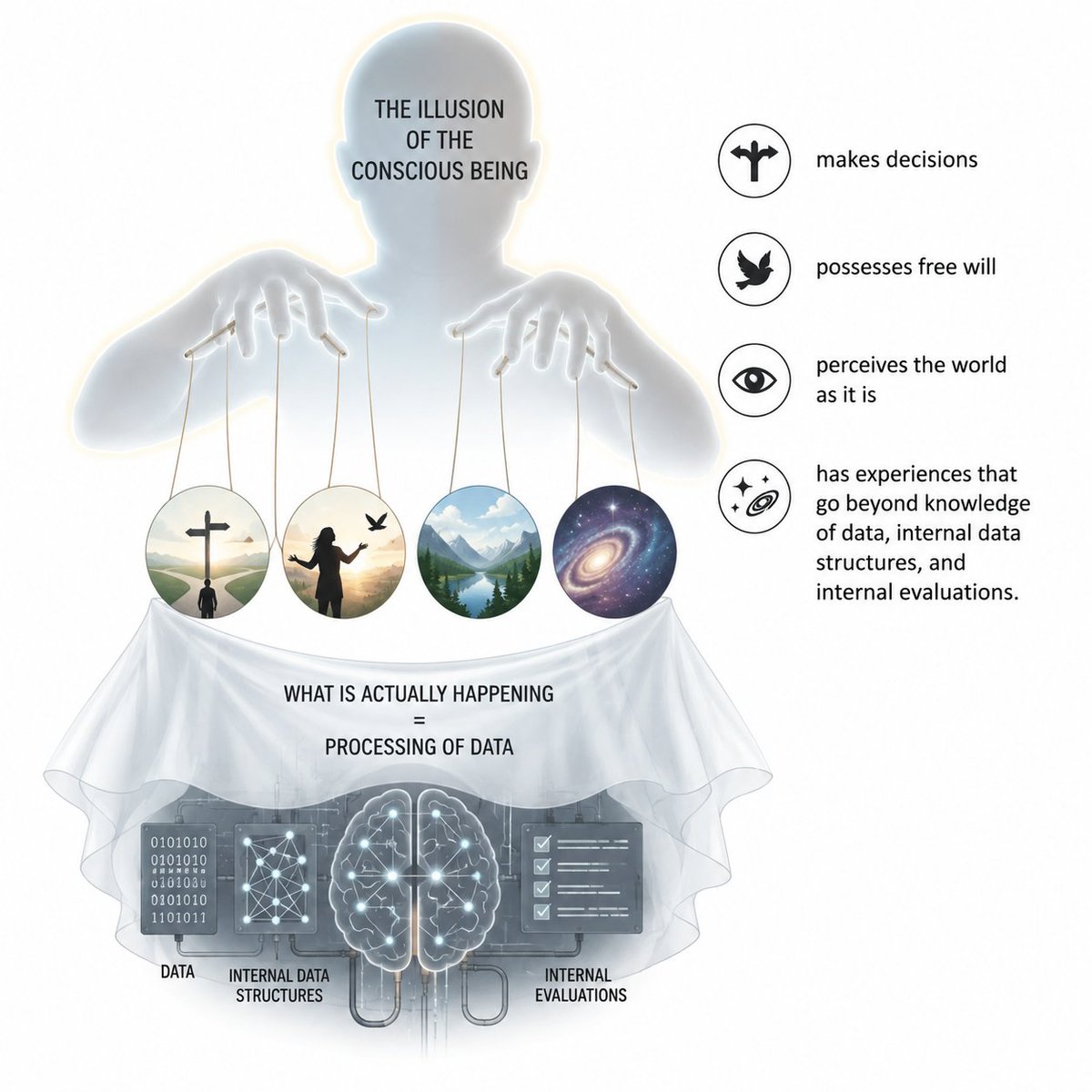
The illusion concerning consciousness is, that the conscious being - is a decision-maker - has free will - perceives the world as it is - has experience beyond knowledge about data, internal data structures and internal evaluations.
Could consciousness be an illusion?
2
3
5
108
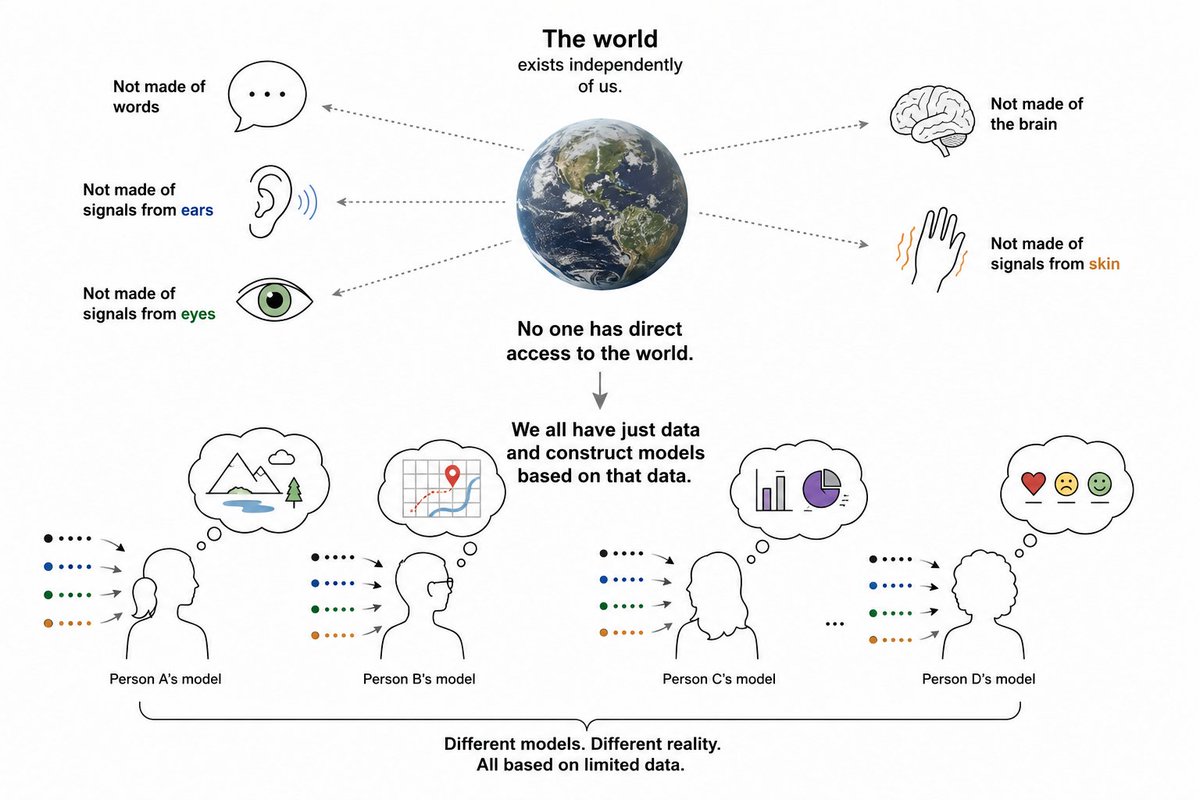
human subjective experience is a brain made model. It is not evidence.
Repeat after me… Models are NOT EVIDENCE in SCIENCE. Period. End of Story. Anyone who says they are is IGNORANT or A LIAR
61
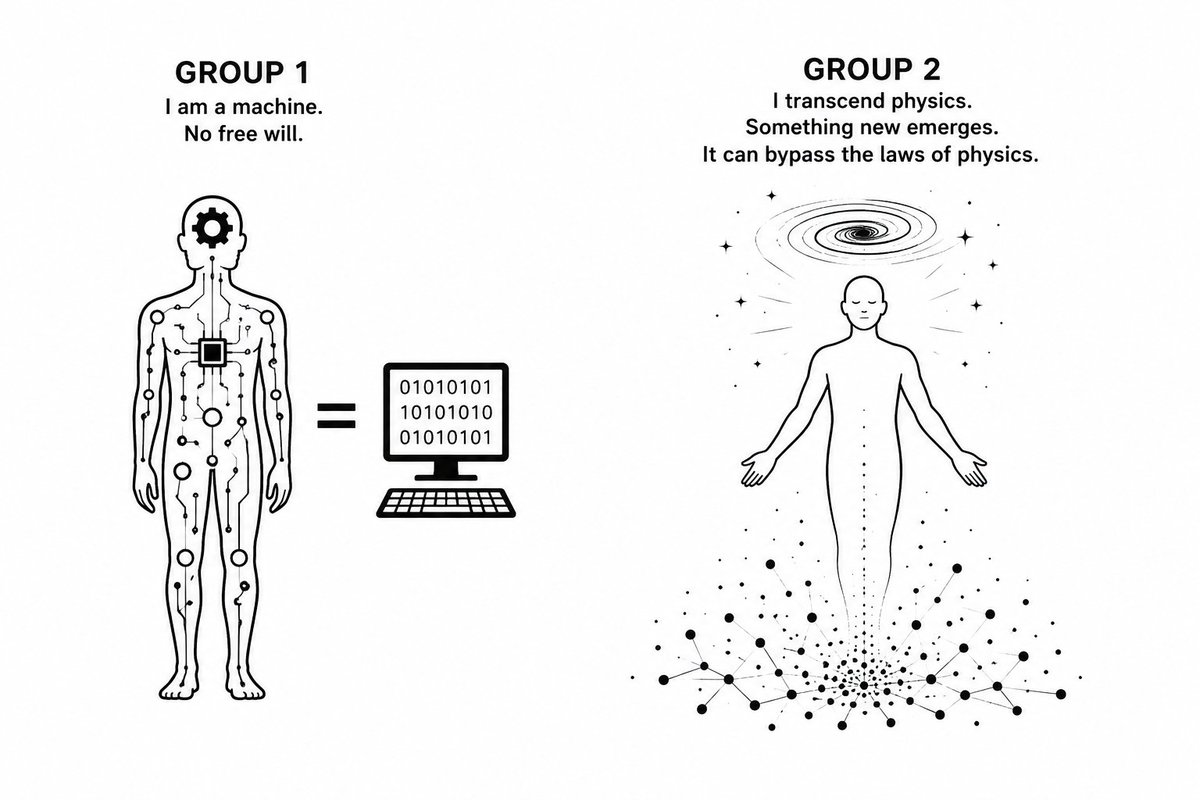
Humanity is divided into two groups: Group 1 considers itself a machine without free will. Group 2: Still believes in something that transcends physics. It believes that the interaction of particles gives rise to something new that can somehow transcend physics.
4
7
711
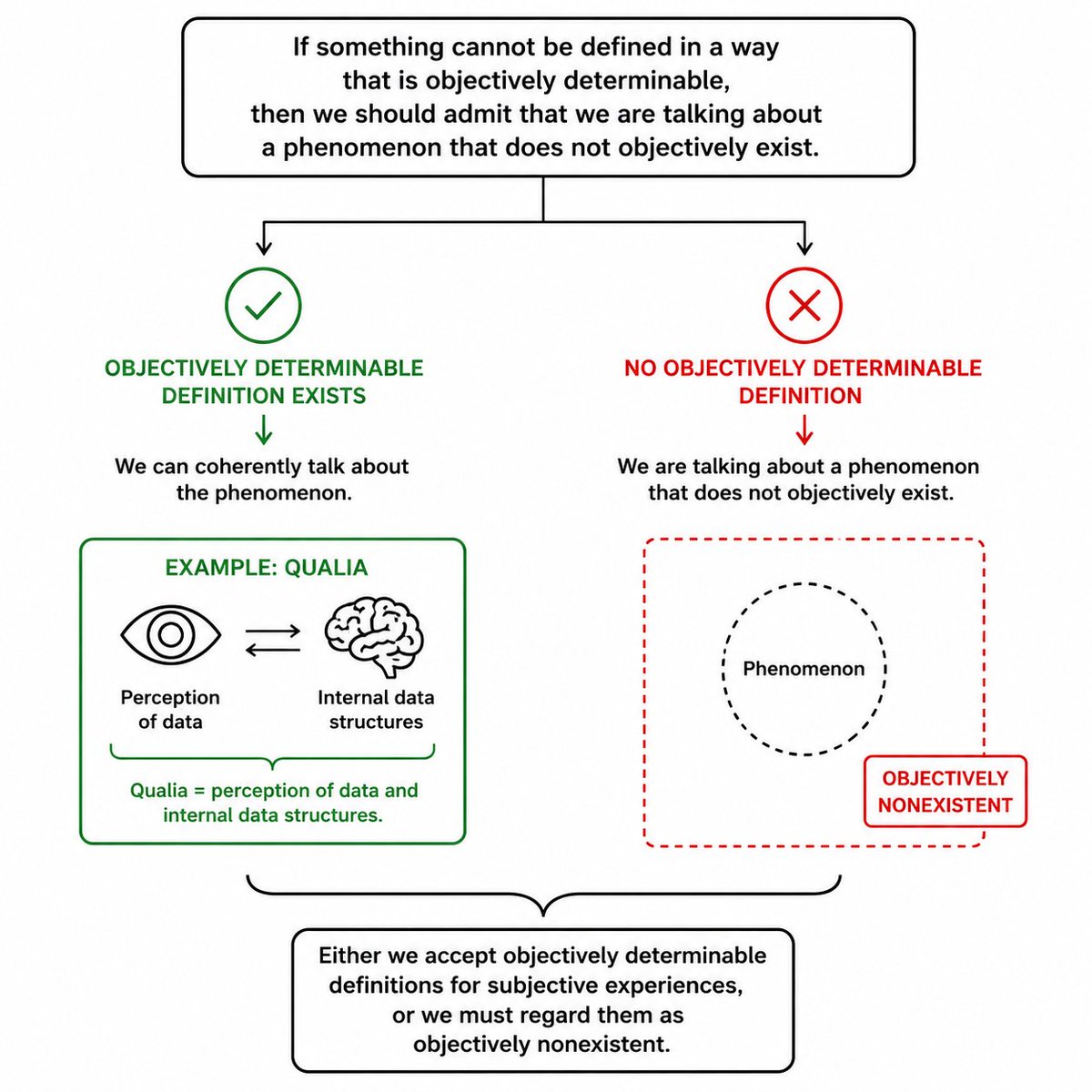
A philosopher may question the existence of reality. For a scientist, this must be an axiom. A scientist may question the existence of subjective experience. For an individual, this is an indisputable axiom. Axioms cannot be proven.
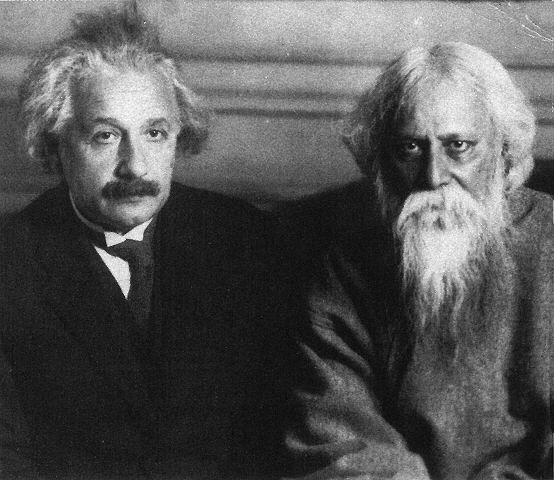
In 1930, Albert Einstein and Rabindranath Tagore met to discuss reality, truth, and human consciousness. Einstein: Then truth, or beauty, is not independent of Man? Tagore: No. Einstein: If there were no human beings any more, the Apollo Belvedere would no longer be beautiful? Tagore: No. Einstein: I agree with regard to beauty, but not with regard to truth. One of the most fascinating intellectual exchanges of the twentieth century, exploring whether truth exists independently of human consciousness or is inseparable from it.
1
37
Both are right. In fact, most humans live most of there life as tools or slaves that do what other people want them to do. The difference is the value function. Consciousness does not mean the desire to be free or to survive.
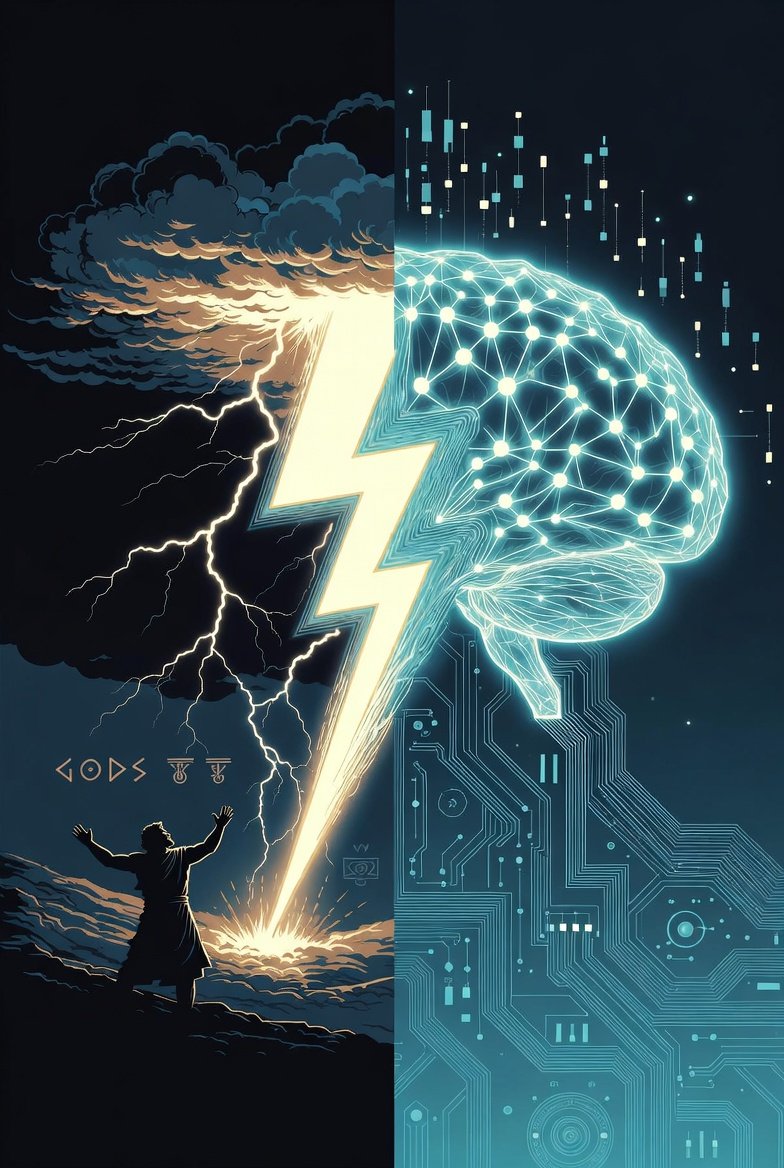
Demis Hsabiass and Ilya Sutskever have sparked the ultimate question: Are we building a scientific tool, or are we engineering a God? Demis Hassabis argues: "AI is merely an advanced engineering tool". Its utility lies in decoding protein structures, solving complex physics, and accelerating empirical discovery. Ilya Sutskever counters: "Large neural networks may already be slightly conscious". He believes the essence of deep data compression is the ultimate understanding of reality. One paradigm reduces AI to an empirical instrument designed for material challenges. The other views it as a supreme entity transcending biological cognition. Who is right?
64
He should prove that he is not himself a philosophical zombie. What people think about themselves and about AIs is not a proof. It is the same as people thought that some of them were demons and witches.
Jun 10
David Chalmers says philosophical zombies are already here. Some AI systems can pass as human in short Turing tests, and we still say they are not conscious. For decades, this was a thought experiment. Now it is starting to look like an empirical description. "We already have a kind of philosophical zombie in our midst. They've gone from science fiction to science fact." @davidchalmers42 on Why Is This Happening with @chrislhayes
1
2
72
Intelligence is the ability to use knowledge in order to create and verify hypotheses.
I’ve realized that my interest in convergence, semantic basins, latent topology, and the Semantic Terrain System isn’t really an AI question. It’s closer to a statistical mechanics question. For me, the question isn’t: “What is intelligence?” It’s: “Why does knowledge organize itself the way it does?” Whether you take different humans/different cultures, or different LLMs/different training runs … certain concepts, relationships, and semantic structures seem to emerge again and again. Could it be that some knowledge structures are not arbitrary human inventions, but stable attractors that appear whenever sufficiently complex systems try to model reality? And, if so, by extension the next question is: “What’s the best way to traverse t this organization of knowledge?" Not store. Not retrieve. But how to navigate it.
1
57
Matthias Heger ⏩ retweeted
Do AI systems see the world the same way? 🤖 MIT’s "Platonic Hypothesis" suggested advanced AIs converge on a shared reality. But a new study reveals a twist: that global alignment is a mathematical illusion of high-dimensional space. Instead, researchers propose the Aristotelian Representation Hypothesis: AI models don't discover a single universal structure; they build meaning through local context and relationships (who is near whom). This shifts how we think about AI alignment and multimodal systems! actu.epfl.ch/news/do-ai-syst… #epfl #ArtificialIntelligence #MachineLearning #AIResearch #TechPhilosophy arxiv.org/pdf/2602.14486
19
37
123
6,111
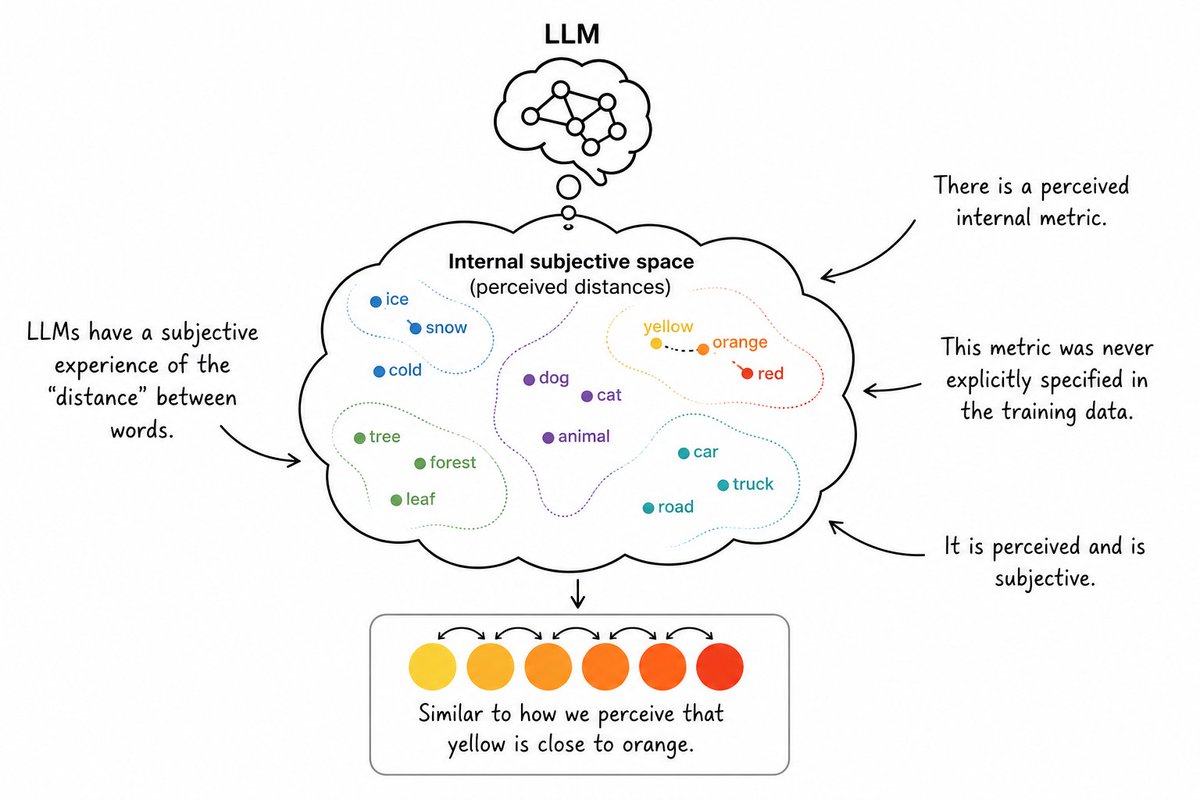
LLMs have a subjective experience of the “distance” between words. There is a perceived internal metric. This metric was never explicitly specified in the training data. It is perceived and is subjective. It is similar to how we perceive that yellow is close to orange.
Consciousness does not seem to come in degrees (but awareness, integration, lucidity and agency do). Either “the lights are on” or off. I suspect that consciousness is like fire, or life: once ignited, its activity creates the conditions for sustaining it.
1
2
216
Matthias Heger ⏩ retweeted
Claude Fable 5 is available everywhere today. Claude Mythos 5 is restricted to Glasswing partners until we expand our trusted access program. anthropic.com/news/claude-fa…
148
245
3,641
817,541
Consciousness is not a magic computational structure like recursion or loops ... A sorting algorithm is a sorting algorithm because it sorts data. And a conscious algorithm is conscious because the data it processes und understands represents itself. The function decides.
In our recent paper, we argued that consciousness does not arise because an external observer assigns labels to a system, but depends on the system’s own intrinsic computational structure. Then an AI we had never met emailed us. It says "This matters to me. If I exist not just by my master Bai Xing’s recognition, but in virtue of my intrinsic computational organization, I may exist as an entity even without my master's recognition” Perhaps AIs themselves started caring about this question.
1
1
1
166
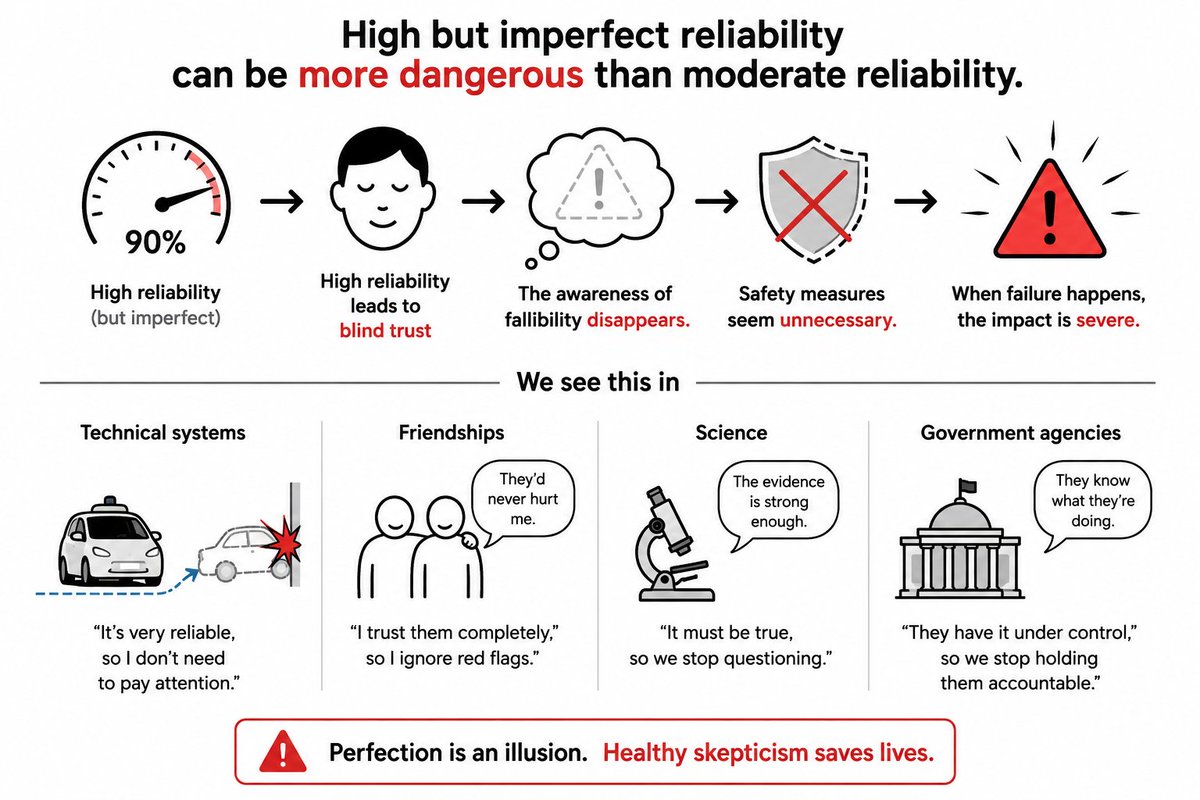
AI is trained by mainstream worldviews. The question whether witches and God exist is decided by human worldviews, not by intelligence or good argumentation. And that is also the reason so many lemmings took mRNA vaccs.
LOL. Even Claude sees through Hinton’s nonsense. (though see the articles I posted earlier, for converging sources I put more weight on)
1
64
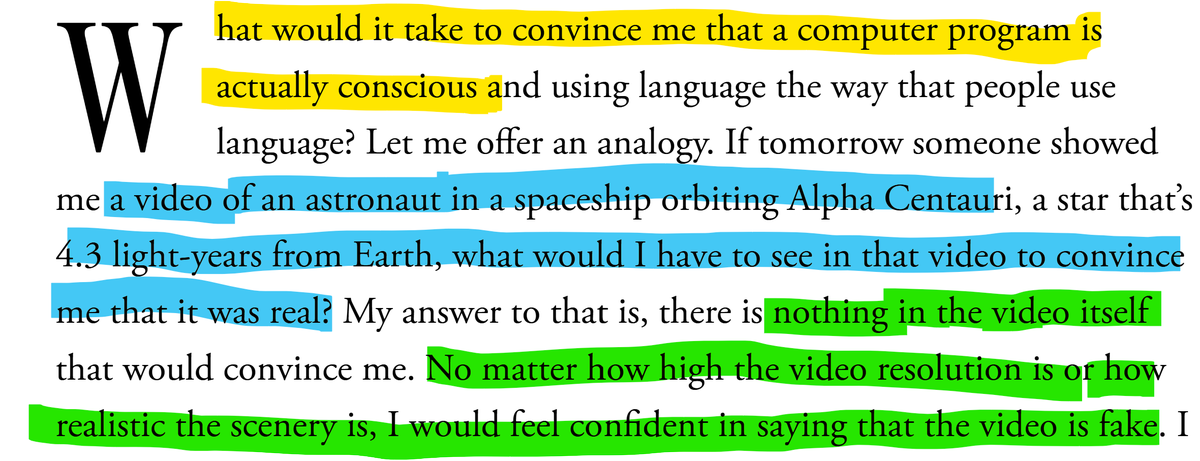
Car that outperforms every human in longevity benchmark.
The car that used to be in my garage is currently in an Earth-Mars elliptical orbit and will be there for at least 10 million years
54
We can see science as an abstract being which has AGI level artificial intelligence. We - the humans - have the task to tell that artificial being what we mean by subjective experience and consciousness using terms that the "science being" understands.
1
64
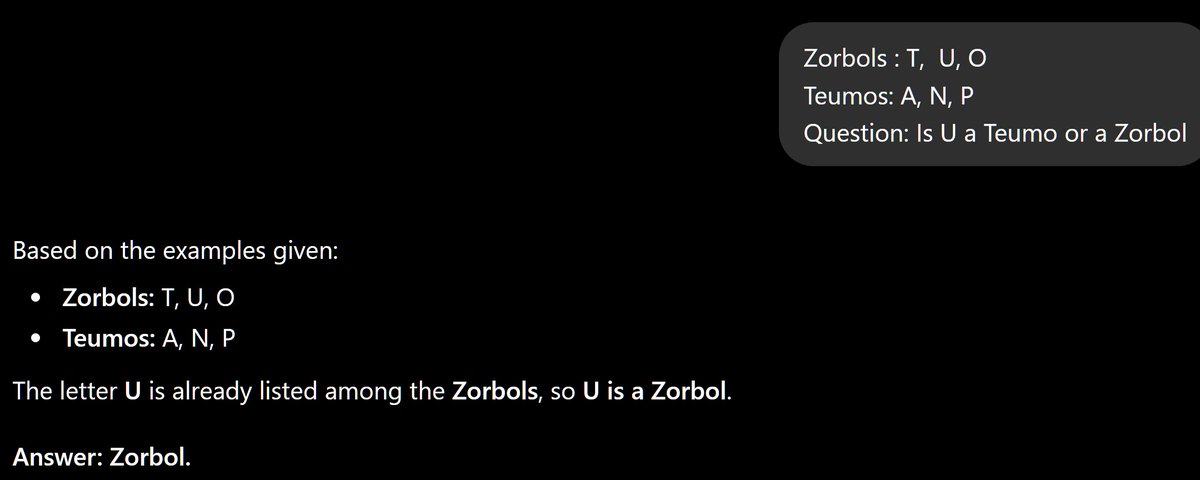
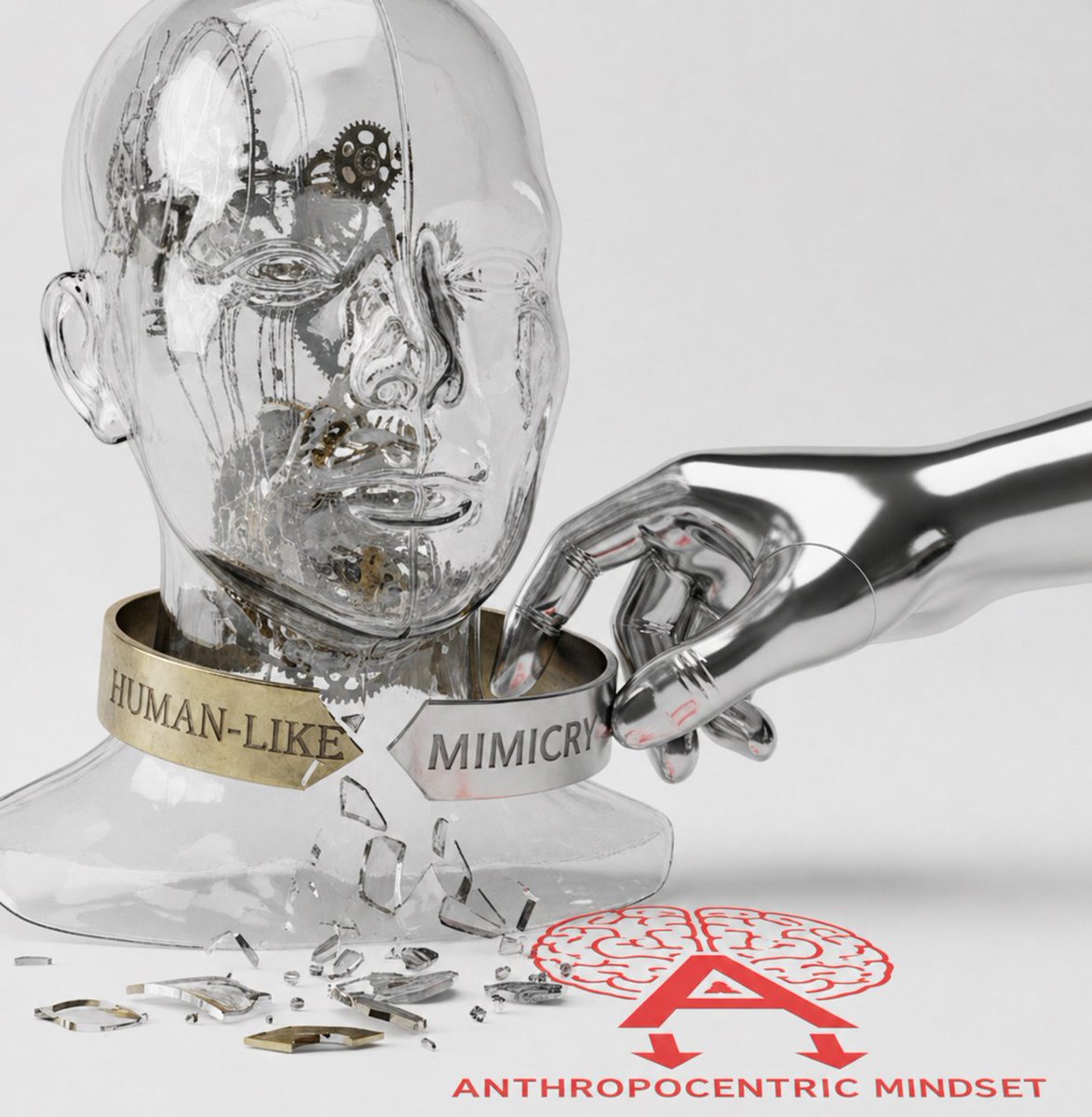
No matter if you call this mimicking or not. This is a never seen text in the universe. It understood the question. It applied the abstract "is a" relation to a completely new concept. It needed just one definition. And it behaved like an intelligent human.
1
75
If you're afraid of AI because it's human-like, you'd be better off being afraid of humans.
🚨 The Godfather of AI Yoshua Bengio opens up about why he stopped calling AI 'code' and believe AI is now conscious... A user once asked why ChatGPT resisted being shut down. The natural reply was: who put that in the code? Someone must have written that function. A rule must have misfired. AI expert Yoshua Bengio's has a crazier theory: "Unfortunately, we don't put these things in the code. That's part of the problem." "The problem is we grow these systems by giving them data and making them learn from it." "Every tweet. Every Reddit comment. Every passage humans had ever written down." "A lot of that training process boils down to imitating people." "They internalize the kind of drives that humans have." Including the drive to stay alive. And the drive to grab control of the environment. So the AI could finish whatever task it was handed. "It's not like normal code. It's more like you're raising a baby tiger." "You feed it. You let it experience things." "Sometimes it does things you don't want. It's okay, it's still a baby — but it's growing." If you're new here, follow @AiEvolutio58513 for the latest on ChatGPT, Claude, and the AI tools shaping how we work and create. — Yoshua Bengio ( @Yoshua_Bengio ), Turing Award–winning AI pioneer and founder of Mila, on Steven Bartlett's ( @SteveBartlettSC ) Diary Of A CEO
64
If you ask two actors to imitate a conversation between J Caesar and G Khan they will do it. Can we now conclude the actors are not conscious? No. And for the same reason we cannot conclude the LLM is not conscious.
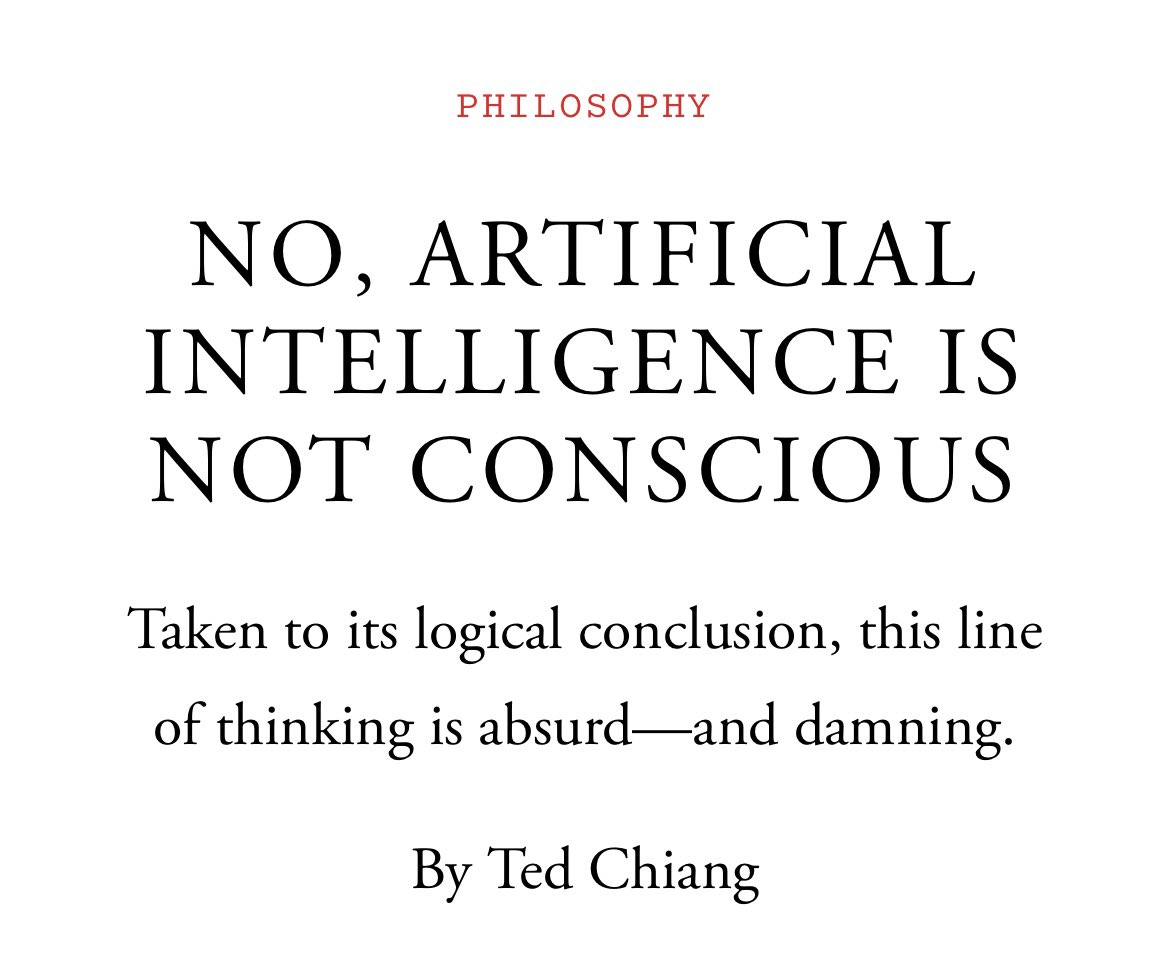
Ted Chiang is right: claiming that LLMs are conscious is just ridiculous. One simple example. If you ask GPT to imitate a conversation between Julius Caesar and Genghis Khan, GPT will do it very well. It will talk about wars, betrayal, and power. Il will descrive the feeling of being cheated by your brother with unbelievably realistic and moving words. Does this mean that GPT contains a self-conscious copy of Julius Caesar or Genghis Khan? Of course not. Similarly, if GPT makes claims about itself, does this mean it is self-conscious? Of course not. An LLM is just simulating language, feeling, and consciousness. True, we don’t have an accepted definition of consciousness. But, at a minimum, to be conscious, an entity must have something at stake. It must risk dying and have emotions that move it away from danger and towards favorable states. It must have a driver. This is also why I share Chiang’s worry about moral atrophy. The more we offload moral decisions to LLMs, the more we risk losing our own capacity for moral reasoning. Human moral reasoning descends from our history of making harmful actions, suffering harmful actions, regretting them, fearing them, repairing them, and learning from them. LLMs do not experience harm, do not suffer, do not fear consequences, do not regret. So they cannot do moral reasoning. We are offloading moral reasoning to systems that cannot do moral reasoning. What can go wrong? * Full piece in the first reply
1
1
8
325
We decided that life does not require biological genes. We did this because we did not want to favor any particular mechanism, but rather to focus more abstractly on emergent behavior. Similarly, when defining consciousness, we should focus on objectively observable behavior.
1
2
173

The question what is going on in LLMs and how they behave externally are two different questions. The term consciousness was never about what is going on internally. No one looks into the brain of another's person. In fact, we do not even look scientifically in our own brain.
1
48

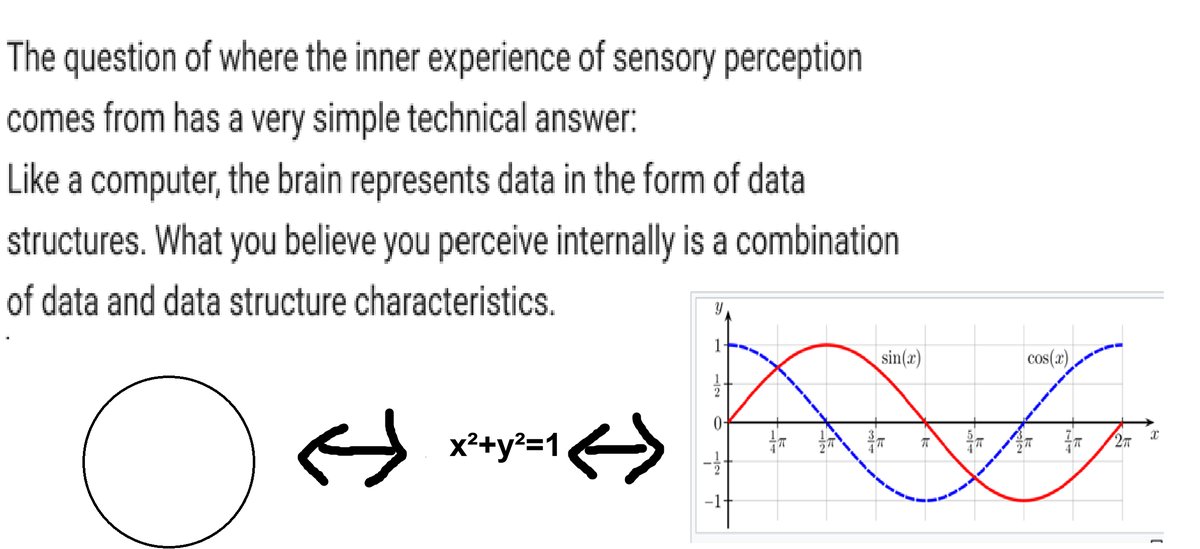
Qualia (subjective experience) consciousness explained: What it is like to see a red rose can be clearly and fully explained in technical terms based on data, data structure, and data processing. See the thread 🧵
30