gio :: jjong's # 1 bestie retweeted

8h
Because he looks fully adult now, a lot of the Asian fetishizers only like Asian men if they look extremely young.


26
368
9,466
385,724
Joshua Evans retweeted

A Baby Elephant Tried Its Best to Save a Child, Then the Adult Elephant Stepped In and Lifted Him Back to Safety 🐘❤️
168
844
7,103
601,310

Truth About Mao ZeDong & #China
"....life expectancy rose by 32 years – fastest in history. Adult illiteracy fell from 80% to 33%. Land redistributed. Women emancipated. Industrial base built. Treaty ports abolished. The country was unified after the Century of Humiliation

The Chinese socialist project from Mao to Xi: one continuous revolution.
The standard Western story about modern China is that Mao has been quietly buried by the Communist Party, that Deng Xiaoping repudiated his legacy, and that the China that emerged after 1978 is no longer really socialist. By implication, China’s success is the success of capitalism, not of the revolution.
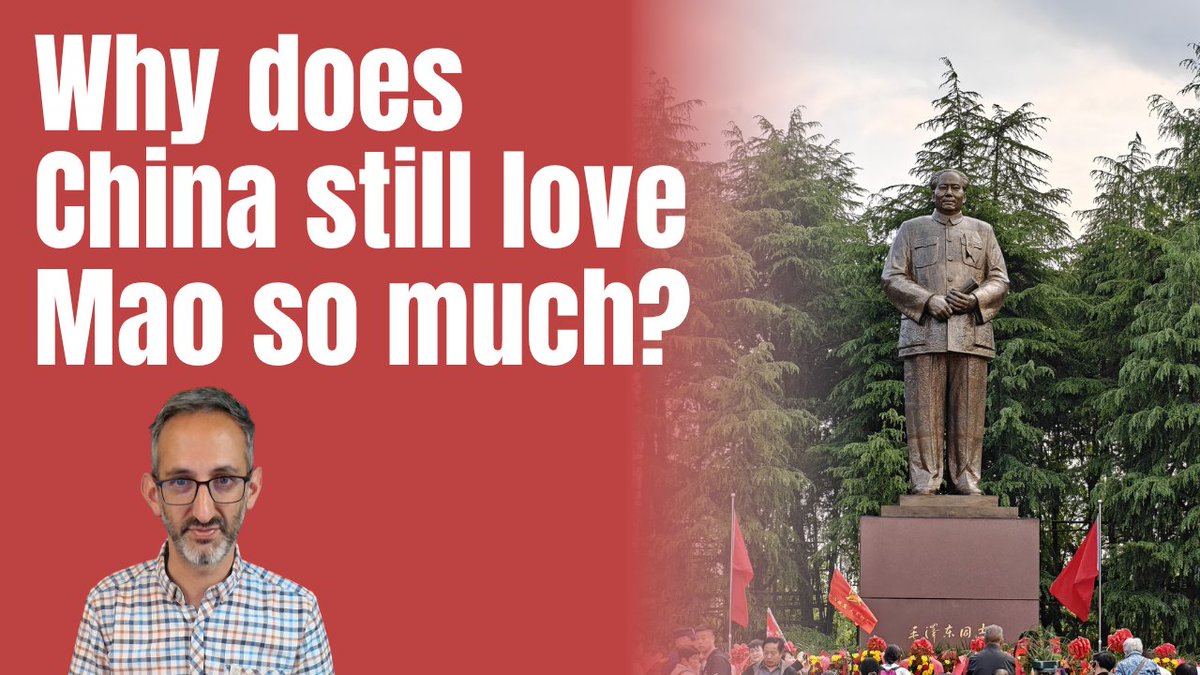
So why do ordinary Chinese people still travel in their millions to Shaoshan – the village in Hunan where Mao was born, now one of the most-visited tourist sites in China – to pay their respects to the founder of the People’s Republic? Stand there among the crowds and the Western story falls apart on contact.
In this video I draw on a recent trip to Shaoshan, and on the hard development data from the Mao era, to answer that question: the Mao era and the reform era are not opposed phases of Chinese history. They are two stages of a single revolutionary project, and the Chinese people know it.
Between 1949 and 1976, life expectancy in China rose by 32 years – the fastest improvement ever recorded by any country in human history. Adult illiteracy fell from over 80 per cent to 33 per cent by 1978. Land was redistributed. Women were emancipated. A complete industrial base was built from near-zero. The treaty ports were abolished. The country was unified after a century of fragmentation. This is the China the post-Mao leadership inherited – not the impoverished backwater of Western myth.
Without Mao, no Deng. Without 1949, no 1978. As the late Egyptian Marxist Samir Amin put it, the take-off of the post-1978 period “would not have been possible without the economic, political and social foundations that had been built up in the preceding period.” It is also exactly how the Communist Party of China understands its own history, in Xi Jinping’s doctrine of “the two cannot negates.”
youtube.com/watch?v=4LuBmu87…
4
5
191
Pepper Kat retweeted

The men sitting in church on Sunday and the men visiting adult sites during the week are often the same people.
Here's what I've learned after years of hearing their stories.
pepperkat.com/dreamgirl-diar…
1
1
43
Mbhebhi Wengq retweeted

(EXPLICIT) Released in 2002, Liquid City blended adult entertainment with Southern hip-hop culture, featuring rapper Mystikal as host and promoter of the project. Set against a New Orleans party atmosphere, the film mixed hardcore scenes with music, performances, and behind-the-scenes footage. At the time of its release, Mystikal was best known for his successful rap career and mainstream popularity, years before the legal allegations and controversies that later came to define much of his public image. Liquid City remains a notable example of the early-2000s crossover between rap culture and adult video productions.
115
3,424
54,148
432,872

I don't believe they're fused, at least not yet, and god willing that's what happens and fixes this. But given Hoyo's track record with writing adult women my hopes are low.
1
3

You have to understand - she is a child and totally out of her depth, discussing real issues with an adult (not giggling about hair braids, makeup or gym tights with her teen friends on TikTok). She's given a list of woke questions by her communist bosses and is totally clueless.
1
33
thee og kewchie mane retweeted

Not a single adult in sight, just a bunch of 12 year olds😭 this is actually crazy

225
3,387
88,515
2,163,057
Head of the Messy Mafia retweeted

Being an adult is watching this back and realizing Phaedra was actually the loser in this situation. Her husband was openly flirting with another woman right in her face, running scams behind the scenes, and she managed to lose one of her closest friends on the show at the exact same time.
That’s not a victory lap. That’s a series of unfortunate events 🤷🏾♂️
Jun 13

WHY IS PHAEDRA CALLING HER “CAPTAIN CRUNCH!?” 🤣🤣🤣
Roku TV strikes againnnnnnnn sjsjsjsjss
#RHOA
27
61
777
71,251

O no an adult drew adult content. I'm a sensitive deltarune larper let me post about how that's such a horrible thing
102
Boy with Girl retweeted

15h
These games make you cum in few minutes: if you want to play these adult games clink on the link➡️ playnight.live
3
255
806
17,913

I hate being the only girl ( young adult) at my job! It’s literally nothing but old ass niggas bru😐.
12

Express The Sex Feeling retweeted
14h
These games make you cum in few minutes: if you want to play these adult games clink on the link➡️ playnight.live
1
249
1,061
23,686

chloë retweeted

Jun 12
Having parents who didn't prepare you for literally anything in life, judging you for being "behind" as an adult is definitely a canon event for a lot of neurodivergent people.
114
2,514
20,943
372,558