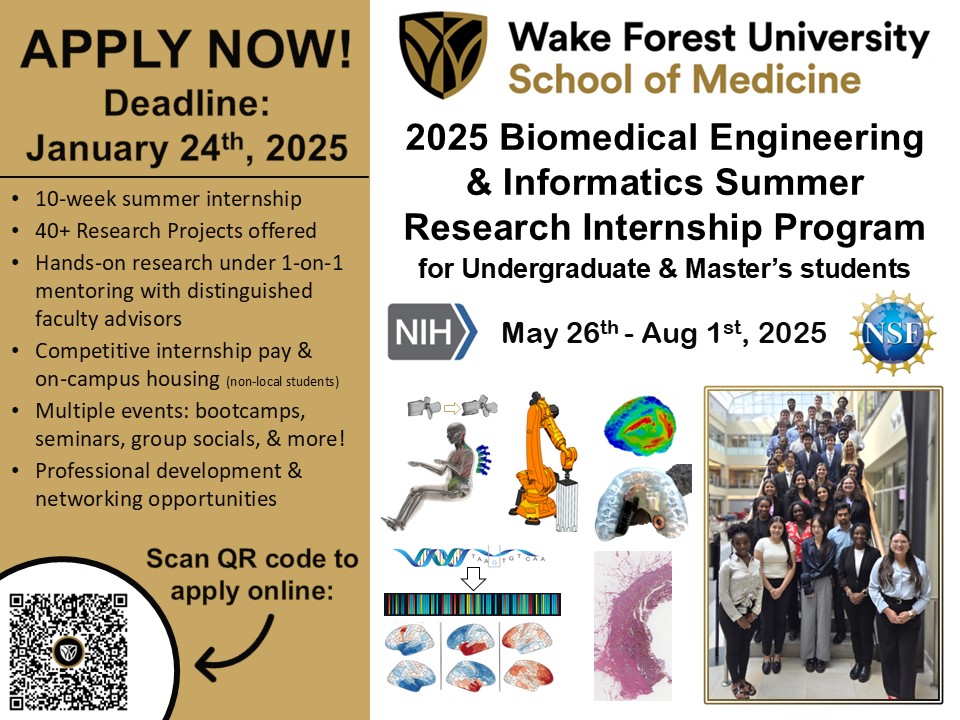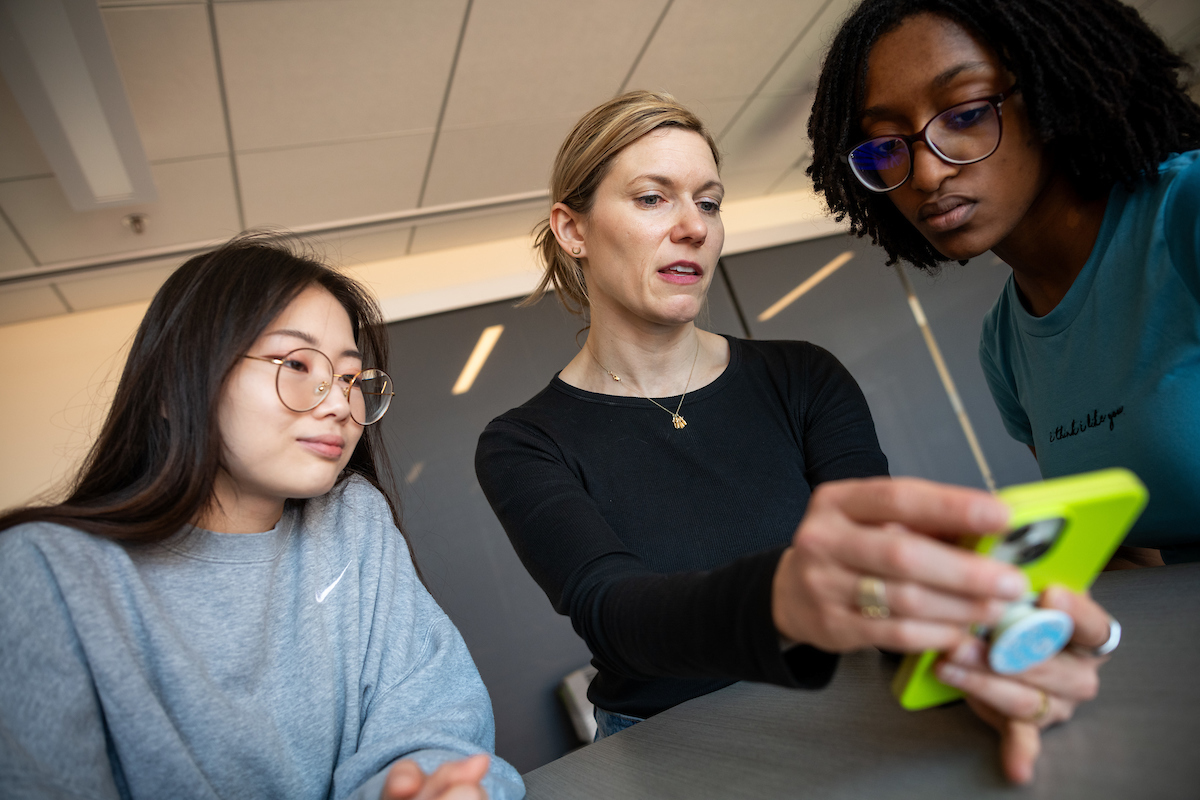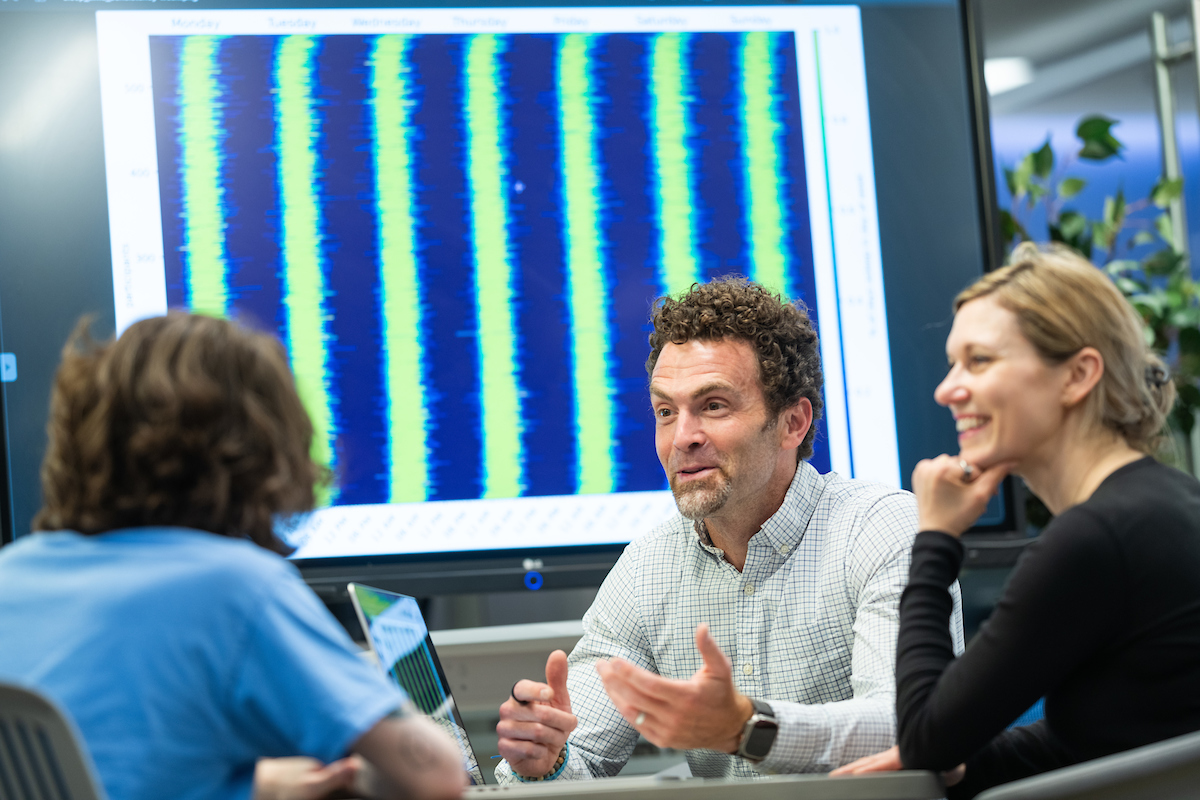
📣Exciting news! Our #REU & #CALIBIR summer program is now accepting applications‼️
Open to undergraduate & masters students from all institutions, including WFU & community colleges 🌟
Don't miss this chance to dive into hands-on research & apply now!➡️rb.gy/1uum04
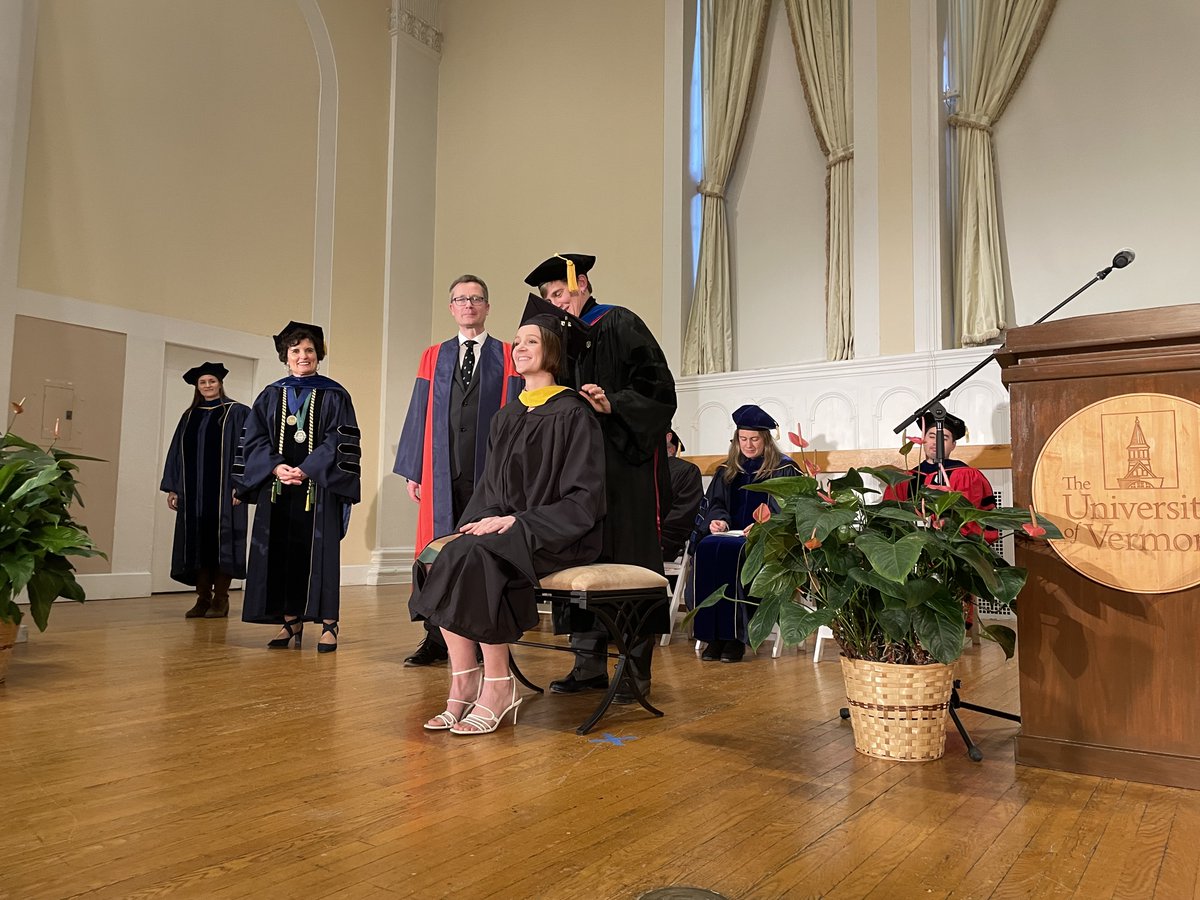
Learn about how @LaraWeed, a PhD candidate and part of a Wu Tsai Performance at @stanford seed grant, became interested in the impact of sleep and the menstrual cycle on neuromuscular performance in women in this @StanfordEng profile. buff.ly/3vSMo2M
New Agreement Aims to Engineer Improved Access to Rural Healthcare. Center for Biomedical Innovation and the University of Vermont Health Network Partner to Develop Modular Healthcare Delivery Vehicle #uvmresearch@uvmcemsuvm.edu/news/cems/new-agreem…
We're hiring a research specialist to help us collect, manage, and analyze our brain imaging and behavior data! Please spread the word, or come join us yourself! github.com/djangraw/hiring/t…
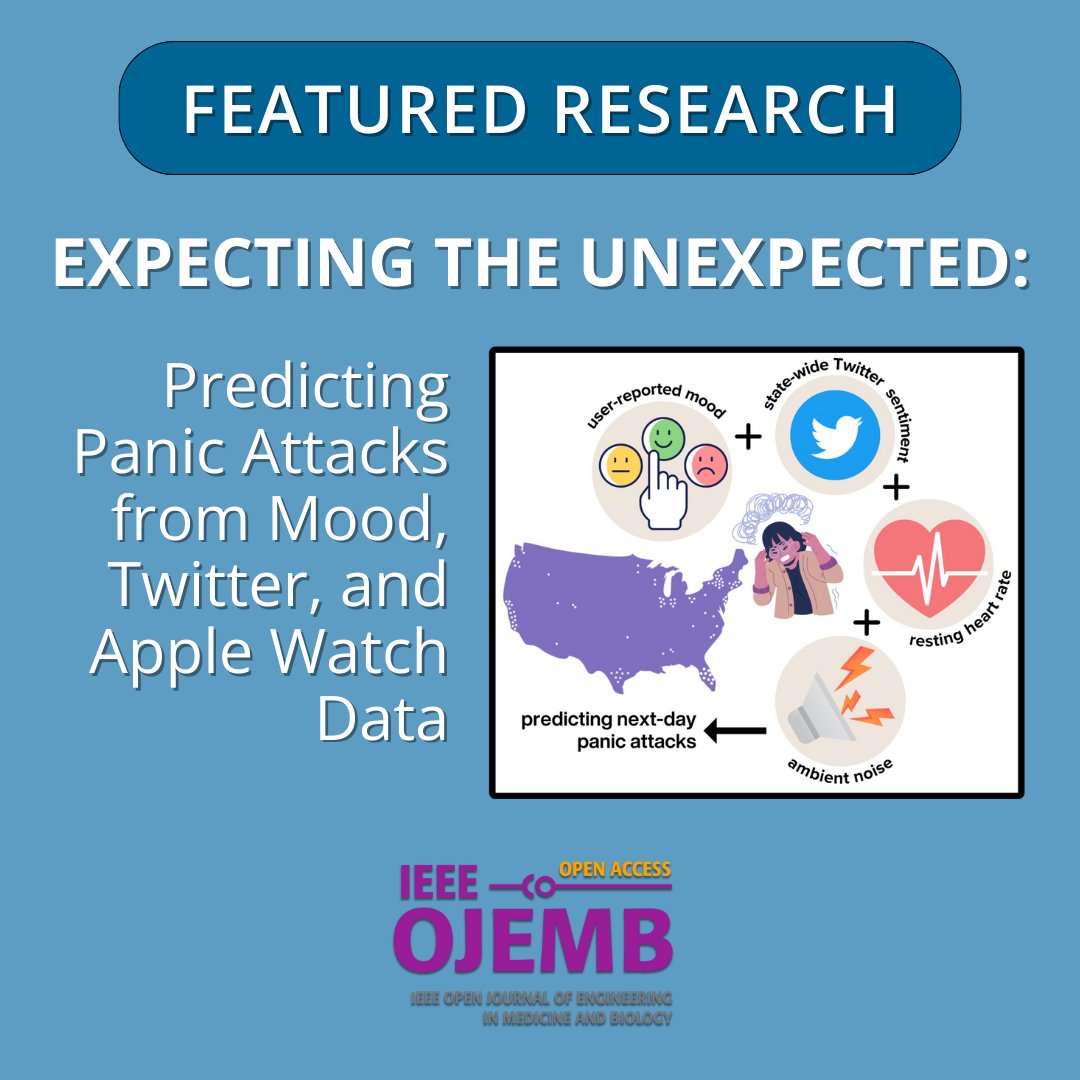
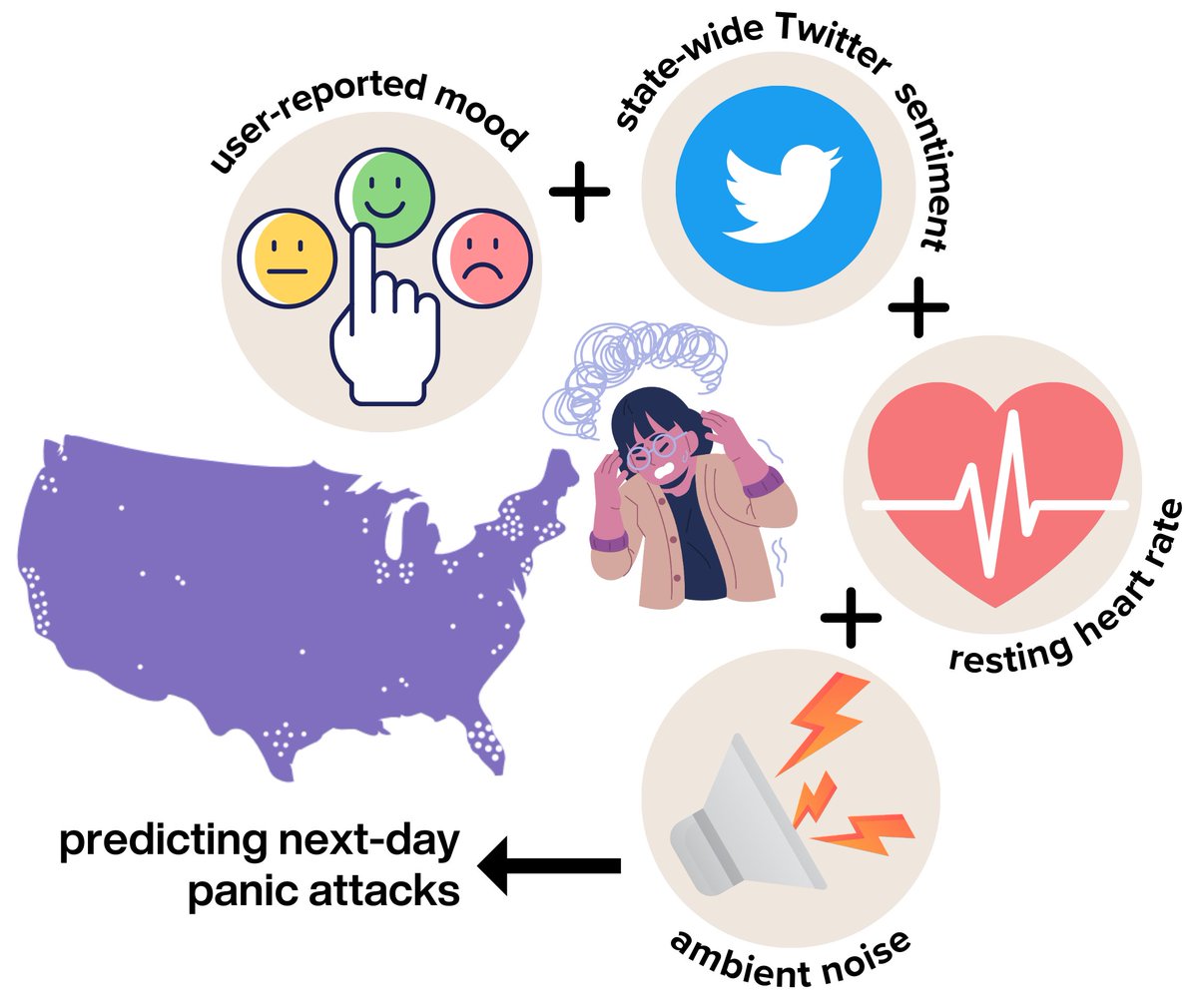
🌟Exciting news!🌟Our paper, "Expecting the Unexpected: Predicting Panic Attacks from Mood, Twitter, and Apple Watch Data," is now out in @IEEEembs OJEMB.🧠 Over 28% of adults have experienced panic attacks; we dive into new ways to predict & prevent them: ieeexplore.ieee.org/document…
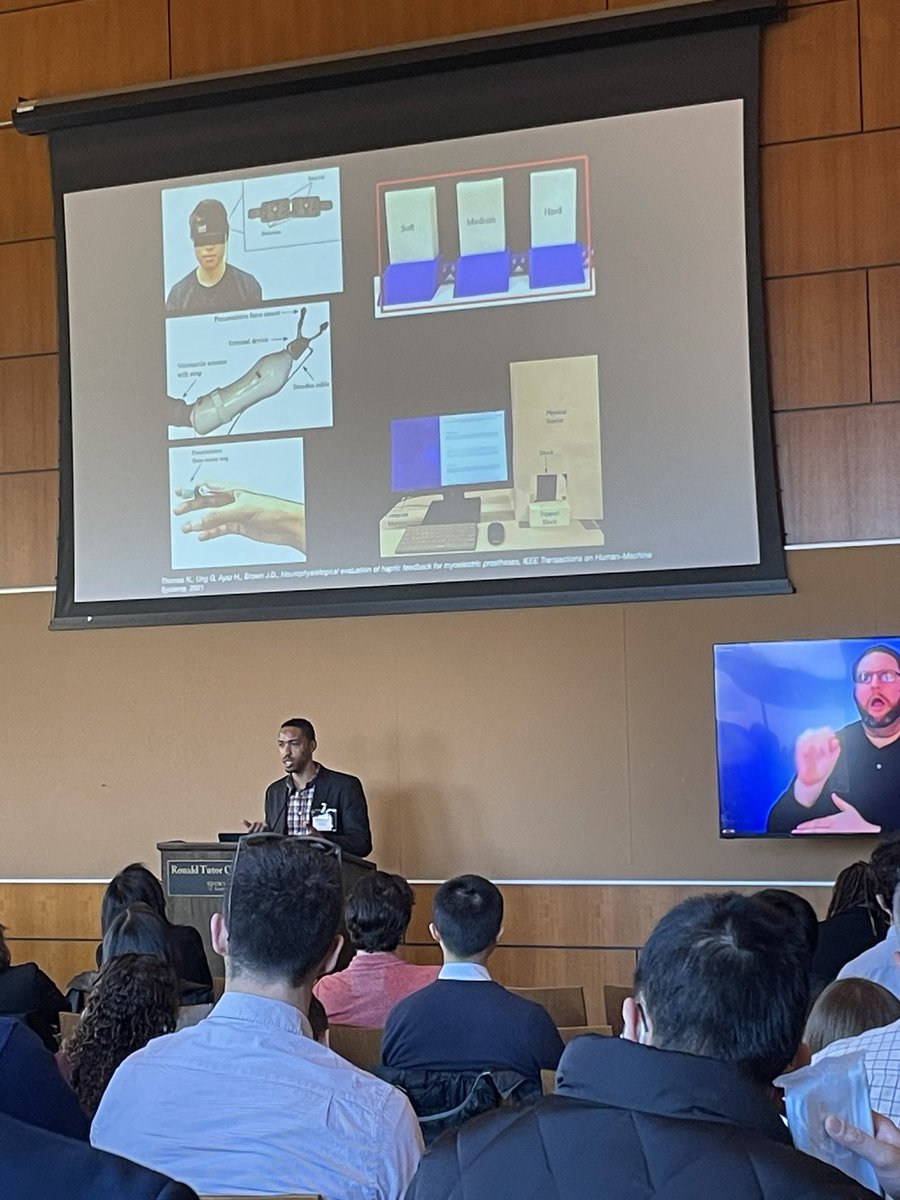
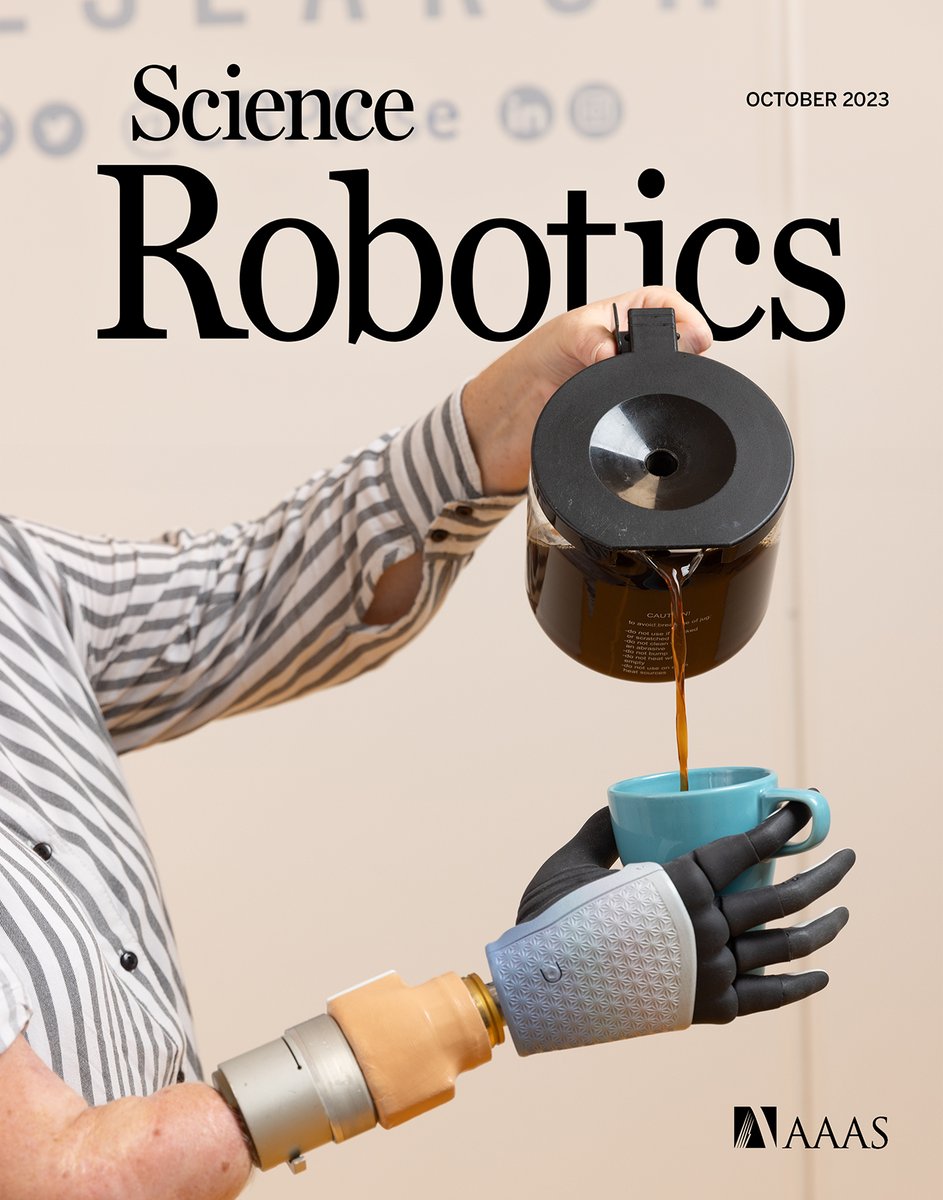
Thank you @SciRobotics for giving researchers like myself, Edoardo Battaglia, and @MarcieOMalley a platform to advocate for greater inclusion of end-users in prosthesis research by publishing our article featuring four prosthesis users as authors who kindly shared their stories!
The October issue of Science #Robotics has arrived!
Roboticists present new advances in prosthetics, including a prosthetic foot that replicates neural sensations to allow its users to walk more naturally, and a three-year case study of a bionic hand.
scim.ag/4qO
I am hiring PhD students in the Movement Bioengineering Lab at the University of Utah.
Please share or apply by January 1!
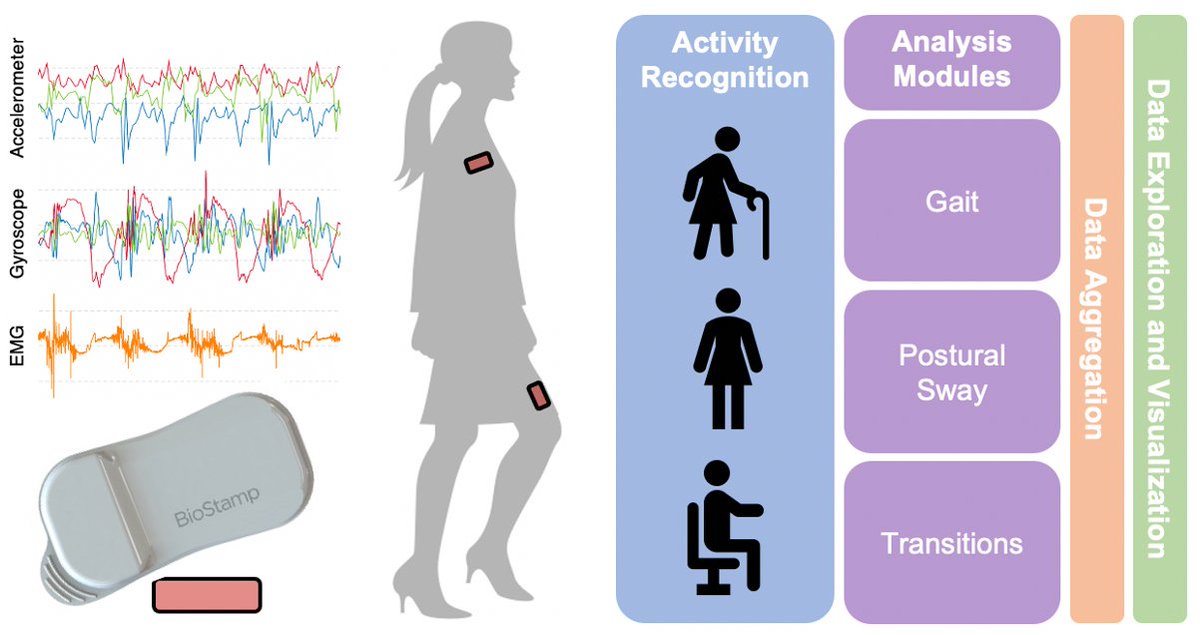
Join us at the intersection of movement biomechanics, computer vision, machine learning, and wearables as we create tools that improve human mobility.
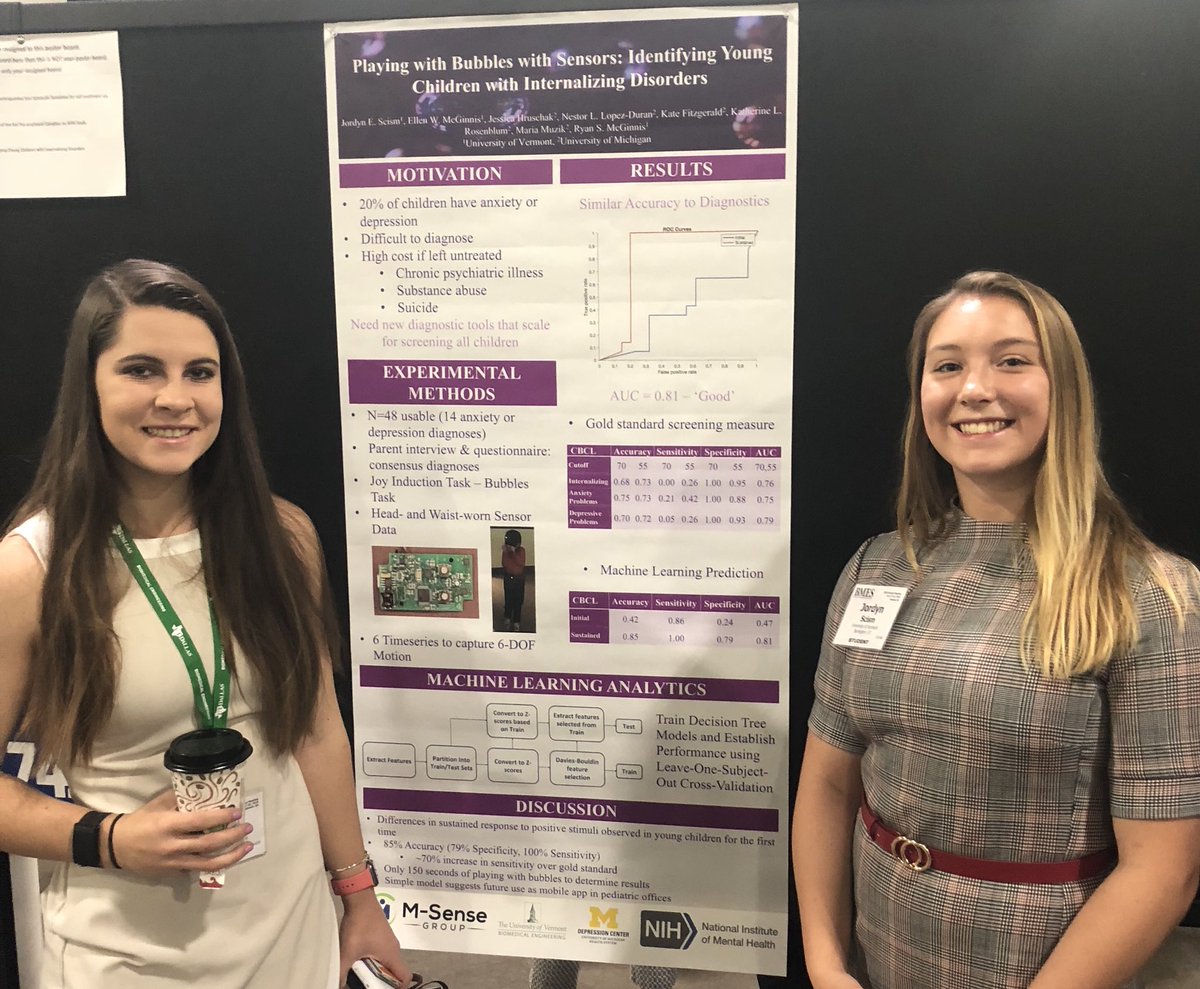
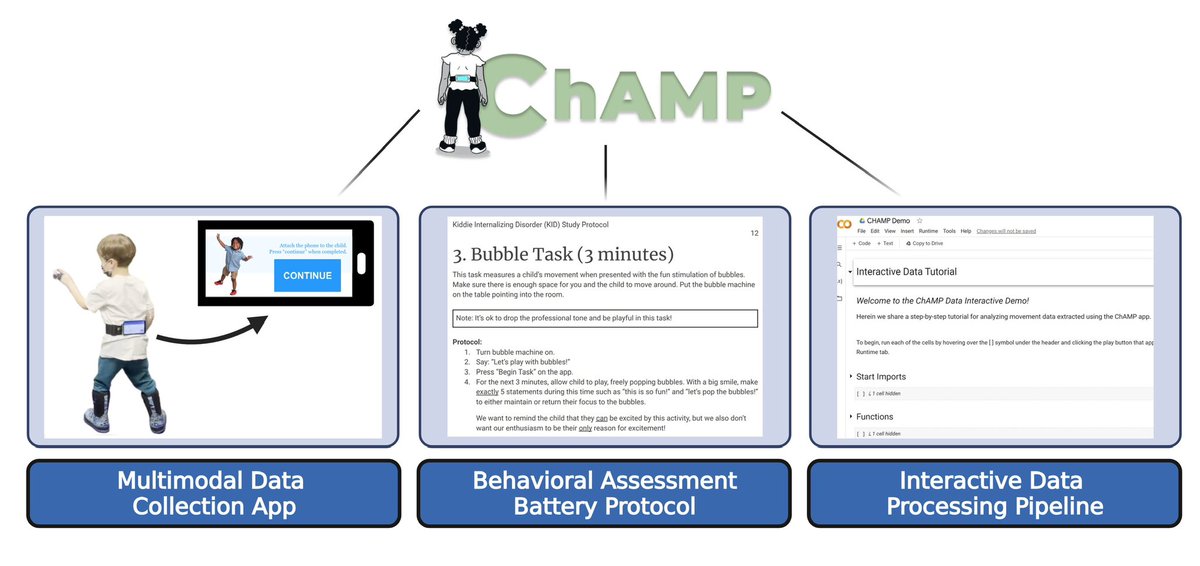
🚀 Delighted to share our latest publication, just out in @IEEEembs JBHI, “The ChAMP App: A Scalable mHealth Technology for Detecting Digital Phenotypes of Early Childhood Mental Health.” pubmed.ncbi.nlm.nih.gov/3801…… 🎉🎉
📻Tune in this Friday December 1st to listen to the very first 1⃣ episode of "Gears of Progress" with Dr. Elijah Kuska on wonders of computational biomechanics, synergies debates, and importance of education accessibility.
Perturbations are designed to provoke a specific context of instability that may or may not generalize to a broader understanding of falls risk. Latest from @Andy_Shelt: "Does the effect of walking balance perturbations generalize across contexts?" (1/3)
authors.elsevier.com/a/1iAC6…
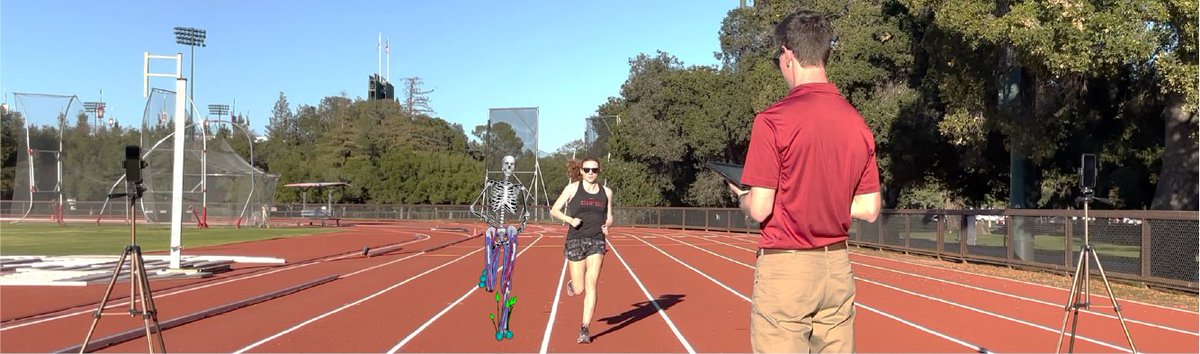
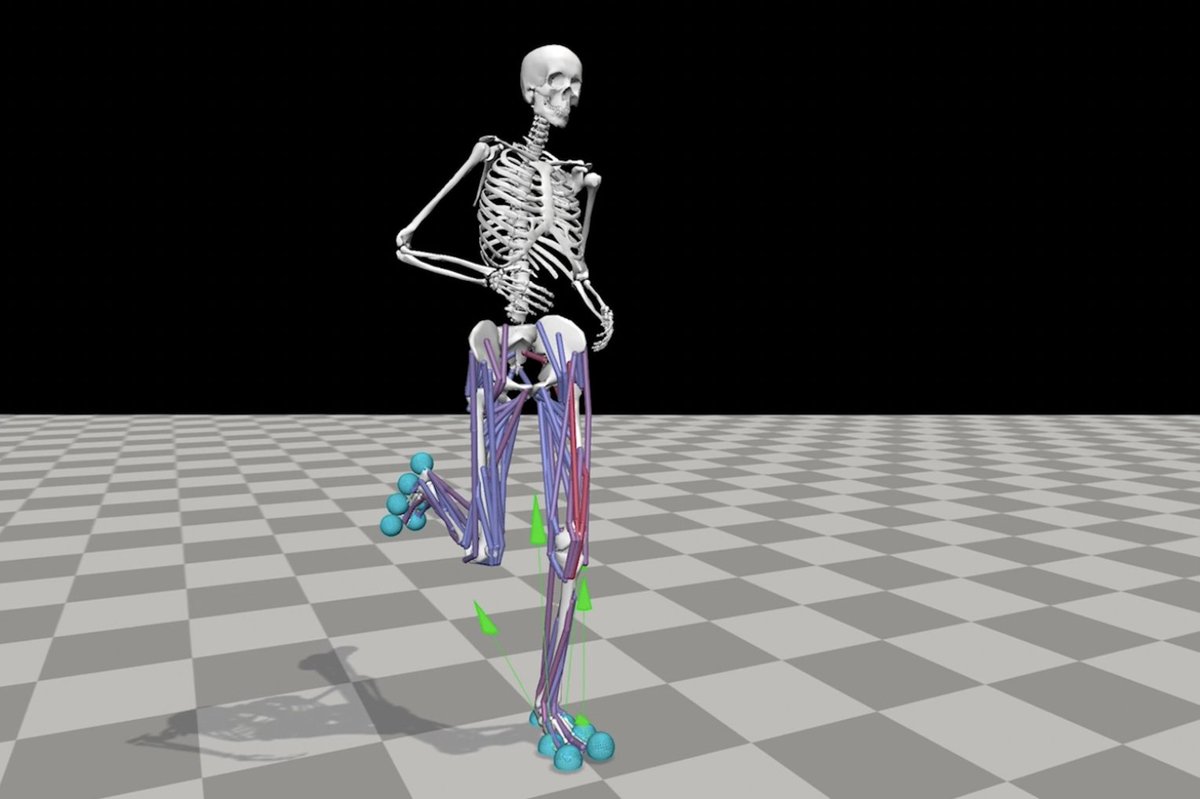
🚨 "In a new study in PLOS Computational Biology, a team of researchers at Stanford Univ. introduces OpenCap, a powerful open-source motion-capture application that uses video from two calibrated iPhones working in tandem to quantify human motion and the underlying forces." 😎
#UVM and Gund researchers are tracking how nature, exercise, and stress affect our health.
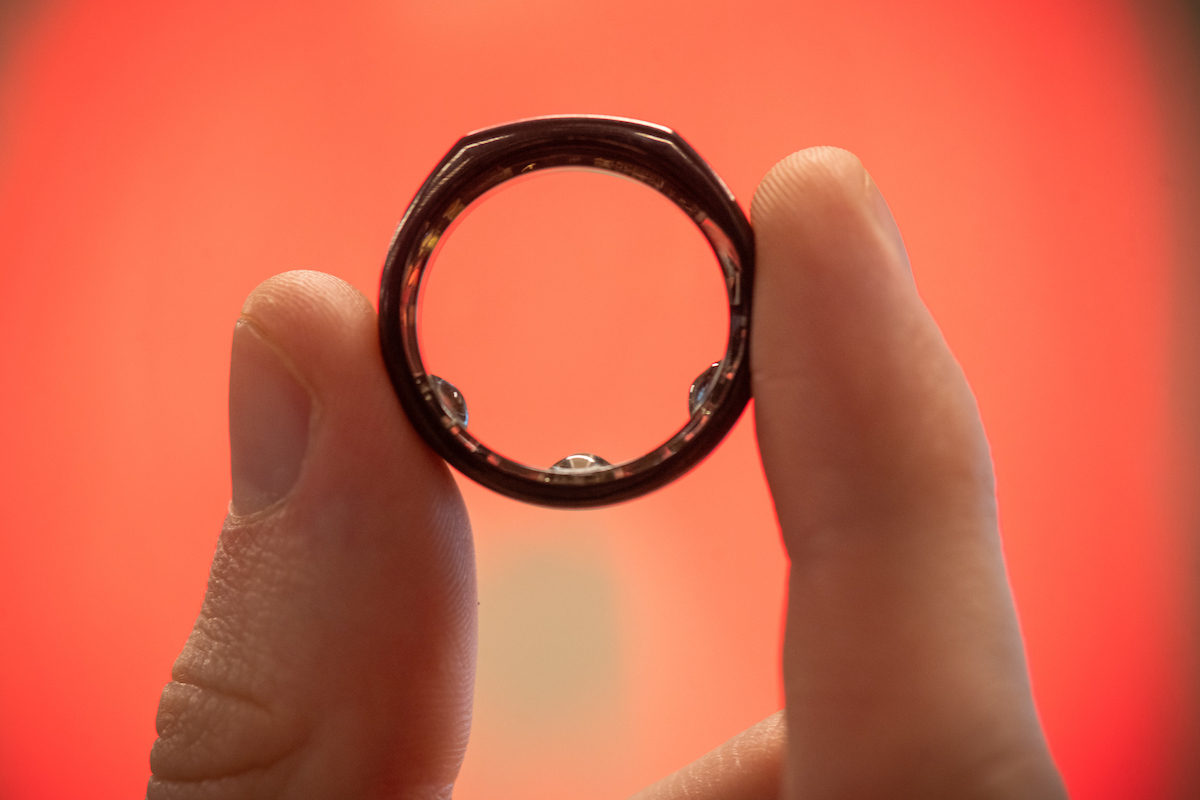
The @uvmcomplexity-led study will use @ouraring to measure biometrics from 600 people over time.
Read Oura's blog on the LEMURS project: go.uvm.edu/rhbvw#UVMresearch
I had been holding off on this public announcement for quite some time now, but yesterday, the truth came out. This last February, after a streak of over 775 days in a row, I finally had my big miss-step (😉 pun intended) for my 10,000 step/day goal.
1/1 🧵
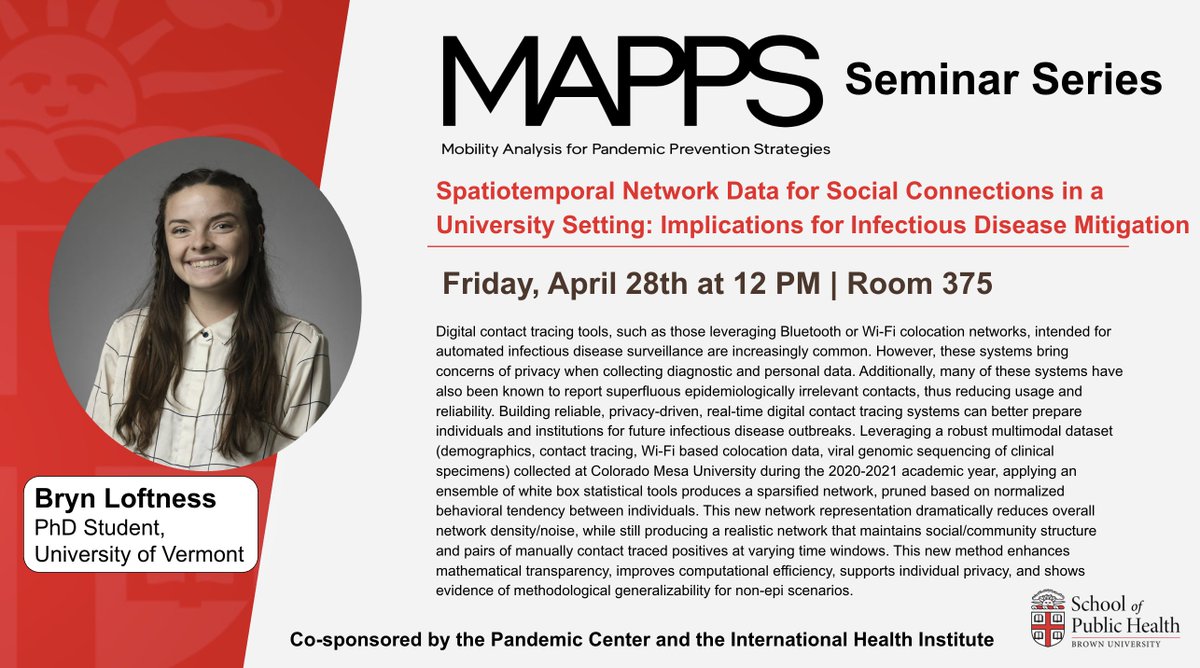
"Spatiotemporal Network Data for Social Connections in a University Setting: Implications for Infectious Disease Mitigation"
Upcoming seminar by PhD student & recent NSF GRFP awardee @technologybrynevents.brown.edu/epidemiolog…
ALT Digital contact tracing tools, such as those leveraging Bluetooth or Wi-Fi colocation networks, intended for automated infectious disease surveillance are increasingly common. However, these systems bring concerns of privacy when collecting diagnostic and personal data. Additionally, many of these systems have also been known to report superfluous epidemiologically irrelevant contacts, thus reducing usage and reliability. Building reliable, privacy-driven, real-time digital contact tracing systems can better prepare individuals and institutions for future infectious disease outbreaks. Leveraging a robust multimodal dataset (demographics, contact tracing, Wi-Fi based colocation data, viral genomic sequencing of clinical specimens) collected at Colorado Mesa University during the 2020-2021 academic year, applying an ensemble of white box statistical tools produces a sparsified network, pruned based on normalized behavioral tendency between individuals. This new network representation dra