The Michigan Tech Archives provides access to resources documenting the history of Michigan's western Upper Peninsula and Michigan Technological University.
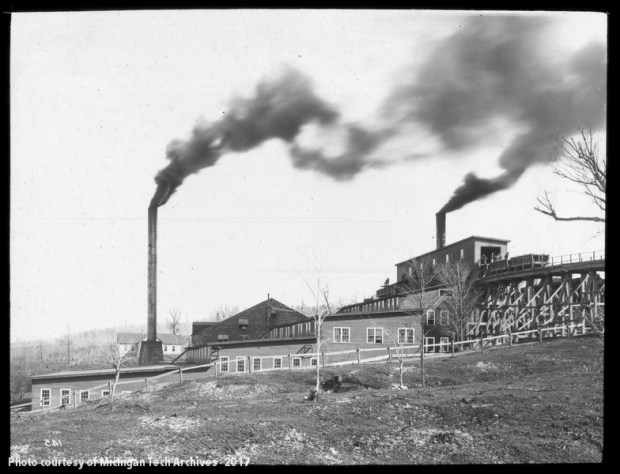
#MiningMonday drops in what is likely a Tamarack Mine stamp mill near Torch Lake. Mills for Tamarack, Osceola, and Ahmeek were clustered on the shores of the lake, providing critical water access. The housing location nearby was dubbed Tamarack Mills and later Tamarack City.
ALT Stamp mill on a hill with smoke pumping from its stacks
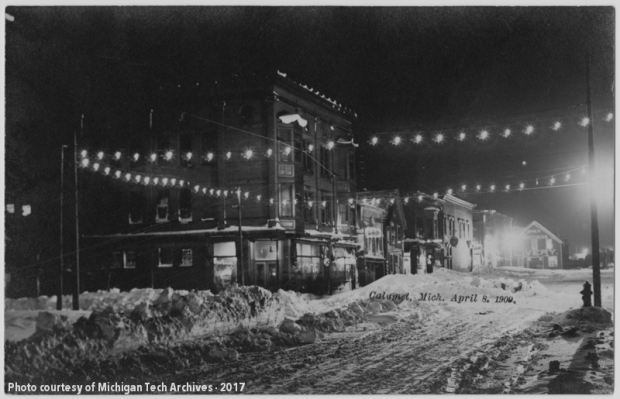
Your eyes are not deceiving you: the date on this photo is indeed April 8. This is the Copper Country, after all!
#ThrowbackThursday to the intersection of Sixth and Oak in Calumet, 1909. The Michigan House stands at left, welcoming patrons then as it does now.
ALT Snow-covered streets surrounded by well-lit buildings
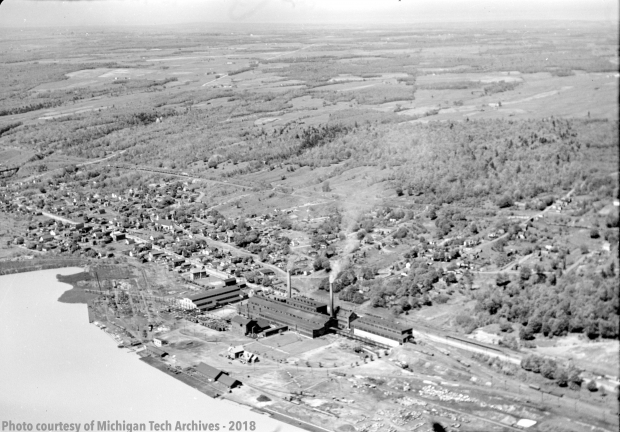
#MiningMonday takes in an aerial view of Calumet & Hecla's smelter in Hubbell, 1947. When this photo was taken, the smelter was about 60 years old and still busily processing copper received from C&H's mills in nearby Lake Linden. A train puffed by in the background of this shot.
ALT Aerial view of a smelter with a house- and tree-lined hillside behind it
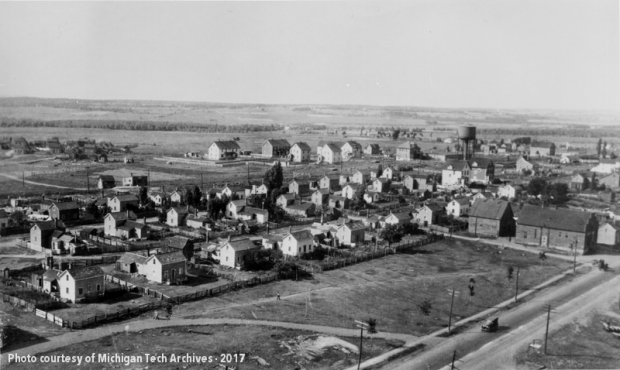
Our #MiningMonday has a bit of an Irish flavor for #StPatricksDay! This 1925 image depicts Limerick, a housing location near the Quincy Mine that shared its name with a county and city in the Emerald Isle. Despite the name, Irish families were never a majority in Limerick.
ALT Neighborhood featuring a water tank and houses with large wooden fences
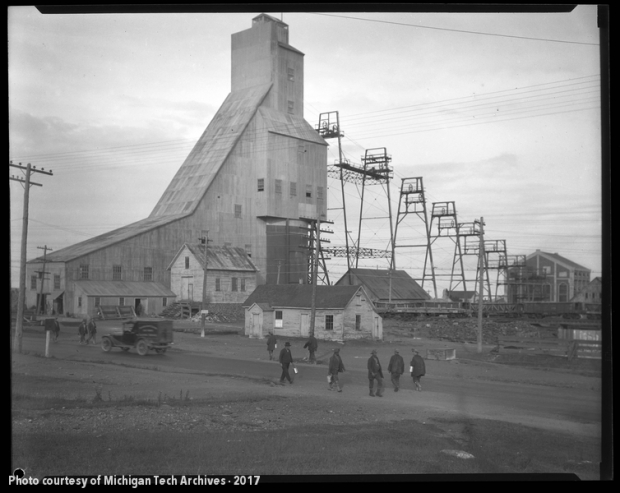
It's another #MiningMonday at Quincy No. 2 as men stroll in for one shift and out of another, swinging lunch/dinner pails. How many of these workers do you think were having pasties?
ALT Men walking past a vehicle with lunch pails as a mine shafthouse stands in the background
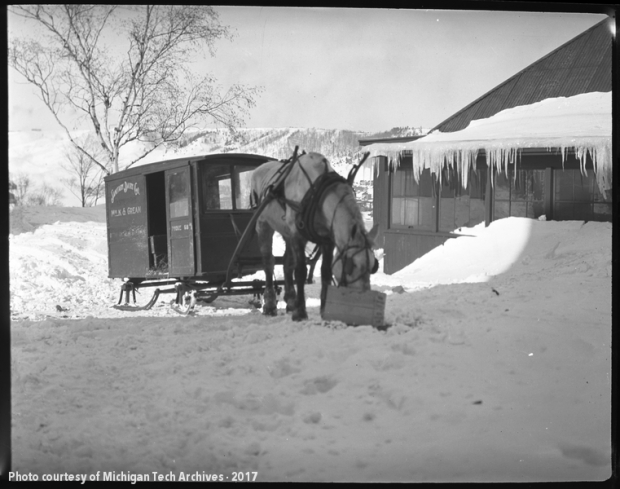
Talk about a scenic place to refuel! John Warmington of Sanitary Dairy topped off his delivery horse with a snowy Quincy Hill in the background in February 1922. After a good meal, the two were off for another run.
#ThrowbackThursday
ALT Horse eating from a feedbox while hitched to a delivery wagon
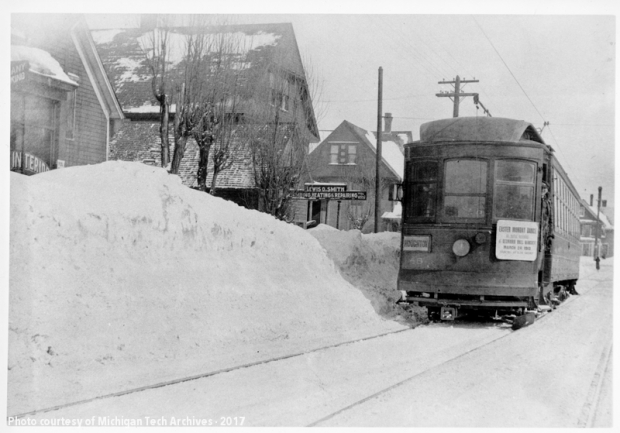
Houghton County Traction Company's Car No. 48 motors through a snowy Laurium in this circa March 1913 picture. Based on the sign for Lewis O. Smith, plumber, this may have been taken on 1st Street, a prime Laurium thoroughfare then and now.
#TrainTuesday
ALT Streetcar moving down a snowy road with high banks
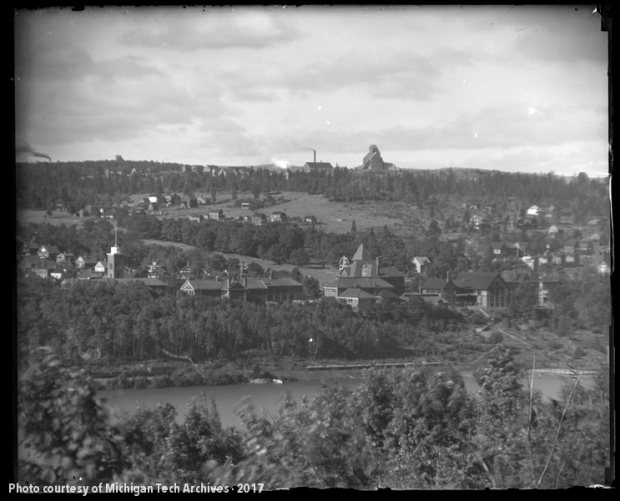
Images like this illustrate why the Michigan Mining School (@michigantech) was built in Houghton. Students looking for hands-on experience as mining engineers didn't have far to go far from campus (shown at the center of this photo) to find a mine (Isle Royale #2).
#MiningMonday
ALT Image of college campus with a mine shafthouse atop a hill behind it
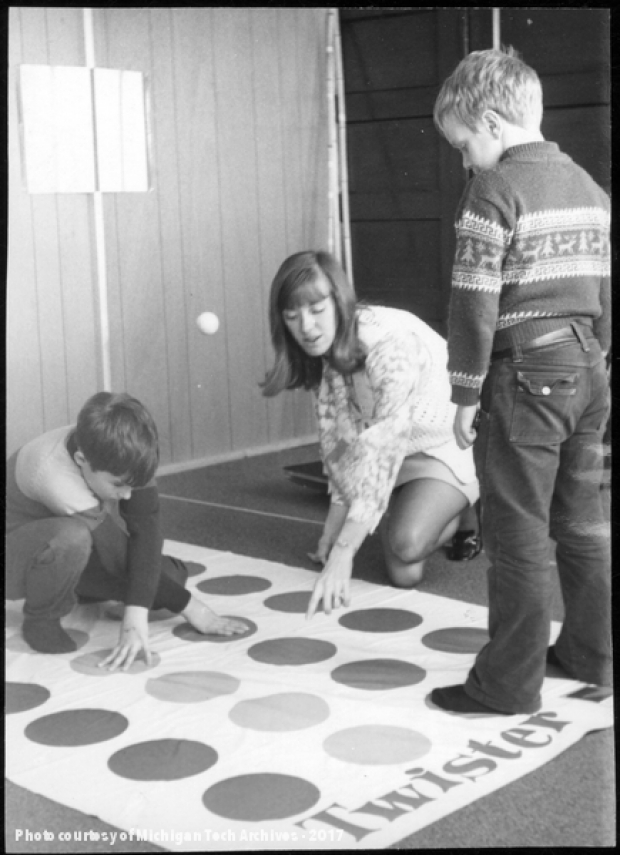
Playing Twister at school? Yes, please.
#ThrowbackThursday to the Learning Lab at the public schools of Calumet, 1973. This experimental space used games and other tools to help children develop motor skills and learn to follow directions.
ALT Two children playing Twister with an adult giving directions
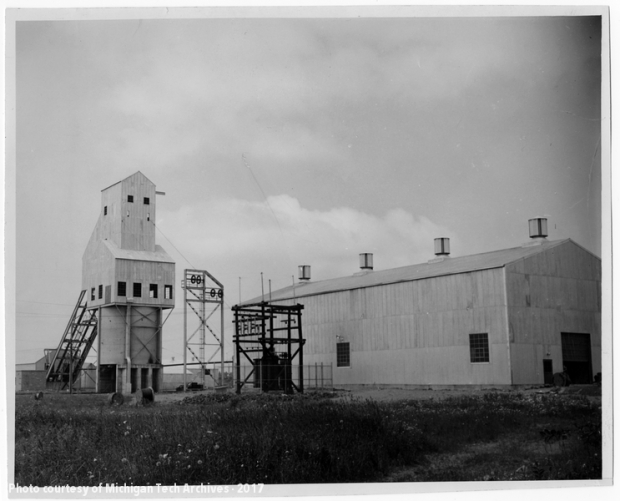
#MiningMonday takes us to Calumet & Hecla's Osceola No. 13 shaft, located between Millionaire Street and E Street just south of Calumet. Osceola No. 13 was one of the Copper Country's last survivors. Dewatered in the 1950s, it remained in operation until the 1968-1969 C&H strike.
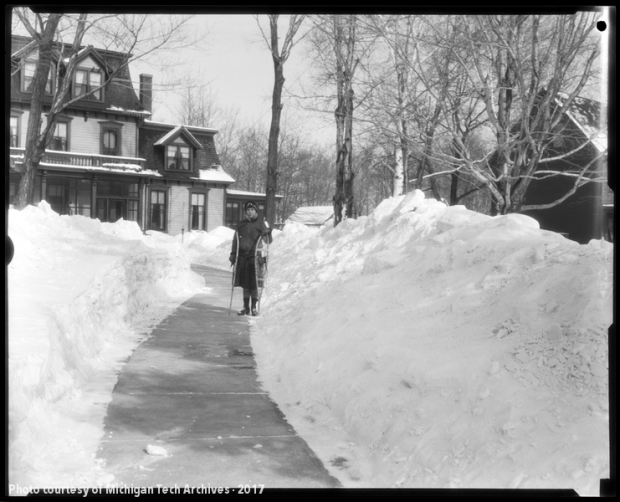
That's a cleared sidewalk to be proud of. Nice work.
#ThrowbackThursday to Edith Hotchkiss, wife of @michigantech's then-president William O. Hotchkiss, in front of her home in February 1928.
ALT Woman with snowshoes on a cleared sidewalk in front of a large house
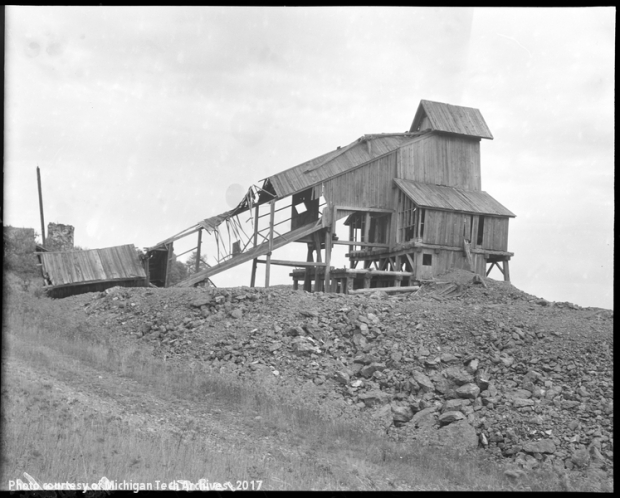
#MiningMonday heads north to the abandoned Delaware Mine, 1935. By this point, it had been fifty years since any mining work was done on the Delaware property. A largely unsuccessful operation as far as copper production goes, Delaware has had a strong second act as a mine tour.
ALT Abandoned and crumbling mine shaft house atop a poor-rock pile
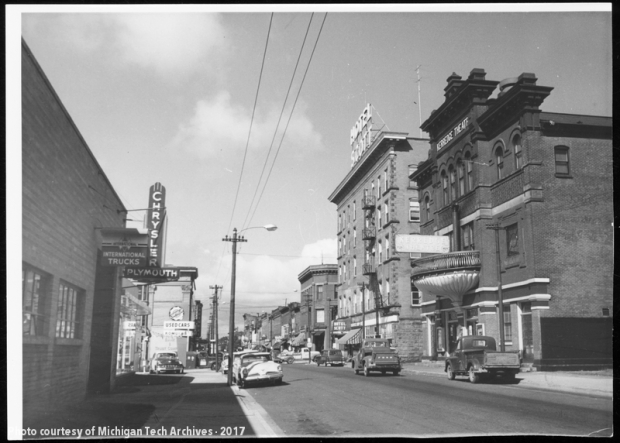
It almost hasn't changed, has it? We've lost the Kerredge Theatre, and the cars look different, but Quincy Street in Hancock is still very obviously itself in this photo, probably taken in the late 1940s.
#ThrowbackThursday
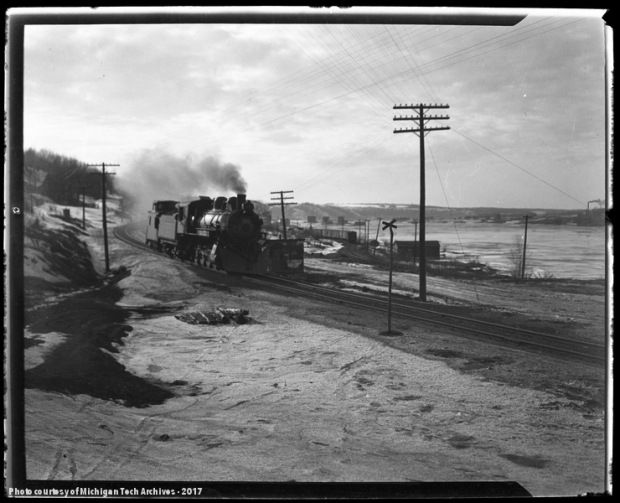
Every Copper Country railroad needed a good plow train. #TrainTuesday features one from the Copper Range Railroad as it chugs its way along the slushy Portage in March 1921.
ALT Train with snow plow on the front moving down some snowy tracks
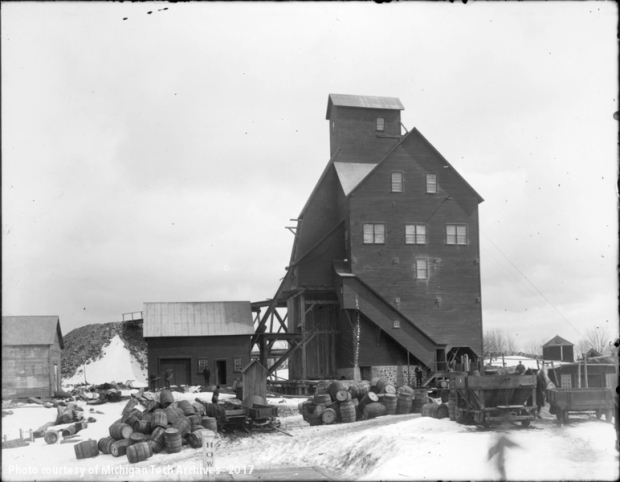
The Victoria Mine near Rockland lasted longer than most, but all good things must end. In 1849, the Cushin Mine began work on prehistoric copper pits in the area. Various mergers, new owners, and reorganizations followed until Victoria finally closed in 1921.
#MiningMonday
ALT Shafthouse, auxiliary buildings, barrels, and rail cars in the snow
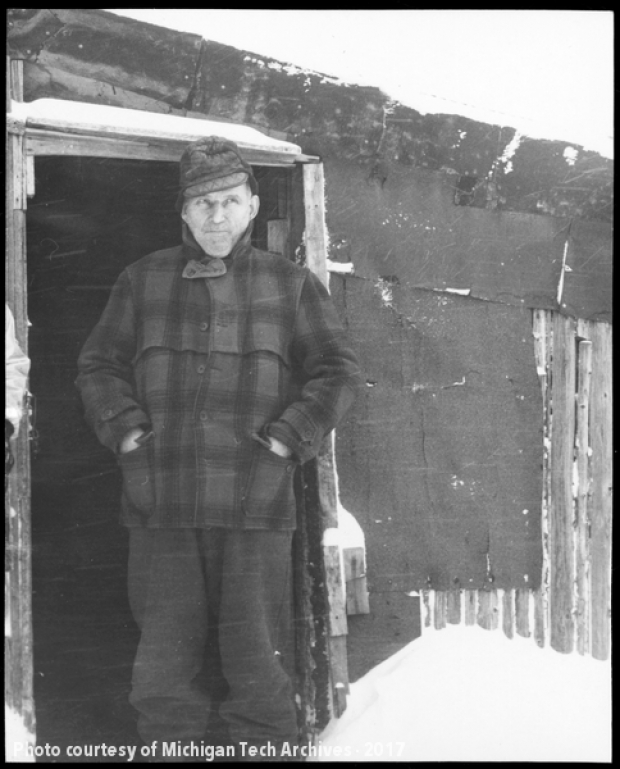
#ThrowbackThursday to Bill Mattila, who resided atop Brockway Mountain for more than thirty years. Mattila was born in Baltic and served in the army during WWII before heading to Keweenaw County to live off the land and on his wits.
Read more on our blog: blogs.mtu.edu/archives/2019/…
ALT Man in plaid jacket and hat standing in front of a tarpaper house in the snow
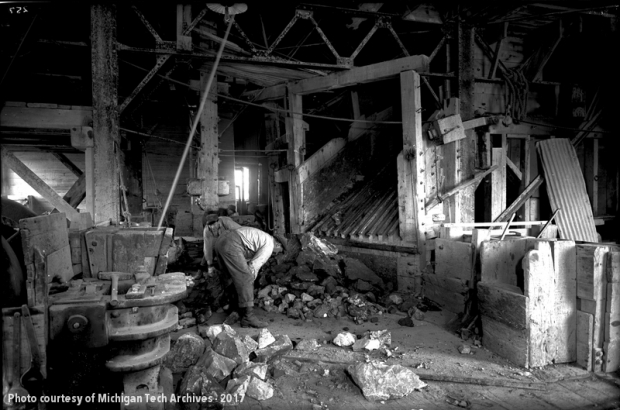
It was a simple tool with a ferocious name. The grizzly acted as an oversize sieve in a mine's rockhouse. As rock poured down an incline toward the grizzly, small pieces could squeeze through its vertical supports. Large ones would be caught and broken up later.
#MiningMonday
Shout out to the photographers of the past who also kept getting their thumbs over the lens.
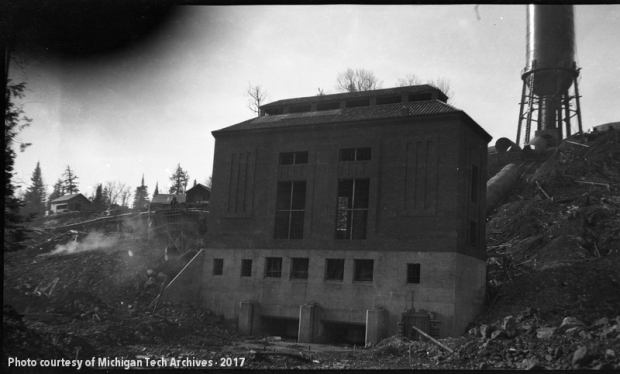
#ThrowbackThursday to a trip to the Victoria Dam in Ontonagon County. This picture was mailed to its recipient on January 24, 1931.
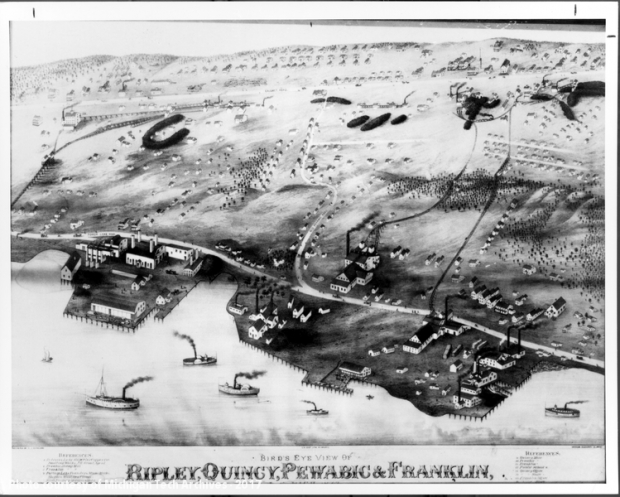
#MiningMonday has a bird's-eye view of the area around Quincy Hill, circa 1881. This artist's rendering features the contemporary operations of the Quincy, Franklin, and Pewabic mines, as well as homes, schools, and happy little trees.
ALT Sketch showing an artist's rendering of various mining operations