
Joined September 2020
- Tweets 80
- Following 381
- Followers 1,881
- Likes 130
14 Photos and videos

Martínez Group retweeted

6 Nov 2025
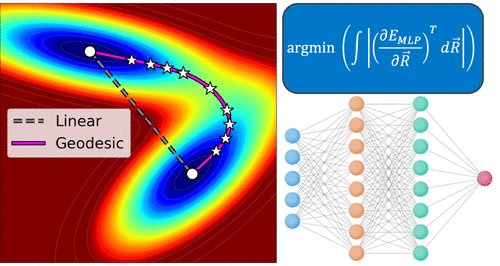
Identifying transition states often requires hundreds/thousands of ab initio calculations. We report a more efficient route by finding the shortest path (“geodesic”) between reactant and product on a machine-learned potential energy surface, without any ab initio calculations.
1
3
9
696
Martínez Group retweeted
30 Oct 2024
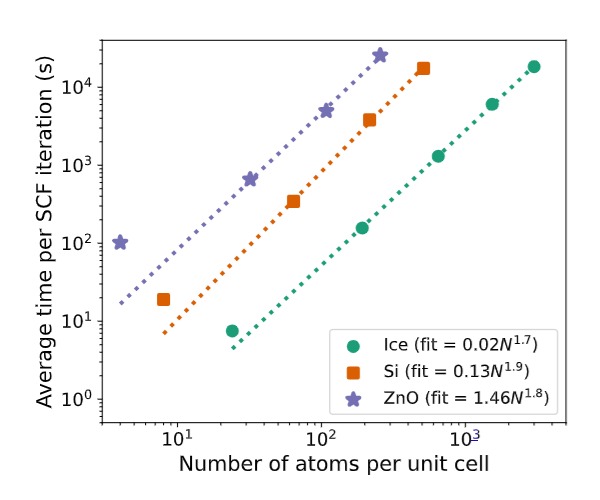
Excited to share @mtzlab 's venture into periodic quantum chemistry. All-electron hybrid DFT on unit cells with hundreds (or few thousands) of atoms in the timescale of hours, with quadratic scaling vs system size. GPUs Gaussian orbitals ftw. #compchem
arxiv.org/abs/2410.22278
2
10
58
5,377

16 Oct 2024
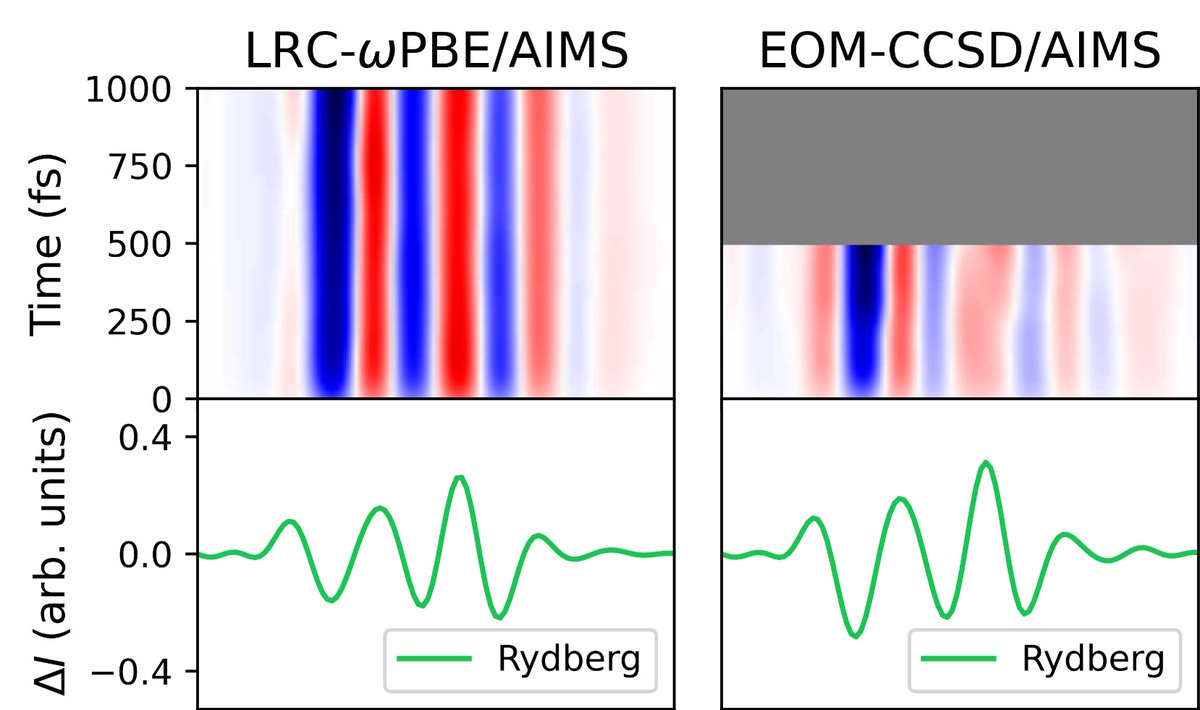
Check out our new collaborative study @JPhysChem A on probing coherent vibrational dynamics of CBr₄ with XUV spectroscopy of Br 3d electrons. Experiments by the Leone group @UCB_Chemistry and theory by our postdoc @fullCIalchemist
doi.org/10.1021/acs.jpca.4c0…
17
3,725
Martínez Group retweeted

15 Oct 2024
My research group at @USC is #hiring. We have multiple PhD and postdoc positions in Spring and Fall 2025. Interested candidates can email me with CV and research interests. Check our website for details: xu-group-usc.com/. Please kindly RT 👍
#USC #PhDposition #Postdocs
2
11
18
3,075
26 Jun 2024
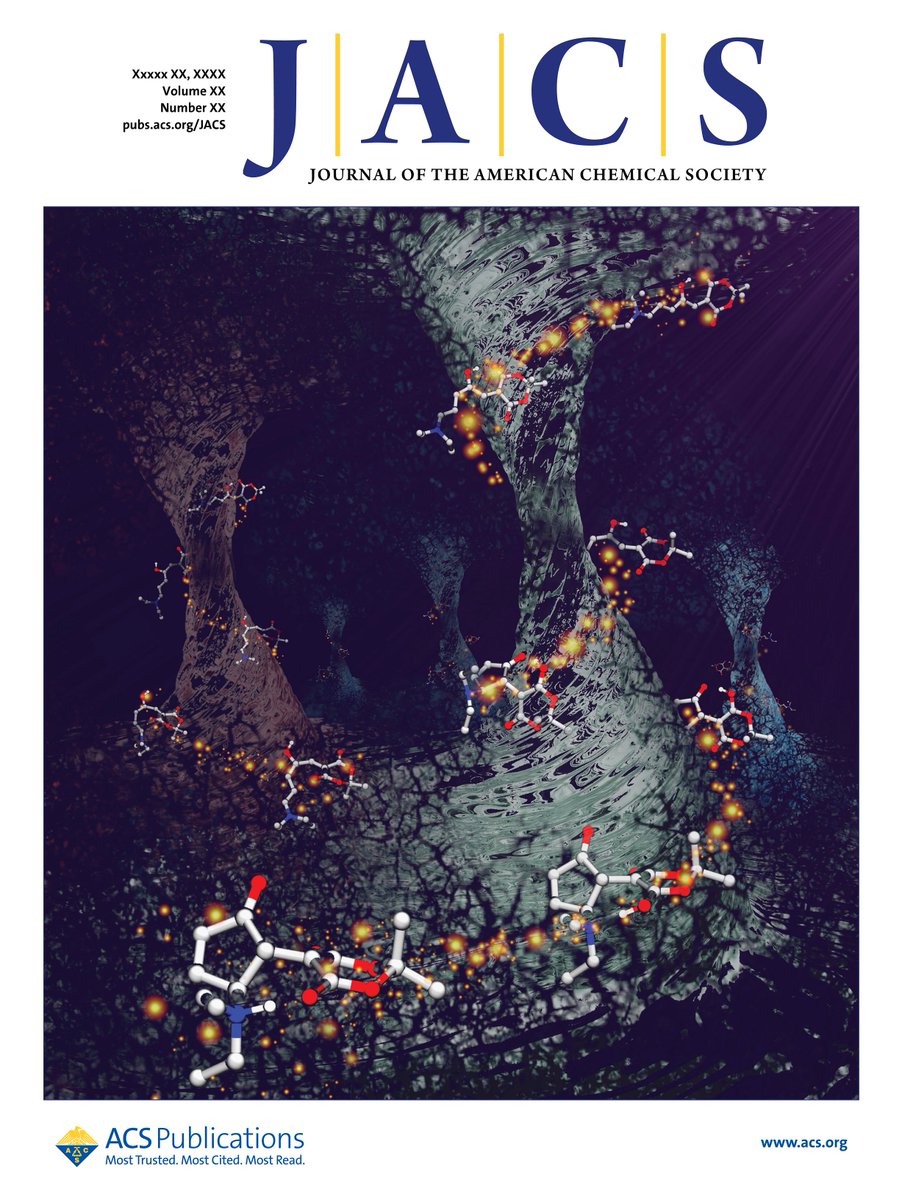
Check out our new publication by our alumni @EliPieri90 @arwalker_on_gpu and talented graduate student Mingning Zhu @nancyzmn !
Conical Intersection Accessibility Dictates Brightness in Red Fluorescent Proteins | Journal of the American Chemical Society pubs.acs.org/doi/10.1021/jac…
1
9
33
2,381
25 Jun 2024
Our contribution to the cyclobutanone photochemistry prediction challenge has been published @JChemPhys. Using EOM-CCSD & TDDFT with ab-initio multiple spawning, we estimate a few ps lifetime for the S2 state, leading to relatively slow photodissociation.
doi.org/10.1063/5.0203800
2
23
3,605
18 Jun 2024
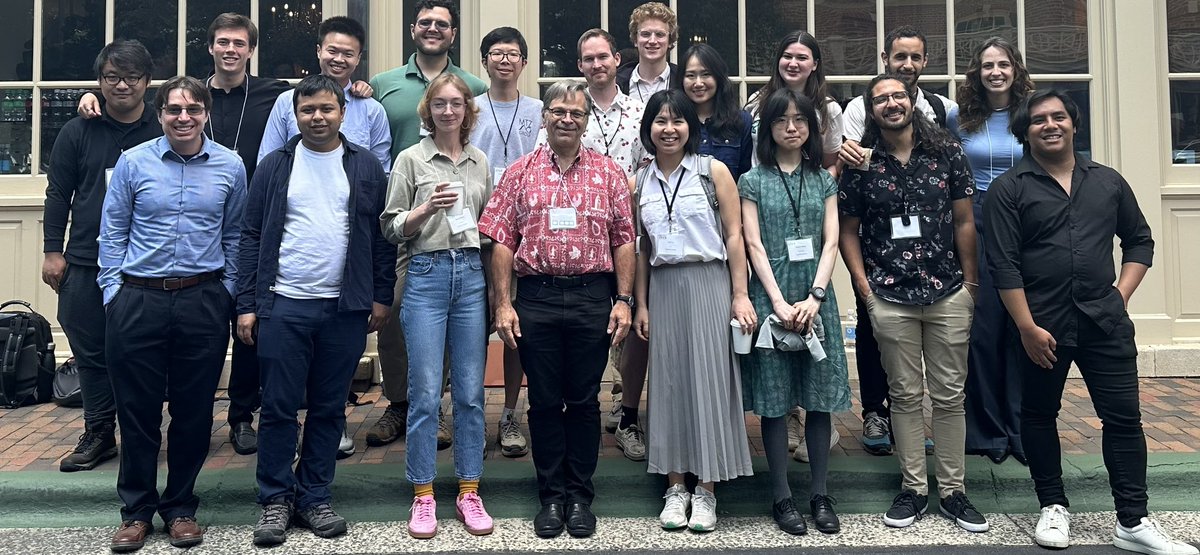
Martínez lab at #ACTC2024!! We are joined by our beloved alumna Prof. Pieri! @EliPieri90
#TheMartinizLab
2
4
41
2,473
23 May 2024
23 May 2024

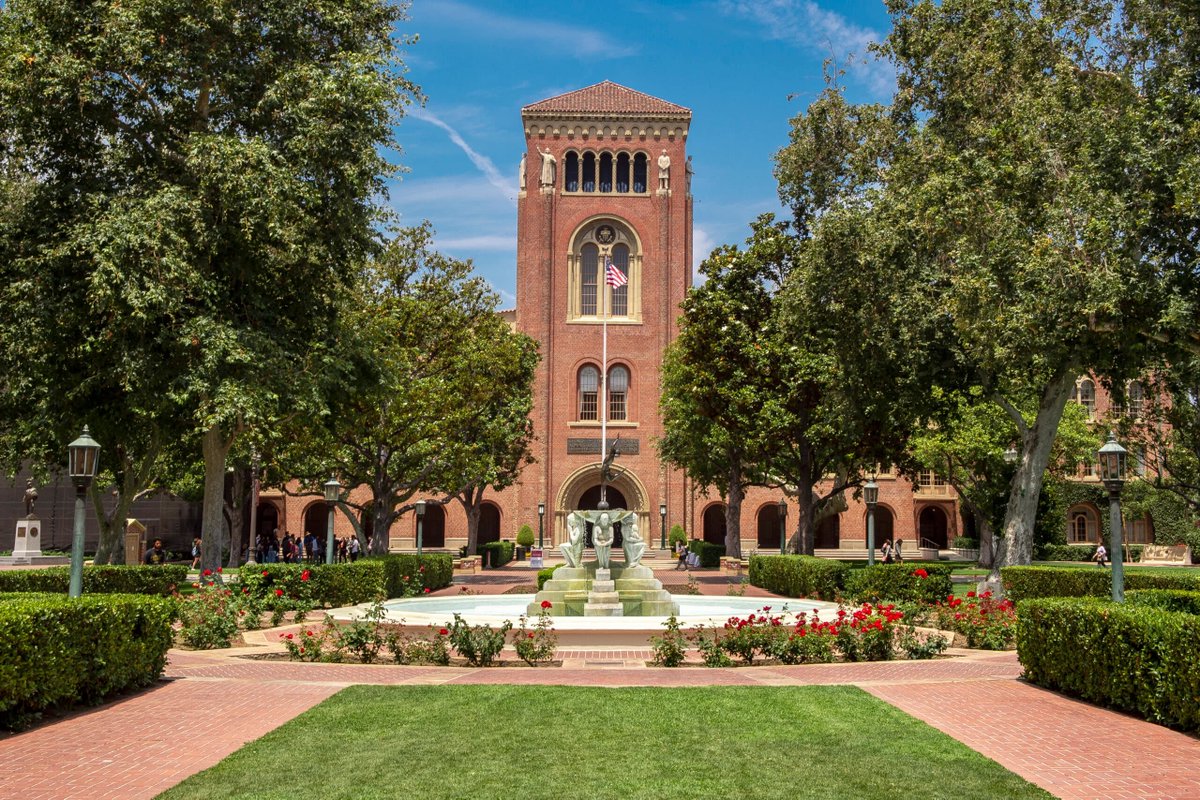
Delighted to share that I’ll be joining @USC as an Assistant Professor of Aerospace and Mechanical Engineering starting in January 2025. @USCViterbi @uscviterbi_ame
I’m indebted to my advisors, colleagues, and collaborators who have supported me to reach this career milestone.
22
1,269
16 Apr 2024
Quantum Chemistry at massive scale! Our new open source systems, BigChem and ChemCloud, parallelize calculations across hundreds of nodes (or GPUs) simultaneously while achieving linear performance gains. Give them a try in your lab today🙌 @JChemPhys doi.org/10.1063/5.0190834
15
56
3,770
16 Apr 2024
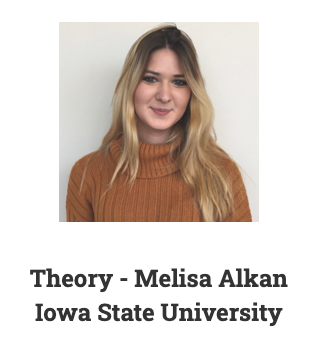
Big congrats to our postdoc Melisa Alkan @thecompchemist !!!
15 Apr 2024

🎉 The MolSSI team extends our belated congratulations to Melisa Alkan, our former Software Fellow, on her 2023 ACS Division of Physical Chemistry Graduate Student Award in Theory! 🏆She is currently a postdoc @StanfordUChem @thecompchemist Well done! 👏😀
8
1,176
22 Mar 2024
Check our new paper in @JChemPhys by our group alumni and members Roman Ellerbrock, @KGraceJohnson, @sseritan, and Harry Zhang. We released QuTree, a tree tensor network package available for public use. doi.org/10.1063/5.0180233
4
15
1,803
26 Feb 2024
Our new article in @JCIM_JCTC, led by Andreas Hillers-Bendtsen, presents a new strategy for achieving quartic computational scaling of coupled cluster ground-state energies, by using tensor hypercontraction (THC) in cluster perturbation theory.
doi.org/10.1021/acs.jctc.3c0…
5
20
2,633
20 Feb 2024
Check out our contribution to the prediction challenge for the photochemistry of cyclobutanone. Using EOM-CCSD & TDDFT with ab-initio multiple spawning, we estimate a few ps lifetime for the S2 state, leading to relatively slow photodissociation.
arxiv.org/abs/2402.10710
1
7
34
4,445
13 Feb 2024
Congrats to Alice Walker @arwalker_on_gpu on receiving the NSF CAREER Award!!!
12 Feb 2024

It’s official! Alice Walker is receiving the @NSF CAREER Award for the proposal: Computational Design of Fluorescent Proteins with Multiscale Excited State QM/MM Methods. Congratulations @arwalker_on_gpu! #WSUchemistry #CompChem

ALT Alice Walker and text
1
2
22
1,737
6 Feb 2024
Check out our recent @CommsChem work by @ListNanna and @CheyMJones on controlling the excited-state GFP reactivity ⏬ ⏬ ⏬
6 Feb 2024

Interested in controlling the excited-state reactivity/selectivity of chromophores via electronic tuning? Check out our (@ListNanna , @toddjmartinez) @CommsChem paper where we use QM to reveal how P-ring engineering can impact GFP photoisomerization yields
nature.com/articles/s42004-0…
1
4
20
1,825
11 Jan 2024
Ozone X-Ray absorption spectrum using orbital optimized DFT. Check out out latest work in @JCIM_JCTC led by @fullCIalchemist !
8 Jan 2024

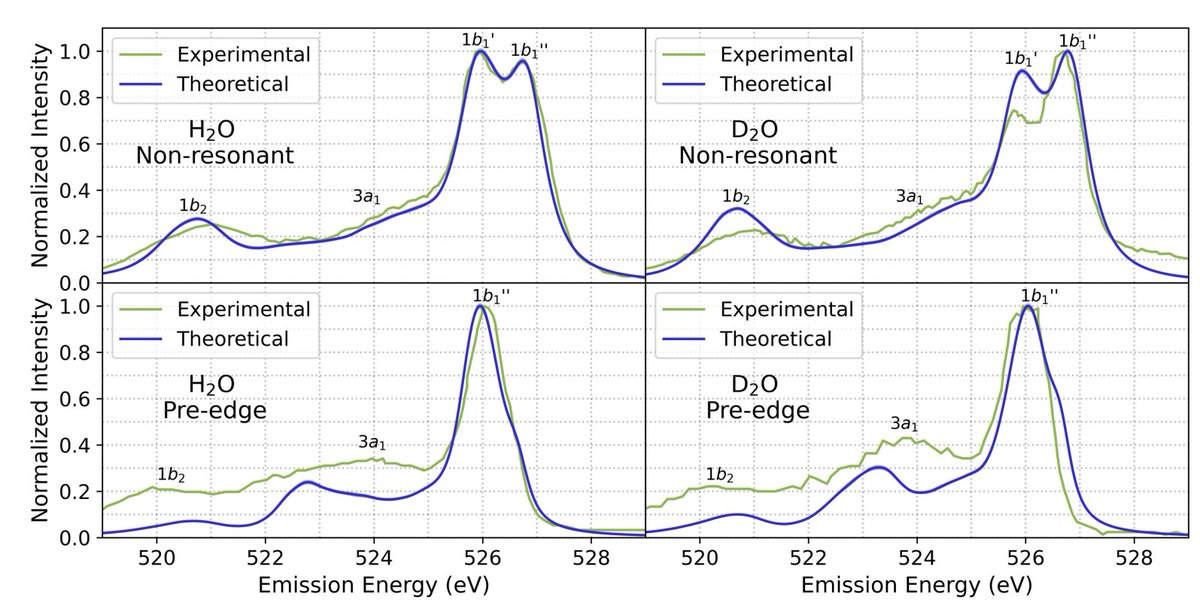
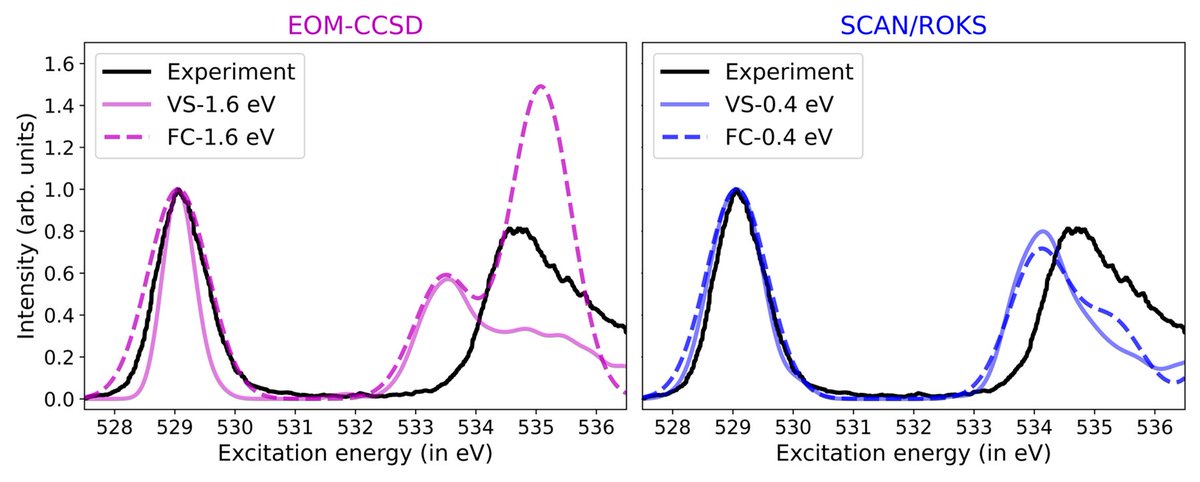
My first paper as a postdoc in @mtzlab just came out in @JCIM_JCTC. We wondered how well standard quantum chemistry can compute the XAS of ozone (prototypical biradicaloid) and found that orbital optimized DFT (i.e. ROKS) gives excellent results. #compchem
pubs.acs.org/doi/10.1021/acs…
4
17
1,888
29 Dec 2023
Interested in mechanochemistry? Our new collaboration paper with @YanXiaLab and @CraigGroup_Duke is published in @J_A_C_S. Great work led by Matias Horst @ladderchem !!!
1
8
1,101
29 Dec 2023
Our paper on the nonadiabatic dynamics of polaritons are now available in @JPhysChem, doi.org/10.1021/acs.jpca.3c0…. Led by @bhaskar_98, we applied ab initio multiple spawning (AIMS) to simulate the photochemistry of salicylideneaniline coupled to a cavity photon.
5
32
2,146
17 Nov 2023
Check our new paper in @NatureComms by @CheyMJones and @arwalker_on_gpu on GFP engineering in collaboration with Boxer Lab @StanfordUChem
17 Nov 2023
Hot off the press: More GFP engineering! Check out our latest article in @NatureComms to see how we (Yasmin Shamsudin , @arwalker_on_gpu , @toddjmartinez , Boxer Lab at Stanford) used QM/MM and MD simulations to engineer a more efficient split GFP!
nature.com/articles/s41467-0…
1
6
16
3,395