
Product update | support | data for Native, an on-chain platform to build liquidity that is openly accessible and cost effective.
Joined April 2026
- Tweets 65
- Following 103
- Followers 25
- Likes 83
22 Photos and videos










Pinned Tweet

Native = onchain RWA Spot Liquidity

1
1
60

Native.fi Product & Research retweeted

Jun 12
Excited to announce day-one support for @OndoFinance’s $SPCXon on Native.
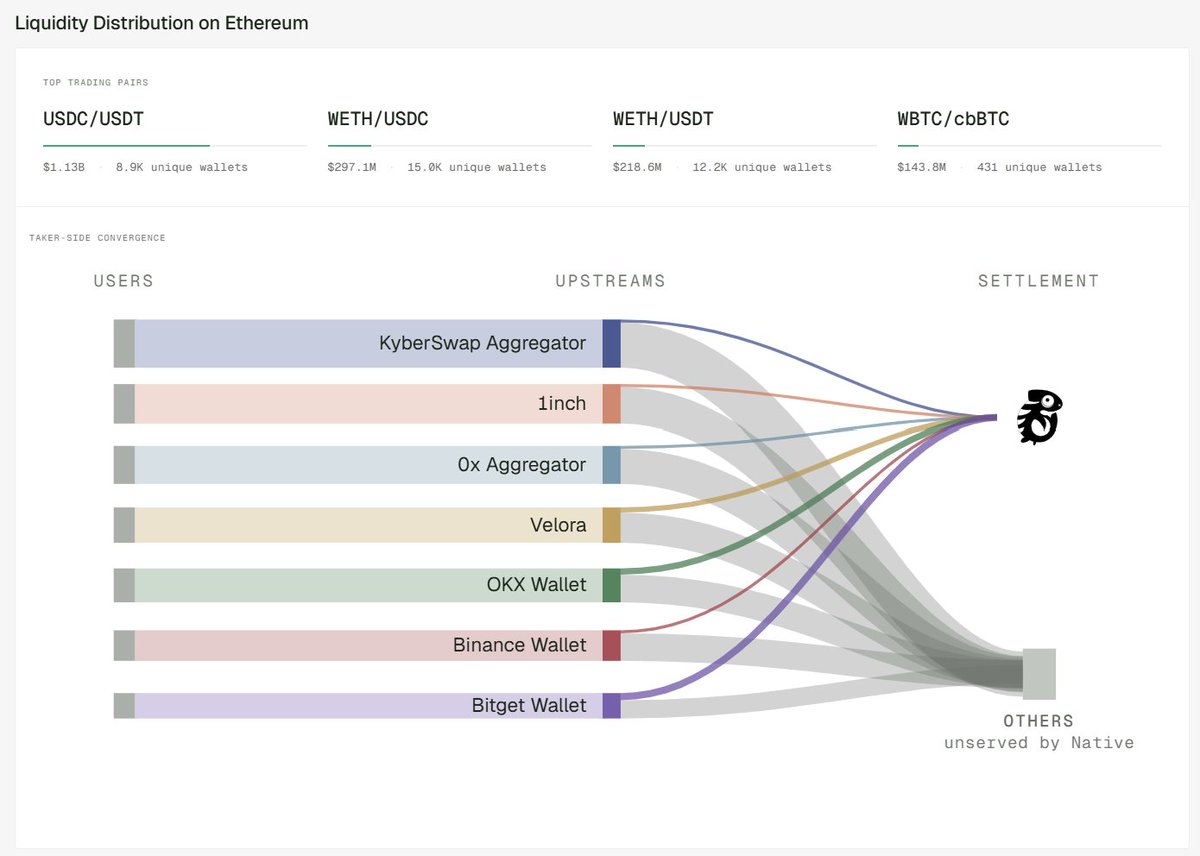
Native RFQ Relay delivers 24/7 onchain institutional-grade liquidity across major Web3 gateways on Ethereum and BNB Chain.
Other supported tokenized stocks include $TSLAon, $MRVLon, $MUon, $CRCLon, $GOOGLon, and $QQQon.
Check the live onchain spot orderbook:
app.native.org/markets/13
Explore the onchain transactions and distribution:
app.native.org/explorer/trad…
3
6
53
6,404
Native.fi Product & Research retweeted
Jun 12
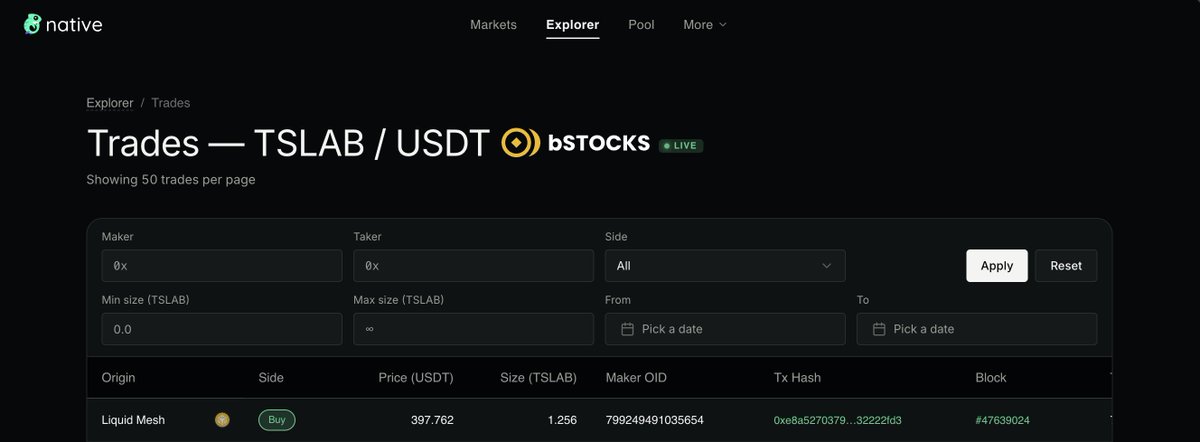
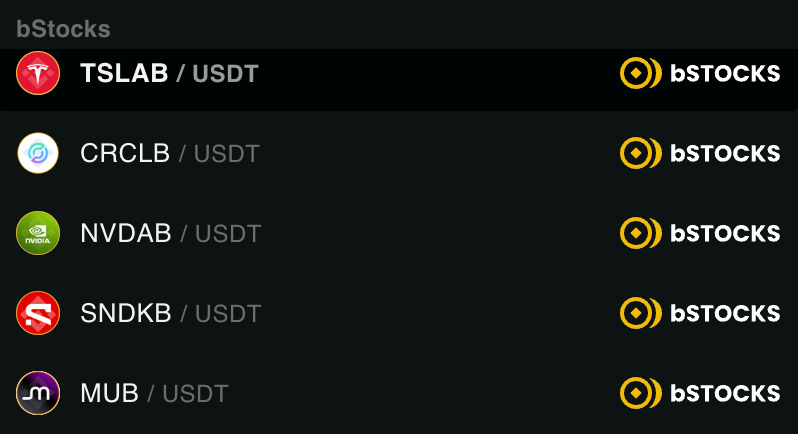
bStocks 24/7 liquidity is now live on @BNBCHAIN, powered by Native.
$TSLAB $CRCLB $NVDAB $SNDKB $MUB
View the live Native Core orderbook:
app.native.org/markets/17
Access spot trading through @BinanceWallet, @TrustWallet, and other trading interfaces integrated with Native.
ALT https://app.native.org/markets/17
3
7
22
5,729
Native = onchain RWA Spot Liquidity
1
1
60
First bStocks tx on @native_fi Core.
CLOB-based • Transparent • Efficient • Widely distributed
Native is the choice for onchain RWA spot liquidity.
Explore: app.native.org/markets/2
1
3
33

bStocks are landing on BNB Chain.
Launched by @Binance as 1:1-backed U.S. securities, bStocks are tradable 24/7 with zero fees and settle on BNB Chain in under a second.
Start with just $5 while enjoying full self-custody over your portfolio on @TrustWallet, @BinanceWallet and more, powered by @native_fi.
Not only that, you can soon deploy bStocks to work across DeFi protocols on BNB Chain, all while continuing to earn dividends on your underlying stocks: @PancakeSwap, @Aster_DEX, @VenusProtocol, @lista_dao and more.
Read the full story in our blog 👇
bnbchain.org/en/blog/introdu…
65
69
347
120,667
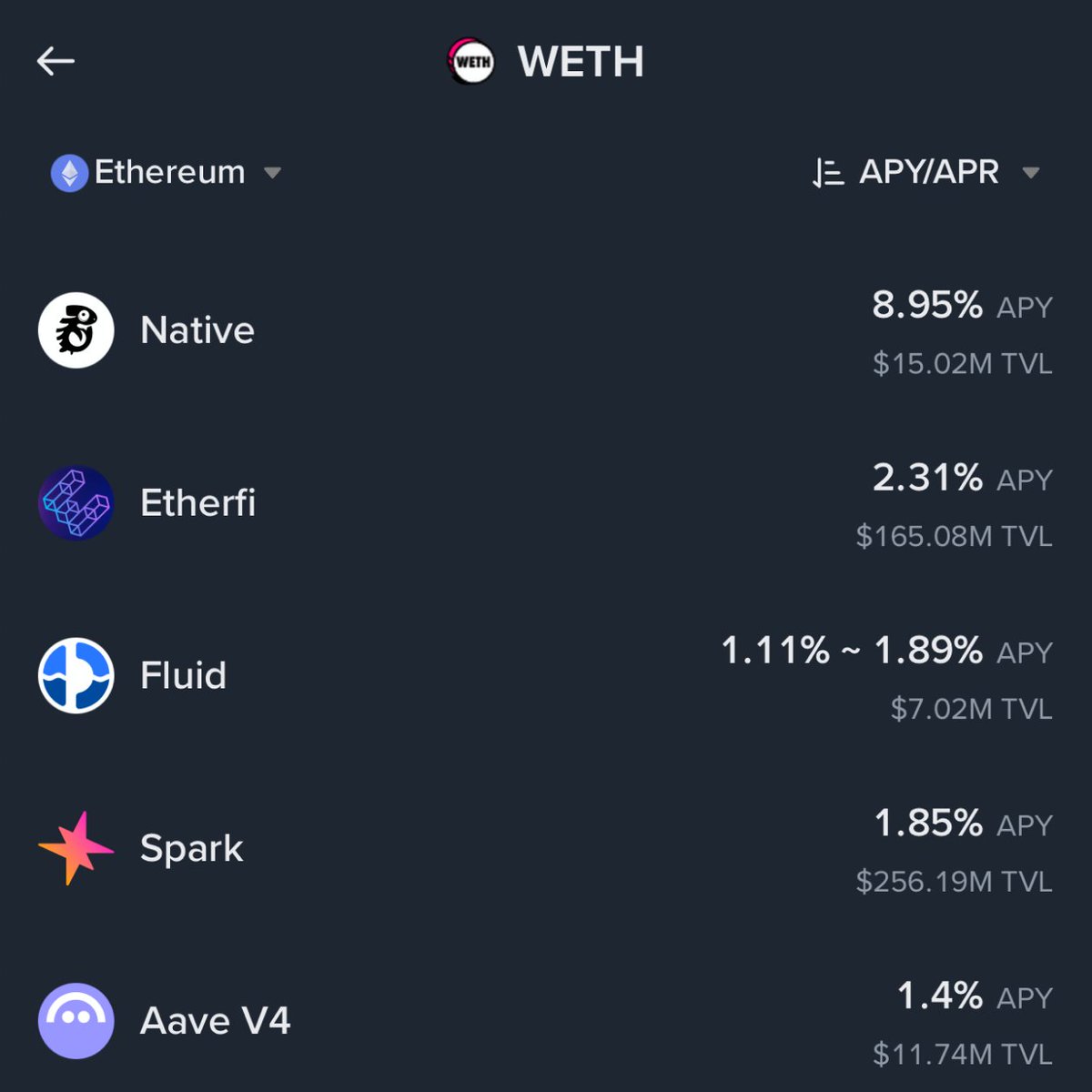
Shinning Yields powered by @native_fi on @BinanceWallet
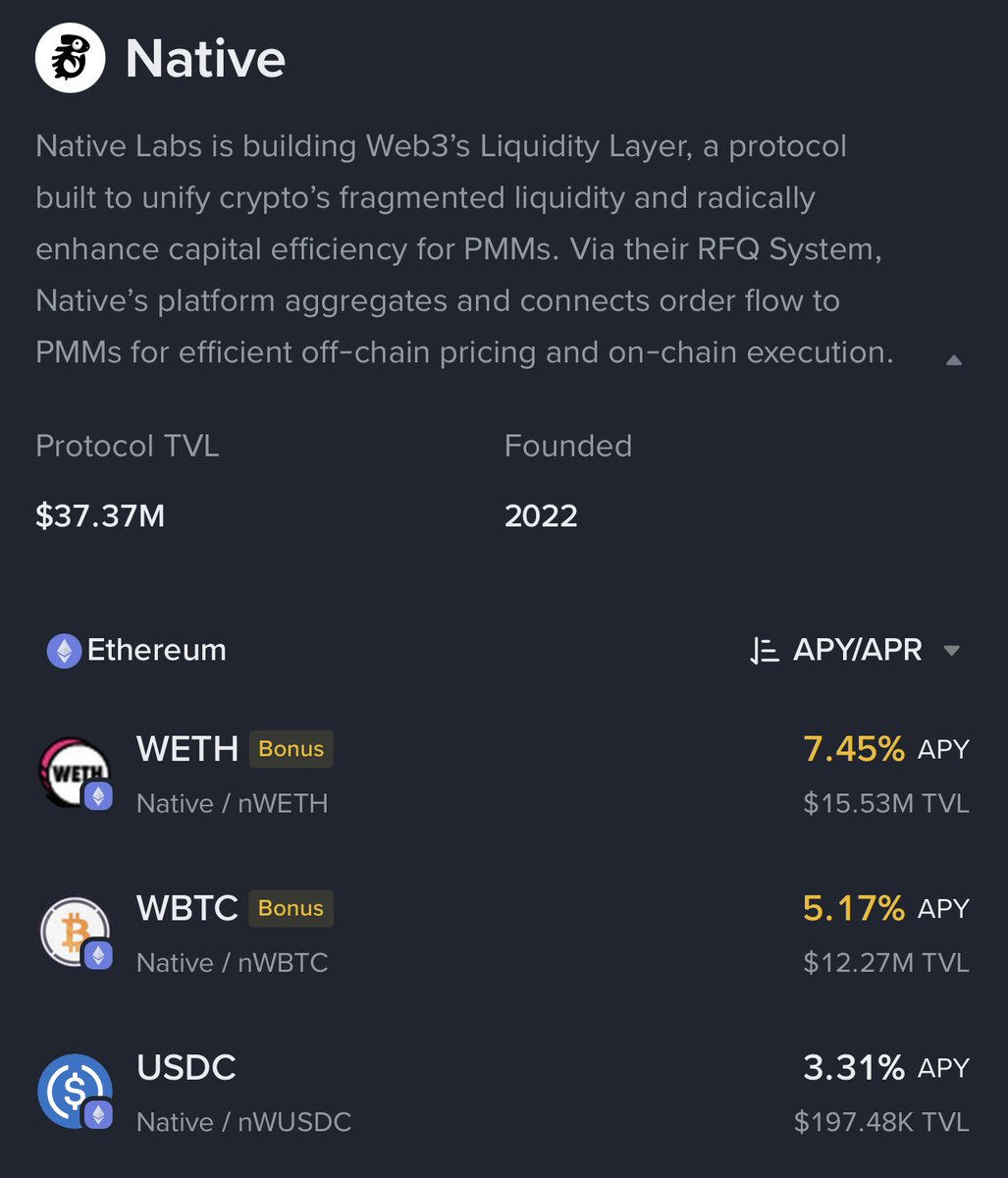
🔵 9.38% APY on WETH
🟠 6.54% APY on WBTC
Explore professional market making yields - zero IL👀
Jun 5

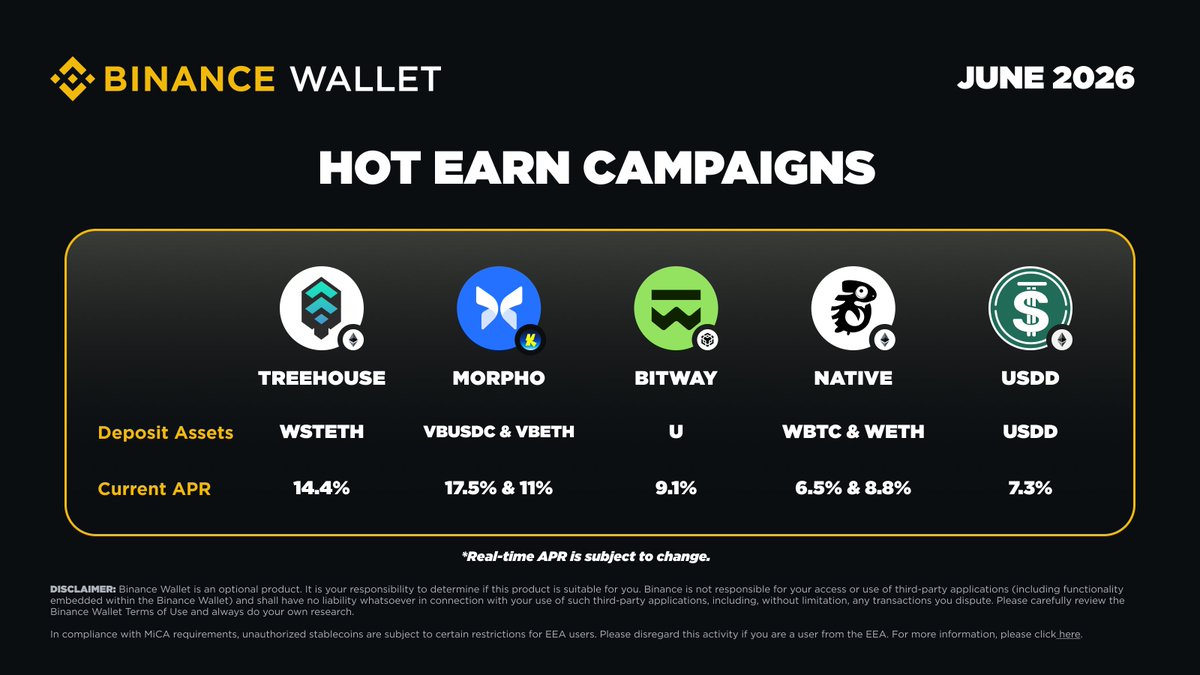
🚀 Boost your DeFi yields with active Earn campaigns and secure top-tier real-time APRs on #BinanceWallet!
Dive into our current campaigns with @TreehouseFi, @katana, @BitwayOfficial, @native_fi, and @usddio to stack boosted rewards just by allocating your assets.
💥 Start maximizing your returns today!
1
1
63
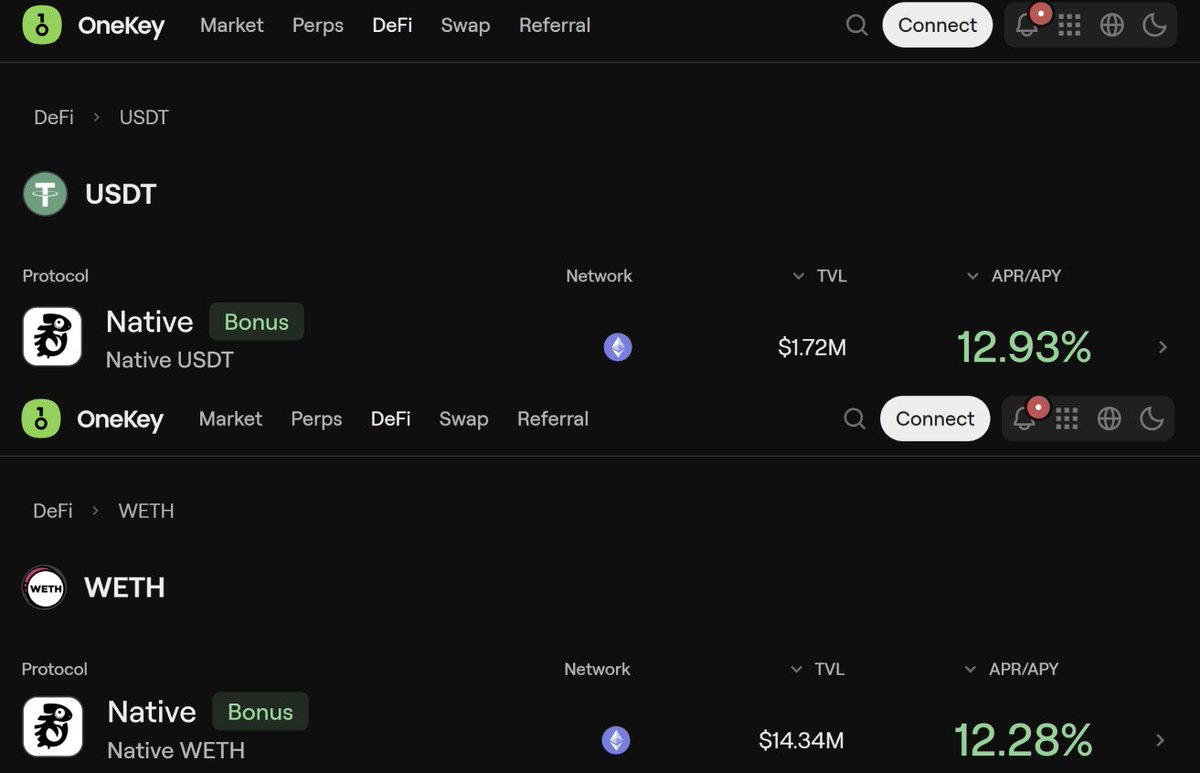
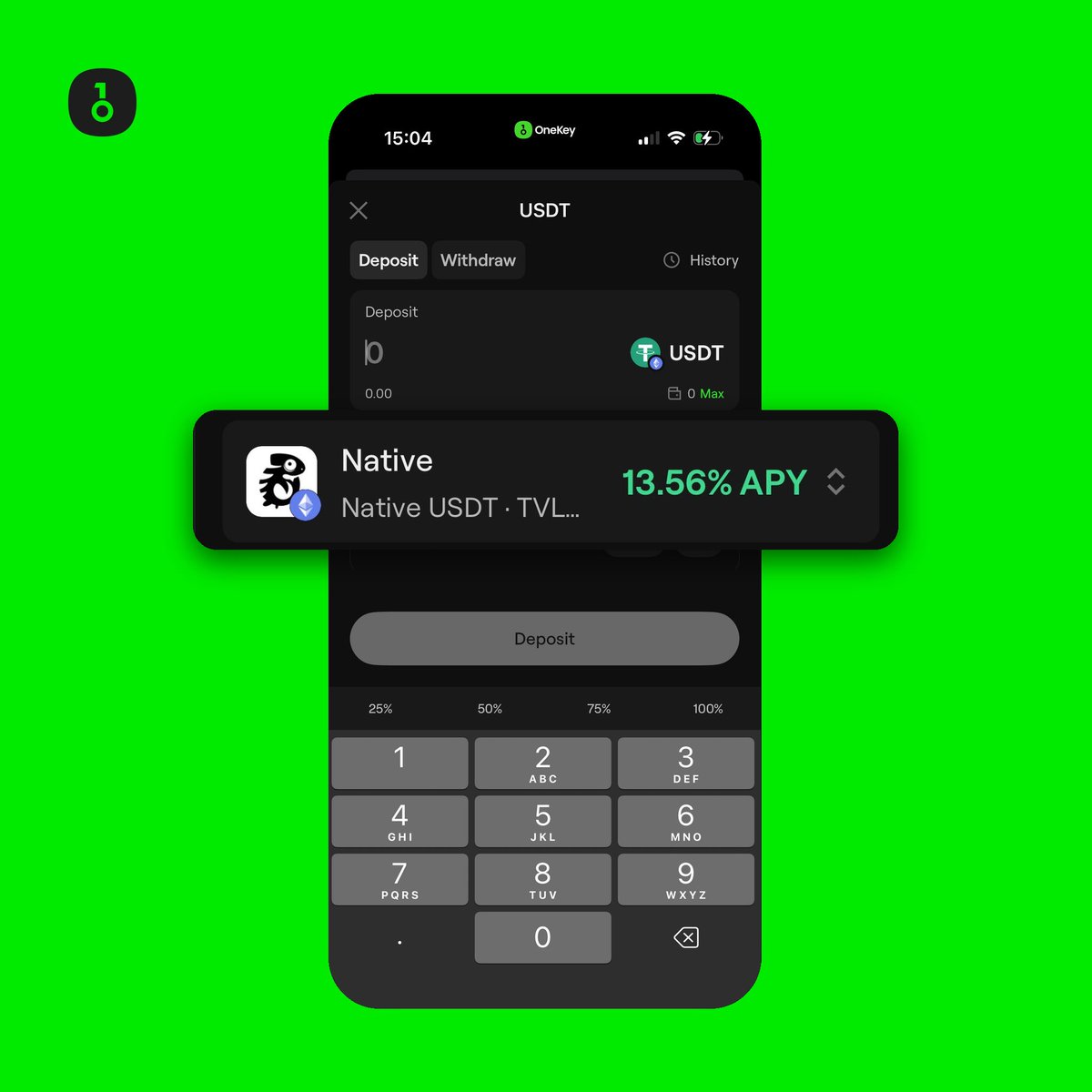
Native is an on-chain liquidity protocol that puts deposited funds to work powering market-making and trade matching, earning depositors a share of the interest and fees. The Native vault is currently paying 13.55% APY on USDT and 12.82% on WETH.
Deposit into the Native vault through OneKey and earn even more: Native is adding a $10,000 Boost reward pool on top.
Open the OneKey App and deposit USDT or ETH via DeFi > Earn to join.
3
4
27
2,063
Enjoy a current 12% APY on your WETH and USDT in @OneKeyHQ!
Just days after launch, ~$1.5M in funds have already embraced the trusted yields from Professional Market Making, powered by @native_fi.
Join now through DeFi → Earn:
- USDT: app.onekey.so/defi/EarnProto…
- WETH: app.onekey.so/defi/EarnProto…
Jun 1
Excited to partner with @OneKeyHQ to launch Native Credit Pool vaults for WETH and USDT.
OneKey is a leading hardware wallet backed by @yzilabs and @cbventures.
Through this integration, OneKey users can now access institutional-grade yield generated from on-chain market making without impermanent loss or active management.
🎁 To celebrate the launch, we're offering $10,000 in stablecoin rewards over the next 4 weeks.
Deposit now via OneKey App → DeFi → Earn
💧 USDT Vault
app.onekey.so/earn/ethereum/…
💧 WETH Vault
app.onekey.so/earn/ethereum/…
1
3
61
Want to learn more about the mechanism and FAQ of Native Credit Pool?
It has been delivering optimized APY across @binancewallet, @buidlpad and more, with tens of millions in TVL.
Full details here: docs.native.org/native-dev/p…
1
1
42
OneKey has partnered with @native_fi launch a limited-time Bonus rewards campaign.
By joining selected Native Vaults through OneKey App’s DeFi > Earn section, users can receive additional Bonus rewards provided by OneKey on top of the Base APY.
The campaign starts on May 29, 2026 and will run for approximately 4 weeks, with a total reward pool worth $10,000 in stablecoins.
Open the OneKey App and go to DeFi > Earn to participate.
3
7
24
6,359
Native × @TownSquarexyz: Institutional trading yields CEX-level liquidity & execution coming to @monad.

We are super excited to partner with @native_fi to announce the $10M Strategic Vault Program, to bring institution-grade experience and trading-backed yields to key assets including USD1, USDC, cbBTC, wETH, MON etc. to more users, first on @monad
Read more here 👇
1
40
Solutions are not built just to be debated, but to solve the exact problems and challenges.
In the coming months, you may be surprised to find @native_fi infrastructure has already satisfied the demand for #RWA and beyond with its full suite of liquidity and trading infrastructure.
- Efficient liquidity - Native Credit Pool
- Proactive pricing and relay - Native RFQ / trading engine
- Price discovery, smooth execution, and beyond - 👀
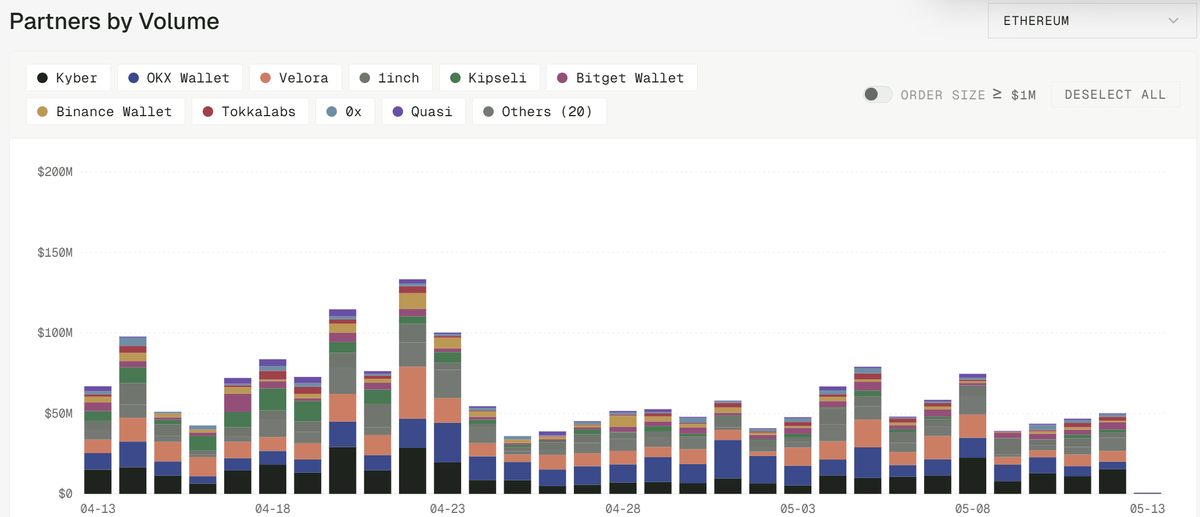
- Broad retail / institutional access and distribution - as we already demonstrated
Tools and mechanisms are the means, not the ends. Native is here to combine all necessary features for the optimized solution to on-chain liquidity problems.

I don’t think anyone serious is arguing that RFQs replace orderbooks entirely. And nobody is crowning RFQs over orderbooks.
**Notice how Lucas drew a distinction in his response in the video below rather than call one model superior to the other.
CLOBs and RFQs optimise for different things and solve different market structure problems.
Orderbooks are excellent for native price discovery. Nobody disputes that. Hyperliquid and Lighter are fantastic examples of this.
But the bigger bottleneck for scaling global on-chain markets is not price discovery. It’s liquidity sourcing.
You cannot realistically bootstrap deep crypto-native orderbooks for every commodity, FX pair, index, equity basket, or global market. Fragmentation eventually becomes a problem.
That’s where RFQ architecture becomes powerful.
RFQs are designed to connect DeFi to existing liquidity rather than rebuilding every market from scratch. And ironically, many of the largest TradFi markets today, FX, bonds, OTC derivatives, and institutional block trading, are heavily RFQ-driven.
A smart RFQ system aggregating multiple liquidity sources can absolutely provide better effective execution in many situations.
And yes, “last look” concerns are valid, but that’s mostly in poorly designed RFQ systems.
Interestingly, even Lighter just announced “Lighter RFQ” specifically to handle large RWA positions with lower slippage and better pricing.
That alone should tell you that even strong CLOB systems eventually recognise that RFQ infrastructure becomes extremely useful once you start dealing with RWAs, larger size, fragmented liquidity, and TradFi-style execution.
So RFQs are not some “inferior fake market structure.”They solve a different problem.
The future is probably not RFQ vs CLOB.
It’s hybrid systems combining:
• price discovery
• smart routing
• aggregated liquidity
• institutional access
• efficient execution
2
2
190