
exploring markets as systems, so you don’t have to.
Joined July 2024
- Tweets 12,891
- Following 730
- Followers 2,300
- Likes 28,371
Photos and videos



Jun 14
gm frens
i found out recently that being able to sleep is one of the greatest gift given to man.
i can’t afford it tho, because for me to become who i dream about — i need to follow a set of routines and habits
i will sleep when i’m done.
stay in motion

4
4
98
Jun 13
me after paying for claude max specifically for mythos
Jun 13

The US government, citing national security authorities, has issued an export control directive to suspend all access to Fable 5 and Mythos 5 by any foreign national, whether inside or outside the United States, including foreign national Anthropic employees.
The net effect of this order is that we must abruptly disable Fable 5 and Mythos 5 for all our customers to ensure compliance.
Access to all other Claude models is not affected.
We apologize for this disruption to our customers. We believe this is a misunderstanding and are working to restore access as soon as possible.
Read our full statement: anthropic.com/news/fable-myt…
2
4
100

Jun 9
mythos save my bloodline, make no mistakes.

Introducing Claude Fable 5: a Mythos-class model that we’ve made safe for general use.
Its capabilities exceed those of any model we’ve ever made generally available.
1
1
10
139
Jun 9
it’s personal.
gonna make it all back on some trades.
there is no money in this market that doesn’t belong in my pocket.
my first cycle I was a problem, my next cycle I will be the whole issue.
book it.
-hex

Jun 8

It’s personal.
Gonna make it all back on some trades.
There is no money in this market that doesn’t belong in my pocket.
My first cycle I was a problem, my next cycle I will be the whole issue.
Book it.
-gbboy
4
1
11
1,217
Jun 8
long term: crypto is a great place to be
short term: you don’t wanna be here
get acquainted
get motion
get skills
this is the best time to build relevance
3
7
85
hex retweeted

May 26
If you don’t think ALT coins will require a multi-year accumulation, idk what to tell you
3
15
1,189
hex retweeted

Jun 6
New listing!
$HUNTER just dropped on derp trade.
Up to 8x leverage now live.
time to hunt 👇

8
4
21
4,085
Jun 6
let’s flip bullish for a while
imagine 5yrs from now, when $btc is above 500k, eth ath, sol at 500 and the market is great again
you remember this day when you thought to yourself “i’m buying more coins at this levels.” and you had no fear of losing.
so toss that fud out and buy the bottoms
2
2
7
181
Jun 5
btc nearing 50k, sol at 63, eth still being a piece of sh*t and people getting liquidated
what a good day
gm
1
5
108
hex retweeted
Jun 3
EVERY TRANSACTION YOU'VE EVER MADE ON A PUBLIC BLOCKCHAIN IS VISIBLE.
Forever.
Anybody can see your footprint on the blockchain, which sounds normal because we're used to it.
But think about that for a second.
- Banks don't work like that.
- Hospitals definitely don't work like that.
- Governments don't either.
So why are we building the future of finance on infrastructure where everybody can see everything?
This thought has been on my mind for a while now.
—————————————————————————
Crypto was supposed to reduce the amount of trust we place in institutions, but Instead, we accidentally created a world where your data is more public than ever.
That's the paradox.
And honestly, it's becoming impossible to ignore.
=>
The next generation of crypto applications needs privacy. Not another optional privacy, but actual privacy.
You can't put medical records on a public ledger.
You can't run institutional trading infrastructure if every move is visible.
You can't tokenize real-world assets at scale if sensitive information is exposed.
The ambition got bigger.
The infrastructure didn't.
—————————————————————————
Most existing solutions only solve part of the problem.
Mixers hide flows.
ZK proofs hide information.
But eventually the data still needs to be processed somewhere.
That's where things get interesting.
Because what's actually missing is the ability to compute on encrypted data itself, without decrypting it, which sounds almost impossible.
=>
That's basically the promise behind Fully Homomorphic Encryption (FHE).
- Data stays encrypted.
- Computation happens anyway.
- Results stay encrypted.
- Nobody sees anything.
Cryptographers have been obsessed with this idea for decades.
The problem?
It was painfully slow. It was great in theory, but turned out terrible practically.
—————————————————————————
This is where @octra enters the conversation.
They're building around something called Hypergraph FHE (HFHE)
Without getting too deep into the weeds, the goal is simple:
"make encrypted computation fast enough to actually use."
Not in a research paper.
Not in ten years.
Now.

2
2
21
568

Jun 3
EVERY TRANSACTION YOU'VE EVER MADE ON A PUBLIC BLOCKCHAIN IS VISIBLE.
Forever.
Anybody can see your footprint on the blockchain, which sounds normal because we're used to it.
But think about that for a second.
- Banks don't work like that.
- Hospitals definitely don't work like that.
- Governments don't either.
So why are we building the future of finance on infrastructure where everybody can see everything?
This thought has been on my mind for a while now.
—————————————————————————
Crypto was supposed to reduce the amount of trust we place in institutions, but Instead, we accidentally created a world where your data is more public than ever.
That's the paradox.
And honestly, it's becoming impossible to ignore.
=>
The next generation of crypto applications needs privacy. Not another optional privacy, but actual privacy.
You can't put medical records on a public ledger.
You can't run institutional trading infrastructure if every move is visible.
You can't tokenize real-world assets at scale if sensitive information is exposed.
The ambition got bigger.
The infrastructure didn't.
—————————————————————————
Most existing solutions only solve part of the problem.
Mixers hide flows.
ZK proofs hide information.
But eventually the data still needs to be processed somewhere.
That's where things get interesting.
Because what's actually missing is the ability to compute on encrypted data itself, without decrypting it, which sounds almost impossible.
=>
That's basically the promise behind Fully Homomorphic Encryption (FHE).
- Data stays encrypted.
- Computation happens anyway.
- Results stay encrypted.
- Nobody sees anything.
Cryptographers have been obsessed with this idea for decades.
The problem?
It was painfully slow. It was great in theory, but turned out terrible practically.
—————————————————————————
This is where @octra enters the conversation.
They're building around something called Hypergraph FHE (HFHE)
Without getting too deep into the weeds, the goal is simple:
"make encrypted computation fast enough to actually use."
Not in a research paper.
Not in ten years.
Now.
2
2
21
568
Jun 3
And what caught my attention wasn't even the encryption.
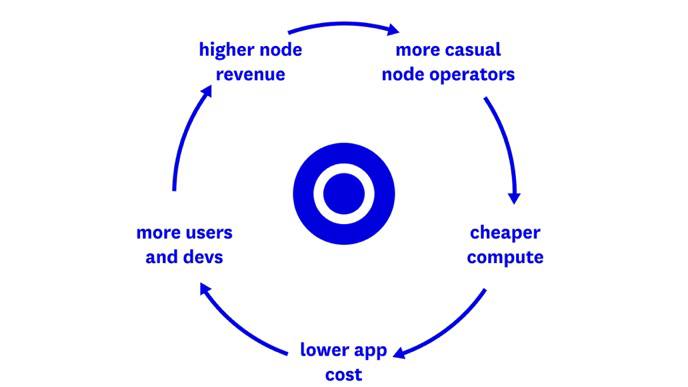
It was what becomes possible afterwards;
> Private smart contracts.
> Private AI.
> Private applications.
Entire execution environments where the logic, state and data remain encrypted.
That's a very different future than the one most people imagine when they hear "blockchain".
=>
One underrated thing.
Octra isn't forcing everyone to migrate.
You can use it like an encrypted co-processor.
Imagine adding privacy functionality to existing chains instead of replacing them.
With way lower friction and easier adoption.
That's smart imo.
—————————————————————————
The AI angle is where things start getting wild.
Imagine a hospital running AI diagnostics on patient records. It's onchain and verifiable.
Without exposing a single patient record.
Or training models on sensitive financial data without revealing the underlying information.
That's the type of stuff people have been talking about for years.
Octra is actually experimenting with it today.
And who knows.
Maybe privacy ends up being the most important crypto narrative of the next cycle.
Not because it's exciting.
But because eventually the world runs out of things it can put on a public ledger.
1
6
70
Jun 3
questions i'm still looking into:
who are the cryptographers behind HFHE and has it had external peer review?
what named projects are actively building in Circles?
how does it stack up against Zama, Fhenix, and Inco Network?
1
15
Jun 2
why do they always want my $10 position?

Dear noobs,
$BTC is NOT naturally going down. It is being pushed down via whales placing spoofy sell orders on exchanges to make noobs and risk managers sell to ‘buy back lower’. They are stealing your bags and will make you buy back at a higher price.
Retweet this.
2
83
Jun 2
hyperliquid
May 31
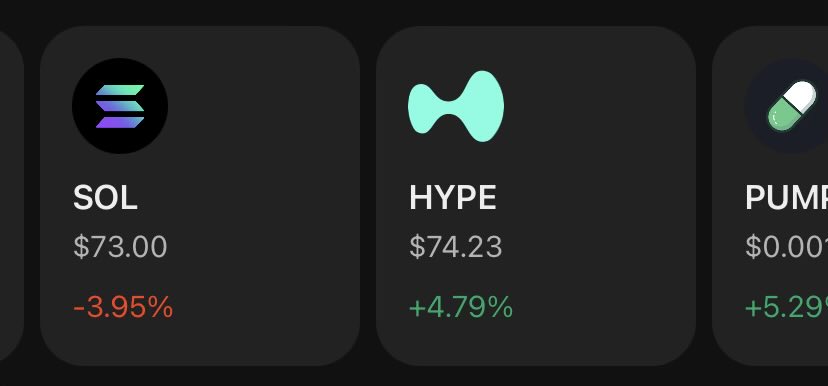
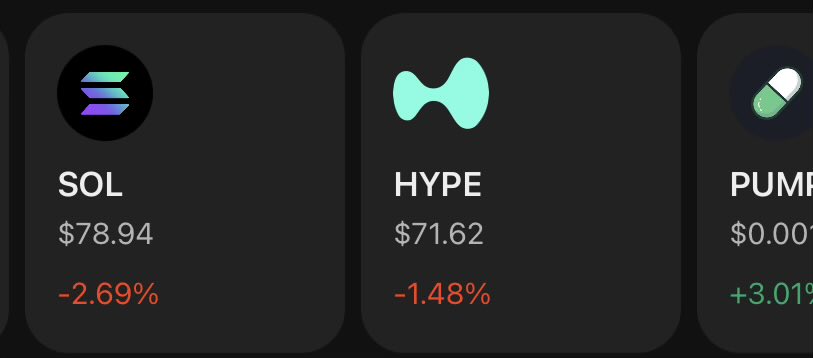
the most chaotic thing to happen rn would be hype flipping sol
would be a movie
1
3
389