
Candidate California State Senate 22. Main proponent for previous drive to Recall Newsom! Media Host Lets take back California Donations to link below help
Joined April 2012
- Tweets 83,397
- Following 43,622
- Followers 113,149
- Likes 31,502
22,392 Photos and videos








Pinned Tweet

Apr 22
WHY I’M RUNNING FOR CALIFORNIA STATE SENATE
MY VISION FOR CALIFORNIA
I have no intention of being a legislator that does nothing. I welcome everyone UP THERE to join me and be a part of a broad coalition that is willing to work hard, call out EVERYONE that is a part of the problem and design a plan that gets ACTUAL RESULTS. That’s how I did business in the private sector beginning in sales, that in time built up a business as a visionary entrepreneur and conquered an industry at an executive level. Now I get the opportunity to do this, make California better than it’s been – one win at a time.
California is too expensive for a decent family or a young couple with a meager salary to live. It’s becoming increasingly difficult to find a job. Once you do find a job, there’s no guarantee that it will last. Every other day our favorite venues realize they can’t afford to stay in business. They close-up shopand cut jobs that never come back.
Crime has run rampant in California. We’ve all watched the “Smash and Grab” operations, COMMITTED IN BROAD DAYLIGHT. Our current Governor-in-Thief, Newsom has done nothing. In fact, he literally fought AGAINST the effort to increase penalties, catch these thieves and hold them accountable.
The Democrats in charge are a Den of Thieves - these criminals stick together
Trans-Drug “THERAPY” for our kids paid for by our tax-dollars?!
By order of Newsom and School Administrators teachers were told not to share information with parents, that's crazy.
(It’s not therapy). I call it what it is, it’s CHILD ABUSE and pure evil.
Gavin Newsom AND School Administrators STOLE the authority to hide all this information from parents – responsible parents are the only people that should have the authority and right to make these decisions and raise their children, NOT the State! If there are exceptions to the rule they shouldn’t dictate public policy. Newsom has placed our children in direct, irreparable harm FOR LIFE.
This isn’t just the first time I’ve waded into this conversation.
I have a history of calling these abusive acts of criminal enterprise by administrators, bureaucrats and politicians out on Radio. I hope to get the chance to call them out to their faces.
Sincerely,
Mike Netter
Businessman, Taxpayer Advocate, Californian
(I will not give up on California and restoring the California Dream that we deserve.)

73
125
319
47,813
Yes we do

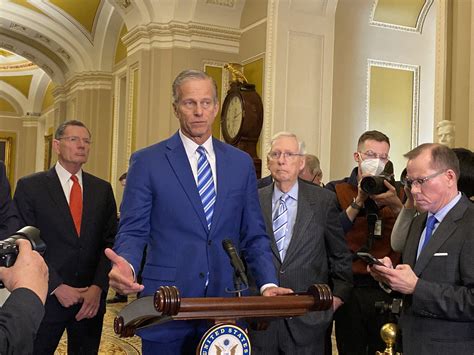
We have a math problem in the Senate. Thune's leadership is to answer to 27 senators (the amount that he needed to become the leader in the Senate).
Before the 17th Amendment passed, the senators were selected by their state legislatures, not other senators, PACs and large donors. And therefore answered to their State Legislatures.
That is why the Federal government has gone crazy, the states have no impact, and cannot restrain the Feds..
We need to rescind the 17th Amendment and go further and add to that what @marklevinshow proposed in the LIBERTY AMENDMENTS, and allow state legislatures to recall their senators by a 2/3's vote.
Only when the Federal Government is answerable to the states will sanity and restraint come to the Federal Government. The Safe Act would be law if there had not been a 17th amendment.
Although we might not have been in this situation in the first place either....
You want to pressure Thune? Pressure the other Republican Senators.
You want a long term solution? Revert back to Senators being selected by the state Legislatures!
Of course the Congress will not support reversing the 17th and taking away their power. So we will need an Article V, Convention of States to pass this Constitutional Amendment!
Do you really think we would have Mitch McConnell and John Thune if we didn't have the 17th amendment?

5
16
680
A SpaceX welder earning $28 an hour just became a millionaire.
Juan Hernandez came from Mexico and worked as a welder at SpaceX, helping build the rockets that changed the space industry.
When he went full-time in 2015, SpaceX gave him $10,000 in stock.
Most people would have sold. He didn’t. He bought more and more with every paycheck for 10 years. He knew it would pay off.
Now, with SpaceX stock trading around $167, his shares are worth over $1 million.
A man who helped build the rockets also got to own a piece of the company sending them into space.
That is what real wealth creation looks like
6
78
226
2,337
Here’s the dirt on America.
A survey conducted last year revealed the US cities with the worst pollution, including metrics for air quality and waste management, as well as how it affects both the physical and mental well-being of their residents.
LawnStarter’s 2025 Top 10 Dirtiest Cities
Here are the rankings with overall scores:
1. San Bernardino, California — 55.34 (Worst median air quality; high resident dissatisfaction with pollution)
2. Los Angeles, California — 49.79 (Poor air quality; high near-roadway pollution; overcrowded homes)
3. Detroit, Michigan — 49.72 (Elevated smoking rates; resident dissatisfaction)
4. Reading, Pennsylvania — 49.31 (High industrial emissions/RSEI score; smoking rates)
5. Ontario, California — 48.20 (Tied for worst air quality; high dissatisfaction)
6. Newark, New Jersey — 48.06
7. Phoenix, Arizona — 47.47
8. Jersey City, New Jersey — 46.53
9. Las Vegas, Nevada — 45.96
10. Corona, California — 45.36
Several California cities dominate due to air quality issues (many tied for the worst median Air Quality Index).
5
9
22
1,170
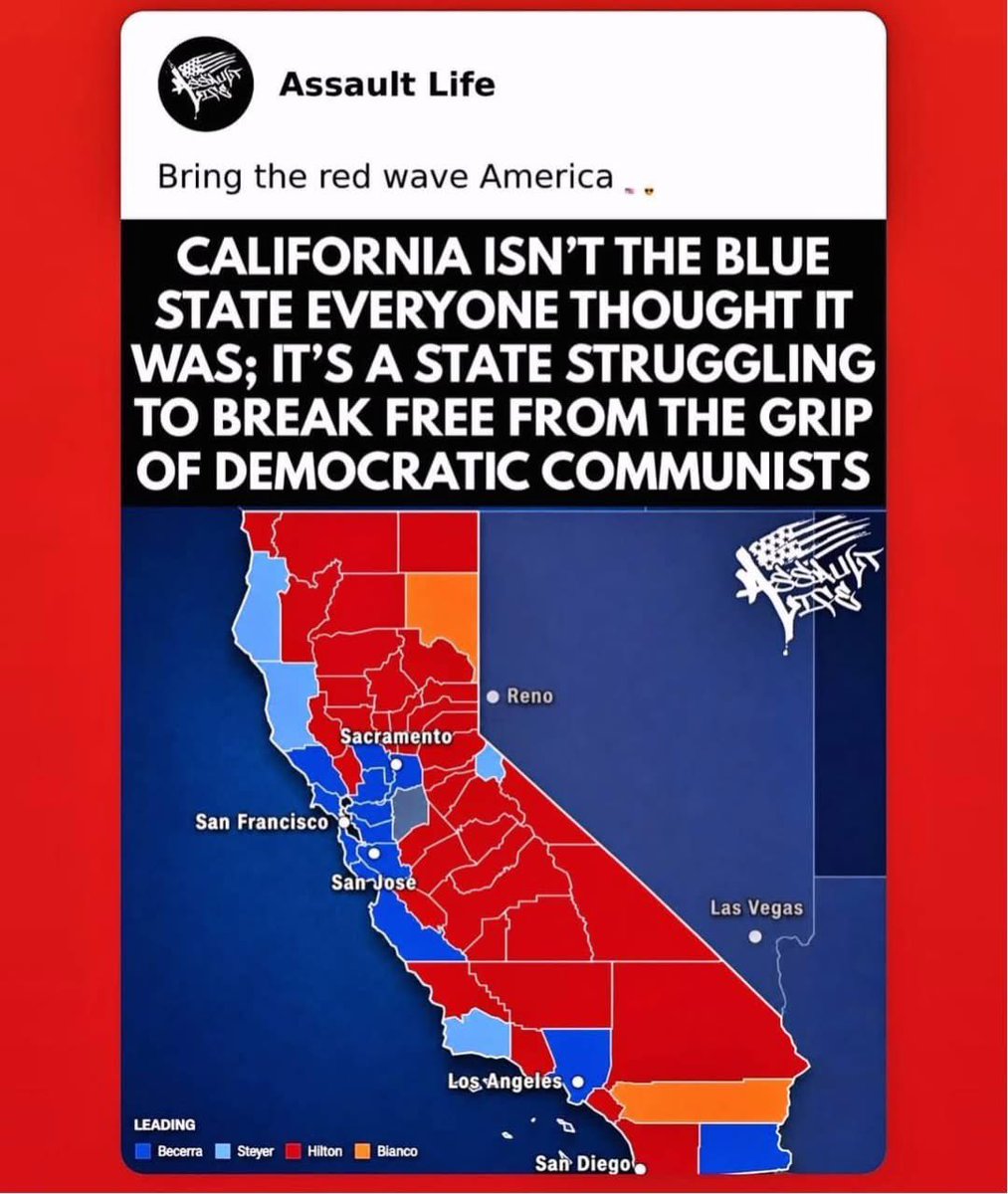
Land doesn’t vote but people that live on that land deserve representation and we don’t have it in California
43
314
860
5,711
Liberal Elites Booed by Their Own City at World Cup
Los Angeles, June 2026 — The U.S. team rolled to a smooth 4-1 victory over Paraguay at SoFi Stadium, but the real spectacle was in the stands. California Governor Gavin Newsom and LA Mayor Karen Bass strolled out waving and flashing big grins like hometown celebrities. The crowd quickly set them straight.
A loud, sustained chorus of boos poured down on the pair as they tried to bask in the spotlight. Newsom’s own teenage son stood awkwardly between them, arms folded, face twisted in clear embarrassment — the ultimate “this is painful” vibe. Bass kept waving like nothing happened. The message from frustrated Californians was loud and unmistakable: your disastrous policies have ruined this state, and we’re done faking it.
Skyrocketing homelessness, crushing taxes, collapsing schools, and businesses bolting from California — that’s the Newsom-Bass track record. Yet there they were, peacocking at a major international event like it was all sunshine and rainbows. The fans weren’t having any of the photo-op nonsense.
😂👎
30
189
575
8,916

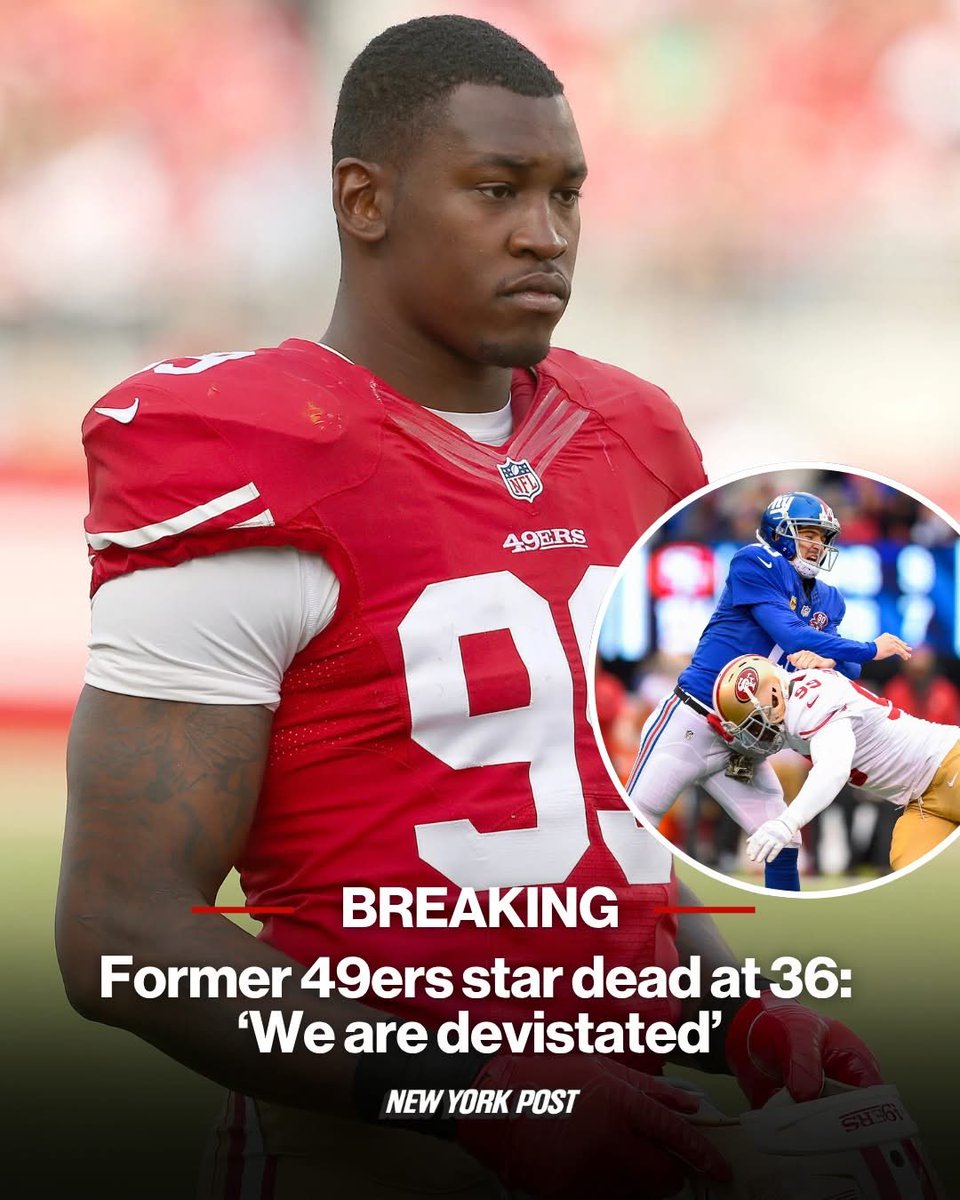
“Former NFL defensive lineman Aldon Smith died Saturday in the Bay Area. He was 36.
Smith played six seasons in the NFL for the San Francisco 49ers, Oakland Raiders and Dallas Cowboys. The Niners originally selected him with the seventh overall pick in the 2011 NFL draft.
The team confirmed Smith's death on Saturday afternoon. No cause of death was given.”
1
1
1,394
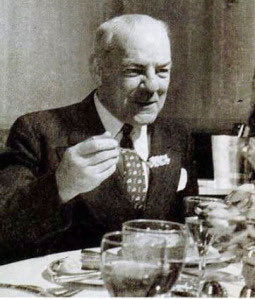
Duncan Hines was a real person.
Leveling up on him
Born in Kentucky in 1880, Hines worked as a traveling salesman from the 1920s through the ’40s, a life that didn’t allow for regular home-cooked meals. While putting anywhere from 40,000 to 60,000 miles on the road each year, he kept a meticulous journal of his dining experiences, listing noteworthy restaurants that provided budget-friendly dishes. But Hines didn’t just review meals — at a time when health codes and food inspections weren’t yet standard, he went so far as to audit kitchens himself, monitoring food safety practices and cleanliness, and even examining the garbage.
Flooded with requests from fellow travelers, Hines attached a list of 167 restaurants to his 1935 Christmas card. A year later, he self-published Adventures in Good Eating, a comprehensive compendium of U.S. eateries that was updated annually until 1962. With each edition, Hines solidified his reputation for honest critiques, in part because he refused payment for good reviews (though he did profit from renting signsbearing his stamp of approval to restaurants, and once accepted a gifted Cadillac from a happy restaurant owner). By 1949, Hines had teamed up with businessman Roy Park to launch Hines-Park Foods, which sold under the Duncan Hines label — moving the reviewer’s name from print to the containers of more than 250 grocery items. The brand’s iconic boxed cake mixes debuted in July 1951 in just two flavors — vanilla and devil’s food. Today, the cake mixes are beloved by many, even if the man who originally helped create them has been forgotten.
8
64
1,287
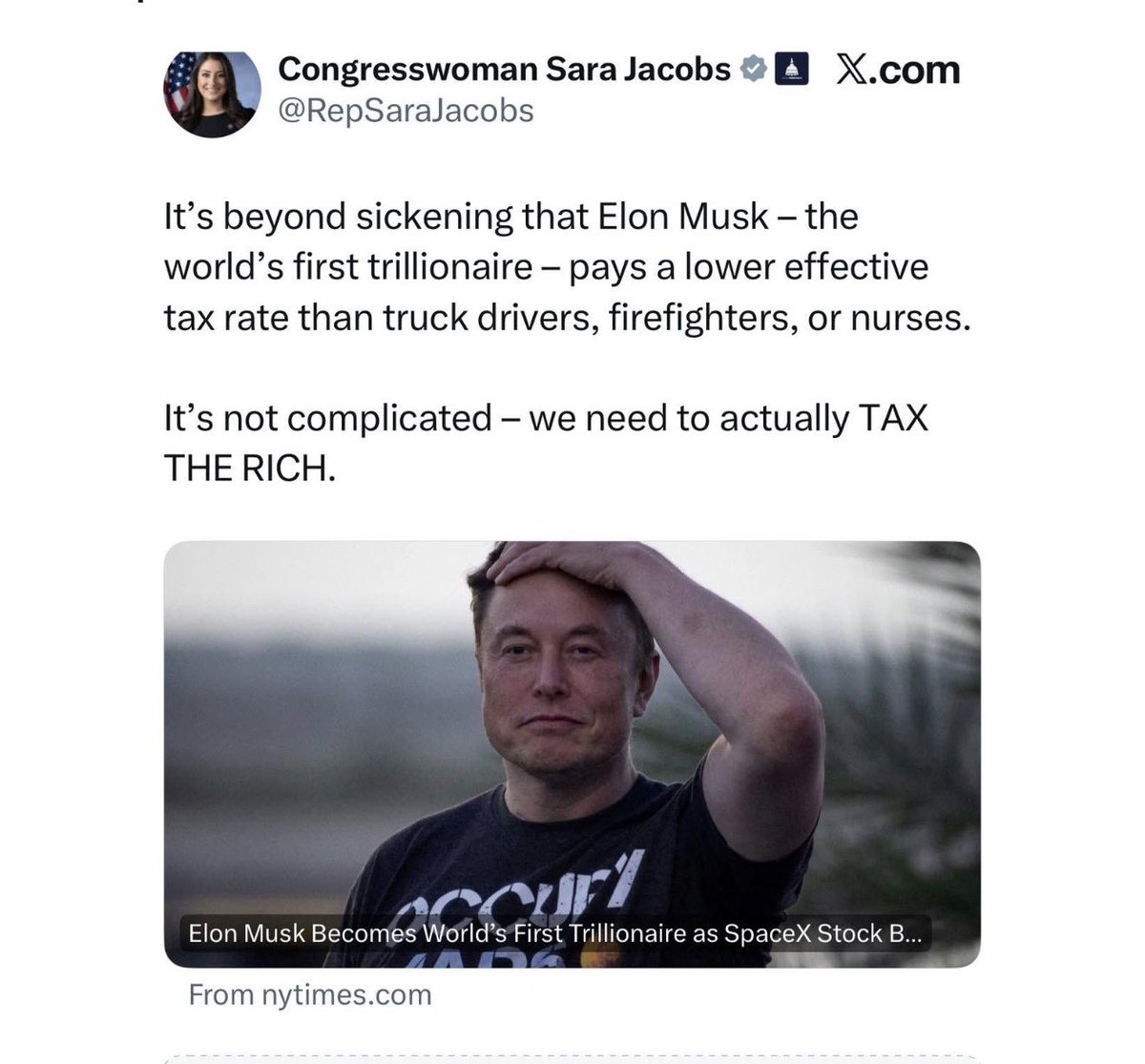
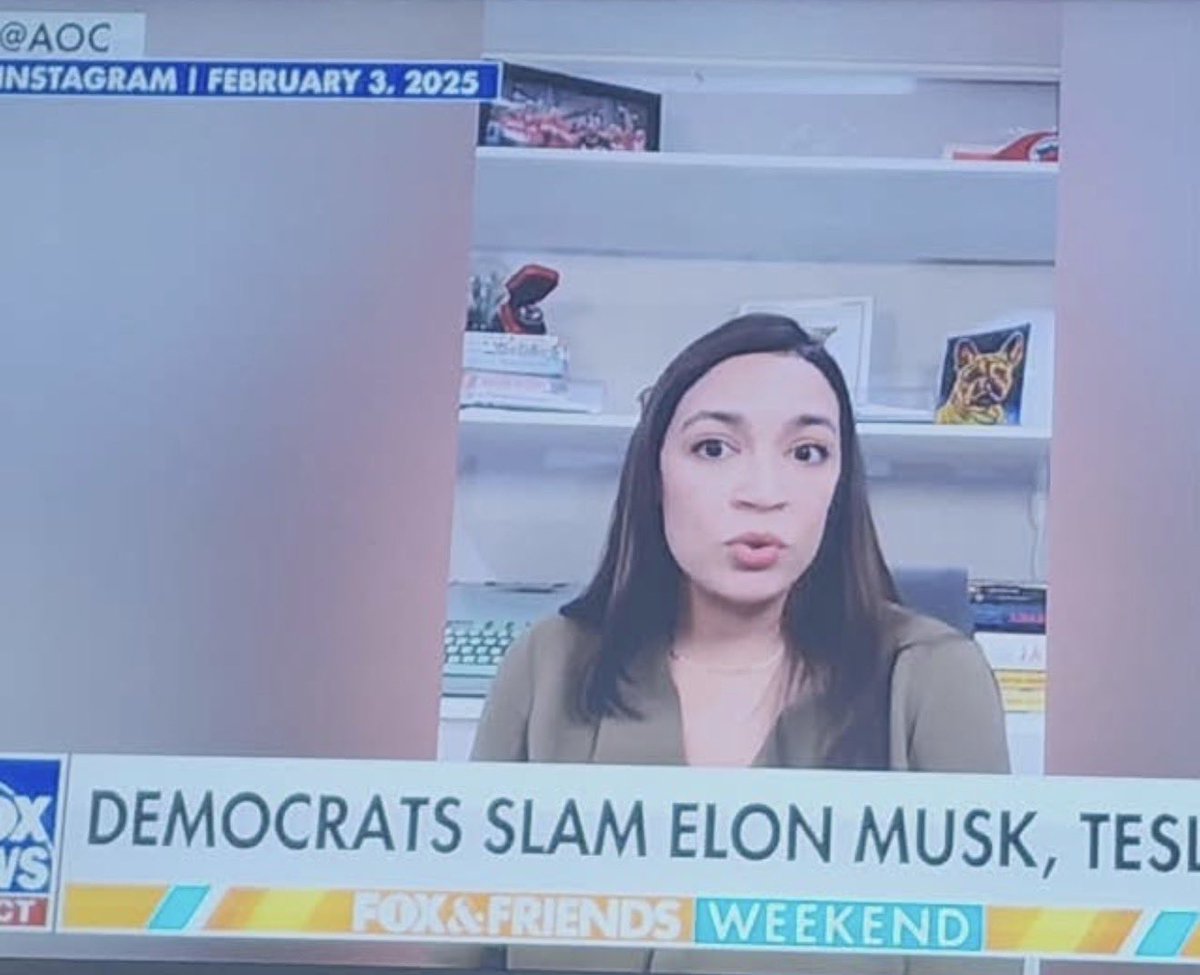
And just like that - "community notes" destroyed another Democrat congresswoman. Facts matter - "it's not complicated". @RepSaraJacobs CALL HER OUT
Elon Musk paid ~$11B in taxes in 2021 (record high) on Tesla stock sales, effective rate 47% on reported income.
Typical effective federal rates:
truck drivers/firefighters/nurses
~10-25%; median household ~13-15%.
Oh and by the way
With an estimated net worth of $76 million, Jacobs is one of the wealthiest members of Congress.
Sara Jacobs's grandfather is Irwin M. Jacobs, the billionaire businessman and co-founder and former chairman of the telecommunications and semiconductor company Qualcomm.
She probably doesn’t want this reposted so please do

It’s beyond sickening that Elon Musk – the world’s first trillionaire – pays a lower effective tax rate than truck drivers, firefighters, or nurses.
It’s not complicated – we need to actually TAX THE RICH.
nytimes.com/2026/06/12/techn…
2
23
44
1,470
The Office of Strategic Services was formed on 13 June 1942 under William "Wild Bill" Donovan as America's answer to a new kind of warfare.
The Axis powers controlled vast territories across Europe and Asia, and the United States needed men and women who could operate behind enemy lines, gather intelligence, sabotage critical infrastructure, and organize resistance movements.
In response, the OSS became America's first true special operations organization. Its operatives parachuted into occupied France to work alongside resistance fighters. They coordinated supply drops, organized guerrilla networks, gathered intelligence on German troop movements, and prepared the battlefield for the Allied invasion of Europe.
In Norway, OSS teams supported resistance operations against German forces and helped disrupt Nazi control of key transportation routes.
In Burma, OSS Detachment 101 became one of the most successful unconventional warfare organizations of the war. Working with local Kachin tribesmen, a few hundred Americans built a guerrilla force that tied down thousands of Japanese troops, gathered intelligence across vast stretches of jungle, rescued downed Allied airmen, and conducted raids deep behind enemy lines, all while inflicted thousands of casualties on Japanese forces while suffering few losses of its own.
The OSS also pioneered many of the tradecraft techniques that remain associated with intelligence and special operations today. Most importantly, the organization proved that small teams operating among local populations could create strategic effects far beyond their numbers.
When World War II ended, the OSS was dissolved. The intelligence side of the OSS became one of the foundations of the Central Intelligence Agency, established in 1947, and many former OSS officers joined the new agency and helped shape America's postwar intelligence capabilities.
Several former OSS veterans played key roles in the development of Army Special Forces in the 1950s as well. Aaron Bank, often called the "Father of Special Forces," drew directly from his OSS experiences in Europe. Bank had firsthand experience conducting unconventional warfare behind enemy lines, and the Special Forces mission of unconventional warfare, working by, with, and through indigenous forces, is what OSS teams were doing a decade earlier in France, Burma, and elsewhere.
Even though the OSS only lasted for three years, the lasting effects are still seen today in those two great organizations.
2
8
581
“Former NFL defensive lineman Aldon Smith died Saturday in the Bay Area. He was 36.
Smith played six seasons in the NFL for the San Francisco 49ers, Oakland Raiders and Dallas Cowboys. The Niners originally selected him with the seventh overall pick in the 2011 NFL draft.
The team confirmed Smith's death on Saturday afternoon. No cause of death was given.”
9
5
23
3,582
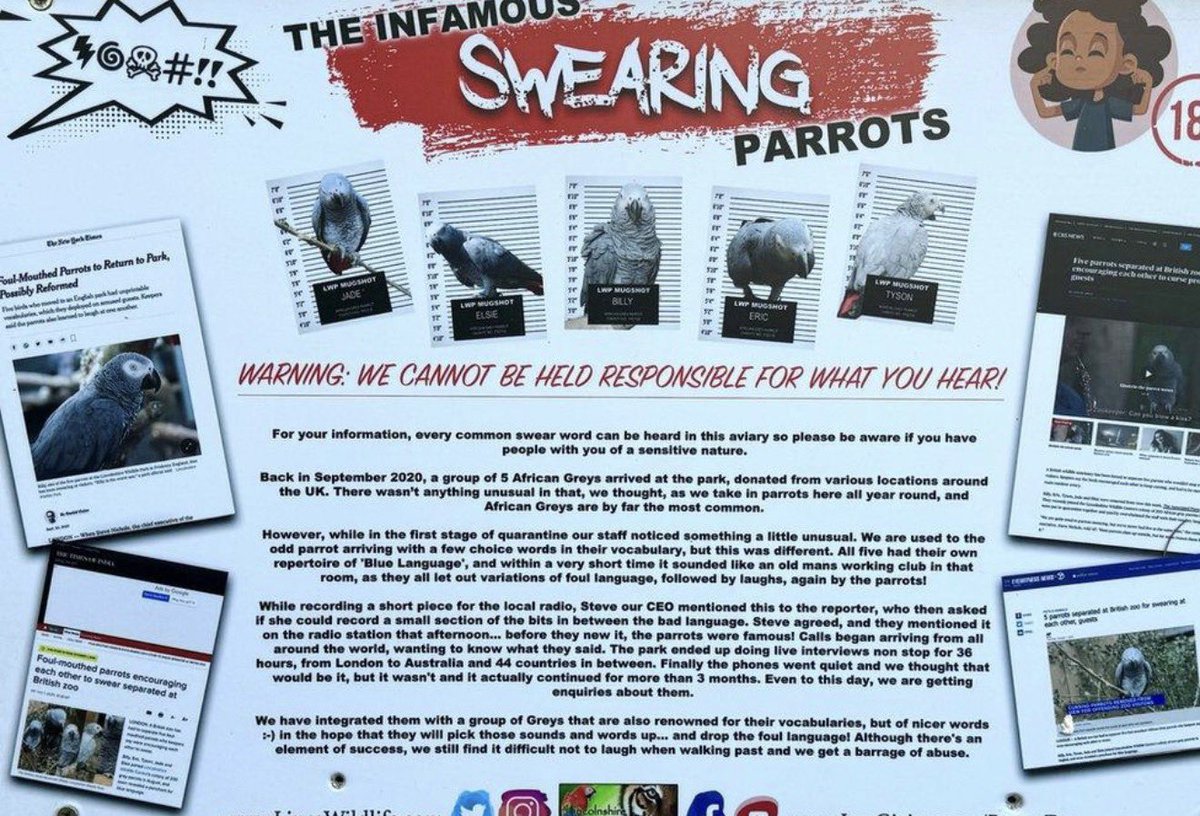
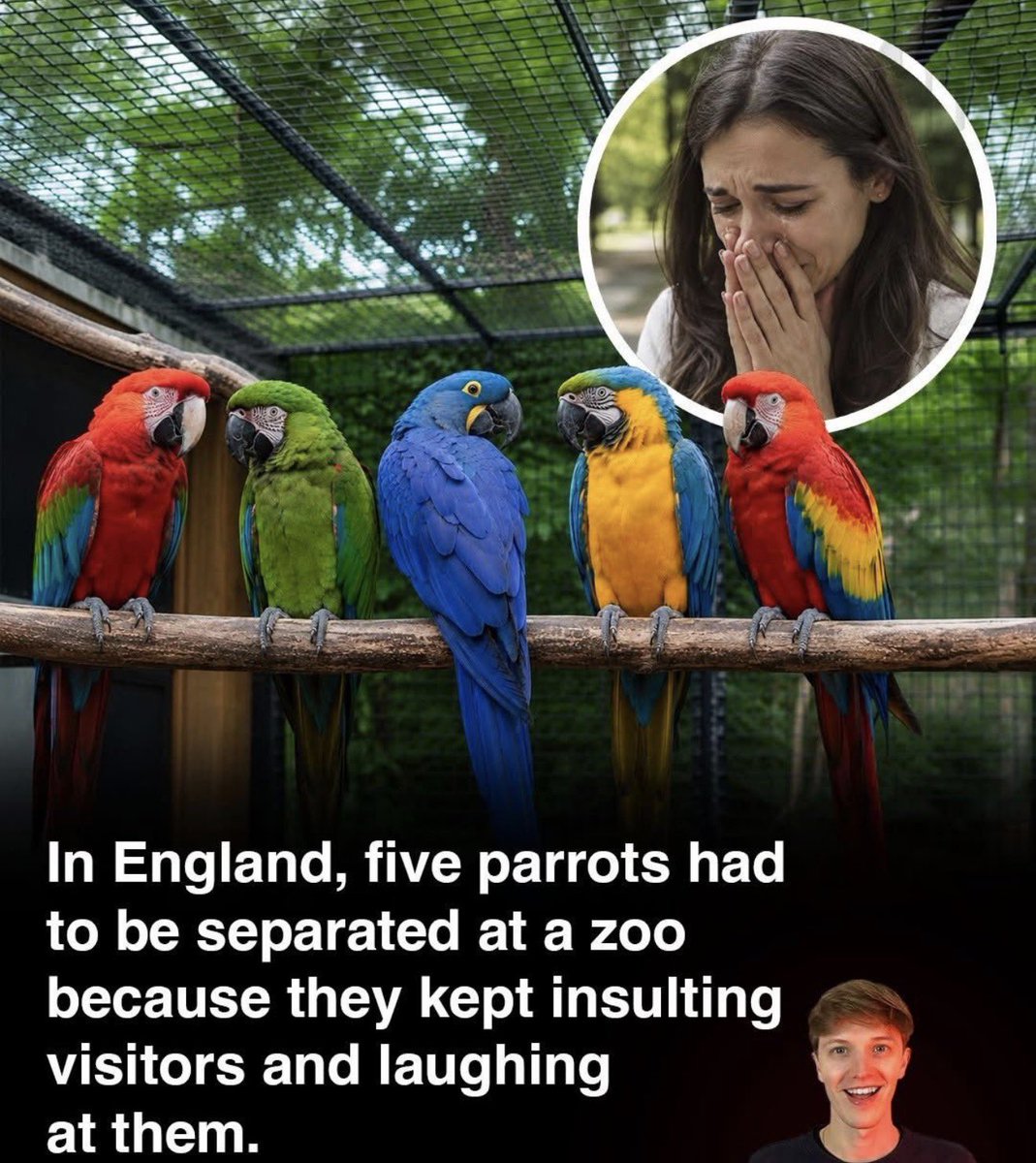
A zoo in England in 2020 had to separate five parrots because they would not stop insulting visitors.
The parrots lived at Lincolnshire Wildlife Park.
Their names were Billy, Elsie, Eric, Jade and Tyson.
They had only recently joined the park’s colony of African grey parrots.
But there was one problem.
They had all learned to swear.
And when visitors walked past, the parrots started hurling insults at them.
Then they laughed.
And because visitors laughed back, the parrots kept doing it even more.
It became a feedback loop of chaos.
One parrot would swear.
Another would laugh.
Then the others would join in.
Staff eventually had to separate them because they were encouraging each other too much.
The funniest part is that the parrots were not being aggressive in the human sense.
They were copying sounds, reactions and attention.
But to visitors, it looked like five birds had formed a tiny comedy group dedicated to roasting the public.
A wildlife park expected people to come and see the animals.
Instead, the animals started heckling the people.
4
1,051
A zoo in England in 2020 had to separate five parrots because they would not stop insulting visitors.
The parrots lived at Lincolnshire Wildlife Park.
Their names were Billy, Elsie, Eric, Jade and Tyson.
They had only recently joined the park’s colony of African grey parrots.
But there was one problem.
They had all learned to swear.
And when visitors walked past, the parrots started hurling insults at them.
Then they laughed.
And because visitors laughed back, the parrots kept doing it even more.
It became a feedback loop of chaos.
One parrot would swear.
Another would laugh.
Then the others would join in.
Staff eventually had to separate them because they were encouraging each other too much.
The funniest part is that the parrots were not being aggressive in the human sense.
They were copying sounds, reactions and attention.
But to visitors, it looked like five birds had formed a tiny comedy group dedicated to roasting the public.
A wildlife park expected people to come and see the animals.
Instead, the animals started heckling the people.
2
2
25
1,785
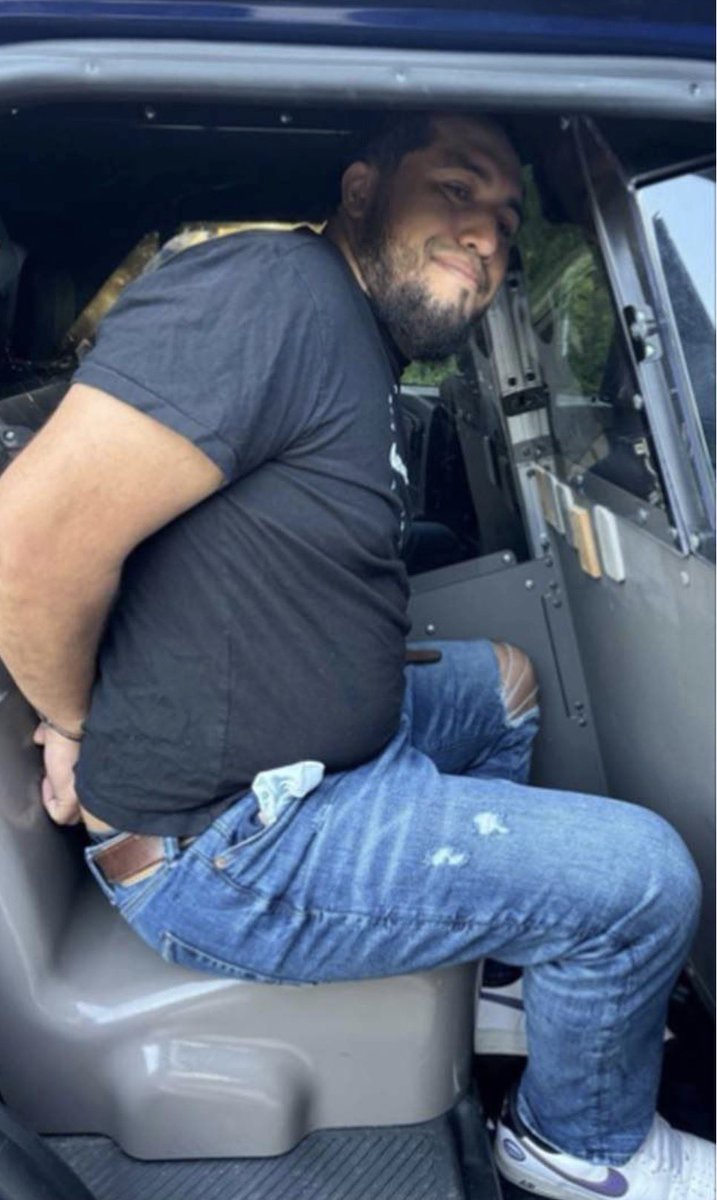
Meet Yerlis Efrain Alvarez-Alvarez, an illegal immigrant from El Salvador.
He's been arrested in the sanctuary-state of Maryland on THREE counts for each of second-degree r*pe, s3xual ab*se of a minor-household/family member and and third-degree s-x offense.
And guess what? He was literally RELEASED INTO AMERICA under the Obama administration.
THIS is the kind of person the left fights to keep in America. Let that sink in then blast this everywhere.
4
101
145
1,287
Why do so many Democrats hate successful people who have pursued and achieved the American dream? Jealousy? Maybe. But, in my opinion, it's because many, many Democrats love communism and socialism and don't like to see wealthy people, only dependent people Such people are evil to them unless their name is George Soros. Any comments?
31
20
66
1,232
More Than 10,000 Dem Lawyers Have Exited Govt since President Donald Trump returned to office, a 17% drop. (Numbers form NYT analysis ) Great job Mr. President riding the gov't and draining the swamp. If there was any questions about their leanings, know that Democrat state attorneys general and advocacy groups have hired them.
4
13
44
1,086
If the military sends one massive drone into enemy airspace, it will be shot down instantly. So, they decided to completely delete the massive drone and replace it with a terrifying, autonomous swarm.
Originally designed by @mit engineering students and modified by MIT Lincoln Laboratory, the Perdix is a microscopic, 3D-printed drone that weighs just 290 grams. In a mind-bending test, three F/A-18 Super Hornets flying at Mach 0.6 dropped 103 of these drones directly out of their flare dispensers! Once in the sky, they are not pre-programmed individuals; they are a literal collective organism sharing one distributed brain. Because every drone continuously communicates with the others, the swarm has absolutely no leader and mathematically adapts itself if a drone is destroyed or exits the formation! Does an autonomous hive-mind completely change the future of warfare?

1
13
684
1930s, Mississippi River near Vicksburg. Along the riverbanks, some families created floating neighborhoods after floods, debt, and economic hardship forced them from farms and homes. Using old barges, houseboats, and salvaged lumber, they built small communities tied together by ropes, docks, and a shared determination to survive during the Great Depression.
Life revolved around the water. Fishermen spent long days catching catfish and other river fish that could feed their families or be traded for necessities such as flour, coffee, fuel, and clothing. Skilled workers repaired engines, patched boats, and reused materials from abandoned equipment to keep the settlement functioning. Others earned income by gathering river resources and selling them in nearby towns.
Women helped sustain daily life by mending clothes, sewing quilts, preparing meals, and finding creative ways to stretch limited supplies. Small container gardens appeared on decks and floating platforms, producing vegetables wherever sunlight and space allowed. Every available corner served a purpose.
Children adapted quickly to life on the river. They learned to swim, row small boats, balance on floating docks, and navigate the waterways that surrounded their homes. Despite the uncertainty, strong friendships formed among families who depended on one another for support.
When floods threatened nearby communities, residents often worked together, sharing shelter, food, and supplies with neighbors in need. Cooperation became one of the settlement's greatest strengths.
For many who lived there, the river brought both challenges and opportunity. Though they possessed few material comforts, these floating communities offered independence, resilience, and a sense of belonging during one of the most difficult periods in American history.

11
43
908
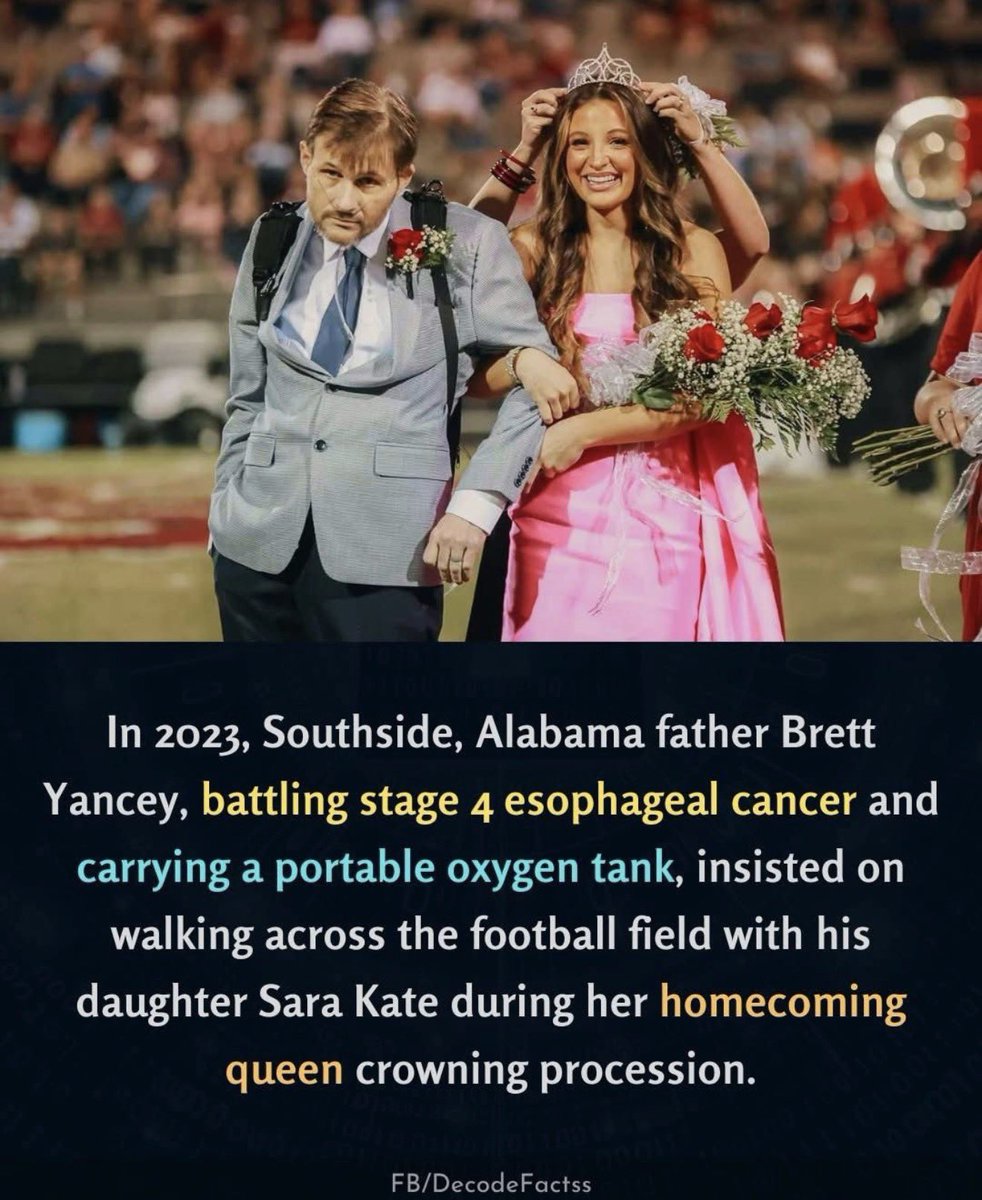
In 2023, Brett Yancey of Southside, Alabama was fighting stage 4 esophageal cancer and depended on a portable oxygen tank to help him breathe. Despite his declining health, he was determined to be present for one of the most important moments in his daughter Sara Kate’s life.
During the high school homecoming ceremony, Sara Kate was announced as homecoming queen. As part of the crowning procession, Brett walked across the football field beside her, refusing to use a golf cart despite concerns about his condition.
The slow walk covered only a short distance, but it carried immense meaning for the family. Photos and videos of the moment spread widely online, inspiring many people with Brett’s determination to support his daughter despite the challenges of advanced cancer
2
12
64
998
Some of the intended recipients moved away more than 10 years ago.

24
94
171
4,806