Will surprise you with the facts about how viruses spread, how any two random twitterers are linked and how the whole world is a small world :)
Joined February 2009
- Tweets 27
- Following 7
- Followers 1,115
- Likes 4
1 Photos and videos
Network Science retweeted

14 May 2023
Welcome to the #AI Report.
We are curating a newsletter that's research focused, and aims to equip you with actionable insights on the latest developments in #GenerativeAI and #ML.
Read the inaugural edition here: bit.ly/3M8YJnA

1
1
202
Network Science retweeted

23 Dec 2022
Mathematics.
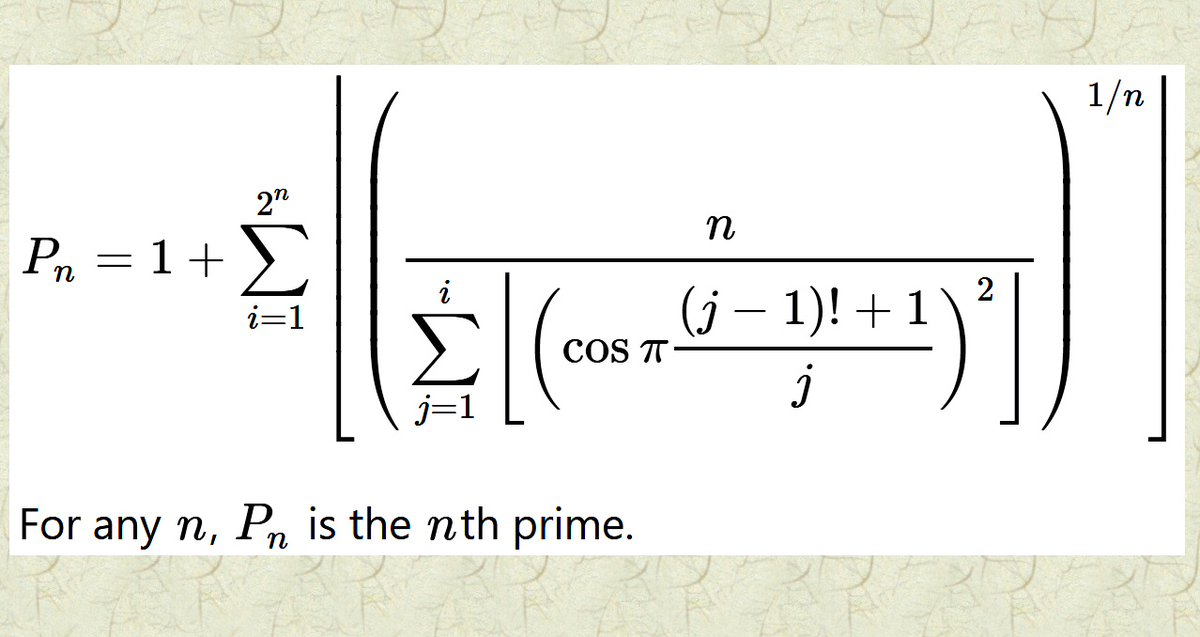
Shiver in ecstasy. An exact formula for determining the n-th prime number. bit.ly/3HY9zfn
44
208
1,473
272,518
Network Science retweeted

4 Jan 2022
I'm teaching "Networks" at Stanford again this quarter, my 7th run of the course with 100 students, following the excellent Easley & Kleinberg textbook (and mega-class at Cornell!). Always a thrill. If you teach a related class, here's an awesome lecture trick… 🧵 1/
15
128
1,446

21 Dec 2021
The networks that help us sometimes gets us in trouble!
We got firsthand experience of this with air travel during this pandemic. But it's nothing new: the vast road networks that the Romans constructed also helped spread Plague along those networks.
Network Science retweeted

17 Dec 2021
Fav networks of 2021, 3/7
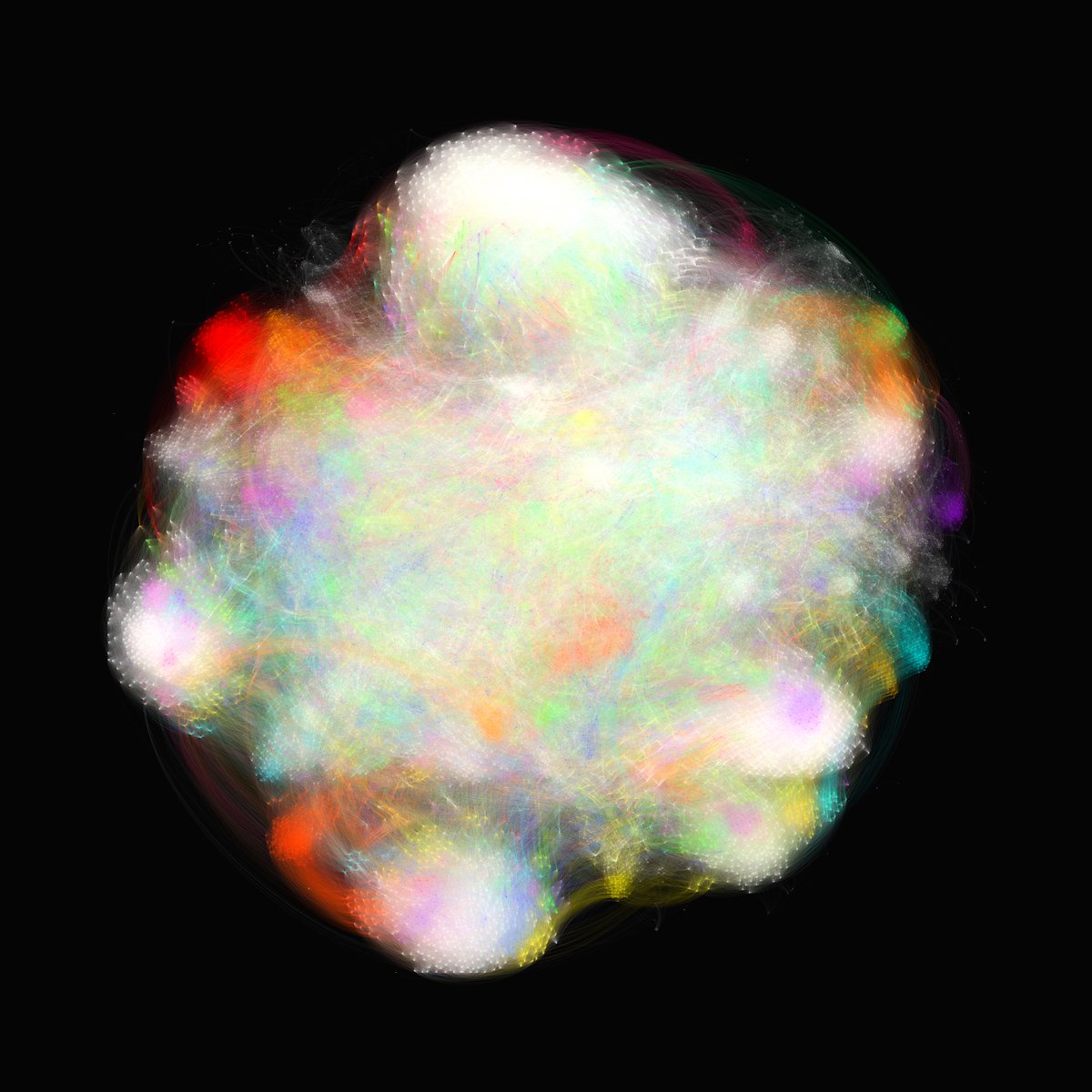
A network of NFTs on @SuperRare - each node representing one #NFT while two are linked based on their number of shared owners. A project with @barabasi that also appeared in the @nytimes
#networkscience #datascience #datavisualization #nft #cryptoart
1
3
20 Dec 2021
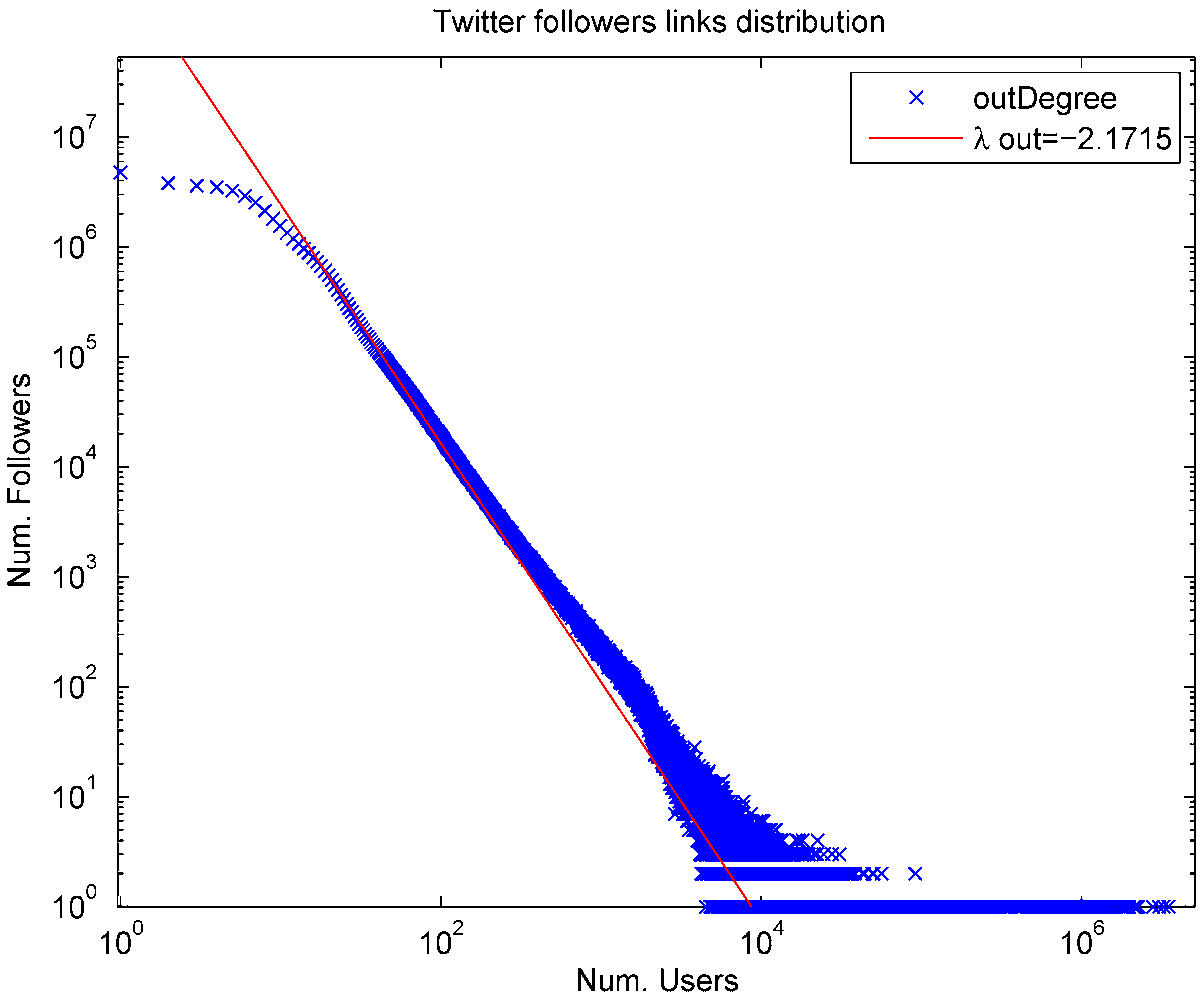
If it is already not clear, Twitter is a scale-free network where the number of followers that the users have, follows a power law distribution. That's why @BarackObama (who follows me!) has 100k times more followers than me. This can never happen with Gaussian distributions.
1
2
5
20 Dec 2021
Image from [1]. Obama is the left most blue cross, and I am somewhere in between (but let's push me to the left?)
[1] Aparicio, Sofía, Javier Villazón-Terrazas, and Gonzalo Álvarez. "A model for scale-free networks: application to twitter." Entropy 17.8 (2015): 5848-5867.
Network Science retweeted

20 Dec 2021
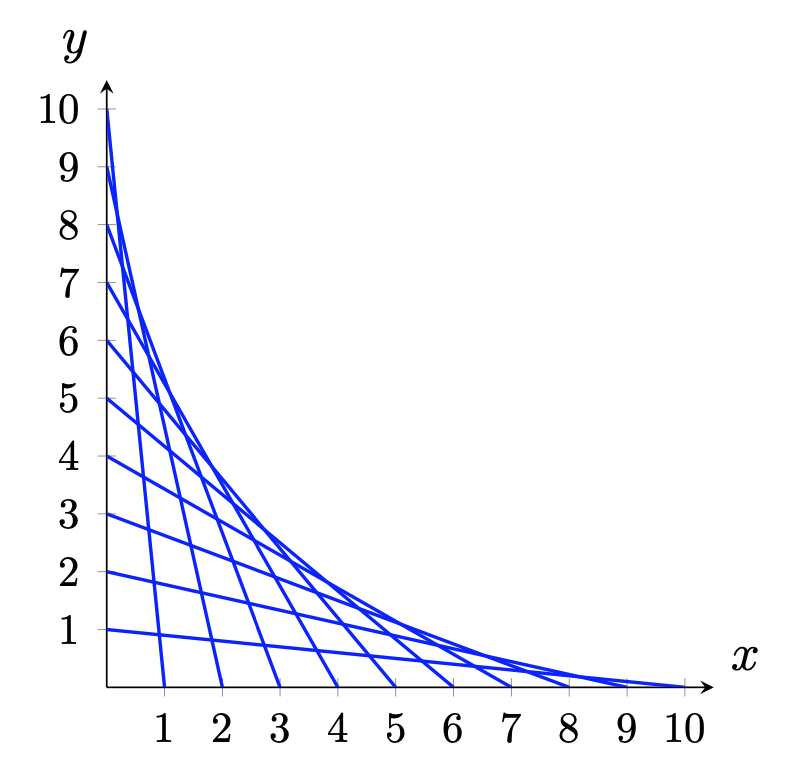
A very nice, gentle explanation of “envelopes” and their connection to string art (and partial derivatives).
19 Dec 2021

When I was a kid I used to make this sketch: connect (1,0) to (0,10), (2,0) to (0,9), etc. I thought it was cool that these straight lines had a curved boundary. Now I know that this curve is called the *envelope* of the family of lines. What is this curve? 1/7
25
159
19 Dec 2021
We live in a small world, where pretty much everyone is separated by six degress of separation.
See the thread for an experiment by Prof. Duncan Watts who recreated Milgrams experiment.
10 Jul 2009

If you don't know about Milgrams Six degrees of Separation experiment, check out http://bit.ly/6degrees and http://bit.ly/vf0Zu
1
19 Dec 2021
"Watts found that the average (though not maximum) number of intermediaries was around six."
1
19 Dec 2021
"A 2007 study by @jure and Eric Horvitz examined a data set of instant messages composed of 30 billion conversations among 240 million people. They found the average path length among Microsoft Messenger users to be 6"
What a small, but fascinating world we live in!
Network Science retweeted

10 Jun 2020
🤯 Topological Logic - a rod through one hole of a double torus can pass through both with some careful stretching of the surface. No tearing or pinching required. A fantastic video made by math professor Dave Richeson @divbyzero
57
1,421
5,150
26 Oct 2011
Leskovec et al. found the diameter of networks shrink as they grow. So the 6 in 6 degrees of freedom will slowly decrease!
3
5
17 Mar 2010
Birds of same feather flock together. Interesting paper that uses your friends' info to deduce info about you: http://bit.ly/aY6Xr7
1
8
4
12 Jul 2009
When you boil an egg, it goes from liquid to solid abruptly. Percolation theory was developed to explain that, now also used for epidemics!
3
3
10 Jul 2009
SIR model is one of the oldest to model epidemics. One can be (S)usceptible, (I)mmune or (R)emovd. Disease becomes epidemic abv a threshold.
1
10 Jul 2009
If you don't know about Milgrams Six degrees of Separation experiment, check out http://bit.ly/6degrees and http://bit.ly/vf0Zu
1
1
8 Feb 2009
If you check out the list of blogs, it turns out that a handful get about 80% of traffic whereas the ALL remaining blogs get abt 20%