
Joined December 2018
- Tweets 6,751
- Following 488
- Followers 2,780
- Likes 471
823 Photos and videos












A private Signal chat full of Silicon Valley's biggest names has spent the last eight months waging a quiet war against a proposed California billionaire tax.
Sergey Brin, Marc Andreessen, Chris Larsen, Michael Moritz, and Ron Conway are among the dozens of tech elites who brainstormed everything from buying the signature firm behind the ballot measure to recruiting candidates for governor.
So far it hasn't worked. The union backing the tax collected nearly double the signatures it needed, and the billionaires' preferred candidates lost their primaries.
Gavin Newsom is now racing to negotiate the measure off the ballot before a June 25 deadline.
3
A growing number of drivers in China have found an oddly low-tech way to fool one of Tesla's most important safety features.
They're placing small plastic head figurines, the kind sold for ten to forty dollars on sites like Taobao and Douyin, in the driver's seat to trick Autopilot's in-cabin camera into thinking someone is paying attention.
One driver reportedly used a Dwayne Johnson figurine for 250 miles of a 400 mile trip.
Tesla's system is supposed to intervene within about 30 minutes if it detects inattentiveness, so this workaround raises real questions about how reliable that safeguard actually is.
1
1
18
Full story, and four more, in today's newsletter.
newslit.substack.com/p/tesla…
4

Jun 12
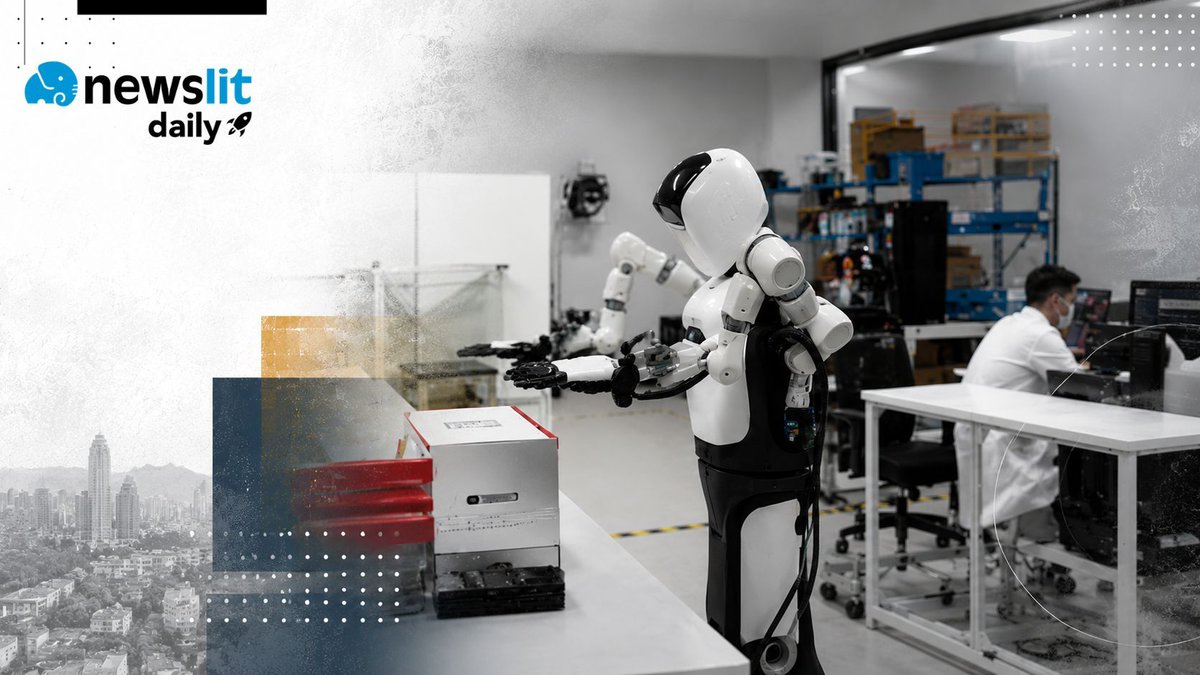
China's humanoid robot industry has a new problem, it can build far more robots than anyone is currently buying.
Chinese manufacturers now account for roughly 85% of global humanoid robot production, and the government wants 10,000 units in commercial use by the end of 2026. Prices range from about $6,000 for basic models to nearly $100,000 for fully functional ones.
Experts say most robots still struggle outside of controlled environments, which means the real test is whether businesses will actually pay for them.
31
Jun 12
Google just took a Chinese cybercrime ring to court over a massive AI powered scam.
The lawsuit accuses a group called Outsider Enterprise of using Gemini to build fake Google, YouTube and government websites to defraud people.
The network created 9,000 fake sites and sent millions of scam texts and messages in just two weeks. Google says hundreds of thousands of people were affected, with losses in the millions of dollars.
The company is now coordinating with the FBI and pushing Congress to pass new laws against AI driven fraud.
34
Jun 12
SpaceX just pulled off the biggest stock market debut in history.
The company priced its IPO at $135 a share, raising $75 billion and valuing SpaceX at close to $1.8 trillion.
Retail investors alone placed more than $100 billion in orders, making it more than four times oversubscribed.
Shares jumped about 30% above the offer price as soon as trading opened on Nasdaq.
The listing puts Elon Musk on the edge of becoming the world's first trillionaire and kicks off what could be a wave of AI related mega IPOs this year.
1
178
Jun 12
We break down what it means for markets in today's newsletter.
newslit.substack.com/p/space…
25
Jun 11
The FBI and the Justice Department shut down thirteen internet domains used by Chinese actors posing as consulting firms.
The fake companies used AI generated photos and personas to recruit Americans with security clearances.
Job listings for roles like "Senior Analyst" appeared on LinkedIn and other sites, part of a scheme to extract sensitive reports.
The action follows a joint FBI and MI5 warning about similar tactics targeting defense analysts.
25
Jun 11
OpenAI is reportedly weighing steep price cuts across ChatGPT's subscription tiers.
The move comes as the company braces for an intensifying fight for users with Anthropic.
Both consumer and business plans could be affected, with OpenAI looking to make ChatGPT more competitive on price.
It's a sign that pricing is becoming a major new front in the AI assistant wars.
27
Jun 11
Anthropic just reversed a policy that let Claude quietly flag and tone down answers to AI research questions it considered risky.
The change comes after researchers and developers pushed back over the lack of transparency about when and why Claude was holding back.
Going forward, restricted answers will say so directly, with flagged queries falling back to Claude Opus 4.8 and a visible explanation.
It's a notable moment for how AI labs talk about safety tradeoffs in public.
1
59
Jun 11
More on what changed and why it matters in today's newsletter.
newslit.substack.com/p/claud…
34
Jun 10
Seattle just became the latest major US city to hit pause on new AI data centers.
The city council voted unanimously for a one year moratorium on large facilities, following a wave of public pressure after five new projects were proposed earlier this year.
More than 70 cities and counties across the country have now enacted similar bans.
New York could be next, with a statewide pause awaiting the governor's signature.
It is part of a much bigger story about who pays the cost of the AI boom.
22
Jun 10
SpaceX is reportedly planning to launch a test of an AI data center in space by the end of 2027.
The idea is to put satellites covered in solar panels into orbit, with a central module packed with chips for training and running AI models.
It is an ambitious idea, but SpaceX's own IPO filing admits the project might never become commercially viable.
Companies have a history of making big promises right before going public, and not all of them pan out.
28
Jun 10
Anthropic just released its most capable public AI model yet, Claude Fable 5, alongside a more powerful sibling called Mythos 5 for trusted partners only.
Fable 5 ships with safety guardrails that only kick in for a small fraction of conversations, while Mythos 5 has those restrictions lifted for vetted cybersecurity teams.
Reports suggest Mythos 5 is already being used to support offensive cyber operations for the US government.
Early testers say the new model can compress months of engineering work into a single day.
There is a lot more nuance to how these two models differ and what it means for AI safety.
1
1
77
Jun 9
OpenAI just walked back one of its most ambitious claims.
The company had set a goal of fully autonomous AI research by 2028. Now CEO Sam Altman and chief researcher Jakub Pachocki say the future is AI and humans working in tandem, not full automation.
They also called for an international body that could slow frontier AI development when societal resilience and safety need time to catch up.
The shift arrives as OpenAI is actively preparing for its IPO, which makes the timing worth paying attention to.
36
Jun 9
Microsoft had a serious security incident this week, and it landed squarely in the AI developer community.
Hackers breached dozens of Microsoft's open-source GitHub repositories and injected password-stealing malware into tools used by developers working with Claude Code, Gemini's CLI, and VS Code.
More than 70 repos were disabled, and security researchers believe this may be a re-compromise of a project Microsoft thought it had already fixed.
It is the second known breach of Microsoft's open-source infrastructure in the span of a few weeks.
1
2
56
Jun 9
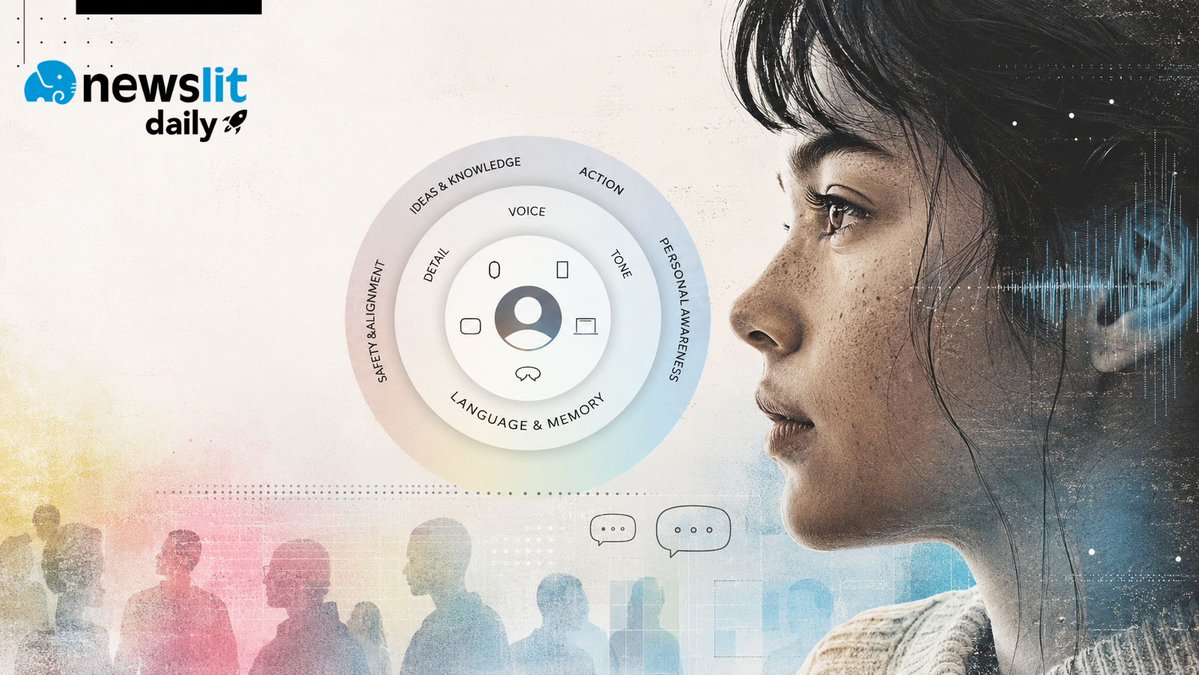
Apple just revealed it rebuilt Apple Intelligence from the ground up, and the foundation is Google's Gemini technology.
The two companies co-developed the new foundation models together, designed to run both on-device and through Apple's Private Cloud Compute.
The new architecture adds a system orchestrator, realistic image creation, advanced photo editing, and stronger reasoning across apps.
Apple is framing it as a privacy-first move, but the Apple-Google collaboration is already generating debate about what it means for competition and for users who trusted Apple to go it alone.
1
1
60
Jun 9
Full breakdown, plus more tech stories, in today's newsletter.
newslit.substack.com/p/apple…
38
Jun 8
UK Prime Minister Keir Starmer walked into London Tech Week and gave Apple and Google three months to block explicit images on children's phones, or face legislation and potential criminal charges for senior managers.
The UK's National Crime Agency gets 1,700 child abuse referrals every week, and nine in ten abuse images last year were generated by children themselves, many coerced online.
Starmer called it non-negotiable: tech should adapt to society, not the other way around.
Civil liberties groups have already pushed back, warning about threats to anonymity and privacy.
1
56