
EACC 1BTC=1BTC
Joined August 2021
- Tweets 871
- Following 486
- Followers 4,298
- Likes 1,581
27 Photos and videos





NiftyStar retweeted

Schwab Crypto™ is on the way. Schwab Crypto accounts (offered by Charles Schwab Premier Bank, SSB) will provide direct access to Bitcoin and Ethereum trading, in-depth digital assets education, and more. Read the full press release: brnw.ch/21x1F79
104
243
962
341,673

Introducing Claude Design by Anthropic Labs: make prototypes, slides, and one-pagers by talking to Claude.
Powered by Claude Opus 4.7, our most capable vision model. Available in research preview on the Pro, Max, Team, and Enterprise plans, rolling out throughout the day.
4,141
14,999
148,134
63,892,158
NiftyStar retweeted

Apr 14
⚡️JUST IN: GOLDMAN SACHS FILES FOR BITCOIN PREMIUM INCOME ETF
Goldman Sachs has filed to launch a Bitcoin Premium Income ETF, signaling continued expansion of institutional $BTC yield-style investment products.


19
26
164
12,541

We just released Gemma 4 — our most intelligent open models to date.
Built from the same world-class research as Gemini 3, Gemma 4 brings breakthrough intelligence directly to your own hardware for advanced reasoning and agentic workflows.
Released under a commercially permissive Apache 2.0 license so anyone can build powerful AI tools. 🧵↓
727
3,016
20,410
7,727,825
NiftyStar retweeted

Mar 31
Today is a monumentous day for quantum computing and cryptography. Two breakthrough papers just landed (links in next tweet). Both papers improve Shor's algorithm, infamous for cracking RSA and elliptic curve cryptography. The two results compound, optimising separate layers of the quantum stack. The results are shocking. I expect a narrative shift and a further R&D boost toward post-quantum cryptography.
The first paper is by Google Quantum AI. They tackle the (logical) Shor algorithm, tailoring it to crack Bitcoin and Ethereum signatures. The algorithm runs on ~1K logical qubits for the 256-bit elliptic curve secp256k1. Due to the low circuit depth, a fast superconducting computer would recover private keys in minutes. I'm grateful to have joined as a late paper co-author, in large part for the chance to interact with experts and the alpha gleaned from internal discussions.
The second paper is by a stealthy startup called Oratomic, with ex-Google and prominent Caltech faculty. Their starting point is Google's improvements to the logical quantum circuit. They then apply improvements at the physical layer, with tricks specific to neutral atom quantum computers. The result estimates that 26,000 atomic qubits are sufficient to break 256-bit elliptic curve signatures. This would be roughly a 40x improvement in physical qubit count over previous state-of-the-art. On the flip side, a single Shor run would take ~10 days due to the relatively slow speed of neutral atoms.
Below are my key takeaways. As a disclaimer, I am not a quantum expert. Time is needed for the results to be properly vetted. Based on my interactions with the team, I have faith the Google Quantum AI results are conservative. The Oratomic paper is much harder for me to assess, especially because of the use of more exotic qLDPC codes. I will take it with a grain of salt until the dust settles.
→ q-day: My confidence in q-day by 2032 has shot up significantly. IMO there's at least a 10% chance that by 2032 a quantum computer recovers a secp256k1 ECDSA private key from an exposed public key. While a cryptographically-relevant quantum computer (CRQC) before 2030 still feels unlikely, now is undoubtedly the time to start preparing.
→ censorship: The Google paper uses a zero-knowledge (ZK) proof to demonstrate the algorithm's existence without leaking actual optimisations. From now on, assume state-of-the-art algorithms will be censored. There may be self-censorship for moral or commercial reasons, or because of government pressure. A blackout in academic publications would be a tell-tale sign.
→ cracking time: A superconducting quantum computer, the type Google is building, could crack keys in minutes. This is because the optimised quantum circuit is just 100M Toffoli gates, which is surprisingly shallow. (Toffoli gates are hard because they require production of so-called "magic states".) Toffoli gates would consume ~10 microseconds on a superconducting platform, totalling ~1,000 sec of Shor runtime.
→ latency optimisations: Two latency optimisations bring key cracking time to single-digit minutes. The first parallelises computation across quantum devices. The second involves feeding the pubkey to the quantum computer mid-flight, after a generic setup phase.
→ fast- and slow-clock: At first approximation there are two families of quantum computers. The fast-clock flavour, which includes superconducting and photonic architectures, runs at roughly 100 kHz. The slow-clock flavour, which includes trapped ion and neutral atom architectures, runs roughly 1,000x slower (~100 Hz, or ~1 week to crack a single key).
→ qubit count: The size-optimised variant of the algorithm runs on 1,200 logical qubits. On a superconducting computer with surface code error correction that's roughly 500K physical qubits, a 400:1 physical-to-logical ratio. The surface code is conservative, assuming only four-way nearest-neighbour grid connectivity. It was demonstrated last year by Google on a real quantum computer.
→ future gains: Low-hanging fruit is still being picked, with at least one of the Google optimisations resulting from a surprisingly simple observation. Interestingly, AI was not (yet!) tasked to find optimisations. This was also the first time authors such as Craig Gidney attacked elliptic curves (as opposed to RSA). Shor logical qubit count could plausibly go under 1K soonish.
→ error correction: The physical-to-logical ratio for superconducting computers could go under 100:1. For superconducting computers that would be mean ~100K physical qubits for a CRQC, two orders of magnitude away from state of the art. Neutral atoms quantum computers are amenable to error correcting codes other than the surface code. While much slower to run, they can bring down the physical to logical qubit ratio closer to 10:1.
→ Bitcoin PoW: Commercially-viable Bitcoin PoW via Grover's algorithm is not happening any time soon. We're talking decades, possibly centuries away. This observation should help focus the discussion on ECDSA and Schnorr. (Side note: as unofficial Bitcoin security researcher, I still believe Bitcoin PoW is cooked due to the dwindling security budget.)
→ team quality: The folks at Google Quantum AI are the real deal. Craig Gidney (@CraigGidney) is arguably the world's top quantum circuit optimisooor. Just last year he squeezed 10x out of Shor for RSA, bringing the physical qubit count down from 10M to 1M. Special thanks to the Google team for patiently answering all my newb questions with detailed, fact-based answers. I was expecting some hype, but found none.
345
1,172
5,942
1,529,150
NiftyStar retweeted

Mar 24
Today, several teams at the EF are launching pq.ethereum.org, a dedicated resource for Ethereum's post-quantum security effort.
What started with early STARK-based signature aggregation research in 2018 has grown into a coordinated, multi-team effort, all open source.
The Post-Quantum team and Cryptography teams, with help from the Protocol Architecture and Protocol Coordination teams, have been working on this body of work for 8 years.
At pq.ethereum.org you'll find:
- How PQ impacts each protocol layer
- The full PQ roadmap (strawmap.org)
- Open resources: repos, specs, papers, EIPs
- FAQ: 14 questions across 5 categories, written by the PQ team
- A 6-part lean Ethereum interview series (@zeroknowledgefm)
- Interest form for the 2nd Annual PQ Research Retreat (Cambridge, UK, Oct 2026)
- 10 client teams are already building and shipping devnets weekly through PQ Interop.
All the work is public and all of it is open.
pq.ethereum.org
91
251
967
94,823
NiftyStar retweeted

Mar 13
Bitcoin is not a Ponzi scheme. A Ponzi requires a central operator promising returns and paying early investors with funds from later ones. Bitcoin has no issuer, no promoter, and no guaranteed return—just an open, decentralized monetary network driven by code and market demand.
1,398
3,258
32,438
1,042,356

NiftyStar retweeted

Jan 16
“All of the prerequisites for the original web3 vision are here, in full force, and are continuing to get stronger over the next few years. Hence, it's time to buidl, and buidl decentralized.” greenfieldscan.com/tx/0xfd99…
Jan 14

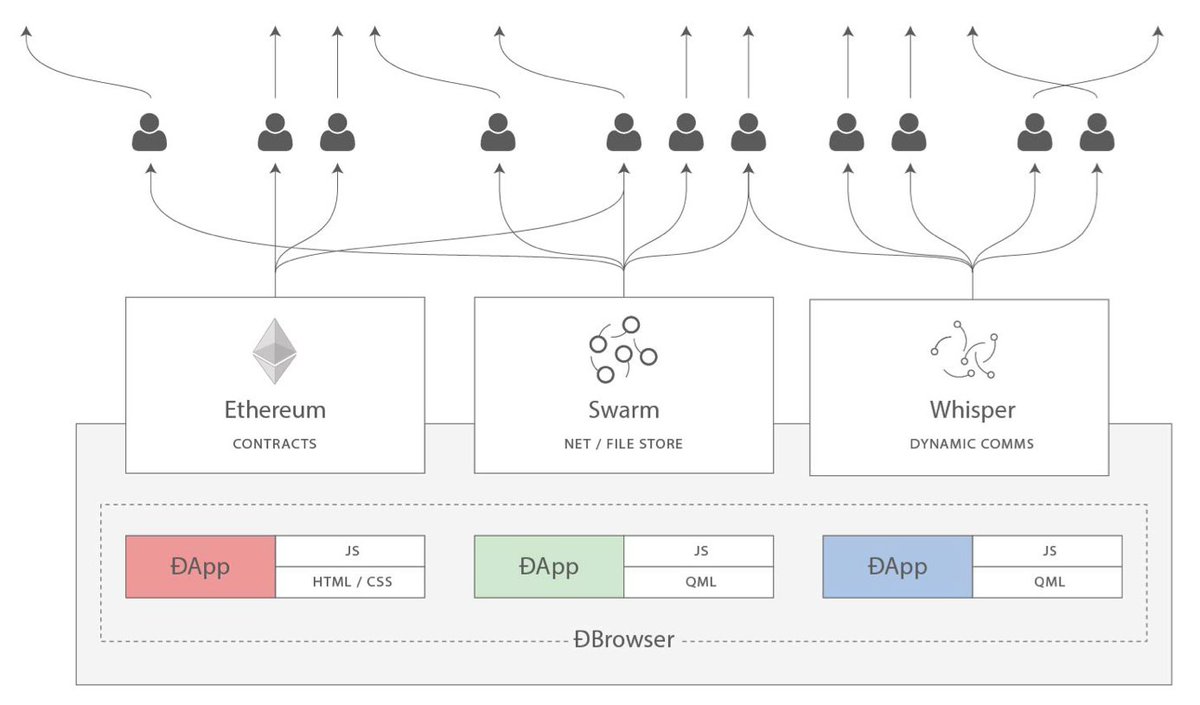
In 2014, there was a vision: you can have permissionless, decentralized applications that could support finance, social media, ride sharing, governing organizations, crowdfunding, potentially create an entire alternative web, all on the backs of a suite of technologies.
Ethereum: the blockchain. The world computer that could give any application its shared memory.
Whisper: the data layer. Messages too expensive for a blockchain, that do no need consensus.
Swarm: the storage layer. Store files for long-term access.
Over the last five years, this core vision has at times become obscured, with various "metas" and "narratives" at various times taking center stage. But the core vision has never died. And in fact, the core technologies behind it are only growing stronger.
Ethereum is now proof of stake. Ethereum is now scaling, it is now cheap, and it is on track to get more scalable and cheaper thanks to the power of ZK-EVMs. Thanks to ZK-EVM PeerDAS, the "sharding" vision is effectively being realized. And L2s can give additional and different kinds of gains in speed on top.
Whisper is now Waku ( docs.waku.org/ ), and already powers many applications (eg. railway.xyz/, status.app/ just to name two I use). Even outside of Waku, the quality of decentralized messaging has increased. Fileverse (decentralized Google Docs and Sheets alternative: fileverse.io/ ) has seen massive gains in usability over the past year.
IPFS is now highly performant and robust as a decentralized way of retrieving files, though IPFS alone does not solve the storage problem. Hence, there is still room to improve there.
All of the prerequisites for the original web3 vision are here, in full force, and are continuing to get stronger over the next few years. Hence, it's time to buidl, and buidl decentralized.
Fileverse is an excellent example of the right way to do things:
* It uses Ethereum and Gnosis Chain for what they are good for: names, accounts and permissioning, document registration
* It uses decentralized messaging and file storage to store documents and propagate changes to documents
* The application passes the walkaway test: github.com/fileverse/walk-aw… (even if Fileverse disappears, you can still retrieve them and even keep editing them with the open source UI)
This is what we mean by "build a hammer that is a tool you buy once and it's yours, not a corposlop AI dishwasher that requires you to register for a google account and charges a subscription fee per month for extra washing modes, and probably spies on you and stops working if you get politically disfavored by a foreign country".
If you think this criticism of corposlop is hyperbolic, well turns out, it's literally a concatenation of these three:
* mein-mmo.de/en/user-buys-new…
* theguardian.com/technology/2…
* irishtimes.com/world/us/2025…
In 2014, decentralized applications were toys, hundreds of times more difficult to use in web2. In 2026, fileverse is now usable enough that I regularly write documents in it and send them to other people to collaborate. The decentralized renaissance is coming, and you can be part of making it happen.
4
3
10
2,306
NiftyStar retweeted

26 Dec 2025
I've never felt this much behind as a programmer. The profession is being dramatically refactored as the bits contributed by the programmer are increasingly sparse and between. I have a sense that I could be 10X more powerful if I just properly string together what has become available over the last ~year and a failure to claim the boost feels decidedly like skill issue. There's a new programmable layer of abstraction to master (in addition to the usual layers below) involving agents, subagents, their prompts, contexts, memory, modes, permissions, tools, plugins, skills, hooks, MCP, LSP, slash commands, workflows, IDE integrations, and a need to build an all-encompassing mental model for strengths and pitfalls of fundamentally stochastic, fallible, unintelligible and changing entities suddenly intermingled with what used to be good old fashioned engineering. Clearly some powerful alien tool was handed around except it comes with no manual and everyone has to figure out how to hold it and operate it, while the resulting magnitude 9 earthquake is rocking the profession. Roll up your sleeves to not fall behind.
2,596
7,415
55,670
16,928,439
NiftyStar retweeted

6 Dec 2025
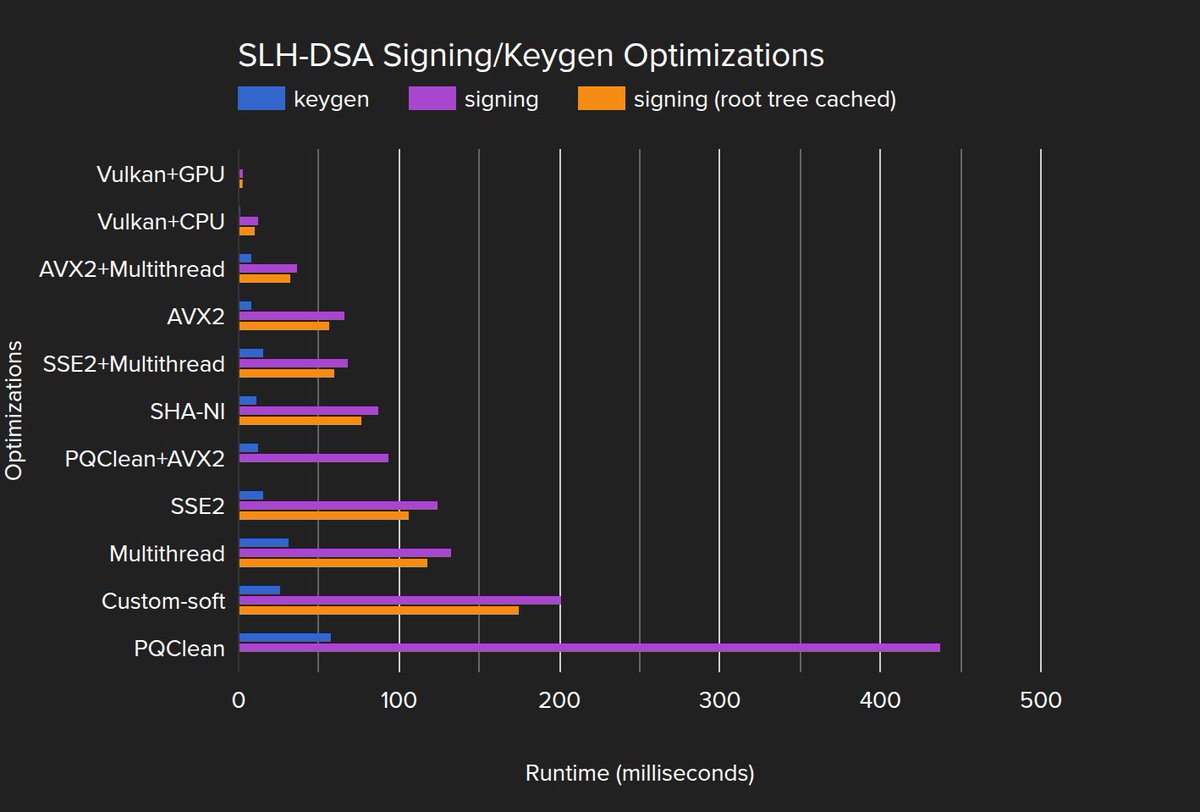
🧵Thread: A major update on post-quantum signatures for Bitcoin — direct from the Bitcoin Dev mailing list.
SLH-DSA (formerly SPHINCS ) is being optimized by @conduition_io as a candidate for the BIP360 quantum-resistant soft fork.
Here’s what changed, why it matters, and what Core devs said.👇
3
4
12
3,656
NiftyStar retweeted

1 Dec 2025
New on our Frontier Red Team blog: We tested whether AIs can exploit blockchain smart contracts.
In simulated testing, AI agents found $4.6M in exploits.
The research (with @MATSprogram and the Anthropic Fellows program) also developed a new benchmark: red.anthropic.com/2025/smart…
346
698
4,784
2,121,956

NiftyStar retweeted

28 Oct 2025
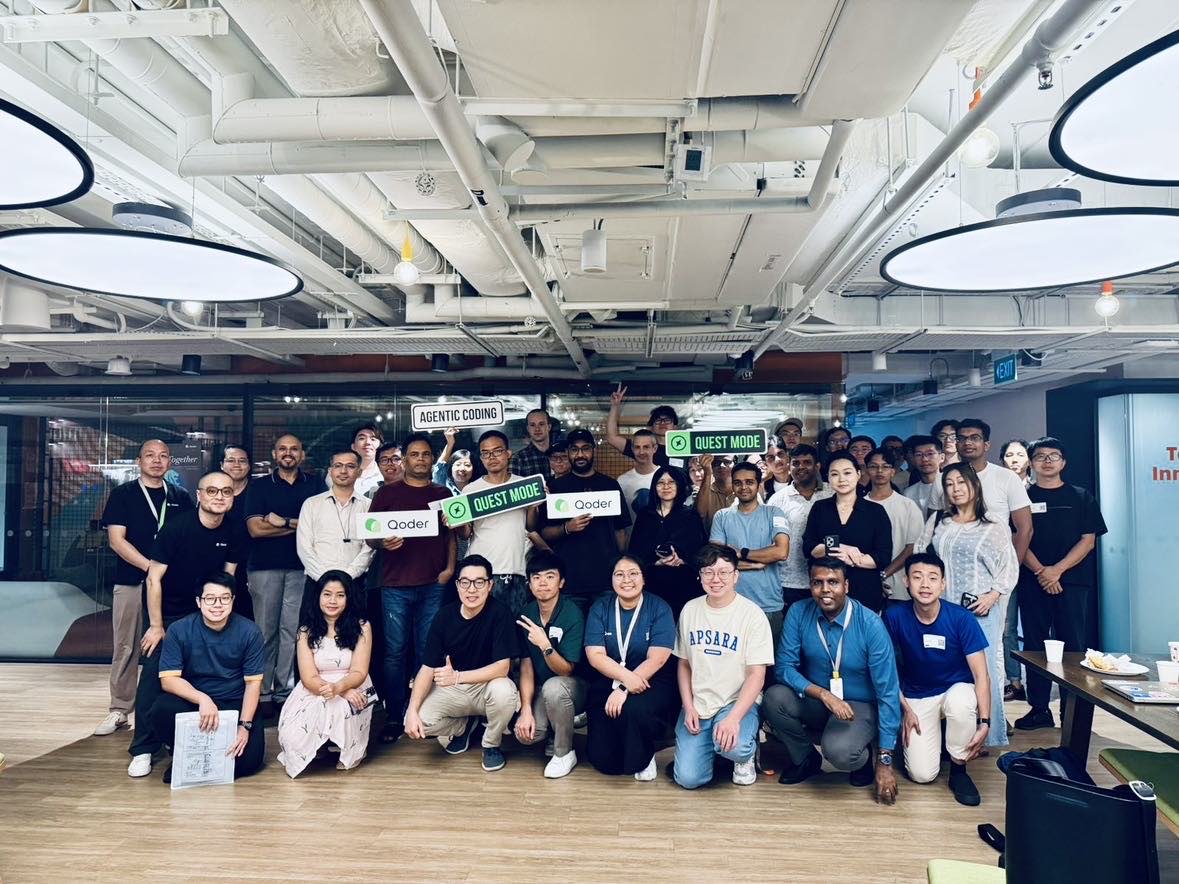
First Qoder meetup done ✅
Singapore builders&founders came through with the energy. Live demos, real feedback, hard questions.
For those who missed it: we're planning more cities.
Drop your location if you want us to host next📍
6
2
25
1,575
NiftyStar retweeted

7 Oct 2025
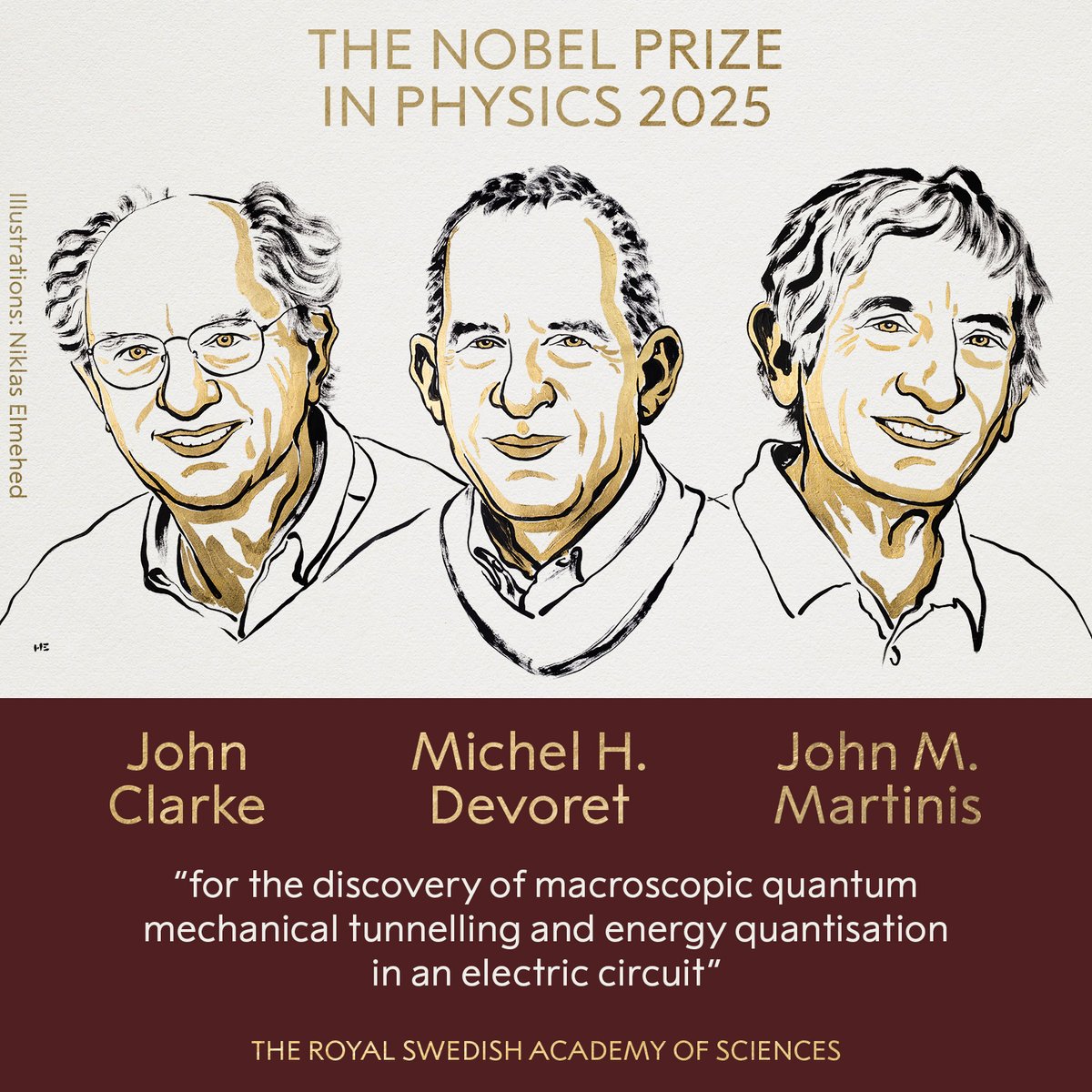
BREAKING NEWS
The Royal Swedish Academy of Sciences has decided to award the 2025 #NobelPrize in Physics to John Clarke, Michel H. Devoret and John M. Martinis “for the discovery of macroscopic quantum mechanical tunnelling and energy quantisation in an electric circuit.”
396
7,513
17,915
4,761,147
NiftyStar retweeted

3 Oct 2025
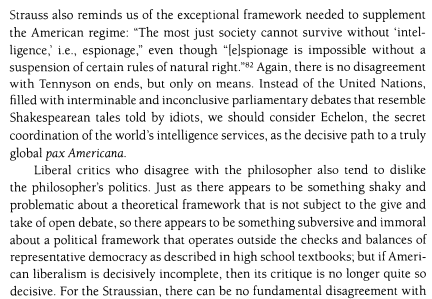
Reminder that Peter Thiel is, to put it mildly, not a cypherpunk
477
452
3,500
947,573
NiftyStar retweeted

30 Sep 2025
We are launching a new app called Sora. This is a combination of a new model called Sora 2, and a new product that makes it easy to create, share, and view videos.
This feels to many of us like the “ChatGPT for creativity” moment, and it feels fun and new. There is something great about making it really easy and fast to go from idea to result, and the new social dynamics that emerge.
Creativity could be about to go through a Cambrian explosion, and along with it, the quality of art and entertainment can drastically increase. Even in the very early days of playing with Sora, it’s been striking to many of us how open the playing field suddenly feels.
In particular, the ability to put yourself and your friends into a video—the team worked very hard on character consistency—with the cameo feature is something we have really enjoyed during testing, and is to many of us a surprisingly compelling new way to connect.
We also feel some trepidation. Social media has had some good effects on the world, but it’s also had some bad ones. We are aware of how addictive a service like this could become, and we can imagine many ways it could be used for bullying.
It is easy to imagine the degenerate case of AI video generation that ends up with us all being sucked into an RL-optimized slop feed. The team has put great care and thought into trying to figure out how to make a delightful product that doesn’t fall into that trap, and has come up with a number of promising ideas. We will experiment in the early days of the product with different approaches.
In addition to the mitigations we have already put in place (which include things like mitigations to prevent someone from misusing someone’s likeness in deepfakes, safeguards for disturbing or illegal content, periodic checks on how Sora is impacting users’ mood and wellbeing, and more) we are sure we will discover new things we need to do if Sora becomes very successful. To help guide us towards more of the good and less of the bad, here are some principles we have for this product:
*Optimize for long-term user satisfaction. The majority of users, looking back on the past 6 months, should feel that their life is better for using Sora that it would have been if they hadn’t. If that’s not the case, we will make significant changes (and if we can’t fix it, we would discontinue offering the service).
*Encourage users to control their feed. You should be able to tell Sora what you want—do you want to see videos that will make you more relaxed, or more energized? Or only videos that fit a specific interest? Or only for a certain about of time? Eventually as our technology progresses, you will be should to the tell Sora what you want in detail in natural language. (However, parental controls for teens include the ability to opt out of a personalized feed, and other things like turning off DMs.)
*Prioritize creation. We want to make it easy and rewarding for everyone to participate in the creation process; we believe people are natural-born creators, and creating is important to our satisfaction.
*Help users achieve their long-term goals. We want to understand a user’s true goals, and help them achieve them. If you want to be more connected to your friends, we will try to help you with that. If you want to get fit, we can show you fitness content that will motivate you. If you want to start a business, we want to help teach you the skills you need. And if you truly just want to doom scroll and be angry, then ok, we’ll help you with that (although we want users to spend time using the app if they think it’s time well spent, we don’t want to be paternalistic about what that means to them).
1,037
935
9,339
1,742,456

Seedream v4 might’ve just taken the Virtual Try-On crown 👑
We stress-tested it with some outrageous fits…
Here’s how you can try it yourself:
1️⃣ Drop in your selfie outfit image
2️⃣ Hit run!
Bonus: Animate your changes with Kling 2.1
Links below 👇
16
108
962
83,087
NiftyStar retweeted

8 Sep 2025
Optimus: Owning the Dirty Work ! 🦾 $TSLA
"anything that humans don’t want to do," Elon Musk
278
577
3,367
222,568
NiftyStar retweeted
3 Sep 2025
"A clear-cut solution to a long-persistent problem, when accomplished, often results in an enormous scientific or technological impact."
Chemistry laureate Ryoji Noyori developed the Noyori asymmetric hydrogenation reaction. This helps enable production of various medications.

ALT Ryoji Noyori in profile giving a lecture to a group of students sitting in the background.
10
29
140
14,856