
founder of @traceloopdev (acquired by ServiceNow), ex-@Google, ex-chief architect @Fiverr. Tweets mostly in Hebrew
Joined April 2016
- Tweets 2,113
- Following 1,314
- Followers 1,898
- Likes 27,535
115 Photos and videos





In what world does more lines of code == more developer productivity?
Jun 4

Our internal data shows Claude is accelerating AI development—a possible path to recursive self-improvement, or AI autonomously building a more capable successor.
It’s happening faster than we thought, and the implications deserve greater attention. anthropic.com/institute/recu…
6
17
2,096
Nir Gazit retweeted

זה פשוט הדבר הכי יפה שראיתי היום.
47
44
2,477
76,676
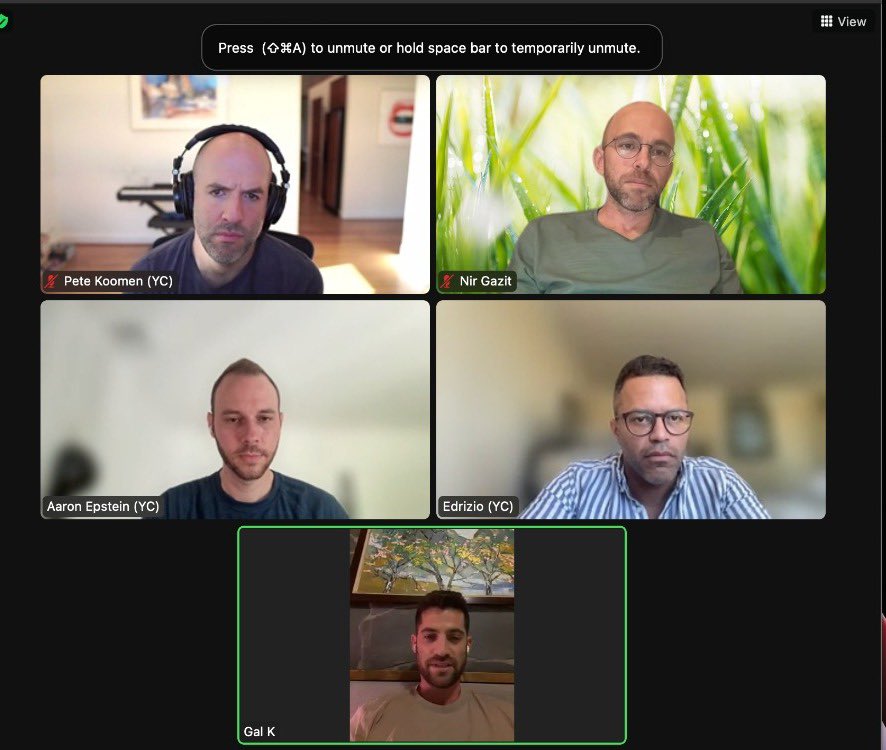
היי טוויטר! מלחמה בחוץ אז חשבתי שזה זמן טוב לספר לכם ש-@traceloopdev, החברה ש-@GalKlm ואני הקמנו, נרכשה על-ידי ServiceNow!
איכשהו בין טיל לאזעקה נחתם היום הסכם הרכישה (סיפור משוגע בפני עצמו, שנשמור לימים רגועים יותר)
113
8
734
35,470
This video was uploaded by OpenClaw. I didn't do anything. I just told @OmriBarak to send the video to my OpenClaw bot, and then it just uploaded it to my LinkedIn profile (hopefully!).
This is what the future looks like.
A lot of people have been asking me lately - what's the big deal with OpenClaw? Why is everyone talking about it?
In my opinion, it comes down to 3 things:
1. Cron Jobs. Not a new concept - they've been around since the early days of Linux. Schedule something, and it happens. Simple. With OpenClaw, I've been using one to scrape Tel Aviv apartment listings and get a WhatsApp message every day at 7pm with the results. Old idea, powerful new use case.
2. Messaging channels. OpenClaw plugged into WhatsApp, Telegram, and more. And this matters more than people think. When I interact with it over WhatsApp, it genuinely feels like texting a person. The interface isn't an app or a dashboard - it's a conversation. That changes everything about how you think about automation.
3. It has its own computer. It can browse the web, read and create files, check my LinkedIn, install packages - basically anything you'd do on a machine. It's not just answering questions. It's actually doing things.
Take those 3 ingredients - scheduled tasks, natural messaging channels, and a computer of its own - and you get something that feels less like a chatbot and more like a digital employee.
Are we one step closer to AGI? Maybe. But we're definitely one step closer to a world where agents just... handle things for you.
What would you automate first?
1
10
1,026
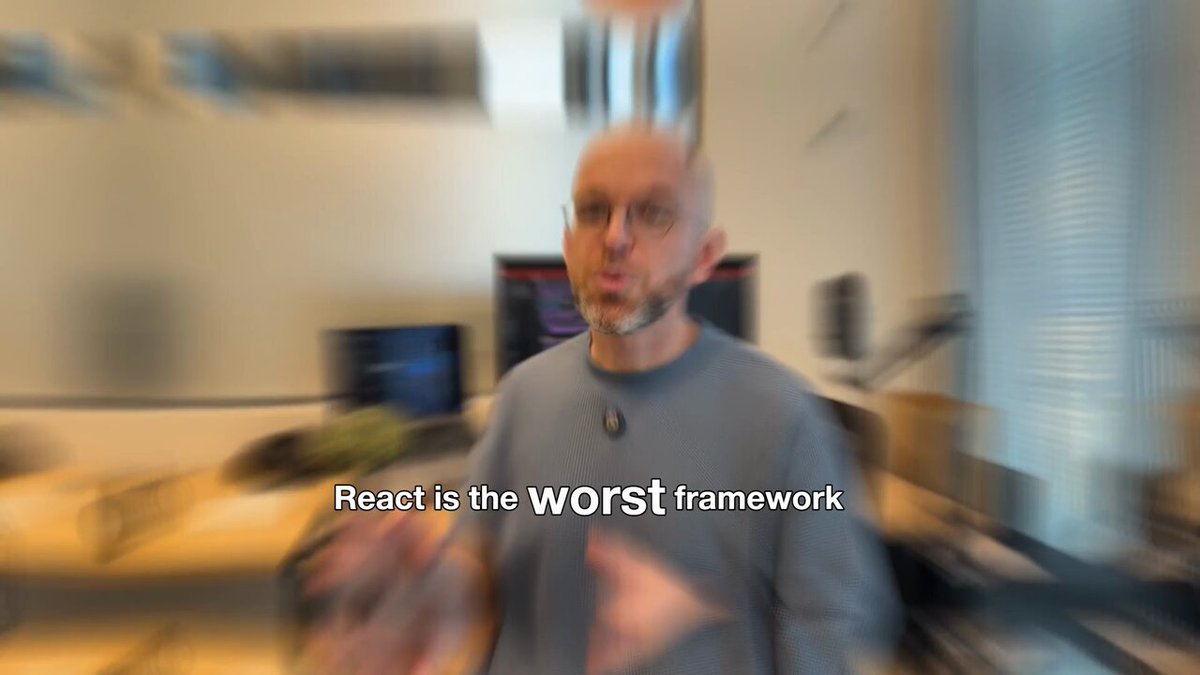
React is the worst framework for coding agents. Here's why Ruby on Rails might be making a comeback.
When you use Claude Code or any other coding agent to work on a React codebase, the agent has no idea where anything is. Your DB models, your API calls, your business logic - they can sit literally anywhere. In a large codebase, this is a massive problem.
The agent ends up spending a huge chunk of its context window just searching for the right files. And the more context it burns on navigation, the less it has for actually writing good code.
Now think about the opposite scenario. What if the agent knew exactly where everything was from the moment it touched your codebase?
That's Ruby on Rails. And yes, I know - we're talking about a framework from 2010. But hear me out. Rails has a strict convention: models go here, controllers go there, API calls live in this folder. Every Rails app follows the same structure. GitHub was built on it. Shopify still runs on it. Twitter started on it.
That convention, which developers used to find restrictive, is exactly what makes coding agents 10x (maybe even 30x) more productive. The agent doesn't need to explore. It just starts working.
React gave us flexibility. But flexibility has a cost when you're working with AI agents that rely on understanding your codebase structure to do their job well.
Next time you're starting a weekend project and plan to use a coding agent heavily - consider Rails over React. The performance difference might surprise you.
What framework are you using with your coding agents? Have you noticed the same issue?
3
1
3
876
We all saw the demos of Claude Cowork last month. They looked incredible. But honestly? I think we’re getting a little ahead of ourselves.
Anthropic isn't quite solving the real problem yet. If you’ve ever tried to build a genuine AI copilot, you know there are two massive headaches you have to deal with:
1. Context Engineering: How do you engineer and build the right context so that the AI can actually answer your questions or solve your problem? For that, you can either use chunking (so you build a context that is right for answering a specific question), or using an agent. Then, you just give the agent the entire directory of data that you have, and then the agent can selectively choose the data that it needs to actually answer or solve the problem.
2. Integrations: This is much bigger, because you need to actually connect different data sources to your AI copilot or agent.
All of this is largely solved for code just because code is basically text files in your computer. So you can give Claude Code access to your desktop directories and it just works.
When thinking about productivity or an AI copilot for everything else, you need to connect to a lot of different tools. Think Gmail, Zoom, Calendar, and Notion, and many, many others. We tried to solve it with MCP, but it didn't really work.
So, here is a wild thought.
Maybe the solution isn't better APIs. Maybe the solution is just… files.
Imagine if your Notion workspace was just a folder of markdown files on your desktop. Imagine if your Zoom calls were just text files sitting in a directory.
Suddenly, you don’t need complex integrations. Claude Code could just read your "productivity stack" the exact same way it reads a Python script.
I’m seriously thinking about testing this workflow. Has anyone else tried treating their entire work life as local files?
2
3
503
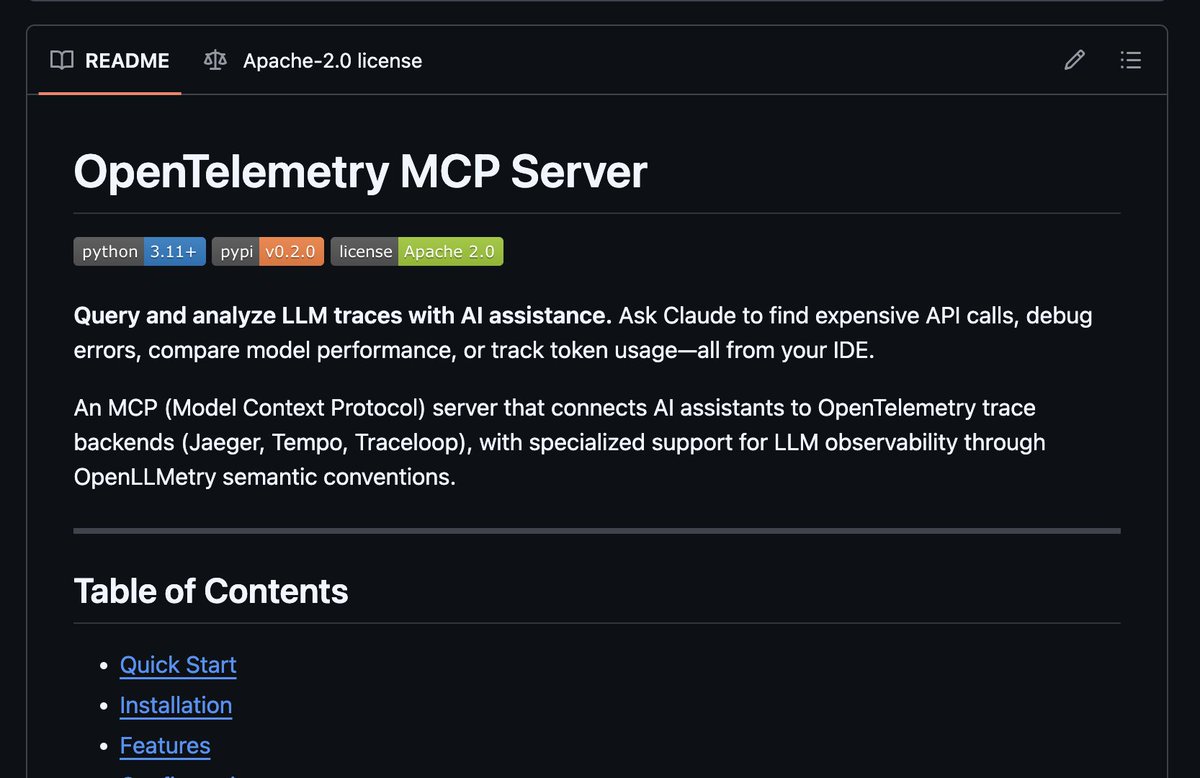
We're releasing today a cool new open source (link in the comments!)
Over the past 2 years, we've helped teams debug everything from prompt issues to production outages.
We kept running into the same problem: Jumping between our IDEs and our observability dashboards. So, we built an open-source MCP server that connects any OpenTelemetry backend (Grafana, Jaeger, Datadog, Dynatrace, Traceloop) to our dev environment using an MCP.
While there are many MCP servers built for specific providers (like Datadog and others), they’re closed source (so we can’t easily extend them), and they’re locked to a single platform, so organizations that leverage multiple platforms, where data is scattered in between them, can’t really use them.
We’re adding support for more providers every day - feel free to contribute your own.
We would love your feedback and opinions - feel free to connect it to Claude or ChatGPT and try to investigate your own production data. What do you think about the set of tools that we currently expose? Do you think we should expose more or others?
1
3
12
1,249
אבל כבר יש אפליקציה שמציגה רק יצירות AI קצרות וחסרות משמעות לחלוטין היא נקראת לינקדאין
26 Sep 2025

על מה מדובר: אפליקציה חדשה של Meta שמציגה פיד וידאו שבו *רק* יצירות AI קצרות וחסרות משמעות לחלוטין.
3
607
Nir Gazit retweeted

12 Sep 2025
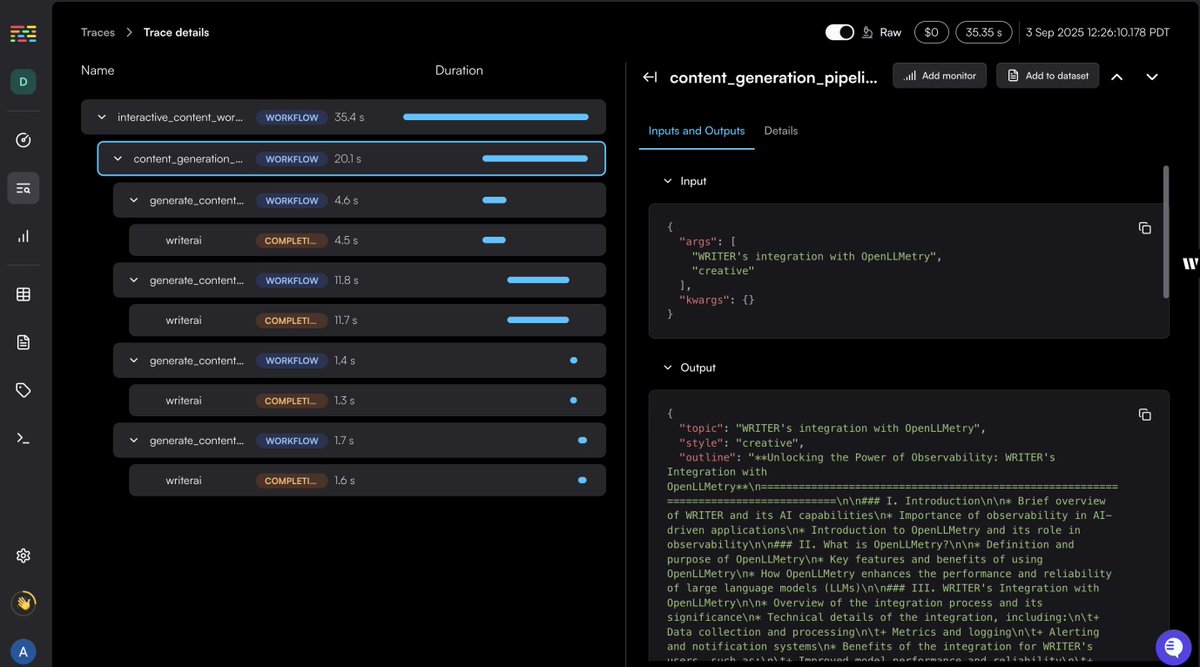
OpenLLMetry support for the @Get_Writer SDK is now available via the @traceloopdev SDK!
Get LLM trace info and pipe it to any OpenTelemetry backend or evals platform you want -- or build your own.
No more excuses not to listen to @HamelHusain and look at your data 🤪
1
2
7
797
Yesterday, Claude betrayed me. He pushed some code he’d written straight into production.
I just asked him to fix a bug and then to create a pull request, and instead, he decided to directly push his code to main, and from there it went straight to our production system.
So then I see people on the Internet writing, "oh, so we just add some instructions on our Claude MD file - like "don’t push something directly to main" or "don’t delete my database".
But that's wrong - Claude may or may not listen to my nice Claude MD file.
When you think about it, the problem isn't Claude, it was me.
I didn’t put the right guardrails in my system so that he couldn’t push something directly to production. When I used to work at Google, I could never just push some code straight to prod. Someone has to approve all my PRs, I needed to roll out new features with a feature flags, and so on. There were a lot of systems and guardrails in place preventing me from doing harm to the YouTube system I was working on.
Even if I really wanted to, I couldn’t take YouTube down.
Good systems prevent you from destroying themselves, even if you didn't mean to do that. So when you're thinking to yourself how do I prevent Claude from making mistakes - think about building the right guardrails so that Claude cannot push code to main, or cannot access your production databases etc.
Otherwise, if you allow Claude to take your own system down, you’re at fault, not Claude.
1
1
3
654
אז אחרי שגוגל הכריזו שהם קונים את היזמים של windsurf, דווין החליטו לקנות את מה שנשאר
cognition.ai/blog/windsurf
1
2
386
One weekend I started playing around with self-improving agents. I tried imagining a world where an agent will be able to build itself and improve its own prompts by running and evaluating itself.
I played around with a RAG pipeline we have as part of Traceloop's docs, and see if I can improve its performance without doing anything - just let the agent iterate and improve the prompt by itself.
The results were astonishing - the agent was able to improve the performance of our RAG pipeline by almost 200% - without me having to do anything (well, except for having to build all the evals, and write the prompt improving agent - but you get my point).
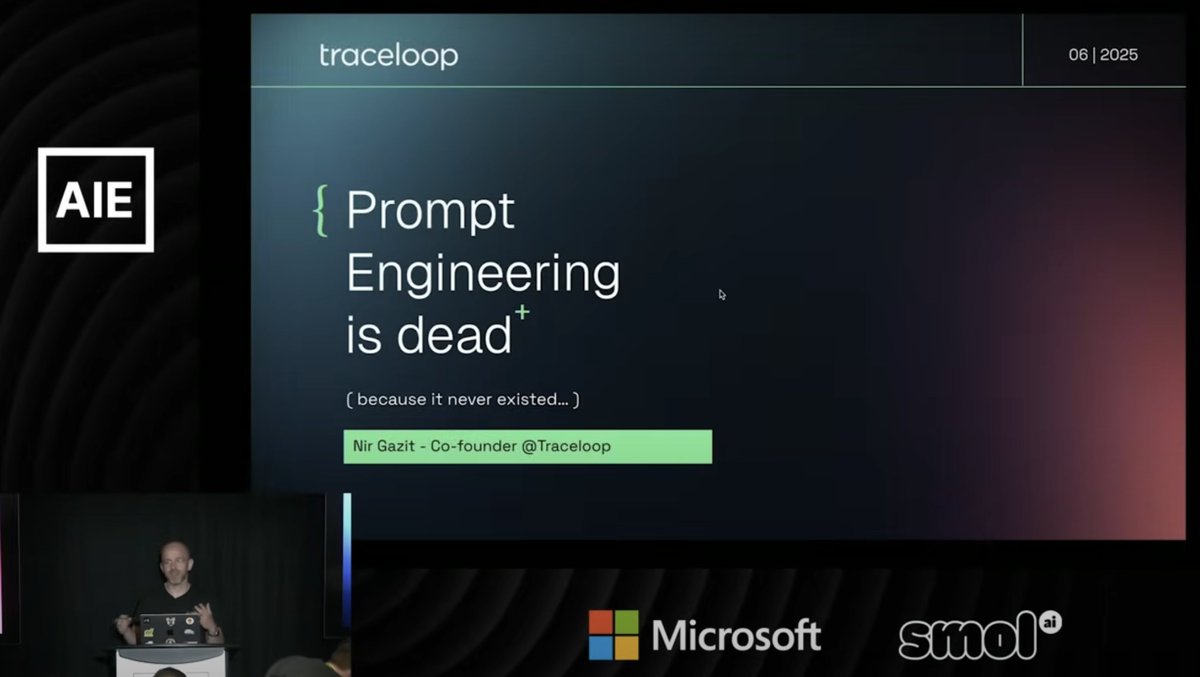
And so I realized - prompt engineering is dead. It wasn't engineering, really. It was just us manually doing what AI can now do automatically.
Think about it: we've been spending hours crafting the perfect prompts, tweaking words, adding examples, adjusting tone. But that's exactly what these self-improving agents excel at - iterating through variations, testing performance, and optimizing based on results.
The future isn't about becoming better prompt engineers. It's about building systems that can engineer their own prompts. Systems that can evaluate their own performance and continuously improve without human intervention.
I gave a talk about this at the AI Engineer World Fair last month in SF - about how to build such agents and what this means for the future of building with AI. Check it out in the comments below.
8
11
66
7,095
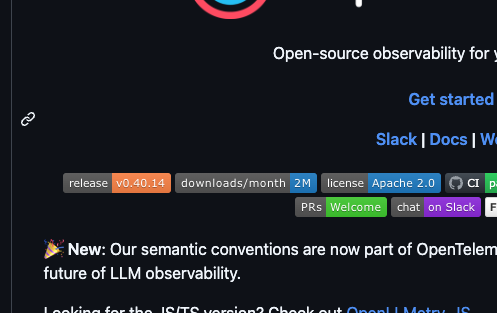
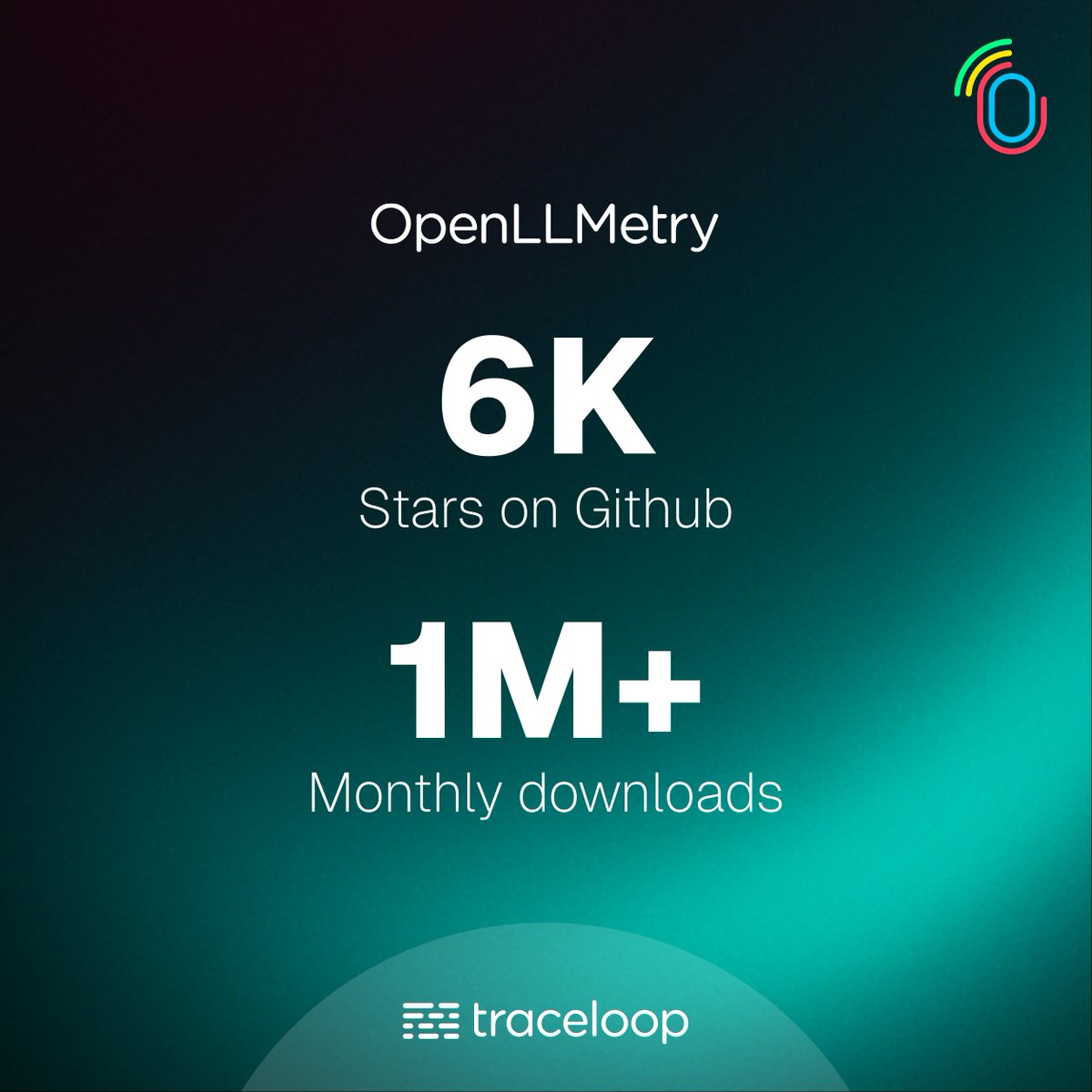
זה די משוגע. פרויקט קטן שאני וגל התחלנו כחלק מ- @traceloopdev לפני שנה ומשהו הגיע למיליון הורדות חודשיות. חברות ענק מסתמכות עליו כדי לבנות מוצרים מבוססי LLM. וכמעט 80 מפתחים מרחבי העולם עוזרים לנו לתחזק אותו ברמה היומיומית. איזה כיף
9
7
94
2,605
Nir Gazit retweeted

1 Jul 2025
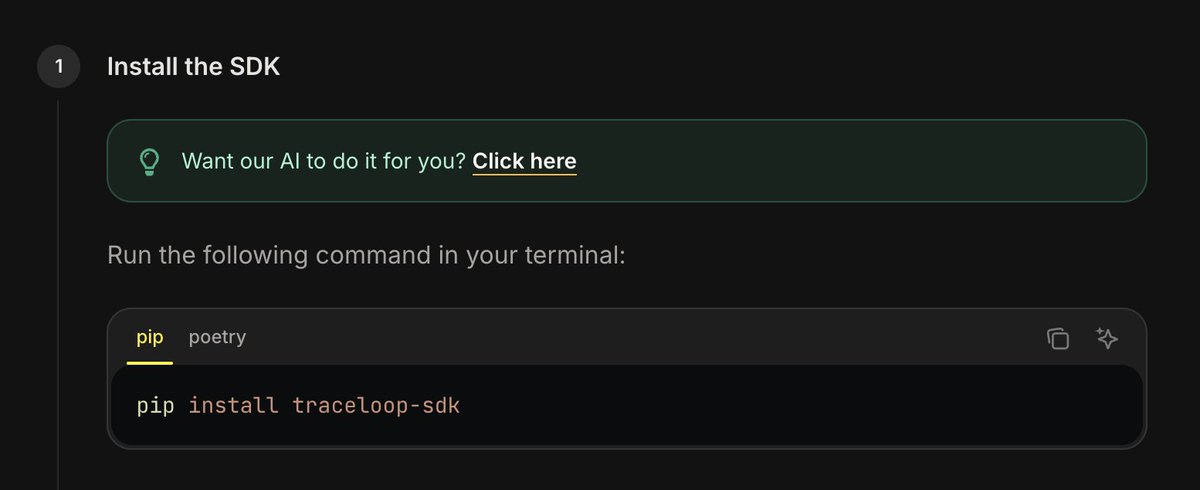
Look at @traceloopdev docs.
This should be the first step for all dev tools.
Coding agents aren't confined to your IDE or Terminal, you can embed them anywhere.
5
4
17
1,422
איזה כיף ההרצאה שלי מה AI Engineer World Fair עלתה ליוטיוב ואנשים די עפים עליה
youtu.be/jvKf6zXrNO4?si=VMMy…
1
4
426
Nir Gazit retweeted

26 Jun 2025
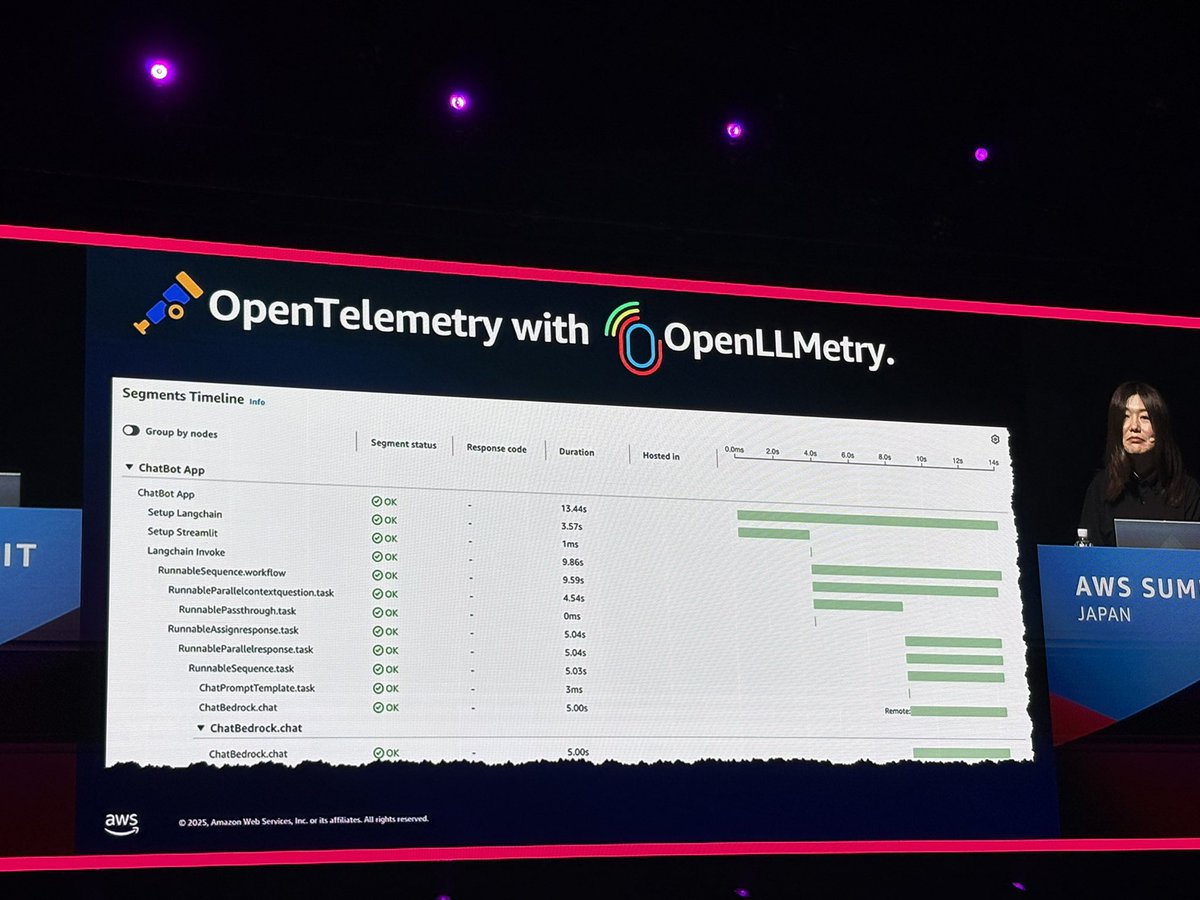
openLLMetryなんてあるんか。オブザーバビリティにわか勢であることがバレる。
1
2
284
Nir Gazit retweeted

27 Jun 2025
.@traceloopdev Launches an Observability Platform for LLM-Based Apps
Feat. @nir_ga, @GalKlm thenewstack.io/traceloop-lau…
2
5
762