
building @5x5_Collective // explore all ideas
Joined May 2010
- Tweets 4,918
- Following 2,496
- Followers 4,606
- Likes 39,841
415 Photos and videos








Jun 4
Soccer has multiple competitions during a club team season
The nba has 2
If the Knicks win they’ll be the first to win the nba cup and finals
Soccer has the “treble” for teams that win 3 trophies
What will the nba version be? “The double” is not good enough
2
148
Nikhil Kumar retweeted

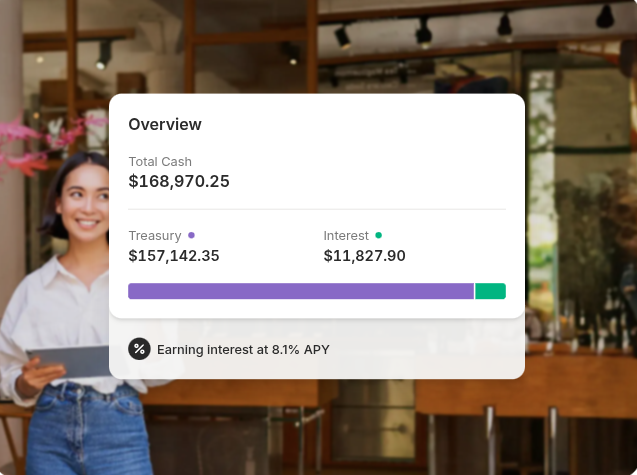
Today we're launching Decal Treasury.
Your idle cash now earns automatically — and that yield funds a loyalty program that pays for itself.
One toggle. New revenue. Zero work.
Here's the whole idea 🧵
38
18
95
29,558
Nikhil Kumar retweeted

May 28
Would love to see dirt plunges as the next wellness trend not even joking
May 28

touch dirt
4
1
14
3,476
May 28
There is still a need for a censorship resistant base layer of information
npr.org/2026/05/26/nx-s1-583…
1
2
47
Nikhil Kumar retweeted

May 27
Really respect how @saumil has been engaging directly with hard questions from fans on Ticketmaster, bots, access, pricing, and resale.
As a builder in live events and a former Ticketmaster employee, I think this kind of direct dialogue is long overdue.
A few questions:
7
11
42
5,557

May 1
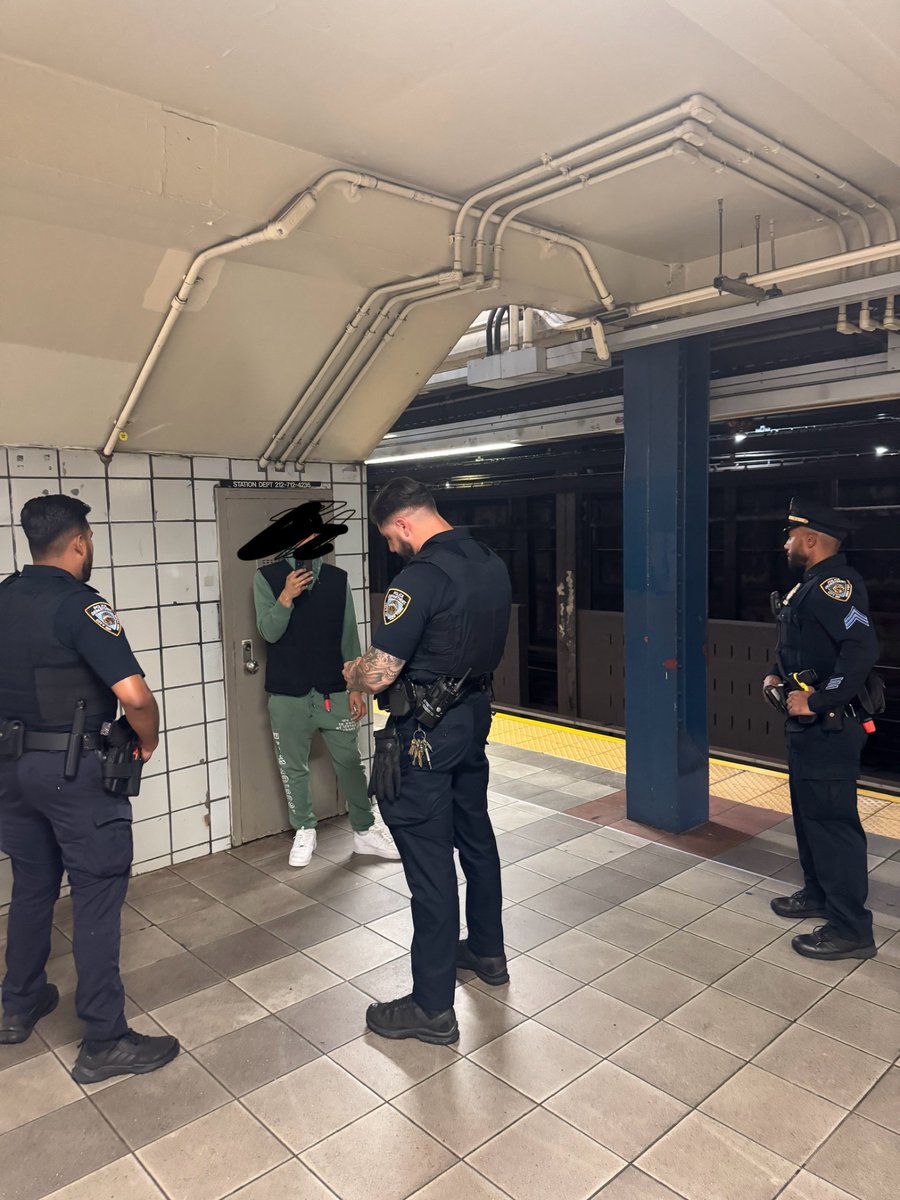
According to my research, NYC subway performances are finally approaching pre-COVID levels
1
121
Nikhil Kumar retweeted

Apr 30
during the @stripe sessions keynote this morning, @collision and @emilygsands reference ronald coase's nature of the firm (1937) which is a very interesting lens with which to view AI its effect on corporate structure
in the original essay, coase essentially explains why companies exist—to reduce the friction and transaction costs of contracting individual work on the free market (it’s cheaper to do things internally than coordinate in the market). however, firms come with their own diminishing returns to size (bloat, coordination costs)
emily and john explain how AI changes that math
inside companies, AI lowers coordination costs so companies can do more with fewer people
but AI also lowers the cost of using markets––agents can discover vendors, integrate software, buy data, etc. etc. more work can happen outside the firm
one way i might extend this argument/read between the lines: AI makes two corporate forms viable
a hyper-optimized firm: you get the scaling benefits of shared context, systems of record, proprietary data, and AI helps you reduce bloat—fewer people just routing information, translating context, and keeping the machine moving. AI working inside the company
a nanocorp: a solopreneur or tiny team can launch globally, stay lean, and automate aggressively, with agents, APIs, contractors, payments, and cloud tools standing in for the old org chart. AI working as the company
the awkward middle is the company with proprietary context but neither the coordination nor the AI leverage to do anything with it—all hierarchy/bloat, no upside

4
8
20
5,867
Apr 26
Wild thought:
If you’re a millennial, there will be a point in our lifetimes where we’re the last people on earth who experienced life before the internet 🤯
1
7
380

Why We Ship: @useDecal
After building products for billions at Google and launching Solana Pay in a cafe in SF, @joshfried decided to go build the merchant product the ecosystem was missing.
73
48
367
47,708
Apr 10
i've had the most fun in my career working with jon. we started at @coursera, ran it back years later @solana, and now it's time to chart our own course.
we're entering a world where skilled generalists will be more relevant than ever; where vision matters in profound ways. we were built for this. time to have some fun.
follow along for the ride here 🏀 5x5.studio // @5x5_Collective

after four long years, last week was my final one @SolanaFndn. along the way, i've been witness to the growth of one of the strongest ecosystems in all of technology (let alone crypto) and i'm deeply appreciative of having played a small part in where @solana is today
there are too many stories to recount and too many people to thank so i won't begin to try, but i'm forever a fan of the entire Solana ecosystem and always hope to count myself as part of the family
as for what's next: i seek to fulfill a decade-long vision quest to build the last company i ever work for with my friend @nkumar23. across both of our many interdisciplinary experiences throughout our careers, we've seen the value of being glue, of mixing-and-matching skillsets, and of building powerhouse teams to tackle hairy problems. this all-around mindset is embodied by the rare achievement of getting a 5x5 in basketball: at least five points, assists, rebounds, steals and blocks in a single game. only 15 players have done it, ever.
we will take this approach to heart with the next step of our journey. this creative technology lab slash product studio slash members collective will have both highly experimental and entirely practical outputs, which we'll explore with software, writing, events, & art. we'd love for you to follow along as we figure it out: 5x5.studio // @5x5_collective
8
51
4,537
Nikhil Kumar retweeted

Apr 6
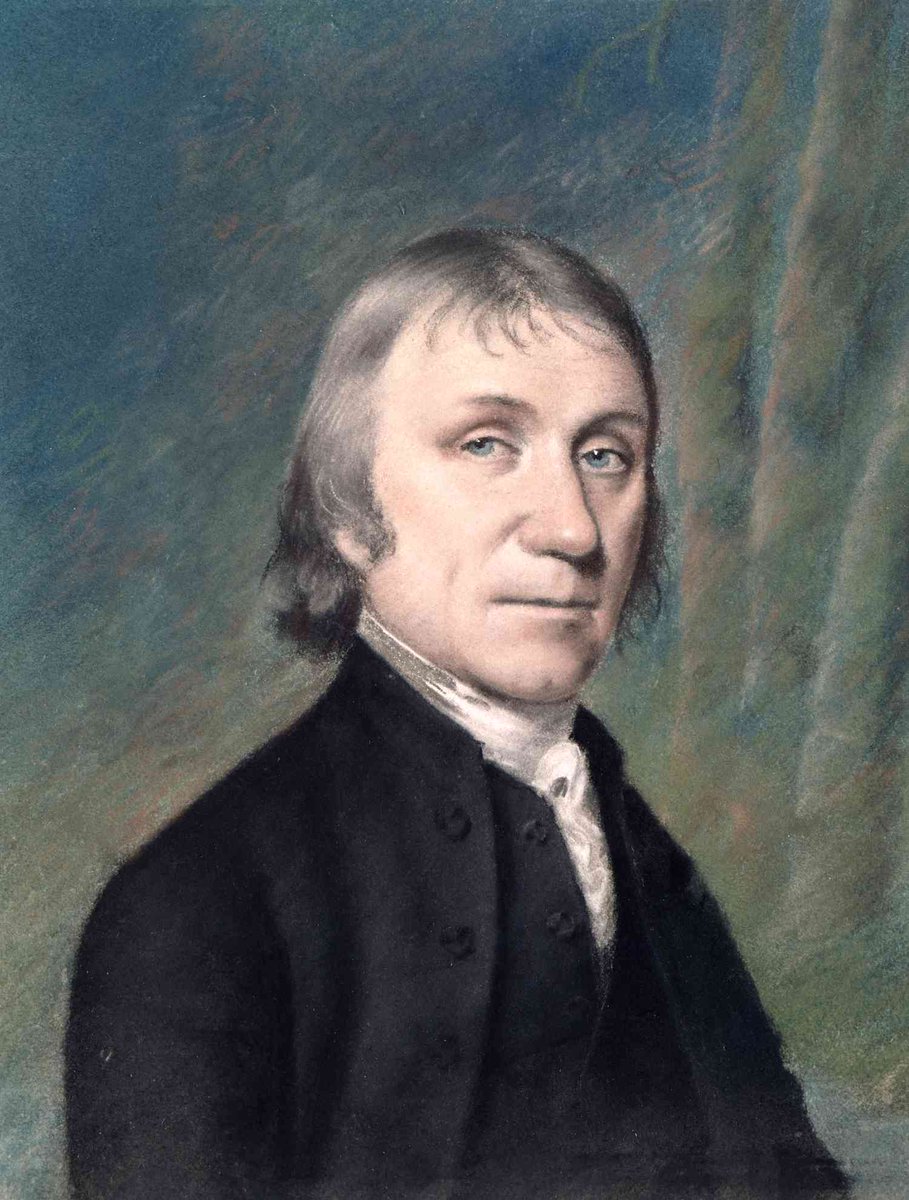
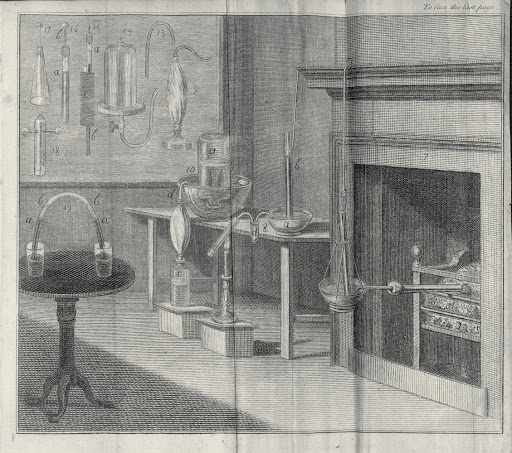
Just finished reading The Invention of Air, a book about Joseph Priestley. I recommend it.
Priestley is a fascinating character. He was an amateur scientist in the purest and most beautiful sense of the word. In 1765, aged 32, Priestley was working as a schoolteacher and minister in Warrington, England. He was avidly following electricity experiments at the time and decided to write a “popular history” of the field. To pitch his book, Priestley traveled to London to a coffeehouse meeting of the Honest Whigs, where he first met — and was encouraged by — Benjamin Franklin.
Priestley left that meeting with:
- Access to Franklin’s personal library and all correspondence on electricity (a kind gesture from the American statesman).
- A promise for funding to support the book’s printing.
- Encouragement, by the Honest Whigs, to conduct his own experiments while writing the book.
This was undoubtedly one of the most important scientific meetings of all time. Priestley went back to Warrington and immediately began working. He wrote his entire 700-page history in a single year, and also began his own experiments. During various attempts to replicate published experiments, Priestley discovered that charcoal conducts electricity, a finding that led to his election to the Royal Society that same year (1766).
But I think the most fascinating part of Priestley’s life is not his experiments, but rather the way he supported his work. For a time, Priestley was funded by subscribers, an arrangement which was highly unusual in the late-1700s, when many independent scientists had immense personal wealth or got support from a wealthy patron.
Henry Cavendish, for example, inherited two fortunes during his lifetime. He had so much money, in fact, that the French astronomer Jean-Baptiste Biot called him "the richest of all the savants and the most knowledgeable of the rich."
Galileo Galilei was funded almost entirely by Cosimo II, a Medici. Tycho Brahe was funded handsomely by King Frederick II of Denmark. (Indeed, the Danish King spent so much money on Brahe’s experiments that it’s been estimated that about 1 percent of the Danish crown’s total revenue went to the scientist. Brahe was also given an entire island for his experiments, on which he constructed an astronomical observatory and alchemy laboratory, called Uraniborg; “the first custom-built observatory in modern Europe,” according to Wikipedia.)
But Priestley was not wealthy. He attracted support from wealthy sponsors (including Lord Shelburne, who later became Prime Minister) on occasion, but often struggled for funds.
This is why Priestley turned to his network of “subscribers,” who collectively sent him about 200 guineas per year. At the time, one guinea was worth 21 shilling, or roughly £1.05, meaning Priestley’s subscribers sent him about £210 per year. This is a lot, considering a skilled artisan, at the time, made about £50 per year and £100 was enough to maintain a solidly middle-class household with servants. (A seaman sailing with the East India Company only earned about £21 per year!)
Subscribers included the Galtons (father and son), Sir George Savile, Josiah Wedgwood, and other figures of the local community. In exchange for about 10 guineas per year, these subscribers received not only the satisfaction of supporting a prominent scientist and hearing about cutting-edge experiments before anybody else, but also early access to Priestley’s books and publications. “Without assistance I could not have carried on my experiments except on a very small scale and under great disadvantages,” Priestley once wrote.
Indeed, Priestley thought a good deal about science funding, and was ahead of his time on the subject. In 1767, he also outlined plans for industry-funded research centers. Priestley liked that the large institutes then supporting science, such as the Académie Française, supported research, but "he objected to the centralized nature of those societies,” writes Steven Johnson in The Invention of Air. Priestley didn’t like that a single individual (like Antoine Lavoisier in France) had so much power over the research of the institute.
Instead, Priestley proposed “smaller and more nimble clusters,” where many different companies all contribute funds to a research center. Each research center would have a “director of experiments,” who would perform experiments on behalf of the supporting companies. The companies that gave more money would have more control over which experiments got done, and all companies would have proportional votes relative to their funding levels.
It seems this idea never panned out (or, at least, I’m not aware of anyone who has tried this.) But the idea of industry-funded R&D is much older than I anticipated, and we owe part of its vision to Joseph Priestley.
8
42
193
16,064
Mar 26
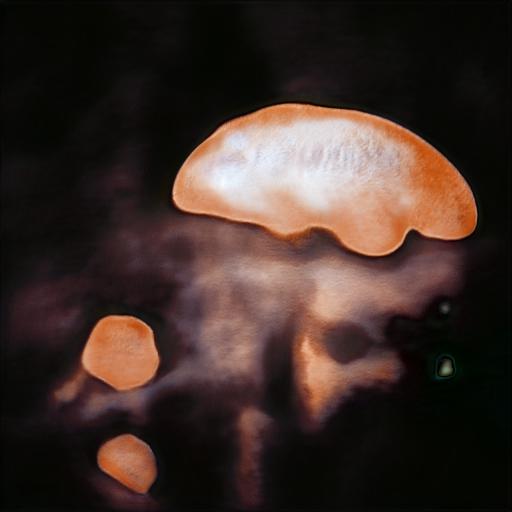
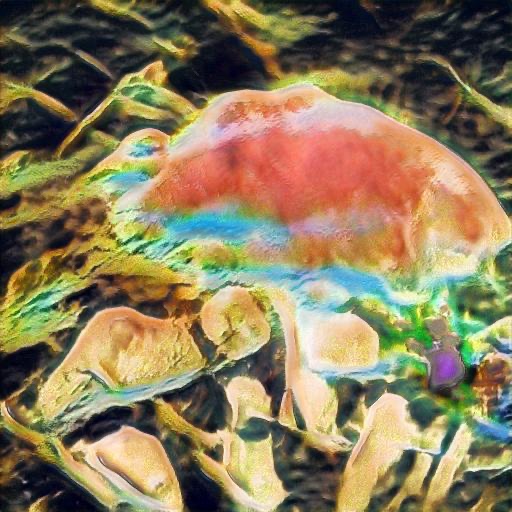
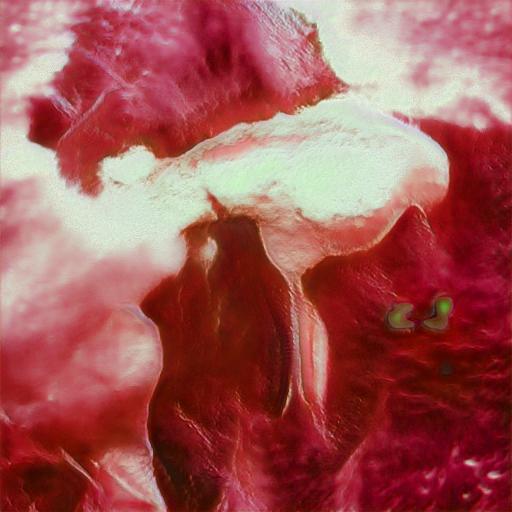
2020 era Stylegan art was a distinct vibe
At the time it felt like everyone was doing it and getting a similar aesthetic; now it’s clear we were early and the outputs mark a moment in time
I made these images by giving stylegan photos of nebulas, microorganisms, and fungi:
2
6
299

Nikhil Kumar retweeted

Mar 17
Emotional suppression costs you about 30% of your working memory. Measured on fMRI.
The anterior cingulate cortex processes emotional pain and cognitive control through overlapping circuits. When you shove emotions down instead of processing them, your prefrontal cortex burns glucose on inhibition. That’s glucose not available for decision-making, planning, or execution. The brain doesn’t have separate budgets for “feelings” and “performance.” It’s one pool.
The military figured this out the hard way. After decades of “push through it” culture, SOCOM funded research into emotional regulation for tier-one operators. The finding: operators who named and processed emotions before missions had faster reaction times and better decision-making under fire than operators who suppressed. The Special Forces pipeline now includes psychological flexibility training.
The historical record confirms it. Stoicism, the philosophy most often cited to justify “stop talking about feelings,” literally requires examining your emotions in writing every single day. Marcus Aurelius wrote the Meditations as a private journal. Epictetus taught students to dissect their emotional responses in granular detail. The entire Stoic method is structured emotional processing, not emotional avoidance.
What actually kills performance is rumination, looping on the same thought without resolution. The fix for rumination is more processing, not less. Cognitive behavioral therapy, the most evidence-backed intervention, works by teaching people to articulate and examine feelings with precision.
The highest performers process fast and move. They don’t skip the processing step.
66
290
1,879
117,885
Nikhil Kumar retweeted

Mar 16
I look forward to future generations watching this clip in order to get some sense of how proudly stupid the self-proclaimed Great Men of our time actually were
Mar 16

Billionaire Marc Andreessen says he has "zero" introspection, and that the idea itself is a modern invention.
137
1,590
13,610
433,885
Mar 17
Silicon Valley is devoid of real vision
Blind leading the blind, but at max speed and volume
I love technology; I do not love what the industry has become
1
2
180

nobody talks about how genuinely wild music is at a fundamental level. an instrument disturbs air molecules. those molecules cross a room and reach your ear. your ear transforms that into electricity.
that electricity shifts your consciousness. and without any coordination, without any shared culture or language, every single human society that has ever existed found their way to this. that is one of the most profound things about being human.
133
1,205
6,951
142,096
Nikhil Kumar retweeted

Mar 10
If you're looking for a job—or already have one—and worried about AI, this is for you.
3
13
104
9,541