
3D geometry researcher: graphics, vision, 3D ML, etc | Senior Research Scientist @NVIDIA | running, hockey, baking, & cheesy sci fi | opinions my own | he/him
Joined May 2018
- Tweets 617
- Following 322
- Followers 6,097
- Likes 1,680
103 Photos and videos


Pinned Tweet

30 Jul 2021
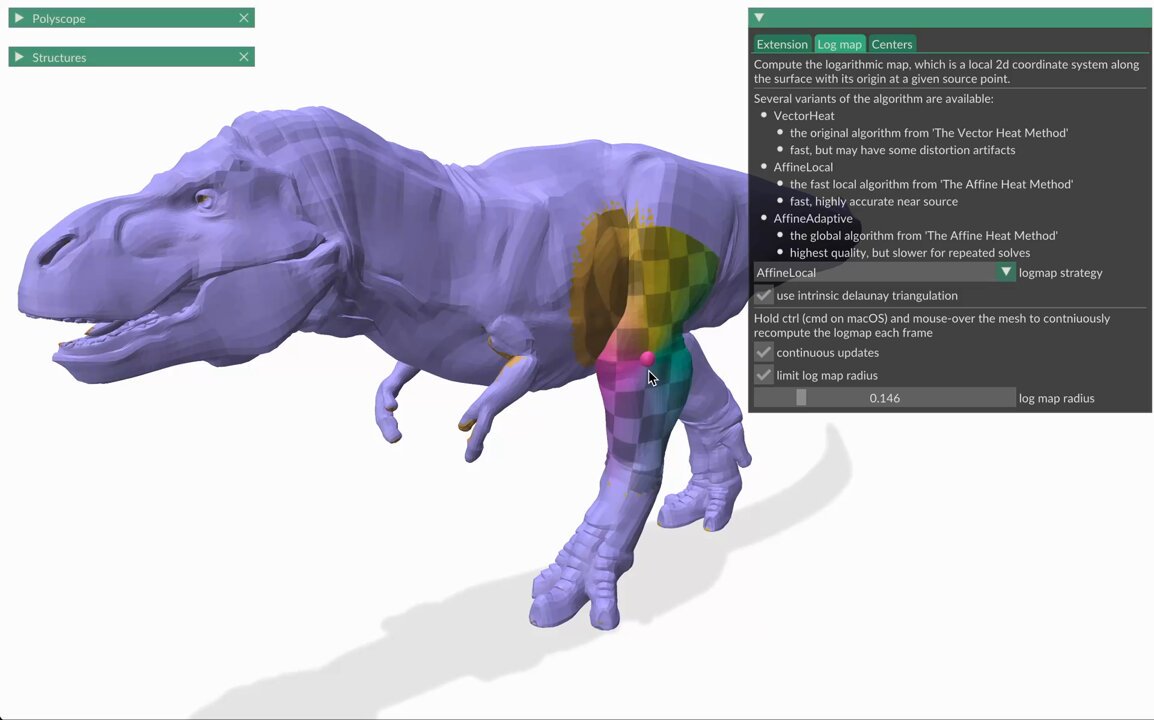
Giant new v1.2 release of Polyscope! Adds support for tet & hex meshes, transparency, ground shadows, slice planes, variable-size points, setting camera views, and more.
Try Polyscope for easy 3D visualization in C & Python: polyscope.run/
Thread of new features! 1/n
5
48
332
Nick Sharp retweeted

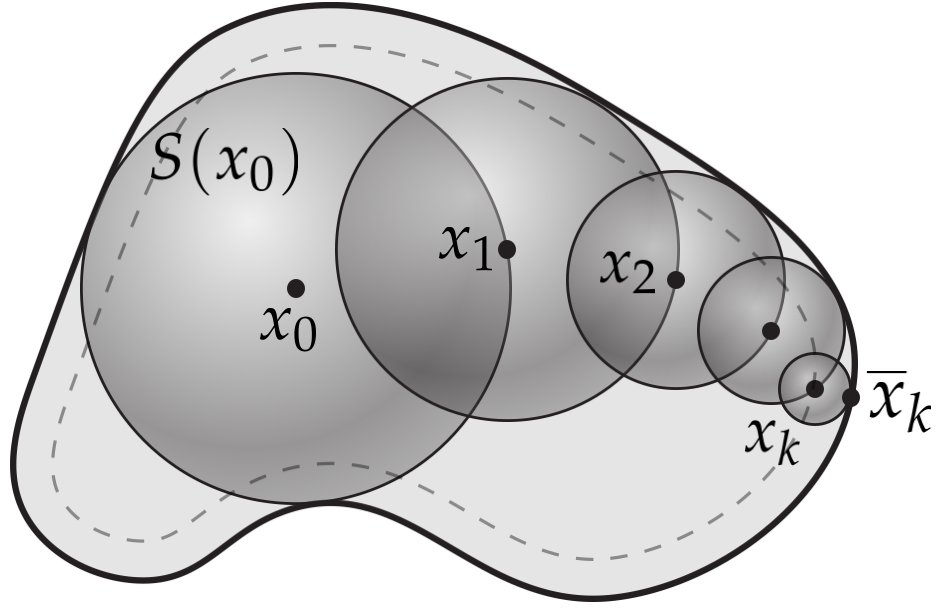
Releasing Walk on Spheres Extensions (WoSX): a GPU-accelerated C /Python library for Monte Carlo physics simulation on complex geometry
Think path tracing but for physics beyond light transport: heat, electrostatics, potential flow, deformation & more!
github.com/nv-tlabs/wosx
7
64
519
115,673
Nick Sharp retweeted

Jun 4
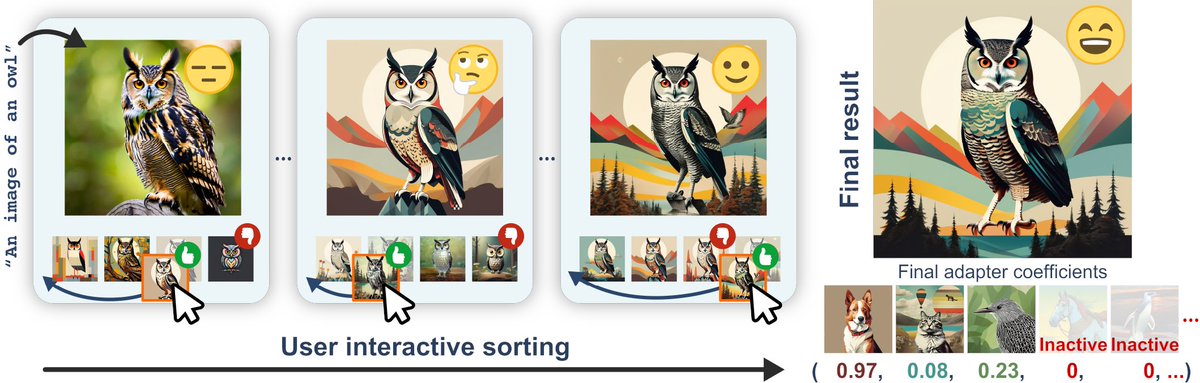
Paper announcement📢 GimmBO: Interactive Generative Image Model Merging via Bayesian Optimization
Chenxi Liu, Selena Ling (@seleniumlzh), Alec Jacobson
🏆 SIGGRAPH 2026 Best Paper
Selena and I will be presenting in LA (July 19-23)!
🌐 Project: gimmbo-project.github.io/
[1/7]
2
8
44
3,827
Nick Sharp retweeted

Jun 3
Code is out! Feel free to try it here: github.com/nv-tlabs/learning…
We’ll also be presenting our work as a CVPR oral at Bluebird Ballroom on Sunday, June 7, at 3:00 PM. Hope to see you there!"
Mar 11

Excited to share our new work at CVPR 2026: Learning Convex Decomposition via Feature Fields.
We introduce the first feedforward openworld model that generates high-quality convex decomposition for any 3D shapes in seconds, enabling faster simulation.
🔗research.nvidia.com/labs/sil…
6
33
4,976
May 29
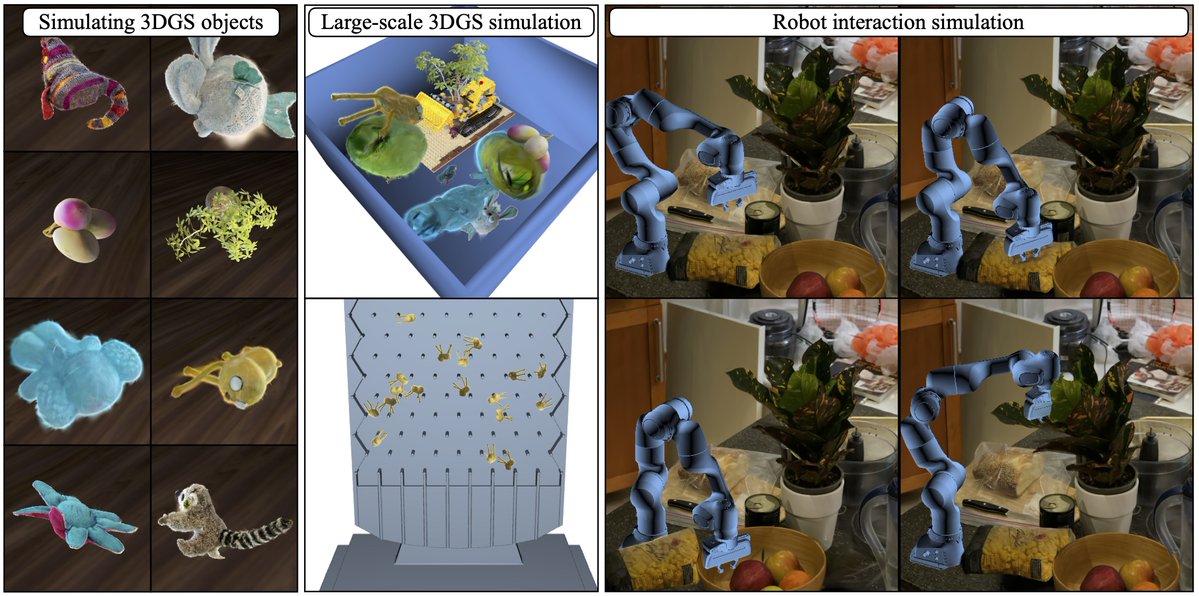
Visual reconstruction started with meshes, then NeRFs, and now Gaussian Splats.
We went through the same with physical reduced order models: from classic tet meshes, to neural fields, and ultimately a careful particle-based method that gets the best of all worlds. Check it out!
May 29

Excited to share FreeForm☁️: Reduced-Order Deformable Simulation from Particle-Based Skinning Eigenmodes at #CVPR2026
FreeForm enables fast elastodynamic simulation for robotics and beyond, directly on messy data (no mesh needed)!
3
25
3,002
May 7
This summer I'll be speaking at LOGML, a program on geometry & learning in London! Come find out how the discrete structure of 3D data meets the tools and techniques of ML 🚀
Applications to the program are still open for a few more days, check it out!

📣 Participant Applications Open: LOGML’26, Imperial College London (13–17 July)
A week on geometry/topology ML talks, tutorials, projects & networking.
👩🎓 Students/PhD/Postdocs
💰 Limited fee waivers & travel support
🗓 Deadline: 1 May 2026
🔗 Apply: forms.gle/RjxJHCdKVJF41Vvv7
2
2
20
2,564
Nick Sharp retweeted

Apr 15
Seeing how realistic video generation has become, I always imagined a model that continuously constructs a 3D world as you move through previously unseen environments. Today, I’m excited that we’ve made it real!
Lyra 2 turns images into explorable 3D worlds—and the environment generated along your trajectory can be exported as 3D Gaussian Splatting and meshes, making it directly usable for real-time rendering and physics simulations.
Apr 15

We scaled up Lyra to generate explorable 3D worlds! 🚀
Introducing Lyra 2.0 — turning a single image into a 3D world you can walk through, look back, and even drop a robot into 🤖
Code and Model available today!
🌐 Website: research.nvidia.com/labs/sil…
(1/N)
4
8
65
7,143
Nick Sharp retweeted

Apr 15
We scaled up Lyra to generate explorable 3D worlds! 🚀
Introducing Lyra 2.0 — turning a single image into a 3D world you can walk through, look back, and even drop a robot into 🤖
Code and Model available today!
🌐 Website: research.nvidia.com/labs/sil…
(1/N)
29
122
874
1,145,208
Apr 15
Check out our Lyra2.0 for generating virtual worlds!
The key is combining representations---the generative prior is a video model, but we leverage explicit 3D to scale to large scenes and support physical interaction.
Huge kudos to @TianchangS and @xuanchi13 who led the effort.
Apr 15

Today, we released Lyra 2.0, a framework for generating persistent, explorable 3D worlds at scale, from NVIDIA Research.
Generating large-scale, complex environments is difficult for AI models. Current models often “forget” what spaces look like and lose track of movement over time, causing objects to shift, blur, or appear inconsistent. This prevents them from creating the reliable 3D environments required for downstream simulations. Lyra 2.0 solves these issues by:
✅ Maintaining per-frame 3D geometry to retrieve past frames and establish spatial correspondences
✅ Using self-augmented training to correct its own temporal drifting.
Lyra 2.0 turns an image into a 3D world you can walk through, look back, and drop a robot into for real-time rendering, simulation, and immersive applications.
➡️ Learn more: research.nvidia.com/labs/sil…
📄 Read the paper: arxiv.org/abs/2604.13036
2
3
48
4,602
Mar 23
more cool unsupervised shape learning!
Mar 22

HiT: Hierarchical Transformers for Unsupervised 3D Shape Abstraction
- Project: aditya-vora.github.io/HiT/
- Paper: arxiv.org/abs/2510.27088
- Code: github.com/aditya-vora/HiT
We will present HiT at @3DVconf Poster 5-27.
Join us if you are around!
2
27
4,374
Mar 11
Computing a convex decomposition of a shape is a classically-hard geometry problem, yet essential for fast physics simulators.
Yuezhi found a way to accelerate it by training a large model!
Mar 11
Excited to share our new work at CVPR 2026: Learning Convex Decomposition via Feature Fields.
We introduce the first feedforward openworld model that generates high-quality convex decomposition for any 3D shapes in seconds, enabling faster simulation.
🔗research.nvidia.com/labs/sil…
1
13
110
10,232
Mar 4
Totally agree.
Spatial learning needs to be built with a base of tech that is scalable, efficient, precise, and controllable. 3D representations are exactly that.
The best coding models are the ones that use tools the best. Care to guess what will distinguish the best 3D AI?
Mar 3

We don't expect LLMs to multiply numbers or sort lists directly within their output token stream. Instead, we ask them emit code and execute it in a separate runtime.
Why predict the opposite outcome for simulating interactive worlds?
worldlabs.ai/blog/3d-as-code
1
3
42
7,606
Feb 18
Great read if you work in 3D.
We're firmly in the middle of the "3D AI era"---why was this change so fast for text & pixels, but still so tricky for 3D? Representations are harder, and data doesn't exist.
Yet in fields beyond vision, 3D is much more than means-to-an-end! (1/2)
Feb 16

In my recent blog post, I argue that "vision" is only well-defined as part of perception-action loops, and that the conventional view of computer vision - mapping imagery to intermediate representations (3D, flow, segmentation...) is about to go away.
vincentsitzmann.com/blog/bit…
1
3
81
13,121
Feb 18
LLM coding didn't kill IDEs, it made them richer than ever to endow AI with tools, controllability, & complex observable workflows.
3D AI & world models will advance not as a monolithic black box, but as a rich ecosystem of 3D representations & tech to put them to work. (2/2)
2
17
1,464
15 Dec 2025
In engineering and art, geometry is often represented not as meshes or points, but as domain-specific structured *grammars*.
In this work led by @milin_k_ and @jackzzhang, we investigated how to optimize these grammars ML-style with SGD. 4 simple rules make a huge difference!
15 Dec 2025

Can we apply gradient descent to discrete changes? In our new #SIGGRAPHAsia paper, we show that gradient descent can work on shape grammars, as in CAD and procedural modeling, but only if the grammars are designed correctly!
4
44
376
30,517
Nick Sharp retweeted

30 Oct 2025
📢want to produce realistic dynamic 3d worlds (with >100 splats)
my new NVIDIA internship project, VoMP, is the first feed forward approach to convert input surface geometry to volumetric sim-ready assets by assigning real world physics materials
🌐Project: research.nvidia.com/labs/sil…
📜Paper: arxiv.org/abs/2510.22975
2
19
96
10,502
15 Oct 2025
The Spatial Intelligence Lab at NVIDIA (research.nvidia.com/labs/sil…) is looking for 2026 research interns! We do all kinds of cool work across graphics/vision, geometry, physics, & ML. Now is the time to apply & reach out!
nvidia.eightfold.ai/careers/… (not limited to Canada-only)
7
24
229
16,167
Nick Sharp retweeted

10 Aug 2025
See your Gaussian Splats deform and collide under gravity! #NVIDIA Kaolin Library just released v0.18.0. github.com/NVIDIAGameWorks/k…
Join us at #SIGGRAPH tomorrow Sunday, Aug 10, Room 121-122 for a hands-on lab showcasing this and an intro to NVIDIA Warp, used under the hood.
3
22
2,262
Nick Sharp retweeted

28 Jul 2025
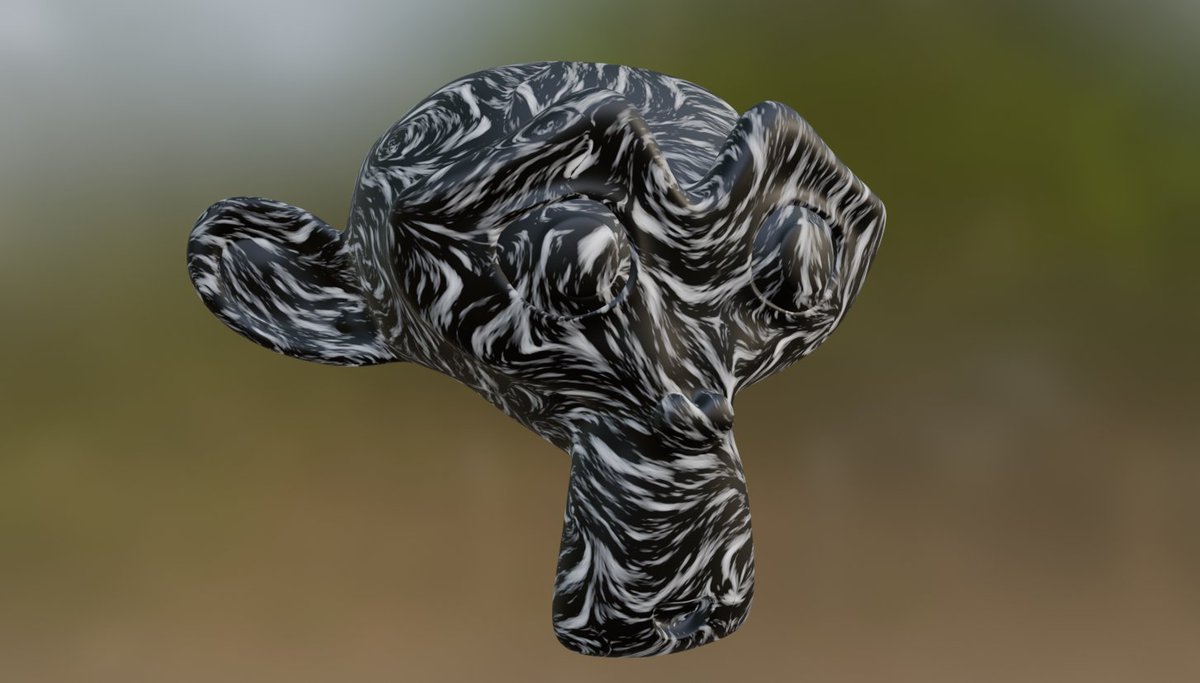
New at #SIGGRAPH2025:
Can we make Perlin Noise stretch along some underlying vector field? Well it turns out it's possible with two simple additions to the original method! No need for advection or convolutions.
Find the paper and implementations here:
github.com/jakericedesigns/S…
6
34
199
17,236
Nick Sharp retweeted

15 Jul 2025
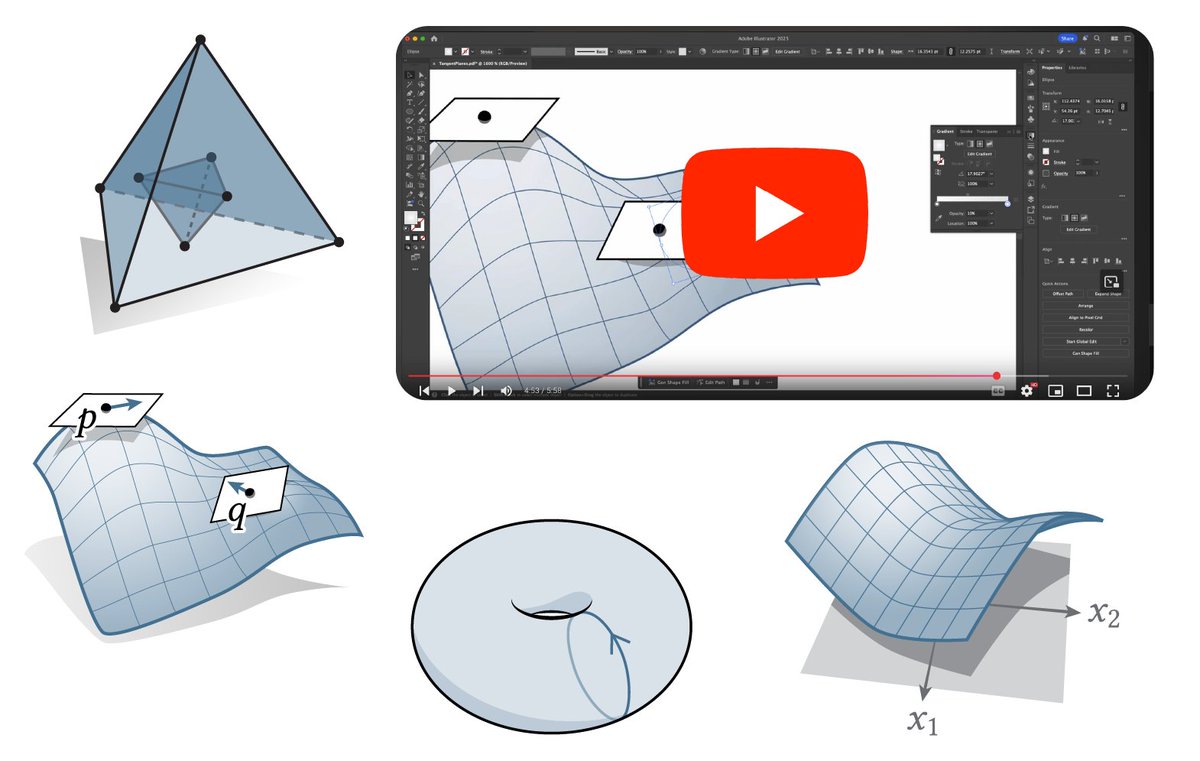
While making some figures for SGI* this year, I made some "behind the scenes" footage of how they get made: youtube.com/playlist?list=PL…
Basically a video extension of cs.cmu.edu/~kmcrane/faq.html ("figures?")
*SGI is a great program run by @JustinMSolomon & deserves more funding
5
29
270
27,477
4 Jul 2025
Also: this paper was recognized with a best paper award at SGP! Huge thanks to the organizers & congrats to the other awardees.
I was super lucky to work with @yousufmsoliman on this one, he's truly the mastermind behind it all!
2 Jul 2025

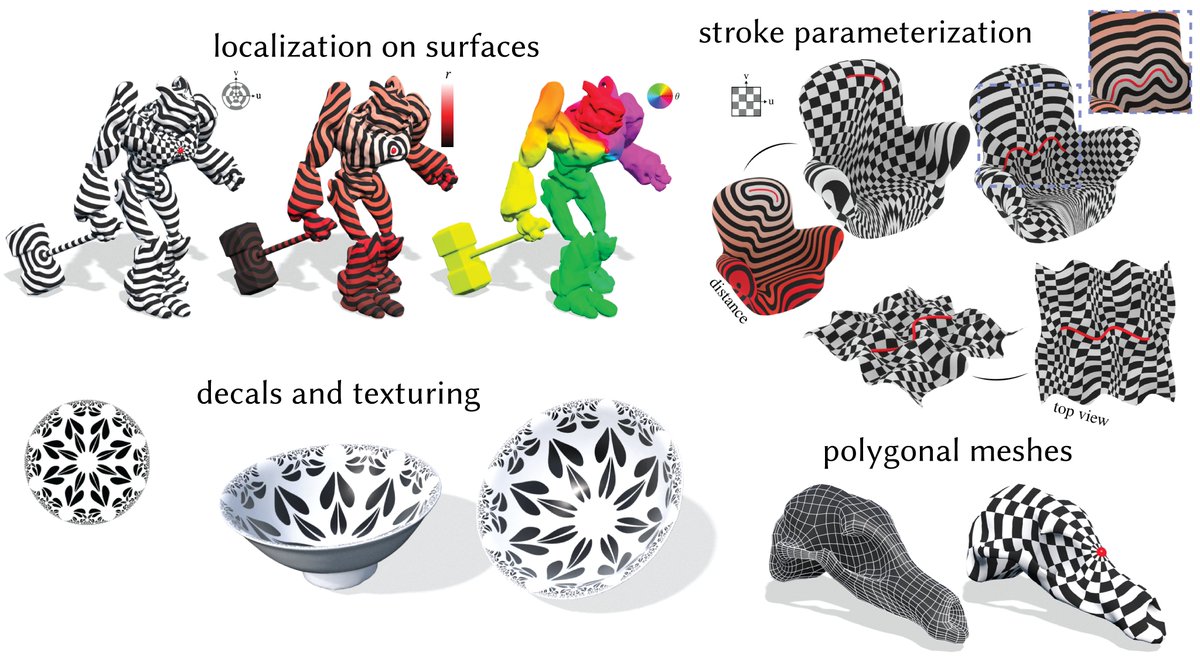
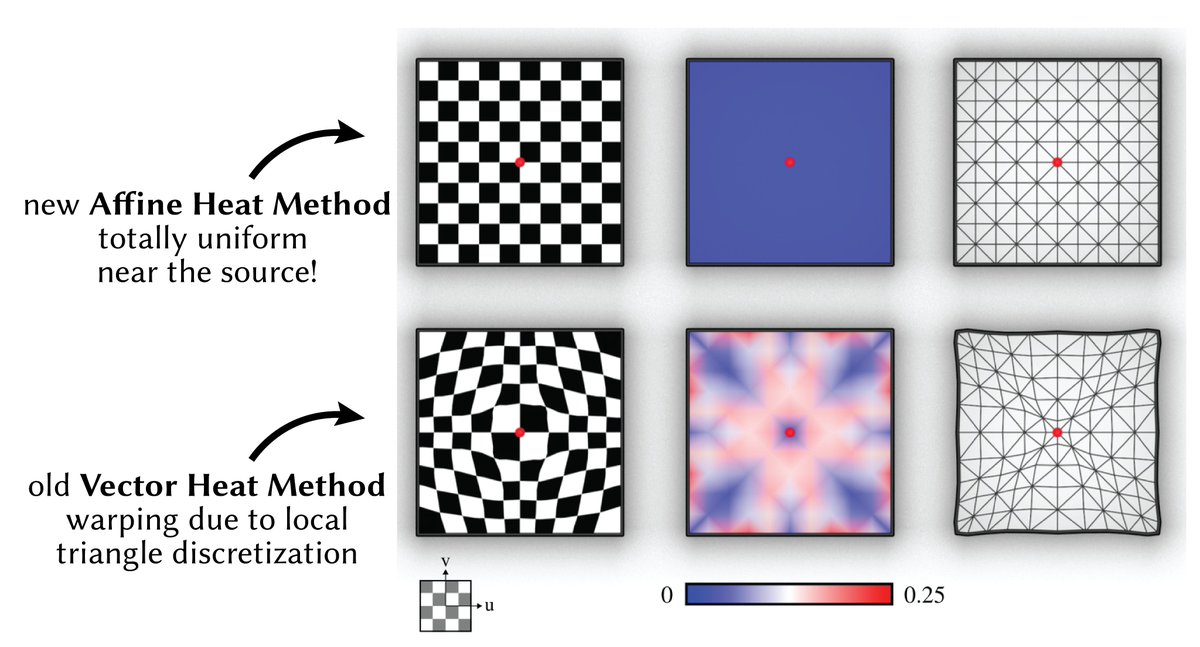
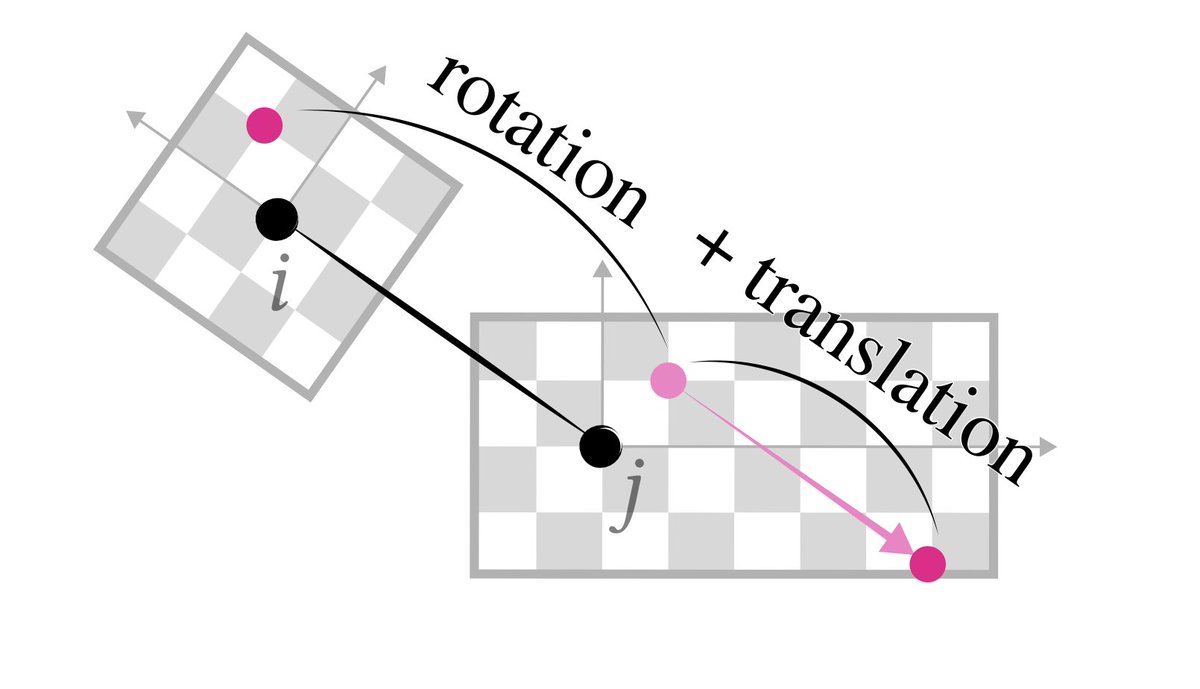
Logarithmic maps are incredibly useful for algorithms on surfaces--they're local 2D coordinates centered at a given source.
@yousufmsoliman and I found a better way to compute log maps w/ fast short-time heat flow in "The Affine Heat Method" presented @ SGP2025 today! 🧵
4
66
4,314