
🌐 YouTube nerd that runs 18 Faceless channels. 2.5 mil subscribers. - Discussing & building tools like @nexlevio & @vidrushai for the YouTube (faceless) space
Joined May 2018
- Tweets 14,071
- Following 595
- Followers 52,748
- Likes 7,275
2,215 Photos and videos








Pinned Tweet

Jan 18
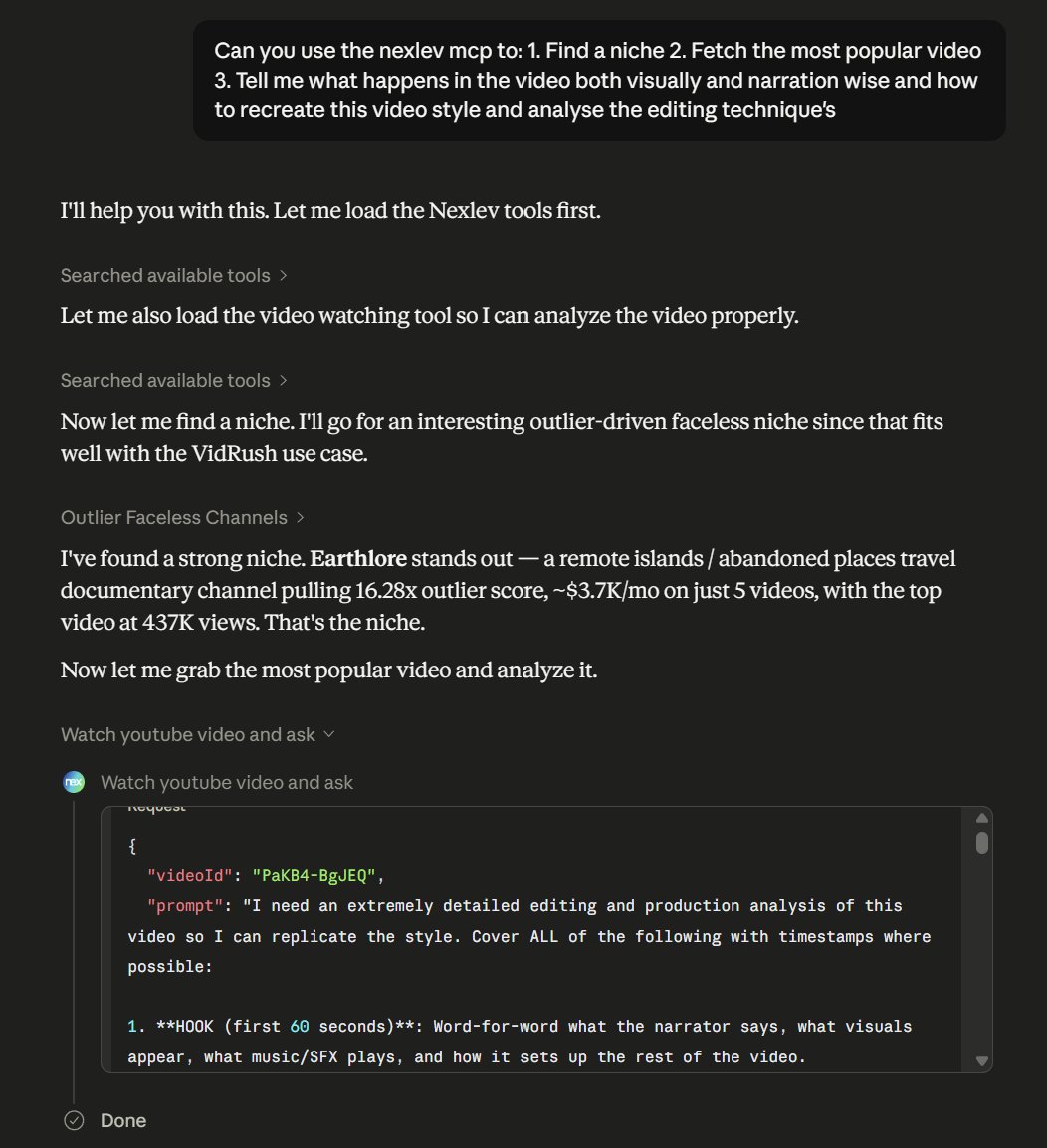
Today, we're introducing a working Loveable for video production.
It does a video production teams work in minutes by writing, reserching, and editing like a human would.
Hiring a video production team of upwork is now optional:
374
168
2,251
341,520
Jun 14
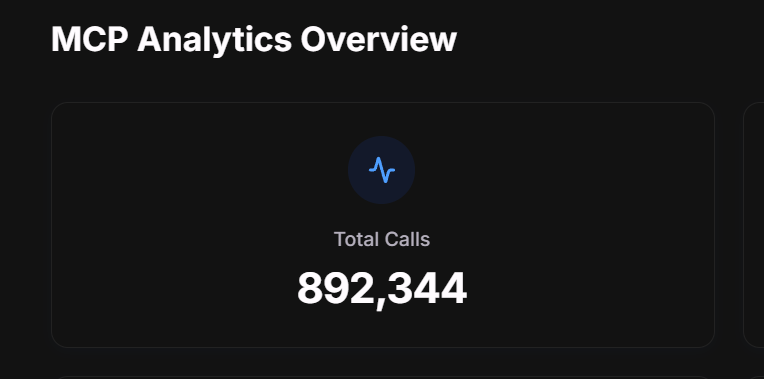
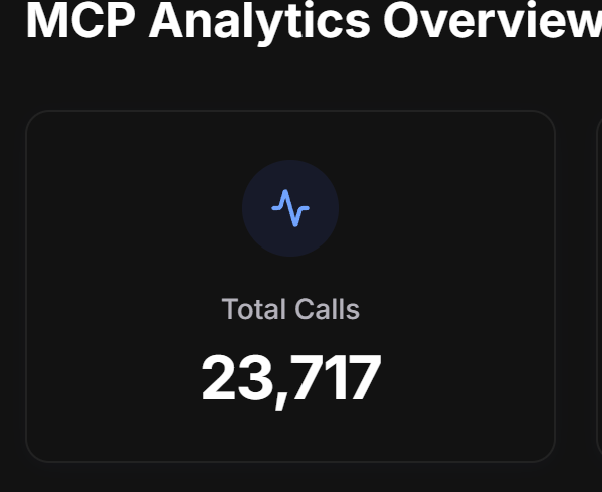
the @nexlevio analytics feature has been exploding recently. Too many people have been abusing claude X nexlev.
2
44
3,917
Jun 14
Man, i already miss it. It was so goated for YouTube tasks
Jun 13

The US government, citing national security authorities, has issued an export control directive to suspend all access to Fable 5 and Mythos 5 by any foreign national, whether inside or outside the United States, including foreign national Anthropic employees.
The net effect of this order is that we must abruptly disable Fable 5 and Mythos 5 for all our customers to ensure compliance.
Access to all other Claude models is not affected.
We apologize for this disruption to our customers. We believe this is a misunderstanding and are working to restore access as soon as possible.
Read our full statement: anthropic.com/news/fable-myt…
11
3
121
18,786
Jun 9
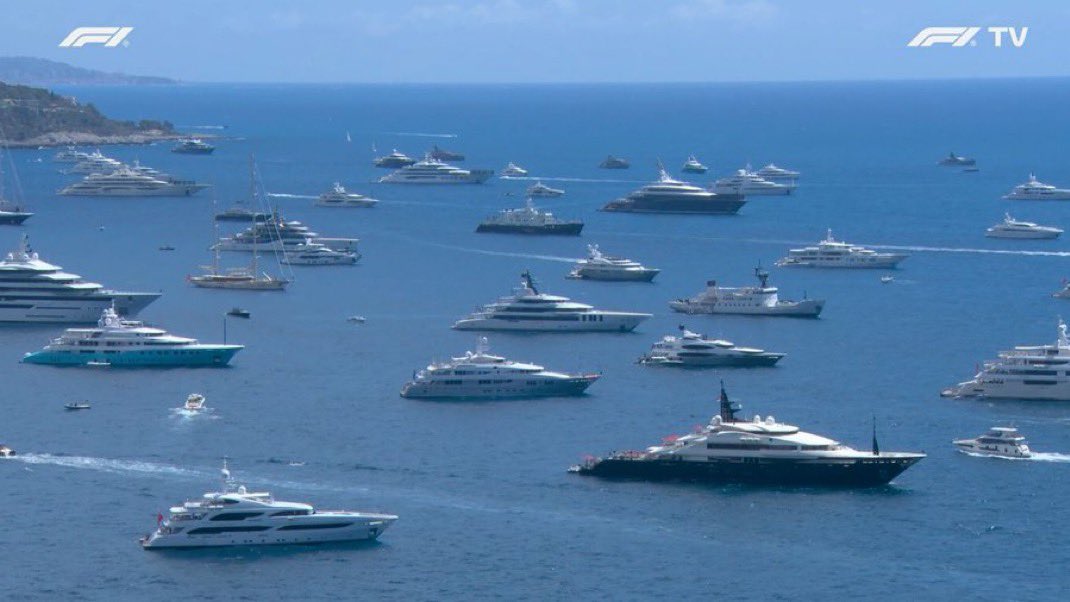
The only way to get to this level of wealth is to either own a platform, or a large chunk of an entire market.
i promise if you look who most of these boats belong to each of their companies or ventures are category defining products.

13
13
255
24,372
Jun 9
Now that faceless digital products are trending again, here's a proven playbook
21 Oct 2024

Here’s my process for launching digital products on faceless channels.
1. Create value type content (not entertainment)
2. Create a discord or telegram group
3. Talk to viewers and find their pain points. Or favorite products and tools
4. Create a solution, course, SaaS etc
2
1
59
9,209
Jun 6
Such a great read.

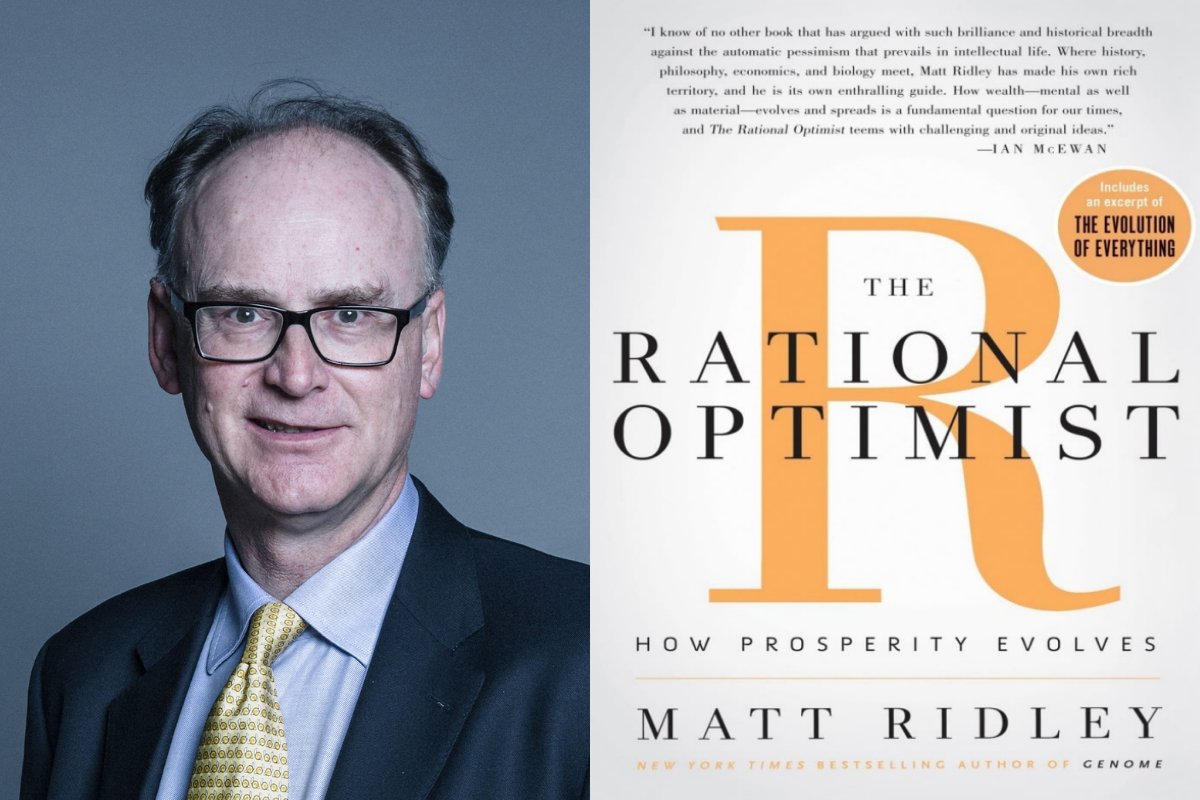
A British biologist looked at 200,000 years of human history and found that the entire reason humans broke out of poverty was not intelligence, not language, not even agriculture, but one mechanism so simple a 6-year-old could explain it.
His name is Matt Ridley.
He is a zoologist by training, an evolutionary biologist by career, and in 2010 he wrote a book called The Rational Optimist that quietly argued the most important fact about human progress had been hiding in plain sight for the entire history of economics.
Naval Ravikant has been telling people to read everything Ridley has ever written for the last 15 years. The reason is the argument inside this one book.
For 200,000 years, anatomically modern humans walked around with the same brain you have right now. Same skull size. Same neural architecture. Same raw capacity for language, planning, and abstract thought.
For roughly 190,000 of those years, almost nothing happened. Generation after generation lived and died inside the same Stone Age toolkit their great-great-grandparents had used. Then somewhere around 50,000 years ago, the line on the chart of human progress started to tick upward. Then it bent. Then it exploded.
The question Ridley spent years on was the only question that mattered. What changed.
It was not the brain. The brain had been the same for 190,000 years. It was not language, which had existed long before the takeoff. It was not even agriculture, which arrived only 10,000 years ago and was actually preceded by the upward bend, not the cause of it.
What changed was that humans started trading with strangers.
This sounds too small to be the answer. Ridley argues that it is the answer to almost everything. The moment one human exchanged a useful object with another human from a different group, something happened that no other species on earth had ever done.
Two ideas that had developed in isolation came into contact. The flint knapper learned what the spear maker had figured out. The fisherman from the coast learned what the hunter from the forest had figured out. The two pieces of knowledge fused into something neither side could have produced alone.
Ridley calls this ideas having sex. The phrase sounds frivolous and it is meant to. The point is that ideas, like genes, get better when they combine with other ideas from different lineages.
An idea sitting inside one head, no matter how brilliant the head, eventually hits a ceiling. The same idea exposed to ten thousand other ideas does something genes do under sexual reproduction. It mixes. It recombines. It produces offspring nobody planned.
The cleanest proof of this argument is the most uncomfortable case study in the book. Tasmania.
Around 10,000 years ago, rising sea levels cut Tasmania off from mainland Australia. A population of roughly 4,000 humans was now isolated on an island, with no possibility of contact with the rest of humanity. They had the same brains. The same language. The same starting toolkit as their cousins 150 kilometers north. The natural experiment was now running.
What happened next is something no economist or geneticist had ever predicted.
The mainland Australians kept inventing. Boomerangs. Spear-throwers. Fishing nets. Bone needles for sewing fitted clothes. Watercraft with paddles. Their technology compounded slowly across the centuries.
The Tasmanians went the other way. They did not just fail to invent the new tools their cousins were developing. They started losing the tools they already had. Fishing was abandoned within a few thousand years. Bone tools disappeared. Fitted clothing disappeared. They forgot how to make fire from scratch and started carrying lit firebrands from camp to camp instead, relighting their fires from a neighbor's whenever their own went out.
By the time European explorers arrived in the 17th century, the Tasmanians had the simplest toolkit of any human society ever recorded. Their material culture had gone backward for 8,000 years.
The archaeologist Rhys Jones called it a slow strangulation of the mind.
Joseph Henrich at Harvard later proved with formal mathematical models that there was nothing wrong with Tasmanian brains. There was something wrong with their network. A toolkit requires a critical mass of people exchanging skills to maintain itself.
The act of teaching a skill is imperfect. Every generation loses a small percentage of what the last generation knew. If your population is large enough and trading widely enough, those losses get caught and corrected by someone else who still remembers.
If your population shrinks below a certain threshold and stops mixing with outsiders, the small losses compound until entire technologies disappear.
This is the part that should haunt anyone reading this in 2026.
Intelligence is not a property of the individual brain. Intelligence is a property of the network the brain is connected to. A genius in isolation will produce less than a mediocre thinker inside a dense exchange of other mediocre thinkers.
The thing your ancestors needed in order to break out of 190,000 years of stagnation was not better brains. It was better connections between brains they already had.
The implication for any individual is direct and uncomfortable. If you are smart and isolated, you will be outproduced by people half as smart who are connected.
The most successful people in any field are almost never the smartest people in it. They are the ones positioned at the intersection of the most idea flows. They are reading more authors than their competitors. They are talking to more people from more disciplines. They are in the rooms where ideas from different lineages bump into each other.
Ridley ends the book on the line that sounds optimistic but is actually a warning its this "The future will be invented by people who connect ideas, not by people who guard them."
1
4
52
7,604
Jun 5
i always hate RPM's dropping right when school vacations are about to start.
6
60
7,581
Jun 3
I often think about what makes certain people more likely to succeed than others.
I think it has relatively little to do with intelligence, some of the most successful entrepreneurs including myself aren’t in any way shape or form smarter then the average person.
I think the main trait I see in successful people is calculated delusion and speed.
99% of people will have a business idea and spend a month pondering, researching etc.
Meanwhile the delusional people will know they can solve the problem and will just start, and only think when they get stuck.
So by the time person A. builds the courage to even file a business license,
the delusional entrepreneur has earned his first 100k.
it sounds so obvious, yet only a very small amount of people truly embody it.
When is the last time you had a good business idea and had it launched by the end of that same day?
That is what makes the difference.
15
12
296
13,086
Jun 3
Vidrush 2.0 motion graphic ability is going to be insane.
We’re truly not very far of from $100 / per 10 min video production value after all the releases that are coming this month.
23
1
190
10,083
May 29
I moved back to the UAE this year and I must say I’m very happy with the decision.
Sure yeah it’s hot, but I’ve never moved to a new house and within a week I am friends with 5 neighbours, all of them running businesses, similar interest also long term relationships. Having dinners etc.
9
175
10,685
May 29
It’s different from let’s say Asia (although I love it lifestyle wise) people are always moving around there, it’s harder to make long term friends or routines etc
15
2,593
May 26
I should make a NexLev or vidrush themed subscriber count tracker

Introducing the Framer F1 Keyboard. A low-profile mechanical keyboard with an aluminum body, built-in display, and programmable controls, built together with @work_louder. Pre-order now at the link below!
7
1
49
7,364
May 24
Looking for someone who is extremely good at reviewing vidrush videos in a frame.io style way as well prompt engineering.
If this is you please DM it’s a full time role.
6
1
66
7,289
May 23
It’s always funny when I see people watch faceless videos in real life.
Got in a uber today, guy was jamming to a 12 hours of ai generated Afro dance mix videos on YouTube.
He had no idea it was prob produced by some random kid in his bedroom.
6
5
167
9,504
May 22
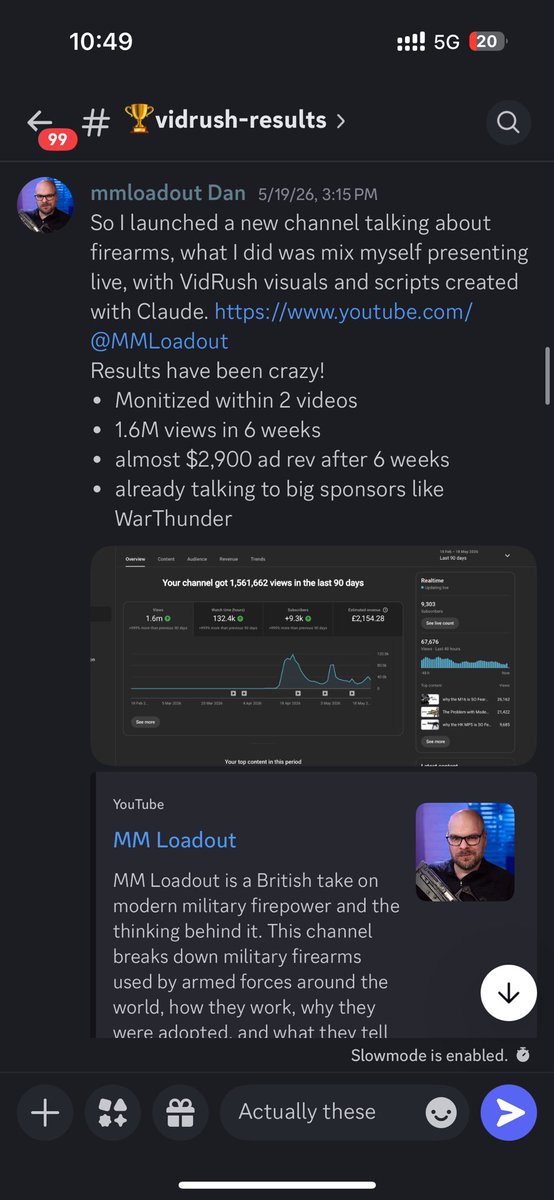
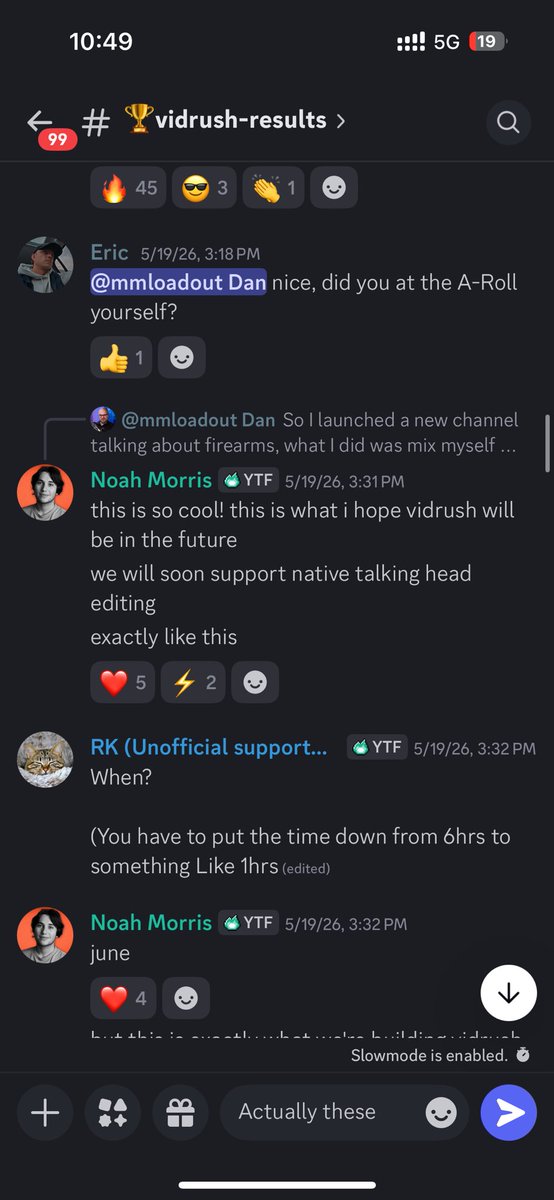
Had to share it cause this is the prime example of where I want VIDRUSH to go in the coming months, and where I expect a lot of the faceless space to head to as well.
Insane results!
7
3
137
10,536
May 22
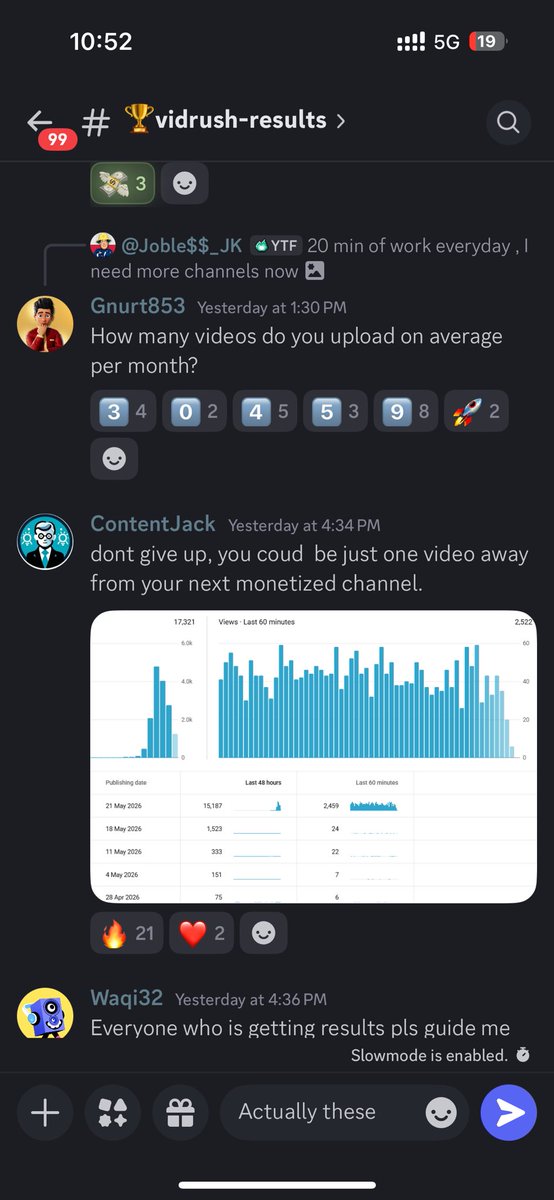
Faceless results have also been great but I am very bullish on the talking head angle
4
1
17
3,501
May 17
Randomly stumbled across this video recently.
I have a feeling this is a hired person or the actual Ex "faceless" creator. The way it's packages screams faceless niche
Like i mentioned before i think we're going to see alot more of these talking head plays in coming months
youtube.com/watch?v=Kzbsyw7a…
10
1
76
15,183
May 17
Looking for video editors & Creatives locally based in the UAE. Looking at potentially establishing a local office here in dubai.
if you're good at editing, motion design, design, UGC, marketing etc and looking for a local job in Dubai hit me up.
16
1
86
8,150
May 16
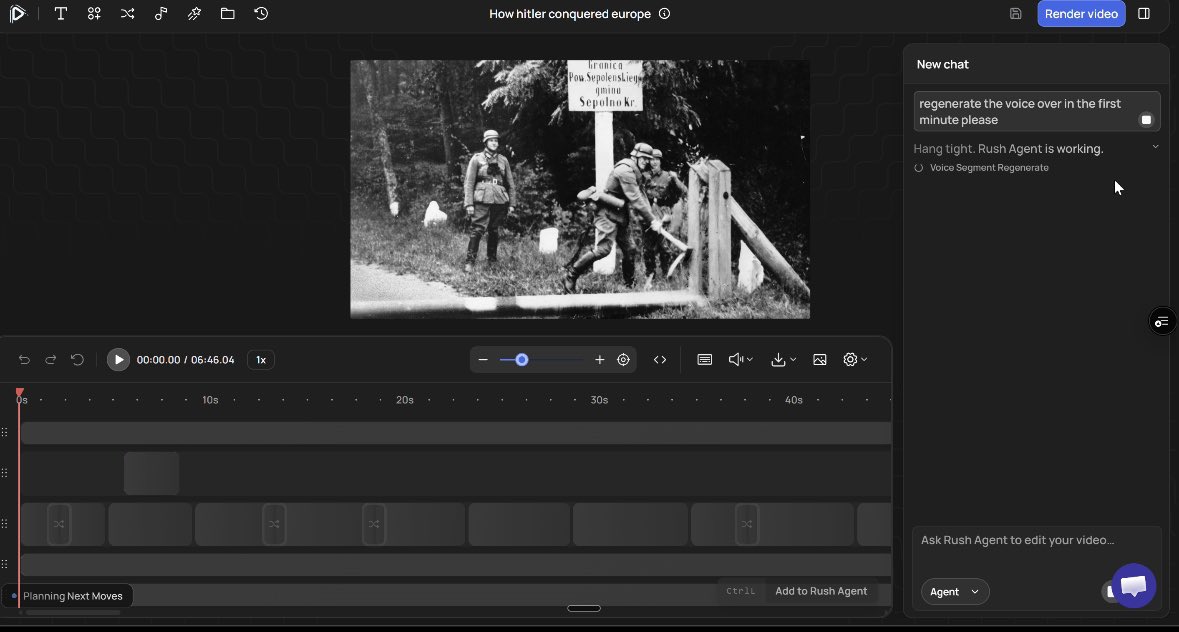
Vidrush V2 is probably the hardest thing I have ever worked on, the amount of attention to detail, R&D that we’ve been putting into this is just insane.
It will be slowly rolled out to people who have Vidrush access over the coming weeks.
The main focus is first the new interface, then the new human like editing improvements on the model and lastly once that’s done we will start to roll out the talking head update 😄
22
4
224
12,488
May 16
This update required an absurd amount of coordination and testing even little things like making the model multi language was not easy at all.
1
22
3,558