The Northwest Scientific Association is a nonprofit organization that has promoted science in the northwest since 1923.
Joined January 2016
- Tweets 167
- Following 173
- Followers 140
- Likes 57
42 Photos and videos


15 Aug 2024
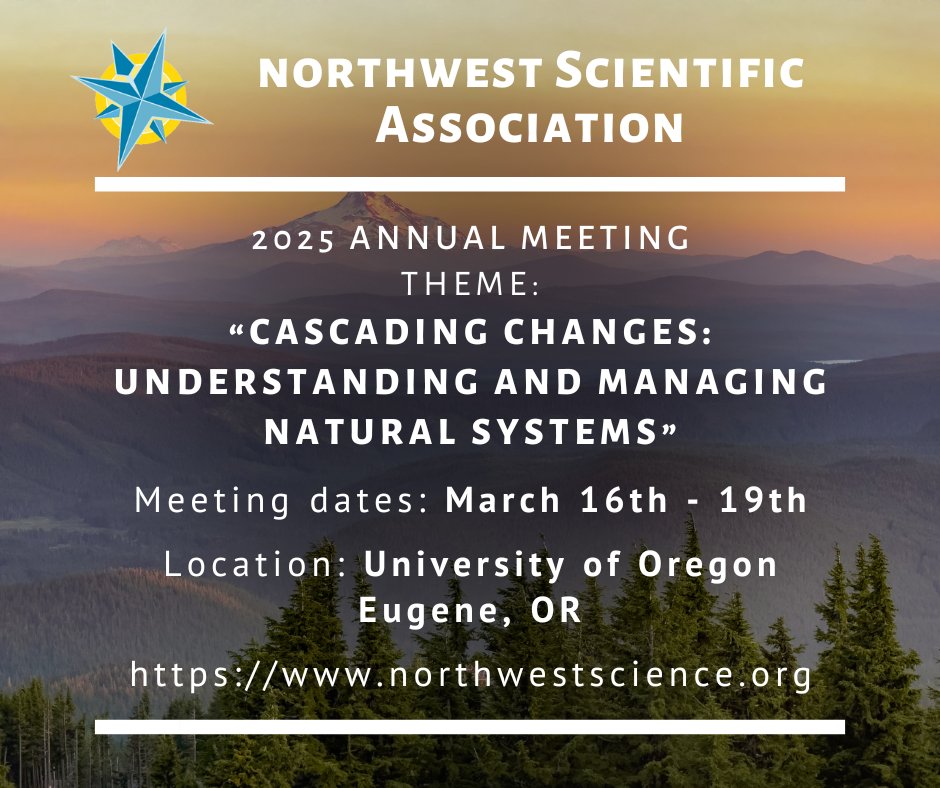
NWSA Annual Meeting Announcement! NWSA welcomes proposals and recommendations for special sessions, field trips, and workshops for the Association’s Annual Meeting. This years meeting will be hosted by the University of Oregon in Eugene, OR.
1
75
15 Aug 2024
Please send recommendations by November 1st to James Lamping <jlamping@uoregon.edu>.
Regarding special sessions, field trips, and workshops:
1. Please propose one or more that you would organize. 2. Please suggest topics you’d like the meeting to address.
1
9
15 Aug 2024
NWSA meetings range widely across the natural sciences. Proposals and recommendations should note how the theme will be of broad interest.
10
3 Jun 2024
NWSA Student Grant Research Highlight:
Student Grant Recipient: Evan Burnett (Cal Poly Humboldt)
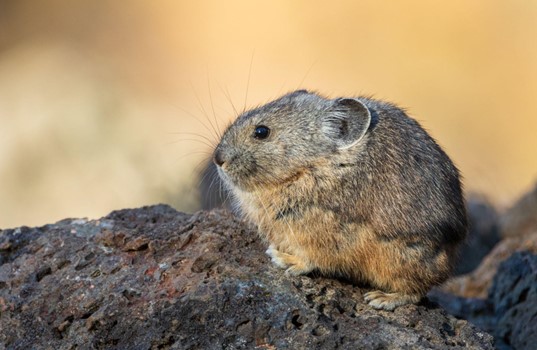
🐾 New Research on American Pika Nocturnality! 🐾
Study description in the thread below:
1
1
74
3 Jun 2024
The American pika, known for its climate sensitivity, faces increased risks due to rising temperatures. Recent studies reveal that pikas at lower elevations are more nocturnal compared to their high-elevation counterparts.
1
15
3 Jun 2024
Researchers used motion-capture cameras and temperature loggers in Lassen National Forest, CA, to study 35 pikas. Findings show that rock structures provide thermal buffering, boosting pika activity. However, extreme temperatures (≥25.5°C) reduce overall and nocturnal activity.
21
17 Apr 2024
Greetings Northwest Scientists!
The 94th Annual Meeting of the NWSA is less than five weeks away, and we are pleased to announce that the abstract submission deadline has been extended by one week. The new submission deadline for oral and poster presentations is April 26th.
1
1
160
17 Apr 2024
Abstracts are submitted using an online submission form. The form can also be accessed from the 2024 Call for Abstracts page on the NWSA website. Abstracts are limited to 250 words, plus a separate 50-word summary of key findings and significance.
1
34
17 Apr 2024
Presentations are welcomed on all subject matter covered by the NWSA. Remember to register for the Annual Meeting by May 10th for early registration rates.
We hope to see you in Spokane, WA, May 20th - 23rd!
24
25 Mar 2024
**ANNOUNCEMENT** Registration for the 2024 NWSA Annual Meeting is now open. Visit our website at northwestscience.org or check out the link below before early registration prices end May 10th!
Also, student registration is only $50!
northwestscience.org/event-5…
1
122
12 Feb 2024
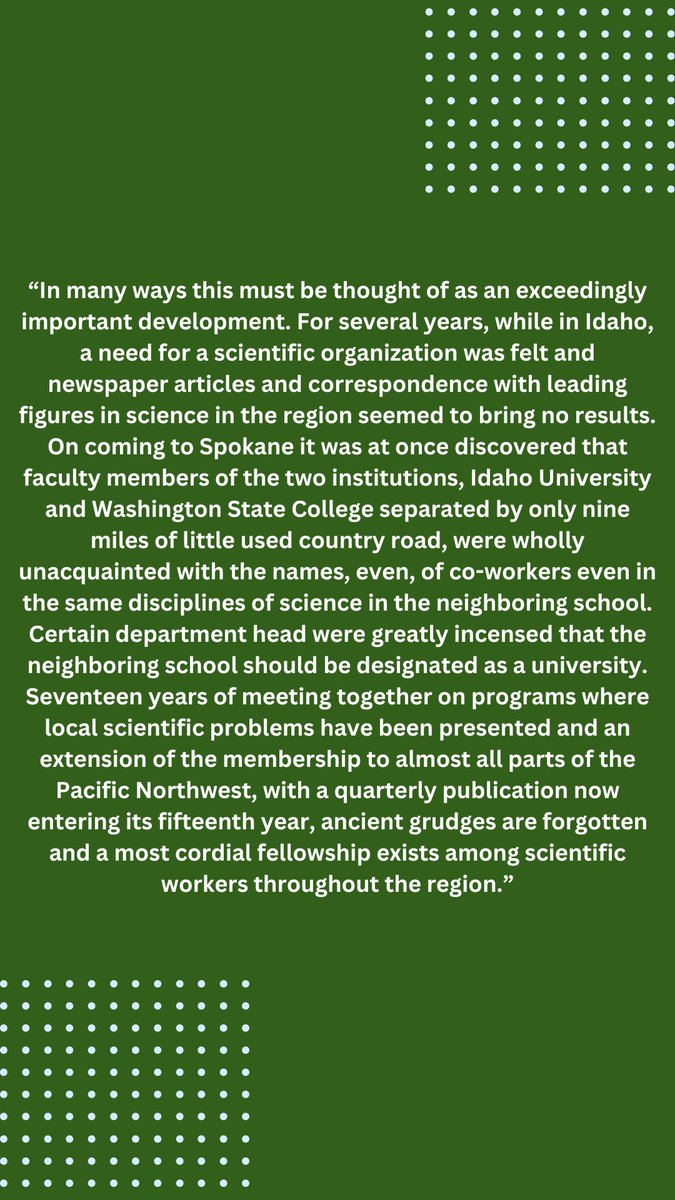
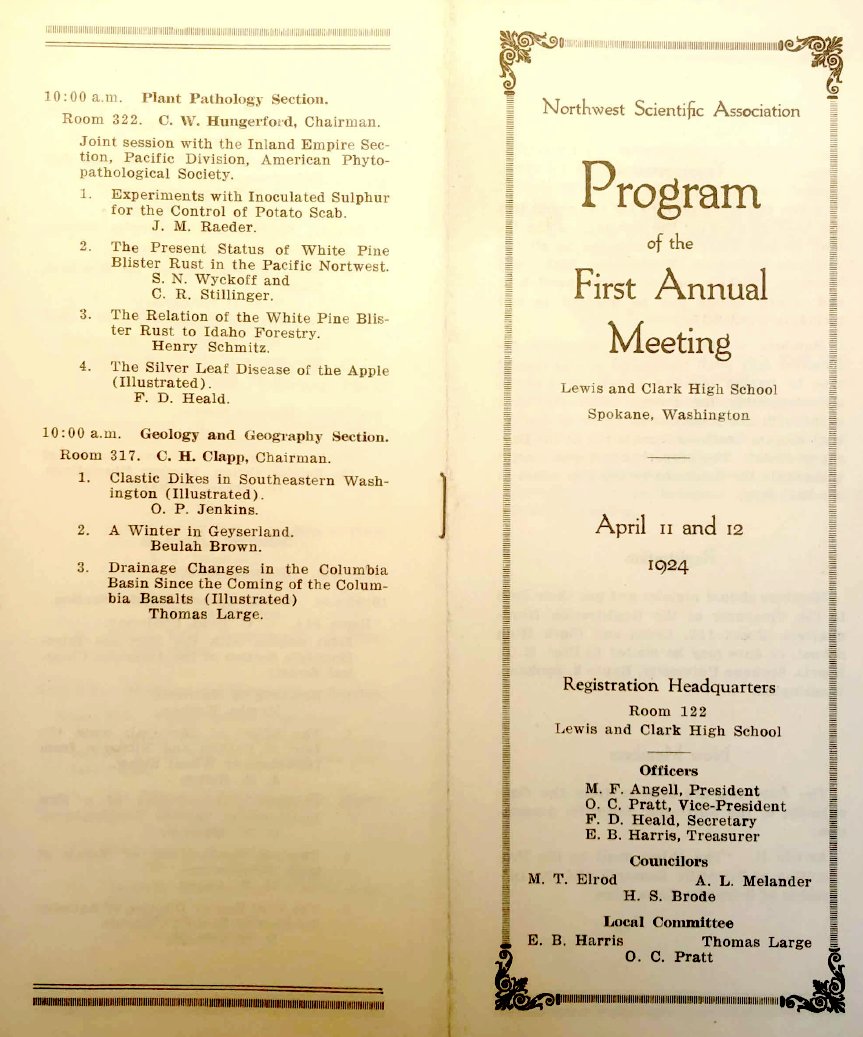
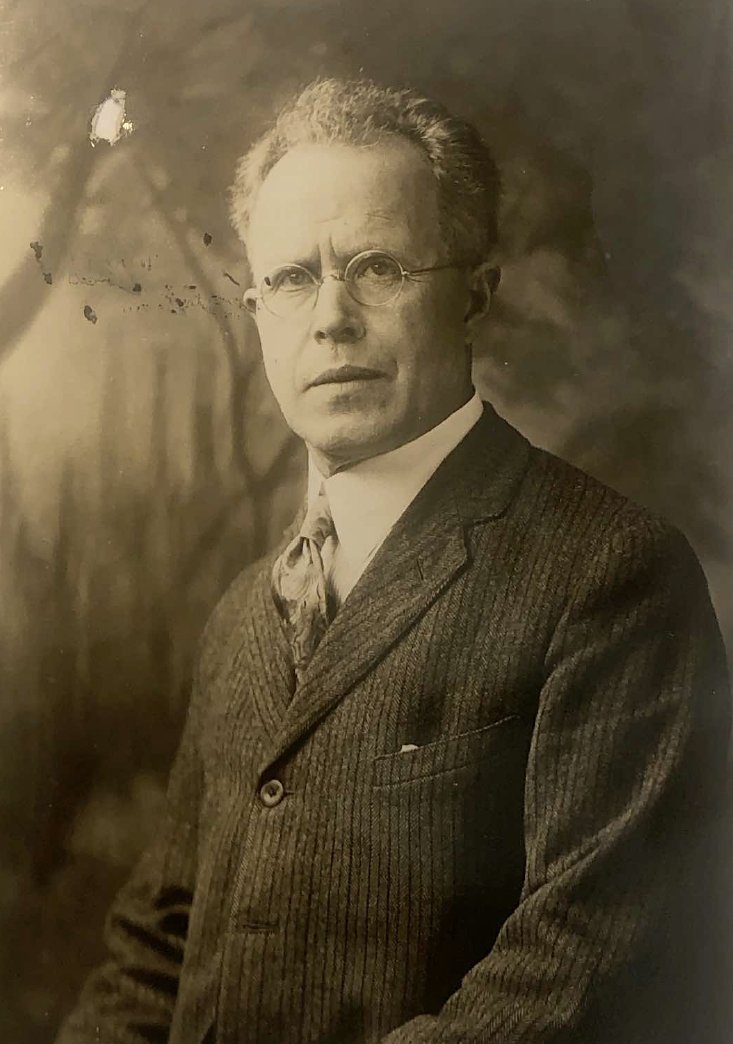
Thomas Large, ca. 1941, on the organization of the Northwest Scientific Association in 1923:
1
120
12 Feb 2024
Thomas Large was a key player in the “discovery” of the Missoula Floods; come to our meeting in Spokane in May to hear Richard Waitt’s talk The “debacle which swept the Columbia Plateau” one hundred years on.
33
9 Feb 2024
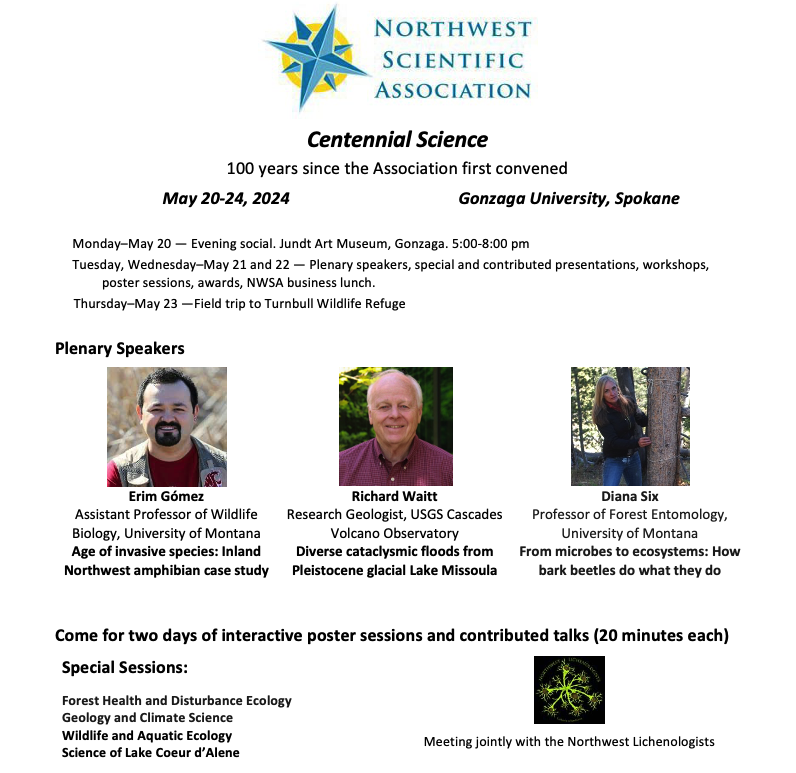
Join us in Spokane, May 20 - 23, for the 94th Annual Meeting of the Northwest Scientific Association, a joint meeting with the Northwest Lichenologists!
Celebrating 100 years since it first convened!
1
1
116
9 Feb 2024
NWSA will be hosted by Gonzaga University for three days of presentations, posters, networking, student poster awards and field trips.
See the full meeting announcement for details of our exciting line-up of plenary speakers and special sessions.
northwestscience.org/Annual-…
1
49
9 Feb 2024
Upcomming dates:
Abstract submission for oral and poster presentations is now live! Submission deadline: April 19, 2024
Meeting registration will open in late February.
May 20 Pre-conference social 5:00 - 8:00 pm.
35
9 Dec 2023
We recently received word that our main website is experiencing security certificate issues! We are working to get everything back up and running here soon, and we appreciate your patience.
1
52
27 Jun 2023
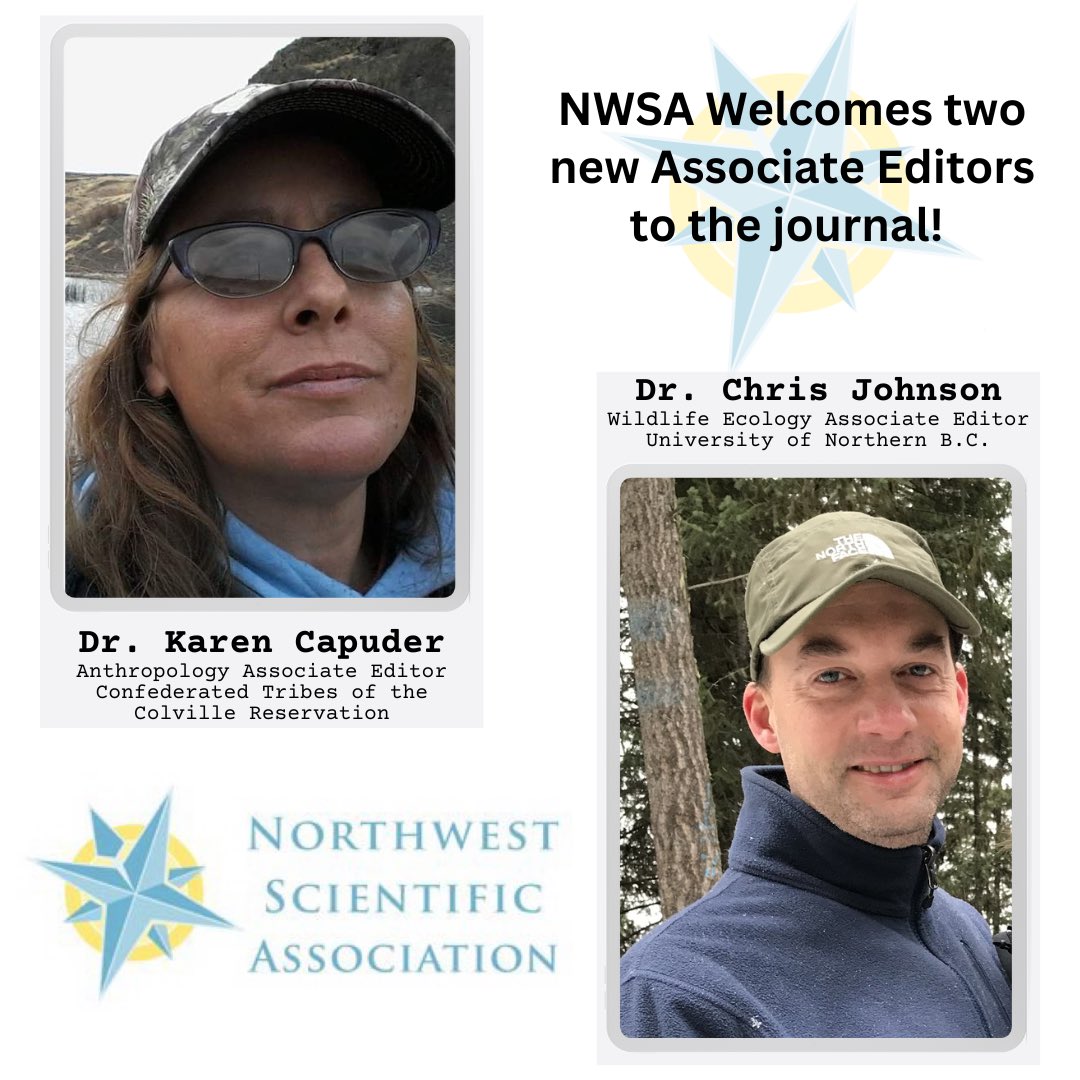
NWSA welcomes two new associate editors to the journal!
61
22 Jun 2023
NWSA is in search of two Associate Editors in:
• Wildlife Ecology
• Coastal Marine Ecology
If interested please email lucy.kerhoulas@humboldt.edu
36
26 Mar 2023
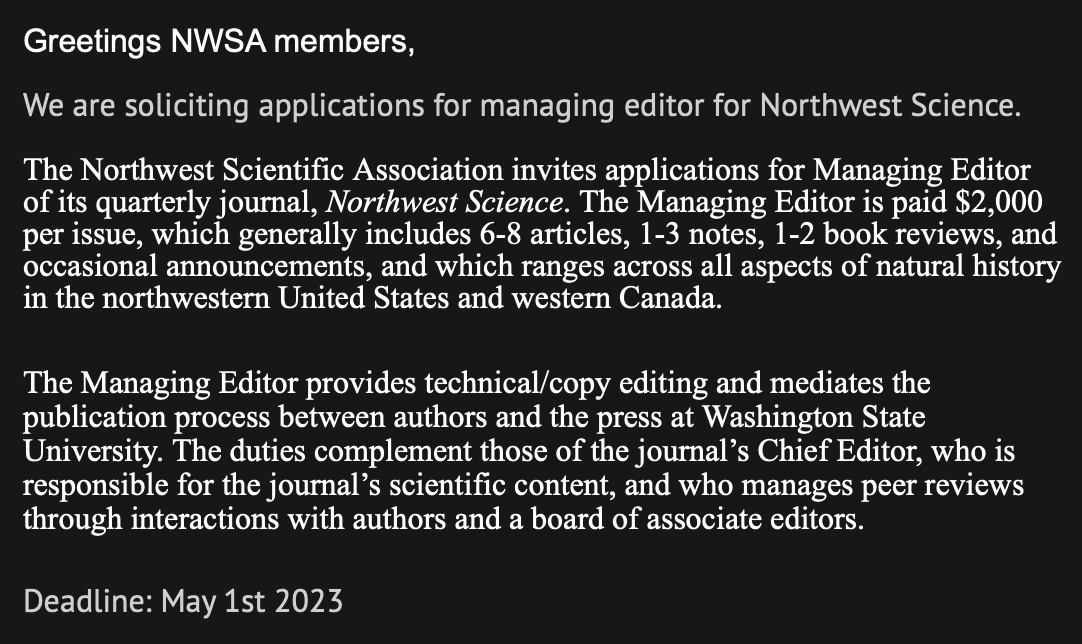
NWSA is looking for a managing editor! Application deadline is May 1st.
northwestscience.org/announc…
3
1
516
25 Mar 2023
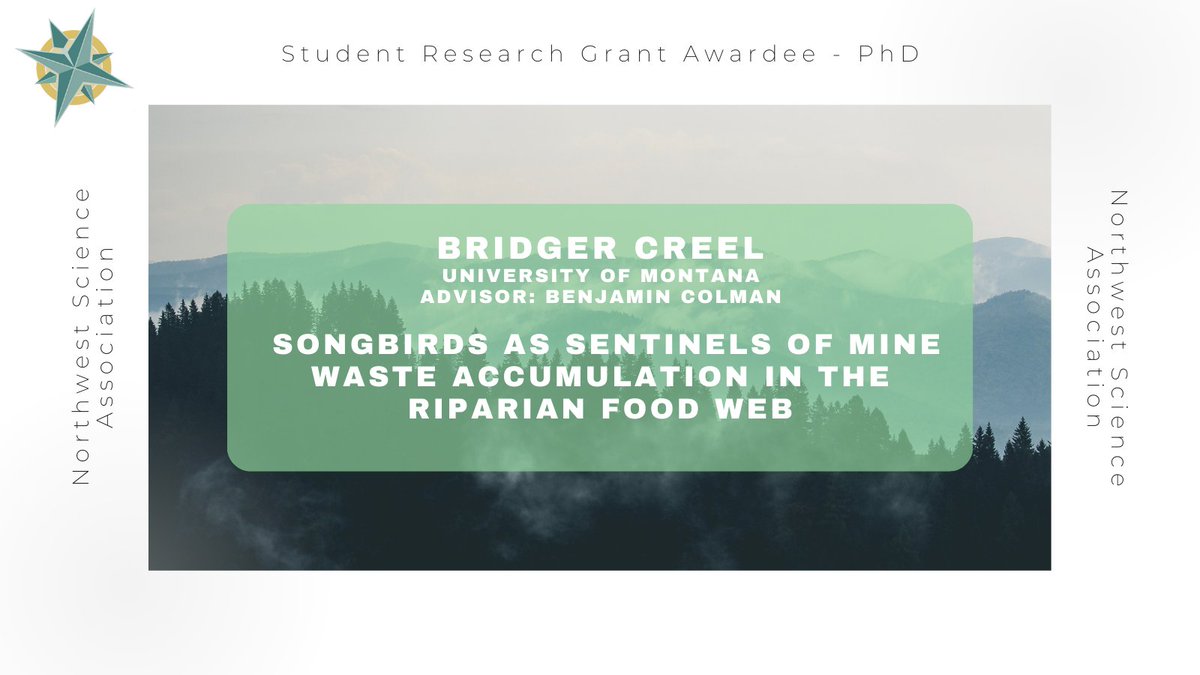
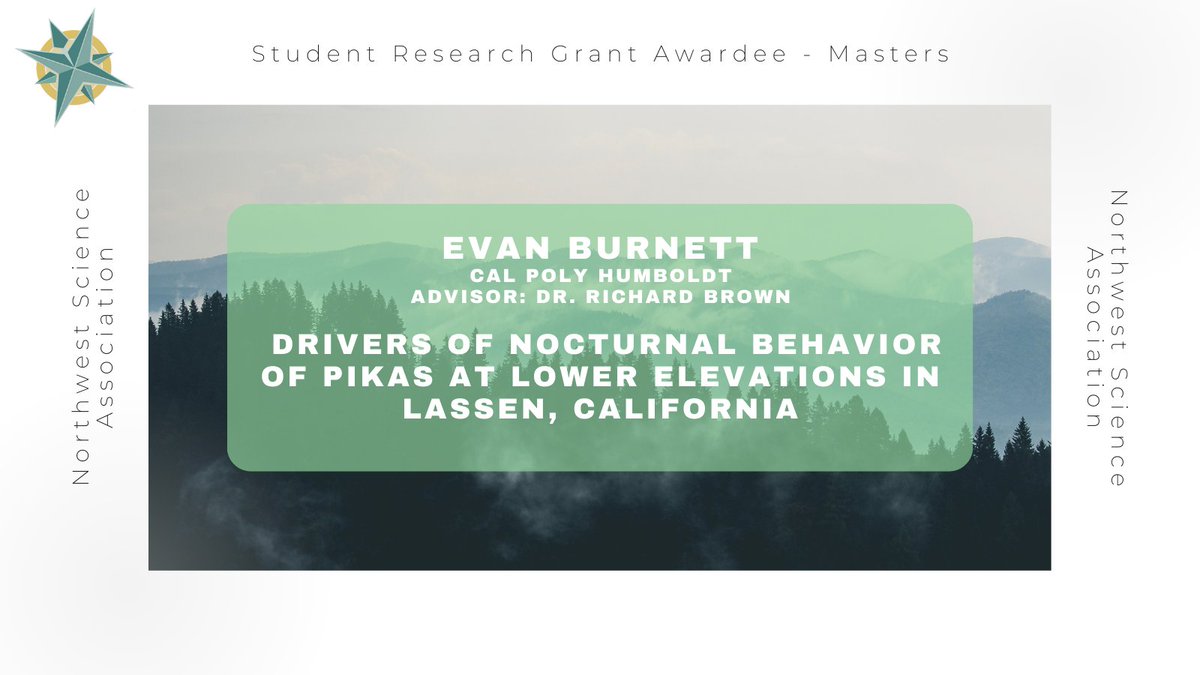
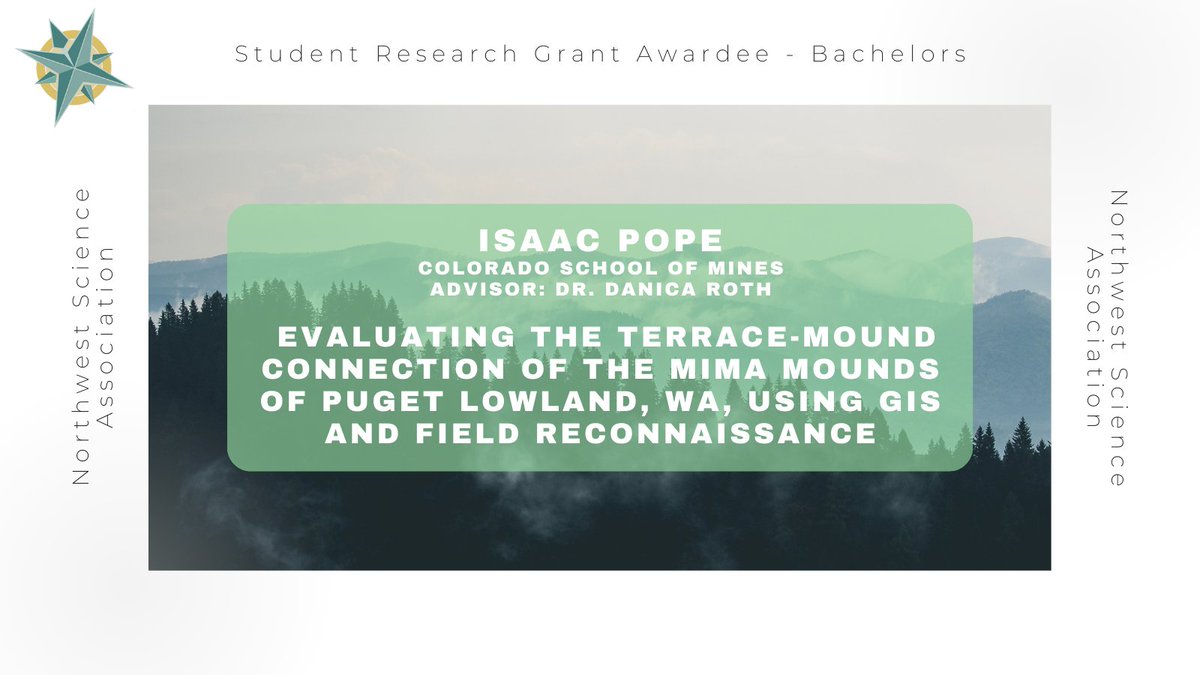
Congratulations to the NWSA 2023 Student Grant Awardees!
- Bachelors: Isaac Pope
- Masters: Evan Burnett
- Doctorate: Bridger Creel
2
1
507