
Plants. People. Possibilities. The Oak Spring Garden Foundation is dedicated to facilitating scholarship and public dialogue relating to the world of plants.
- Tweets 2,801
- Following 1,248
- Followers 1,551
- Likes 2,065
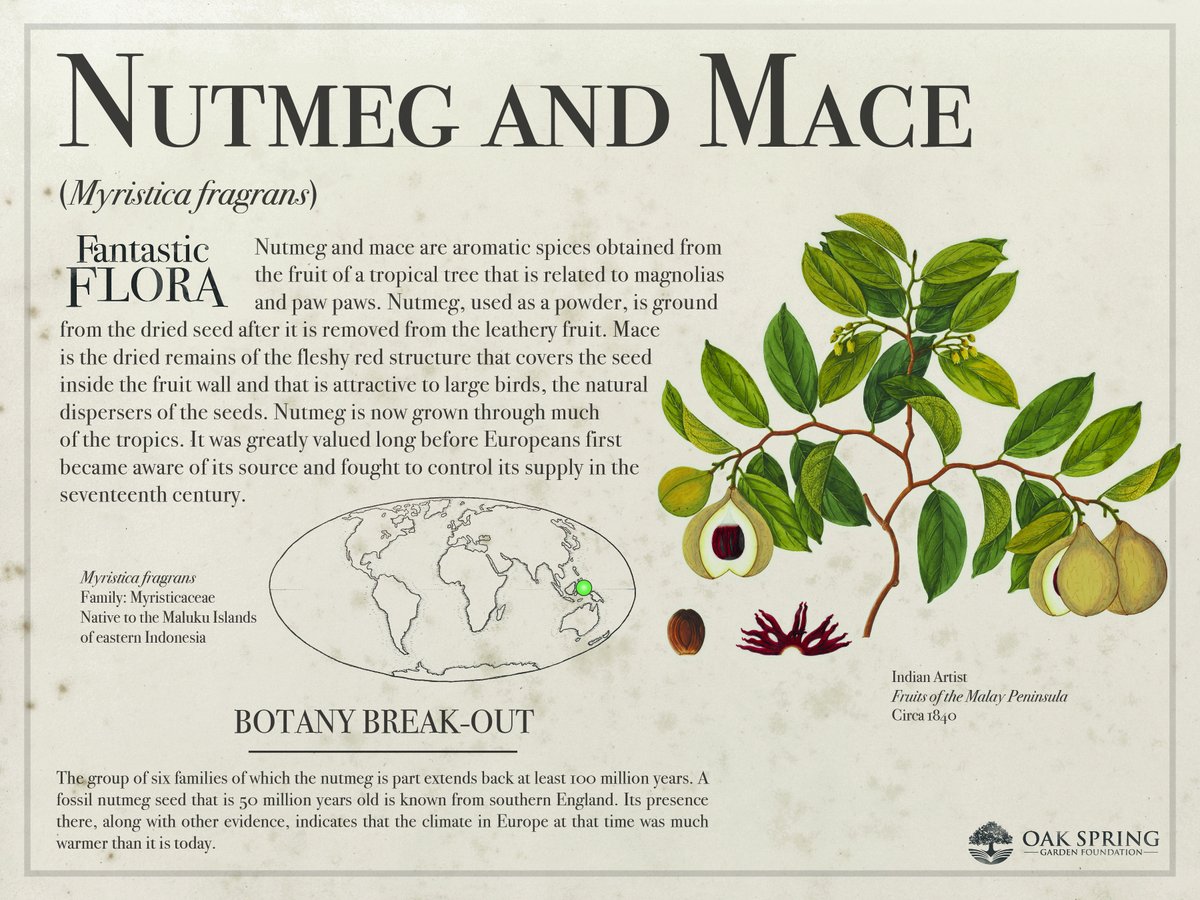

ALT Nutmeg and mace are aromatic spices obtained from the fruit of a tropical tree (Myristica fragrans) that is related to magnolias and paw paws. Nutmeg, used as a powder, is ground from the dried seed after it is removed from the leathery fruit. Mace is the dried remains of the fleshy red structure that covers the seed inside the fruit wall and that is attractive to large birds, the natural dispersers of the seeds. Nutmeg is now grown through much of the tropics. It was greatly valued long before Europeans first became aware of its source and fought to control its supply in the seventeenth century. The group of six families of which the nutmeg is part extends back at least 100 million years. A fossil nutmeg seed that is 50 million years old is known from southern England. Its presence there, along with other evidence, indicates that the climate in Europe at that time was much warmer than it is today.
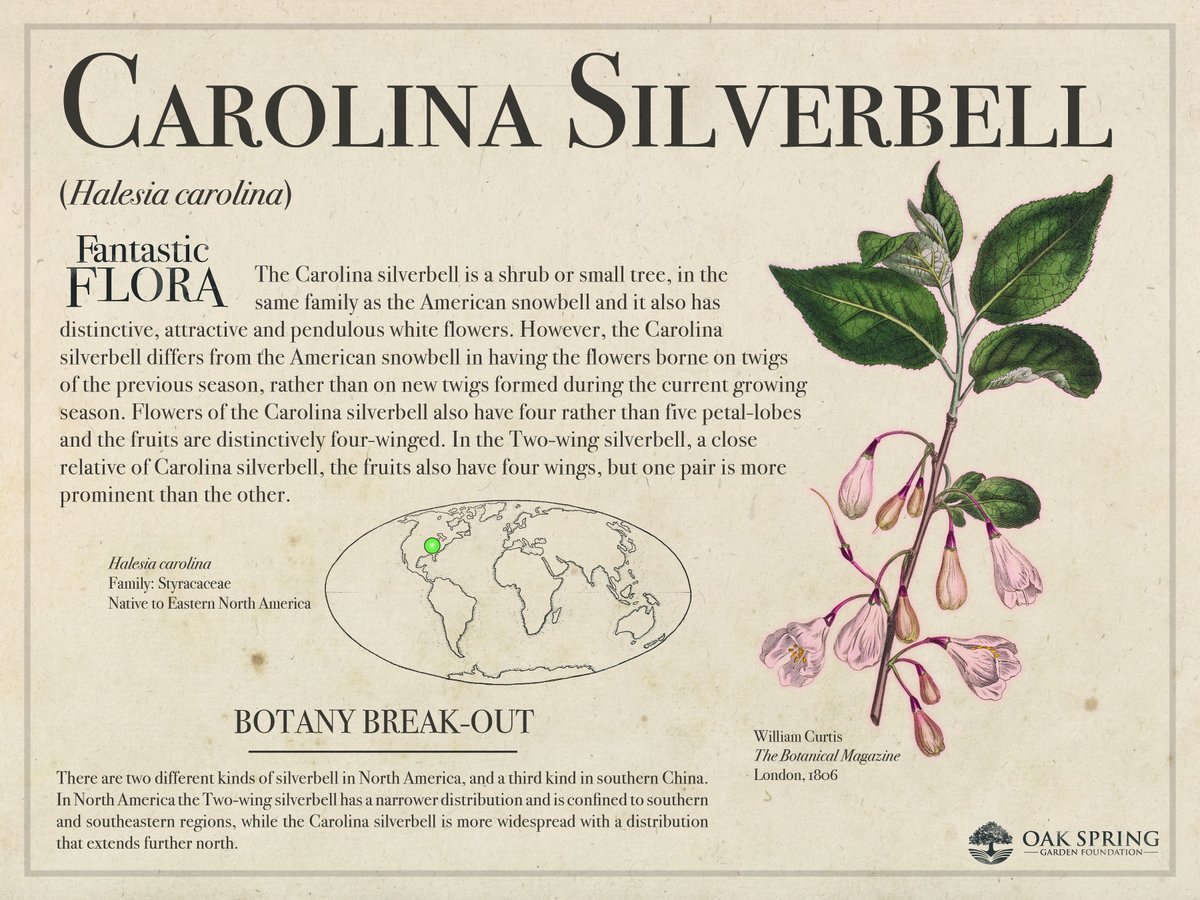
ALT The Carolina silverbell (Halesia carolina) is a shrub or small tree, in the same family as the American snowbell and it also has distinctive, attractive and pendulous white flowers. However, the Carolina silverbell differs from the American snowbell in having the flowers borne on twigs of the previous season, rather than on new twigs formed during the current growing season. Flowers of the Carolina silverbell also have four rather than five petal-lobes and the fruits are distinctively four-winged. In the Two-wing silverbell, a close relative of Carolina silverbell, the fruits also have four wings, but one pair is more prominent than the other. There are two different kinds of silverbell in North America, and a third kind in southern China. In North America the Two-wing silverbell has a narrower distribution and is confined to southern and southeastern regions, while the Carolina silverbell is more widespread with a distribution that extends further north.

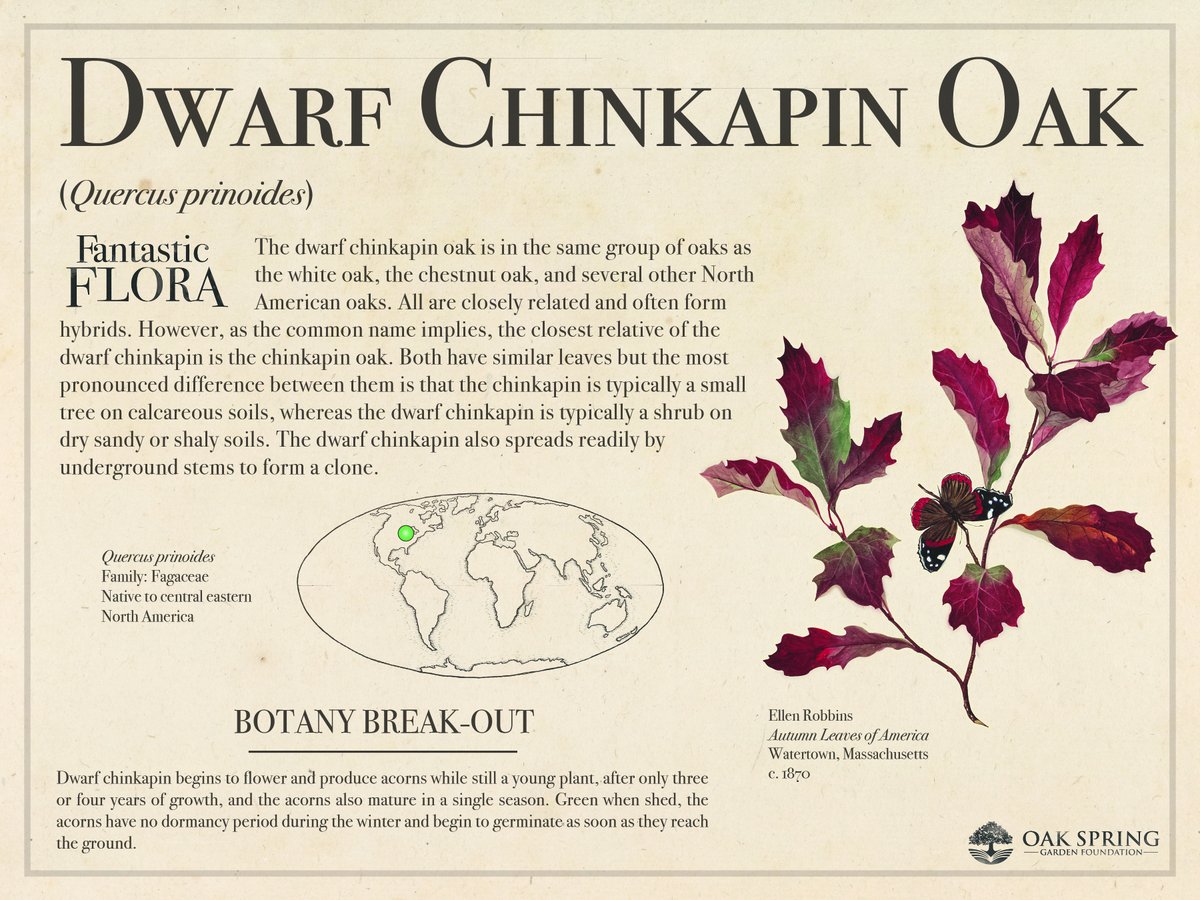
ALT The dwarf chinkapin oak (Quercus prinoides) is in the same group of oaks as the white oak, the chestnut oak, and several other North American oaks. All are closely related and often form hybrids. However, as the common name implies, the closest relative of the dwarf chinkapin is the chinkapin oak. Both have similar leaves but the most pronounced difference between them is that the chinkapin is typically a small tree on calcareous soils, whereas the dwarf chinkapin is typically a shrub on dry sandy or shaly soils. The dwarf chinkapin also spreads readily by underground stems to form a clone. Dwarf chinkapin begins to flower and produce acorns while still a young plant, after only three or four years of growth, and the acorns also mature in a single season. Green when shed, the acorns have no dormancy period during the winter and begin to germinate as soon as they reach the ground.
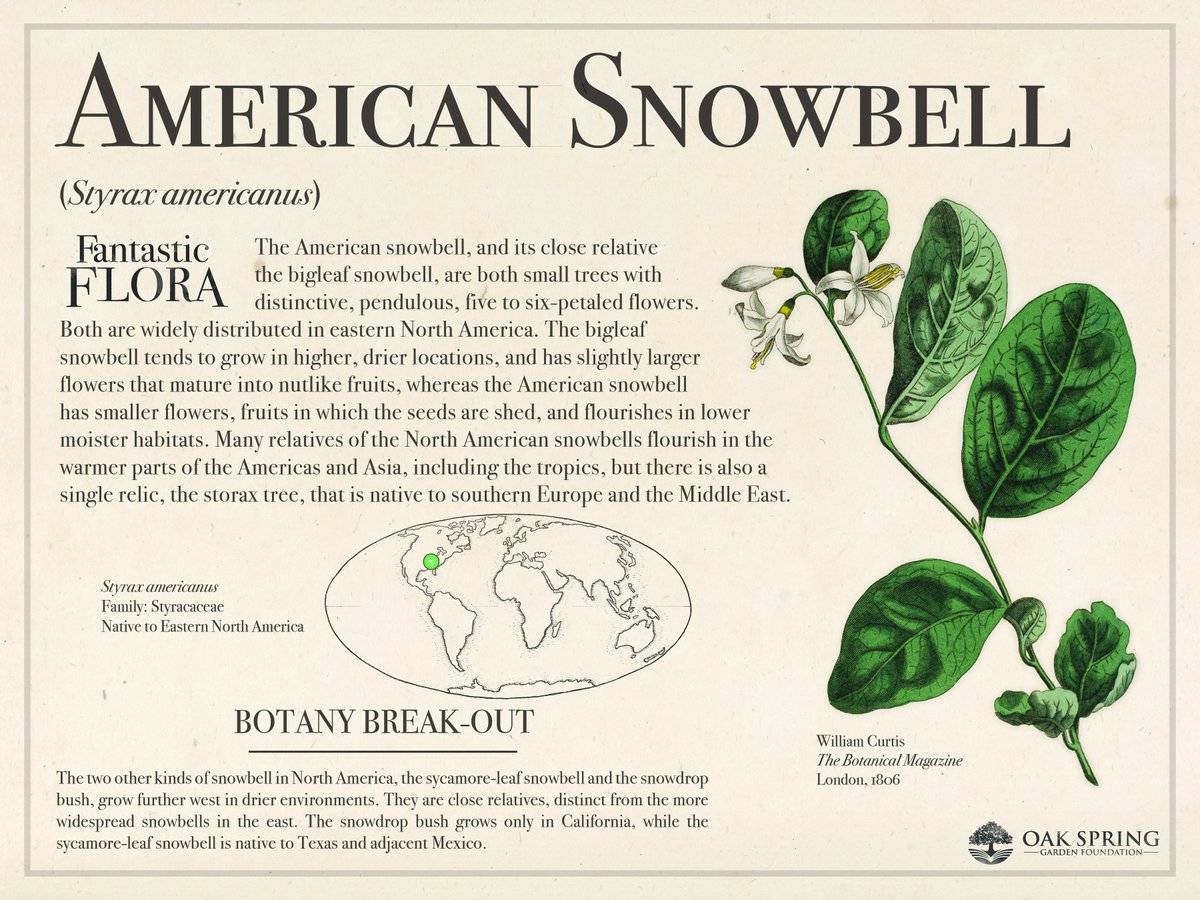
ALT The American snowbell (Styrax americanus), and its close relative the bigleaf snowbell, are both small trees with distinctive, pendulous, five to six-petaled flowers. Both are widely distributed in eastern North America. The bigleaf snowbell tends to grow in higher, drier locations, and has slightly larger flowers that mature into nutlike fruits, whereas the American snowbell has smaller flowers, fruits in which the seeds are shed, and flourishes in lower moister habitats. Many relatives of the North American snowbells flourish in the warmer parts of the Americas and Asia, including the tropics, but there is also a single relic, the storax tree, that is native to southern Europe and the Middle East. The two other kinds of snowbell in North America, the sycamore-leaf snowbell and the snowdrop bush, grow further west in drier environments. They are close relatives, distinct from the more widespread snowbells in the east.
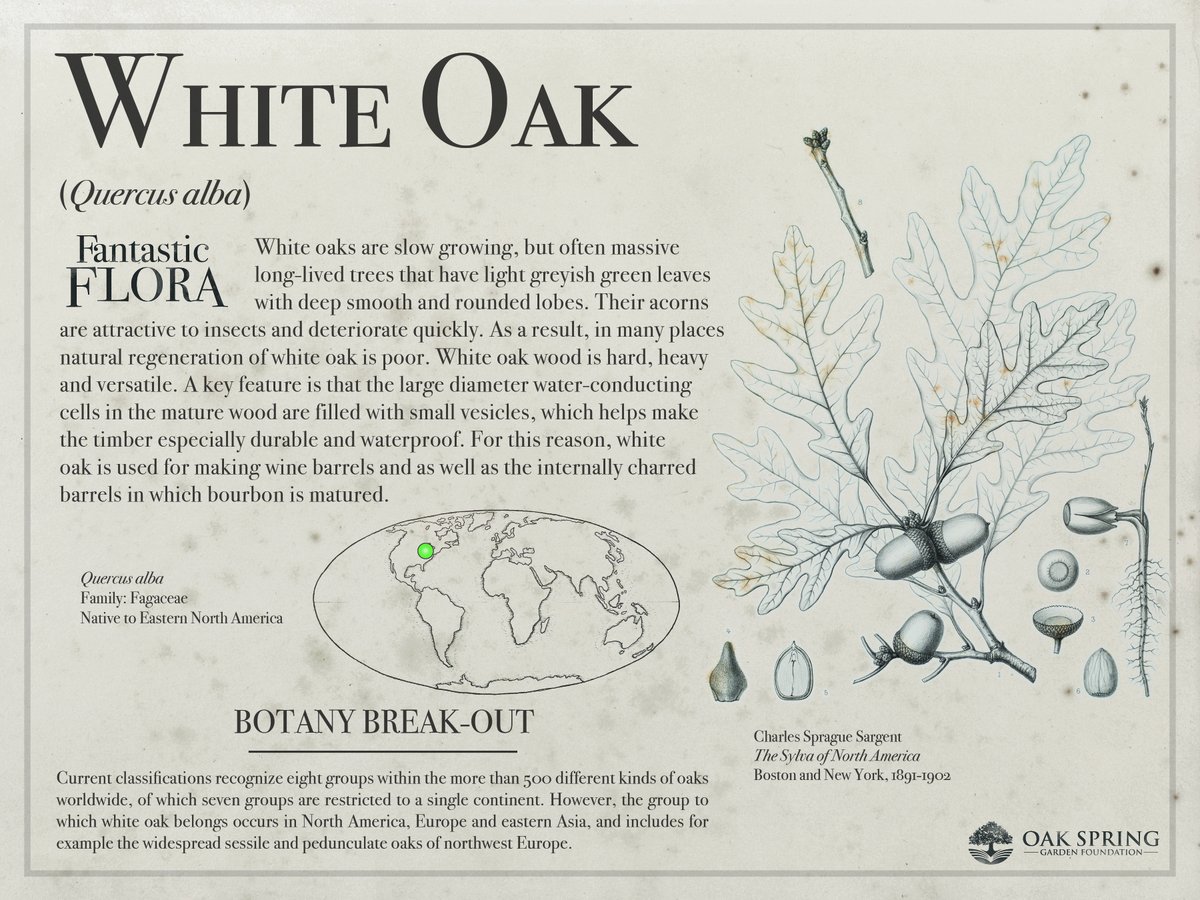
ALT White oaks (Quercus alba) are slow growing, but often massive long-lived trees that have light greyish green leaves with deep smooth and rounded lobes. Their acorns are attractive to insects and deteriorate quickly. As a result, in many places natural regeneration of white oak is poor. White oak wood is hard, heavy and versatile. A key feature is that the large diameter water-conducting cells in the mature wood are filled with small vesicles, which helps make the timber especially durable and waterproof. For this reason, white oak is used for making wine barrels and as well as the internally charred barrels in which bourbon is matured. Current classifications recognize eight groups within the more than 500 different kinds of oaks worldwide, of which seven groups are restricted to a single continent. However, the group to which white oak belongs occurs in North America, Europe and eastern Asia, and includes for example the widespread sessile and pedunculate oaks of northwest Europe.
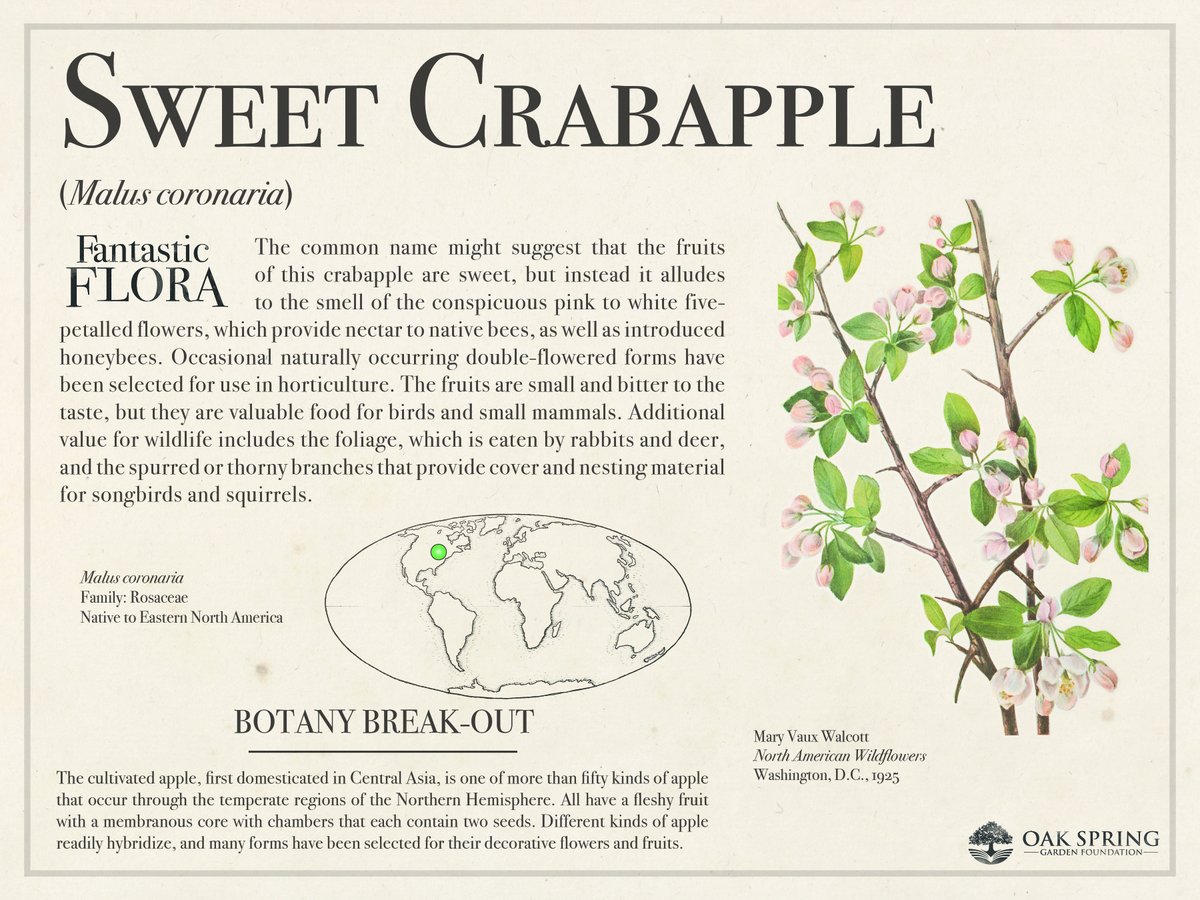
ALT The common name might suggest that the fruits of this crabapple are sweet, but instead it alludes to the smell of the conspicuous pink to white five-petalled flowers, which provide nectar to native bees, as well as introduced honeybees. Occasional naturally occurring double-flowered forms have been selected for use in horticulture. The fruits are small and bitter to the taste, but they are valuable food for birds and small mammals. Additional value for wildlife includes the foliage, which is eaten by rabbits and deer, and the spurred or thorny branches that provide cover and nesting material for songbirds and squirrels. The cultivated apple, first domesticated in Central Asia, is one of more than fifty kinds of apple that occur through the temperate regions of the Northern Hemisphere. All have a fleshy fruit with a membranous core with chambers that each contain two seeds. Different kinds of apple readily hybridize, and many forms have been selected for their flowers and fruits.
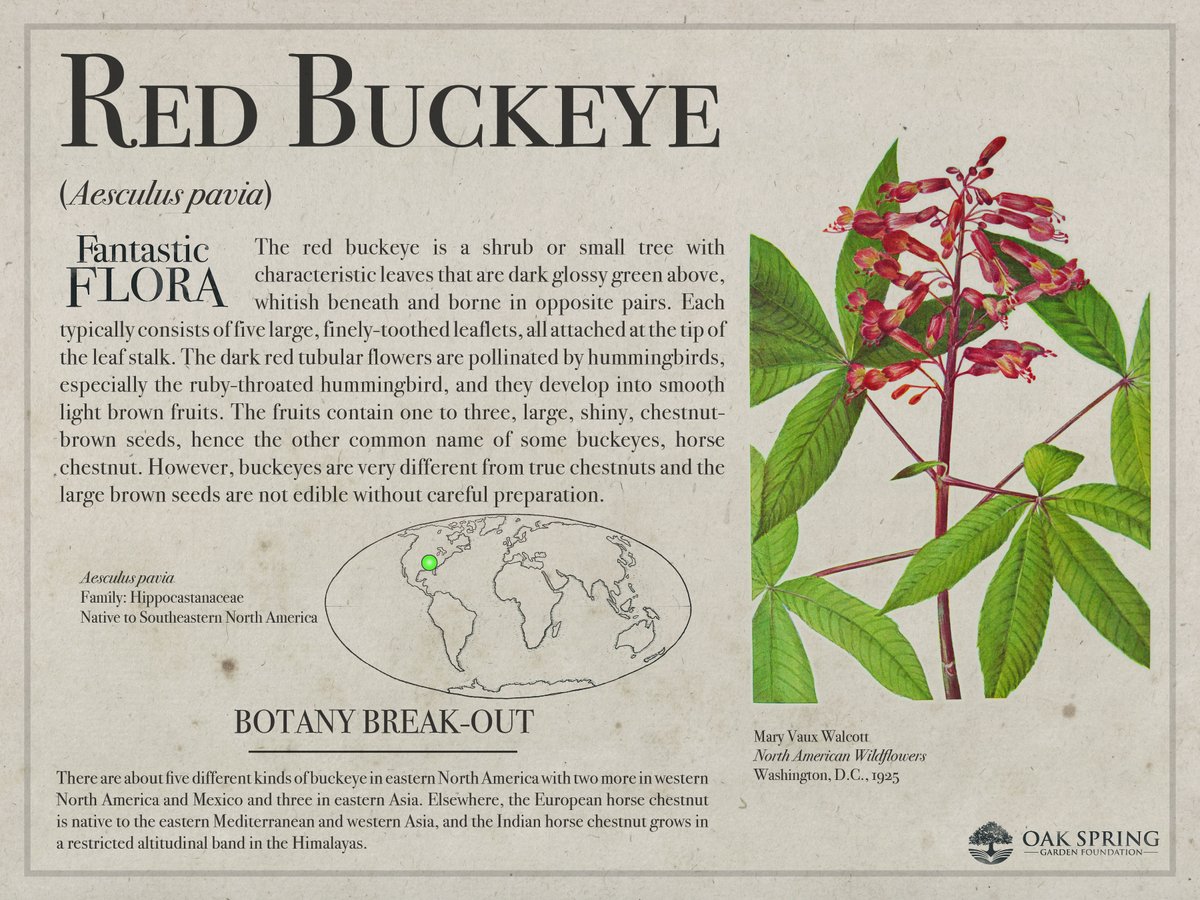
ALT The red buckeye is a shrub or small tree with characteristic leaves that are dark glossy green above, whitish beneath and borne in opposite pairs. Each typically consists of five large, finely-toothed leaflets, all attached at the tip of the leaf stalk. The dark red tubular flowers are pollinated by hummingbirds, especially the ruby-throated hummingbird, and they develop into smooth light brown fruits. The fruits contain one to three, large, shiny, chestnut-brown seeds, hence the other common name of some buckeyes, horse chestnut. However, buckeyes are very different from true chestnuts and the large brown seeds are not edible without careful preparation. There are about five different kinds of buckeye in eastern North America with two more in western North America and Mexico and three in eastern Asia. Elsewhere, the European horse chestnut is native to the eastern Mediterranean and western Asia, and the Indian horse chestnut grows in a restricted altitudinal band in the Himalayas.
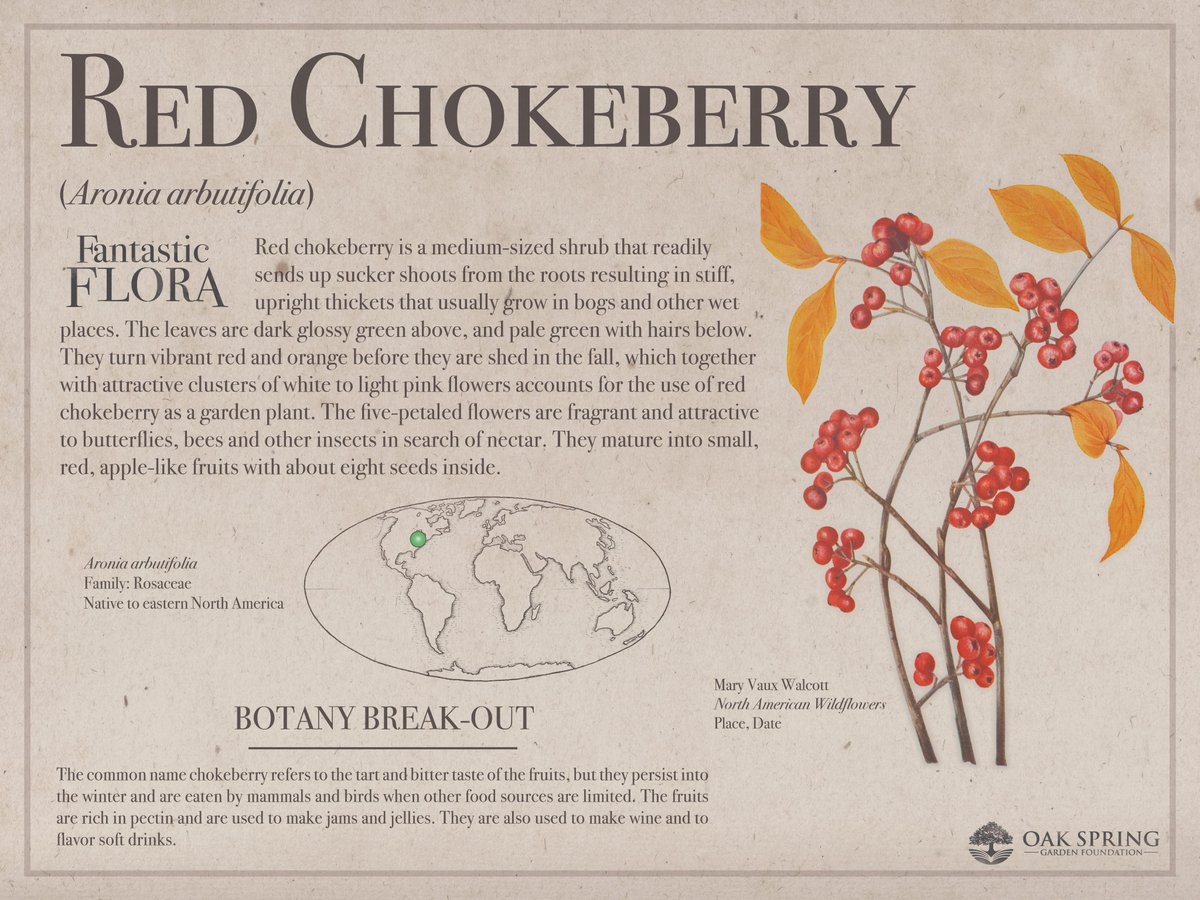
ALT Red chokeberry (Aronia arbutifolia) is a medium-sized shrub that readily sends up sucker shoots from the roots resulting in stiff, upright thickets that usually grow in bogs and other wet places. The leaves are dark glossy green above, and pale green with hairs below. They turn vibrant red and orange before they are shed in the fall, which together with attractive clusters of white to light pink flowers accounts for the use of red chokeberry as a garden plant. The five-petaled flowers are fragrant and attractive to butterflies, bees and other insects in search of nectar. They mature into small, red, apple-like fruits with about eight seeds inside. The common name chokeberry refers to the tart and bitter taste of the fruits, but they persist into the winter and are eaten by mammals and birds when other food sources are limited. The fruits are rich in pectin and are used to make jams and jellies. They are also used to make wine and to flavor soft drinks.


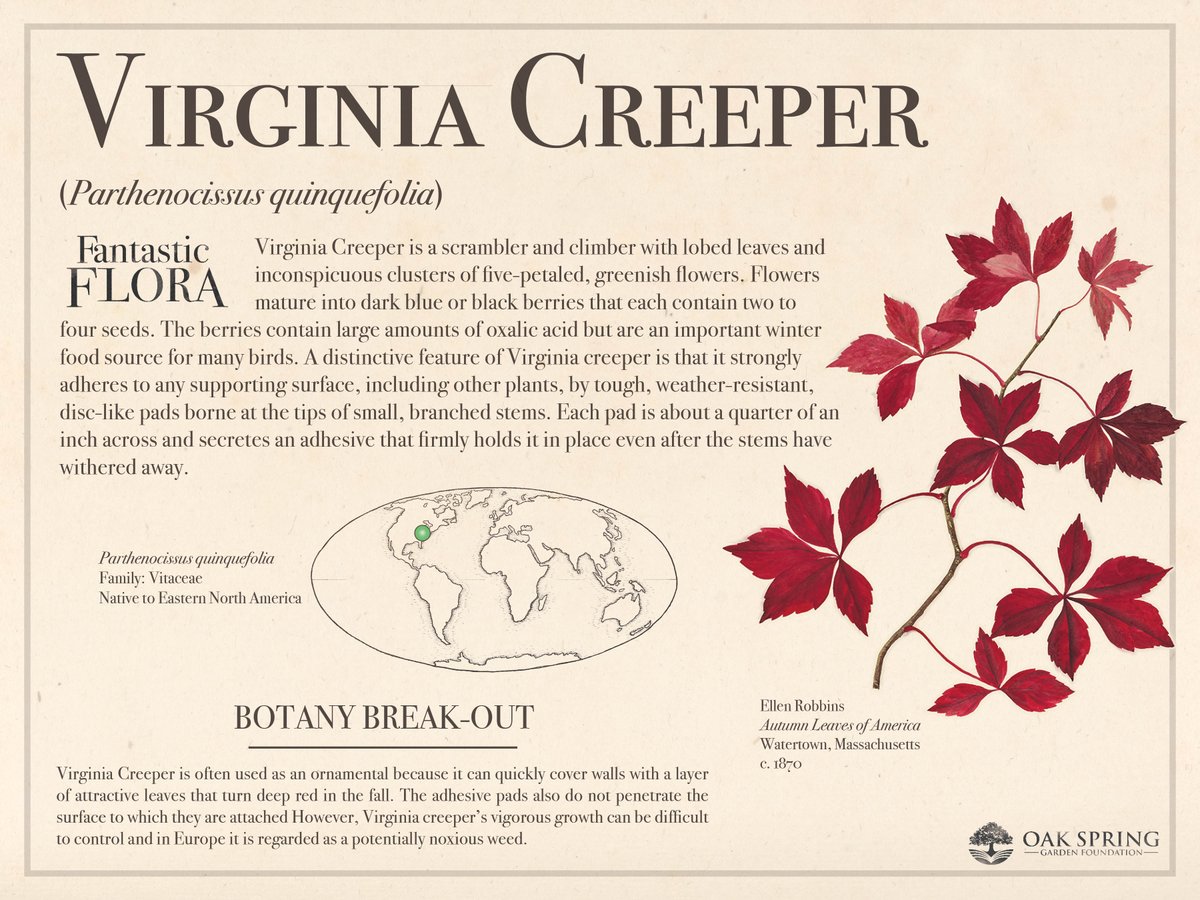
ALT Virginia Creeper (Parthenocissus quinquefolia) is a scrambler and climber with lobed leaves and inconspicuous clusters of five-petaled, greenish flowers. Flowers mature into dark blue or black berries that each contain two to four seeds. The berries contain large amounts of oxalic acid but are an important winter food source for many birds. A distinctive feature of Virginia creeper is that it strongly adheres to any supporting surface, including other plants, by tough, weather-resistant, disc-like pads borne at the tips of small, branched stems. Each pad is about a quarter of an inch across and secretes an adhesive that firmly holds it in place even after the stems have withered away. Virginia Creeper is often used as an ornamental because it can quickly cover walls with a layer of attractive leaves that turn deep red in the fall. The adhesive pads also do not penetrate the surface to which they are attached However, Virginia creeper’s vigorous growth can be difficult to control.
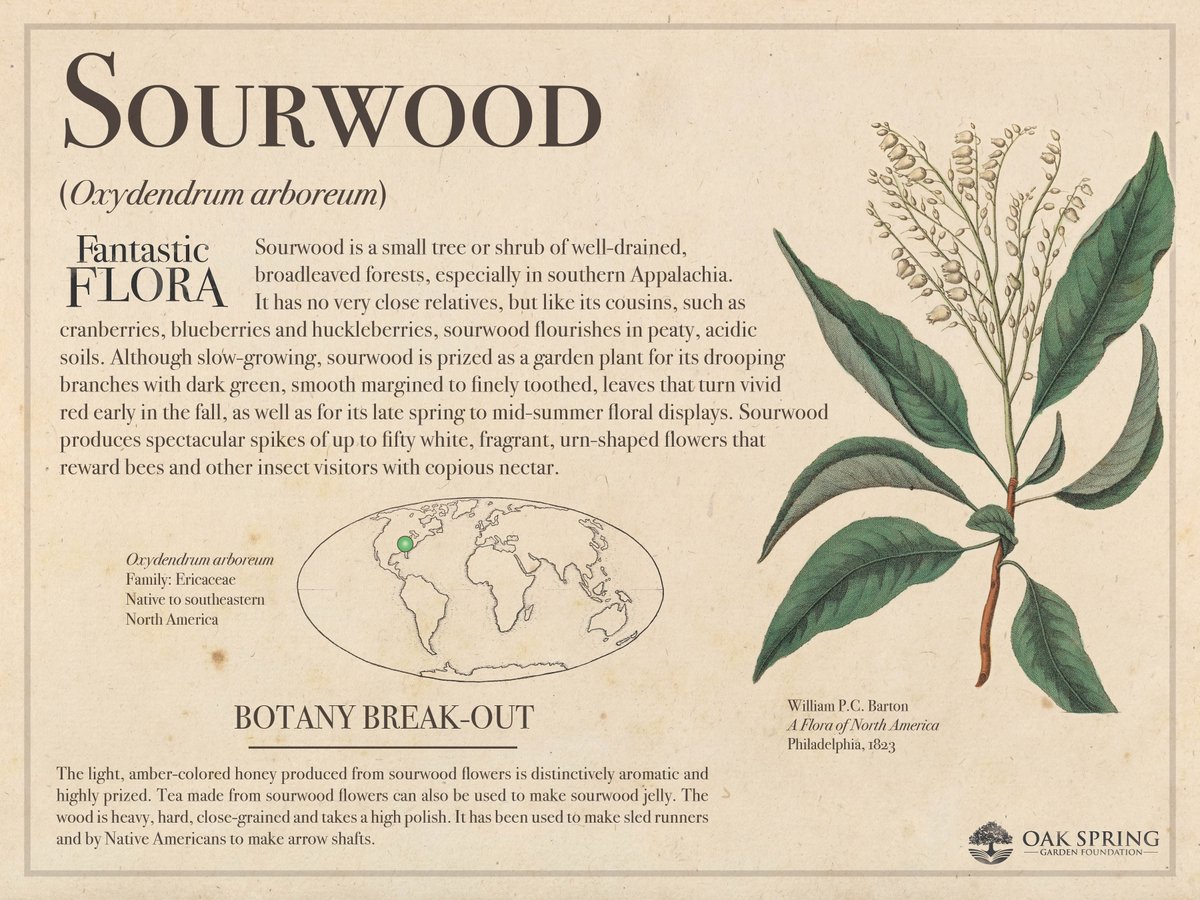
ALT Sourwood is a small tree or shrub of well-drained, broadleaved forests, especially in southern Appalachia. It has no very close relatives, but like its cousins, such as cranberries, blueberries and huckleberries, sourwood flourishes in peaty, acidic soils. Although slow-growing, sourwood is prized as a garden plant for its drooping branches with dark green, smooth margined to finely toothed, leaves that turn vivid red early in the fall, as well as for its late spring to mid-summer floral displays. Sourwood produces spectacular spikes of up to fifty white, fragrant, urn-shaped flowers that reward bees and other insect visitors with copious nectar. The light, amber-colored honey produced from sourwood flowers is distinctively aromatic and highly prized. Tea made from sourwood flowers can also be used to make sourwood jelly. The wood is heavy, hard, close-grained and takes a high polish. It has been used to make sled runners and by Native Americans to make arrow shafts.
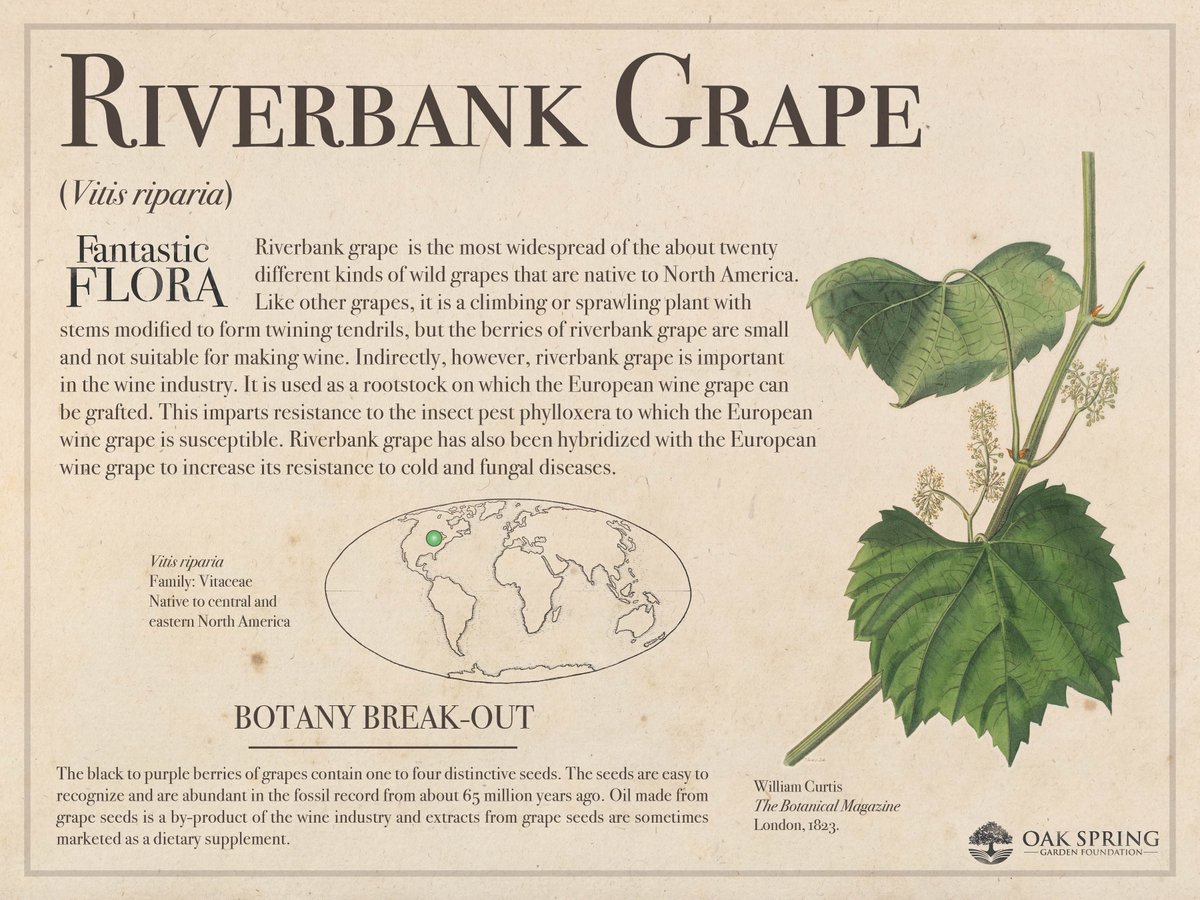
ALT Riverbank grape (Vitis riparia) is the most widespread of the about twenty different kinds of wild grapes that are native to North America. Like other grapes, it is a climbing or sprawling plant with stems modified to form twining tendrils, but the berries of riverbank grape are small and not suitable for making wine. Indirectly, however, riverbank grape is important in the wine industry. It is used as a rootstock on which the European wine grape can be grafted. This imparts resistance to the insect pest phylloxera to which the European wine grape is susceptible. Riverbank grape has also been hybridized with the European wine grape to increase its resistance to cold and fungal diseases. The black to purple berries of grapes contain one to four distinctive seeds. The seeds are easy to recognize and are abundant in the fossil record from about 65 million years ago. Oil made from grape seeds is a by-product of the wine industry.
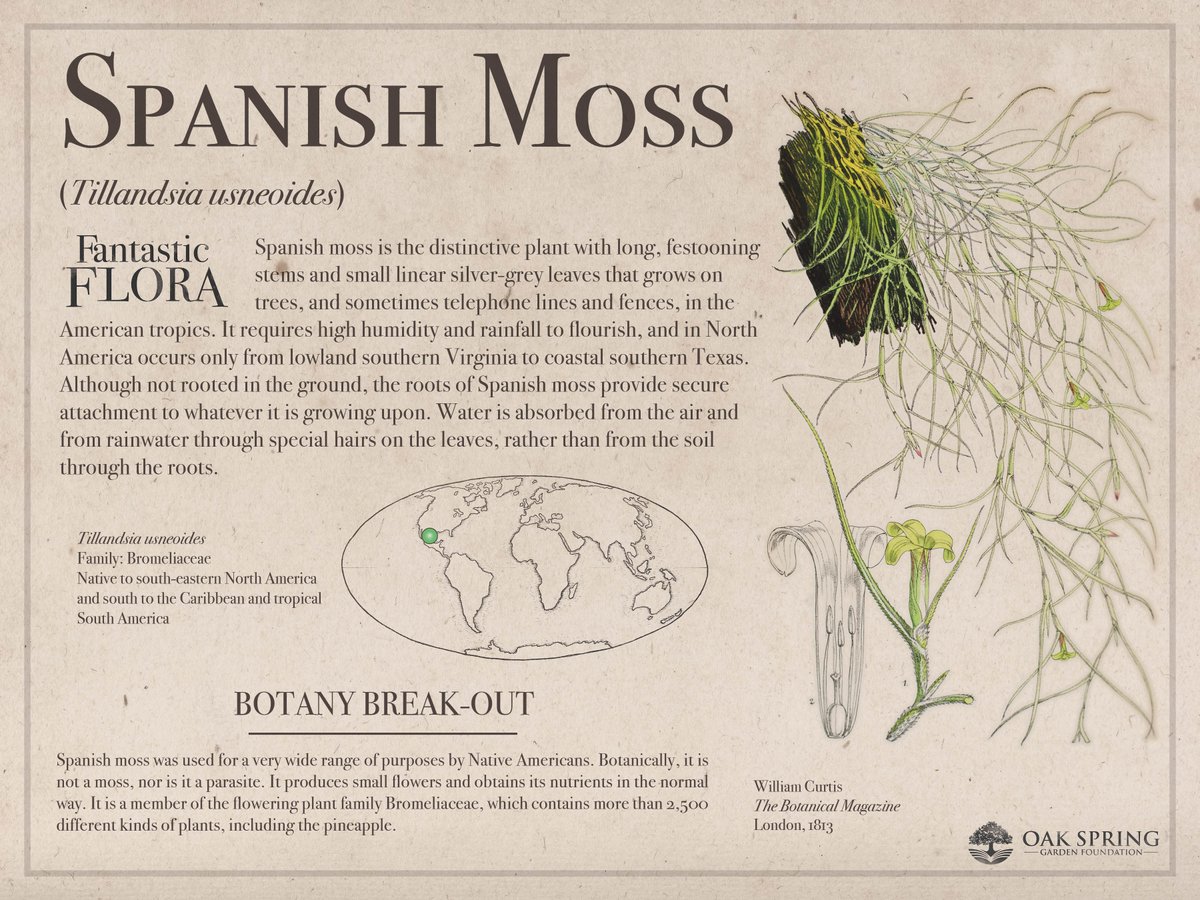
ALT Spanish moss (Tillandsia usneoides) is the distinctive plant with long, festooning stems and small linear silver-grey leaves that grows on trees, and sometimes telephone lines and fences, in the American tropics. It requires high humidity and rainfall to flourish, and in North America occurs only from lowland southern Virginia to coastal southern Texas. Although not rooted in the ground, the roots of Spanish moss provide secure attachment to whatever it is growing upon. Water is absorbed from the air and from rainwater through special hairs on the leaves, rather than from the soil through the roots. Spanish moss was used for a very wide range of purposes by Native Americans. Botanically, it is not a moss, nor is it a parasite. It produces small flowers and obtains its nutrients in the normal way. It is a member of the flowering plant family Bromeliaceae, which contains more than 2,500 different kinds of plants, including the pineapple.
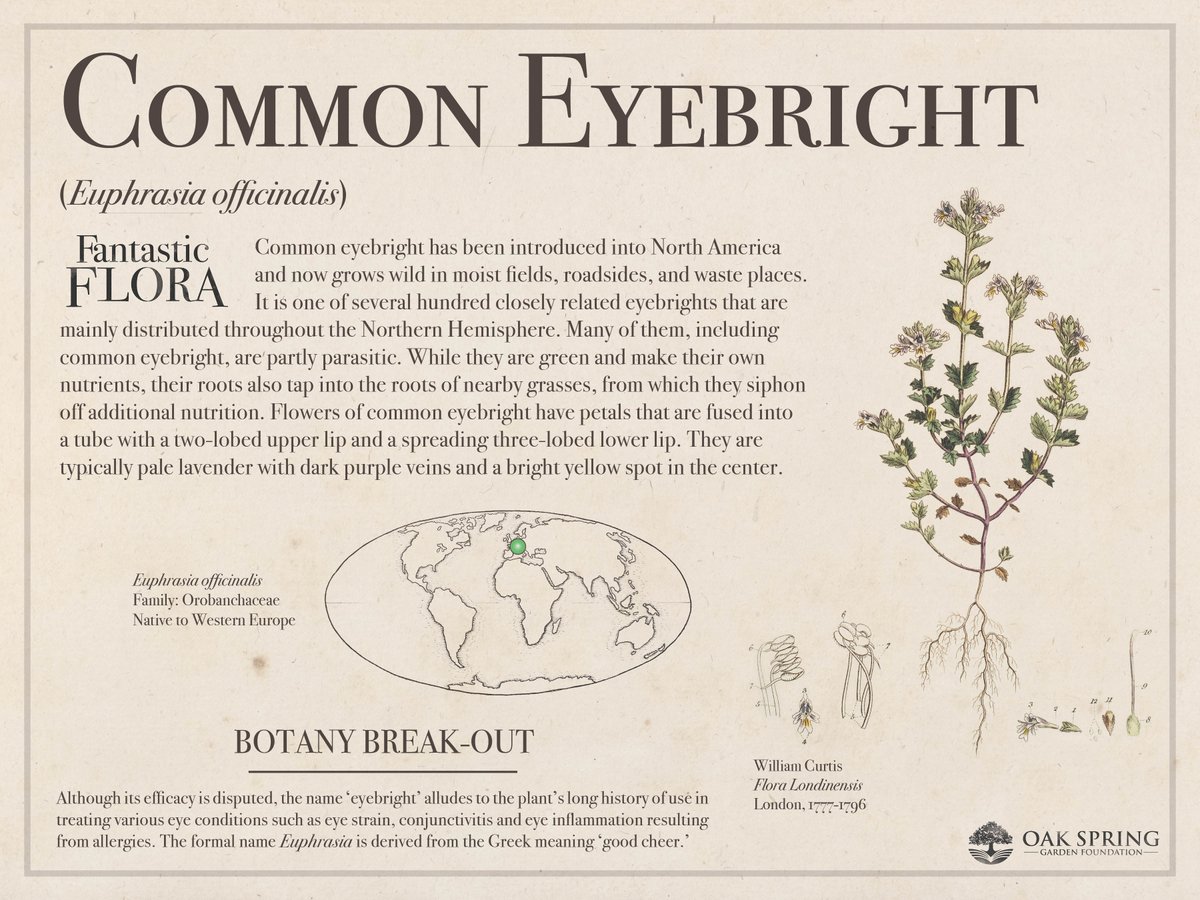
ALT Common eyebright (Euphrasia officinalis) has been introduced into North America and now grows wild in moist fields, roadsides, and waste places. It is one of several hundred closely related eyebrights that are mainly distributed throughout the Northern Hemisphere. Many of them, including common eyebright, are partly parasitic. While they are green and make their own nutrients, their roots also tap into the roots of nearby grasses, from which they siphon off additional nutrition. Flowers of common eyebright have petals that are fused into a tube with a two-lobed upper lip and a spreading three-lobed lower lip. They are typically pale lavender with dark purple veins and a bright yellow spot in the center. Although its efficacy is disputed, the name ‘eyebright' refers to the plant’s history of use in treating various eye conditions such as eye strain, conjunctivitis and eye inflammation resulting from allergies. The formal name Euphrasia is derived from the Greek meaning ‘good cheer.'
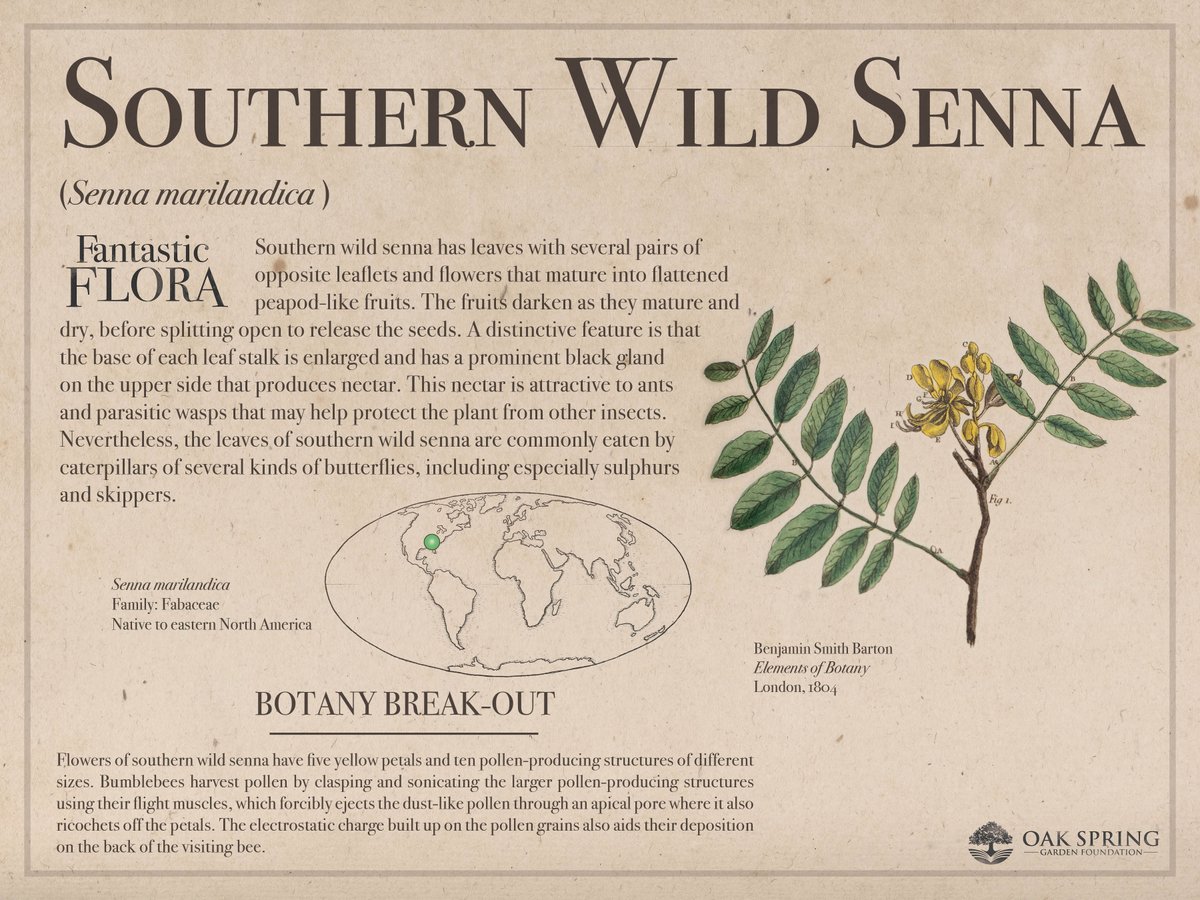
ALT Southern wild senna (Senna marilandica) has leaves with several pairs of opposite leaflets and flowers that mature into flattened peapod-like fruits. The fruits darken as they mature and dry, before splitting open to release the seeds. A distinctive feature is that the base of each leaf stalk is enlarged and has a prominent black gland on the upper side that produces nectar. This nectar is attractive to ants and parasitic wasps that may help protect the plant from other insects. Nevertheless, the leaves of southern wild senna are commonly eaten by caterpillars of several kinds of butterflies, including especially sulphurs and skippers. Flowers of southern wild senna have five yellow petals and ten pollen-producing structures of different sizes. Bumblebees harvest pollen by clasping and sonicating the larger pollen-producing structures using their flight muscles, which forcibly ejects the dust-like pollen through an apical pore where it also ricochets off the petals.

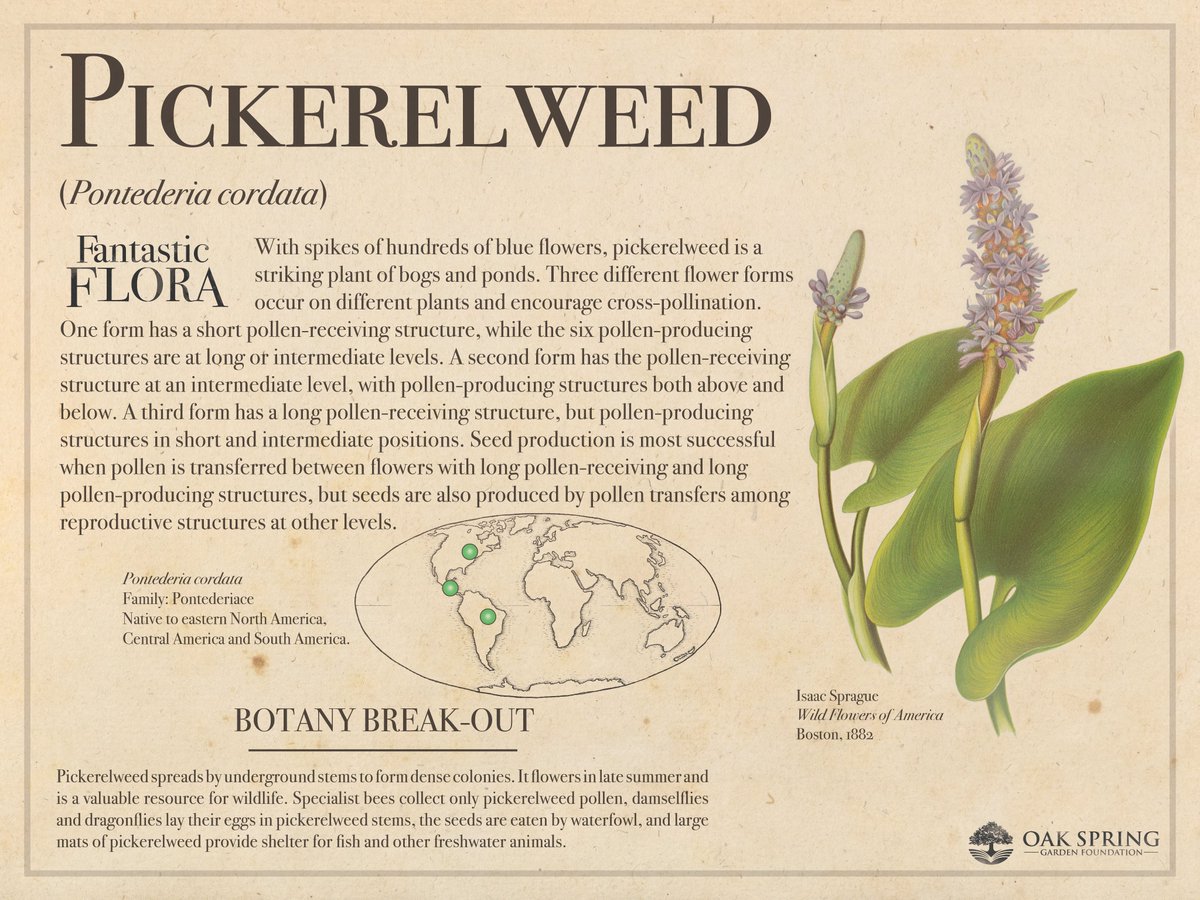
ALT With spikes of hundreds of blue flowers, pickerelweed (Pontederia cordata) is a striking plant of bogs and ponds. Three different flower forms occur on different plants and encourage cross-pollination. One form has a short pollen-receiving structure, while the six pollen-producing structures are at long or intermediate levels. A second form has the pollen-receiving structure at an intermediate level, with pollen-producing structures both above and below. A third form has a long pollen-receiving structure, but pollen-producing structures in short and intermediate positions. Seed production is most successful when pollen is transferred between flowers with long pollen-receiving and long pollen-producing structures, but seeds are also produced by pollen transfers among reproductive structures at other levels. Pickerelweed spreads by underground stems to form dense colonies. It flowers in late summer and is a valuable resource for wildlife as food and shelter for birds, insects, and fish.
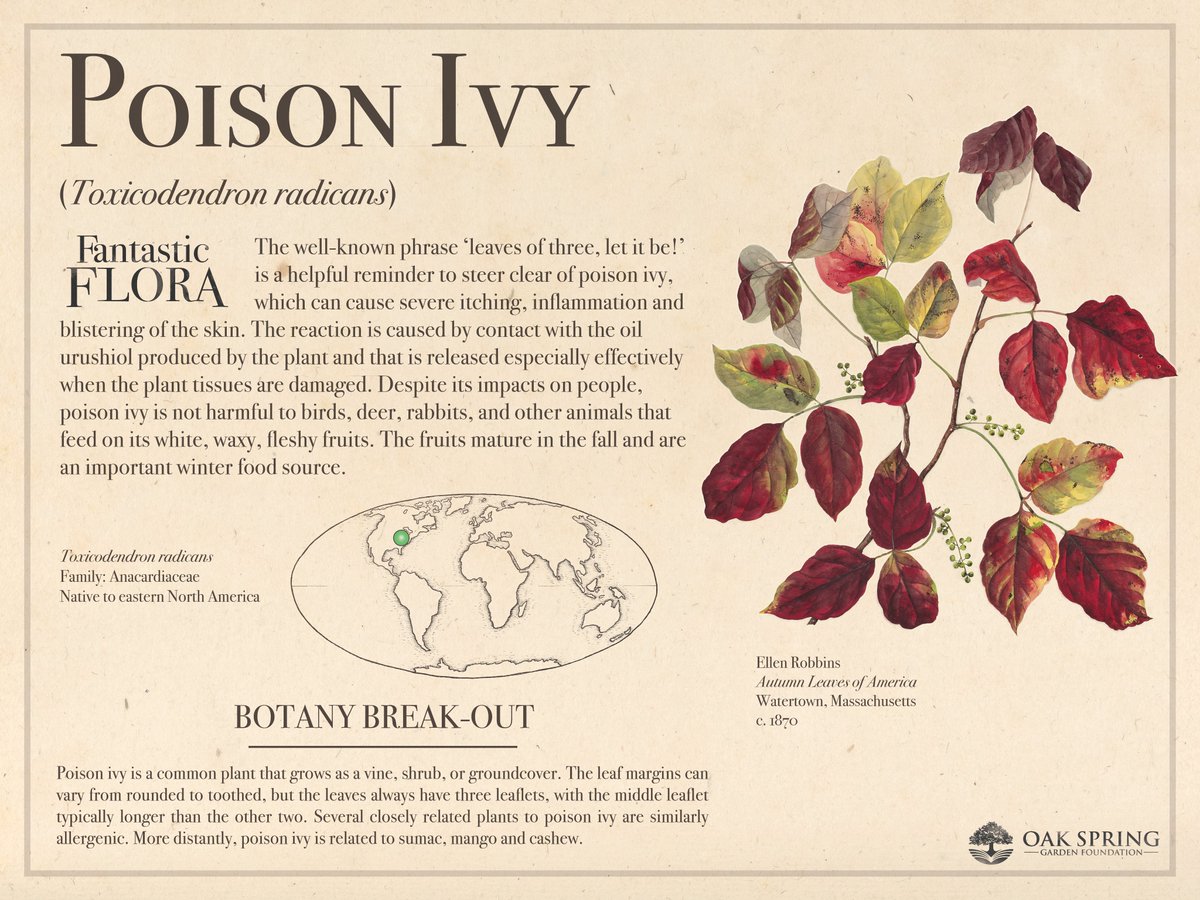
ALT The well-known phrase ‘leaves of three, let it be!’ is a helpful reminder to steer clear of poison ivy (Toxicodendron radicans), which can cause severe itching, inflammation and blistering of the skin. The reaction is caused by contact with the oil urushiol produced by the plant and that is released especially effectively when the plant tissues are damaged. Despite its impacts on people, poison ivy is not harmful to birds, deer, rabbits, and other animals that feed on its white, waxy, fleshy fruits. The fruits mature in the fall and are an important winter food source. Poison ivy is a common plant that grows as a vine, shrub, or groundcover. The leaf margins can vary from rounded to toothed, but the leaves always have three leaflets, with the middle leaflet typically longer than the other two. Several closely related plants to poison ivy are similarly allergenic. More distantly, poison ivy is related to sumac, mango and cashew.
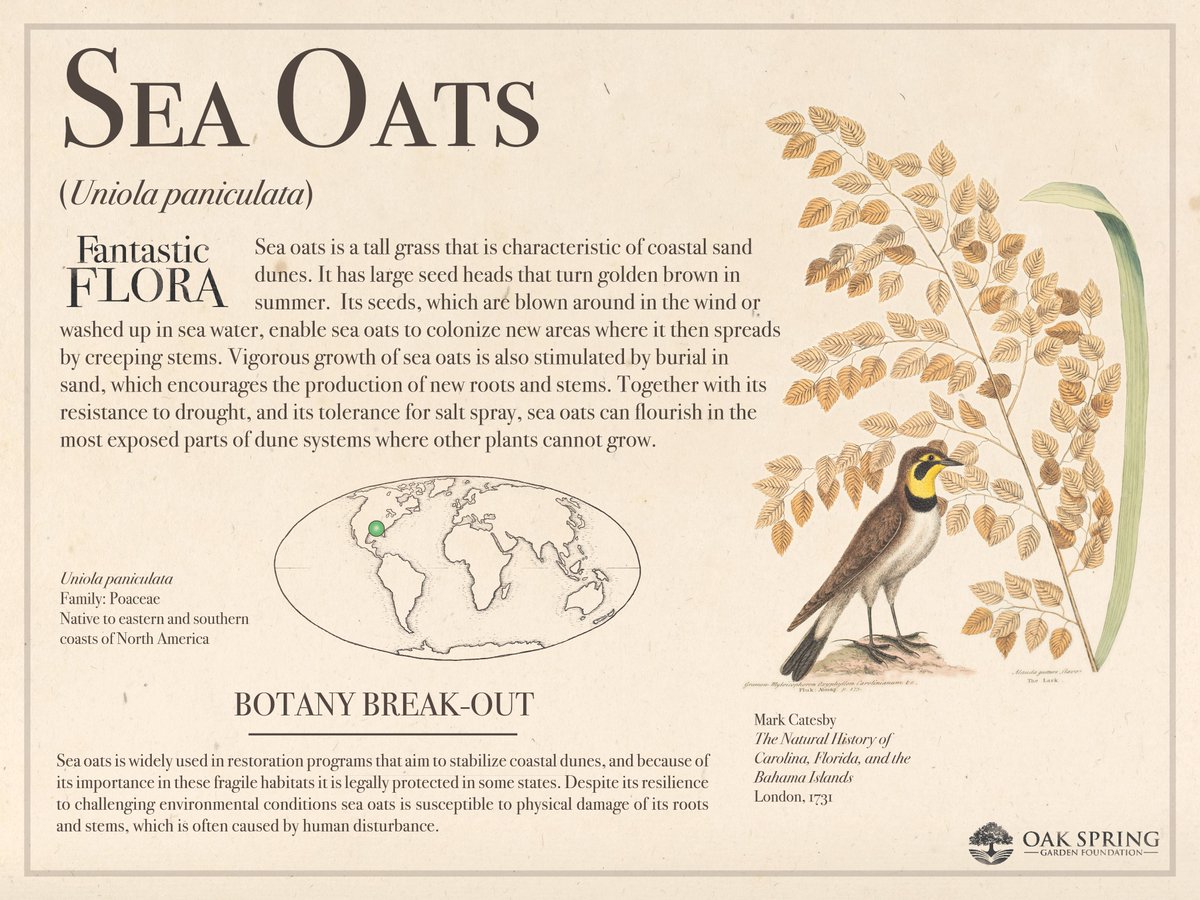
ALT Sea oats (Uniola paniculata) is a tall grass that is characteristic of coastal sand dunes. It has large seed heads that turn golden brown in summer. Its seeds, which are blown around in the wind or washed up in sea water, enable sea oats to colonize new areas where it then spreads by creeping stems. Vigorous growth of sea oats is also stimulated by burial in sand, which encourages the production of new roots and stems. Together with its resistance to drought, and its tolerance for salt spray, sea oats can flourish in the most exposed parts of dune systems where other plants cannot grow. Sea oats is widely used in restoration programs that aim to stabilize coastal dunes, and because of its importance in these fragile habitats it is legally protected in some states. Despite its resilience to challenging environmental conditions sea oats is susceptible to physical damage of its roots and stems, which is often caused by human disturbance.