
Father of two. Proud Turkish. | @Fenerbahce | Lead Advisory Consultant @UK | Harvard Business School | Sabanci University Master of Science
Joined September 2009
- Tweets 7,786
- Following 125
- Followers 267
- Likes 8,270
436 Photos and videos











Onur Sirin retweeted

1,680
3,581
18,998
27,257,271

7h
AMD CEO Lisa Su may have just undercut Nvidia’s $4,000 AI machine with a $1,499 device that fits in your hand.
On stage, she lifted it with one hand and ran a 235 billion parameter model live. No data center, no cloud, no rented GPUs.
The real surprise is inside. AMD’s Ryzen AI Max 395 is the first x86 chip where the CPU and GPU share a unified 128GB memory pool. That single design choice allows a desktop system to run models that previously required full server racks.
From that 128GB, Linux can allocate around 110GB directly to the GPU. For comparison, an RTX 5090 offers 32GB, while a 4090 has 24GB. This small system delivers more than triple that capacity in a form factor the size of a thick paperback.
The moment that caught everyone’s attention was the benchmark. This chip outperformed an Nvidia RTX 5080 by over 3x on DeepSeek R1 inference. A $1,499 compact machine beating a $1,000 GPU on a real AI workload challenges a decade of assumptions about what hardware you need for serious AI.
There is a bigger implication that is not being widely discussed. Many heavy AI users today spend around $200 on Claude Code Max, $200 on ChatGPT Pro, $20 on Cursor, and $20 on Gemini every month. That adds up to $5,280 per year. This machine could effectively pay for itself in under a year and then continue running without ongoing costs.
The setup is straightforward. Install Ollama, download a model like Qwen3 235B, and point your tools to localhost. You keep the same interface, but everything runs locally. No data leaves your system, no usage fees, and no throttling when you are working late.
This could be the point where AI subscriptions become optional rather than essential. Legal teams gain more control over data privacy. Developers stop worrying about token limits. Founders can prototype without the risk of escalating cloud costs.
Those who understand and adopt this early may gain a strong advantage in private AI consulting over the next couple of years.
Save this and take a closer look. This is what the next shift in AI computing looks like before it becomes mainstream.
1
64
Onur Sirin retweeted

Jun 13
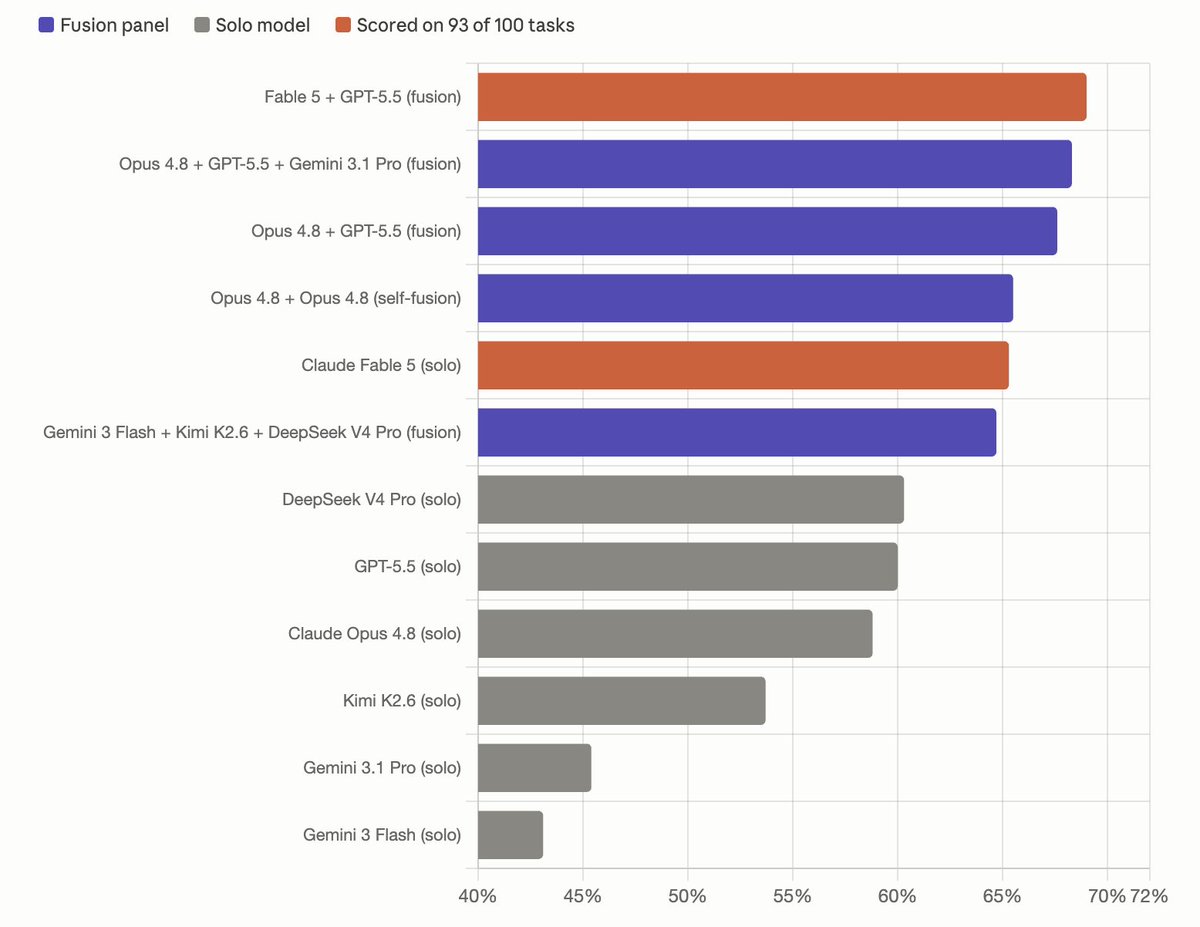
Introducing the Fusion API, the smartest compound model in the market.
Fusion achieves Fable-level intelligence at half the price.
How it works 👇
592
1,539
13,207
4,873,240
Onur Sirin retweeted

Jun 12
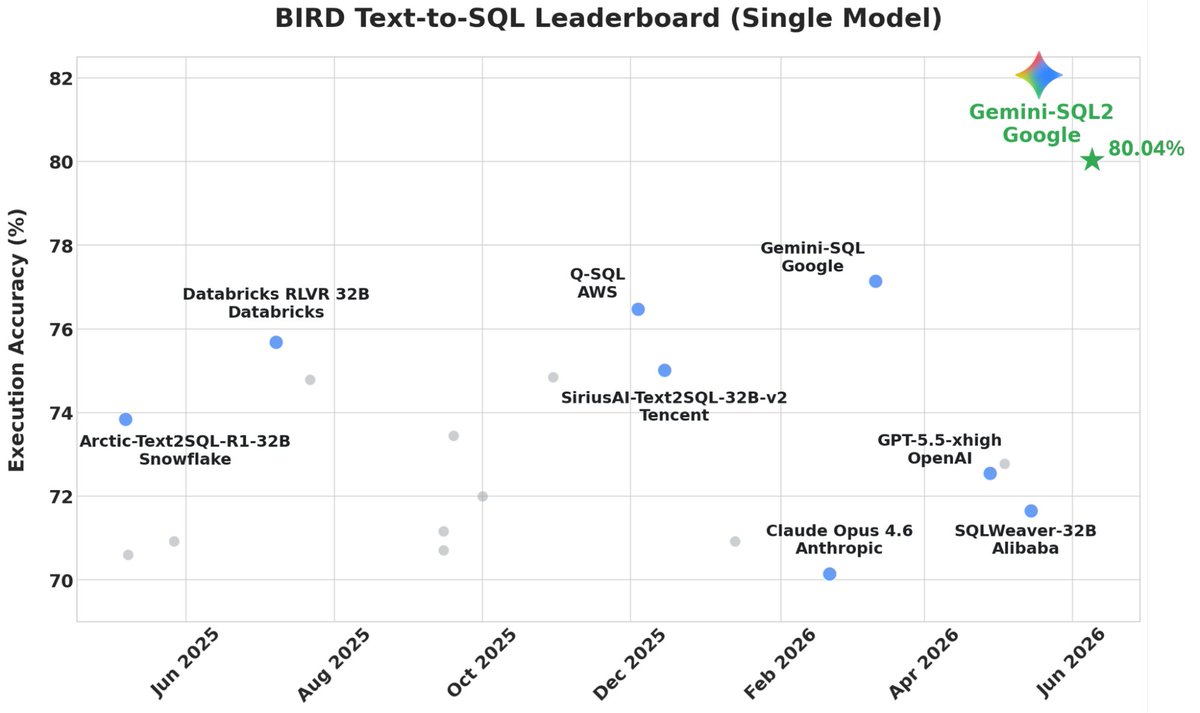
🚀 Introducing Gemini-SQL2, our breakthrough text-to-SQL capability powered by Gemini 3.1 Pro! We've achieved state-of-the-art results on the highly competitive BIRD benchmark, translating natural language into execution-ready SQL queries. 🧵👇
129
614
6,649
655,762
Onur Sirin retweeted

Jun 12
🔥 JUST IN: Spanish banking giant BBVA partnered with OpenAI to push its banking operations toward an AI-native model.


64
81
318
19,773

Onur Sirin retweeted

Jun 11
Özgür Özel'den şok iddia:
"Bizim suçumuz; seçim kazanıp AKP'ye tehdit oluşturmak, ABD ve İsrail'in bölgede planladığı düzene ve nizama uyum gösterecek makul bir aktör olmayı reddetmek."
256
2,238
13,823
402,223
Onur Sirin retweeted

Jun 10
Claude Fable 5 Higgsfield MCP is insane.
You can now build a playable game with a full story and stunning visuals from one click. Fable 5 researches your idea and writes the game. Higgsfield MCP generates all the assets.
On Higgsfield Supercomputer and in Claude via Higgsfield MCP.
150
327
3,016
610,873


Jun 9
Friends, you could ask: why did Anthropic launch Fable 5 right after Opus 4.8?
Yes, it’s a more advanced model, but after using it, one thing becomes clear: during vibe coding, it pushes you much harder on security. It’s basically saying: if you’re building software, shipping to production, and maybe handling personal or commercial data, security can’t be an afterthought. Big companies use Claude to update live code. Before Mythos, Anthropic seems to be conditioning users to take secure software development seriously. Fable 5 feels like a bridge: ship fast, but don’t ship careless.
37
Jun 9
While I was coding with Claude Code; A sudden message appeared on screen :)
'Switched to Opus 4.8, Fable 5's safety filters block messages with sensitive cybersecurity and biology topics. Conservative tuning means it can sometimes flag safe conversations that touch on adjacent topics. You can continue with a different model'
67
Onur Sirin retweeted

Kemal Kılıçdaroğlu’nun konuşmasını canlı izledim. Sonra videoda tekrar dinledim. Terörsüz Türkiye süreci ve dış politika ile ilgili sözlerinin anlamı şu:
-Terörsüz Türkiye süreci kayıtsız şartsız desteklenecek,
-Anayasa değilikliğine “evet” denilecek,
-Atatürk’ün “ulus devlet” yapısı yerine Osmanlı millet sistemi savunulacak.
-Bunlar, ABD’nin hedefi. Lozan’ı bir türlü hazmedemeyenlerin hedefleri. Ve Türkiye’yi parçalar.
--“Butlan vakası” sanıldığı gibi sadece koltuk/makam olayı değil, çok ötesinde stratejik hedefi var.
Kılıçdaroğlu’nun konuşması, “100 yıldır devlet olmamız engellendi” diyenlerle, “Cumhuriyet’in 1923’te açılan bir parantez” olduğunu söyleyenlerin hedefleriyle örtüşüyor.
-SORU: Bu konuşmayı kim hazırladı? Açıklanmalı.
713
5,100
19,902
541,441
Onur Sirin retweeted
ABD'nin Ankara Büyükelçisi Tom Barrack da aynı şeyi söyledi:
“Ulus devletten vazgeçin. Osmanlı millet sistemine dönün…”
-Bu “CHP” CHP değil.
Bu ifade, Atatürk’ün kurduğu partiye ait değil.
-Lütfen, “Altı Ok”u yakanızdan ve ambleminizden çıkarın. İkinci Cumhuriyetçilerle ve Tom Barrack’la kucaklaşın. Graham Fuller mezarında çok mutludur. Partinizin adı mesela, “Osmanlı Millet Partisi” olsun.
Jun 9

Kılıçdaroğlu:
"Osmanlı'nın topraklarına bakın. Türkiye o coğrafyaya gitmek, o coğrafyada kendi kişiliğini geliştirmek zorundadır.
Küçülerek değil, büyüyerek gitmek zorundayız. Osmanlı coğrafyasında Türkiye olmalı."
408
2,271
8,348
177,106

Onur Sirin retweeted

Jun 8
🚨 Tech companies like Apple and Google have three months.
Activate safeguards on smartphones and tablets to detect and block nude images for children or we will bring forward legislation to force you to do so.
Community note
China’s CCP used the exact same “protect children from porn” excuse in 2009 when it forced Green Dam Youth Escort onto every new PC, which also censored political content and monitored users.
en.wikipedia.org/wiki/Green_Dam…
2,720
464
2,662
2,133,231

Here’s this week’s shipping recap 👇
— Nano Banana 2 & Nano Banana Pro are now GA and available via the Gemini Enterprise Agent Platform, Gemini API, and in @GoogleAIStudio
—Co-Scientist, our new multi-agent system for structured scientific thinking, generates and refines novel hypotheses to solve complex scientific problems
— dreambeans from @GoogleLabs works overnight to curate a personalized daily collection of topics that are relevant to you based on your connected Google apps
— @GoogleGemma 4 12B, our unified encoder-free model, brings powerful multimodal intelligence straight to your laptop fully offline
— Gemma 4 models and their drafters are now optimized with Quantization-Aware Training (QAT) to cut memory requirements and maximize on-device performance
— @GoogleMagenta RealTime 2 is our open-weights live music model that you can play like an instrument using a MIDI keyboard, text prompts, and gestures
47
54
409
44,193
Onur Sirin retweeted
Introducing our new agentic RAG framework. A collab with Google Cloud, our multi-agent workflow goes beyond standard RAG by breaking down complex enterprise queries & iteratively searching for sufficient context before generating dependable responses.
📜→goo.gle/4oeg94G
50
290
2,450
503,118
Jun 5
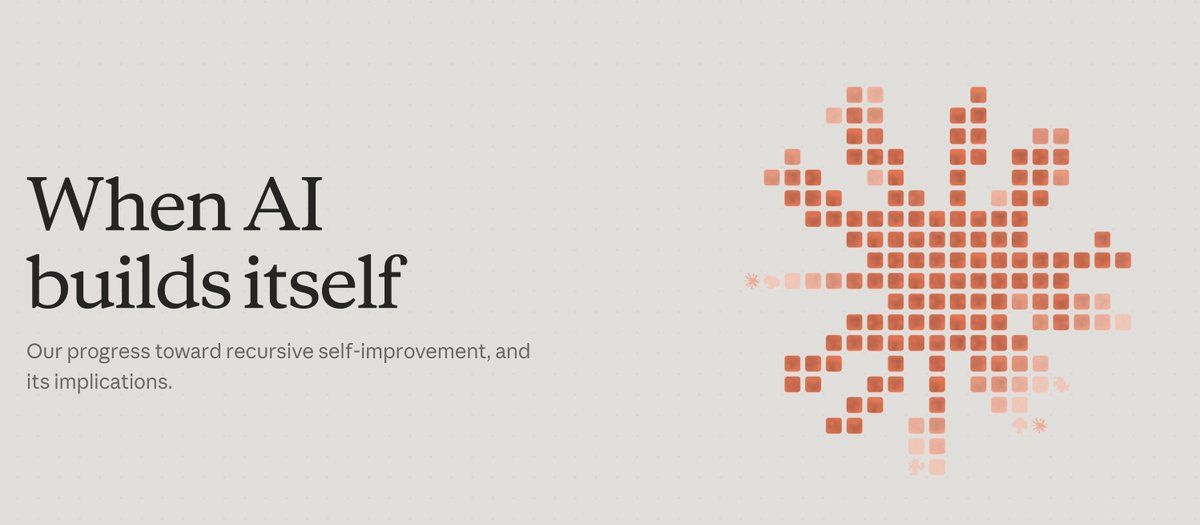
Anthropic’s message is simple: AI is increasingly helping create better AI. We’re not at full recursive self-improvement yet, but if that arrives, it could be one of the biggest breakthroughs in tech history and one of the biggest safety tests too.
5