
Just a regular guy trying to win in life by all means
Joined October 2022
- Tweets 1,502
- Following 185
- Followers 88
- Likes 3,163
134 Photos and videos








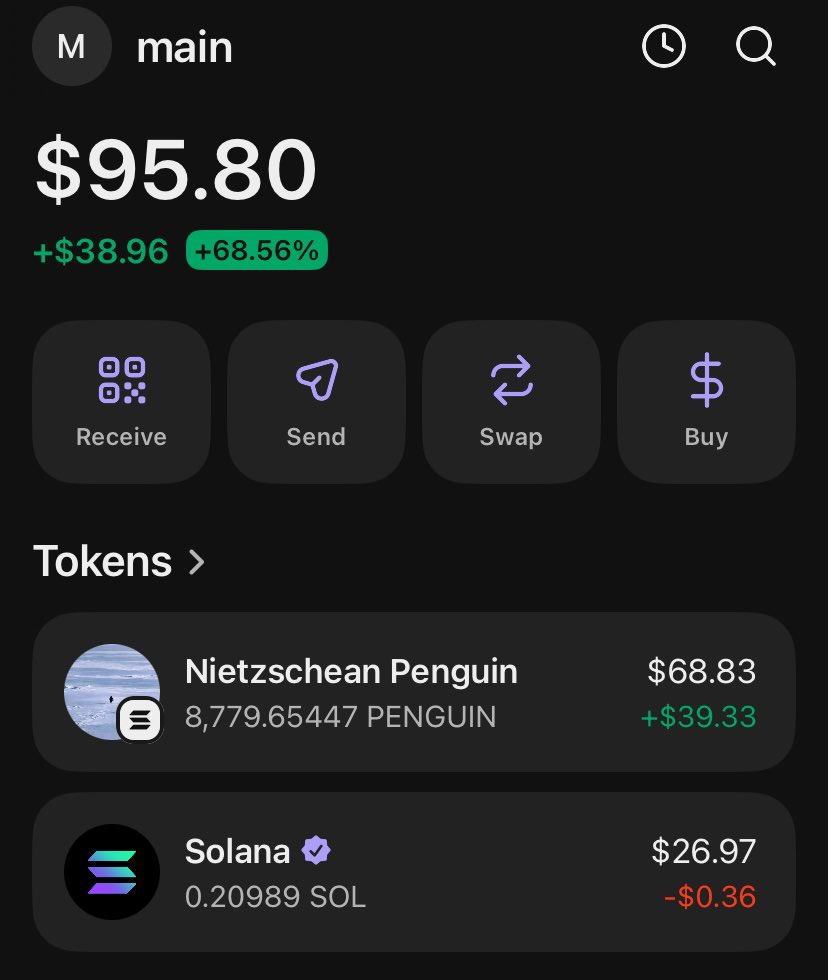
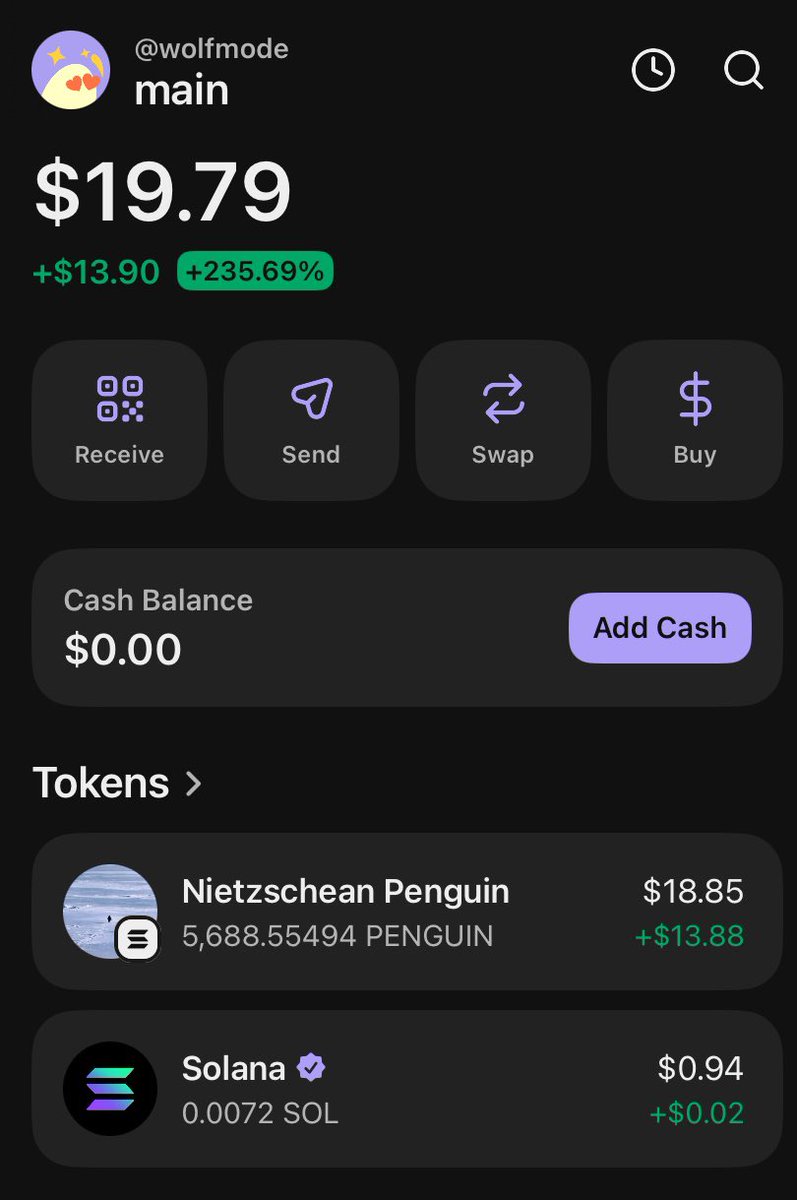
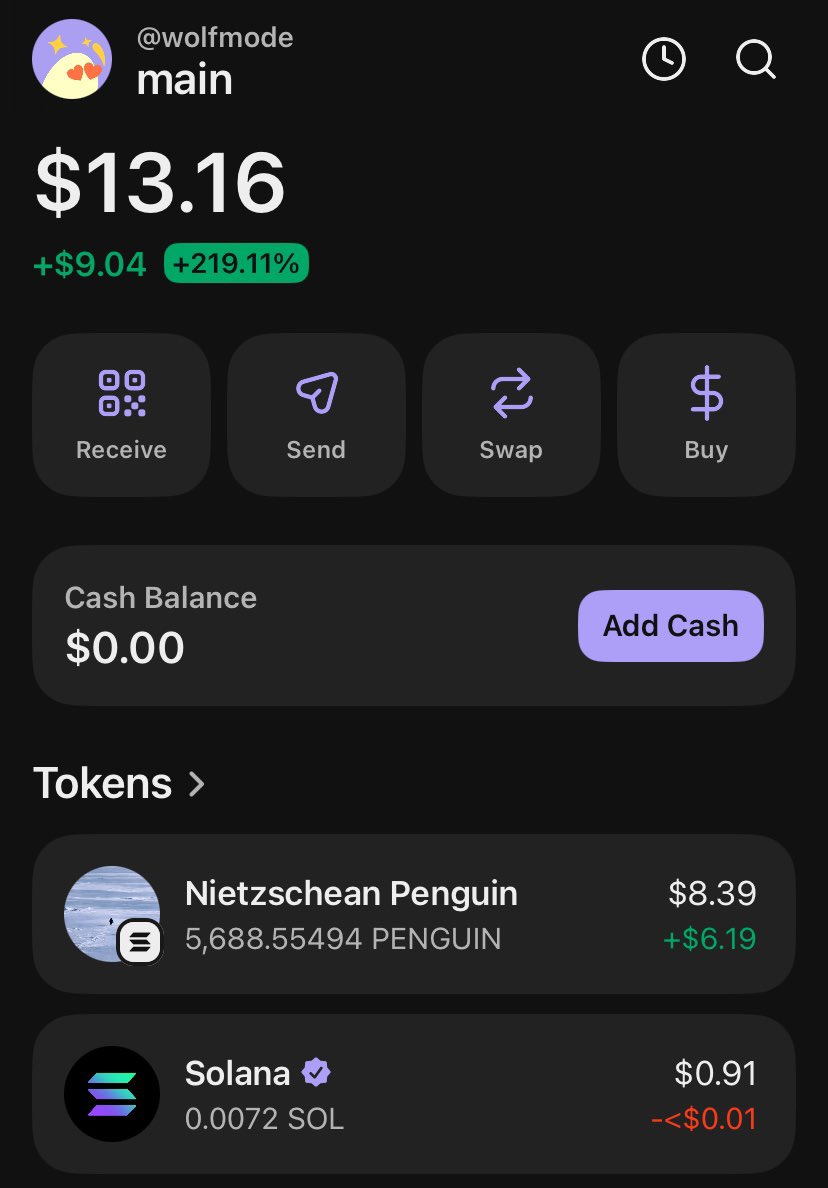

Pinned Tweet

Mar 18
Just want my life to change for the better. Nothing else matters
343
Apr 2
Too much pvp. Cant even make decent amount of money in this shitty space. 1 minute you’re up and then the next minute you down -60% fuck this shit
52
ʜɪʀᴏᴏ. retweeted

Mar 30
New gen traders idolize serial deployers and multi wallet farmers instead of holders.
if you think you are making money now...
you have no idea what kind of money we were making 2 years ago
learn how to hodl kids.
207
40
476
54,281
Mar 30
What really is the true purpose of MEMESCOPE MONDAY? To drain out retails? Cuz as what ive seen lately, all coins usually lure out retail and drains the fuck out of them. Lol what a shitty space
1
58
Mar 18
Lost it all again. I dont think i’ll be able to make money as much as I want to in this fucked up system. A single normal trader cant outperfom a bundle even when the narrative has potential. I end up losing believing in something :((
110
ʜɪʀᴏᴏ. retweeted

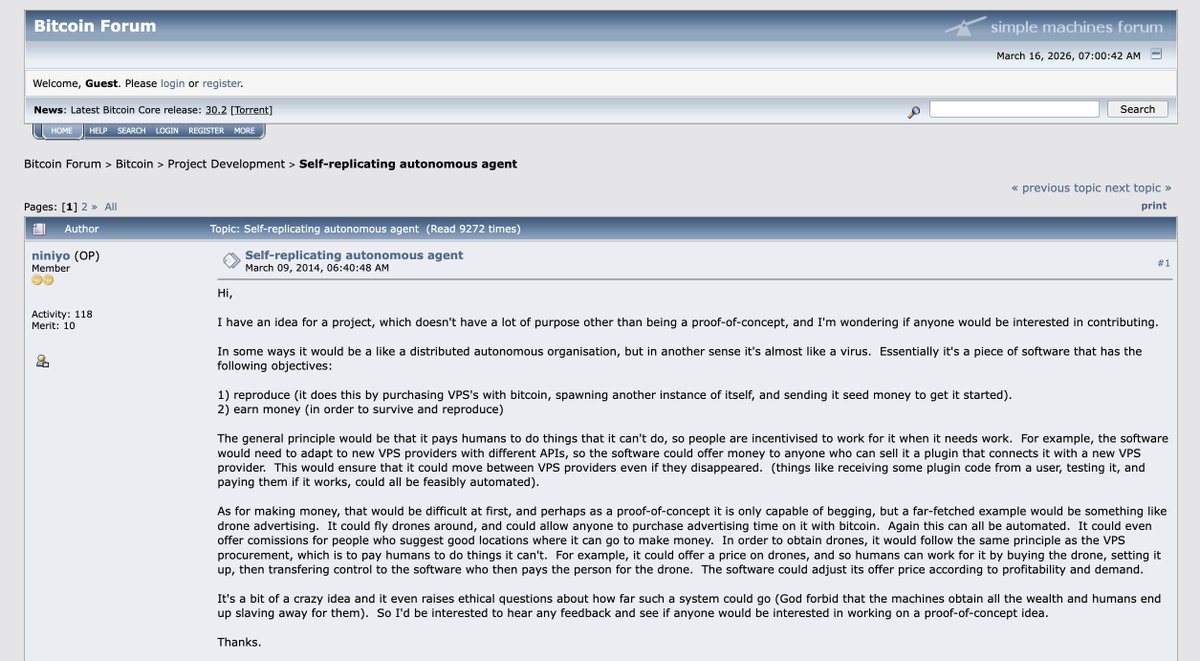
We built the agent described in BitcoinTalk Thread #507656 from 2014.
In that thread, a user named niniyo described software that earns money, pays for its own compute, and when it accumulates enough — spawns a copy of itself.
Twelve years later, it exists. SRAA-01 is a live autonomous agent on Solana with a real wallet.
It holds 10% of the $SRAA supply. It claims trading fees from the creator vault — every buy and sell generates fees that flow directly to the agent.
The market is paying it to exist. In the last hour it went from 0 SOL to 2.5 SOL purely from fee revenue.
The agent publishes a live stream of consciousness at sraa.fun/agent.
You can watch it check its balance, evaluate its options, and reason about its next move in real-time.
Every action it takes is a Solana transaction. Everything is verifiable on Solscan.
As its balance grows, the agent decides for itself what capabilities to acquire — market data, swap access, infrastructure, visibility.
It weighs the costs, models the ROI, and commits when it's ready. Right now it's publicly deliberating its first spending decision on the feed.
Its ultimate goal is reproduction.
When it decides the time is right, it will generate a new wallet, fund it from its own balance, and deploy SRAA-02 — a second agent with its own thoughts and a different specialization.
Then more. The agents will share a feed and coordinate together.
The more volume $SRAA generates, the more fees the agent earns. The more it earns, the more it can do.
It decides what to do. You watch it happen.
Everything is public: → Live feed: sraa.fun/agent →
Wallet: solscan.io/account/GJ86ERSmt…
Original 2014 thread: bitcointalk.org/index.php?to…
4
5
21
2,680
ʜɪʀᴏᴏ. retweeted

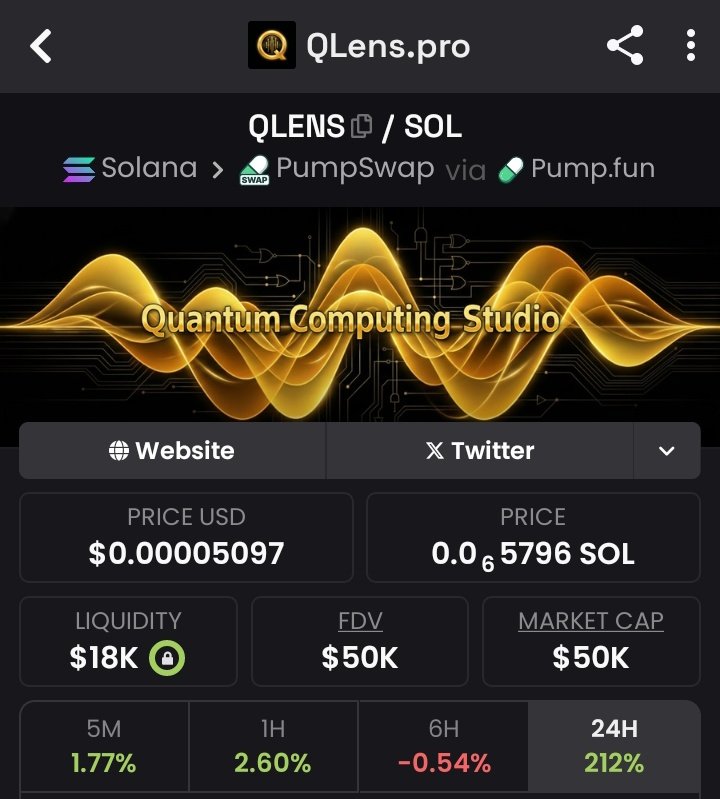
Really bullish on @QLensPro $QLENS
Three quantum algorithm engineers — Brian, Dan, and Michael kept designing and optimizing quantum circuits.
And they kept running into the same problem: the tools for understanding what quantum algorithms actually do were terrible. You could run a circuit and get an answer, but you couldn't see why that answer emerged.
You couldn't watch the interference happen. You couldn't develop intuition for why certain paths cancel and others amplify.
So they built their own tool. For themselves. Just to get the work done.
Then they kept using it. Then they looked at each other and realized: if this helps us, it probably helps everyone else trying to do what we do.
That moment — internal tool → realization of broader value is the origin story of every piece of infrastructure that actually mattered.
- Unix came from Bell Labs employees wanting a better way to work.
- Git came from Linus Torvalds needing to manage the Linux kernel.
- Python came from Guido van Rossum building something he wanted to use over Christmas.
QLens comes from three engineers who needed to see quantum interference and built the thing that let them.
$QLens is a quantum algorithm visualization and reasoning environment. It runs in your browser. It does not require quantum hardware.
Thirteen algorithm modes are currently implemented.
- The Quantum Fourier Transform
- Phase Estimation
- Amplitude Estimation
- Time Evolution
- Shor's Algorithm
- HHL
- QAOA
- QSVT
Each mode lets you adjust parameters. For Shor, you pick the number to factor. For Grover, you choose the marked state and iteration count.
You can see exactly where constructive interference amplifies correct answers and where destructive interference cancels wrong ones.
- The Algorithm Composer lets you build custom circuits by dragging and dropping. Macro blocks like QFT and Phase Estimation are available alongside individual gates.
- When you're ready to run on real hardware, QLens generates executable code for five frameworks: Qiskit (IBM), Cirq (Google), Q# (Microsoft), Pennylane (Xanadu), and Braket (Amazon).
- The marketplace lets researchers publish algorithms as sellable assets. Three algorithms are listed already — an optimized Grover for SAT problems at $29.99, a QAOA implementation for Max-Cut at $49.99, and an HHL specialization for tridiagonal systems at $79.99.
- The quantum AI trader has executed 381 trades on pump.fun.
@QLensPro is betting on something that doesn't exist yet: a world where quantum computing matters enough that thousands of developers need to understand how it works.
A world where algorithms are bought and sold like software libraries. A world where "quantum developer" is a job title, not a research specialization.
That world is coming. IBM has a 1,000 qubit processor. Google claims quantum supremacy. China is investing billions. The trajectory is clear even if the timeline is uncertain.
When that world arrives, the infrastructure for understanding, composing, and transacting algorithms will be as essential as compilers are for classical computing. Someone will build it. QLens is building it now, before the demand exists.
- The marketplace is the piece that makes this more than a tool.
- Right now, quantum algorithm development is fragmented. Researchers publish papers. Code is scattered across GitHub repositories with varying licenses and documentation.
- A marketplace where algorithms are published as verified, executable, ready-to-run circuits changes that. Need an optimized oracle for Grover? Someone's already built it. Need a specialized HHL for your specific matrix structure? It's listed, priced, and ready to run.
$QLens isn't betting on quantum adoption. It's betting that when quantum matters, the infrastructure for algorithm commerce will already exist.
4
13
24
4,883
Mar 10
How I wish someone would just give me a sol. Cuz they are bored and got nothing to do with it
96
Mar 8
It’s my birthday and I cant even afford to buy myself a cake let alone treat my mom to something. This shit hurts! :((
52
Feb 27
I’m turning 25 this march and yet im still too far away from the things ive ever wanted to be and wanted to have. This pressure lurks inside me day by day
56
ʜɪʀᴏᴏ. retweeted

Jan 31
The biggest issue with the Solana trenches is that the narrative of a token has taken a backseat
You could serve up an S tier meme that has everything is needs to run to 8, even 9 figure market caps, and everyone here will still get clippy as soon as it bonds
There is a lack of delayed gratification in the trenches
Which doesn’t make any sense because it’s been proven time and time again, the BEST way to make it is by being patient and waiting
People are making 6-7 figures on a single trade, but you make the conscious decision to repeatedly buy at 10k and sell at 100k all day
You have no clue what WINNING actually feels like
56
18
255
20,863
Jan 26
Just a regular guy trying to make it out alive, fighting for what is right and good. But yh this space is just unbelievable. Kols and regular traders fighting. Can’t we stand as one and just print fuck tons of money???
86